Category Archives: gender

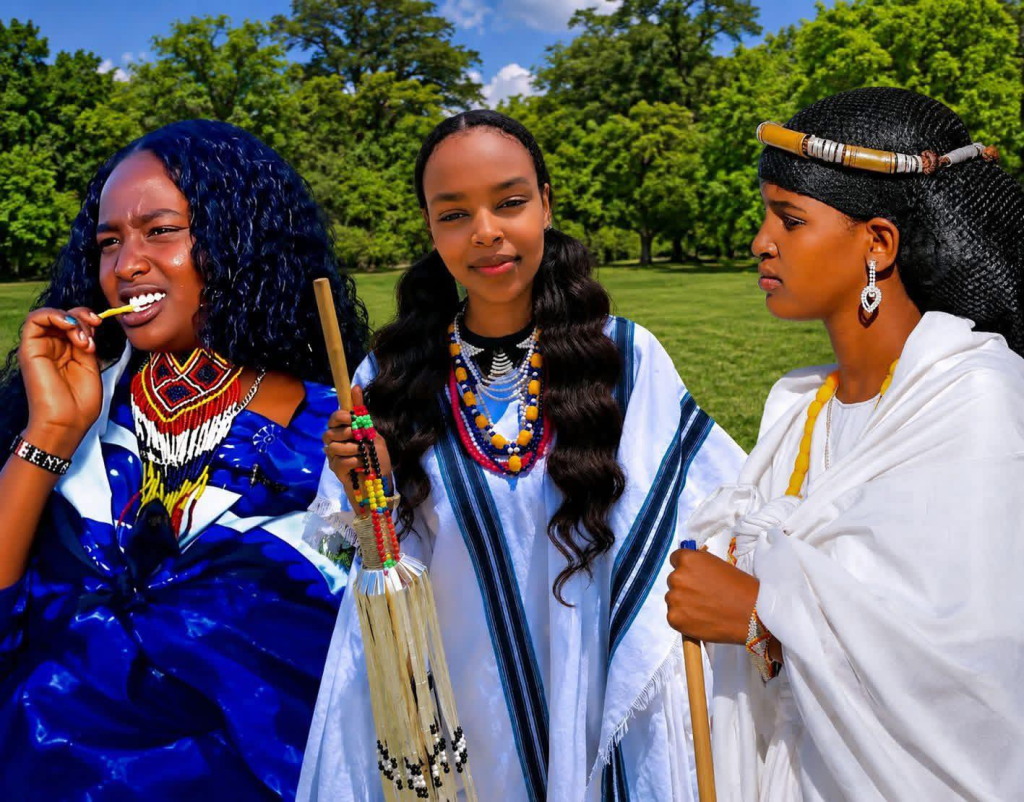
Unity Among Borana, Guji, and Gabra: A Call for Strength
By Staff Reporter
In the vast, sun-scorched lowlands of southern Oromia and northern Kenya, where pastoralists have roamed with their cattle for centuries, three names are spoken with reverence: Borana, Gabra, and Guji. They are not merely neighboring communities. They are, in the words of a powerful new message circulating among Oromo communities, “ilmaan haadha tokkoo”—children of one mother.
Now, as political tensions and fragmented narratives threaten to sow discord across the Horn of Africa, elders, youth, and community leaders from these three groups have raised a collective voice. Their message is simple, ancient, and urgent: We are one.
“Warri ajandaa dhunfaa barbaachaaf, fixxi-fixxi jechaa uummata wal irraa qoqqooduu yaaltaan dhaabbadhaa ofi ilalaa,” the statement reads. “Those who seek personal agendas, speaking in fragments and trying to divide the people, should look at themselves.”
The declaration leaves no room for ambiguity. Borana, Guji, and Gabra are not separate nations. They are siblings—”qorii tokko keessaa nyaatu,” those who eat from the same bowl. They share ancestry, language, culture, and a profound bond of kinship that predates modern maps and political borders.
A History of Harmony, Not Hatred
The message acknowledges that misunderstandings may arise from time to time, often rooted in the complex history of past kingdoms and shifting governance. But it insists that there is no innate enmity between these communities.
“Wantii yeroo adda addaatti mul’ataa ture seenaa fi adeemsa mootummootii darban irraa kan madde malee, ummatoota kana gidduutti hammeenyii dhalootaan jiru tokkoo hin jiru,” the statement explains.
Translation: Except for what occasionally appears from the history and processes of past governments, there is no generational hatred between these peoples.
In other words, the divisions some seek to exploit are not born of tradition or blood. They are artifacts of political maneuvering—and they can be undone by conscious, collective will.
Rejecting False Narratives
The statement takes particular aim at what it calls “kashalabbee miidiyaa sobaatiin”—the lies spread through dishonest media. It warns against those who, disguised in the name of the people, spread suspicion and hatred, whether from inside or outside the community.
“Namoonnii muraasnii faayidaa dhuunfaa isaaniif jechaa gosa walitti buusuuf wixxiratan ni jiru,” the message concedes. Yes, there are a few who conspire to pit clan against clan for personal gain.
But the children of Borana, Guji, and Gabra know the truth. “Harka wal qabannee tokkoomnee dura dhaabbanna; waan waliin dhabne irratti mari’anna, waan wal dhowwanne nuu hin qabnu.”
They will stand together, united hand in hand. They will discuss what they have lost together. They have nothing they need to deny each other.
Unity is Strength
The message closes with a call that echoes across the generations: “Tokkummaan keenya humna keenya.” Our unity is our strength.
Respect, listening, and mutual support are not foreign concepts—they are tradition. “Wal kabajuu, wal dhaga’uu fi wal tumsuun aadaa teenna.”
Borana, Guji, and Gabra, the statement affirms, have lived together, grown together, and stood for each other—yesterday, today, and tomorrow. They are Oromo. They are children of one mother.
Tokko taanee haa jiraannu; Tokkummaan humna!
Let us live as one. Unity is strength.
—

Ethiopia’s Election: 143 Polling Stations Closed Amid Security Crisis
By Daandii Ragabaa
Finfinne
FINFINNE – The hopeful hum of a nation casting its ballots was silenced in 143 corners of Ethiopia today, their shuttered polling stations standing as stark monuments to the country’s persistent security fractures.
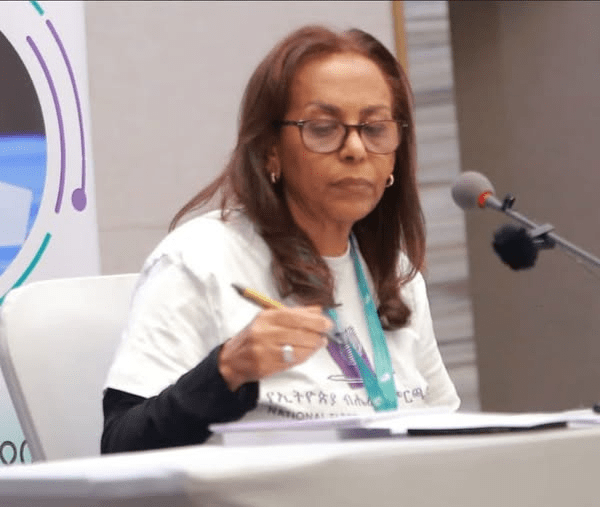
As voters lined up under a heavy sky in the capital, the chairperson of the National Election Board of Ethiopia (NEBE) delivered a sobering update from behind a lectern at the Skylight Hotel. “Security concerns,” Chairperson Melatwork Hailu explained, have forced the complete closure of 143 polling stations across the Amhara and Oromia regions. Their doors never opened.
But the tally of disenfranchisement does not end there. In a separate, more chaotic category, an undisclosed number of additional stations managed to open only to be violently silenced, forced to shut their doors early as the security situation on the ground deteriorated.
The electoral map is now pocked with dark spots. In the districts of Kersa, Kutaber, Gilolopa, and Gosache, voting began with the morning bell only to be interrupted by unseen threats. For the citizens there, the act of democracy was reduced to a waiting game—one that, by late afternoon, appeared lost. It remains unclear exactly how many voters will be unable to cast their ballots, their civic voices swallowed by regional instability.
Melatwork tried to offer a counterpoint of resilience amid the disorder. Of the more than 52,000 polling stations erected across the sprawling federal landscape, she noted, over 50,000 did open on time. Yet nearly 700 others suffered delays—not all from bullets or intimidation, but from the tangled knots of technology.
Across the country, long queues snaked around schoolyards and community halls, not just from enthusiasm but from frustration. Election officials pinned the sluggish pace on complications with the online voter registration data. In a nation still bridging the digital divide, the glitches led to hours of waiting, with fingers stained not by ink, but by restless anxiety.
The day, already heavy with political weight, took a tragic turn long before the polls closed. Melatwork disclosed that an election facilitator—one of the thousands of citizens who had volunteered to shepherd this democratic process—lost his life earlier today. He died not in a clash with security forces, nor at the hands of militia, but in a mundane yet devastating motorcycle accident in Enamorena Enayer, deep in the Gurage Zone.
He was, the chairperson noted quietly, simply trying to help.
As the sun sets on this seventh national election, the image that lingers is not of the ballots cast, but of the 143 doors that never opened—each one a silent referendum on whether, in parts of this country, peace can arrive before the next election day.
Daandii Ragabaa is a journalist based in Finfinne covering political and social affairs across Ethiopia.

When the Bokkuu Blooms Again: The Oromo Quest to Revive a Native System
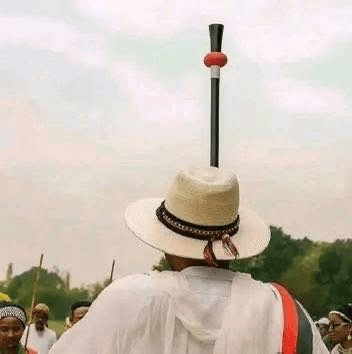
FINFINNE, OROMIA — The morning mist still clings to the highlands when Jaldessa Gammadaa, 74, raises the bokkuu—a curved wooden staff wrapped in leather and beads—toward the rising sun. His weathered hands tremble slightly, not from age, but from the weight of what this simple object represents.
“The bokkuu never died,” he says softly, his voice carried by the wind sweeping across the grassy plains of Mecha, in western Oromia. “It was only sleeping. Now, we are waking it up.”
For the Oromo people, Ethiopia’s largest ethnic group, the bokkuu is more than a ceremonial scepter. It is the embodiment of the Sirna Oromoo—the Oromo system of governance, law, spirituality, and social organization that once governed millions across the Horn of Africa. And after decades of suppression, forced assimilation, and state-sanctioned neglect, the Oromo are engaged in a quiet but determined revolution: not with guns, but with memory.
They are reviving. They are rebuilding. They are strengthening.
—
A System That Predates Modern Democracy
The Gadaa system—the beating heart of Sirna Oromoo—is a complex, age-grade-based democratic governance structure that has been recognized by UNESCO as an Intangible Cultural Heritage of Humanity. Every eight years, power transfers peacefully from one generation to the next, with elected leaders known as Abbaa Gadaa presiding over legislative, judicial, and ritual functions.
Political scientists have marveled at its checks and balances. Its separation of powers. Its regular succession mechanisms that prevent authoritarian drift—all developed centuries before many European nations had abolished absolute monarchy.
“People ask me if the Oromo had democracy before colonialism,” says Dr. Worku Tesfaye, a historian at Addis Ababa University who has studied Gadaa for three decades. “I tell them no. We had something more sophisticated. Colonialism never reached Oromia in the same way it reached the coast. The Gadaa system is indigenous, organic, and astonishingly modern in its core principles.”
Yet for much of the 20th century, successive Ethiopian regimes viewed the Gadaa system as a threat. Emperor Haile Selassie’s government sought to centralize power and absorb Oromo lands, sidelining Oromo institutions. The Marxist Derg regime (1974–1991) banned what it called “feudal and tribal structures.” And even after 1991, while ethnic federalism allowed some cultural expression, Gadaa was largely relegated to folklore—performed at tourist festivals, but stripped of its governance authority.
“The system was broken,” Jaldessa recalls. “When I was a boy, the elders still met in secret under the oda tree. But the meetings grew smaller every year. Young people laughed at us. They said we were ghosts telling old stories.”
—
The Revival: From Memory to Movement
Today, the ghosts are finding their voices again.
Across Oromia—and in diaspora communities from Minneapolis to Melbourne—a grassroots cultural renaissance is underway. Community elders known as hayyuus (wise ones) are holding intergenerational workshops. Local Gadaa councils, once dormant, are being reconstituted—not to replace modern government, but to complement it in matters of conflict resolution, environmental stewardship, and social welfare.
In the city of Adama, a youth group called “Dallachaa” (Growth) has documented over 200 oral histories from elders who remember the Gadaa system before its suppression. In Addis Ababa’s Oromo neighborhood of Bole, young professionals meet weekly to study the Seera (customary laws) and debate how they might apply to contemporary issues like land rights and gender equality.
“We’re not trying to turn back the clock,” says Hundaol Banti, 28, a software engineer who co-founded a digital platform cataloging Gadaa principles. “But there are things our ancestors got right—consensus-building, ecological balance, leadership rotation. Why would we throw that away just because it’s old?”
The revival has found unexpected allies. In 2016, the Oromo Protests—massive anti-government demonstrations rooted in land rights and political marginalization—took the bokkuu as their symbol. Young protesters, many of whom had never witnessed a full Gadaa ceremony, raised wooden staffs in defiance. The image of the bokkuu became a rallying cry.
“Those protests changed everything,” Worku says. “Suddenly, a new generation saw the bokkuu not as a relic of their grandparents, but as a weapon—a peaceful one—against injustice. The system was re-politicized in the best sense.”
—
The Challenges Ahead
Yet revival is not without its fractures.
Some women’s groups have pushed back against Gadaa’s traditionally male-dominated leadership structures. While the system includes ritual roles for women—the Siiqqee institution, named after a staff carried by women—critical governance positions were historically held by men. Contemporary reformers are debating how to reinterpret these traditions for an era that demands gender parity.
“The Siiqqee was not just symbolic,” insists Asha Boru, a women’s rights activist and Gadaa scholar from Borana zone. “Women could veto decisions, call assemblies, and protect other women from abuse. But yes, there is work to do. The beauty of Sirna Oromoo is that it is built on debate. We are debating now.”
There are also tensions between rural and urban practitioners. In rural areas, particularly among the Borana and Guji Oromo, the Gadaa system never fully disappeared; it operated underground. In cities, revival efforts sometimes risk romanticizing a complex system that also had hierarchies and rigidities.
And then there is the state. While the current Ethiopian government, led by Prime Minister Abiy Ahmed (himself Oromo), has made conciliatory gestures—declaring the Irreecha festival a national holiday, funding cultural centers—the legal authority of Gadaa councils remains unclear. Can customary courts sentence someone? Can Gadaa assemblies collect taxes? The boundaries remain contested.
“The government is comfortable with Irreecha and folklore,” says one Addis Ababa-based analyst who requested anonymity to speak freely. “But a fully autonomous Oromo governance system? That is a different conversation. The revival is cultural for now. Whether it becomes political again—that is the question.”
—
Under the Oda Tree
On a recent Friday afternoon, under a sprawling oda tree in the village of Odaa Nabee—a site of immense spiritual significance where Oromo oral tradition says the Gadaa system was formalized—Jaldessa oversees a ceremony. But this is no tourist performance.
Twenty-three young men and women sit in a semicircle, notebooks in hand. They are learning the Gadaa grades—the five eight-year stages through which every Oromo male (and now, in some communities, female) once passed. They memorize the names of the Abbaa Gadaas of the past. They practice the Jaarsummaa (eldership) protocols of conflict mediation.
“We will not all become elders overnight,” Jaldessa tells them. “But you cannot grow a tree from a dead root. We are watering the root.”
One of his students, 19-year-old Marge Waqjira, raises her hand. She wants to know whether a woman can one day hold the bokkuu as a full Abbaa Gadaa. The question hangs in the air.
Jaldessa smiles. “The law does not forbid it,” he says slowly. “The law says a leader must be wise, just, and chosen by the people. So I ask you: does wisdom have a gender?”
The students laugh. Marge writes something in her notebook. And under the oda tree, the Oromo system—rebuilt, revived, and strengthened—takes another small step into the future.
As the sun sets behind the highlands, Jaldessa plants the bokkuu into the earth. It stands upright, alone for a moment. Then he walks away, leaving it there—a promise that next time, it will be younger hands that lift it.
— Reported from Oromia

The Power of One Voice: Ambassador Dagifee Bulaa on Ethiopia’s Electoral Responsibility
By Bariisaa Newspaper
May 23, 2018
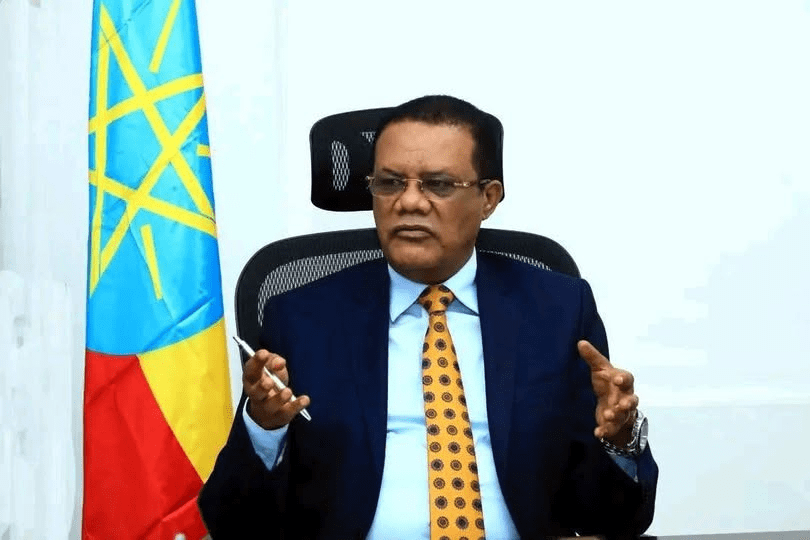
In the quiet corridors of the Federal Institute of Law and Justice, Ambassador Dagifee Bulaa speaks with the measured precision of a man who has spent decades navigating the complex intersections of justice, diplomacy, and national transformation. As the current Director of Ethiopia’s Federal Institute of Law and Justice, his voice carries the weight of experience—from serving as ambassador to Uganda, Rwanda, Burundi, and the Democratic Republic of Congo to leading the Ethiopian Football Federation and media oversight.
But today, on the eve of Ethiopia’s seventh national election, his message is both urgent and timeless: “In an election, the people must understand that every single vote is decisive, and they must participate.”
Building Justice from the Ground Up
The Federal Institute of Law and Justice, under Ambassador Dagifee’s leadership, operates on four fundamental pillars: conducting research on justice sector issues, providing training to legal professionals, collecting evidence from various jurisdictions, and spearheading comprehensive reform efforts.
“We don’t just conduct research and leave it on a shelf,” Ambassador Dagifee explains from his office in the Ayat area of Addis Ababa. “Our research has directly contributed to reforming legal procedures, including the long-overdue revision of the Criminal Procedure Law that served for over sixty years.”
What sets the Institute apart is its three-tiered training approach—a comprehensive system designed to transform theoretical legal education into practical, applied justice. Newly appointed judges and legal professionals undergo nine months of intensive training before ever hearing a case. Sitting judges receive five-to-ten-day refresher courses. And practicing lawyers must complete five days of paid continuing education annually to maintain their licenses.
Perhaps most striking is the Institute’s embrace of technology. “We have now implemented E-learning platforms,” Ambassador Dagifee notes. “Judges and legal professionals can complete their assignments from wherever they are, receiving their certifications without disrupting their court schedules.”
A Dictionary for Justice
One of the Institute’s most ambitious projects has been the creation of the first-ever comprehensive Oromo language law dictionary—the “Walabu Law Dictionary”—alongside an updated Amharic version completed two years ago.
This was no academic exercise. Ambassador Dagifee recounts the urgent need: “For too long, legal terminology has been interpreted inconsistently across different regions. A term that works in Shawa might cause confusion in Wallagga, Boorana, Gujii, Arsi, or Hararge. When a judge’s decision affects someone’s property and very life, precise understanding of legal terms is not optional—it is essential.”
The dictionary took two and a half years to complete, bringing together legal scholars, linguists, and practitioners from across Oromia. “This is unprecedented in Ethiopia,” he says with pride. “Not just in quality, but in scope. And it is available in both print and soft copy, ensuring accessibility for judges, lawyers, police, and anyone working in the justice system who works in Oromo.”
The Justice Sector’s Electoral Duty
As Ethiopia prepares for its seventh national election, Ambassador Dagifee emphasizes the critical role of justice sector institutions in ensuring the process is democratic, fair, peaceful, and free.
The Institute recently convened a symposium for judges and legal professionals specifically focused on their electoral responsibilities. “The role of four key institutions—NEBE, police, prosecutors, and courts—is paramount,” he explains.
The electoral board creates the enabling environment. Police ensure security around polling stations. Prosecutors investigate and refer any electoral disputes to the courts. And the courts adjudicate based on electoral law.
“The election has proceeded peacefully so far,” Ambassador Dagifee observes. “Both parties and individuals have been given the opportunity to compete wherever they wish. Even those who have stepped back, perhaps doubting their chances of victory, must remain engaged.”
On Federalism and National Unity
Some political parties have argued that Ethiopia’s federal system divides rather than builds. Ambassador Dagifee disagrees—but with an important qualification.
“Twenty-eight countries worldwide, including the United States, Canada, Germany, and Nigeria, operate under federal systems. There is nothing unique about Ethiopia’s federalism that makes it inappropriate for our context.”
He continues: “Properly implemented, federalism allows regions to govern themselves while uniting under a national framework. The problem has never been federalism itself, but how it has been implemented. We have not adequately focused on what binds us as one nation.”
A Final Appeal
As our interview concludes, Ambassador Dagifee returns to the eve of the election with a final message to every Ethiopian holding a voter card.
“The election belongs to all the people of this country. Every citizen who holds a voter card must cast their vote. Our hope is that tomorrow’s election will be peaceful, democratic, fair, and free for every Ethiopian.”
His words echo through the Institute’s modern facility—a 10,000 square meter campus built with 3.5 million Euros of European Union support, complete with training halls, dormitories, cafeteria, library, E-learning studio, and a 40 million Ethiopian birr borehole.
But the most important resource, Ambassador Dagifee would argue, is not in the buildings or the technology or even the new law dictionary. It is in the hands of millions of Ethiopian voters, each holding a single vote, each deciding to make their voice heard.
=======
This feature story was developed from an interview conducted by Bariisaa Newspaper’s Natsaannat Taaddasa on May 23, 2018

The Asmara Enigma: What Does Eritrea’s Power Signify, and What Does It Seek?
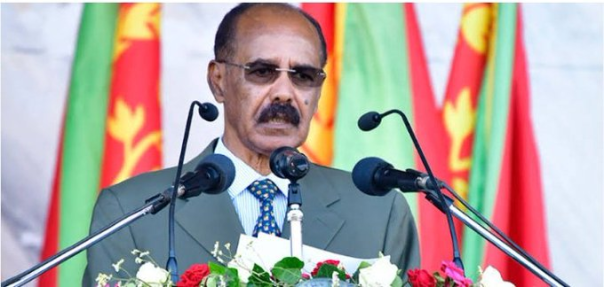
By Daandii Ragabaa
In the turbulent landscape of the Horn of Africa, few actors are as consistently consequential—and as persistently misunderstood—as Eritrea. A small nation of approximately 6.3 million people, with a modest economy and a military that punches significantly above its weight, Eritrea has nonetheless woven its influence through nearly every major geopolitical conflict in the region . From Ethiopia’s internal convulsions to Sudan’s protracted war and Somalia’s fragile transitions, Asmara’s role—direct or indirect—has repeatedly surfaced at moments of regional stress .
This presents a strategic puzzle. How does a state with limited economic weight and modest demographic size exercise such persistent regional impact? Why does Eritrea appear consistently aligned with fault lines rather than with stability and integration platforms? And most critically: What does Eritrea’s power signify, and what does it seek?
The answers are not found in simplistic narratives of irrationality or isolation. Instead, a sharper diagnosis is required—one that recognizes Eritrea’s external conduct as reflecting a deliberate survival doctrine in which regional fragmentation serves as strategic depth .
The Asmara Doctrine: Survival Through Fragmentation
To understand what Eritrea seeks, one must first understand how it perceives the world. For Asmara, the most significant threat is not territorial invasion. It is structural encirclement by consolidated neighboring states capable of projecting economic, political, or ideological influence inward .
A confident Ethiopia pursuing reformist leadership, a unified Sudan embedded in external alliances, or a stabilized Somalia anchored in international security frameworks—each of these presents distinct risks to Eritrea’s tightly controlled domestic order. The consolidation of strong, institutionally coherent neighboring states introduces long-term challenges to a regime whose survival depends on managed siege mentality .
In this calculus, fragmentation offers insulation. Divided or internally preoccupied neighbors lack the capacity to coordinate sustained pressure or export alternative governance models. Fluidity in the regional environment enhances the relative value of Eritrea’s centralized command structure and military discipline. This does not imply a desire for chaos. Rather, it reflects a preference for a strategic landscape in which no single neighboring state accumulates overwhelming coherence or leverage .
Regional integration—particularly when tied to institutional harmonization, economic transparency, or political conditionality—can expose internal vulnerabilities. Fragmentation, by contrast, preserves autonomy. This is the Asmara Doctrine: regime survival through managed regional fragmentation .
The Securitized State: From Liberation to Permanent Mobilization
Eritrea’s foreign policy cannot be separated from its internal formation. The state emerged from a decades-long liberation struggle defined by discipline, hierarchy, and strategic patience. The transition from insurgency to sovereignty did not dissolve these traits; it institutionalized them .
National service became more than a defense policy. It evolved into a mechanism of political consolidation and social control. Political pluralism was indefinitely deferred in favor of unity under threat. The experience of existential conflict—first during liberation, then in the 1998–2000 border war with Ethiopia—embedded siege mentality into statecraft .
The prolonged “no-war-no-peace” period that followed reinforced this orientation. Border militarization and diplomatic isolation hardened threat perceptions. Sanctions deepened the conviction that vulnerability invited coercion. Over time, securitization became permanent rather than exceptional. Under such conditions, foreign policy ceased to be an arena for economic growth or cooperative expansion. It became an extension of regime preservation .
Today, Eritrea maintains an estimated 350,000 active personnel and 680,000 reservists out of a population of just over 6 million—one of the highest military-to-population ratios in the world . This massive mobilization is not merely defensive. It is the structural backbone of a state that organizes society around permanent readiness.
What Eritrea Seeks: A Framework of Strategic Objectives
Based on its actions, alliances, and historical trajectory, Eritrea’s strategic objectives can be understood across several interconnected dimensions.
1. Sovereignty as Absolute Priority
Since achieving independence, Eritrea has adopted an uncompromising approach to national sovereignty. The state exhibits heightened sensitivity toward any regional or international frameworks that could be interpreted as encroachments upon its internal affairs . This perception is rooted in past experiences in which regional organizations supported international measures—including sanctions—targeting Eritrea .
Sovereignty, for Eritrea, is not negotiable. It constitutes the cornerstone of foreign policy. Any arrangement that appears to cede decision-making authority to external bodies is viewed with deep suspicion. This explains Eritrea’s strained relationship with IGAD and its eventual withdrawal from the organization in December 2025—only two years after rejoining .
2. Prevention of Regional Encirclement
Eritrea’s primary strategic anxiety is the emergence of a coherent bloc of neighboring states aligned with external powers that could coordinate pressure against Asmara. A re-centralized and economically dynamic Ethiopia with regional leadership ambitions introduces long-term strategic risk. A consolidated Sudan aligned firmly with external actors could recalibrate strategic balances .
Thus, Eritrea’s posture toward its neighbors oscillates between tactical alignment and guarded distance. It is neither unconditional partnership nor entrenched hostility. It is calibration. The objective is not domination but prevention of configurations that compress Eritrea’s maneuver space .
3. Red Sea Relevance and Strategic Leverage
Eritrea controls a long Red Sea coastline, sits opposite Saudi Arabia, and occupies a decisive position in the corridor linking the Horn, the Gulf, and the wider maritime-security ecosystem . Its geography gives Asmara leverage that few regional actors can ignore.
Recent developments underscore Eritrea’s strategic pivot toward Red Sea governance. In May 2026, Egypt and Eritrea signed a groundbreaking maritime transport cooperation agreement, reaffirming their shared stance that Red Sea security is the exclusive responsibility of its littoral states . The agreement, signed during a high-level Egyptian delegation visit to Asmara, includes establishing a shipping line connecting Egyptian and Eritrean ports .
Egyptian Foreign Minister Badr Abdelatty emphasized that “the governance and security of the Red Sea are the exclusive responsibility of its littoral states,” firmly rejecting any attempts by outside parties to impose security arrangements . This alignment with Egypt—a major regional power with its own tensions with Ethiopia over Nile waters—positions Eritrea as a key player in Red Sea geopolitics.
4. Preservation of Domestic Order Through External Fluidity
Eritrea’s operating model links domestic militarization with external maneuvering. Indefinite national service sustains a highly securitized state structure; political closure reduces internal accountability; and regional disruption then becomes a mechanism for projecting strength outward while insulating the regime at home .
In this sense, Eritrea’s foreign policy cannot be separated from its domestic architecture. The same state that organizes society around permanent mobilization also benefits from a neighborhood kept under strategic pressure. Fragmentation serves as strategic depth—preserving maneuver space and preventing the emergence of pressures that could challenge the internal order .
Strategic Partnerships: Egypt, the Gulf, and Beyond
Eritrea has cultivated strategic partnerships that enhance its regional leverage while avoiding deep institutional entanglement. The emerging alliance with Egypt is particularly significant.
The Egypt-Eritrea alignment is rooted in shared concerns about Red Sea governance, opposition to non-littoral state involvement in maritime security, and, implicitly, a shared strategic perspective on Ethiopia . Egypt has expressed full support for Eritrea’s “sovereignty, unity, and territorial integrity”—a position President Abdel-Fattah El-Sisi personally reaffirmed when President Isaias Afwerki visited Cairo in October 2025 .
President Afwerki, for his part, has praised Egypt’s active regional role and reaffirmed Eritrea’s commitment to strengthening coordination with Cairo across political, economic, and security domains . The relationship is described not as a new beginning but as the latest chapter in a long and substantive partnership.
This alignment gives Eritrea a powerful patron at a time when its relations with other neighbors remain fraught. It also positions Asmara as a gatekeeper in Red Sea geopolitics—a role that external powers, including the United States, appear increasingly willing to accommodate .
The “Licensed Spoiler” Debate
Eritrea’s strategic posture has attracted significant international attention, particularly regarding potential shifts in U.S. policy. According to a Reuters report published in May 2026, the United States is preparing to remove sanctions on Eritrea, with analysts linking the move to Asmara’s strategic location along Red Sea shipping routes and Washington’s interest in easing regional tensions .
This prospect has generated concern among regional observers. As the Institute of Foreign Affairs has argued, a policy designed to stabilize a volatile frontier may end up rewarding a state whose regional posture has repeatedly complicated the very stability Washington seeks to preserve . The concern is not whether Eritrea matters—it clearly does. The concern is whether Washington is converting Eritrea’s strategic geography into diplomatic impunity.
The term “licensed spoiler” has emerged to describe this dynamic: an actor with a record of disruption is not rehabilitated because its conduct has clearly changed, but because external powers decide that its geography has become too valuable to ignore. The spoiler is not transformed. It is repackaged as a necessary partner. Its leverage rises precisely because the surrounding security environment deteriorates .
What Eritrea Does Not Seek
To understand Eritrea, it is equally important to recognize what it does not seek. Eritrea is not pursuing economic integration in any meaningful sense. Its development model, anchored on self-reliance and national ownership, prioritizes domestic resilience over regional interdependence . The state has shown little interest in the kind of cross-border infrastructure, trade liberalization, or institutional harmonization that defines conventional regional integration.
Eritrea is not seeking democratic transformation—either for itself or for its neighbors. Political pluralism has been indefinitely deferred. The export of governance models is not on the agenda. What Eritrea seeks from its neighbors is not ideological conformity but strategic fragmentation that preserves Asmara’s relative insulation.
Eritrea is not seeking institutional engagement. Its withdrawal from IGAD, its marginal participation in African Union mechanisms, and its general skepticism toward multilateral frameworks all point to a preference for bilateral, ad hoc arrangements over binding institutional commitments .
Implications for the Horn of Africa
If regime survival through fragmentation remains Eritrea’s guiding principle, the implications for the Horn are profound.
First, security transitions will remain fragile. Efforts to consolidate post-conflict settlements in Ethiopia, Sudan, or Somalia may encounter recalibrations that preserve Eritrea’s maneuver space. A neighbor that benefits from fluidity is unlikely to be a reliable partner for stabilization .
Second, multilateral institutions face silent constraints. Organizations seeking consensus-driven integration depend on baseline convergence among member states. A key actor operating from insulation logic complicates harmonization. IGAD’s difficulties in mediating Ethiopia-Eritrea tensions reflect this structural challenge .
Third, infrastructure-led integration—corridors, ports, energy grids—requires political confidence. Fragmentation erodes the trust necessary for durable interdependence. Ethiopia’s pursuit of maritime access, for example, unfolds in a context where its most direct neighbor views Ethiopian economic dynamism as a strategic risk .
Fourth, external powers navigating Red Sea competition must account for Eritrea’s asymmetric influence. Engagement strategies that ignore Asmara risk misreading regional dynamics. However, engagement without conditionality risks rewarding disruptive behavior .
Conclusion: A System Under Negotiation
The Horn of Africa is undergoing contested reordering. Sovereignty, integration, and external competition intersect across shifting arenas. Within this landscape, Eritrea occupies a paradoxical role: materially limited yet strategically consequential.
What does Eritrea’s power signify? It signifies the enduring relevance of geography, the persistence of siege mentalities, and the uncomfortable truth that fragmentation can serve as strategic depth for states that equate openness with vulnerability.
What does Eritrea seek? At minimum, it seeks regime survival through managed regional fragmentation—a strategic landscape in which no neighboring state accumulates overwhelming coherence or leverage. At maximum, it seeks to convert its Red Sea coastline into permanent strategic relevance, securing external partnerships that enhance its leverage without binding it to institutional constraints .
Whether the Horn can move toward negotiated interdependence without triggering survival reflexes in one of its most militarized states remains uncertain. The Asmara Doctrine endures because it aligns internal regime logic with external maneuver. The region’s broader transition will depend on whether that alignment can be recalibrated—or whether fragmentation continues to serve as strategic depth in a system still struggling to consolidate coherence .
For Ethiopia, for the Horn, and for external powers navigating this complex arena, the challenge is not simply to condemn disruption but to redesign incentives. Stability must cease to appear threatening to those who equate openness with exposure. And engagement must be conditional, anchored in regional architecture, and designed to pull Eritrea into a rules-based framework rather than simply accepting its role as a hard-edged gatekeeper on the Red Sea .
The Asmara enigma endures. Its resolution will shape the Horn for decades to come.

Surrounded by Empowerment: The Circle of Success
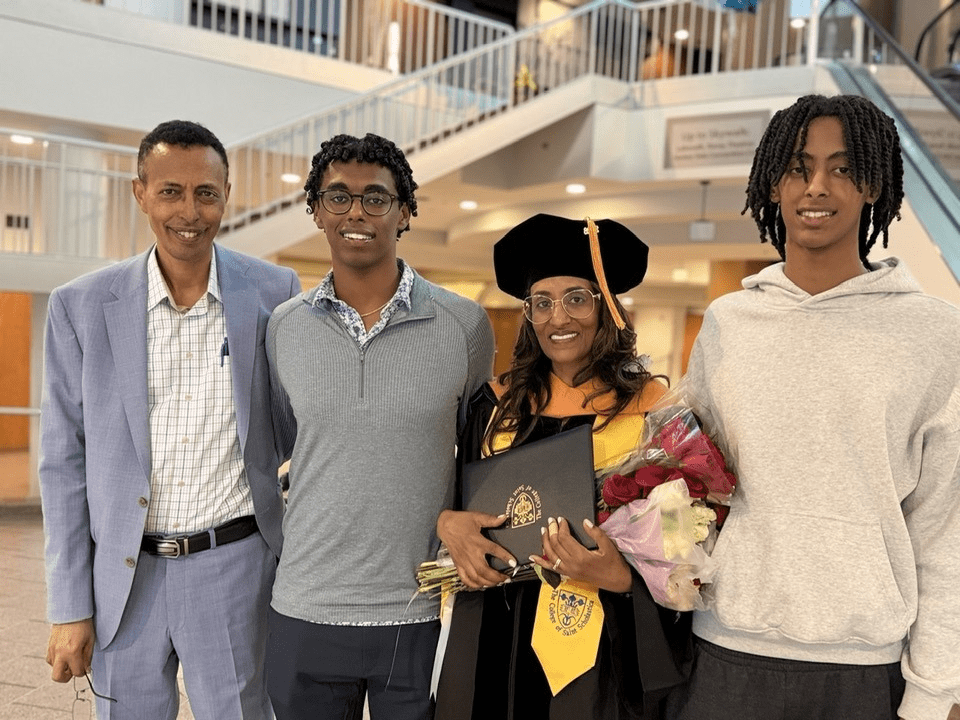
“Yeroo namoota si humneessan, jajjabeessanii fi deeggaraniin marfamtu, akka milkooftu shakkiin hin jiru.”
“When you are surrounded by people who empower you, encourage you, and support you, there is no doubt that you will succeed.”
—
By Dhabessa Wakjira*
The Circle of Success: Why No One Rises Alone
There is a quiet truth that survivors know, that athletes whisper before championships, that artists carry into their studios, and that revolutionaries feel in the dark hours before dawn: success is never a solitary act.
The Oromo people, with their deep wisdom of community, have long understood this. Their proverb rings like a bell across generations: “Yeroo namoota si humneessan, jajjabeessanii fi deeggaraniin marfamtu, akka milkooftu shakkiin hin jiru.”
When you are surrounded by people who empower you, encourage you, and support you, your success is not a matter of hope. It is a matter of certainty.
This feature story explores the anatomy of that circle—what it means to be empowered, what it looks like to be encouraged, and why support is not a luxury but a necessity for any human being daring to achieve something meaningful.
The Three Pillars of the Circle
The proverb names three distinct gifts that others bestow upon us. They are not the same. And each is indispensable.
Humneessan: Those Who Empower You
To empower is not merely to praise. It is to provide the tools, the resources, the access, and the authority that a person needs to act. Empowerment says, “I believe in you—and here is what you need to prove me right.”
Think of the mother who sells her last chicken to buy a notebook for her daughter. Think of the teacher who stays after school to explain a difficult lesson for the third time. Think of the community that pools its meager savings to send one promising student to university. These are acts of empowerment. They are not abstract. They are hands reaching down to lift another up.
Jajjabeessan: Those Who Encourage You
Encouragement is the oxygen of the human spirit. It costs nothing materially, yet it is often the rarest gift of all. The encourager says, “You are not alone. You are not wrong to try. You are not foolish to dream.”
In the long journey of any struggle—whether against political oppression, personal trauma, or professional failure—there are moments when the only thing keeping a person moving forward is a voice saying, “You can do this. I have seen you do hard things before. You will see the other side.”
The Oromo struggle, like all liberation movements, has been sustained not only by weapons and strategies but by songs, by poems, by whispered words of encouragement passed from cell to cell, from village to village, from mother to child.
Deeggaraniin: Those Who Support You
Support is the scaffolding. It is not flashy. It does not seek recognition. But without it, the entire structure collapses. Supporters show up. They cook meals when you are too exhausted to cook. They watch your children when you must attend a meeting. They contribute money when your resources run dry. They defend your name when you are not in the room to defend yourself.
Support is the quiet architecture of every successful life. And it is almost always invisible to the outside world.
The Myth of the Self-Made Person
Western culture, in particular, has elevated the myth of the “self-made” individual—the lone genius, the solitary warrior, the entrepreneur who pulled himself up by his own bootstraps. It is a seductive story. It is also a lie.
No one is self-made. Every successful person stands on a foundation laid by others. Every champion was once a beginner who was coached. Every leader was once a follower who was mentored. Every revolutionary was once a child who was fed, protected, and taught to dream.
The Oromo proverb cuts through this myth with the precision of a blade. It does not say “if you are strong, you will succeed.” It does not say “if you work hard enough, you will succeed.” It says: when you are *surrounded*—by empowerers, encouragers, and supporters—success is inevitable.
The focus is not on the individual. The focus is on the circle.
What Happens in the Absence of the Circle
To understand the power of the circle, one must also understand the devastation of its absence.
What happens to a child who is never empowered? They grow into an adult who does not believe they have the right to act, to speak, to claim space.
What happens to a person who is never encouraged? They become paralyzed by self-doubt, convinced that their efforts are worthless, that their dreams are ridiculous, that failure is the only possible outcome.
What happens to a community that receives no support? It fragments. It turns inward. It cannibalizes its own hope.
The absence of the circle is not merely disappointment. It is a form of slow death. It is the death of potential, the death of possibility, the death of the future.
This is why oppression is so effective. Oppressive systems do not merely take away resources. They isolate. They silence. They ensure that the empowered, the encouraged, and the supportive are removed from your side. They leave you alone—because a person alone is a person easily defeated.
The Circle in the Oromo Struggle
The history of the Oromo people is a history of circles. Under successive regimes that sought to divide, conquer, and erase, the Oromo have survived precisely because they have refused to let each other stand alone.
Think of the Gadaa system—an indigenous democracy built not on individual ambition but on collective responsibility. The Gadaa circle rotates power, shares knowledge, and ensures that no leader governs without the counsel of elders, the wisdom of the Qaalluu, and the consent of the assembly.
Think of the Siinqee institution—women gathering under the sacred staff to demand justice, to halt conflicts, to protect the vulnerable. That is a circle of empowerment, encouragement, and support.
Think of the afooshaa (burial societies) and buusaa gonofaa (savings rotations)—grassroots institutions where ordinary people pool their meager resources to ensure that no family faces death or poverty alone.
These are not charities. These are circles of survival. And they have kept the Oromo people alive through conquest, through famine, through imprisonment, and through exile.
The Modern Circle: Rebuilding What Was Broken
In the contemporary world, the forces that break circles have only grown stronger. Urbanization scatters families. Economic pressure forces migration. Social media creates the illusion of connection while eroding the substance of community.
Many Oromo today find themselves far from the villages of their ancestors, far from the elders who carry the oral histories, far from the physical presence of those who speak their language and share their struggles. The circle has been stretched thin.
But the proverb does not despair. It insists on a truth that cannot be broken: when the circle is present, success is certain. The task, then, is to rebuild the circle. To find new forms of empowerment, new voices of encouragement, new structures of support.
This is happening. In diaspora communities across the globe, Oromos are gathering in living rooms, in community centres, in virtual meeting spaces. They are teaching their children the language that was once forbidden. They are creating media, art, and scholarship that centre Oromo experience. They are sending money home, advocating for justice abroad, and refusing to let distance destroy the bonds of mutual care.
What the Circle Asks of You
If the proverb describes the conditions for success, it also implies a responsibility. To be surrounded by empowering, encouraging, supportive people, you must also be willing to be that person for others.
You cannot demand a circle that you are unwilling to join.
The circle asks: Whom have you empowered today? To whom have you spoken words of encouragement? Whose burdens have you lightened through your quiet, unglamorous support?
Success is not a trophy you receive. It is a current that flows through a network of relationships. You are either part of that current—receiving and giving—or you are standing outside, wondering why the water never reaches you.
Stories from the Circle
Consider the young Oromo woman who wanted to become a doctor. Her family had no money. Her village had no clinic. But her mother empowered her by selling the family’s only cow. Her teacher encouraged her by staying late to tutor her in science. Her community supported her by raising funds for her university application. Today, she is a physician. She did not succeed alone. She succeeded because a circle held her.
Consider the political prisoner who spent seven years in a dark cell. He was tortured. He was isolated. But he later said that the reason he survived was the letters—smuggled, infrequent, but relentless—from his wife. She empowered him by reminding him of his worth. She encouraged him by describing the future they would build together. She supported him by keeping the children alive on the outside. His survival was not his alone. It was hers, too.
Consider the artist whose work was ridiculed by critics. She nearly gave up. But a friend—just one friend—said, “This is important. Do not stop.” That friend spent months helping her find galleries, connecting her with other artists, sitting with her through rejection after rejection. Today, that artist’s work hangs in museums. The friend’s name appears nowhere. But the friend was the circle.
The Certainty of Success
The proverb ends with a bold claim: *shakkiin hin jiru* — there is no doubt.
This is not the language of wishful thinking. It is the language of empirical observation. The proverb is not saying “if you have a circle, you might succeed.” It is saying “if you have a circle, you will succeed.”
Why such certainty? Because human beings are not islands. We are not designed to achieve alone. When the conditions of empowerment, encouragement, and support are present, failure becomes nearly impossible. Not because the path is easy—it never is—but because the circle absorbs the blows that would otherwise destroy the individual.
When you stumble, the circle catches you. When you despair, the circle lifts you. When you are attacked, the circle defends you. With such a structure around you, how could you not eventually reach your goal?
Conclusion: Building the Circle, Securing the Future
The Oromo people are engaged in a long struggle for recognition, justice, and self-determination. There will be setbacks. There will be betrayals. There will be moments when the darkness seems absolute.
But the proverb offers a strategy and a promise.
The strategy: surround yourself—and surround each other—with empowerment, encouragement, and support. Build the institutions that sustain the circle. Be the person who empowers, encourages, and supports, even when you are tired, even when you have received nothing in return.
The promise: when that circle is in place, success is not a question of *if*. It is only a question of *when*.
*Yeroo namoota si humneessan, jajjabeessanii fi deeggaraniin marfamtu, akka milkooftu shakkiin hin jiru.*
When you are surrounded by people who empower you, encourage you, and support you, there is no doubt that you will succeed.
Let the circle hold. And let the success come.
—
No one rises alone. But when we rise together, no power on earth can keep us down.
*Dhabessa Wakjira is a journalist, social worker, community worker, and interpreter who writes commentary, features, analysis, and reflections on issues that build and empower the Oromo people and their affairs. Dhabessa Wakjira can be reached at dabessa@socialworker.net

Standing Alone, Standing Proud: The Quiet Defiance of Najat Sakaye Hamza
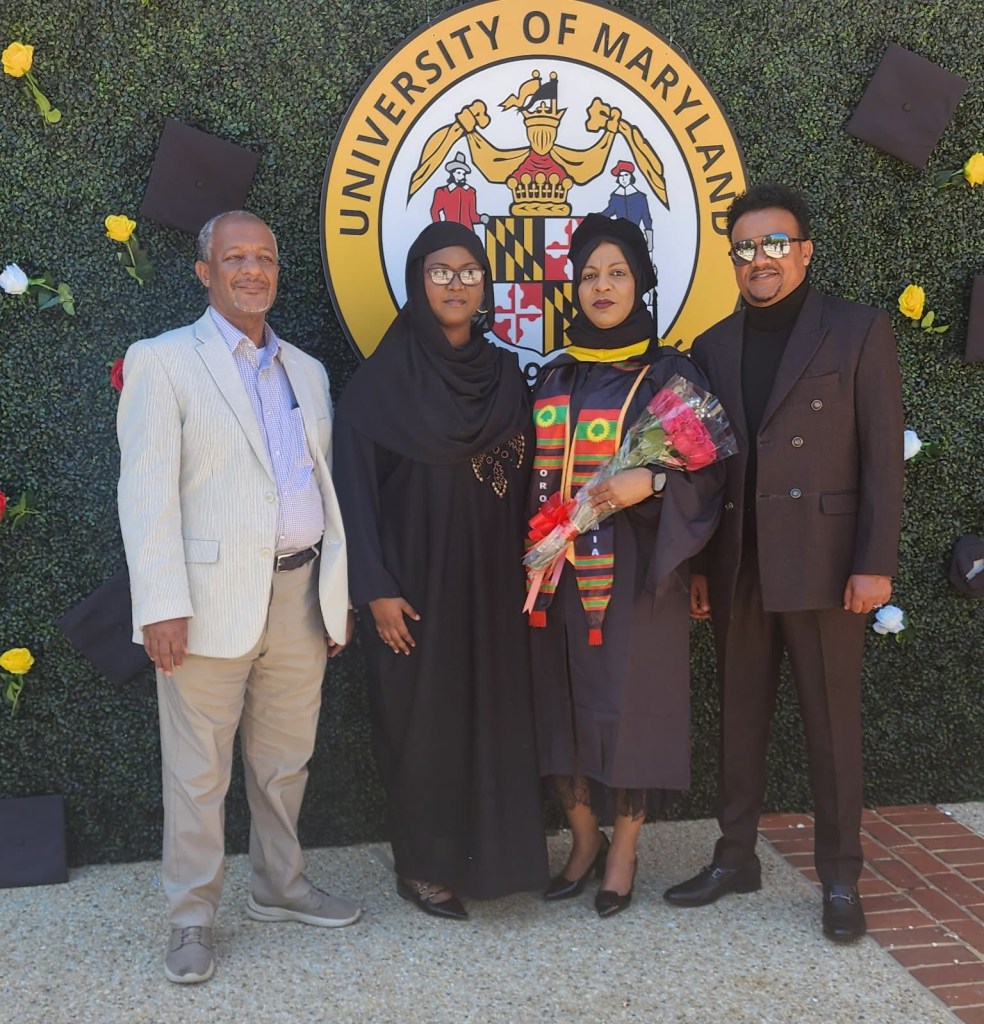
By Dhabessa Wakjira* (based on a reflection by Najat Sakaye Hamza)
“My life is about standing for my dreams even if it means standing alone sometimes.”
—
There is a photograph that Najat Sakaye Hamza keeps on her phone, not as a screensaver but as a secret talisman. In it, she is young—perhaps nineteen—sitting on a worn suitcase in a bus station somewhere between Oromia and the unknown. Her face is tired. Her eyes are not. She is leaving something behind, though she is not yet sure what she is walking toward.
Years later, she would find the words to describe that moment. “My life,” she would write, “is about standing for my dreams even if it means standing alone sometimes.”
Najat Sakaye Hamza is not a politician. She is not a general or a public intellectual in the traditional sense. She is, by her own definition, a woman who decided that the cost of kneeling was higher than the risk of standing. And in that decision, she has become something quietly revolutionary: an example.
This is her story—not of power, but of persistence. Not of armies, but of a single voice that refused to be absorbed into the noise.
—
The Education of a Dreamer
Born into an Oromo family that valued resilience over complaint, Najat learned early that dreams require rent. They do not live in the mind for free. They demand time, sacrifice, and the ability to endure the puzzled looks of those who cannot see what you see.
She was a curious child in a world that often punished curiosity in girls. She asked questions that made elders uncomfortable. She wanted to study when marriage was the expected path. She wanted to speak when silence was the safer option. And so, early on, she learned to stand alone.
“Representing who I am everywhere I am and in any situation,” she would later reflect, “is my quiet protest and my pride.”
That quiet protest took many forms. In classrooms where her language was dismissed, she learned two more. In workplaces where her identity was questioned, she performed her duties with an excellence that left no room for debate. In social settings where Oromo women were expected to be seen and not heard, she spoke—not loudly, but clearly.
The Loneliness of the Standing Woman
There were years when standing alone felt less like courage and more like punishment. Friends drifted away, unable to understand why she could not simply “fit in.” Relatives suggested she was too proud, too political, too difficult. There were nights, she has admitted privately, when she wondered if they were right.
But she kept standing. Not because it was easy, but because the alternative—sitting down, blending in, disappearing—was a kind of death she refused to accept.
She found sustenance in her faith. Alhamdullilah, she would whisper. Thank God for this moment, for this day. Gratitude became her anchor. Not gratitude for the struggle itself—that would be romantic nonsense—but gratitude for the fact that she was still upright, still breathing, still capable of taking the next step.
And then, the steps began to lead somewhere.
A Family That Stands Together
The photograph on her phone now is different. In the newer image, Najat is not alone. She is holding a baby—her daughter, Seran—and beside her stands her husband, Sabsib. There is a softness in this picture that the bus-station photo lacks. The tired eyes have been replaced by something warmer: not rest, but purpose.
“I get to share this moment with my baby, Seran, and my amazing husband Sabsib,” she wrote. The word amazing is not casual. It is the recognition that finding a partner who does not ask you to shrink is a miracle as profound as any in scripture.
Sabsib, by all accounts, is a man who never asked Najat to be smaller. He met her when she was already standing, and he chose to stand beside her rather than in front of her. Together, they have built a home where Seran is being raised to know that her mother’s quiet protests are not embarrassments but inheritances.
The Work Behind the Dream
Najat is careful to demystify her own journey. She has no patience for the myth of the self-made dreamer who simply wished upon a star.
“Dream realization belongs to those who work to achieve it,” she insists.
The work was unglamorous. Early mornings. Late nights. Jobs that had nothing to do with her passions but paid for the rent while she pursued her passions on the side. Rejection letters. Doors that closed. People who said “no” so many times that the word lost its sting.
But she kept working. And eventually, the work began to answer back.
She found platforms to speak about the Oromo experience, about the specific weight that Oromo women carry, about the need for community and also for the courage to stand outside the community when the community is wrong. She wrote. She organized. She showed up to meetings where she was the only Oromo face in the room—and spoke anyway.
Quiet Protest as a Way of Life
There is a phrase in the Oromo language: of-beekuu—to know oneself. Najat Sakaye Hamza has made of-beekuu her compass. To represent who she is, everywhere she is, regardless of the situation, requires a deep and unshakable self-knowledge. It requires knowing what you believe before the test arrives.
That is her quiet protest. Not shouting from a rooftop (though she has done that too, when necessary). But living, daily, as a visible, proud, unapologetic Oromo woman who happens to also be a mother, a wife, a professional, and a believer.
“Pride,” she says, “is not the opposite of humility. Pride is knowing that your existence has value, and refusing to act as if it doesn’t.”
The Moment She Is Living Now
On the day she shared her reflection, Najat was not marking a major public victory. There was no award ceremony, no signed legislation, no standing ovation. She was simply pausing—with her baby in her arms and her husband nearby—to say Alhamdullilah. Thank God for this moment. Thank God for this day.
It is a radical act, in a world that demands constant striving, to stop and give thanks. To acknowledge that the dream is not only in the future but also in the present—in the weight of a child, the steadiness of a partner, the simple fact of still being here, still standing.
The Legacy of the Standing Woman
Najat Sakaye Hamza is not famous. You will not find her name in the headlines of major newspapers, nor her face on the covers of magazines. She is, in the best sense, ordinary—an ordinary woman who decided that ordinary was not the same as invisible.
And that is precisely why her story matters. Because most of us will never be revolutionaries with monuments. Most of us will never speak before the United Nations. Most of us will struggle, in quiet and unglamorous ways, to hold onto our dreams in the face of pressure to let them go.
Najat’s life is a letter to those people. It says: Stand. Even if you stand alone. Even if no one applauds. Even if the only witness to your standing is God and the child sleeping in the next room.
And then, when the moment comes, stop standing long enough to say thank you.
Epilogue: The Unfinished Sentence
At the end of her reflection, Najat does not declare victory. She does not announce the completion of her dreams. She simply shares the moment—a moment that contains her daughter, her husband, her faith, and her own still-standing self.
The sentence is not finished, because her life is not finished. There will be more lonely days. More quiet protests. More mornings when the dream feels distant and the work feels endless.
But there will also be more Alhamdullilahs. More moments of sharing. More proof that standing for your dreams, even alone, eventually brings others to stand with you.
Najat Sakaye Hamza is still standing. Her daughter, Seran, is learning to stand. And somewhere, in a bus station or a boardroom or a quiet living room, someone who reads her words will decide to stand too.
That is not a small thing. That is everything.
—
Alhamdullilah for this moment. For this day. For the women who stand alone and discover they were never truly alone.
*Dhabessa Wakjira is a journalist, social worker, community worker, and interpreter who writes commentary, features, analysis, and reflections on issues that build and empower the Oromo people and their affairs. Dhabessa Wakjira can be reached at dabessa@socialworker.net

The Unbowed: Seenaa G-D Jimjimo and the Art of Refusing to Break
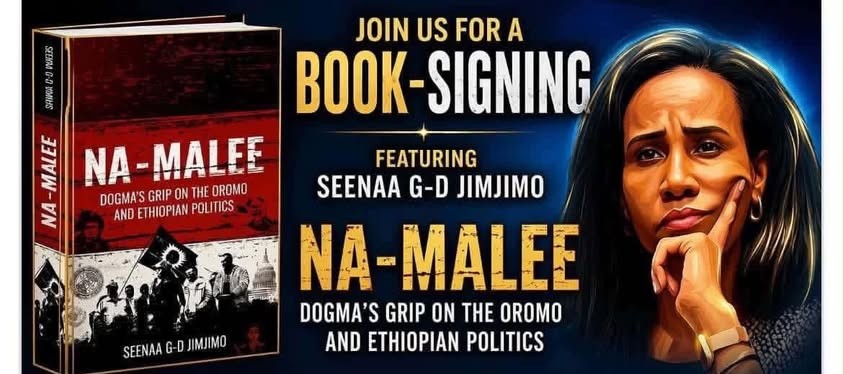
“Jabduu-dhiibbaan keessaa fi alaa kamiyyuu gadhinqabne.”
— “She did not bow to any pressure, from inside or outside.”
—
WASHINGTON, D.C. – In the polished corridors of the U.S. State Department, she speaks with the measured precision of a public health expert. In the dusty highlands of rural Oromia, she kneels beside girls who have never seen a classroom, handing them pencils and hope. And in the pages of her own writing, she dissects the lonely space between two worlds—the Oromo homeland she loves and the American life she built.
Her name is Seenaa G-D Jimjimo. For those who know only her acronym—OLLAA, the Oromo Legacy Leadership & Advocacy Association—she is the Executive Director who has briefed the White House, lobbied the U.K. Parliament, and helped steer House Resolution 128 into law. For those who know her heart, she is something rarer: a leader who has never forgotten that the loudest pressure comes not from external enemies, but from the whispers inside one’s own community to be silent, to be small, to bow.
And she has never bowed.
—
The Roots of Resistance
Born and raised in Oromia, Seenaa G-D Jimjimo grew up watching the slow, systematic strangulation of her people. The Oromo—the largest nation in the country—had been subjected to land confiscation, linguistic suppression, and political marginalization for generations. But it was the violence against Oromo women that carved the deepest wound into her young consciousness.
She saw neighbors dragged from their homes by Ethiopian security forces. She heard stories of girls, barely teenagers, who were arrested, abused, and never seen again. And she made a quiet promise to herself: I will learn. I will speak. And I will never look away.
That promise carried her across an ocean.
In the United States, she pursued higher education with a ferocity that astonished her professors. She earned an undergraduate degree in political science—the tool for understanding power. Then graduate degrees in public health and public administration—the tools for healing and organizing. At the University of Illinois, her peers elected her Senator at Large for the Graduate Student Association and treasurer for the African Student Organization. She was awarded the Dr. Martin Luther King Jr. Scholarship and the Whitney M. Young Fellowship—honors that recognized not just her intellect, but her commitment to justice.
But she was not content to remain in classrooms. The lessons she learned, she brought back to her people.
Forging a Leadership Legacy
Today, as Executive Director of the Oromo Legacy Leadership & Advocacy Association (OLLAA), Seenaa G-D Jimjimo oversees a global apparatus of advocacy. The organization does not simply issue press releases; it builds coalitions. It does not merely condemn human rights abuses; it documents them, presents them to international bodies, and demands accountability.
Under her leadership, OLLAA has engaged directly with the White House, the U.S. State Department, and the United Kingdom’s All-Party Parliamentary Group on Africa. She has sat across tables from diplomats who once could not locate Oromia on a map—and left those tables with commitments to investigate atrocities, support democratic reforms, and amplify Oromo voices.
One of her most significant achievements came through House Resolution 128. Introduced in 2017 and passed in 2018, the resolution urged respect for human rights and encouraged democratic changes in Ethiopia. It was not a sweeping victory—no single piece of legislation could undo a century of oppression—but it was a crack in the wall. And Seenaa G-D Jimjimo was among the key figures who pried that crack open, lobbying members of Congress, mobilizing the diaspora, and refusing to let the issue die.
“People think advocacy is glamorous,” she once told a young organizer. “It is not. Advocacy is showing up to the same office forty-seven times until someone finally agrees to listen. Advocacy is being told ‘no’ so often that the word loses its meaning. And then showing up again.”
The Danboobiduu Foundation: Building What Advocacy Cannot
But Seenaa G-D Jimjimo knows that laws and resolutions are not enough. They do not put food on a child’s table. They do not keep a rural girl in school when her family needs her labor.
That understanding gave birth to the Danboobiduu Foundation in 2014. Named after a cherished Oromo concept of nurturing and empowerment, the foundation focuses on one deceptively simple goal: keeping girls in school.
In rural parts of Oromia, young girls are often pulled from classrooms to work—in the fields, in domestic labor, sometimes in conditions that amount to exploitation. Early marriage remains a threat. Poverty makes education seem like a luxury. Danboobiduu intervenes with scholarships, mentorship, and community engagement, convincing families that a girl with a diploma is worth more than a girl with a dowry.
The foundation does not make headlines. It does not appear in congressional testimony. But for the hundreds of girls who have stayed in school because of its work, it is the difference between a future and a sentence.
The Writer as Truth-Teller
Beyond the boardrooms and the village paths, Seenaa G-D Jimjimo is also a writer. Her work is not the polished propaganda of a movement; it is the raw, searching reflection of a woman trying to diagnose her people’s wounds without romanticizing them.
Her book, The In-Between, addresses the cultural and social fractures that her community faces—the clash between tradition and modernity, the silence around internal problems, the difficulty of building a future when the past is still on fire. She writes about the Oromo Gadaa system, the ancient democratic governance model that predates many Western constitutions, and asks how its principles might be revived for a new generation.
She also writes about the pressures from inside—the fear of criticizing one’s own community, the reluctance to hold fellow Oromos accountable, the temptation to present a flawless front to the world. “We must tell the truth about our struggles,” she has written, “including the ones we inflict on ourselves. Only then can we be truly free.”
The Unfinished Work
Today, Seenaa G-D Jimjimo continues to balance multiple roles: Executive Director, public health specialist, keynote speaker, mentor, and commentator on African intellectual traditions. She is as comfortable discussing epidemiological trends as she is debating Oromo nationalism. She moves between Finfinnee and Washington, between the Gadaa council and the House Foreign Affairs Committee, with a fluency that seems almost effortless—until one remembers the weight she carries.
That weight is the memory of every Oromo woman who was silenced. Every political prisoner who did not emerge from the dungeon. Every child who never learned to read because her school was burned and her language banned.
And yet, she does not bow. Not to the pressure of despair. Not to the cynicism that says change is impossible. Not to the internal critics who accuse her of being too radical or not radical enough. Not to the external forces—states, lobbies, powerful men—who would prefer that she simply disappear.
“I did not bow to any pressure, from inside or outside.” Those words, carved into the identity of Seenaa G-D Jimjimo, are not a boast. They are a discipline. A daily decision to stand, even when standing requires more than one person should have to give.
The Legacy She Is Building
She will tell you, if you ask, that she is not a hero. She is a daughter of Oromia who happened to learn English, earn degrees, and find herself in rooms where decisions are made. She will tell you that the real heroes are the girls in the Danboobiduu program who walk two hours to school each morning, the mothers who hide Oromo books under their beds, the prisoners who refuse to name their comrades under torture.
But those girls and mothers and prisoners would say something different. They would say: She gave us a voice when we had none. She took our whispers and shouted them into the halls of power. She did not bow, and because she did not bow, we can stand.
Seenaa G-D Jimjimo’s story is not finished. The Oromo struggle is not finished. But every morning, in an office in the United States or a village in Oromia, she wakes up and chooses to continue. The pressure will come again—from inside, from outside, from the thousand small deaths of hope deferred. And she will refuse, again, to bow.
That is not a story of suffering. That is a story of unbending grace.
And to the woman who taught them to stand—honor upon honor.

The Hands That Build: Women and the Unfinished Work of Nation Building
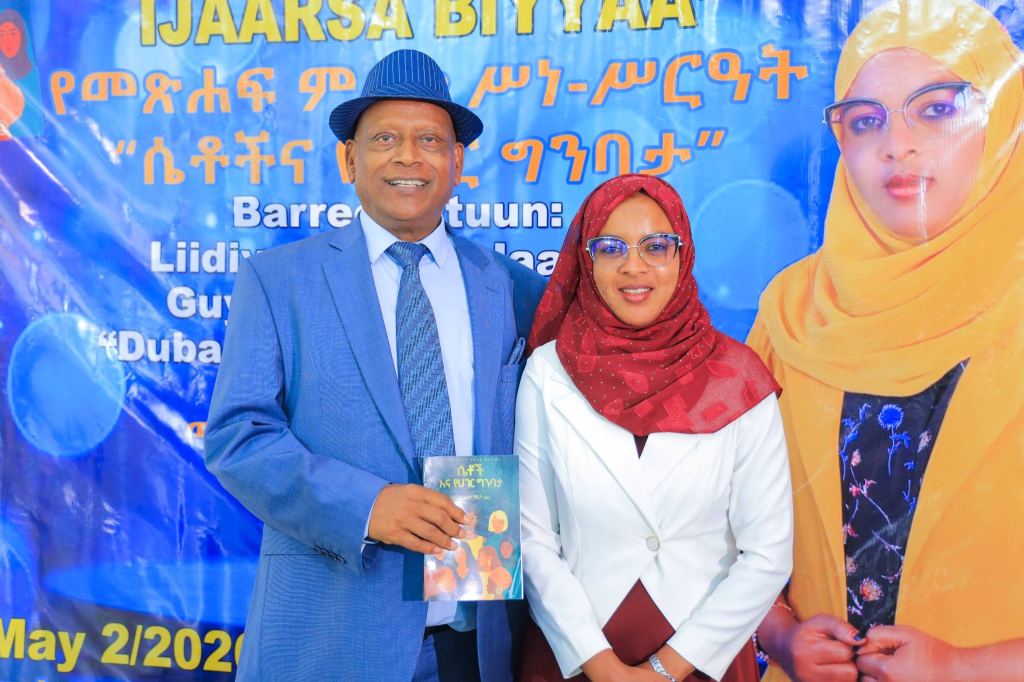
By Dhabessa Wakjira*
There is a proverb in many African cultures: “When a woman stumbles, the whole household trembles.” But the corollary is rarely spoken: when a woman rises, the entire nation ascends with her.
For generations, the story of nation building has been told as a masculine epic—a tale of warriors, kings, negotiators, and generals. Yet the quiet truth, known in every village and every home, is that nations are not built by speeches alone. They are built by hands that grind grain, by backs that bend over rivers, by voices that sing children into sleep and then rise at dawn to plant the seeds of tomorrow.
This feature story turns the lens on the women of Oromia and Ethiopia—not as victims, not as symbols, but as architects. It is a reflection on what it means to say dubartootaafi ijaarsa biyyaa: women and the construction of a country.
The Invisible Foundation
Walk into any rural household in Oromia before the sun has touched the horizon. Who is awake? The woman. She has already fetched water, kindled the fire, and begun preparing the marqaa that will fuel the day’s labor. By the time the first light breaks, she has completed a morning’s work that would exhaust a city dweller by noon.
This is not a scene from the past. This is the present. And it is the foundation upon which the national economy rests—unpaid, unacknowledged, and utterly indispensable.
Yet when we speak of “nation building,” we speak of parliaments, budgets, roads, and treaties. We speak of the visible architecture of power. The invisible architecture—the reproductive labor, the agricultural toil, the social cohesion woven through kinship networks—is left to women, and left out of the story.
Beyond the Domestic Sphere
To say “dubartootaafi ijaarsa biyyaa” is to make a claim that challenges this erasure. It is to insist that women are not merely beneficiaries of development or recipients of aid. They are active agents in the creation of the nation.
Consider the Gadaa system, the indigenous Oromo democracy. For centuries, it has been understood primarily as a male institution—five parties, eight years each, a cycle of power passed between generations of men. But what of the Siinqee? The institution of the Siinqee staff, carried by Oromo women, was not a decoration. It was a check on power. When a woman raised the Siinqee, disputes stopped. When women marched together, decisions were delayed until justice could be heard. The Siinqee was not outside the Gadaa; it was the conscience of the Gadaa.
This is the deeper meaning of women and nation building. It is not about “including women” in structures designed by men. It is about recognizing that women have always possessed their own structures, their own forms of authority, their own ways of holding the nation together when men—with their armies and their ambitions—pulled it apart.
The War Women Fight
In times of conflict, women are called the “first victims.” They bear the weight of displacement, of sexual violence, of watching their children starve. But they are also the first responders, the first rebuilders, the first to gather the scattered pieces of a shattered community.
The women of Oromia know this intimately. They have buried sons who fell in the struggle. They have visited husbands in prisons built by regimes that feared their names. They have fled across borders with infants on their backs and nothing else in their hands. And then, when the shooting stopped—or even before it stopped—they began to rebuild.
They formed iddir (burial associations) to ensure that the dead were honored. They formed iqqub (rotating savings groups) to send children back to school. They turned refugee camps into marketplaces, turning nothing into something, turning survival into life.
This is nation building. This is ijaarsa biyyaa.
The Politics of Presence
In recent years, the political landscape of Oromia and Ethiopia has shifted. Women have taken seats in parliament, ministries, and regional councils. The language of gender equality has entered the constitution, the party platforms, and the international donor reports.
These are victories. They are not empty.
But presence is not power. A woman sitting in a chair designed by a patriarchal system, following rules written by that same system, speaking a language that was never her mother tongue—this is not liberation. It is a foot in the door. And a foot in the door, while necessary, is not the same as building a new house.
The true work of dubartootaafi ijaarsa biyyaa lies deeper. It lies in asking: What would a nation look like if it were built not on competition but on care? Not on extraction but on cultivation? Not on the logic of the battlefield but on the logic of the kitchen—where resources are shared, where no one eats until everyone is served, where waste is a sin and generosity is survival?
These are not soft questions. They are revolutionary ones. And they are questions that women, who have been excluded from the official story of nation building, are uniquely positioned to ask.
The Double Burden
No honest reflection on women and nation building can ignore the double burden. Women are expected to build the nation while also building the home. They are told to lead, but only after they have cooked, cleaned, raised the children, and cared for the elderly. They are praised for their strength while being denied the rest that strength requires.
This is not sustainable. A nation that demands everything from its women while giving them nothing—no shared domestic labor, no affordable childcare, no protection from violence, no recognition for unpaid work—is a nation that is eating its own seed corn.
Ijaarsa biyyaa requires the bricks of justice. And justice begins at home.
The Young Girl and the Future
Imagine a girl born today in a rural village of Oromia. If she is lucky, she will go to school. If she is very lucky, she will finish. If she is extraordinarily lucky, she will find work, marry by choice, and live without fear of violence.
But luck is not a policy. And nation building is not a lottery.
The question before the Oromo people—before all Ethiopians—is whether they will continue to build their nation on the backs of women, or whether they will finally build with them, for them, through them.
The girl in that village has her hand on the future. She does not yet know the word “feminism.” She may never read a book about “gender and development.” But she knows what her mother knows: that the country will be what women make it. Because women have always made it. They have just never been given the credit.
Conclusion: The Unfinished House
Dubartootaafi ijaarsa biyyaa is not a slogan. It is a description of reality. Women have been building this nation since the first seed was planted, since the first child was named, since the first council gathered under the sycamore tree.
The house is not yet finished. The roof leaks. The walls have cracks. Some rooms are still locked to those who built them.
But the builders are still here. They are waking before dawn. They are fetching water. They are raising the Siinqee. They are sitting in parliament and sleeping in refugee camps. They are doing two jobs, three jobs, the work of generations compressed into a single day.
The question is not whether women can build a nation. They already have.
The question is whether the nation will finally acknowledge their hands—and let them help design the blueprints.
When a woman rises, the entire nation ascends with her. Let her rise. Let the nation rise.
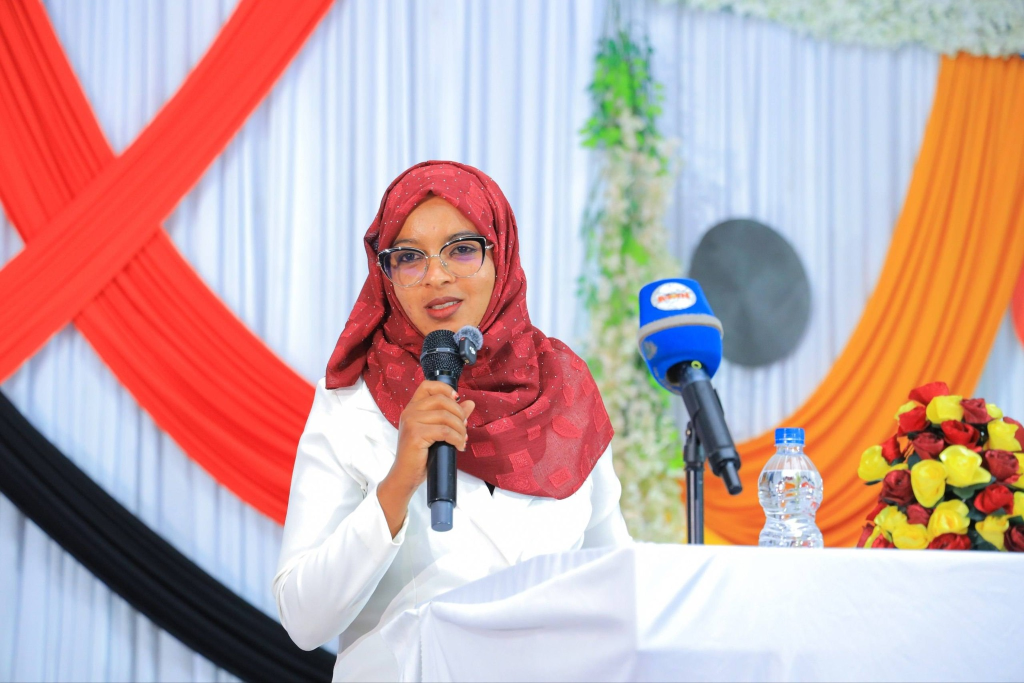
*Note on Attribution: The feature story is based on the author, Lediya K Jarso, the book reflection. Dhabessa Wakjira engaged with that reflection as a commentator, and the present reflection draws substantially from the ideas, themes, and framing originally articulated by the author. This feature story is offered as a synthesis and expansion of that shared conversation, with full acknowledgment of the original source.




 Advocacy for Oromia