Yearly Archives: 2016
A Tale of Two Grooms

Sunday, January 10, 2016 was ordinary Sunday in Ethiopia. Most are resting from a long work week, visiting families, catching up with friends. For some, since this was a wedding season, they are preparing to attend wedding of family or friend. This same Sunday two grooms are preparing to wed their loved ones, hundreds of miles apart.
The first groom was Abel Tesfaye, he was preparing to merry his lover, Dr. Sosina HaileMariam at the Apostolic Church of Ethiopia in the capitol Addis Ababa. This wedding was all over the news since it was the first official wedding that will take place in the National Palace of Ethiopia. Since his soon to be wife was the daughter of the Prime Minster of Ethiopia Haile Mariam Desalegn and w/o Roman Tesfaye. I am sure the wedding was special to the PM and his family since there is nothing more important and moving than giving the hand of his daughter in marriage. The videos that was released from the church was very nice and moving. Congratulation is in order to the Prime Minster and his family. I am sure Groom number one, Abel Tesfaye, will continue to live happily ever after with his beloved wife Dr. Sosina HaileMariam. With God’s will they will have kids and make the PM a proud Grand father.
The second Groom was teacher Fitsum Abate of Gurissa, Illibabour at Oromia region. He was preparing to merry his lover Frehiwot Belete. According to the reports from different media outlets, the night before, Ethiopian Security forces show up in his place and knock on his door. He opened the door only to be met with a barrage of bullets which hit him in his head. The day that was suppose to be the happiest of his life, Fitsum spend the night in Metu hospital in life support. The day of his wedding he was taken to the capital to get a better treatment and as the reports show he is in critical condition at Tikur Anbessa Hospital.
Here is where the story meets. In early December, a protest started in a city of Ginchi, because of the government’s plan of expanding Addis Ababa’s territory into Oromia administered areas. In the effort to stop a private company’s bulldozers from destroying a Chilimo forest, residents of Ginchi started protesting and the government starting shooting innocent protesters. Most young students and some children laid dead in the streets. The protest erupted throughout Oromia and in an effort to squash the movement the Government set up command posts and dispatched a brutal Agazi brigade which escalates the number of dead quickly. As of today, 140 plus dead, 2000 plus injured and 35000 imprisoned.
At this point, the father of bride number one, the Prime Minster gave a TV interview and we all hoped for a comment of reason to stop the senseless killing and move the country to healthier atmosphere and we were shocked and disappointed to hear his angry comments and his regrets for the destruction of property before life. He said “For the people that involved in the protest in destruction of property, we will take action against them without any mercy”. Most of us know really well what comments like this mean. The mass arrest of protesters and opposition political leaders like Bekele Gerba continued and the number of dead escalated right away. The PM’s comment meant the green light to hunt and kill what the government believes to be anti-government without any do-process. It meant a green light to harass one in his or her home and shoot them. It meant a green light to shoot groom number two, teacher Fitsum Abate just because the security forces suspected him or not. Don’t hold your breath to see if justice will be served for Fitsum, it is not. He just end up being another person without a voice in his own country.
From the wedding video of the PM’s daughter, I can’t help it but see the emotions of the Prime Minster while he was reading the scripture. He was wiping his eyes with emotions of happiness and I hope he know there are thousands of other parents wiping their eyes too but only in misery and sadness. I hope he knows he and his administrations actions unleashed misery on thousands of families and the only way they remember their kids is by small plot in a nameless graveyard due to the bullets of blood hungry butchers. I hope every time he cherish his family, he remembers, those mothers and fathers and their pain.
The story of the two grooms is a perfect face of today’s Ethiopia. The land of so many struggling families and few completely out-of-touch supporters. The land of the exiled, tortured, imprisoned masses and few greedy millionaires that can loot, steal, lie and prosper without consquences. The land of tens of millions starving and few living in their villas crying foul.
This is the end of the tale of the two grooms and I hope we will have a country where the two grooms live happily ever after. Hope both families cry the tear of joy and be able to hug their kids and grand kids. I hope we will have a country where the rule of law prevails. I hope and pray!
Source:http://yadesabojia.com/2016/01/13/a-tale-of-two-grooms/
William Davison’s Witness from Southwest and West Shewa zones of Oromia
 I was in Southwest and West Shewa zones of Oromia for two days last week. I drove the Addis-Woliso-Wenchi-Ambo-Addis loop that I last did on a tourist jaunt with my parents in early 2014. I intend to document the more interesting parts of what I found in a couple of pieces next week, so I’m not going to go into details here. Suffice to say there was considerable anger at the killing of unarmed Oromo protesters, fear over an ongoing extensive crackdown, and general dissatisfaction with an unresponsive government over poor public services and corruption.
The protests seemed to be focused on east Oromia last week. All we saw was a group of mostly teenagers running up and down Ambo town centre chanting at about 5pm on Christmas afternoon. They seemed to be generating quite a lot of excitement among onlookers, and I think the group had grown to over 100 by the time I last saw them. They were quickly tailed by a pick-up of armed Oromia regional forces, and then it started raining, so I think they gave up. The response of the authorities was to immediately dispatch a pick-up of Federal Police in riot gear and an EDF armored personnel carrier to patrol the same stretch of road. There were also dozens of Federal Police dotted along the side of the road. It was a way heavier security presence than we’d seen in Woliso, or any of the smaller towns.
We didn’t get detained over the two days and were only prevented from reporting by a pot-bellied kebele official in Dima next to Sebeta on our very first stop. It seemed like he’d been tipped off about our presence and so sidled over, pen in pocket, phone in hand, ignored the ferenjis, and started discussing the situation with out translator. I don’t think he looked at me once and definitely didn’t address me directly or engage in a conversation. I guess I saw him as a useful metaphor for a government that’s not very good at listening. His position seemed to be the usual claptrap about us needing specific permissions wherever we want to report, and the local authorities needing to be informed about our arrival as they are responsible for our security. (My stock response to that one these days is that, as I’m an adult, I’m responsible for my security – it doesn’t impress anyone.) The chap wanted us to stick around and presumably get acquainted with the local police commander, but we jumped in the car and drove off instead.
Source: https://www.facebook.com/william.davison.33?fref=nf&pnref=story
Oromo protest in Melbourne
Monday, January 4, 2016

Melbourne’s Oromo community rallied on January 3 as part of a world-wide action in solidarity with the Oromo student protesters currently leading the #OromoProtests movement in Oromia, Ethiopia.
The Oromo people are an ethnic group inhabiting Ethiopia, northern Kenya, and parts of Somalia. Oromia is Ethiopia’s largest region, surrounding Addis Ababa. With around 25 million members, they constitute the single largest ethnicity in Ethiopia with about 35% of Ethiopia’s population according to the 2007 census.
The protesters in Oromia say they fear cultural persecution and the loss of their land if the Ethiopian government’s so-called “master plan” to integrate parts of Oromia into Addis Ababa go ahead. They also call for the Oromo people’s right to self-development, self-determination and to publicly protest.
For well over a month, peaceful protesters have been met with government-directed military forces that are killing, beating and arresting primary school, high school, and university students for protesting.
The #OromoProtests movement has brought attention to the many illegalities and crimes against humanity the Ethiopian government has committed. In the face of extreme violence, mass arrests and a rising death toll, the protests continue and the protesters remain unarmed, peaceful and persistent.
The BBC reported on December 28 that at least five people had been killed in clashes in Oromia region in recent weeks and two journalists have been arrested.
The Guardian reported on December 11 that at least 10 students are believed to have been killed and hundreds injured during protests against the Ethiopian government’s plans to expand the capital city into surrounding farmland.
By January 4 #OromoProtests was reporting that the death toll had reached 124 as disturbing reports of soldiers using hand grenades against the protesters emerged.
Rights groups say the Oromo have been systematically marginalised and persecuted for the last 24 years. Some estimates put the number of Oromo political prisoners in Ethiopia as high as 20,000 as of March 2014.
For campaign updates visit their website.
PHOTOS BY ALI BAKHTIARVANDI


Tsegaye R Ararssa spoke at the Melbourne rally.
My name is Tsegaye Ararssa. I am an Oromo from Ethiopia. I come from Addis Ababa, and I intimately know the area that is directly affected by the Master Plan.
I am also one of the keen observers of the tragic events that are unfolding in our homeland today.
I am here as a concerned citizen who would like to join a chorus of voices that protest the ill-designed Master Plan, to denounce the killings and violent repressions being meted out by the regime, and to deplore the situation in which our people languish as we speak.
I am here to help us raise our voices as we tell stories of horror, stories of an impending humanitarian crisis in the Horn of Africa.
I would like to begin by saying ‘thank you’ to the organizers. What you have done today goes a long way as an expression of solidarity to the Oromo youth and farmers who are risking their lives, limbs, personal liberty, means of livelihood, etc, just so they can protest this deadly Master Plan.
What you have done today is significant in resisting the general land grab in Ethiopia.
It is immense in its impact in the effort towards arresting the humanitarian crisis facing the civilian Oromo population; and towards exposing the barbaric and atrocious acts of repression, killing, maiming, torture, rape and persecution of civilians as terrorists.
What you have done goes a long way to contest, resist and protest a wider practice of dispossession, displacement, and consequent homelessness/placelessness, and loss of identity, culture, and language.
What you have done today stands out as a noble act of resisting injustice in all its forms, to negate the Ethiopian state’s practice of cultural dehumanisation, military subjugation, and political domination.
What you have done today is an important act to raise your voice against a massive act of state terrorism.
What you have done today goes a long way in exposing the state practice of political deception that fakes development for an outright plunder through dispossession.
This protest is an expression of solidarity with the Oromo protests at home and among the Oromo diaspora across the globe.
Ours is a voice of sympathy, because theirs is a voice of justice which we also take as our own.
Our protest is a demand for the respect for the human dignity of the Oromo person. It is a demand for equality and non-discrimination. It is a demand for social justice — housing, livelihood, health, employable labor, land and general human security.
It is a demand for a peaceful existence in one’s place of birth. It is a demand for the ecological integrity of one’s natural environment.
Above all, it is a demand for voice, a demand for a hearing. A demand to be taken seriously as a people.
For far too long, the Oromo have been silenced. For far too long, our image has been invisible. Our voice has been inaudible. Our perspective has been rendered unpalatable. Our message has been rendered unsayable.
For far too long, our cry has been a cry for help as in a scream in a dream.
This protest is a protest to say HEAR US. LISTEN TO US. SEE US. DON’T SEE THROUGH US. WE ARE HERE. AND WE AREN’T GOING ANYWHERE. THE LAND HAS A PEOPLE. THE LAND HAS A STORY. AND IT HAS A LIFE. IT IS NOT AN EMPTY SPACE. IT IS NOT TERRA NULLIS.
As a voice of justice, this is part of a global cry for justice only manifested as a local instance. This is the voice of humanity seeking a different — and a better — way of living this life.
Our protest is a challenge to the politics of deception, misinformation and brutal repression.
Our voice is the voice of the human cry expressed in all the international human rights instruments such as the Universal Declaration of Human Rights, the International Covenant on Civil and Political Rights and the International Covenant on Economic, Social, and Cultural Rights, and all other moral and legal codes of universal human aspirations.
Our voice is a voice calling for the respect of the constitution of the land. It is not an onerous demand at all. Ours is a critical voice of loyalty, a voice calling for constitutional fidelity. Ours is a demand for modest and honest politics grounded in the rule of law.
Ours is a voice of civilisation in the face of state barbarity. A voice of peace and legality in the face of state-sponsored terror, chaos and anarchy.
Ours is a voice calling for the fulfilment of the dreams of the ages, the aspiration for democracy in the Ethiopia yet to come. It is also a quest for self-determination in Ethiopia and beyond.
Most of all, ours is a voice of remembrance, a voice of remembering the dead and the disappeared. It is a voice of remembering them, bringing them back to live on, and to live with us.
We stand in solidarity with the Oromo protest as a voice of memory, a s a voice of a witness who has seen it all and has survived — if only to tell the story of horror.
As we tell these stories, we would also like to make a call to several fellow travellers of this humanist journey.
Ethiopians
We call upon all other peoples from Ethiopia to join the Oromo protests to help raise our voices against a shared experience of brutal repression by the State. We note the suffering of the peoples of Gambella, Afar, Benishangul-Gumuz, SNNPRS, and Amhara who had to sustain similar dispossession of land and displacement therefrom. We note all the unnecessary suffering created by the barbaric regime in Ethiopia today. We note the misery of the people of Qemant that resulted from misrecognition and is manipulated by the regime to spread hostility with the Amhara. We note the concerns of the people living in the Ethio-Sudanese border whose land is alleged to be gratuitously given over to the Sudanese government.
The Ethiopian Government
We reiterate our call to the government to:
a. Scrap the Master Plan;
b. Rescind the Caffee Law on Urban development in Oromia;
c. Stop all other forms of land grab — such as the ones done through the creation of Industrial Zones, recreation parks, Investment Places, etc;
d. Stop killing Oromo protesters;
e. Withdraw the armed forces from Oromia which the latter have occupied without a Federal intervention Order or declaration of emergency and an appropriate legal response thereof;
f. Restore displaced families to their land; compensate those who are displaced; provide replacement housing and means of livelihood that have so far been dislocated;
g. Stop the political and military acts of state terror applied to the civilian population of Oromia;
h. Release all the people arrested arbitrarily in the course of the protest now and in 2014;
i. Release all Oromo prisoners of conscience such as Bekele Gerba; leaders of the OFC; Yonatan Tesfaye Regassa; and thousands of others;
j. Call an emergency parliamentary meeting and establish an impartial, neutral (or, if that is impossible, all-inclusive) Commission of Inquiry to investigate the killings, injuries, mass arrests, disappearances, tortures and all forms of atrocities;
k. Take political responsibility for the crisis and the lawless acts of state terror; Deplore the situation; express sympathy for the victims; apologize to the public; and ensure that perpetrators are brought to justice as appropriate;
l. Dismiss the Caffee Oromia immediately and organize a snap election in Oromia so that a government with a genuine democratic mandate is put in place;
m. Dismantle these illegal and unconstitutional bodies chaired by the Prime Minister such as the Command Post and the Joint Counter-terror Task Force;
n. Renounce the de facto war declared on the Oromo people;
o. Stop repressing the general Ethiopian public who express concerns over the anguish of the Oromo and all the other peoples of Ethiopia who are daily suffering from the brutal acts of state terror.
We call upon the government of Ethiopia to heed its own constitution and the provisions of international human rights instruments it has long ratified. We believe that doing this is in the interest of the regime itself, and with this protest we send our final appeal to the conscience, if any, of its officials.
Australians
We call on the Australian public to heed to the unfolding misery in the Horn of Africa country.
We call on the government, its institutions of foreign policy, its institutions of human rights, and its civic organisations to engage with the regime in Ethiopia and put pressure on it to stop its acts of state terror, to renounce its land grab policies, and to start listening to the voice of the people. We call on Australia not only to demand Ethiopia to stop the ongoing atrocities but also to stop providing any support to it, be it diplomatic, financial, or otherwise.
The International Community
We call on the International Community and its institutions to take a heed to the plight of the Oromo people in Ethiopia and to take prompt and effective measures to arrest the mass atrocities unfolding in Ethiopia. We call on the international community to act morally, justly, and effectively before things degenerate into another genocidal scourge that happens right before our eyes.
We call upon everyone to stand in solidarity with Oromo protests and call for a stop to the murder of children and students in the name of eradicating “terrorists.”
As we do, we keep marching. We keep protesting. We keep resisting state violence. We resist a century old colonial violence that is being re-enacted in the form of the Master Plan.
We will keep saying No to the Master Plan. We say NO to injustice. We say NO to massive violations of human rights. We say NO to mass murder. We say NO to genocide. We say NO to Displacement. We say NO to continued and expanded state violence against the Oromo and all other oppressed peoples of Ethiopia. We say NO to arbitrary state demonization of the Oromo as “terrorists”.
We are Oromos seeking land justice; we are not terrorists. We are a voice of justice. We are a voice of remembrance. We are a voice of memory. We are a voice of human solidarity.
E-press Release: The Intimidation by the Government Continues
Dear All,
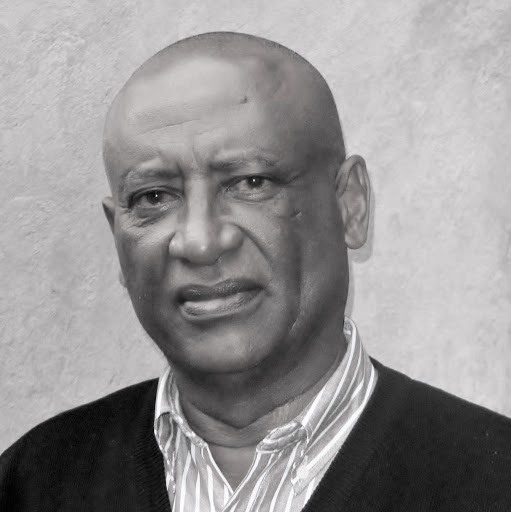
Bekele Nega (General Secretary, Oromo Federalist Congress (OFC)
This morning, on my way to work, 4 men in civilian clothes greeted me by my name; identified themselves as ‘police’ and asked me to get in a car parked next to where they stopped me. When I refused, they grabbed me by my arms left and right; forced me into the backseat of their car and started driving. Once the car started moving, they started to hit me: the two guys in my left and right continued to punch me while the one sitting in the front-seat kept touching my face with his gun.
While they were hitting me, they kept saying that they were doing this because I was talking to the media despite their warnings not to do so. After they stopped the beating, they took away my phone at gun point and threatened that I do as they say or they would come for me and my family. They told me that not only mine but also my family’s lives were in danger: “If you step out of your house or talk to any media, you will take responsibility for what may happen to you or your children” (“ከዛሬ ጀምሮ ከቤትህ ብትወጣ ወይ ሚዲያ ብታናግር በአንተም ሆነ በቤተሰቦችህ ላይ ለሚሆነው ነገር ሃላፊነቱ ያንተ ነው”). Before they let me go, they also made it clear that they would resort to killing if I don’t do as they say “we no longer have a place to keep you, if you don’t do as you’re told killing you or paralyzing you is what is left to do.” (“ከእንግዲህ ወዲህ እናንተን የምናስርበት ቦታ የለንም:: ወይ እንገድልሃለን ወይ በመኪና ገጭተን ፓራላይዝ እናደርግሃለን ”)
The Ethiopian government has turned deaf ears to the many peaceful pleas to stop the violent crackdown all over Oromia, and continues to intimidate, arrest and kill citizens with no accountability. More than 4,000 of our party’s members including Bekele Gerba, Dejene Tafa, Addisu Bulala, and Desta Dinka are currently imprisoned incommunicado. It is my hope that the government and those who are silently watching understand that arresting and killing of innocent individuals has never silenced Oromos and will never be a solution to a legitimate demand of millions, and move quickly to rectify this situation. Until then, I, as an individual and member of OFC, will continue to peacefully voice the concerns of the Oromo people, because the peaceful struggle for the freedom and dignity of our people is a cause that millions of Oromos including me are prepared to sacrifice our lives for.
Regards,
Bekele Nega
General Secretary, Oromo Federalist Congress (OFC)




 Advocacy for Oromia