Category Archives: Koronaa

“A Generation Like This Is Hope for Oromo! A Promise for Oromia!”
By Dhabessa Wakjira
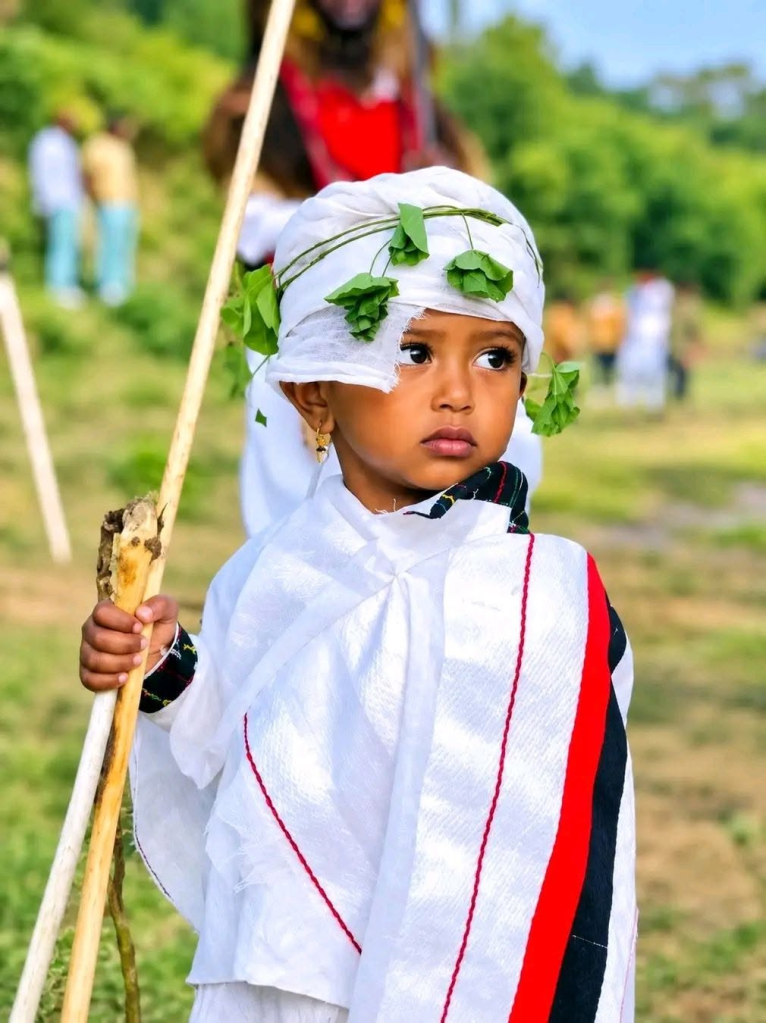
There is a saying among the Oromo people that captures something profound about the relationship between a community and its youth: “Dhaloota akkanaatu, Oromoof abdiidha! Oromiyaaf wabiidha!” — “A generation like this is hope for Oromo! A promise for Oromia!”
It is more than a slogan. It is a declaration of faith in the future, spoken by elders who have witnessed both the pain of suppression and the resilience of a people who refused to disappear. It is a recognition that the young people rising today — educated, conscious, connected, and proud — carry within them the seeds of everything the Oromo struggle has long been working toward.
The Weight of History, The Light of Tomorrow
The Oromo people have endured centuries of marginalization, land dispossession, cultural suppression, and political exclusion. Through the imperial era, the Derg regime, and subsequent administrations, the flame of Oromummaa was kept alive in the hearts of the people — in the songs sung at Irreechaa, in the wisdom passed down through the Gadaa system, in the quiet defiance of families who spoke their language at home when the world outside forbade it.
That flame did not survive by accident. It survived because generation after generation refused to let it die.
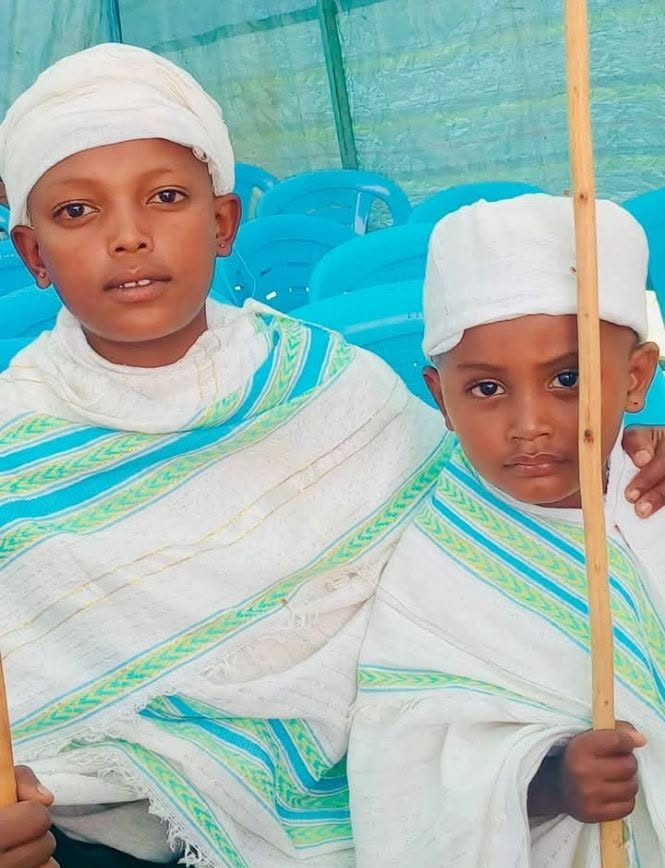
Today, a new generation stands at the threshold. They are the children and grandchildren of those who carried the flame. But they are also something new: they are the first generation in modern Oromo history with broad access to education, to global networks, to digital platforms that amplify their voices beyond any border. They are the generation that can look back at history with clear eyes and forward to the future with determined hearts.
When elders say “Dhaloota akkanaatu, Oromoof abdii dha,” they are acknowledging this. They are saying: We endured so that you could rise. And you are rising.
What Makes This Generation Different?
Every generation believes it is special. But there are concrete reasons why this moment in Oromo history feels different — why the phrase “Oromiyaaf wabiidha” carries such weight.
They are educated. Oromo youth are pursuing higher education in unprecedented numbers — in Ethiopia and across the diaspora. They are becoming doctors, engineers, lawyers, teachers, social workers, journalists, and leaders. Knowledge, once denied to their ancestors, is now their weapon and their tool.
They are connected. Social media has given Oromo youth a global platform. They organize, they inform, they advocate, and they build solidarity across continents. A student in Melbourne can exchange ideas with a student in Addis Ababa in real time. The isolation that once silenced Oromo voices has been shattered.
They are proud. Unlike previous generations who were sometimes forced to hide their identity to survive, this generation wears Oromummaa openly. They sing in Afaan Oromoo. They celebrate Irreechaa with millions. They carry the yellow daisies not as a secret symbol but as a public declaration of who they are.
They are global and local at once. They understand the world beyond Oromia — human rights, international law, digital advocacy, multiculturalism — while remaining deeply rooted in Oromo values of community, respect for elders, and connection to land and Waaqa.
They are bridge-builders. This generation navigates multiple worlds: tradition and modernity, Oromia and the diaspora, local struggles and global movements. They are learning to carry their heritage into new contexts without losing its essence.
Hope Is Not Passive
It is important to be clear: “Dhaloota akkanaatu, Oromoof abdii dha” is not a statement of complacency. It is not a declaration that the future will simply take care of itself because the youth are impressive.
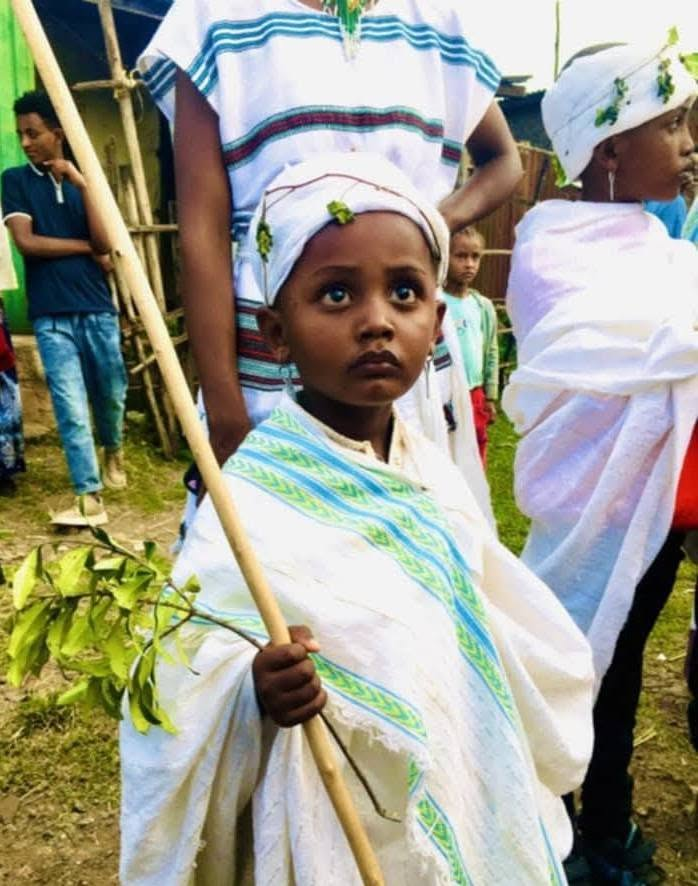
Hope, in the Oromo understanding, is active. It is the hope of the farmer who plants seeds and tends them. It is the hope of the marcher who walks toward the water carrying fresh grass. It is the hope that requires discipline, sacrifice, and unity.
For this generation to truly be the hope of Oromo, it must:
- Learn — from elders, from history, from education, and from one another.
- Preserve — the language, the traditions, the Gadaa wisdom, the sacred rituals of Irreechaa.
- Build — institutions, networks, and platforms that serve the community.
- Unite — across regions, across diaspora communities, across generations.
- Stay rooted — in Oromo values of respect, community, and connection to Waaqa and the land.
A Promise to Oromia
“Oromiyaaf wabiidha” — a promise for Oromia.
A promise is not a guarantee. It is a commitment. It is a covenant between a generation and the land that birthed it. It says: We will not forget where we came from. We will not squander what our ancestors sacrificed for. We will not let the flame go out.
This generation carries the dreams of every Oromo who came before — the farmer who lost his land, the mother who sang lullabies in a language she was told to abandon, the student who was punished for speaking the truth, the elder who kept the traditions alive in secret.
They also carry the hopes of every Oromo yet to be born — children who will one day ask, What did you do when it was your turn?
The answer being written today, by this generation, is this: We rose. We learned. We built. We stayed united. We honored those who came before us, and we prepared the way for those who will come after.
The Question That Remains
When elders look at the youth of today and say “Dhaloota akkanaatu, Oromoof abdiidha! Oromiyaaf wabiidha!”, they are offering both a blessing and a challenge.
The blessing is this: You are enough. You are capable. You are the ones we have been waiting for.
The challenge is this: Now prove it. Not with words alone, but with action. Not for a moment, but for a lifetime.
Every generation is given a choice. This generation — educated, connected, conscious, and proud — has been given the opportunity to be the generation that turns centuries of struggle into a future of dignity, justice, and flourishing for all Oromo people.
That is the hope.
That is the promise.
Dhaloota akkanaatu, Oromoof abdii dha! Oromiyaaf wabii dha!

Oromo Community in Melbourne to Hold Memorial for Artist Ilfinash Qannoo in Dandenong

The Oromo Community in Melbourne has announced it will host a special memorial event to honour the life and legacy of the beloved artist and freedom fighter, Ilfinash Qannoo, on September 12, 2026.
The Oromo Community in Melbourne (OCM) has organised a commemorative gathering to celebrate the life and enduring legacy of Artist Ilfinash Qannoo, who passed away recently in Oromia.
The memorial program will take place on September 12, 2026, at Dandenong Harmony Square, beginning at 5:00 PM.
A Celebration of Life and Legacy
Artist Ilfinash Qannoo was more than a performer—she was a symbol of Oromo resilience, unity, and the enduring struggle for freedom. Throughout her life, she dedicated herself to advocating for Oromo liberation, justice, human rights, and gender equality, using her art as a powerful tool for change.
Her passing has been deeply felt by Oromos in Victoria, across Australia, and around the world. The memorial event organised by the OCM offers the community an opportunity to come together, share their grief, and—most importantly—celebrate her remarkable contributions.
A Call to the Community
The Oromo Community in Melbourne has extended a warm invitation to all members of the community and friends of Oromia to attend the memorial gathering:
“Come to Dandenong Harmony Square at 5:00 PM and let us express the love and respect we hold for our artist!”
The event will feature a program of tribute, reflection, and cultural celebration, honouring the life of a woman who gave everything to the Oromo cause.
Event Details
📍 Location: Dandenong Harmony Square, Victoria, Australia
📅 Date: September 12, 2026
⏰ Time: 5:00 PM
Honouring a Heroine
Ilfinash Qannoo’s legacy is one of courage, dedication, and unwavering commitment to her people. Her music and advocacy inspired millions, and her memory continues to unite Oromos across the globe.
The OCM’s memorial event is not only a tribute to her life but a reaffirmation of the values she stood for—unity, justice, and the unyielding pursuit of freedom for Oromia.
A Community United in Remembrance
As Oromos in Victoria gather at Dandenong Harmony Square, they will do so with heavy hearts but also with pride—pride in a woman who represented the very best of Oromo culture, resilience, and hope.
The event promises to be a powerful moment of community solidarity, cultural expression, and collective remembrance.
Join Us
All members of the Oromo community, friends of Oromia, and supporters of justice and human rights are warmly invited to attend.
Let us come together to honour a true heroine of Oromia. Let us celebrate her life, her art, and her enduring legacy. Let us show the world that Ilfinash Qannoo will never be forgotten.
Galatoomaa! — Thank you!
Event Summary:
| Detail | Information |
|---|---|
| Event | Memorial for Artist Ilfinash Qannoo |
| Organiser | Oromo Community in Melbourne |
| Location | Dandenong Harmony Square, Victoria |
| Date | September 12, 2026 |
| Time | 5:00 PM |
Bilisummaan Oromoof!

The Unrelenting Reactionary Force: A Reflection on Ethiopia’s National Dialogue and the Battle for Constitutional Integrity
Confronting the Forces That Seek to Undermine Ethiopia’s Federal Foundation
By Dereje Gerefa Tullu
For over three decades, the Ethiopian Constitution has served as the foundational document upon which the country’s federal system was built. It enshrined the rights of nations, nationalities, and peoples—including the right to self-determination, cultural recognition, and political participation. It was a historic compromise, an attempt to address the historical grievances of marginalized communities and build a new Ethiopia based on equality and justice.
Yet, from the moment it was adopted, there have been forces that have sought to undermine it. These forces—reactionary in their orientation—have never accepted the constitutional order. They have never reconciled themselves to the reality that Ethiopia is a country of diverse nations and nationalities with equal rights. And now, as the national dialogue unfolds, they have emerged once again, more vocal and more aggressive than ever.
This is a reflection on the reactionary forces that have dominated Ethiopia’s political discourse for decades—forces that, under the guise of unity, seek to reimpose a centralized, assimilationist order that has been rejected by the Ethiopian people.
The Assault on the Constitution: Erasing Nations and Nationalities
The reactionary forces have made their agenda clear. They have targeted the very language of the Constitution, particularly the phrase “nations and nationalities” that appears in its preamble. They argue that this language is divisive, that it undermines national unity, that it must be replaced with something more “inclusive”—a term that, in practice, means something far more sinister.
“The phrase ‘nations and nationalities’ bothers me,” they declare. “It should be removed.”
When the ruling Prosperity Party proposed replacing it with “Ethiopian nationalities” —a gesture toward the reactionaries—it was not enough. They demanded more. They insisted that the very recognition of distinct nationalities be erased entirely, replaced by a homogenized “Ethiopian” identity that denies the reality of the country’s diversity.
No one outside the reactionary camp has asked for this. No one has demanded that the Constitution’s recognition of nations and nationalities be removed. This is not a popular demand—it is the agenda of a minority that refuses to accept the constitutional order.
The Attack on Self-Determination: Article 39 Under Fire
If the preamble was the first target, Article 39 of the Constitution—which enshrines the right to self-determination, up to and including secession—has been the primary focus of the reactionary assault.
“Remove the right to secession,” they demand. “Why should the Constitution include such a dangerous provision?”
Despite the fact that the right to self-determination is a fundamental principle of international law, despite the fact that it is recognized in constitutions around the world, the reactionaries have never accepted it. They see it as a threat to their vision of a centralized Ethiopian state.
“We Ethiopians are not interested in secession,” they insist. “We are interested in unity, equality, and brotherhood/sisterhood.”
But if the right to self-determination is not a threat, if it is simply a constitutional safeguard, then why do they want it removed? The answer is clear: because they do not trust the Ethiopian people. They do not believe in democracy. They do not believe that the people, if given the choice, would choose to remain united. They want to deny the people that choice—not because they believe in unity, but because they believe in control.
The Land Question: Undermining Oromo’s Constitutional Rights
The reactionary forces have also targeted Article 49(5) of the Constitution, which recognizes Oromia’s “special interest” in Finfinne concerning social services, natural resources, and joint administrative matters.
“Remove Oromia’s special interest,” they demand. “Why should Oromia have a special interest in the capital?”
They argue that because Finfinne is surrounded by Oromia, and because the city’s daily activities and development depend on resources from Oromia, this constitutional provision is somehow unfair. They have called for the complete removal of any reference to Oromia in the Constitution’s treatment of the capital.
“The national dialogue is completely under the control of Oromia’s Prosperity Party,” they have claimed on social media. “It is rigged.”
Despite the fact that Finfinne has historically been the capital of Ethiopia and the seat of the federal government, the reactionary forces have framed Oromia’s constitutional interests as a threat. They have campaigned relentlessly to delegitimize these provisions and to marginalize the Oromo people in their own capital.
The Land Question: Property, Access, and Control
The reactionary forces have also weighed in on the land question, challenging the constitutional principle that land is the common property of the state and the people. They have demanded that private property rights be expanded to include land—a demand that would fundamentally alter the socio-economic order of Ethiopia.
“Land should be private,” they declare.
When it was suggested that some form of private land ownership could be introduced, the reactionary forces were not satisfied. They insisted that the only reason private land ownership was not already enshrined in the Constitution was the treachery of the previous regime, the EPRDF. They dismissed any attempt at compromise and insisted on the full privatization of land—a demand that would disproportionately benefit the wealthy at the expense of farmers and rural communities.
The Historical Revisionism: A Convenient Amnesia
The reactionary forces have also engaged in historical revisionism. They have argued that Finfinne has always been the capital of Ethiopia, that it has always been the capital of the Shoa region, and that there is nothing exceptional about this arrangement.
“Under the Emperor, Finfinne was the capital of Ethiopia and Shoa. Under the Derg, it was the capital of Ethiopia, the Shoa Province, and the Administrative Region. Under the EPRDF and Prosperity Party, it has been the capital of Ethiopia and Oromia. Nothing has changed.”
But this is a convenient amnesia. The fact that Finfinne has served as the capital is not in dispute. What is in dispute is whether the Oromo people have a constitutional and historical stake in the city. Article 49(5) was not invented by the current regime—it was a product of the EPRDF era, adopted with the consent of all parties.
The reactionary forces have conveniently forgotten that the EPRDF itself faced a crisis when it attempted to revise the capital’s status. The Oromo people protested, and the attempt failed. The current regime itself is a product of that crisis—a crisis that was caused precisely by the refusal to respect Oromo rights.
“If the Prosperity Party does not change Oromia’s capital from Finfinne to something else,” the reactionaries now declare, “then Prosperity Party itself is OLF.”
The Flag: A Symbol of Unity or Division?
The reactionary forces have even gone after the Ethiopian flag, arguing that the star represents nations and nationalities and that this is somehow divisive.
“If the star is meant to represent the equality and unity of the nationalities, then it must be removed,” they insist. “Otherwise, I am willing to go to death.”
When it was suggested that the flag could be discussed as part of the national dialogue, the reactionary forces attacked the dialogue commission and its members for even raising the issue. They accused the Prosperity Party of being willing to “sell out” by even considering changes to the flag.
“The flag is sacred,” they claimed. “Why should it be changed?”
But the flag has been changed before—under the Derg, under the EPRDF, and under the current regime. The Ethiopian flag has always reflected the political order of the time. The reactionaries’ demand that the flag be frozen in amber, that it never change, is not a demand for tradition—it is a demand for control.
The Deception of the Reactionary Forces
The reactionary forces have attempted to frame themselves as defenders of Ethiopian unity. They have attacked the Prosperity Party for being too “soft” on Oromo rights. They have attacked the national dialogue commission for being too “Oromo-dominated.” They have attempted to claim the mantle of Ethiopian nationalism for themselves.
But their actions betray them.
- They refuse to accept the constitutional recognition of nations and nationalities.
- They refuse to accept the right to self-determination.
- They refuse to accept Oromia’s special interest in the capital.
- They refuse to accept the principle of land as common property.
- They have delegitimized the national dialogue before it even began.
They are not defending Ethiopian unity—they are defending their own power. They fear that any recognition of Oromo rights, any acknowledgment of the constitutional order, will diminish their influence. And so they fight tooth and nail to preserve a system that has already been rejected by history.
The Failure of the National Dialogue
The reactionary forces are now attempting to sabotage the national dialogue. They have engaged in a social media campaign to discredit the dialogue commission, to attack its members, and to delegitimize its proceedings.
“The dialogue is a sham,” they have claimed. “It is entirely controlled by Oromia’s Prosperity Party.”
But the reality is different. The national dialogue has brought together a wide range of voices from across Ethiopia. The Oromo representatives, including Qajeelaa Mardaasaa, Sanyii Nagaasaa, and Dr. Saamuel Kiflee, have presented their views. The issues of Finfinne, the capital status, and the constitutional rights of the Oromo people have been discussed.
But the reactionary forces have not accepted the dialogue—they have sought to undermine it. They have attacked the dialogue commission, they have attacked the participants, and they have demanded that the agenda be changed to suit their preferences.
They are not interested in dialogue. They are interested in dictation.
The Need to Confront the Reactionary Forces
The reactionary forces have been allowed to dominate the political discourse for too long. They have been allowed to attack the Constitution, to deny Oromo rights, and to undermine the national dialogue—all in the name of “unity.”
But silence is not a strategy. It is a surrender.
If the reactionary forces are not challenged, they will continue to dominate. They will continue to attack the constitutional order. They will continue to undermine the national dialogue. And they will continue to marginalize the Oromo people and other communities that seek justice and equality.
“If you don’t say ‘enough,’ the reactionary forces will not retreat. They will only grow bolder.”
The time for confrontation is now.
Conclusion: A Choice Between Two Futures
The reactionary forces have made their agenda clear. They want to roll back the constitutional gains of the past thirty years. They want to deny the Oromo people their rights. They want to centralize power and impose a homogenized Ethiopian identity.
But that is not the only future available.
The Oromo people have made their voice heard. They have insisted on the recognition of their rights, the acknowledgment of their history, and the respect of their constitutional position. They have demonstrated that they will not accept a system that denies them justice.
“Finfinne is Oromo. Oromia’s rightful capital must be recognized. The struggle for justice continues.”
The choice is now before the Ethiopian people: Will they allow the reactionary forces to dominate? Will they accept the denial of Oromo rights? Will they embrace a future of equality and justice—or a return to the past?
The time to say “enough” is now.
The time to confront the reactionary forces is now.
The time to build a future of justice and equality is now.
Finfinne is Oromo.
The Constitution must be respected.
The national dialogue must serve the people, not the reactionaries.
The struggle for justice continues.
Injifannoon Ummata Oromoo!
Finfinne haa jabaattu!
This feature article is based on the reflections of Dereje Gerefa Tullu and is dedicated to all those who continue to struggle for justice, equality, and constitutional integrity in Ethiopia.
Two journalists and a driver arrested, held without charge in Ethiopia
(Nairobi, March 18, 2020) Authorities in Ethiopia should immediately and unconditionally release journalists Dessu Dulla and Wako Nole and media worker Ismael Abdulrzaq, and let them work freely, the Committee to Protect Journalists said today.
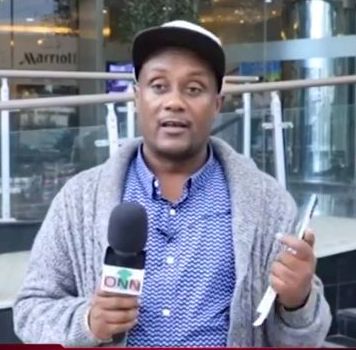
ONN Journalist Dessu Dulla
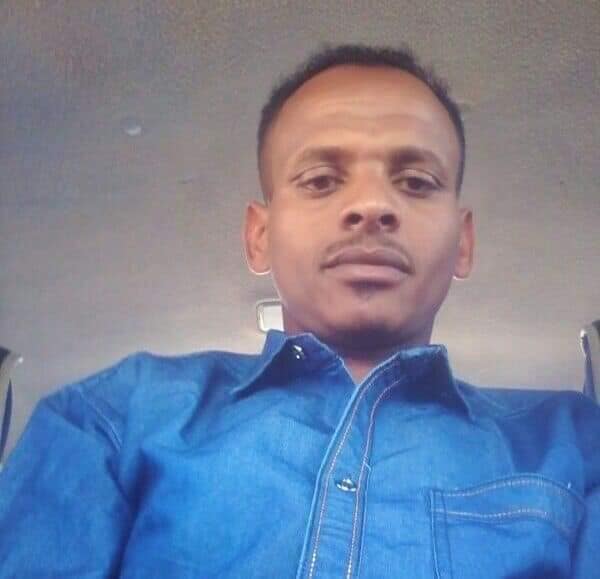
ONN Journalist Wako Nole
On March 7, police arrested Dessu, deputy director of the privately owned Oromia News Network broadcaster, Ismael, a driver for the station, and Wako, a reporter with the Sagalee Bilisummaa Oromoo radio broadcaster, in Burayu, a town in the Oromia region, according to Muhammed Regassa and Betie Urgessa, two Oromia News Network employees who spoke to CPJ via messaging app, and an eyewitness to the arrests who spoke to CPJ on the condition of anonymity, citing safety concerns.
Betie told CPJ that the three appeared in court on March 10, and that police were granted 14 days to hold them in custody, but said they were not charged with any crime.
“Holding journalists for weeks without charge is a violation of their basic rights and a clear effort to intimidate the press; Ethiopia must release Dessu Dulla, Wako Nole, and Ismael Abdulrzaq immediately,” said CPJ Sub-Saharan Africa representative Muthoki Mumo. “Journalists must be allowed to cover regional politics without official interference or fear that they will be arbitrarily arrested.”
Police arrested the journalists and driver shortly after they left the Burayu police station, where they had traveled to speak with Abdi Regassa, a senior member of the opposition Oromo Liberation Front political party, who was detained there, according to Muhammed, Betie, and the eyewitness. Two Oromo Liberation Front party members who were visiting Abdi were also arrested, those sources said.
The eyewitness told CPJ that he heard a police officer shouting that the journalists had taken pictures on their phones before they arrested them and added that officers were likely uncomfortable with the journalists visiting Abdi Regassa. Prior to 2018, Abdi was a commander in the liberation front’s armed wing while it operated from exile and was designated a terror organization; police initially denied having him in custody, according to a report by the privately owned news site Addis Standard.
The Oromia News Network vehicle was involved in a minor road accident at the scene, but those sources told CPJ that it was unrelated to the arrests. Police are still holding the vehicle, Betie told CPJ.
The Oromia News Network, which operated in exile until 2018, primarily covers politics and is targeted at an Afaan Oromo-speaking audience; Sagalee Bilisummaa Oromoo, which broadcasts some of its programming on the news network, hosts programming that is supportive of the Oromo Liberation Front and also covers regional news, according to Muhammed and Betie, as well as CPJ’s review of the broadcasters’ content.
In a phone interview on March 10, Oromia regional government spokesperson Getachew Balcha told CPJ that he did not know anything about the journalists’ arrests. Getachew later acknowledged their detention in an interview with the U.S. Congress-funded Voice of America broadcaster, but said that they were arrested due to prior offenses.
Getachew referred CPJ to the head of the Oromia Peace and Security Bureau, identified as “Mr. Jibril,” for comment. Jibril told CPJ in a phone interview yesterday that he did not know about the journalists’ cases.
Barattoonni Oromoo Gargaarsa Hatattamaa Barbaadu.
(Finfinnee, 29 Bitootessa 2020) Barattootnni Oromoo yunivarsitiiwwan addaa addaarraa gara maatii isaaniitti deebi’aa jiran rakkinaaf saaxilaman.

Oduun Finfinnee irraa nu dhaqqabe akka ibsutti, yeroo ammaa kana barattoonni hedduun sababa dhibee koronaavaayirasiitiin gara maatii sianaiitti deebi’aa jiran.
Haata’u malee,barattoonni Oromoo naannoo qunnamtiin bilbilaa uggurame irraa dhufan maatii waliin walqunnamaa wana hin turreef maalalqa ittiin galan dhabanii buufata konkolaataa Askootti rakkachaa jiru.
Barattoonni Oromoo kunneen bakka bulan dhabanii hanga namoota 60 tahanii otobuusii keessa buluuf dirqamanii jiru.
Kana birattis, waan nyaatan dhabanii gargaarsa barbaadaa akka jiran beekameera.
Barattoonni kunneen dhaamsa dabarfataniin namoonni dandeettii qaban barataa tokkollee yoo ta’e maatii biraan gahuudhaan qooda lammummaa akka bahan gaafataniiru.
*Barattoonni Yunivarsitiiwwan addaddaa irraa gara maatiitti deebi’aa jiran kunneen gargaaruu yoo barbaaddan adaraa karaa email: info@advocacy4oromai.org nu qunanmaa!
Open Appeal Letter Regarding the Missing Oromo Political Leader
(A4O, Appeal Letter, 29 March 2020) Advocacy for Oromia is deeply concerned by reports of the diappreance of Mr. Abdi Regassa, the leader of Oromo Liberation Front who disappeared from Burrayyu Police station, Oromia, since 20 March 2020.
The letter sent to Ethiopian Prime Minster today by Advocacy for Oromia expresses its deep concern regarding Mr Abdi Regassa’s current state: detained without charges and with out access to the outside world, his colleagues and his family, since 29 February 2020.
The letter demands PM administration to ensures Mr Abdi Regassa has immediate access to a lawyer of his choosing and can communicate with his family.
For full appeal letter: Appeal Letter Abdi Regassa 29 March 2020
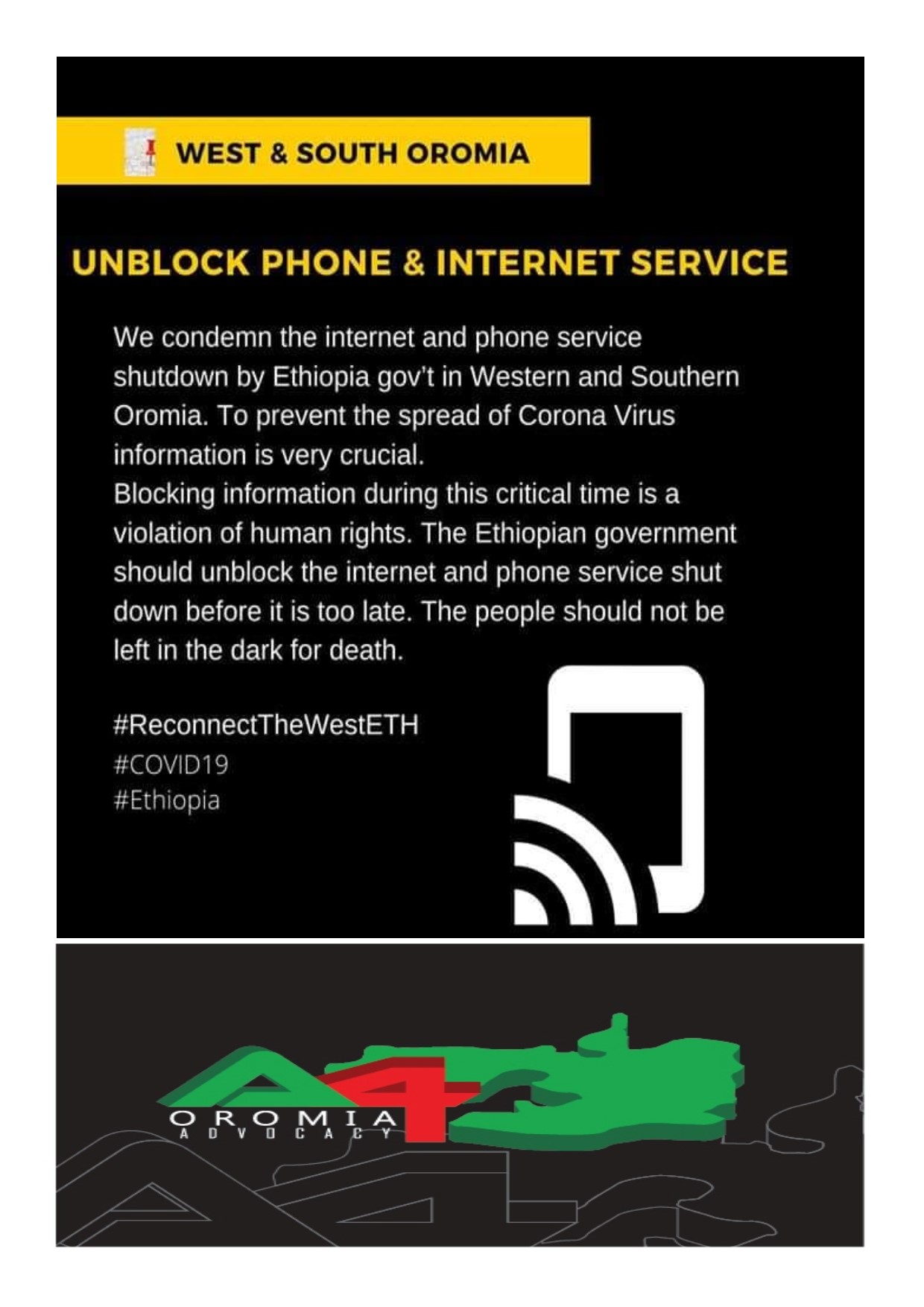
Blocking information during this critical time is a violation of human rights.
We condemn the internet and phone service shutdown by Ethiopia gov’t in Western and Southern Oromia. To prevent the spread of Corona Virus information is very crucial.
Blocking information during this critical time is a violation of human rights. The Ethiopian government should unblock the internet and phone service shut down before it is too late. The people should not be left in the dark for death.
#ReconnectTheWestETH
#COVID19
#Ethiopia
Dhimmi Jaal Abdii Raggaasaa maatii fi hiryoota yaaddeesse; mootummaan Jaal Abdii dhoksee jira.
(Oromedia, 28/03/2020) Maatiin jaal Abdii Raggaasaa yaaddoo fi dhiphina guddoo keessa akka jiran ibsan.
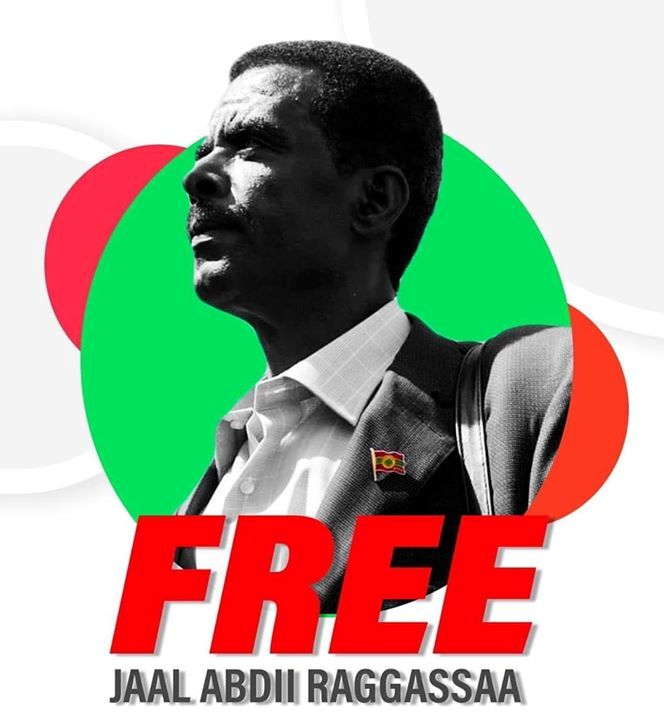 Maatiin akka dubbatanitti Jaala Abdii Raggaasaa erga ijaan arginii torban tokkoo ol ta’ee jira.
Maatiin akka himutti Jaal Abdiif torbaan tokko dura gaafa gaafa 20/03/2020 GC ykn 11/07/2012 EC mana hidhaa inni duraan keessa ture Buraayyuutti ciree fi laaqana geessaniifii turan. Haata’uutii, galgala akka lakk biyyattiitti 12:30 Jaal Abdiin fudhamee bakka hin beekamne geeffamee jira.
Erga torban tokkoo as maatiin bakak halle iyyaafataa jira. Garuu “haga yoonaatti eessa akka geessan hin beeknu; bakka jiruyyuu qaamni nuuf ibse hin jiru,” jedhan maatiin Jaal Abdii.
Haala Jaal Abdiin keessa jiru “manni murti Burrayyu illee hin beeku,” kan jedhan maatiin Jaal Abdii, yeroo ammaa kanas maatiin marti dhiphuu guddoo keessa akka jiru dubbatu.
“Abban keenya baadiyaa jiraatan rifaatuu irraa kan ka’e dhukkubsatanii sireerratti hafanii jiru; nutis takkaa gadi hin teeny; barbaacha isaatif dhibee CORONA kanaf ille akka nun sababne nu soodachisa,” jechuun haala keessa jiran ibsan.
Maatiin Jaal Abdii hanga hardhatti waajjira Poolisii magaalaa Buraayyuutti deddeebi’anii gaafataa jiran. Waajjirri Poolisii magaalaa Buraayyuu garuu “jaal Abdiin as hin jiru; Finfinneetti fudhatame” ittin jedhan.
Eenyu akka isa fuudhee fi eessa akka jiru immoo qaamni maatiitti hime hin jiru.
Haalli kun immoo maatii yaaddessaa jira. “lubbuun jiraachuu fi jiraachuu dhiisu isaayyuu wanti beeknu hin jiru; hanga ammatti qaamni mootummaa ‘bakka akkasi jiraa, hin yadda’inaa’ nuun jedhe hin jiru; erga guyyaa sana inuma barbaanna.” jedhan.
Kana malees, dhimmi fayyaa isa ahedduu akka isaan yaaddessu maatiin Jaal Abdii hin dhoksine. “Nuti waa’ee fayyaa isaaf hedduu yaaddoo qabna; mootummaan dhugaadhuma waanta isaaf barbaachusus ni guutaaf jennee irraa amantaa hin qabnu; Jaal Abdiin dhukkuba asmii dhukkubsachaa jira.” jedhu.
“Uffata jijjirraas dhugumaan mootummaan ni kennaaf jennee hin amannu; yeroo hamtuu kanatti beekaadhuma akka rakkinaaf saaxilamuuf nu jalaa dhoksan; kana biraan dhibeen #Corona nama hunda yaaddeesu akka isa hin tuqne waanti beeknu hin jiru.” jechuun dhiphina maatiin qabu nuuf ibsanii jiru.
Akka odeeffannooa rgannetti, baallamni mana murtii jaal Abdii gaafa 18/07/2012 ture. Garuu dhaddacharratti hin dhihaanne.
Inumaa poolisiin magaalaa Buraayyuu “dhimma kana qaama biraatti dabarsine waan ta’eef galmeen nuuf haa cufamu,” jechuu isaa maddi keenya gabaaseera.
Abukaatoo, Maatii fi jaallan isaa yeroo ammaa kanatti yaaddoo guddoo keessa jiran.
Jaarmyooti mirga dhala namaaf falman ibsoota baasaniin mootummaan Itoophiyaa qabiinsa mirga namoomaa Jaal Abdii akka fooyyessu gaafachaa jiraachuun beekamaadha.
Itoophiyaan addunyaa kana irratti dhiitinsa mirga namoomaan sadarkaa duraatti galmooftee jirti. Biyyattii keessatti nama harka poolisii jiru tokko, keessumaa Oromoo yoo ta’e, abukaatoo fi maatii jalaa dhoksuun, dhiittaa mirga namoomaa irratti raawwachuun mootummichaa kan addunyaan ifatti beekuu dha.
How can we prevent the spread of COVID-19?
Good hygiene can prevent infection. The most useful steps you can take are:
Wash your hands frequently and thoroughly with soap and water or an alcohol-based hand rub
Cough or sneeze into your sleave or a tissue. Throw used tissues in the bin and wash your hands.
Try and keep a 1.5-metre distance between yourself and others: avoid large public gathering, minimise physical contact such as shaking hands, and stay at home when you are unwell.
If you been diagnosed with COVID-19, you must stay at home to prevent it spreading to other people.







