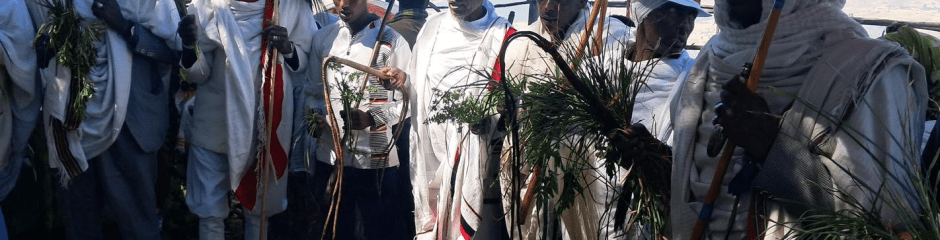

Oromo Diaspora: Celebrating the Legacy of the Maccaa-Tuulamaa Association

From Cairo to the Heart of Oromia: The Maccaa-Tuulamaa Association’s Enduring Flame
Cairo, Egypt – In a vibrant hall far from the verdant highlands of Oromia, the air was thick not with desert dust, but with the palpable weight of memory and the steady pulse of resilience. Last week, the Oromo community in Egypt gathered not for a simple social event, but for a profound act of collective remembrance: the 7th anniversary celebration of the founding of their chapter of the Maccaa-Tuulamaa Association (MTA).
This was more than a milestone marked on a calendar. It was a deliberate and powerful reaffirmation of an identity that refuses to be fragmented by geography. The speeches given were not mere formalities; they were carefully woven threads in the ongoing tapestry of Oromo history, reminding all present that the story of the Maccaa-Tuulamaa Association is inextricable from the modern narrative of the Oromo struggle itself.
For the uninitiated, the significance of such a gathering in a place like Cairo might be lost. But to understand the MTA is to understand a cornerstone of 20th-century Oromo political consciousness. Founded in 1963, the association emerged not as a militant front, but as a critical socio-cultural and intellectual awakening. At a time when the very fabric of Oromo identity was under systemic pressure, the MTA provided a legitimate, organized platform. It championed education, preserved language and history, and most importantly, fostered a sense of unified nationhood (sabboonummaa) among the Oromo people. It was the seed from which more overt political movements would later grow, making its founders not just community organizers, but architects of a modern political identity.
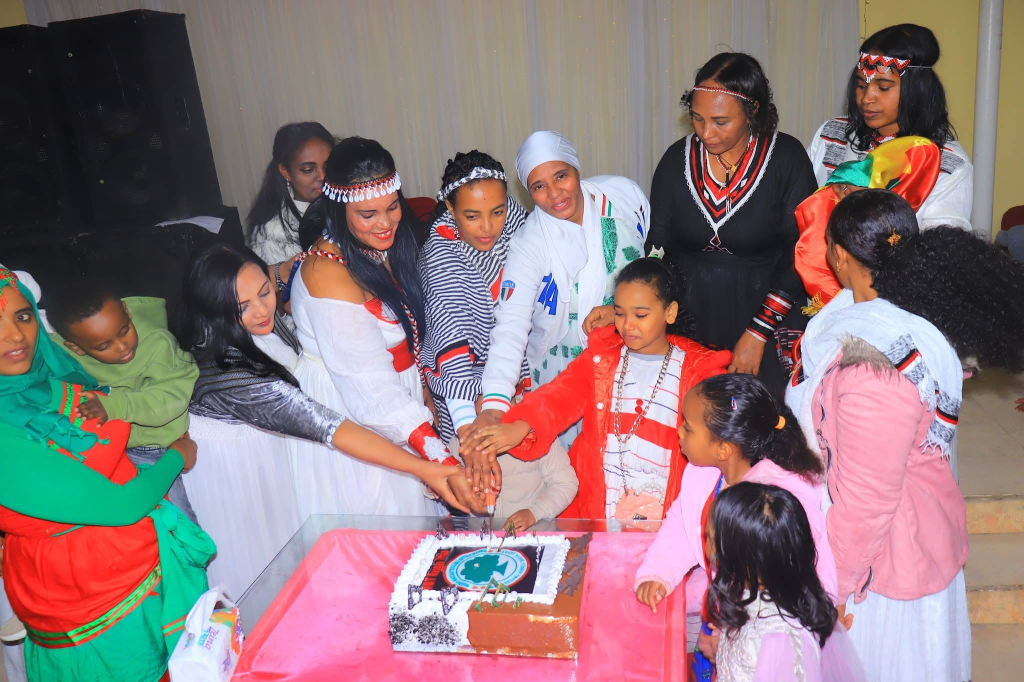
Therefore, the anniversary in Cairo transcends a chapter meeting. It represents a vital dialectic of diaspora existence: the act of building a future in one land while being steadfast custodians of a past from another. The community in Egypt, like Oromo diasporas worldwide, lives this duality. They build careers, raise families, and navigate life in Egypt, all while tending a flame ignited generations ago in the heart of Oromia. The detailed recounting of the MTA’s history at the event was a sacred ritual of passing this torch, ensuring that younger generations born on the Nile understand their roots in the Gibe River valley.
The calls for unity (tokkummaa) issued from the podium in Cairo resonate with a particular urgency today. They speak to challenges both internal and external. The diaspora, while a source of immense strength and resources, is not immune to the political and social fissures that affect any global community. The anniversary serves as an annual calibration—a reminder that the foundational principles of the MTA were unity, self-reliance, and the uplifting of the Oromo people as a whole. It is a call to look beyond differences and focus on the foundational hundee (root) that connects them all.
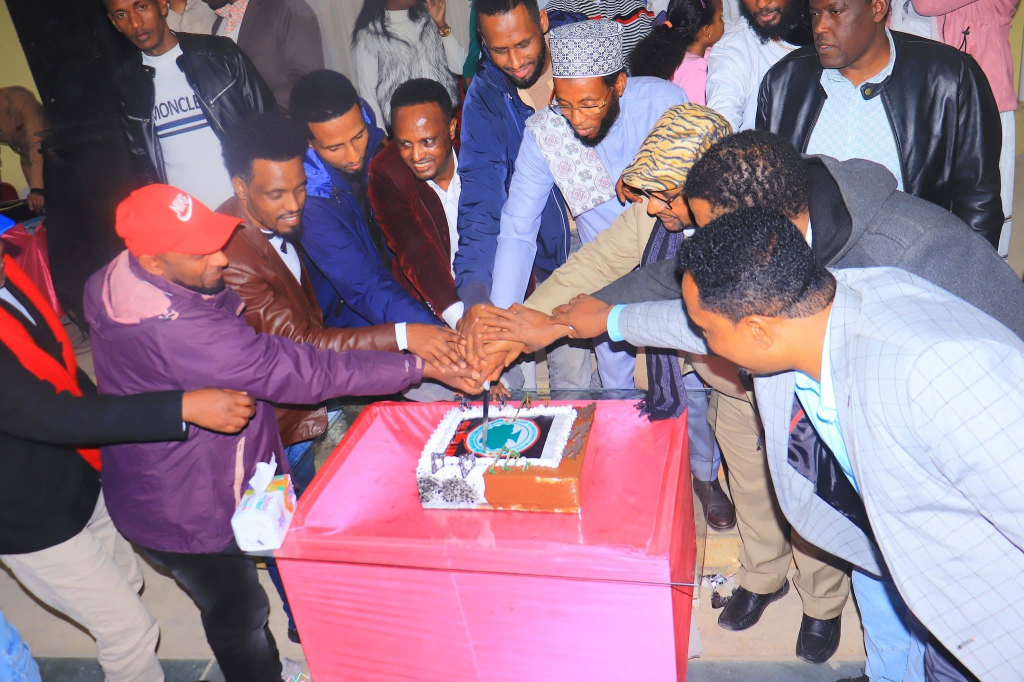
Furthermore, this gathering is a subtle but clear statement of unbroken continuity. It signals that the spirit of the MTA, the spirit of organized, dignified, and persistent advocacy for Oromo rights and identity, is not confined by borders or diminished by time. Whether in Cairo, Minneapolis, or Melbourne, the association’s legacy provides a framework for community cohesion and purpose. It answers the poignant question of how to remain meaningfully connected to a homeland many cannot safely return to. The answer lies in being living archives, active advocates, and unwavering supporters.
As the celebrations concluded, the message was clear: the Maccaa-Tuulamaa Association is far more than a historical relic. It is a living institution, its meaning continually renewed by diasporas like the one in Egypt. Their anniversary was a declaration that the seeds planted by the founders in the 1960s have borne fruit that now grows in global soil. It affirmed that the duty of the present generation is not just to remember the past, but to nurture this resilient tree, ensuring its branches—spread across the world—remain strong, interconnected, and forever reaching toward the light of justice and self-determination for Oromia.
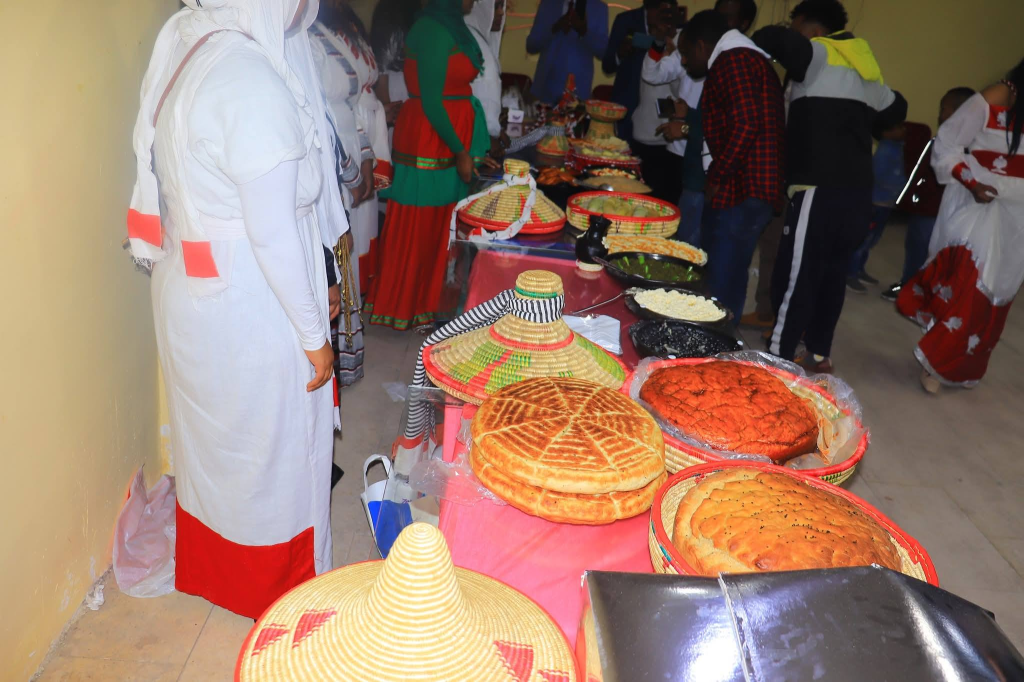

Remembering the Past: Key to Oromo Self-Determination

Feature Commentary: On History, Fear, and the Unfinished Work of Liberation
By Maatii Sabaa
February 1, 2026
A specter haunts the discourse around the Oromo struggle for self-determination: the fear of history. Not the fear of making history, but the fear of speaking its full, unvarnished truth. A persistent notion suggests that to revisit the complex, often painful narrative of the Oromo Liberation Front (OLF) is to court chaos, to sow discord, and ultimately, to abandon the ongoing struggle. This perspective, often implied if not directly stated, holds that dwelling on the past is counterproductive.
This is a profound and dangerous miscalculation.
To argue that examining our history—with all its sacrifices, schisms, and strategic crossroads—has no place in the current struggle is to build our future on a foundation of amnesia. It is to disrespect the very martyrs in whose name we claim to act. The journey of the OLF, from its intellectual germination in the early 1970s, its formal establishment in 1973, and the articulation of its political program in 1976, is not a relic to be shelved. It is the origin story of a modern political consciousness. The subsequent decades of immense sacrifice—of targeted killings, imprisonment, and exile of its intellectuals and heroes—were the bloody ink with which chapters of resistance were written. The bittersweet victory of 1991, which broke the back of the Derg but saw the dream of Oromo liberation deferred, is a pivot point every contemporary analysis must contend with.
The internal fractures, the political alliances within the four-party coalition of 1991, the subsequent marginalization, and the difficult choices faced in the 1990s are not scandalous secrets. They are critical data points. They explain why the OLF found itself back in the bushes, in a “no-choice” scenario, fighting to keep a promise made to its fallen. To ignore this is to ignore the root causes of the very cycles of conflict and resistance that have characterized the past thirty years.
The claim that today’s generation, which has demonstrated formidable political maturity through movements like the #OromoProtests (Finfinnee DFS/Gadaa system is not the correct term here, replaced with the widely recognized hashtag) and the Qeerroo mobilization, would be destabilized by an honest reckoning with history is an insult to their intelligence. It is a paternalistic logic that assumes they cannot handle the complexity that shaped their present. We see remnants of old guard mentalities attempting to replay 30-year-old scripts, causing needless friction, and we are told to look away for the sake of unity. But unity forged in silence is fragile; unity built on a shared, honest understanding is unbreakable.
Therefore, speaking our history—the full history of a people’s resistance against successive repressive systems—is not separate from the struggle. It is an essential organ of it. Our history is our primary weapon against systemic alienation. When we surrender its narrative out of fear, we disarm ourselves intellectually and spiritually.
The central question for every individual invested in this cause today must not be, “How do I avoid offending powerful sensibilities?” It must be: “What is my role in ensuring the ultimate sacrifice of our heroes was not in vain?” For those who mistake gossip, character assassination, and sowing despair among the ranks as revolutionary action, a reckoning is due. True revolutionary duty lies in disciplined organization, in studying and adapting the strategic frameworks of our forebears to today’s realities, and in building upon—not abandoning—their foundational goals.
My recounting of history is not a wish to return to yesterday. It is an act of gathering all the pieces of our story so we can understand the puzzle of our present. Yes, we must celebrate every hard-won gain at the national level. But we must also be clear-eyed: without a deliberate, collective, and honest effort to address the core, unresolved question of Oromo national self-determination, those gains will remain incomplete and vulnerable.
The final struggle is not just against a visible enemy; it is against the forgetting, the fear, and the fragmentation of our own story. To remember completely, to analyze courageously, and to speak truthfully is, itself, a revolutionary act.
The Final Struggle is to End Subjugation!
Victory for the Oromo People!

Restoring Haramaya: A New Era for Tourism and Environment

Feature Commentary: Haramaya’s Return – From Symbol of Loss to Engine of Growth
For years, the name Haramaya evoked a profound sense of loss and environmental grief in Ethiopia. The haunting image of a vast, cracked lakebed where a major body of water once thrived became a national symbol of ecological mismanagement and the devastating consequences of environmental neglect. The primary culprit, as experts consistently pointed out, was siltation and pollution—a slow-motion disaster unfolding over 17 years.
However, a remarkable story of restoration and reimagining is now being written. As of late 2025/2026, Haramaya is not just back; it is being strategically positioned as a cornerstone for economic development and a premier tourist destination. This isn’t merely a recovery; it’s a metamorphosis.
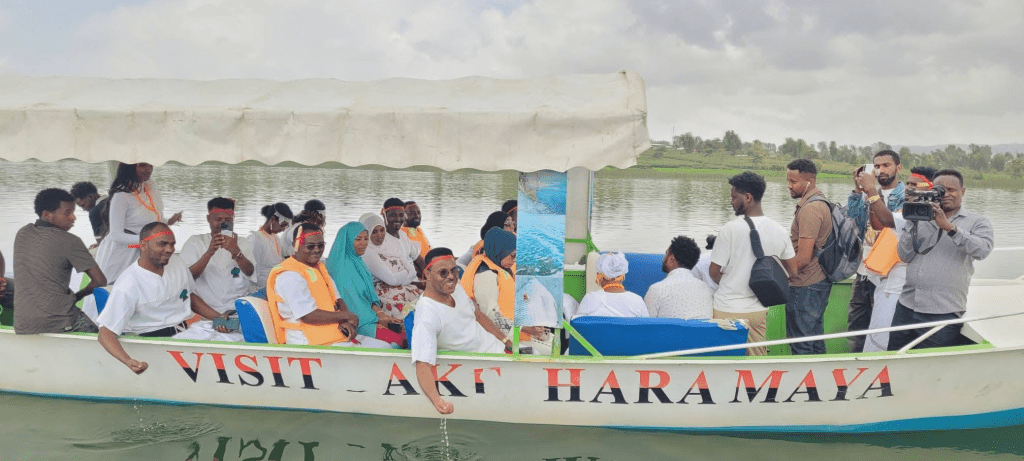
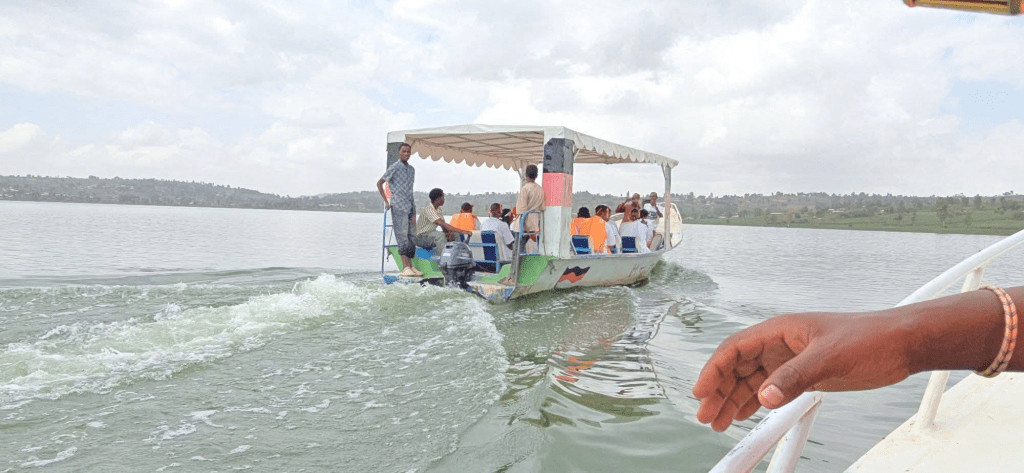
The catalyst for this shift is a multi-faceted, concerted effort spearheaded by the Oromia Regional State. As highlighted by officials like Culture and Tourism Bureau Head Jamiila Simbiruu and Mayor of Mays City Dr. Ifraha Wazir, the mission has moved far beyond refilling the lake. The goal is to systematically develop and promote Haramaya’s immense historical and natural potential. Having already achieved regional recognition, the focus is now on elevating it to a site of national significance.
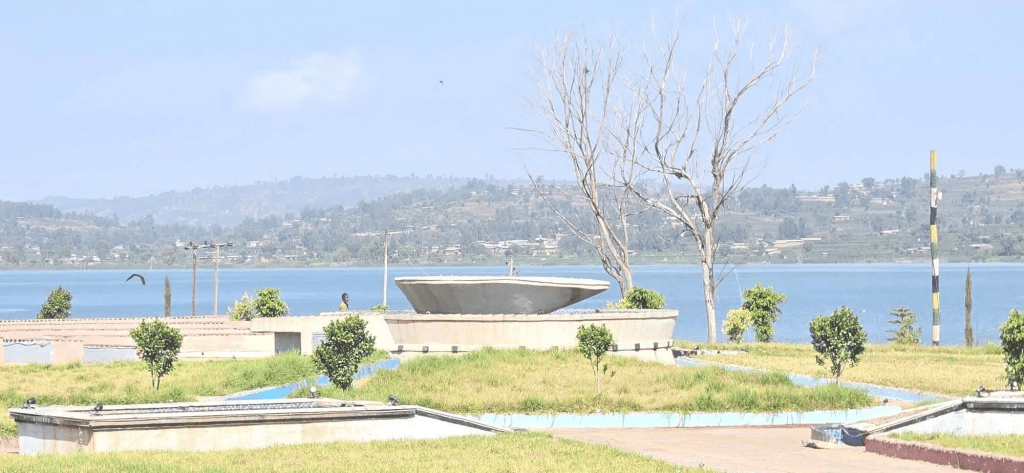
The restoration itself is a testament to community-powered environmentalism. The lake’s return is credited to intensive rehabilitation works, including silt clearance and watershed management, combined with the transformative “Asheara Magarisaa” (Green Legacy) initiative. This involved the active participation of communities from 14 surrounding villages, turning a top-down directive into a grassroots movement for revival.
But the vision extends far beyond the shoreline. Authorities report that the lake’s volume and fish stocks are increasing year on year. Crucially, the perimeter is being secured, cleaned, and developed to unlock its full economic potential. An initial access road has already been completed, and a larger recreational project is underway along the banks, signaling a commitment to creating sustainable infrastructure for both visitors and the ecosystem.
Perhaps the most significant shift in strategy is the move from purely government-led action to a model seeking robust public-private partnership (PPP). Dr. Ifraha explicitly noted that unlocking Haramaya’s full potential requires significant investment from the private sector. This is already materializing, with 19 tourism-focused investment projects approved, nine of which are set to be built directly on the lakefront.
The ambition is grand. As the largest lake in Eastern Ethiopia, Haramaya is poised to serve not just Mays City but a wide region. It is envisioned as a major revenue generator and a source of employment, particularly for the youth. Its influence is rippling outward, with the production of lakeside ornamental plants now supplying major cities like Dire Dawa and Jigjiga.
In summary, the narrative around Haramaya has been fundamentally rewritten. It has transformed from a cautionary tale into a beacon of ecological recovery and smart economic planning. From being a place Ethiopians mourned, it is now a site they can visit and enjoy. With intensified efforts to enhance tourist services and attract more domestic and international visitors, Haramaya stands as a powerful testament to what can be achieved when environmental restoration is seamlessly integrated with community engagement and visionary economic development. The lake that was lost has been found again, and it is now working for its people.

Domestic Tourism: Reviving Oromo Culture in Maya

Feature Commentary: The “Domestic Tourism” Drive – More Than Just A Sightseeing Trip
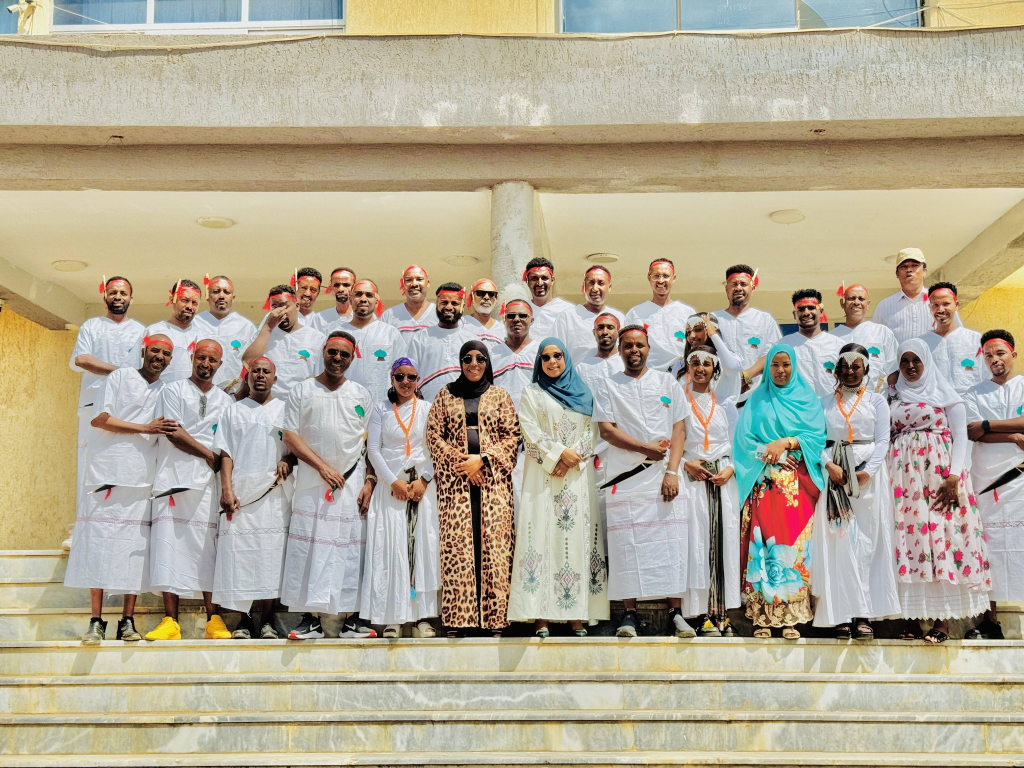
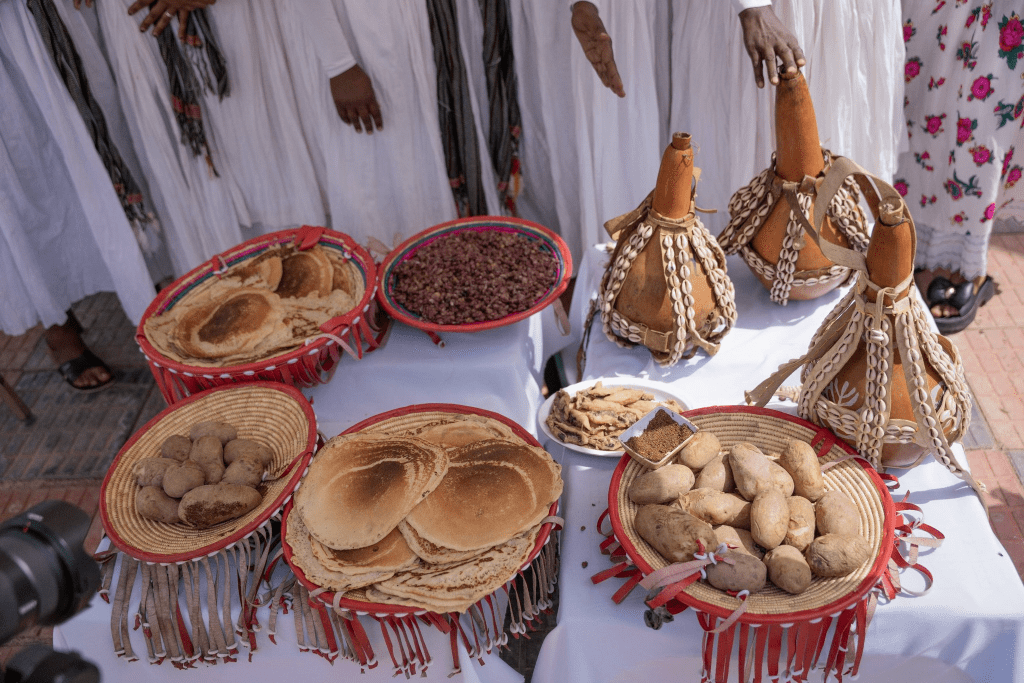
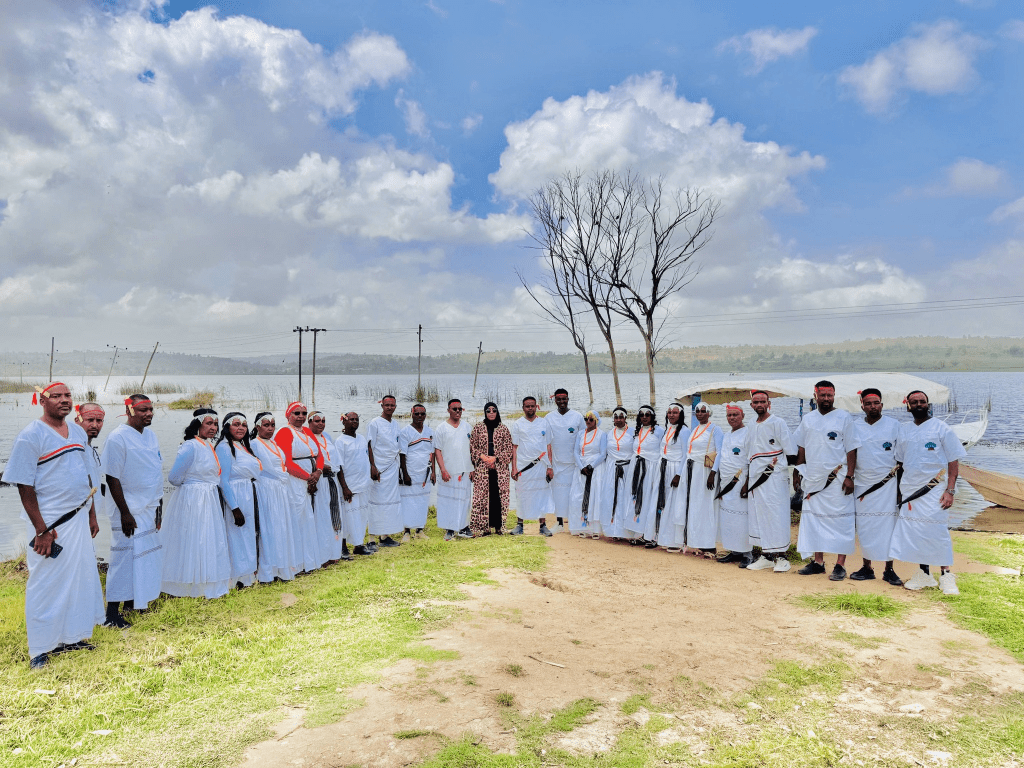
The successful conclusion of the domestic tourism promotion event in the city of Maya, East Hararghe, represents a significant and multifaceted stride for the Oromia Region. On the surface, it was a program where a delegation visited historical, cultural, and tourist sites. But to see it merely as a familiarization tour is to miss its profound cultural, economic, and social implications.
This initiative is a cornerstone of the Oromia Regional Government’s broader Cultural Renaissance policy. That term, “renaissance,” is crucial. It signifies not a static preservation under glass, but a dynamic revival—a reawakening. The goal is not simply to catalog old artifacts, but to actively safeguard, teach, and celebrate the rich and noble elements of Oromo culture. As the commentary notes, this ensures that “the younger generation knows its identity in the morning.” This metaphor is powerful: cultural knowledge is the dawn that illuminates who we are, providing direction and purpose from the very start of life’s journey.
The focus on domestic tourism is a masterstroke in this renaissance. It serves three interconnected purposes:
- Economic Activation: By extensively promoting Oromia’s tourism wealth, the program seeks to stimulate local economies. It encourages spending within the region, supports local guides, hospitality services, and artisans, and fosters community-based tourism. Strengthening domestic tourism builds a resilient internal market before even looking outward.
- Civic Participation: The program aims to “increase the involvement of relevant bodies.” This is about building a coalition for cultural stewardship—engaging local administrations, community elders, youth associations, and entrepreneurs. When communities see their heritage valued and visited, they become its most passionate curators and beneficiaries.
- Social Cohesion and Unity: Perhaps the most profound impact lies here. Visiting different areas within Oromia and Ethiopia breaks down internal barriers. It fosters a deeper understanding of the nation’s diverse tapestry from within. Shared experiences at historical sites and cultural ceremonies build a stronger sense of national unity and social solidarity. As stated, it “plays a high role in fostering the country’s socio-economic development and strengthening national unity.”
The choice of Maya and East Hararghe is itself symbolic. It directs the spotlight to the unique cultural and historical landscapes beyond the usual hubs, ensuring a more equitable and comprehensive celebration of Oromia’s heritage.
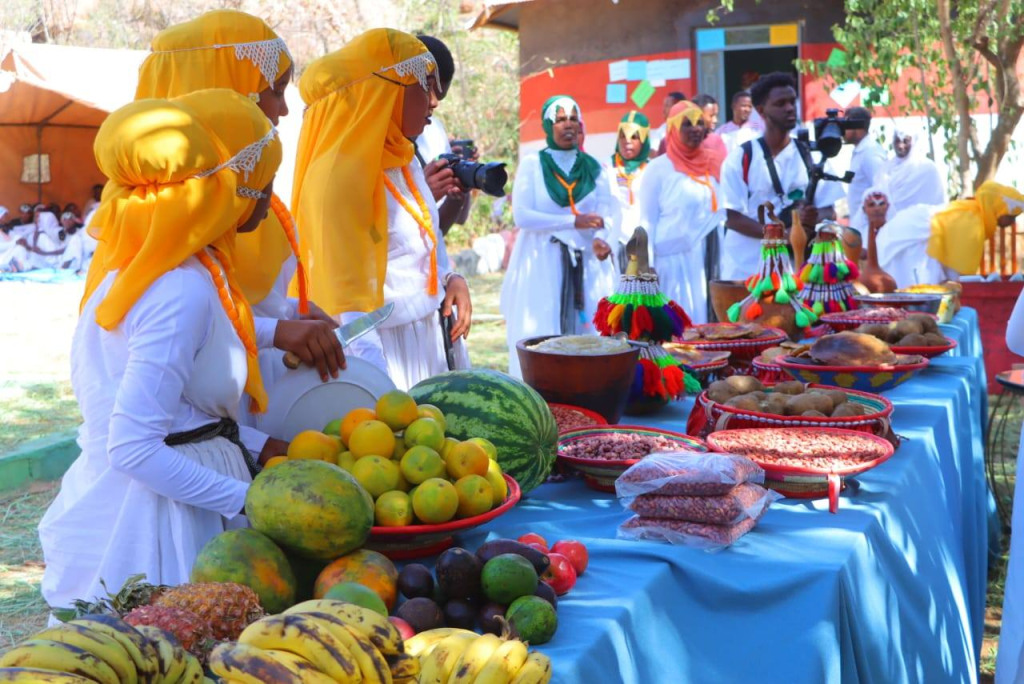
In essence, this domestic tourism drive is far more than a promotional trip. It is:
- A classroom for cultural identity.
- An engine for localized economic growth.
- A workshop for building social cohesion.
- A practical manifestation of the Cultural Renaissance in action.
The “milkaa’ina” (success) of the Maya event, therefore, is not just in its logistical execution, but in its powerful reaffirmation that understanding and exploring one’s own backyard is the first and most vital step toward sustainable development, cultural pride, and national unity. It sets a compelling precedent for other regions to follow, turning the nation into a classroom of mutual discovery for its own people.

Honoring Aadde Beernaadiit: A Legacy of Love and Resilience

A Feature Commentary: The Passing of Aadde Beernaadiit
The news of the passing of Aadde Beernaadiit, the widow of the renowned Oromo artist Dr. Hayilee Fidaa, marks the closing of a profound chapter in Ethiopian cultural and personal history. The memorial service planned in her honour is not merely a funeral; it is a testament to a life of resilience, deep love, and quiet strength that withstood the tremors of national tragedy.
Her story with Dr. Hayilee Fidaa is the stuff of a poignant romance. They met as young students in 1964 at a student event on Boulevard Jordan in Paris, a meeting of minds and hearts far from home. Their bond, formalized in marriage in 1966 in the U.S., flourished with the blessing of two daughters, Saraa and Yodit. This was the beginning of a family life built on intellectual companionship and shared dreams.
Then came the seismic event that would define the rest of her life: the assassination of Dr. Hayilee Fidaa in 1970. The commentary notes a harrowing detail: she learned of her husband’s murder while still in France, the country of the perpetrator. Yet, what did she do? She did not retreat. She embarked on a “great effort” to return to Ethiopia, to the very place where her husband’s blood was spilled. This act alone speaks volumes about her character—a determination to confront grief at its source, to be present in the land he loved, and to raise their daughters connected to his roots.
Her subsequent interviews, like one with Azeeb Warquu on Radio Fana, reveal a woman who, though devastated, framed her loss through the lens of the immense love they shared and her faith. She carried not just grief, but the weight of his legacy. Her dedication to Dr. Hayilee’s family—visiting his birthplace in East Welega, supporting his siblings and mother, educating his nieces and nephews—shows she became the living bridge between his past and their future. She didn’t just mourn an artist; she nurtured the ecosystem from which he sprang.
Her life in Addis Ababa thereafter was a powerful statement. Choosing to live in Finfinnee (Addis Ababa), the capital of her husband’s homeland, over France, demonstrated where her heart and loyalty lay. She channeled her experience into compassion, founding the “Okay” Charity to support orphans and women in distress. This was her enduring response to tragedy: not bitterness, but organized kindness.
The later years brought a familiar diaspora narrative—a daughter abroad, and the quiet life of an elder. Passing at 84, she witnessed epochs change, but her core identity remained: the guardian of a memory, a philanthropist, and a matriarch.
Therefore, this memorial service, this Yaadannoo fi Dungoo, is for so much more than a bereaved widow. It is for:
- A pillar of resilience who stood firm after an unimaginable blow.
- A keeper of the flame who diligently preserved and honored her husband’s legacy and family.
- A compassionate builder who translated personal pain into public good.
- A symbol of transnational love and loyalty, tethered between two worlds but choosing to plant her heart in Ethiopian soil.
Aadde Beernaadiit’s life reminds us that behind every great, lost figure, there are often unsung heroes of remembrance. Her strength ensured that Dr. Hayilee Fidaa’s legacy was not just a public treasure, but a lovingly tended private garden. In mourning her, we also honour the quiet, formidable power of the love that outlasts even death. May she find the peace she so steadfastly cultivated for others. #AaddeBeernaadiit #HayileeFidaa

Dr. Trevor Trueman: An Icon of Oromo Advocacy

Dr. Trevor Trueman (Galatoo): The Quiet Ally and the Unyielding Echo
Some names are woven so deeply into the narrative of a people’s struggle that they become inseparable from it, transcending geography, ethnicity, and origin. Dr. Trevor Trueman—affectionately known as Galatoo, “Thank You”—is one such name. His story is a powerful commentary on the nature of true solidarity, the enduring power of bearing witness, and the quiet, strategic work that sustains a freedom movement far from the headlines.
Dr. Trueman’s journey with the Oromo people began not in the halls of advocacy, but in the gritty, desperate reality of survival. In the late 1980s, as a family health physician, he was in Sudan, training Oromo health workers in refugee camps. When the Derg fell in 1991, he moved into Wallagga, shifting his focus to training community health workers. This foundation is crucial. His alliance was not born of abstract political theory, but of humanitarian connection—of seeing, firsthand, the people behind the cause. He didn’t arrive as an activist; he became one through service.
It was from this ground-level view that his pivotal role emerged. Starting in 1992, he began the critical, dangerous work of documenting and internationalizing the Ethiopian government’s systematic human rights violations against the Oromo people. While the OLF and others fought on the political and military fronts, Dr. Trueman opened a vital front in the global arena of information. He understood that a tyranny thrives in silence and that the world’s conscience must be awakened with evidence. His reports became the credible, external voice that the diaspora and activists within could amplify, forcing the “Oromo question” onto agendas where it was being ignored.
His strategic genius is perhaps best embodied in the Oromia Support Group (OSG), which he co-founded in 1994. The OSG was not a protest group but a clearinghouse for truth. It methodically gathered testimony, verified atrocities, and funneled this information to UN bodies, foreign governments, NGOs, and media outlets. For decades, when the Ethiopian state dismissed accusations as rebel propaganda, the OSG’s meticulously documented reports stood as unassailable counter-evidence. Dr. Trueman became a bridge of credibility, translating the suffering of a distant people into a language the international system was compelled, at least, to acknowledge.
This commentary highlights several profound truths:
- The Outsider as Essential Insider: Dr. Trueman’s identity as a “foreign national” was not a barrier but a unique asset. It lent his documentation an perceived objectivity that was desperately needed to break through global apathy. He wielded his privilege as a tool for the voiceless.
- Advocacy as a Marathon, Not a Sprint: His commitment, spanning from 1988 to the present day, defines “umurii dheeradhaa”—a long life of dedication. While political fortunes and rebel movements evolved, his channel of advocacy remained constant, providing a thread of continuity through decades of struggle.
- The Strategic “Taphat” (Preparation): The tribute rightly notes he will be remembered for his “shoora taphataniif”—his strategic preparations. His work was the essential groundwork. By ensuring the world could not plead ignorance, he created the political space and pressure that empowered all other facets of the Oromo struggle.
Dr. Trevor Trueman’s legacy is a masterclass in effective international solidarity. He did not seek to lead the Oromo struggle; he sought to amplify it. He did not fight with weapons, but with words, facts, and an unwavering moral compass. In the grand symphony of the Oromo quest for freedom, if some voices are the roaring melodies and others the steady rhythm, Dr. Trueman’s has been the crucial, clear note of the witness—persistent, truthful, and cutting through the noise to make the world listen.
For this, the name Galatoo is not merely a token of thanks, but a title of honor, earned over a lifetime. His work ensures that the crimes committed in darkness are recorded in light, and that the struggle of the Oromo people has, indeed, been given an echo the world cannot un-hear.

Mammaa Argoo (1946-2026): A Legacy of Service in the Oromo Struggle

A Life of Unwavering Service: Mammaa Argoo and the Enduring Spirit of the Oromo Struggle
The passing of Obbo Mammaa Argoo in Seattle, USA, is not merely the loss of an individual, but the quiet closing of a chapter written with relentless dedication. His life story, woven from threads of professional service, community building, and unwavering support for the Oromo cause, stands as a powerful commentary on the nature of true activism and the quiet architects of diaspora identity.
Obbo Mammaa’s journey defies the simplistic narrative of a revolutionary who arrives fully formed. It reveals a more profound truth: that the backbone of any long-term struggle is often built by those who work without fanfare, whose “front line” is the community meeting, the weekend language class, and the patient effort to explain a people’s plight to the outside world. From his early days in the 1960s in Shashamane, where he worked to expand educational access in rural villages, to his decades as a respected healthcare professional in Ethiopia and later in Seattle’s Harborview Medical Center, his foundational principle was service.
This ethos seamlessly translated into his life in diaspora. Upon arriving in Seattle in 1992, he didn’t retire; he re-planted his roots in service. He became a pillar of the Oromo community there, not as a distant figurehead, but as a hands-on organizer. For 27 years, he served tirelessly. The establishment and nurturing of the Oromo Sports Federation in North America (OSFNA) is a testament to his visionary understanding that cultural unity and physical well-being are vital for a dispersed people. The weekly classes he helped lead—teaching Oromo language, history, and culture to children—were an act of profound resistance against assimilation and oblivion. These were the quiet trenches where identity was fortified for the next generation.
His engagement extended far beyond the Oromo community. His service on boards like the Harborview Community House, the East African Advisory Council for Seattle Police, and One America illustrates a crucial point often missed: effective advocacy for one’s own community requires building bridges and understanding within the wider society. He knew that to advance the Oromo cause, he had to be a respected voice in the broader conversations about human rights, immigration, and civic participation. He was a connector, translating Oromo realities for American institutions and leveraging those institutions for the benefit of his people.
The commentary of his life makes several indelible arguments:
- Activism is Multifaceted: The freedom struggle is not fought only with political manifestos. It is fought in hospitals with compassionate care, in sports federations that foster pride, and in classrooms on Saturday mornings where mother tongues are kept alive. Mammaa Argoo embodied this holistic approach.
- The Diaspora as a Foundation: He demonstrated that the diaspora’s role is not just to lobby or send remittances, but to build sustainable, enlightened, and united communities abroad. These communities become enduring repositories of culture and platforms for advocacy.
- Steadfastness Over Spectacle: In an age of fleeting headlines and performative activism, his nearly three decades of consistent, granular community work—“without rest or break,” as the tribute notes—speaks of a deeper, more resilient commitment. His was a long obedience in the same direction.
- The Personal is Political, The Professional is too: His career in healthcare was not separate from his activism; it was an extension of it. Caring for the sick, whether in Bulbula, Adama, or Seattle, was congruent with caring for the health and wholeness of his nation.
Obbo Mammaa Argoo has now “left this world,” as the tribute respectfully states. But he did not leave a void; he left a blueprint. He was a man who, as his story confirms, “did not turn his back on the Oromo struggle,” but rather folded it into the very fabric of his daily life, his profession, and his civic duty. His legacy is not etched in stone monuments, but in the living institutions he helped build, in the children who can speak Afaan Oromoo, in the stronger community fabric of Seattle, and in the powerful, quiet example of a life spent entirely in the service of others.
His passing is a moment of sorrow, but more so, it is a moment for reflection on what enduring commitment truly looks like. It looks like the life of Mammaa Argoo.
The Legacy of Obbo Mama Argo: A Community’s Guiding Star
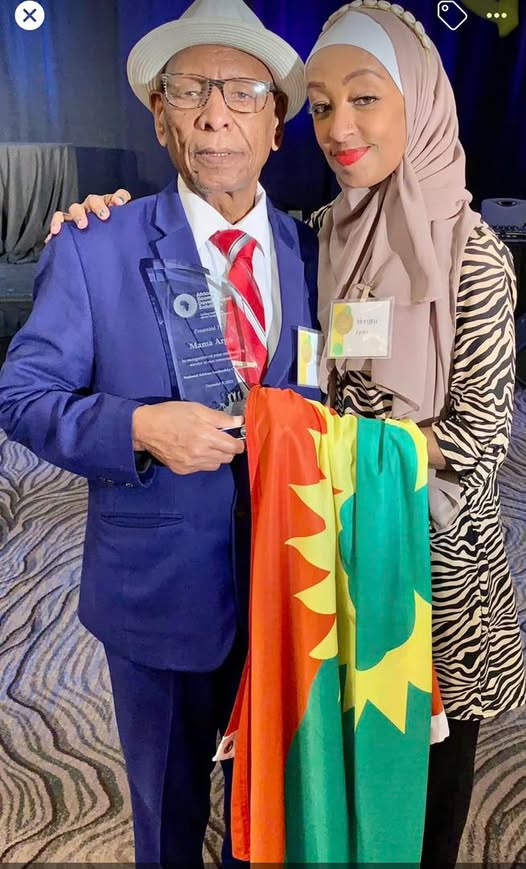
The Milk of Human Kindness: On Losing a Local Legend Like Obbo Mama Argo
By Dhabessa Wakjira
True community is rarely built in grand gestures announced with fanfare. More often, it is woven in the quiet, repeated acts of welcome that happen after dark, in the glow of a porch light, in the simple offering of a cool drink. The passing of a figure like Obbo Mama Argo of Seattle reminds us that the mightiest pillars of a diaspora are often the most humble, their legacy measured not in headlines, but in the cherished, personal memories of a generation.
News of his departure arrives, as the community member writes, with “great sorrow.” But the obituary that follows is not a formal listing of titles—though he certainly earned them as a founding pillar of the Oromo Soccer Federation and Network in North America (OSFNA) and a selfless public servant. Instead, it is something more powerful: a flood of sensory memory, a testament to a man whose impact was felt in the intimate, daily fabric of life.
“I can’t think of anyone who was more selfless or whose contributions are more undeniable,” the tribute begins, anchoring his legacy in collective agreement. For over twenty years in Seattle, the writer explains, “we grew up looking up to his guidance and the love he had for Oromos.” Here is the core of it: he was a local north star, a constant reference point for a community finding its way in a new land.
Then comes the defining anecdote, the story that paints a clearer picture than any official biography ever could. “Back in those childhood days… every evening after soccer, we would go to his house and drink milk.” From this simple, nurturing act emerged his most beloved title: “Abbaa Aannanii” – the Father of Milk.
This name is a masterpiece of community poetry. It speaks of sustenance, of care, of a home that was always open. It speaks of a man who understood that building a community isn’t just about organizing tournaments or holding meetings; it’s about feeding the youth, literally and spiritually. His house wasn’t just a residence; it was a post-game refuge, a cultural waystation where ties were strengthened not through rhetoric, but through shared cups and shared presence.
The tribute makes a profound point about gratitude: “This blessing was a great reward that the Seattle community received from him. Receiving it was timely.” Abbaa Aannanii performed his essential role precisely when it was most needed—during the formative years of a community’s establishment. His gift was his unwavering, predictable kindness.
And so, the writer issues a crucial, poignant reminder: “It is necessary to say THANK YOU to people like him while they are still alive.” We are often so good at eulogizing, at weaving beautiful galatoomaa in hindsight. But the true challenge is to offer that gratitude in real-time, to honor the living pillars before they become memories.
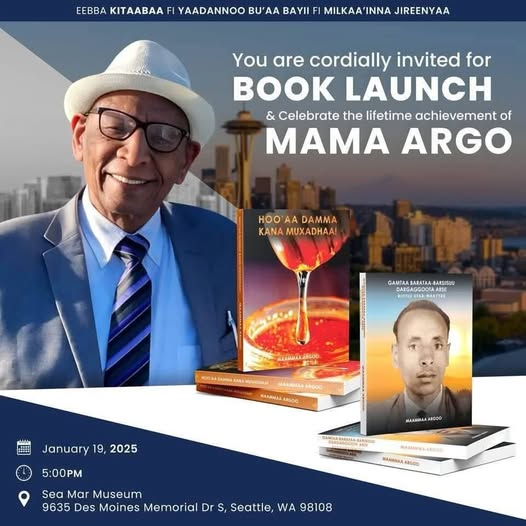
Obbo Mama Argo’s story is a universal one. Every community, every neighborhood, has its Abbaa Aannanii—the person whose door is always open, whose quiet support forms the bedrock. His passing is a deep loss precisely because his contribution was so profoundly human. He built a nation not through pronouncements, but through poured cups of milk; not just through organizing soccer, but by ensuring the children who played it were nourished, welcomed, and loved.
His legacy is the warmth of that remembered milk, the strength of the bonds forged in his living room, and the enduring model of a patriotism expressed through radical, open-hearted hospitality. We extend our deepest condolences to his family, the Seattle Oromo community, and OSFNA. In mourning him, may we all be inspired to see, appreciate, and thank the quiet pillars in our own midst, while the light on their porch is still on.
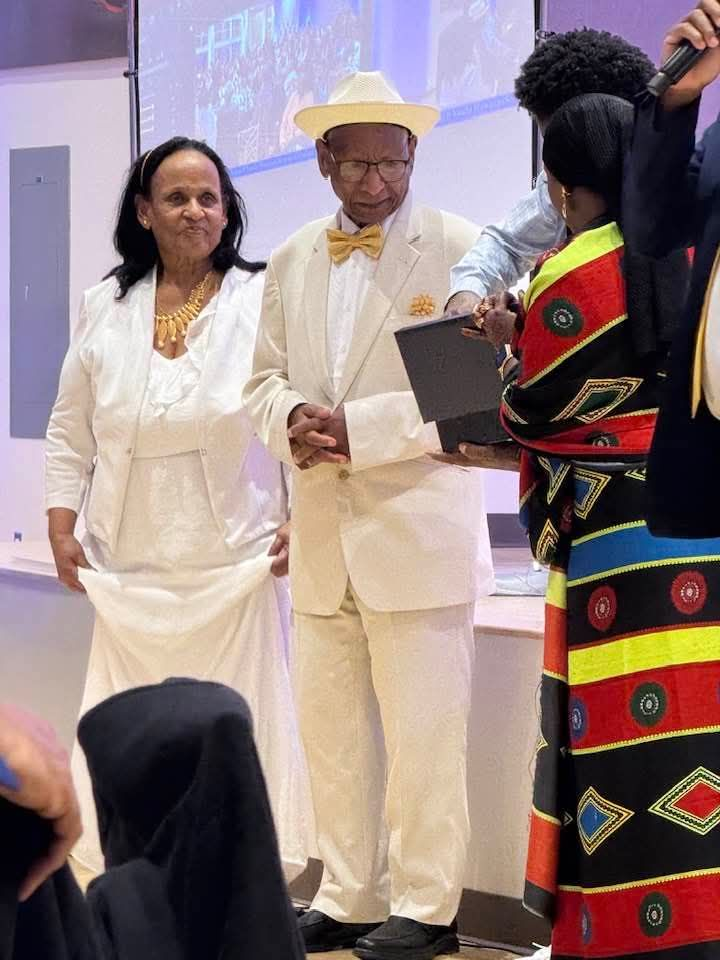

An Unseen Architecture: The Passing of a Pillar and the Foundation He Leaves Behind

An Unseen Architecture: The Passing of a Pillar and the Foundation He Leaves Behind
By Maatii Sabaa
A community, especially one woven across a diaspora, is an intricate architecture. We most easily see its public face—the vibrant festivals, the spirited tournaments, the collective statements. But the integrity of the entire structure, its ability to stand firm across distance and time, depends on a different kind of element: the hidden pillars. These are the individuals whose work is not in the spotlight, but in the scaffolding; whose legacy is not a single dramatic act, but the relentless, humble labor of holding things together.
The recent passing of Obbo Mama Argo is the quiet removal of such a pillar. The condolences flowing to his family, the Seattle Oromo community, and the Oromo Soccer Federation and Network in North America (OSFNA) speak to a loss that is deeply personal yet irreducibly public. He is remembered with the profound titles that form the bedrock of any strong society: a devoted patriot, a loving family man, a selfless public servant. But it is the specific mention of his founding role in OSFNA, and his three decades of support for it, that reveals the true nature of his contribution.
To found an organization like OSFNA is to do more than start a sports league. It is to recognize that for a dispersed people navigating the complexities of a new world, identity needs a living, breathing, communal space. A soccer tournament becomes more than a game. It is an annual pilgrimage, a temporary capital, a network of kinship and care. It is where the next generation meets the old, where news is exchanged, where culture is performed, and where a scattered nation gathers to feel whole.
For three decades, Obbo Mama Argo helped build and sustain this sacred space. This was not a ceremonial role. It is the unglamorous work of logistics, diplomacy, fundraising, and quiet encouragement. It is resolving disputes, securing fields, comforting losses, and celebrating victories that extend far beyond the final whistle. It is the work of a builder who understands that the structure—OSFNA—is not an end in itself, but a vessel for preserving something infinitely precious: a sense of belonging.
His type of patriotism is the most essential kind. It is not the patriotism of grand rhetoric, but of concrete action. It is the patriotism that shows up, year after year, to ensure the community has a place to play, to connect, to be Oromo together in a foreign land. This “selfless public service” is the very glue of diaspora survival.
In mourning him, the community confronts a poignant truth. We often celebrate the visible leaders—the speakers, the stars, the officials. But the true resilience of a people is forged by those like Obbo Mama Argo, whose life’s work was to be a reliable constant, a foundational node in the network. His absence creates a silence that is less about noise and more about stability; a space where his once-steadfast presence used to be.
The greatest tribute to such a man, therefore, is not just in the tears shed, but in the continued strength of the architecture he helped build. It is in the ongoing vibrancy of OSFNA, in the unity of the Seattle community, and in the commitment of new generations to step into the supporting roles he exemplified. To honor Obbo Mama Argo is to understand that the most enduring monuments are not made of stone, but of sustained, loving effort. His legacy is etched in every game played, every connection made, and in the enduring sense of home he helped construct for a nation far from its geographic one.
Galatoomi, Abbaa Argo. Your foundation holds.
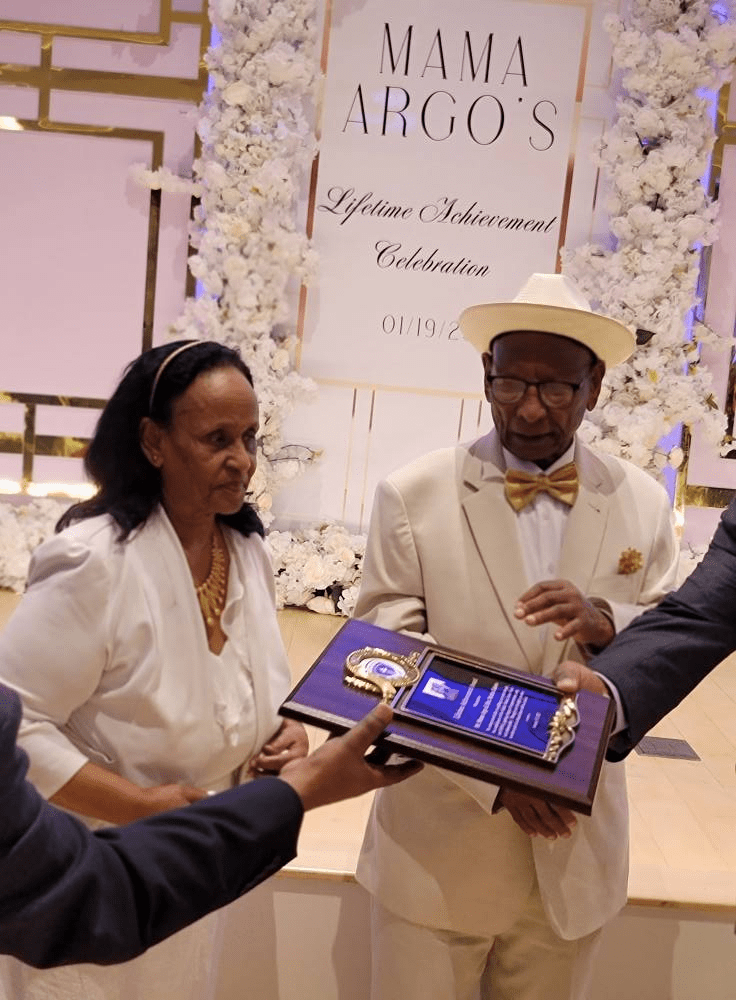

From Struggles to Joy: Honoring Father’s Journeys
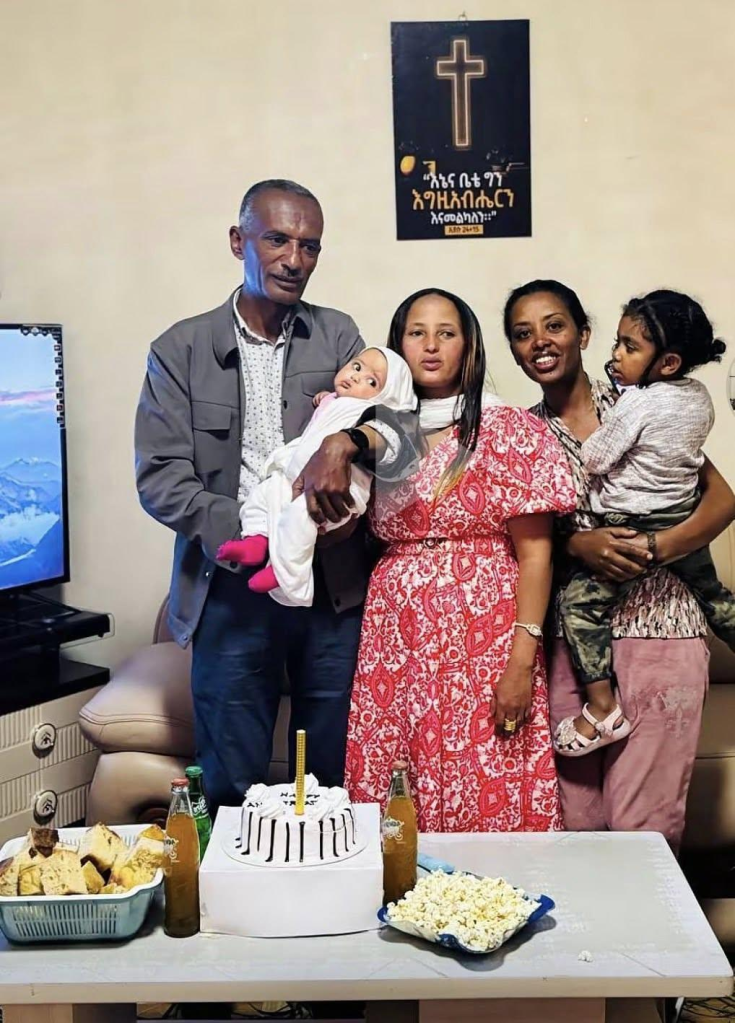
For Our Comrade:A Commentary on Triumph Through the Storm
By Dhabessa Wakjira
Sometimes, the most profound stories of triumph are not told on public stages or captured in headlines. They are whispered in quiet prayers of gratitude, wrapped in the simple, seismic words: “You made it.”
A recent, poignant social media tribute captured this essence perfectly. Dedicated to a brother named Masfin Ittaanaa on his child birthday, it read: “Haadhoo koo, Masfin Ittaanaa, baga Waaqayyo guyyaa kanaan si gahe; rakkoo fi dararaa san keessa dabartee guyyaa gammachuu kana gahuu keetti hedduun gammade. Waaqayyo haa galatoomu!”
Translated, it is a powerful ode: “My brother, Masfin Ittaanaa, thank God you have reached this day; having passed through that hardship and pain to arrive at this day of joy, I am so happy. Thank God!”
This is more than a birthday wish. It is a testimony. It is a eulogy for struggles endured and a celebration of survival won. In its brevity, it lays bare a universal truth about the lives of countless brothers and sisters, particularly those who have navigated the turbulent waters of displacement, conflict, or profound personal sacrifice.
The message does not name the “rakkoo fi dararaa” – the hardship and pain. It doesn’t need to. Their shadow is present in the brilliant light of the joy that followed. This intentional silence is respectful; it acknowledges that some battles are too sacred, too deeply carved into a person’s soul, to be itemized for public consumption. What matters is the outcome: he passed through. The imagery is not of avoiding the storm, but of walking directly through its core and emerging, scarred but standing, on the other side.
This reframes the celebration. The joy of the day is not merely the marking of another year, but the honoring of a journey. The birthday becomes a monument to resilience. Every laugh shared, every bite of cake, every gathered family member is a victory flag planted on the hard-won ground of survival.
And at the heart of it all is the child, witnessing. “Hedduun gammade” – “I am so happy.” This happiness is layered with relief, awe, and a depth of love that only comes from having seen the cost. It is the happiness of a witness who understands the price paid for the peace they now enjoy.
Finally, the closing prayer, “Waaqayyo haa galatoomu!” – “Thank God!” – roots this personal triumph in a larger frame of grace and faith. It speaks to a worldview where survival is not solely an individual’s toughness but also a manifestation of divine favor or ancestral strength, a shared burden and a shared deliverance.
In our culture of highlighting only the polished, perfect outcomes—the success without the struggle—this tribute is a necessary correction. It honors the process as much as the result. It reminds us that the most deserving celebrations are often for those who have weathered silent storms.
So, to all the Masfin’s, the brother and father who have dabarte—passed through—we offer more than birthday greetings. We offer our deepest recognition. Your joy is not a simple emotion; it is a testament. Your survival is our inheritance. And your arrival at this day, against all odds, is perhaps one of the most powerful definitions of victory we will ever know.
Galatoomaa. Waaqayyo haa galatoomu.
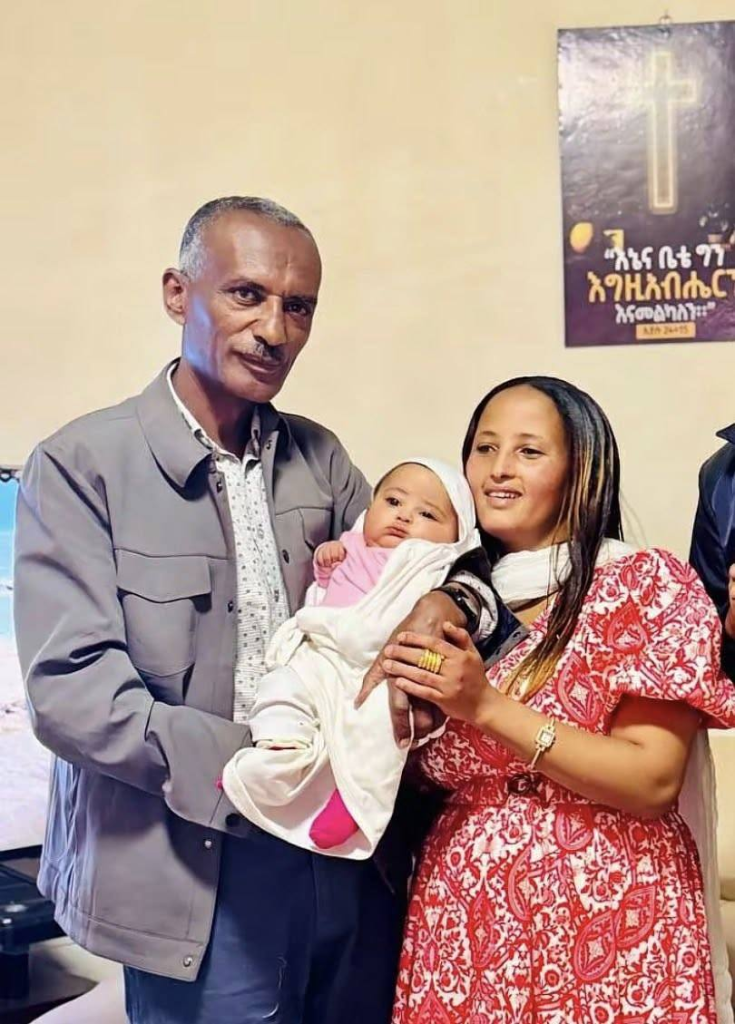

Resilience Amidst Cold: A Celebration of Community and Joy

Finding Warmth in the Cold: A Commentary on Resilience, Home, and Defiant Joy
By Maatii Sabaa
In a world saturated with curated perfection, a birthday post from Minnesota activist and community figure Najat-Sakayyee Hamza offered something more substantive: a masterclass in nuanced resilience. Her message, shared on her birthday, was not a simple scroll-past celebration. It was a layered reflection on holding personal joy and communal concern in each hand, and finding the unique strength of home in a seemingly inhospitable climate.
The opening – “Another year around the sun, alhamdulillah” – grounds the moment in gratitude, a spiritual acknowledgement of life’s journey. The tease of “exciting news” regarding personal growth is the kind of forward-looking energy that fuels us. But Hamza immediately pivots, refusing to let her personal milestone exist in a vacuum. She names the elephant in the room: “the current situation in our country and state,” a veiled but clear reference to the political tensions and divisions that grip both Minnesota and the nation. In doing so, she elevates her message from the personal to the communal.
This is where her insight deepens. “We cannot allow them to steal our joy & happiness,” she declares. This is not naïve optimism; it is a strategic, defiant act. In an age where anxiety is a default setting, choosing joy becomes a radical form of resistance. Her definition of resilience is poetic and powerful: “standing still in face of the storm and coming out of it better.” It’s not about avoiding the storm, nor being blindly battered by it. It’s about a rooted, unwavering presence that allows for transformation.
Then, she turns to her love letter to Minnesota. It’s a rebuttal to the perennial question posed to those in the Upper Midwest: “Why would you stay in such a cold place?” Her answer transcends climate. “There is a warmth to Minnesota only we know & experience,” she writes, “not even harsh winters can defeat.” This “warmth” is the secret ingredient. It’s not the temperature; it’s the tangible sense of community, the shared grit, the unspoken understanding between neighbors who shovel each other’s driveways and show up for each other in crises. It’s the #MinnesotaStrong ethos—a toughness forged in blizzards that translates into civic solidarity.
Hamza’s final note, “We know, this too shall pass & we will overcome it,” applies as much to a personal struggle, a political winter, or an actual February freeze. It’s the quiet, collective faith of a people accustomed to long winters but utterly confident in the eventual spring.
Najat-Sakayyee Hamza’s birthday reflection is more than a personal update. It’s a micro-manifesto for our times. It argues that true strength lies in the ability to acknowledge darkness while kindling a personal light, to feel the bite of the cold while cherishing the profound warmth of community. In celebrating her own journey, she inadvertently charted a map for communal perseverance: find your anchor in gratitude, defend your joy as an act of will, and draw your warmth from the people around you. That’s a wisdom worth celebrating, in any season.

Celebrating Oromo Identity: A Grand Wedding Ceremony

Headline: “Ayyaana!”: Oromia Celebrates a Grand Wedding, Reaffirming Identity, Culture, and the Gadaa Spirit
Sub-headline: A vibrant ceremony blends ancient wisdom, modern success, and a powerful message to the youth to carry the torch forward.
[Finfinne/Oromia, Ethiopia] – In a resplendent celebration that echoed the profound wisdom of Oromo tradition, a recent grand wedding ceremony became more than a union of two individuals; it was a vibrant declaration of cultural identity, generational continuity, and communal strength. Underpinning the festivities was the timeless Oromo proverb, “Ilmi gahee haafuudhu, intalli geesse haa heerumtu” (Let the son who brings the inheritance flourish, let the daughter who carries forward the lineage be married), a core tenet of the Gadaa system.
The ceremony honored this wisdom twofold. The bride, celebrated for safeguarding and embodying Oromo customs and heritage, was heralded for bringing the “Ayyaana”—the blessing, fortune, and sacred celebration—to her family and community. “Our daughter held fast to our culture and presented us with this ‘Ayyaana.’ We are grateful,” expressed family elders, their words reflecting deep cultural pride.
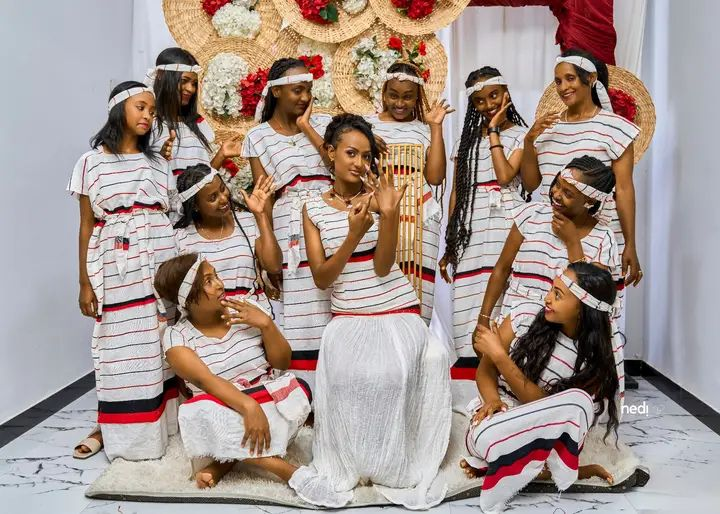
Similarly, the groom was praised not only for his personal achievements but for embracing the “Heera ayyoo”—the laws and wisdom of the fathers—and winning the heart of the community. He stood as an example of one who has honored his own family and now enriches the family of his bride.
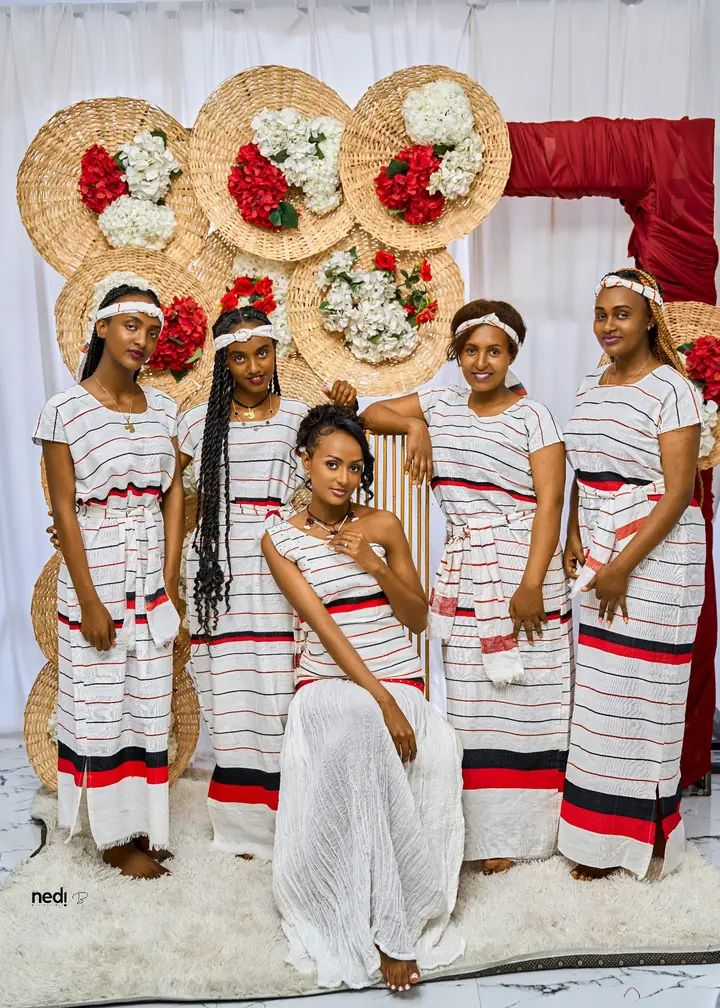
The event was a masterful tapestry of Oromo Aadaa (culture) and Duudhaa (tradition). Guests adorned in traditional attire, the rhythmic beat of keerroo (drums), and the melodic flow of geerarsa (praise songs) transformed the venue into a living canvas of Oromo heritage. The message to the younger generation was clear and powerful: “Strengthen this beautiful and beloved system. Carry it forward together,” a call for unity in preserving their unique way of life.
The celebration extended heartfelt gratitude to all attendees—family, friends, respected community members, and leaders—whose presence amplified the joy. A special acknowledgment was made to those who supported from afar, with wishes for their blessings in the future.
The joyous atmosphere was captured in a closing benediction: “Waaqni Uumaa Uumamaa haa galatoomu!” (May the Creator of all creation be thanked!). The sentiment of shared happiness was encapsulated in the words, “Martinuu akkuma keenya gammadaa” (Let the bride and groom rejoice as we do).
The ceremony was officiated and blessed by Abbaa Sabboontuu Brs. Inkoosaa Namoo alongside harmee Sabboontuu Barsistu. Geexee Fiixaa, signifying a blessing rooted in both spiritual and communal authority.
This wedding stands as a powerful testament to the resilience and dynamism of Oromo culture. It demonstrates that far from being a relic of the past, the wisdom of the Gadaa system provides a living framework for celebrating life, fostering strong communities, and guiding future generations with pride.

Evaluating Current Conditions: OLF Leadership Addresses Crisis Points

Headline: OLF Leadership in Capital Region Holds Urgent Summit to Assess “Current Conditions”
Sub-headline: Closed-door meeting in Gullalle evaluates domestic turmoil, Oromo national issues, and volatile Horn of Africa politics.
Finfinne, Oromia – [AMAJJII 26, 2026] The Political and Organizational Wing of the Oromo Liberation Front (OLF) has convened a critical summit for its leadership cadres operating within the Addis Ababa (Finfinnee) and Sheger City administration. The meeting, framed as an assessment under “current conditions,” was called to deliberate on a pressing array of national and regional challenges.
The high-level gathering took place on AMAJJII 24, 2026, at the OLF’s Gullalle Branch Office. It brought together OLF officials who hold organizational duties in the capital region, a key political and symbolic center for Oromo political activity.
According to sources close to the proceedings, the closed-door deliberations focused on three interconnected crisis points:
- The Prevailing Political and Security Situation in Ethiopia: Leaders analyzed the nation’s deepening instability and its implications for political strategy.
- The Condition of the Oromo People and Oromia: A central, urgent topic was the assessment of the socio-political and security circumstances facing the Oromo population within Oromia regional state, a longstanding core issue for the OLF.
- The Current Political Climate in the Horn of Africa: Discussions also covered the rapidly shifting regional geopolitics and its impact on the Ethiopian and Oromo political landscape.
The meeting was chaired by senior figures from the OLF’s Central Committee and its political wing, identified as Jaal Amaan Filee and Jaal Gammachiis Tolasaa. These officials presented detailed briefings on the summit’s core agenda items, framing the discussions for attending members.
Participants actively engaged, presenting analyses and raising strategic questions, leading the organizers to declare the summit “successful and productive.” The convening of such a focused meeting highlights the OLF’s attempt to consolidate its internal position and refine its response to a period of intense national uncertainty.
The holding of this summit in the capital is particularly significant, indicating an effort by the party’s leadership core to coordinate strategy from a central locus of power and information. While no public statement or resolution has been issued following the meeting, political observers note that such consultations often precede major strategic decisions or public declarations by the party.

Mootuu Ayyaanoo School: A Beacon of Educational Hope
Headline: A Mother’s Name, A Nation’s Future: “Mootuu Ayyaanoo” School Inaugurated as a Beacon of Educational Transformation
Sub-headline: Built with 60 million Birr in Holonkomii, West Shewa, the state-of-the-art school honors Professor Gebisa Ejeta’s mother and embodies a government push for world-class education.
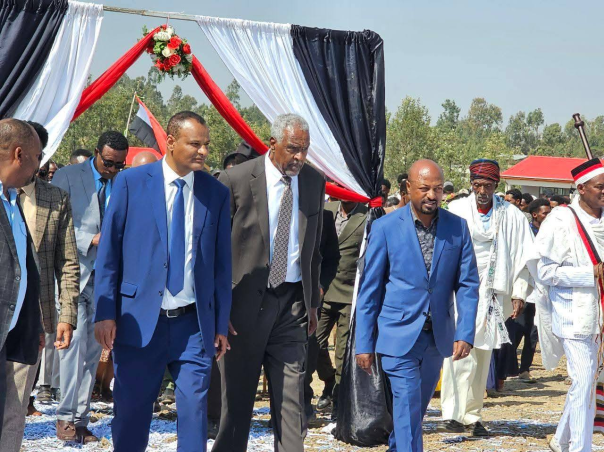
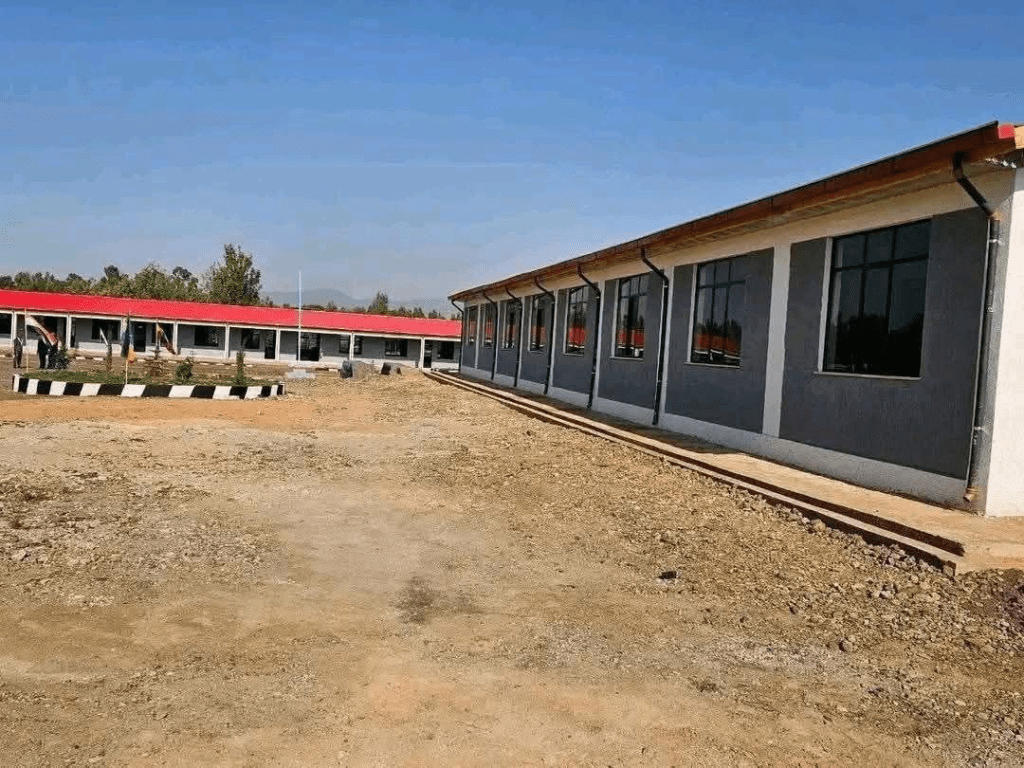
By Maatii Sabaa, Olonkomii, West Shewa, Oromia – In a powerful fusion of personal legacy and national development, the Mootuu Ayyaanoo Secondary School was officially inaugurated today in Holonkomii town. The school, a modern facility constructed with a 60 million Birr government investment, is named in honor of Mootuu Ayyaanoo, the mother of renowned Ethiopian scientist and World Food Prize laureate, Professor Gebisa Ejeta.
The inauguration ceremony was attended by community elders, educators, and senior officials, including the Head of the Oromia Education Bureau, Dr. Tolaa Bariisoo. In his address, Dr. Tolaa framed the school as a critical piece in a larger, transformative strategy.
“The government’s focus on constructing schools of international standard and providing quality education is directly aimed at producing a competent generation in large numbers,” stated Dr. Tolaa. “This work is now bearing significant fruit.”
His words underscore a pivotal shift in educational policy: moving beyond mere access to prioritizing excellence and global competitiveness from the ground up.
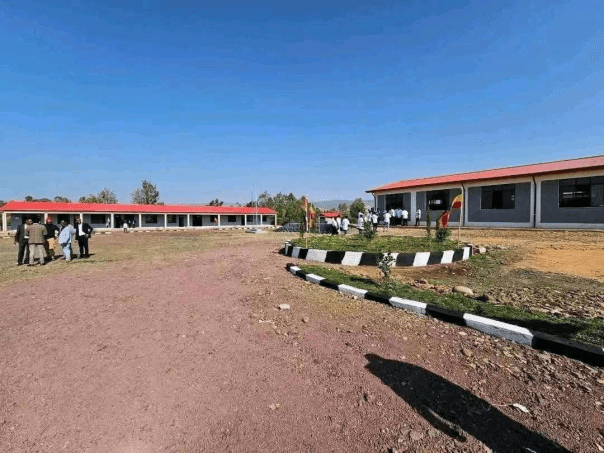
The Mootuu Ayyaanoo School stands as a physical testament to this ambition. The two-story complex houses five blocks containing well-equipped classrooms, a standard library, laboratories, and various other sections designed to facilitate comprehensive, 21st-century learning. It is envisioned as a hub where talented youth from the region can be nurtured.
For Professor Gebisa Ejeta, who was born and raised in Holonkomii, the inauguration was an emotionally charged moment. He expressed profound gratitude that a school bearing his mother’s name would now serve his community. He recounted the extraordinary sacrifices made by his mother, whose unwavering belief in education—often fueled by selling firewood—propelled him from these very fields to global scientific acclaim.
“This school answers her deepest prayers,” Professor Ejeta remarked. “The commitment of various stakeholders to equip it with modern learning materials ensures that the students here will have the tools to reach their full potential.”
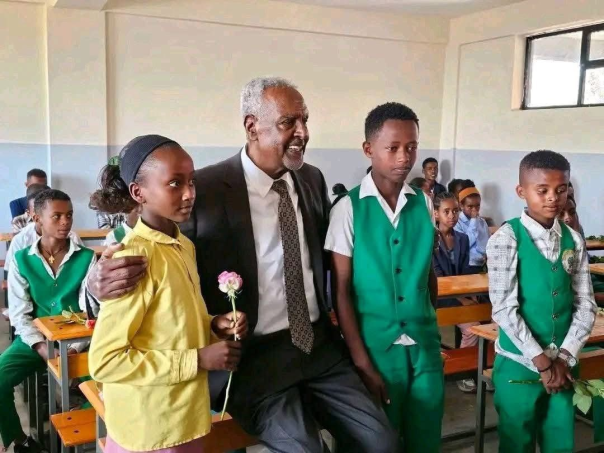
The sentiment of answered prayers echoed throughout the Holonkomii community. Residents, who had long advocated for a quality secondary school, described a palpable sense of joy and relief. “The construction of this school fulfills a long-standing demand,” said one local elder. “The happiness we feel today is immense.”
The Mootuu Ayyaanoo Secondary School, therefore, represents more than just bricks and mortar. It is a symbol of intergenerational hope: a mother’s sacrifice immortalized in a institution dedicated to empowering future generations. It signals a government’s commitment to turning rural towns into launchpads for excellence, ensuring that the path from Olonkomii to the world stage becomes well-trodden by the capable, confident students of tomorrow.

Tajoo Roobaa: Sacred Rituals for Rain and Peace in Oromia

“Tajoo Roobaa”: The Arsii Oromo’s Sacred Invocation for Rain, Peace, and Prosperity
Sub-headline: At Hara Dambal in Malka Utaa Waayyuu, ancient rituals connect community to Waaqa (God) and mark a new year under the Amajjii moon.
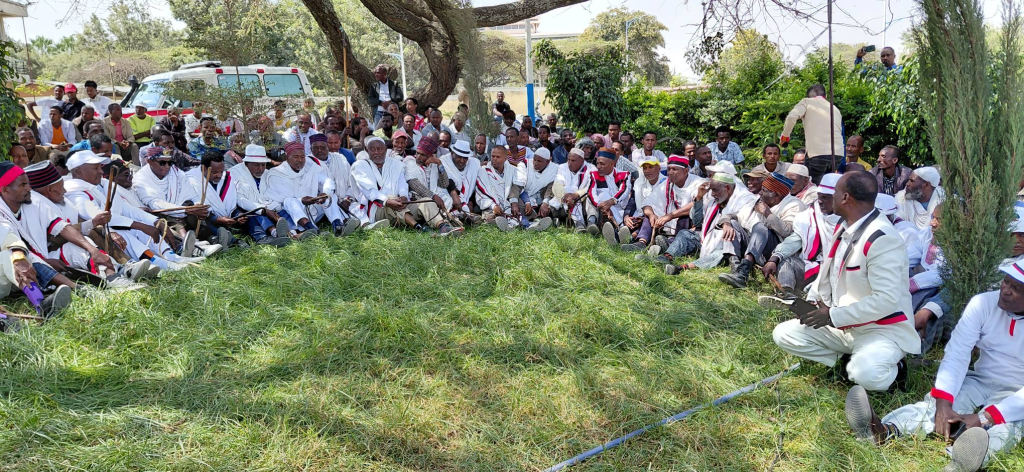
By Maatii Sabaa, Hara Dambal, Arsi Zone, Oromia – Under the bright Amajjii moon, the rolling hills of Hara Dambal echoed this week not just with the wind, but with the collective prayers of thousands. The Arsii Oromo people of Sikkoo Mando, Utaa Waayyuu, gathered to celebrate the profound and spiritually charged festival of Irreecha Tajoo Roobaa—a sacred ceremony dedicated to invoking rain, giving thanks to the creator, and ushering in a new year.
More than a cultural event, Tajoo Roobaa is a deep-rooted indigenous system of supplication to Waaqa (God) for rain. The ceremony, observed specifically during the Amajjii lunar month, serves a dual purpose: as a thanksgiving to the divine (Hinikkaa) and as the celebration of the Oromo New Year.
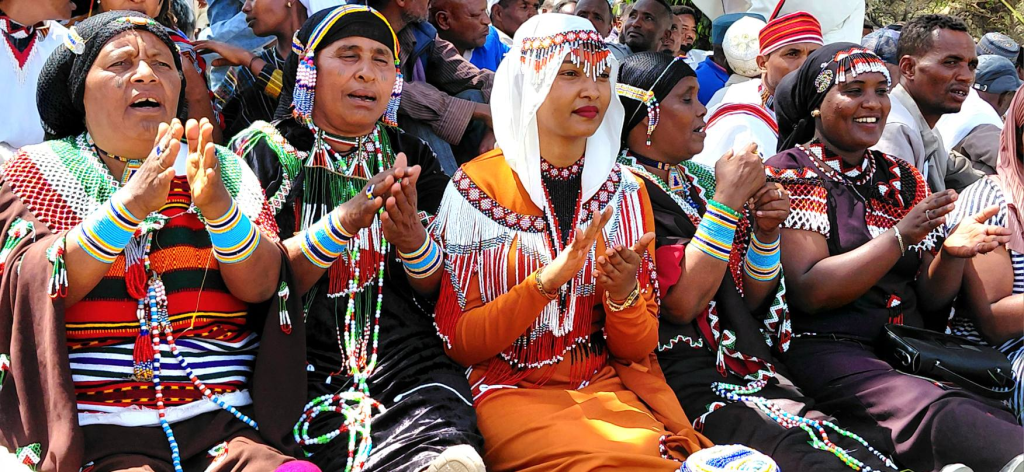
The rituals follow a powerful annual cycle. Days before the main gathering, the community embarked on a spiritual journey, traveling from their homes to the sacred site of Araddaa Jilaa near the Haroo Booramoo (Lake Booramoo). There, initial prayers for rain were offered. This preparatory pilgrimage culminated in the major congregation at Hara Dambal, where the main Ayyaana Tajoo Roobaa was enacted with diverse and symbolic rituals.
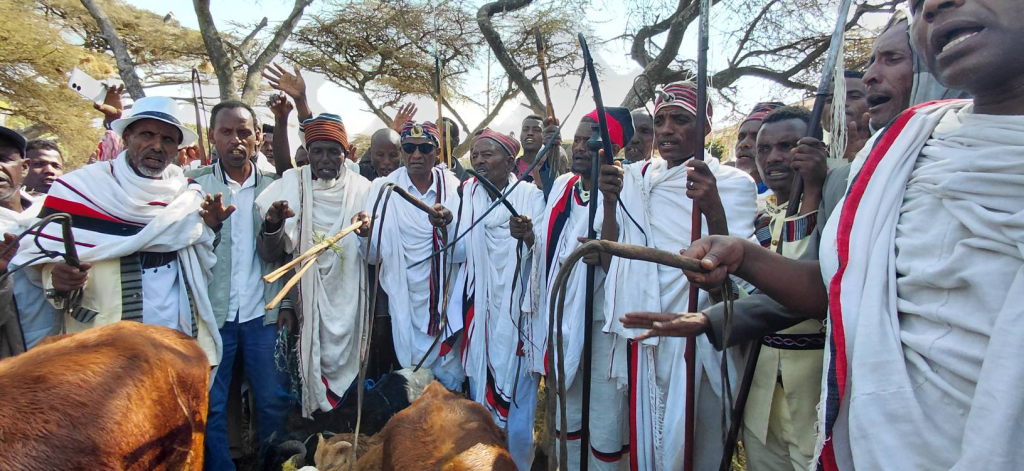
Chants filled the air, carrying the community’s unified hopes skyward. The core of their invocation is a timeless appeal to the divine for balance and blessing: “Bona nuuf gabaabsi” (Shorten the dry season for us), “Badheessa nuu deebisi” (Bring us abundance), “Ganna nuuf dheereessii” (Prolong the rainy season for us), and “Nagaa nuuf buusi” (Bestow peace upon us).
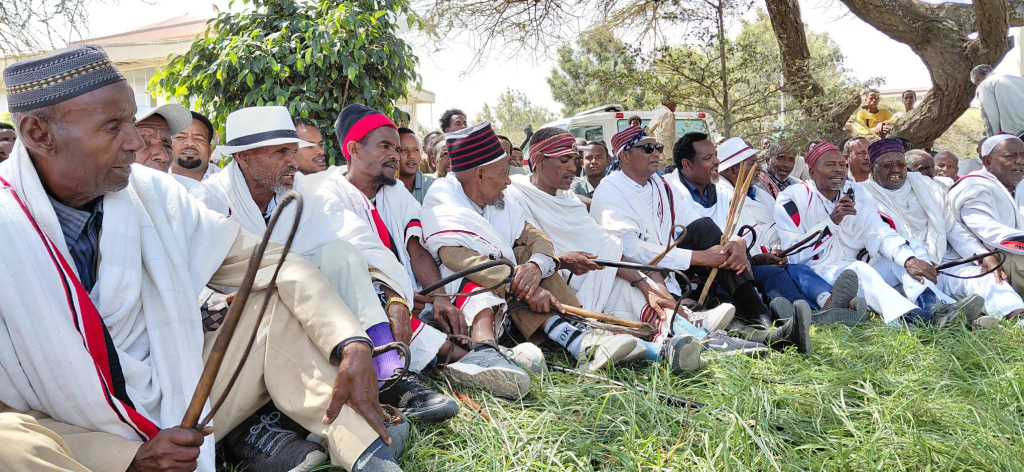
Elders, clad in traditional dress and holding freshly cut grass and flowers—symbols of fertility and peace—led the prayers. The gathering was a vibrant tapestry of song, dance, and solemn prayer, embodying the Arsii Oromo’s intimate connection with their environment, their cyclical calendar, and their spiritual heritage.
“This is not just a festival; it is our covenant with nature and Waaqa,” explained one elder, who chose to be identified simply as Abbaa Gadaa. “When we stand here at Hara Dambal, we are speaking to our creator with one voice, asking for the sustenance of life—rain—and for peace to govern our lives. Celebrating it in Amajjii marks our new beginning.”
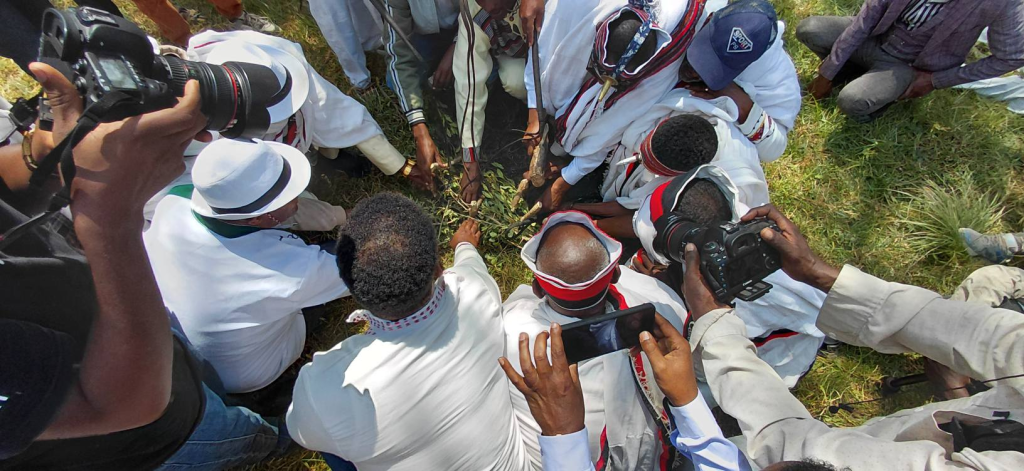
The Irreecha Tajoo Roobaa at Hara Dambal stands as a powerful testament to the resilience of indigenous Oromo spiritual practices. It is a living tradition where cosmology, environmental stewardship, and social cohesion intertwine, ensuring that the sacred plea for a fruitful and peaceful year continues to resonate from generation to generation.

Exploring Western Oromo History: New Book Launch
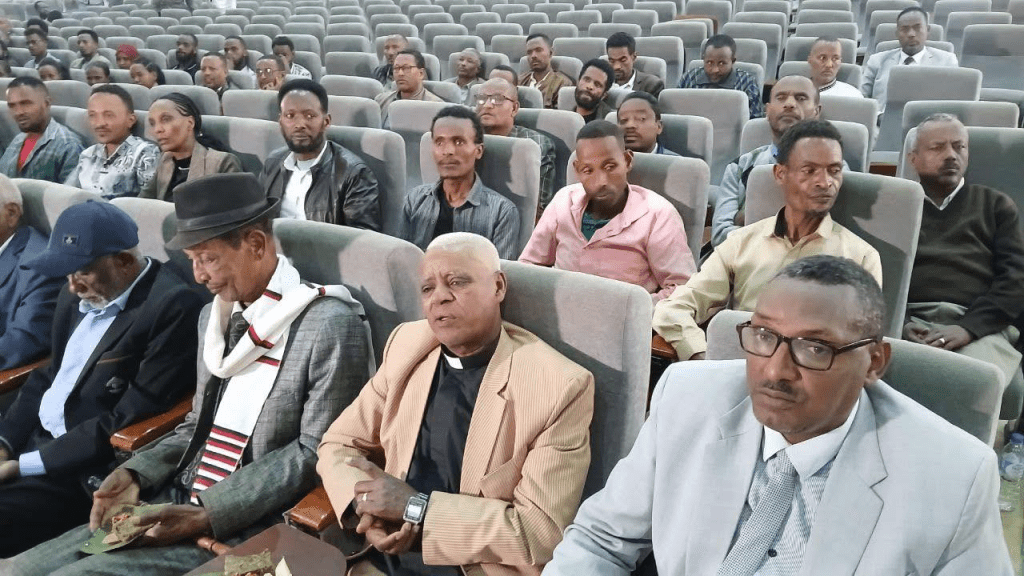
Landmark Book Launch Sheds Light on Western Oromo History
Finfinnee, January 24, 2026 – A significant contribution to Ethiopian historiography was celebrated this week with the official launch of the book “The Western Oromo and The Ethiopian State to 1941.” The work, authored by renowned historian and scholar Professor Tesema Ta’a, was launched at a formal ceremony held at Wollega University.
The book, published in English by Wollega University Press, offers a comprehensive and detailed examination of the political and social history of the Western Oromo people within the context of the Ethiopian state, tracing pivotal developments up to the year 1941. This period marks a critical juncture in modern Ethiopian history, and Professor Tesema’s research provides an essential perspective from the Oromo community’s experience.
The launch event was attended by a distinguished gathering of historians and scholars from various Ethiopian universities, underscoring the academic importance of this publication. The ceremony featured remarks that highlighted the book’s role in enriching the understanding of Ethiopia’s complex and multifaceted historical narrative.
A Deeper Scholarly Contribution
Professor Tesema Ta’a’s work is heralded as a meticulous academic study that draws on extensive research. It moves beyond broad national narratives to focus specifically on the institutions, interactions, and experiences of the Western Oromo. Scholars present at the event noted that such focused studies are crucial for building a more complete and inclusive historical record.
Significance and Impact
The launch of “The Western Oromo and The Ethiopian State to 1941” represents more than just the publication of a new academic text. It signifies a growing emphasis within Ethiopian academia on exploring and documenting the diverse regional and ethnic histories that comprise the nation’s past. By bringing this research to the forefront, Wollega University and Professor Tesema have provided an invaluable resource for students, researchers, and anyone seeking a deeper understanding of Oromo history and state-society relations in Ethiopia.
The book is now available through Wollega University Press.
About the Author: Professor Tesema Ta’a is a respected figure in the field of Ethiopian history, known for his dedicated research and scholarly contributions focused on Oromo history and the broader Horn of Africa region.
Media Contact: Dhaba Fiqadu

Oromo Scientist Launches School in Oolankomii: A Legacy of Education
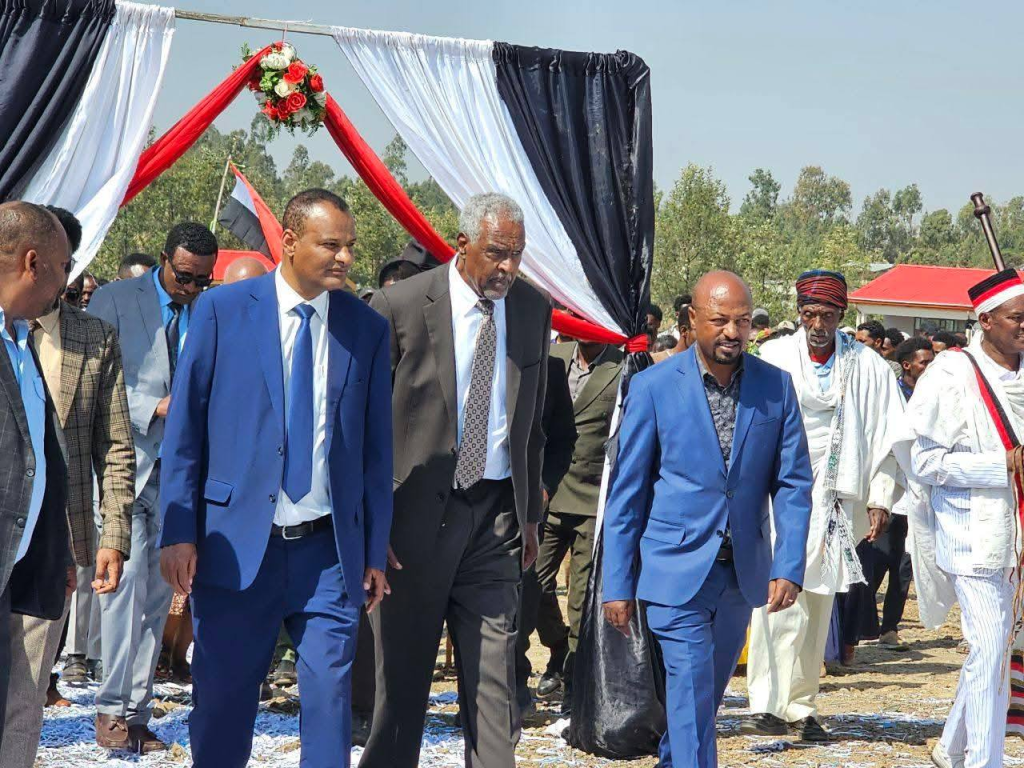
A Mother’s Name, A Nation’s Future: World-Renowned Oromo Scientist Inaugurates School in Oolankomii
OOLANKOMII, Shaggar Lixaa – In a powerful gesture of giving back, world-renowned Oromo scientist Professor Gabbisaa Ejjetaa today inaugurated a secondary school he personally funded and built in his hometown of Oolankomii. The school was officially opened for service on Amajjii 25, 2026.
Named in honor of his late mother, Mootuu Ayyaanoo, the “Mootuu Ayyaanoo Secondary School” stands as a permanent tribute to the values of nurture, wisdom, and foundational support—embodied by mothers in Oromo culture. Professor Ejjetaa stated that naming the institution after his mother was a way to immortalize her sacrifices and to inspire future generations to honor their roots while reaching for the stars.
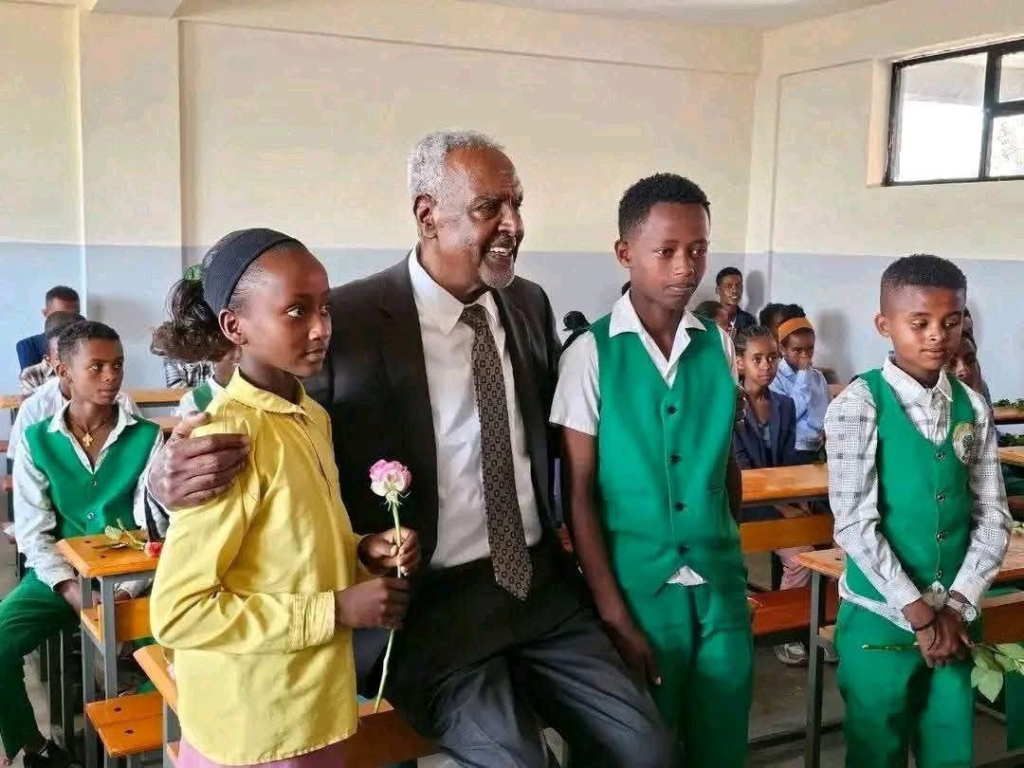
The inauguration ceremony was a moment of immense pride and celebration for the community of Oolankom. Local elders, educators, students, and residents gathered to witness the ribbon-cutting, marking the culmination of Professor Ejjetaa’s vision to provide a modern, quality educational facility for the town’s youth.
Professor Gabbisaa Ejjetaa, a distinguished plant geneticist known for his groundbreaking work in developing drought-resistant sorghum, is a source of immense pride for the Oromo people globally. The establishment of this school underscores his deep commitment to translating global scientific acclaim into tangible local development. It represents a different kind of freedom fight—the liberation of young minds through education.
The Mootuu Ayyaanoo Secondary School is equipped to serve hundreds of students, offering a conducive learning environment designed to foster academic excellence and critical thinking. Community leaders hailed the project as transformative. “This is not just a building; it is a beacon of hope,” said one elder present. “Our son excelled abroad, but his heart remained here. Today, he plants the seed of knowledge for our children. Ulfaadhaa—may it bear abundant fruit.”
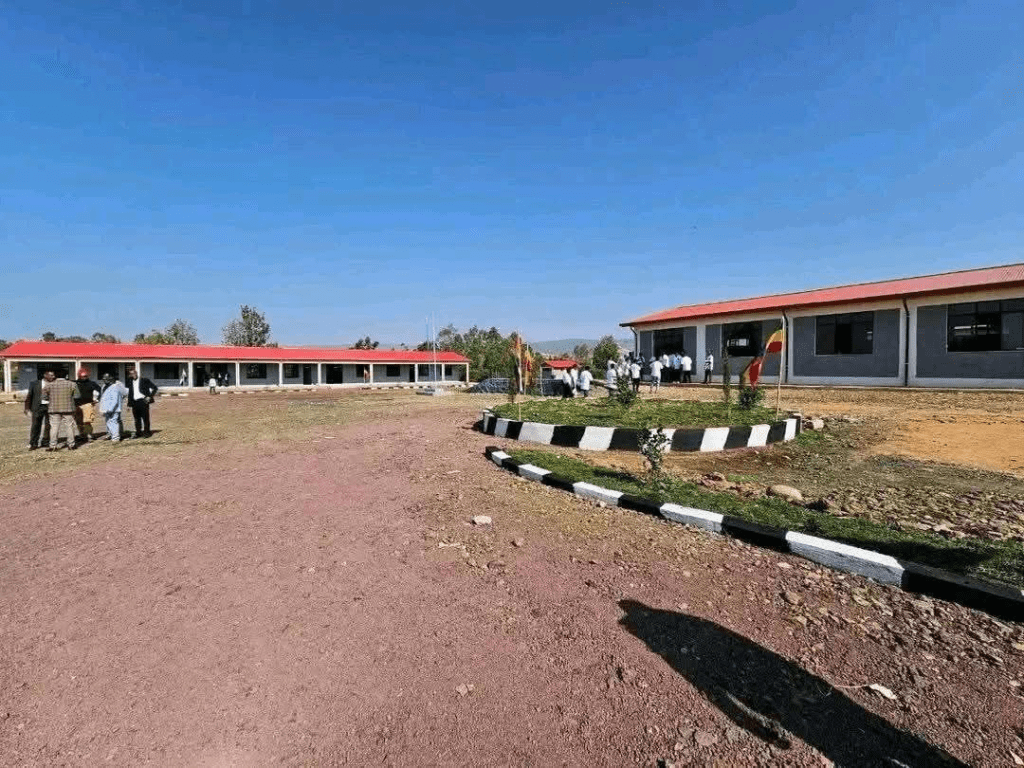
The school’s opening is seen as a significant milestone for educational access in the region, promising to empower a new generation of Oromo youth by combining rigorous academics with a strong grounding in their cultural identity and values.
In his address, Professor Ejjetaa emphasized that true development begins with education. He expressed his hope that the school would become a cradle for future scientists, leaders, and compassionate citizens who would contribute to their community and the world.
The inauguration of the Mootuu Ayyaanoo Secondary School is more than a local event; it is a resonant story of global success circling back to its source, of a scientist honoring his first teacher—his mother—and of a community’s future being brightly rewritten.
Ulfaadhaa jennaan.  (We say, may it bear fruit.)

The Voice That Sowed a Revolution – Daagim Mokonnin and the Soundtrack of Oromo Awakening
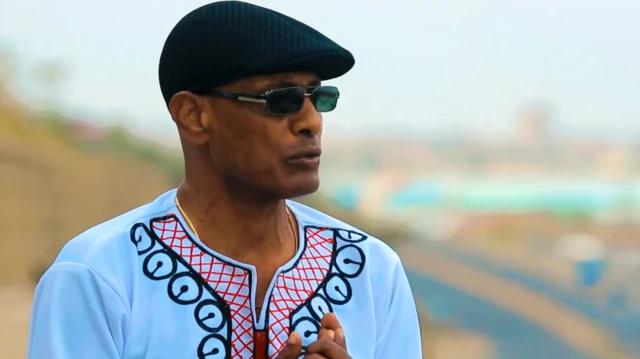
Feature Commentary: The Voice That Sowed a Revolution – Daagim Mokonnin and the Soundtrack of Oromo Awakening
The story of Daagim Mokonnin is not merely a biography of an artist; it is a chronicle of a people’s reawakening, told through melody, struggle, and an unbreakable spirit. Known affectionately by his stage name “Kiilolee” (The Melody), Daagim’s journey from a child chastised for his language to a foundational pillar of modern Oromo music encapsulates the political and cultural resurgence of the Oromo nation in the late 20th century.
His art was never just entertainment. In an era where speaking Afaan Oromoo in the capital, Finfinnee (Addis Ababa), was an act of defiance met with scorn or worse, Daagim’s music became a vessel for identity. “When we sang, it wasn’t just for money,” he recalls. “It was about contributing to the growth of the Oromo language and making the Oromo proud of their tongue.” His first hit, “Agadaa Birraa”, was more than a love song; it was a cultural declaration. Using the metaphor of the Oromo agadaa (a traditional stool) and the spring season of Birraa, it wove romance with deep cultural pride, instantly resonating with a generation hungry for such representation.
His path was forged in adversity. Arriving in Finfinnee as a boy from Wallagga, he was thrust into an educational system designed to erase his identity. “I didn’t know a word of Amharic, only Oromiffa,” he says. The punishment was isolation and ridicule—a “qophaa” (nickname) of shame that marked him as an outsider. Yet, this very oppression became the fuel for his mission. He and a small band of pioneering artists, operating under the banner of the Oromo Liberation Front’s cultural wing, became architects of resistance. They staged Oromo-language radio dramas, walked miles to recording spots, and produced music with rudimentary instruments, all under the watchful eye of a hostile state.
The collective he was part of—artists like Eebbisaa Addunyaa, Jireenyaa Ayyaanaa, and Usmaayyoo Muusaa—did not just sing; they curated a movement. Their style, from Daagim’s iconic headscarf and afro to their distinct aesthetic, was a deliberate, fashionable rejection of assimilation. “There was no borrowed ‘style’,” he insists. “Wearing a scarf is Oromo. If you go to rural Tulama, everyone wears it.” They were building a modern Oromo aesthetic from the ground up.
This courage came at a terrible cost. The 1990s, a period of cautious hope after the fall of the Derg, turned into a nightmare under the new regime. His comrades were hunted. His own brother was killed, and Daagim himself narrowly escaped assassination, an event that inspired one of his most poignant, unpublished poems of grief. Forced into exile in the United States for his safety, he continued his work, but the vibrant, collective creative ecosystem of Finfinnee was lost, replaced by the fragmented life of a diaspora artist.
Today, Daagim Mokonnin has stepped away from the secular music world, finding solace in Christianity. Yet, to view this as a retreat from his life’s work is to misunderstand the man. His legacy is cemented. He was present at the creation, one of the first to plant the seed of contemporary Oromo music—a seed that has now grown into a forest.
When he sings today, it is in praise of his faith. But the thousands who still play “Agadaa Birraa”, the artists who now fill stadiums singing in Afaan Oromoo, and the very fact that the language flourishes in the media, stand as living testimony to his earlier battle. Daagim and his generation were the bridge. They took the immense risk, endured the kutannoo (persecution), and used their art to make it normal, beautiful, and powerful to be Oromo in spaces designed to deny that reality.
His story is a powerful reminder that cultural work is not ancillary to political struggle; it is its bedrock. Before protests could rally millions, songs had to rally hearts. Before a language could be official, it had to be heard as worthy of a love song. Daagim Mokonnin, Kiilolee, provided that crucial, beautiful sound. He didn’t just sing melodies; he helped an entire generation find its voice.

U.S. Withdrawal from WHO: Impacts on Global Health Cooperation

WORLD NEWS: U.S. Announces Withdrawal from World Health Organization; WHO Expresses “Regret,” Defends Pandemic Record
GENEVA, January 24, 2026 – In a move that marks a seismic shift in the global health landscape, the World Health Organization (WHO) has confirmed receipt of a formal notification from the United States of America to withdraw from the UN health agency. The announcement, made public in a detailed statement from WHO headquarters today, has triggered widespread concern about the future of international cooperation against pandemics and other health threats.
The WHO statement began by acknowledging the United States’ historic role as a founding member, crediting its contributions to landmark achievements like the eradication of smallpox and the fight against HIV, polio, and Ebola. However, the tone swiftly turned to one of profound disappointment and warning.
“WHO therefore regrets the United States’ notification of withdrawal from WHO – a decision that makes both the United States and the world less safe,” the agency stated unequivocally.
The U.S. decision, which will be formally deliberated by the WHO Executive Board in February and the World Health Assembly in May 2026, was reportedly accompanied by sharp criticism from Washington. WHO noted U.S. claims that the agency had “trashed and tarnished” it, compromised its independence, and pursued a “politicized, bureaucratic agenda driven by nations hostile to American interests.” WHO rejected these assertions, stating, “The reverse is true,” and affirmed its commitment to engaging all member states with respect for their sovereignty.
Pandemic Response at the Heart of the Dispute
A central pillar of the U.S. justification, according to the WHO, was cited “failures during the COVID-19 pandemic,” including alleged obstruction of information sharing. In an extensive point-by-point rebuttal, the WHO defended its early pandemic actions, providing a detailed timeline:
- Dec. 31, 2019: WHO activated its emergency system upon first reports from Wuhan.
- Jan. 11, 2020: Before China reported its first death, WHO had already issued global alerts and guidance.
- Jan. 30, 2020: WHO declared a Public Health Emergency of International Concern (PHEIC)—its highest alarm—when there were fewer than 100 cases and no deaths reported outside China.
The statement emphasized that while WHO recommended protective measures like masks and vaccines, it “at no stage recommended mask mandates, vaccine mandates or lockdowns,” asserting that final decisions rested with sovereign governments.
A Future Without U.S. Membership
The withdrawal comes at a critical juncture. WHO highlighted that its 194 member states last year adopted a landmark WHO Pandemic Agreement, designed to strengthen global defenses against future outbreaks. Nations are currently negotiating a complementary Pathogen Access and Benefit Sharing system to ensure equitable access to vaccines and treatments.
The U.S. exit casts a long shadow over these initiatives and the operational capacity of WHO, which has long relied on American financial and technical support. The agency, however, expressed hope for a future return.
“We hope that in the future, the United States will return to active participation in WHO,” the statement concluded, reaffirming its commitment to its constitutional mandate of pursuing “the highest attainable standard of health as a fundamental right for all people.”
The formal departure process is now underway, setting the stage for intense diplomatic discussions in the coming months over the architecture of global health security in an era of renewed great-power fragmentation.

Unlocking Oromo Women’s Power for Community Change
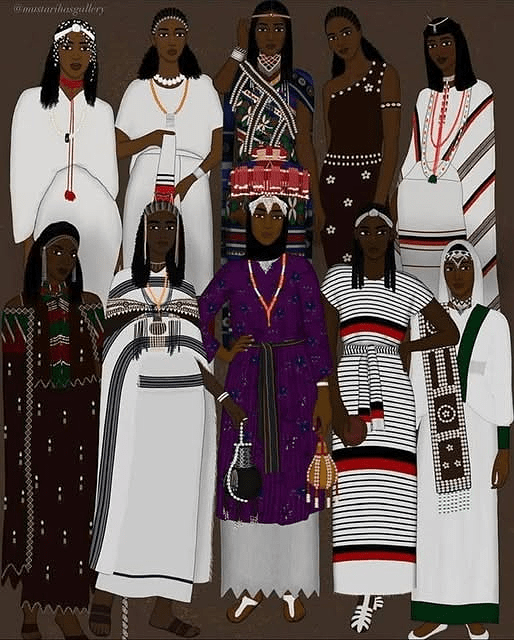
Feature Commentary: Beyond the Token – The Imperative of Unleashing Oromo Women’s Power
A profound truth is being spoken by the Oromo Sisterhood Institute, one that every Oromo civic and political organization must hear: the future of the Oromo people is held in the untapped potential of its women. The call is not for polite inclusion but for a fundamental restructuring of power.
The statement, “Advancing Equity for Oromo Women,” begins with a diagnosis that rejects all euphemisms. The absence of Oromo women from leadership boards, high-stakes negotiations, and strategic decision-making is not an “oversight.” It is, in their own powerful words, a “systemic breakdown.” This framing is crucial. It moves the conversation from a plea for a seat at the table to a demand to rebuild the table itself. The failure is not of individuals but of design.
The Mirage of Inclusion and the Reality of Exclusion
For too long, the solution offered to this systemic failure has been tokenism. A single female face on a committee of twelve becomes the shield against criticism, the hollow symbol of “inclusion.” The Oromo Sisterhood Institute rightly declares this era over. A committee with one woman is not inclusive; it is a perpetuation of the exclusionary structure. True engagement, they argue, requires “clear avenues for Oromo women to lead, impact, and mold our institutions.” This is the difference between being a guest in a house you did not build and being an architect of the new foundation.
The distinction between where Oromo women are currently concentrated and where they are systematically excluded is stark. They are overwhelmingly present in the volunteer work, the community mobilizing, and the front-line advocacy—the vital, often thankless labor that keeps movements alive. Yet, when the discussions shift to strategy, governance, and final decision-making—where the power to set direction and allocate resources resides—their voices fade into the background. The Institute’s message is clear: this dissonance is unacceptable. The work of the hands must be connected to the authority of the voice.
Dismantling the Barriers: A Matter of Justice
To move forward requires honest confrontation with the specific barriers. The Institute names them plainly: the gatekeeping of old networks, cultural norms that invisibilize women’s intellectual and leadership capacities, biased practices in hiring and promotion, and the simple, stark lack of representation where it counts most. These are not peripheral “women’s issues.” They are, as stated, core “issues of justice.” A struggle for liberation that internally replicates structures of oppression is a contradiction in terms.
An inclusive Oromo community, therefore, is not one that merely allows women to speak. It is one that actively “prioritizes women’s voices,” expects their leadership as a norm, and, most importantly, ensures that young Oromo girls can look at every level of their community’s power structure and see a reflection of themselves. Representation is not a gift; it is a mirror that tells the next generation what is possible.
The Unlocked Future
The concluding statement lands with the force of prophecy: “The future of the Oromo people depends on the power we choose to unlock in our women today.” This is the ultimate calculus. The Oromo struggle, in its quest for justice, self-determination, and cultural renaissance, cannot afford to operate at half-strength. It cannot hope to build a liberated tomorrow while silencing half its wisdom, courage, and vision today.
The Oromo Sisterhood Institute has issued more than a statement; it has issued a challenge. The transformation they speak of is not just for women—it is for the entire Oromo nation. To ignore this call is not just to fail women; it is to willfully constrain the future. When Oromo women are truly unleashed to lead, the very horizon of what is possible for the Oromo people expands. Their full potential is not a separate cause; it is the key to a transformed tomorrow.

Oromia’s Jila Tajoo: A Cultural Celebration of Unity
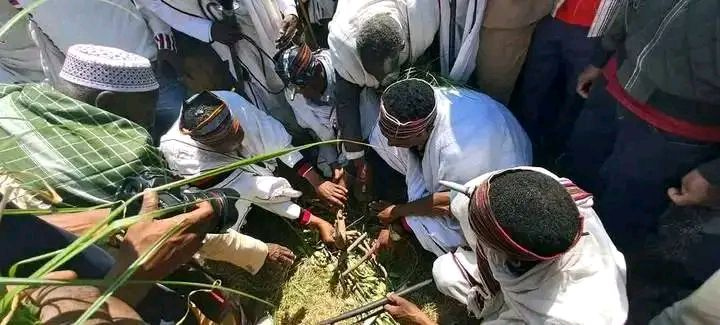
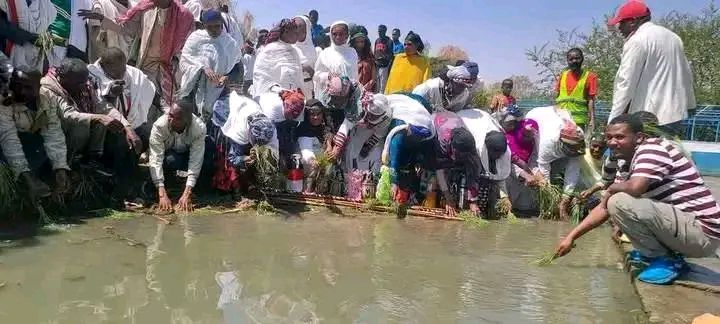
Feature News: Reviving Tradition – Oromia Calls for a Collective Celebration of Jila Tajoo/Birboo
Malkaa Baatuu, Oromia Region – The call has been sounded across Oromia. In a vibrant celebration of faith, culture, and community, the annual Jila Tajoo/Birboo is set to be observed with reverence and unity. The gathering, deeply rooted in the sacred Utaa-Waayyu tradition, has been officially announced for Sunday, January 25, 2026 or Amajjii 17, 2018 EC (Ethiopian Calendar).
The ritual, which holds both spiritual and social significance, will be held at Malkaa Baatuu, near the premises of the Oromia Regional State University in the east.
The invitation is extended broadly and emotionally. “Oromoon cufti, ittiin bultoonni, jaalattoonniifi leelliftoonni aadaafi duudhaa Oromoo marti koottaa waliin Jila Tajoo haa bulfannuu,” the announcement proclaims. (Oromo people, come one and all, leaders, devotees, and supporters of Oromo culture and faith, let us celebrate Jila Tajoo together at the appointed time.)
The event serves a threefold purpose deeply embedded in the Oromo worldview: to celebrate and preserve ancient traditions, to express gratitude for the past, and to invoke blessings for the future. The full call translates as: Let us celebrate Jila Tajoo together, give thanks to Waaqa Uumaa (the Creator) for what has passed, and pray for milkii (abundance) for what is to come!
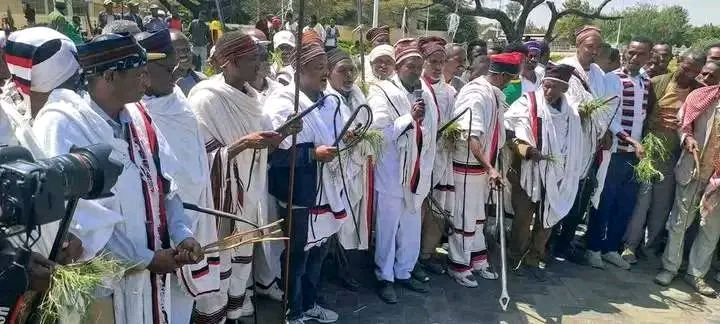
The gathering is not merely a ceremony but a profound communal experience, a reaffirmation of identity. It promises a full sensory immersion in Oromo heritage, culminating in the evocative closing line: “Ijaan aaga argaa; gurraan nagaa dhagayaa!” (May our eyes see wonder; may our ears hear peace!)
This celebration stands as a powerful testament to the living, breathing nature of Oromo cultural and spiritual systems, inviting a collective experience of gratitude, hope, and enduring tradition.

Australia Mourns Bondi Victims with Light and Silence, as Communities Reaffirm Hope
January 22, 2026 | AUSTRALIA – Today, Australia stands still in a sombre moment of national unity, observing a National Day of Mourning for the 15 lives taken in the devastating terrorist attack at Bondi’s Jewish community centre last month.
The Day of Mourning has been declared as a time for collective reflection, with all Australians called upon to join together in grief and solidarity. “It is a day for all Australians to come together to grieve, remember, and stand against antisemitism and hate,” a government statement affirmed.
In a series of formal tributes, flags are being flown at half-mast across federal and Victorian government buildings. As evening falls, iconic landmarks throughout Victoria will be illuminated in white—a powerful visual symbol of resilience, peace, and the collective determination to move forward.
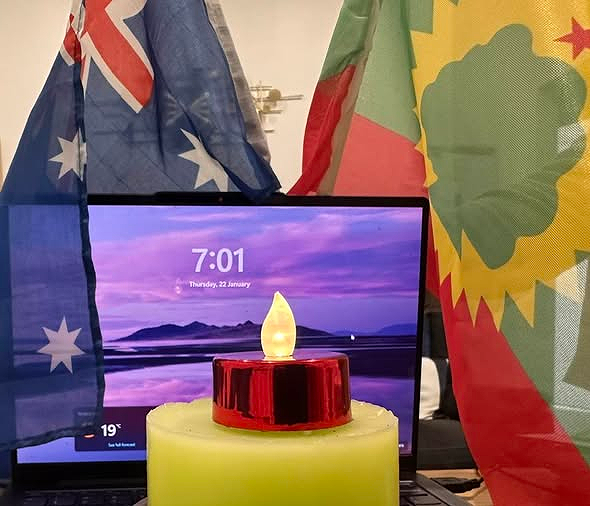
At exactly 7:01 PM, the time the attack unfolded on December 14, 2025, the nation is invited to pause for a minute of silence—a shared moment to remember the innocent victims whose lives and futures were violently cut short.
Personal Acts of Remembrance Echo National Resolve
The official day of mourning is mirrored in the private homes of Australians from all walks of life, where the national tragedy resonates with personal histories of loss and resilience. For some, the act of remembrance is profoundly intertwined with their own experiences.
“At 7:01 PM, my family and I lit memorial candles for a minute of silence,” shared one community member, speaking from Melbourne. Their reflection wove together the national moment with a deeply personal journey: “We found the peace and freedom in Australia that was violated in our homeland, Oromia. Therefore, we condemn any act of hatred. We reiterated our hope that any darkness will be conquered by light.”
This sentiment underscores the profound significance of safety and social cohesion for Australia’s multicultural communities. For many who have sought refuge and stability, the attack strikes at the very promise of sanctuary that Australia represents.
A Nation’s Grief, A Shared Commitment
Today’s observances are more than ritual; they are a national reaffirmation of the values that bind a diverse society together. The minute of silence, the lowered flags, and the glowing white landmarks serve as public pledges against hate, offering a collective response to tragedy through unity and remembrance.
As candles flicker in windows and cities shine with light, the message echoing across the country is clear: from the depths of shared mourning arises a strengthened commitment to ensure that light—and the hope it carries—will always prevail.

The Oromo Flag: Shining Light on a Legacy of Struggle
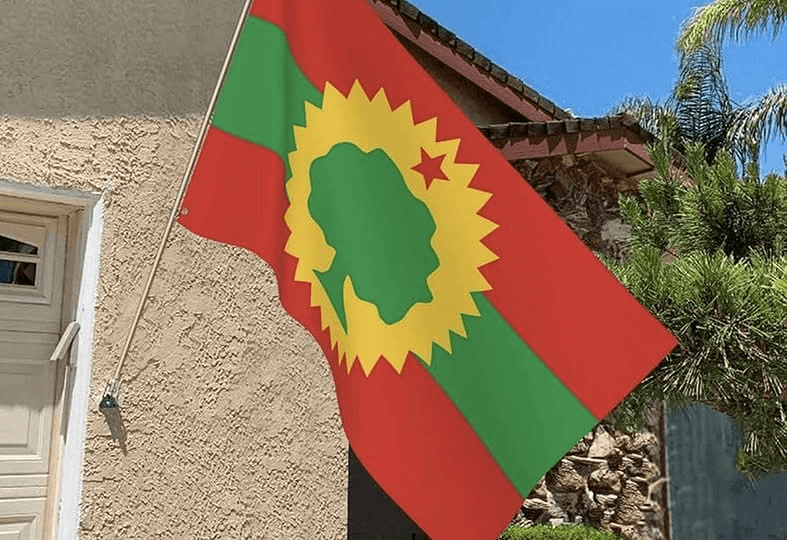
Feature News: The Unbroken Symbol – The Oromo Flag as a Nexus of Identity and Struggle
In the annals of liberation movements, a symbol is never just cloth and color. It is a repository of memory, a map of a desired future, and a target for those who fear the unity it inspires. A recent, poignant statement from within the Oromo struggle underscores this eternal truth: “Oromoon akka mul’atuu fi dhabama irraa hafu kan godhe faajjii qabsoo kana! Alaabaa Oromoo ibsituu dukkanaa..!!” (“What made the Oromo people visible and saved them from extinction is this struggle! The Oromo flag that shines in the darkness..!!”).
This declaration is not mere rhetoric; it is a historical verdict and a living reality. The Oromo flag—with its horizontal stripes of black, red, and white—has evolved from a clandestine emblem of resistance to a powerful, public declaration of an identity long suppressed. Its journey from the shadows into the light is the story of the Oromo people’s modern political awakening.
From Suppression to Symbol: The Flag’s Forbidden History
For decades under successive Ethiopian regimes, the display of the Oromo flag was a criminal act, punishable by imprisonment or worse. Its colors were banned, its meaning erased from official discourse in a systematic attempt to enforce cultural and political assimilation. To raise it was an act of profound bravery, a silent shout of existence against a state policy that sought to render Oromoness—Oromumma—invisible.
“The struggle gave us visibility,” the statement asserts, pointing to the decades-long political and cultural mobilization led by groups like the Oromo Liberation Front (OLF). The flag became the central emblem of this movement, its display at protests, cultural festivals, and in diasporic communities a direct repudiation of enforced silence. It transformed from a party symbol into a national one, representing not just a political program but the very sovereignty of the Oromo nation—a people with a distinct history, language, and the Gadaa system of governance.
“Shining in the Darkness”: A Beacon of Collective Memory
The phrase “shining in the darkness” is deeply evocative. The “darkness” represents eras of persecution, mass displacement, and cultural negation. The flag’s light is the enduring spirit of resistance, the scholarly work preserving Oromo history, the poets singing in Afaan Oromo, and the millions who now claim their identity publicly.
It shines on the graves of martyrs like Hundee (Ahmad Taqii), whose sacrifice was meant to sow terror but instead planted a seed of defiance. It illuminates the wisdom of oral traditions like Mirriga, which carries the constitutional memory of the people. It is the light held high by each new generation of Qeerroo and Qarree, the youth who have carried the struggle into the 21st century.
The Contemporary Crucible: Between Celebration and Conflict
Today, the flag flies openly across Oromia, a testament to a hard-won political space. It is celebrated during festivals like Irreechaa and marks public buildings. Yet, its display remains a potent and often contentious political act. To some, it is an unequivocal symbol of self-determination; to the state, its political interpretation can be seen as a challenge to national unity.
This tension ensures the flag is more than a celebratory banner; it remains a banner of contention. Each time it is raised, it reiterates the unresolved questions at the heart of the Ethiopian federation: the meaning of true multinational equality, the right to self-administration, and the legacy of a struggle that saved a people from cultural extinction.
An Amaanaa Carried Forward
The featured statement connects directly to the core Oromo concept of Amaanaa—the sacred trust of the martyrs. To bear the flag is to bear that trust. It is a vow that the sacrifice of those named in the litany of heroes—from Elemoo Qilxuu to Mecha Tullu—will not be betrayed for fleeting political gain. The flag is the physical manifestation of that covenant, a daily reminder that the visibility it represents was purchased at an incalculable price.
As one Oromo intellectual noted, the struggle is an unstoppable train; some may disembark, but the journey continues. The Oromo flag is the headlight of that train, cutting through the darkness of history, its light a constant, challenging, and unifying glow for millions. It is, as the voice from the struggle declared, the brilliant, undeniable proof that the Oromo people are here, they remember, and they endure.

A NATION IN SHADOW, A RESOLVE IN LIGHT

A National Day of Mourning: Australia Stands in Defiance and Unity After Bondi Attack
By Dabessa Gemelal
SYDNEY – Across a sun-drenched continent known for its laid-back shores, the flags are flying at half-mast today. The sea breeze at the world-famous Bondi Beach carries a new, somber weight. Australia has declared a National Day of Mourning, a unified act of collective grief and resolve following last week’s devastating terrorist attack at Bondi’s Chabad community centre, which claimed 15 innocent lives.
Prime Minister Anthony Albanese, in a solemn address to the nation, framed the day as a sacred covenant between the living and the lost. “Today, we honour the 15 innocent lives taken,” he stated, his words measured and heavy. “We stand with their families, their loved ones, and the entire Bondi Chabad community. We will never let hate win.”
The proclamation transforms private anguish into public ritual. Australians from all walks of life—in bustling cities, quiet suburbs, and remote outback towns—are being asked to participate in a simple, powerful ceremony of remembrance. At 7:01 PM, the exact time the attack unfolded, the nation is encouraged to pause for a minute of silence. The government has urged citizens to light a candle, a single act of defiance against the darkness of the act.
“This is a day of remembrance. And a day of unity,” Albanese emphasized, stitching together the twin threads of the national response. “Because light will always be stronger than hate.”
A Community Reeling, A Nation Responding
The attack has left the tight-knit Bondi Chabad community shattered. The centre, once a hub of prayer, learning, and fellowship, is now a site of unspeakable tragedy. Vigils of flowers, handwritten notes, and stuffed animals continue to grow at its gates, a spontaneous outcry of public sympathy.
But today, that spontaneous mourning is given a formal, national shape. The lowering of flags on government buildings, schools, and military installations is a visual echo of the nation’s lowered heart. It is a rare and significant gesture, reserved for moments of profound national loss, placing the victims in the company of fallen soldiers and revered leaders.
Sociologists Note a Shift in the National Psyche
Dr. Evelyn Shaw, a sociologist at the University of Melbourne, observes that such collective rituals serve a critical purpose. “In the face of senseless violence aimed at dividing us, the act of pausing together—whether in a city square or in our own homes at 7:01—creates a shared emotional experience. It says, ‘Your grief is our grief. Your target is our whole community.’ It actively rebuilds the social fabric terror seeks to tear.”
The call to “stand with one another” is being answered in myriad ways. Interfaith services are being held nationwide, with leaders from Christian, Muslim, Hindu, and Buddhist communities expressing solidarity with their Jewish neighbours. Community centres have opened their doors for quiet reflection, and social media is flooded with images of lit candles using the hashtag #StrongerThanHate.
Light as a Weapon Against Darkness
The symbolism of light, championed by the Prime Minister, resonates deeply. It is a motif found in Judaism, the faith of the victims, where candles are lit to remember the dead and to celebrate perseverance. It is also a universal language of hope.
As dusk settles over Australia this evening, a wave of small flames will ignite in windows and on porches. That collective glow will be more than just a tribute; it will be a silent, nationwide statement. It is the light of memory, honouring 15 stolen futures. It is the light of solidarity, connecting a dispersed nation in a single, purposeful moment. And it is, as the nation’s leader has vowed, a testament to the enduring power of light over hate, of unity over division.
Today, Australia does not move on. It moves together, into the quiet of a minute’s silence, carrying the light forward.
Oromummaa and Nation-Building: Insights from the Oromo Sisterhood Institute

“From Identity to Nation-Building: Oromo Sisterhood Institute Declares ‘Oromummaa is Non-Negotiable'”
[Virtual Conference] — In a powerful and intellectually charged virtual summit, the Oromo Sisterhood Institute has forcefully redefined the trajectory of the Oromo struggle, centering women’s leadership and declaring the core ideology of Oromummaa as the non-negotiable foundation for the future.
Held under the theme “Oromummaa is Non-Negotiable”, the conference assembled leading Oromo intellectuals and activists with a clear mission: to critically engage with the Oromo struggle and strategically empower women to assume robust roles in its present and future leadership.
The conference featured a distinguished panel including Dr. Asafa Jalleta, Jaal Ayyaanee Lammeessaa, and Jaal Raajii Gudetta, expertly facilitated by Jaal Naaroobika Bayissa. Their discussions delved into the practical and philosophical applications of this framework, reinforcing the conference’s resonant refrains:
- Oromummaan seenaa keenya! (Oromummaa is our history!)
- Oromummaan eenyummaa keenya! (Oromummaa is our identity!)
- Oromummaan egeree keenya! (Oromummaa is our future!)
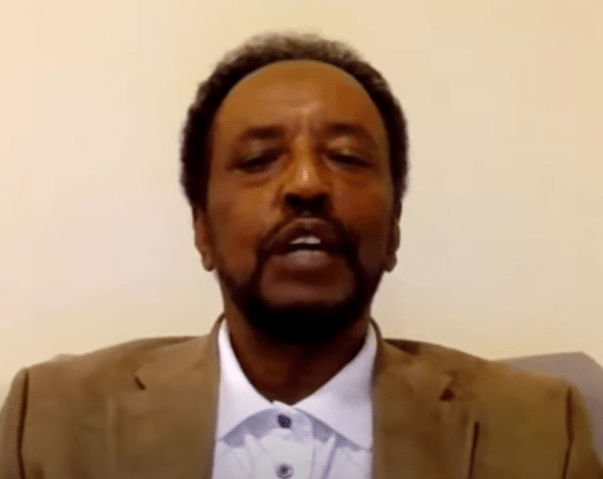
“This was more than a discussion; it was a declaration of intent,” a statement from the Oromo Sisterhood Institute read. “Our aim is to ensure Oromo women are not just participants but architects of the next chapter.”
The keynote framework was delivered by scholar Jaal Ayyaanee Lammeessaa, who presented a compelling three-stage evolution for the national movement:
“Oromummaa must grow into Sabboonummaa (Enlightenment/Consciousness); from Sabboonummaa, we are summoned to unify for Ijaaramuu (Construction/Building).”
This progression charts a deliberate path from foundational identity, through a phase of widespread political and cultural awakening, to the ultimate, unified project of tangible nation-building.
By framing Oromummaa as an evolving, dynamic force essential for survival and sovereignty, the institute has moved the discourse beyond preservation towards active creation. The summit signals a pivotal shift, positioning Oromo women’s intellectual leadership as the vital catalyst for transforming a non-negotiable identity into a built future.
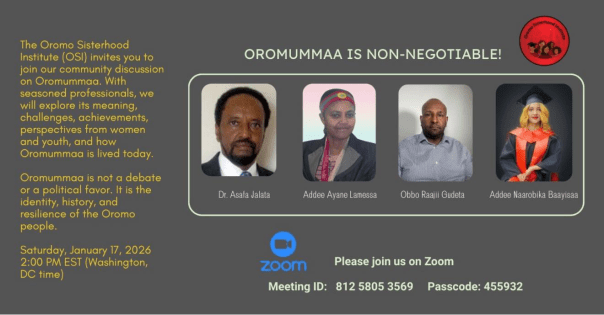

Minnesota Service Provides Translation Help for Immigration Issues
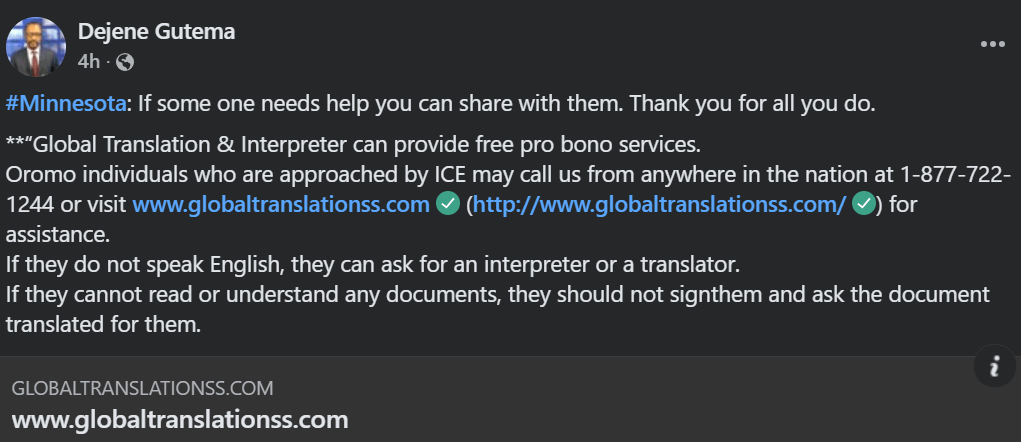
Minnesota-Based Service Offers Free Legal Language Support to Oromo Community Facing ICE Contact
MINNESOTA, USA – A crucial resource is being highlighted for members of the Oromo community across the United States who may encounter U.S. Immigration and Customs Enforcement (ICE). Global Translation & Interpreter, a service based in Minnesota, is offering free pro bono assistance to ensure individuals understand their rights and any legal documents presented to them.
The service emphasizes a critical piece of advice: if a person does not speak English or cannot read and understand documents, they should not sign anything and should immediately request a translation.
“If they do not speak English, they can ask for an interpreter or a translator,” the announcement states. “If they cannot read or understand any documents, they should not sign them and ask for the document to be translated for them.”
This guidance is essential for protecting legal rights during encounters with immigration authorities. Signing a document without full comprehension can have serious, unintended consequences for an individual’s immigration case.
How to Access Help:
Oromo individuals anywhere in the United States who are approached by ICE or need language assistance for immigration-related matters can access this free support by:
- Calling: 1-877-722-1244
- Visiting: http://www.globaltranslationss.com
The service, promoted with the message “If someone needs help you can share with them. Thank you for all you do,” underscores the importance of community knowledge-sharing. Advocates stress that being aware of and disseminating such resources can be a vital form of mutual aid.
The offer of pro bono (free professional) translation and interpretation is seen as a significant support for immigrant communities navigating complex legal systems where language barriers can create substantial vulnerability.
Community leaders encourage individuals to save the number and share the information widely to ensure those in need know where to turn for confidential language assistance.

Empowering Victoria’s Multicultural Energy Transition

Feature News: Empowering Victoria’s Multicultural Homes in the Clean Energy Transition
MELBOURNE, VIC – As Victoria accelerates its shift toward renewable energy, one question remains central for many households: how can every family participate in and benefit from electrification? The answer lies not just in technology, but in accessible information and community-led support. Recognising this, the Ethnic Communities’ Council of Victoria (ECCV) is launching a pioneering new project designed to empower multicultural households to make confident, informed decisions about electrifying their homes.
Titled “Empowering Multicultural Communities at Home,” the initiative directly addresses a critical gap in the clean energy transition: ensuring that language barriers, cultural nuances, and access to trusted information do not leave diverse communities behind.
“Every Victorian deserves the opportunity to lower their energy bills and reduce their carbon footprint through home electrification,” a project spokesperson said. “But to do that, people need information that is clear, in their own language, and delivered by those they trust. That’s where this project comes in.”
A Tailored, In-Language Approach
The project will move beyond generic brochures by providing clear, culturally relevant, and in-language information about home electrification and available energy upgrades. This includes everything from understanding efficient electric heating and cooling (reverse-cycle systems) and hot water systems to navigating government rebates and installer qualifications. The goal is to equip people with the knowledge to understand their options and ask the right questions of providers.
“Information is power,” the spokesperson added. “We’re demystifying the process—from what an induction cooktop is really like to use, to how to finance upgrades—so households can make choices that are right for their family and budget.”
Community at the Core
The project’s methodology is deeply community-centric. Key activities will include:
- Local Information Sessions & Workshops: Held within community hubs, these sessions will provide practical, hands-on guidance.
- Training Community Electrification Leads: ECCV will train and support trusted community members to become local points of knowledge and guidance.
- Developing Accessible Multilingual Resources: Creating easy-to-understand guides, checklists, and digital content in multiple languages.
- Facilitating Peer-to-Peer Learning: Creating spaces for communities to share experiences, concerns, and successes.
This model ensures information is not only translated but also transcreated—adapted to be meaningful within specific cultural contexts—and delivered through trusted channels.
Navigating the Transition with Confidence
With a focus on practical support, the project aims to do more than just inform; it aims to build confidence. For many families, the upfront cost and complexity of upgrading appliances or installing solar can be daunting. By breaking down the steps, explaining long-term savings, and clarifying available support, the project helps households see a clear pathway forward.
“Our focus is on making sure multicultural communities across Victoria have the information and support they need to navigate this transition with confidence,” the spokesperson emphasised. “This is about equity, ensuring the benefits of a clean energy future—like healthier homes, lower bills, and a safer climate—are shared by all.”
The “Empowering Multicultural Communities at Home” project is set to launch in the coming months, with ECCV beginning outreach to communities across the state. It represents a vital step toward an inclusive and just energy transition for Victoria.
For more information or to express interest in partnering, community organisations are encouraged to contact the Ethnic Communities’ Council of Victoria (ECCV).

Condemnation of Islamophobia in Melbourne: A Call for Unity

FOR IMMEDIATE RELEASE
Community Leaders Unite in Condemnation Following Islamophobic Attack in Melbourne’s South-East
MELBOURNE, VIC – The Ethnic Communities’ Council of Victoria (ECCV) has issued a strong condemnation following a violent Islamophobic attack over the weekend that targeted an Imam and his wife in Melbourne’s south-eastern suburbs. Victoria Police have confirmed that charges have now been laid in connection with the incident.
In a firm statement, the ECCV declared, “There is no place for hate in Victoria.” The council emphasized that in the state’s multifaith and diverse community, no one should ever fear for their safety because of their religion or identity.
“We utterly condemn this attack,” an ECCV spokesperson said. “We reaffirm our shared responsibility to reject hate in all its forms and uphold the multicultural values that bind us together. This is more important than ever at a time when some elements in the community are seeking to stoke division.”
The attack has sent shockwaves through Victoria’s Muslim communities and drawn widespread concern from interfaith and multicultural leaders. It underscores a worrying trend of rising religious intolerance and highlights the urgent need for community solidarity.
Support Available for Victims
The ECCV has directed those affected by Islamophobia to crucial support services, reiterating that no one should suffer in silence.
Available resources include:
- Islamophobia Register Australia – Hayat Line: 1300 993 398
- Islamic Council of Victoria – Islamophobia Support: (03) 9328 2067
- Online reporting and support via the Islamic Council of Victoria’s website.
A Call for Unity and Vigilance
The incident has prompted a renewed call from community leaders for Victorians to stand together against bigotry. Leaders are urging the public to actively support their Muslim neighbours, report incidents of hate, and foster dialogues that reinforce mutual respect and understanding.
“An attack on one faith leader is an attack on the fabric of our entire multicultural society,” the ECCV statement concluded. “We stand in solidarity with the victims and with all Victorian Muslims, and we call on every member of our community to join us in loudly and clearly rejecting hatred and violence.”
The ECCV and other peak bodies are expected to work closely with faith groups and authorities in the coming days to address community safety concerns and promote cohesion.

Exploring ‘Daaniyaa’: A Journey of Resistance and Identity

The Unbroken Pen: “Daaniyaa” and the Price of Truth in Captivity
In a quiet but profound literary offering, a book titled “Daaniyaa” has emerged from a place of enforced silence, carrying a message that resonates far beyond its pages. “A person who reads this book, Daaniyaa,” it is said, “will not lose their faith, but will find their identity within it.” This is more than a tagline; it is a declaration of the book’s purpose and the defiant spirit of its author, Dhaabassa Waaqjiraa, who wrote it from within a prison cell.
The story of Daaniyaa is inextricably linked to the story of its creator, a narrative that reveals the high cost of integrity within a repressive system. Dhaabassa was not an anonymous activist in the shadows but a professional within the system itself—a producer for the Afaan Oromoo program at the Ethiopian Television (ETV). His colleagues from that time attest to his diligence and strength, calling him a “hard worker.” Yet, it was precisely this platform that became the stage for his principled stand, which would ultimately lead to his downfall.
His crime, as framed by the then-ruling EPRDF and its security apparatus (IHADIG), was a classic example of how truth-telling is criminalized. During a period when the city of Adama (Nazareth) was controversially designated as the “capital of Oromia,” Dhaabassa did what any responsible journalist and Oromo citizen might do: he challenged the official narrative on air. He presented evidence, arguing that Adama could not functionally serve as the regional capital, citing its history as a site of recurring conflict and displacement, particularly referencing the turbulent period of 1994/95.
This act of professional and civic duty was not received as such. It was twisted into an act of subversion. The state’s machinery swung into action: he was accused of having “ties with the enemy” for opposing the capital designation, and other pretexts were fabricated. Along with a colleague, Shifarra, he was arrested and imprisoned. His career was not just ended; it was used to paint him as a traitor.
Courtesy: https://www.pambazuka.org/categories/media-freedom-expression?page=150
But here lies the remarkable turn in this story: captivity became a crucible for creation. It was from within this very prison that Dhaabassa Waaqjiraa, alongside fellow inmates, gathered testimonies and composed Daaniyaa. The book is therefore a physical artifact of resistance—a testament that the walls meant to silence him only focused his voice. It embodies a powerful truth: “People who give themselves for their nation want to do something. To accomplish what they have envisioned, no circumstance or time is a limit to them. Their work is not measured by personal gain.” Dhaabassa himself is living proof.
The publication of Daaniyaa prompts a challenging reflection for the reader and the wider Oromo intelligentsia: “If you were in his place, could you have written this book? It doesn’t seem so to me.” This is not a challenge of capability, but of courage and commitment. It asks us to measure our own resolve against the standard set by those who write history from their shackles.
The final call is both an invitation and a charge: “Let the generation buy and read this book. You become for your nation what you are for yourself. You will find yourself in Daaniyaa.”
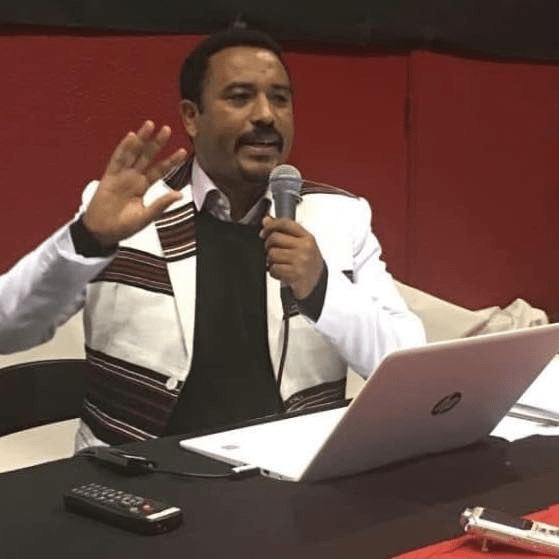
Daaniyaa is more than a memoir or a historical account. It is a mirror held up to the Oromo struggle, reflecting the enduring battle for narrative sovereignty, the persecution faced by those who speak inconvenient truths, and the indomitable will to create identity and history even from the darkest of places. It is a story of how a prison sentence was transformed into a sentence of liberation, written one word at a time.

Historic Odaa Roobaa Gathering: Heero Council Unites Arsii

Historic Gathering at Odaa Roobaa: The Heero Council Ascends, Uniting the Five Branches of Arsii
In a landmark ceremony resonating with deep historical significance, the 20 Dhaddachas (Gadaa class leaders) of the Arsii Sikkoo Mandoo generation gathered under the sacred Odaa Roobaa sycamore. From this assembly, the most senior and pivotal leader, the Dhaddacha Heeroo, has formally risen, marking a decisive moment in the restoration and unity of the Arsii Gadaa system.
The ascension of the Dhaddacha Heeroo is the culmination of a major decree passed during the recent Dhaddacha Guutaa (Grand Assembly). This decree, rooted in a call made by the Abbaa Gadaa of all Arsii, Aliyyii Muhaammad-Suruur, mandated the reconstitution of this supreme council. Its purpose is to reunite the five historic branches (Baalli) of the Arsii nation—Birmajii, Bultuma, Bahara, Horata, and Roobalee—whose people are spread across the lands of Baale, Diida’a, Gadab, Albaso, Laangannoo, and Dambal.
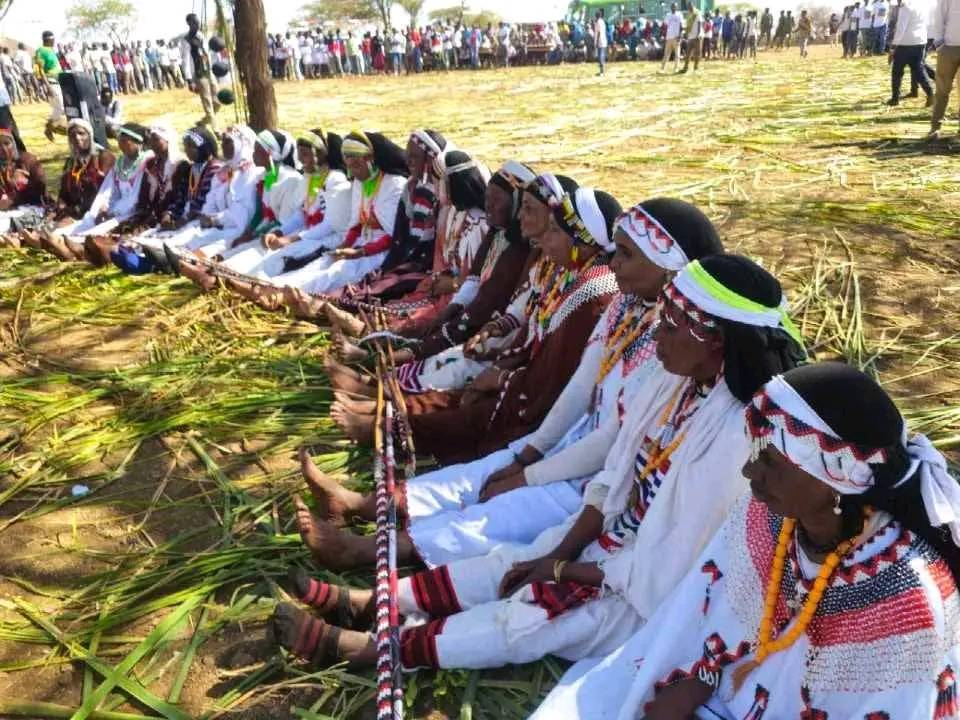
A Unifying Vision for a Dispersed People
Abbaa Gadaa Aliyyii Muhaammad-Suruur, during his term of office, has spearheaded efforts to bring the dispersed children of Sikkoo Mandoo back to their rightful place within the Gadaa structure. Strengthening this mission, the recent decrees are a high-level strategy designed to foster unity among the five branches. The plan specifically allocates a dedicated week for the branches to meet, allowing communities separated by distance to see each other, share ideas, and discuss their collective concerns.
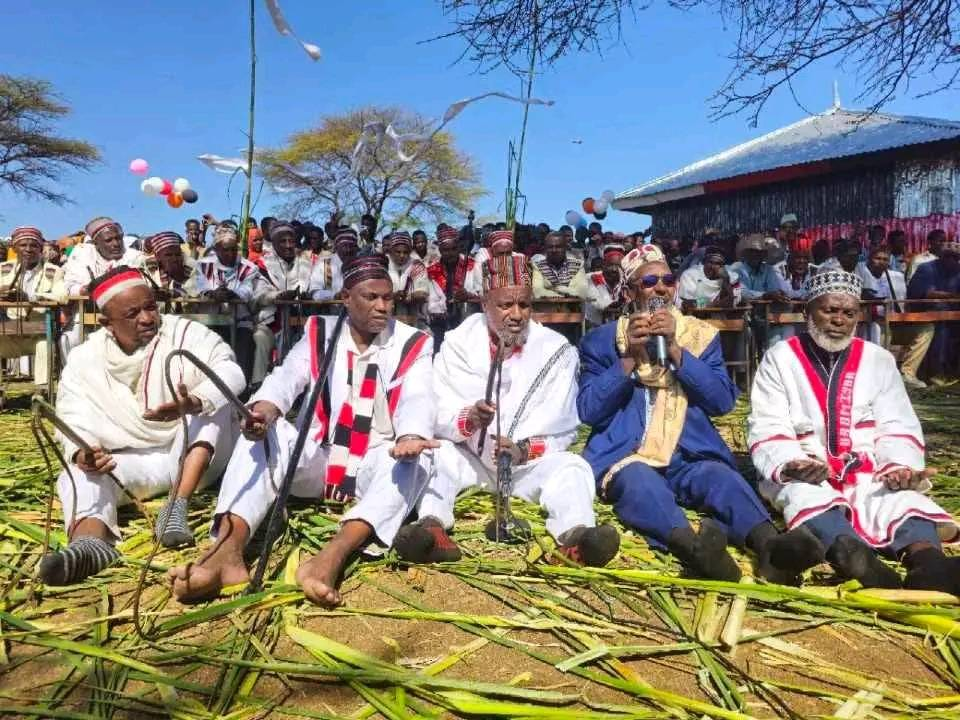
A Community’s Determined Effort
The successful execution of this profound ceremony is credited to the exceptional effort and organization of the broader community, particularly the people of Baalee Bahaa and the residents of the historic Laga Hidhaa district. Their deep commitment to the success of this Gadaa event underscores the living, community-driven nature of the institution.
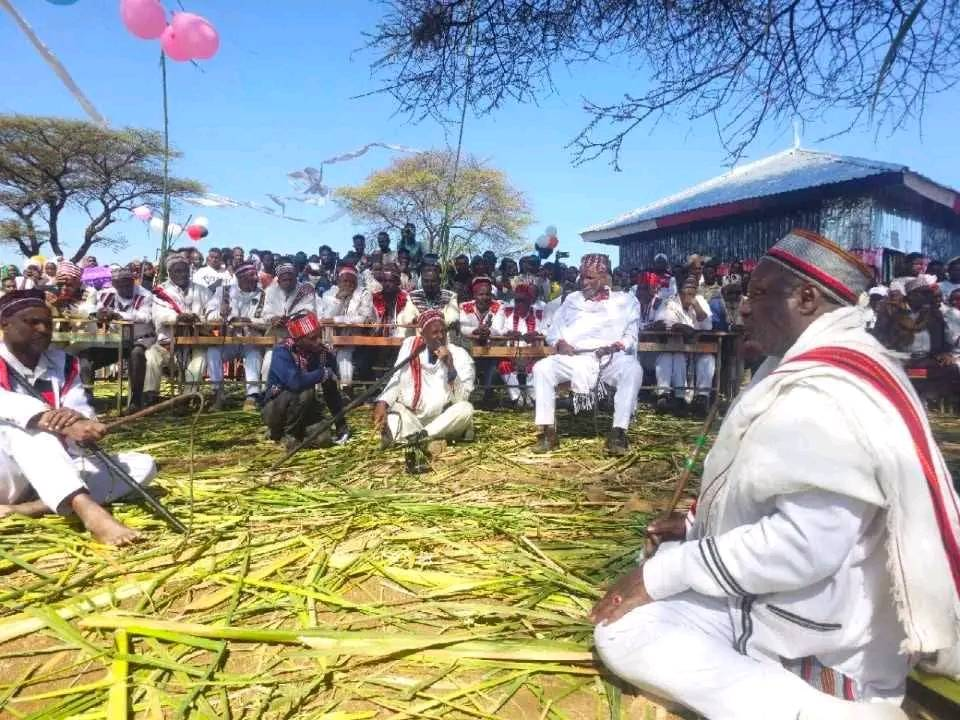
This gathering at Odaa Roobaa transcends ritual. It is a powerful act of political and cultural revitalization, signaling the Arsii Sikkoo Mandoo’s intent to reclaim the cohesion and governance envisioned by their forefathers. As the Heero council takes its place, it reaffirms the core Gadaa principle: “Gadaan ta misaaf mirgaati” — “Gadaa is both a duty and a right.”
The rise of the Heero is not just a return to formality; it is the reassembly of a people’s parliament under their sacred tree, ready to guide their future through the ancient, yet ever-relevant, laws of balance, justice, and collective responsibility.
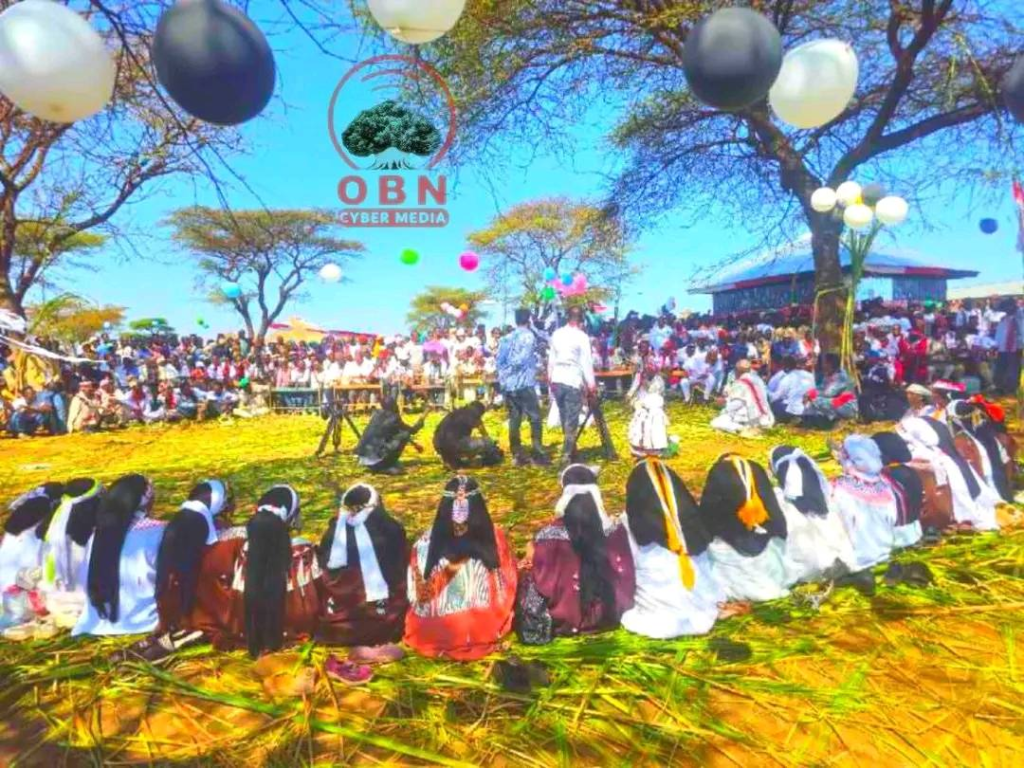

Halaba’s Sera Festival: A New Year Celebration of Tradition

The “Sera” Festival: Halaba People Herald the New Year with Ancient Timekeeping and Social Renewal
HALABA KULITO, ETHIOPIA – As the Gregorian calendar year winds down, the Halaba people are celebrating a different, deeply rooted transition: the “Sera” festival, their indigenous New Year. This annual celebration, observed from the end of the Ethiopian month of Tahsas to the beginning of Tir (late December to early January), is far more than a party; it is a vibrant testament to their ancestral timekeeping, social cohesion, and spiritual preparation for the future.
The festival is anchored in the “Mengesa,” the complex, lunar-based calendar of the Halaba. Mengesa is the final month of the year, serving as a bridge between the conclusion of the old year and the dawn of the new. During this period, the entire community engages in a profound psychological and practical reset.
“Farmers in their fields, traders in their businesses—everyone in their respective professions prepares themselves mentally and spiritually for new success,” explains a community elder. It is a time of reflection, planning, and communal alignment.
A Festival of Values: Rites of Passage and Social Reconciliation
The Sera festival encapsulates several core societal values. A key feature is the rite of passage for youth. As the festival concludes, adolescents who have come of age undergo a traditional circumcision ceremony, symbolically crossing the threshold into young adulthood and assuming new social responsibilities.
Equally significant is the festival’s role in social healing. During Sera, elders and fathers actively seek out individuals with whom they have conflicts and engage in reconciliation. This deliberate act of peacemaking ensures that the community enters the New Year united, leaving grievances behind. This social responsibility is a hallmark of the celebration.
“Sera”: More Than a Festival, A Governing Philosophy
The term “Sera” itself signifies much more than the New Year festival; it represents the Halaba’s entire traditional governance and legal system. It is the customary framework that has guided the community’s social interactions, conflict resolution, and daily life for generations.
This system includes specific institutions like:
- “Ogete Sera”: A traditional adjudication or justice system.
- “Mishala Sera”: Systems of mutual support and cooperation.
These customary laws have been preserved not in written codes, but through oral tradition and practical application, passed down meticulously from generation to generation. Their continued observance during the festival reinforces their relevance in modern life.
A Living Culture in Halaba Kulito
Today, the Halaba Sera festival is being celebrated with its traditional values intact in Halaba Kulito town. The event stands as a powerful assertion of cultural identity and intellectual heritage, showcasing the community’s sophisticated indigenous knowledge in astronomy (timekeeping), social governance, and sustainable community psychology.
As one participant noted, the festival is a dynamic display of a living culture that has navigated centuries. In an era of globalization, the Halaba’s Sera offers a compelling example of how ancient systems can provide continuity, social glue, and a unique sense of time and place, ringing in the New Year on their own enduring terms.


A City Rises, A People Displaced: Oromo Liberation Front Condemns ‘Mega Airport’ Project as Cultural Erasure
A City Rises, A People Displaced: Oromo Liberation Front Condemns ‘Mega Airport’ Project as Cultural Erasure
FINFINNEE / AABBUU SEERAA (BISHOOFTU) – In a forceful and detailed statement, the Oromo Liberation Front (OLF) has issued a scathing condemnation of Ethiopia’s planned new “Mega Airport” project and its adjoining “Airport City” in Aabbuu Seeraa (Bishoftu), framing it as the latest and most severe chapter in a decades-long campaign of displacing Oromo farmers and eroding their identity.
Marking a major political intervention, the OLF’s statement, dated April 9, 2026, draws a direct line from the historic displacement of Oromo clans around the capital to the imminent eviction of thousands in Bishoftu, warning that the project constitutes a form of “ethnic cleansing.”
“History Repeating, on a Grander Scale”
The OLF asserts that for the past thirty years, Oromo farmers across the region have been illegally displaced from their land for “development” projects, receiving minimal or no compensation. This, they argue, has systematically eroded Oromo culture, language, history, and collective identity.
“Particularly, the situation inflicted upon the farming community in the Finfinnee (Addis Ababa) periphery has dismantled social foundations, scattered families, and escalated to the level of national genocide (ethnic cleansing),” the statement declares. It points to the fate of clans like the Eekkaa, Galaan, Gullallee, and Abbichuu, who were displaced from their heartland to make way for the capital’s expansion and whose current whereabouts are often unknown.
The OLF accuses the government of surreptitiously reviving the controversial 2014 “Master Plan” for Addis Ababa—a proposal that sparked the historic Oromo youth (Qeerroo) protests—piece by piece under new names. The Aabbuu Seeraa airport project, they state, is a direct continuation of this plan, now “expanded and intensified.”
The Imminent Displacement: 15,000 Lives in the Balance
The core of the crisis, as detailed by the OLF, is the imminent eviction of farmers from six villages: Aabbuu Aciroo, Aabbuu Garbii, Aabbuu Kombolchaa, Aabbuu Looyyaa, Aabbuu Lugnaa, and Aabbuu Saarkamaa. This would affect an estimated 3,000 households, or about 15,000 people.
The OLF reports that despite a regional budget of 17 billion Birr earmarked for farmer resettlement and rehabilitation, the on-the-ground reality is brutal. “Starting last month,” the statement alleges, “farmers… have been forcibly ordered, in a manner of war, to leave without harvesting their crops, moving their property, or even selling their cattle.” They are reportedly being temporarily housed in Dhibaayyuu village on the outskirts of Bishoftu.
A Demand for Equity, Not Eviction
Moving beyond condemnation, the OLF lays out a concrete, four-point alternative path that rejects mere cash compensation:
- Farmers as Shareholders: Displaced communities must be granted equity shares (abbummaa qabeenyaa) in the new airport project, making them co-owners, not casualties.
- Intergenerational Rights: These shares must be inheritable, benefiting both current landowners and their descendants.
- Rehabilitation Infrastructure: Immediate construction of schools, health centers, clean water, and electricity in resettlement areas.
- Cultural Safeguards: Special programs must be established to prevent the loss of Oromo identity, language, and culture.
“The cultural genocide of a nation cannot be compensated with any amount of money,” the statement asserts.
A Broader Call to Action
The OLF pledges to fight for this solution for the Aabbuu Seeraa farmers. It also praises the legal advocacy of the Global Oda Nabe Association (GLONA) and calls on all Oromo institutions to learn from this case and proactively resist human rights violations carried out in the name of “development” across Oromia.
The statement concludes with a rallying cry: “Victory to the Broad Masses!” It frames the airport conflict as a microcosm of the larger Oromo struggle for land, self-determination, and the right to exist as a people on their own terms—not as obstacles to someone else’s progress. The coming weeks will test whether the government engages with these demands or if the bulldozers proceed, writing another painful entry in what the OLF calls a long history of displacement.



Oromo Congress Challenges Addis Mega Airport Project
“Mega Airport or Mega Displacement?” Oromo Congress Raises Alarm Over Addis Ababa ‘Airport City’ Project
ADDIS ABABA – The Oromo Federalist Congress (OFC) has issued a stark warning and a detailed critique of the proposed “Mega Airport Project” and its adjoining “Airport City” development in the Aabbuu Seeraa (Bishoftu/Debre Zeit) area, framing it not as a symbol of progress but as a potential humanitarian and cultural disaster.
In a powerful statement of concern, the Congress denounced the current plan as a “grave and deeply worrying” strategy that will inevitably lead to the mass displacement of indigenous communities. The project, intended to expand Bole International Airport and construct a new urban center, threatens to forcibly evict over 3,000 farming families—more than 15,000 people—from villages including Aabbuu Aciroo, Aabbuu Garbii, and Aabbuu Saarkamaa.
A Violation of Land, Law, and Livelihood
The OFC forcefully challenged the narrative of the project, stating, “What is being carried out under the name of ‘development’ is in fact saamicha—dispossession.” They accused the government of ignoring their prior calls for a halt and said they are now “obliged to issue a special red alert” for the affected communities.
Citing Article 40 of the Ethiopian Constitution, which guarantees farmers’ rights to land and protection from displacement, the Congress argued the project’s “top-down” approach is illegal and unethical. “Land is the foundation of a farmer’s life, not a commodity for sale,” the statement declared, warning that short-term financial compensation will quickly vanish, leaving generations trapped in poverty.
Echoes of a Painful Past
The statement draws a direct and chilling parallel to the displacements that accompanied the expansion of the capital into surrounding Oromo areas like Boolee, Qooqaa, and Wonji. “At that time, the displaced Oromo community was scattered, losing its culture and way of life. We fear this will not be repeated in Aabbuu Seeraa,” the OFC cautioned.
They condemned the use of “world-class” labels to justify destroying the future of local inhabitants, arguing, “Any development project must be inclusive and create shared opportunities, not displace native residents from their own developmental path without their free, prior, and informed consent—a practice unacceptable both legally and historically.”
A Demand for Equity, Not Just Eviction
Moving beyond mere criticism, the OFC laid out a series of non-negotiable demands for a just path forward:
- Immediate Halt: An immediate suspension of all eviction and demolition activities pending a credible, independent Social and Environmental Impact Assessment (SEIA).
- Inclusive, Transparent Dialogues: Meaningful public consultations with the displaced community, local civil societies, and legal experts.
- Community as Shareholders: The displaced community must be recognized as equity shareholders (Abbaa Aksiyoonaa) in the “Airport City” project, receiving annual dividends rather than a one-time payment for their land.
- Cultural Safeguards: Strong legal mechanisms must be established to protect the local language, culture, and identity from being erased by the new urban sprawl.
- Donor Accountability: The Congress called on financiers like the African Development Bank (AfDB) to verify that the project complies with international human rights standards before releasing funds.
A Question of True Development
The OFC’s intervention reframes the core question: Is this project truly for national development, or is it another chapter in the long history of displacing Oromo farmers for urban expansion? By demanding equity and inclusion, they propose a revolutionary alternative—that the original inhabitants of the land should not be its first victims of progress, but its lasting beneficiaries.
The ball is now in the court of the government and international financiers to respond. The future of Aabbuu Seeraa hangs in the balance, caught between the blueprint for a mega-city and the determined resolve of a community fighting to stay on the map.


Oromo Graduation Ceremony 2025: Celebrate Culture and Achievement

Oromo Graduation Celebration Set to Showcase Cultural Pride in 2025 Ceremony
Organizers of the upcoming Annual Graduation Ceremony 2025 are issuing a heartfelt call to the Oromo community and its supporters, inviting them to celebrate academic achievement through a vibrant display of cultural identity.
In a statement filled with excitement, the message is clear: “We are so excited and love to meet everyone there with our Oromo attire.”
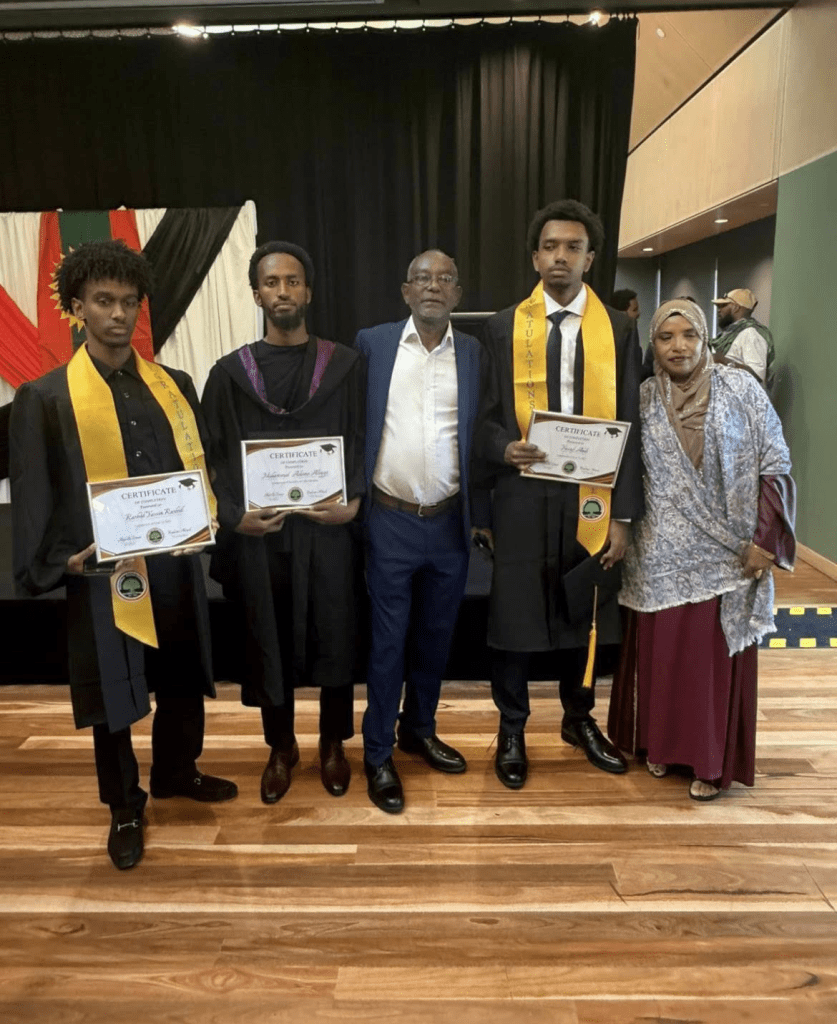
The event has positioned itself as more than just an academic milestone; it’s a powerful opportunity to affirm cultural heritage and communal pride. “We acknowledge that and are proud of how it feels to wear our traditional [attire],” the statement continues, emphasizing the deep personal and collective significance of donning cultural dress for such a landmark occasion.
This encouragement highlights a growing trend of graduates incorporating traditional garments into graduation ceremonies worldwide, transforming the standard academic regalia into a colorful tapestry of personal history and belonging. For many Oromo graduates and their families, wearing traditional attire is a profound statement of resilience, identity, and joy.

The 2025 ceremony promises to be a visually stunning and emotionally resonant gathering where caps, gowns, haddiisas, waaddas, and other traditional garments will intermingle—a celebration of both scholarly success and enduring cultural strength.
The organizers’ message has been met with enthusiastic anticipation, as the community prepares to turn the graduation into a unified and proud display of Oromummaa.
Event: Annual Graduation Ceremony 2025
Key Note: Attendees encouraged to wear Oromo traditional attire.
Message: A celebration of education, culture, and communal pride.


Urgent Actions for Severe Weather Preparedness

URGENT NEWS ALERT
CRITICAL WEATHER AND SAFETY ADVISORY: COMMUNITY COOPERATION URGED
Issued Immediately
At this moment, due to severe conditions in the region, community cooperation and information sharing are critical for safety. All residents are urged to take immediate and serious precautions.
URGENT ACTIONS REQUIRED:
- STAY HYDRATED & CONSERVE WATER: Ensure you drink an adequate amount of water and store clean drinking water if possible.
- MOVE TO SAFE AREAS: Immediately move away from riverbanks, floodplains, and low-lying areas.
- SEEK RELIABLE INFORMATION: Monitor official channels for urgent updates from local authorities and emergency services.
- AVOID NON-ESSENTIAL TRAVEL: Do not travel unless absolutely necessary. If you must travel, exercise extreme caution.
- CHECK ON VULNERABLE NEIGHBORS: The community must now come together. Contact people you know who may be isolated, elderly, or have special needs.
COMMUNICATION IS KEY:
It is essential that we stay connected. Use your mobile phones and available online communication channels to contact family, friends, and neighbors to ensure everyone is safe and informed. Share verified information only to prevent panic.
This is a time for collective responsibility and immediate action. Please follow these instructions and await further updates from official sources.
Stay Safe. Stay Informed. Look Out for One Another.


Buttaa Qaluu Ceremony: A Cultural Milestone for the Karrayyu Oromo
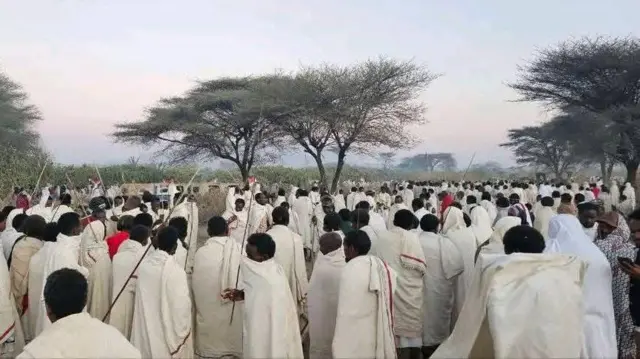
URGENT NEWS
HISTORIC GADAA CEREMONY “BUTTAA QALUU” SUCCESSFULLY CONCLUDED IN TARREE LEEDII
MATAAHAARA, OROMIA – In a significant cultural event, the Karrayyu Oromo, specifically the Baasoo family, have successfully concluded the sacred Gadaa transfer ceremony, known as “Buttaa Qaluu” or “Irreessa Kennuu,” in their ancestral territory of Tarree Leedii. The ceremony marks a pivotal six-year preparation phase where the incoming Gadaa class prepares to assume leadership from the current “Baallii” grade.
Thousands of participants from the Baasoo family embarked on a traditional trek several kilometers from the Mataahaara area to the ceremonial grounds, meticulously observing the ancient protocols of their Gadaa system. The event was not isolated; it drew a multitude of attendees, including Abbaa Gadaas from across Oromia and other community members, who joined the Karrayyu in this profound ritual.
A Testament to Cultural Resilience
The ceremony stands as a powerful testament to the resilience of Oromo culture. Scholars and attendees highlighted its significance in an era marked by prolonged cultural pressure. “For over a century, the Oromo people have faced pressure on their culture and language,” noted one observer. “These elders, the Karrayyu, are preserving their morning culture and passing it on to future generations. Where they currently reside is a place of historical pressure.”
The Karrayyu’s ability to preserve their traditions against multifaceted pressures—linguistic, cultural, and religious—was a central theme. “They withstood pressure from all directions. The fact that they have endured and reached this point is a symbol of identity,” remarked a participant.
Scholarly Perspective on a Living System
Among the distinguished attendees was Dr. Asafa Tafarraa Dibaabaa, a researcher, writer, and academic. Dr. Asafa, who once taught among the Karrayyu thirty years ago, expressed deep reflection upon witnessing the ceremony. “As a scholar of Oromo culture, being present when called to this ceremony was a moment of great joy,” he said. “Seeing this ritual after so many years is deeply moving. What the Karrayyu are preserving is something from which other communities can also learn.”
He emphasized that the Karrayyu Gadaa system is a branch from which the wider Oromo society draws lessons, calling it a “great education.”
Logistical Triumph Amidst Challenges
Writer and journalist Wabii Kabbada, who documented the entire event, marveled at the organization. He described the immense logistical feat of assembling and hosting such a large gathering in a remote area with limited infrastructure. “The level of mobilization, the way food was provided for everyone, and the manner of inclusion was a tremendous and astonishing education. Their method of inclusion—hosting others without eating themselves—was truly distinct,” Wabii noted.
Dr. Asafa also praised the community’s collective effort in overcoming severe logistical hurdles to reach the site. “Tarree Leedii is a mountainous area, far from asphalt roads. People came from distant places under difficult conditions. The road they traveled is rough and blocked by fallen trees. From what we saw, people spent many days there clearing the trees from the road to make passage. What remained was that we attended the ceremony well and returned safely.”
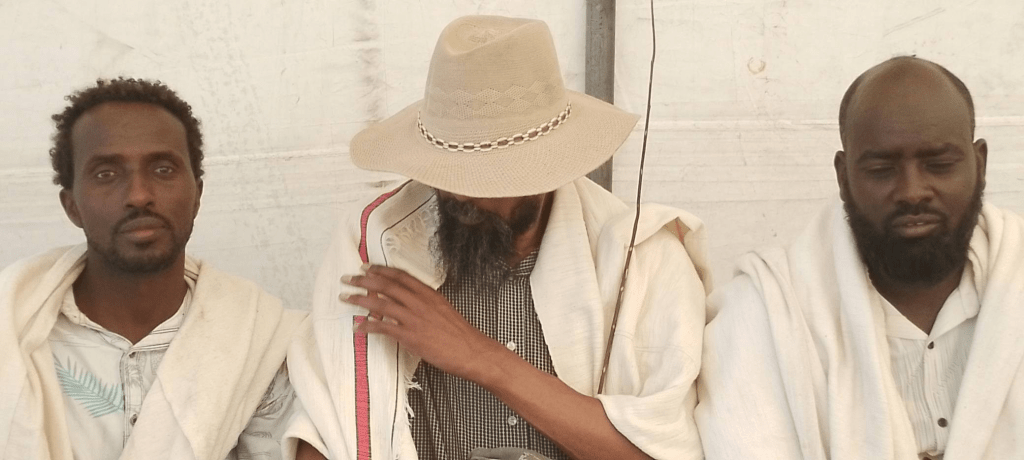
The Karrayyu: Guardians of Tradition
The Karrayyu, primarily settled in the Fantaallee and Boosat districts of East Shewa, are renowned for their distinct traditions, including their attire, hairstyles (Gunfura), and dance forms. Historically pastoralists, the Baasoo and Dullachaa sub-groups have been steadfast guardians of their territorial boundaries, paying significant sacrifices to protect their land, a commitment they continue to uphold today.
This urgent news feature documents the successful execution of a vital cultural ceremony, underscoring the enduring strength and sophisticated social organization of the Karrayyu Oromo Gadaa system.


Reclaiming Oromummaa: Four Decades of Indigenous Scholarship

Bringing ‘Oromummaa’ into Focus: Four Decades of Reclaiming an Indigenous Legacy
JANUARY 9, 2026 – As the Oromo Studies Association (OSA) approaches its 40th anniversary, it has released a landmark statement that is part historical reflection, part scholarly triumph, and part urgent defense. The statement, authored by OSA President Dr. Ibrahim Amae Elemo, chronicles a transformative journey: from the systemic erasure of Oromo history to the global recognition of its indigenous democratic systems, and now, to a new wave of attacks targeting the scholars who brought this legacy to light.
Central to this four-decade effort is the concept of Oromummaa—a term embodying the collective values, institutions, and worldview of the Oromo people, the largest ethnic group in Ethiopia. Once dismissed, Oromummaa has been meticulously restored by OSA scholars through research that has redrawn the map of Horn of Africa studies.
From Erasure to Reclamation
The OSA’s founding in the 1980s was a direct response to a void. Prior to its establishment, Oromo heritage was not merely absent from academia and state narratives; it was actively suppressed. As the statement details, a state ideology of “Ethiopianism” promoted Orthodox Christianity, the Amharic language, and Abyssinian culture as the sole legitimate national identity. The Oromo language, Afaan Oromoo, was banned in schools and public life until 1992, and students were punished for speaking it or using Oromo names.
“The national project,” the statement asserts, “was to ‘Ethiopianize’ the peoples of the south and center through enforced cultural unification.” In this process, the Oromo—despite constituting about half of Ethiopia’s population—were portrayed as backward and ahistorical.
OSA’s intervention was revolutionary. Its scholars, many of whom were part of that first generation of students reclaiming their language, engaged in rigorous research that recovered suppressed histories. Through conferences, journals, and collaborative work, they produced a substantial body of knowledge that countered centuries of denigration and “restored collective dignity.”
Reshaping History and Highlighting Indigenous Democracy
A cornerstone of OSA scholarship has been re-examining Ethiopian state formation. Drawing on archives and oral histories, researchers have framed the expansion of the Abyssinian empire in the late 19th century as a colonial project, supported by European powers and marked by violent conquest, dispossession, and the enslavement of independent societies like the Oromo.
More celebratory research has focused on Oromummaa as an indigenous democratic worldview, anchored in three core institutions:
- The Gadaa System: A complex socio-political system featuring an eight-year leadership cycle, checks and balances, and principles of accountability and rule of law. Its global significance was recognized by UNESCO’s inscription on its Intangible Cultural Heritage list.
- Siinqee (Siiqee): A women’s institution that ensures gender balance and social justice.
- The Qaallu: The spiritual authority maintaining harmony between society, nature, and the spiritual realm.
Together, these institutions embody values of democracy, peace (nagaa), and ecological stewardship that OSA argues offer lessons of “global relevance.”
A New Era of Attacks and a Call to Action
This hard-won scholarly recognition is now under threat. The OSA statement warns of “renewed attacks on Oromo scholars and scholarship” from actors seeking to “restore inequitable power relations.”
These attacks have evolved from formal complaints accusing scholars of “hate speech” to coordinated social media campaigns that vilify Oromummaa itself as a dangerous ideology. Internationally respected figures like Professor Asafa Jalata, a pioneering sociologist, have been targeted.
“These attacks do not represent scholarly debate grounded in evidence,” the statement declares. “Rather, they reflect a politicized rejection of any scholarship that challenges centralized authoritarian narratives.” It draws a stark warning: “History demonstrates that vilification of a people’s identity is often a precursor to mass violence.”
In conclusion, the OSA issues a powerful call to the global academic community and the public. It urges the defense of academic freedom and support for Oromo scholarship, framing it not as a niche field but as vital to understanding one of the continent’s oldest continuous democratic traditions. The Oromo legacy, the statement concludes, is a contribution not only of “agricultural and animal bounty” but of a resilient, indigenous democratic way of life whose study is now more critical than ever.
#Oromummaa #OromoStudies #Gadaa #AcademicFreedom #OSA40


Community Healing: The Naqamtee Reconciliation Council’s Impact

NEWS FEATURE
Peacemakers of Naqamtee: How a Community-Based Reconciliation Council is Healing Families
NAQAMTEE, OROMIA — In this bustling city, a quiet revolution is taking place inside homes, not on the streets. It’s led not by politicians, but by elders and respected community figures who have come together to form a local reconciliation council, or gaa’ila. Their mission: to mend the fractures within families before they reach the courthouse, and to restore peace one household at a time.
The council’s impact is tangible. To date, its members have successfully mediated and reconciled over 300 families teetering on the brink of permanent separation. But their work doesn’t end with a handshake. “It’s not just about reconciliation,” explains Luba Haayilu, a founding member. “We also follow up by visiting their homes to see how the healing is progressing, and we counsel and educate them about the principles of gaa’ila itself. The benefit is immense.”
From Courtrooms to Living Rooms
The traditional path for marital or family disputes in Ethiopia often leads to a costly, adversarial, and public court battle. The Gaa’ila council of Naqamtee offers an alternative rooted in Oromo customary law (Aadaa Seera). They describe a common scenario: a husband and wife separate, divide their property through the court, and go their separate ways, often leaving deep wounds.
“Afterwards,” says Luba Haayilu, “they come to us separately, gain understanding, seek each other out, and are reconciled. They are now living together anew, with love.”
A Personal Mission Born from Observation
For Luba Haayilu and his wife, Aadde Yashii Abbabaa, this mission is personal. They founded their council 25 years ago. The catalyst was the pain they witnessed around them. “We didn’t start this work while sitting idle,” Luba recalls. “It was because of what we saw happening on the streets.”
He shares a poignant story that compelled them to act: “A young man would marry a girl and they would have a child. However, while they loved each other, her family would intervene and separate them. ‘No, this boy is not the right man for you,’ they would say, and they would take their daughter back after she had borne his child. The young man would be left utterly heartbroken.”
Seeing this cycle of unnecessary familial destruction, Luba and Yashii decided to intervene. “We want everyone to have a stable family (gaa’ila tasgabbaa’aa),” Luba explains. “So we asked ourselves, ‘Why are we just sitting here while families are breaking apart?’ and we began this work of mercy.”
The Methodology: Listening and Facilitating Dialogue
The council’s power lies in its process. The two key principles, Luba states, are equal listening and openly identifying the root cause of the conflict. “We listen to both sides equally and we bring the source of the problem out into the open to discuss it frankly,” he says.
A primary technique is facilitating direct communication. Council members visit the family home and mediate a conversation between the spouses about their union. “We talk with them about their marriage together, and that’s how we reconcile them,” Luba notes.
Fruits of Reconciliation: A Legacy of Peace
The rewards of this decades-long work are measured in human futures restored. Luba beams with pride when speaking of the families they’ve helped. “Today, that family has had many more children. Their children have grown into adults. One of their children is now studying for a second degree. I am very happy,” he says, reflecting on one of their early successes.
The Gaa’ila council of Naqamtee stands as a powerful testament to community-driven justice. It operates on the belief that the best resolution is not a legal verdict that divides property, but a healed relationship that preserves a family. In a world of complex legal systems, they offer a simple, profound alternative: deep listening, honest dialogue, and the patient rebuilding of trust. Their 300 reconciled families are a living archive of their success, and a model for communities everywhere.
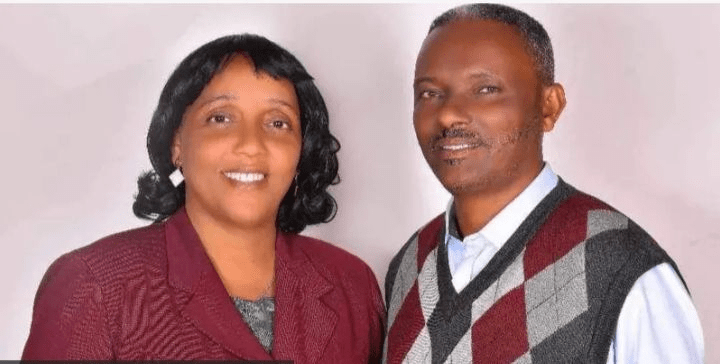

The Untold Story of Qeerransoo: Courage from the Oromo Resistance

News Feature: Portraits from a Generation of Sacrifice — The Untold Legacy of Qeerransoo
A black-and-white photograph, weathered by time yet sharp in its clarity, has resurfaced across Oromo social media and community forums. Captioned as a moment from 1980 in the Western Front (Dirree Dhihaa), it shows a group of young fighters known as Qeerransoo — “the fearless” or “the brave ones.”
These were not just any fighters. They were the children — some barely in their teens — who grew up within the folds of the Oromo Liberation Front (OLF), raised by the struggle itself. The poignant caption that accompanies the image tells a profound story: “These children were raised by the OLF and made to carry the Oromo liberation struggle — from basic membership to leadership.”
From Cadets to Commanders: A Generation Forged by Struggle
The image is more than a historical artifact; it is a testament to a generation that knew no life outside the quest for freedom. They were the Agartuu Ummata Oromoo — the “hope of the Oromo people.” In the absence of conventional childhoods, their schools were the forests and their curriculum was resistance.
As the caption powerfully notes, “The OLF is the foundation of Oromo peace.” This statement frames the sacrifice of the Qeerransoo not merely as a martial endeavor, but as the painful, necessary groundwork for a future peace — a peace they were often too young to remember but were tasked to secure.
A Living Legacy and a Call to Memory
The accompanying message is a direct, urgent appeal: “If you are in this picture and are alive, share this history with us in an orderly way. Pass it on through your own means.”
This call highlights a critical gap in the recorded history of the Oromo struggle. While the political narratives and major battles are documented, the personal, human stories of those who lived their entire youth inside the movement are at risk of being lost. The Qeerransoo represent a unique demographic: survivors of a conflict that was their only home, now living with memories that are both a personal burden and a national inheritance.
Why This Photo Matters Now
The resurgence of this image comes at a pivotal moment. As debates about the OLF’s legacy, its factions, and the path forward for Oromo nationalism continue, this photograph grounds the discussion in human cost and generational sacrifice. It asks uncomfortable questions:
- What happened to these children of the revolution?
- How does a society recognize and reintegrate those whose entire upbringing was militarized for a cause?
- Where do their stories fit into the official history of the struggle?
The photo of the Qeerransoo is a silent but powerful rebuttal to any simplified history. It reminds viewers that the OLF was not just a political or military structure; for many, it was a family, a home, and a fate. Their faces, frozen in a moment from 1980, are a bridge between a past of immense sacrifice and a present still grappling with its meaning.
Epilogue: Seeking the Faces
The search is now on, led by historians, veterans, and a curious younger generation. The plea is clear: if you recognize yourself or a loved one in this frame, your story is not just your own. It is a vital chapter in the story of the Oromo people’s long walk toward dignity and self-determination. The request is for more than just identification — it is for testimony, for context, and for the preservation of a legacy written in the youthful faces of the fearless.

The Legacy of Ilfinash Qannoo: Music and Resilience
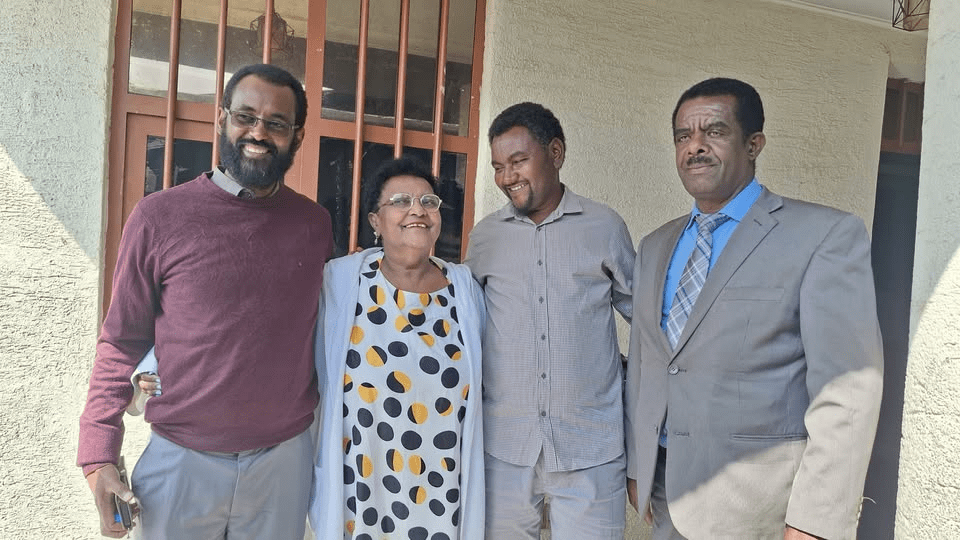
FEATURE NEWS
In Memory and Celebration: Ilfinash Qannoo — A Mother, an Icon, a Struggle’s Melody
Finfinnee, Oromia — In homes, on stages, and in the quiet moments of remembrance, a name is being spoken with a blend of reverence, love, and profound loss: Ilfinash Qannoo. More than an artist, she was a Kabajamtuu (honored one), a Haadha (mother), and a Qabsooftuu (one who struggles). Her life and voice became intertwined with the identity and aspirations of a people, making her passing not just the loss of a person, but the silencing of a powerful symbol of resilience and love.
Ilfinash Qannoo’s artistry transcended mere performance. Her songs, often imbued with the deep cultural motifs and the subtle yearnings of the Oromo people, served as a soundtrack to both everyday life and collective struggle. She did not simply sing songs; she gave voice to a history, to joys, to sorrows, and to an enduring hope. In this, she became a “mallattoo cichoominaati” — a symbol of identity. Her music was a vessel carrying the language, the pain, and the beauty of her community, affirming its existence and its right to be heard.
Yet, perhaps the most universally resonant title bestowed upon her is “Haadha Jaalalaa” — a Mother of Love. This speaks to the nurturing quality of her presence, both personal and public. For her biological family, she was the center of love and care. For her wider community, she offered a maternal embrace through her art, providing comfort, strength, and a sense of belonging. She mothered a cultural spirit, tending to it with her voice and her unwavering presence.
The brief, poignant tribute now circulating—”Umrii nuuf haa dheerattu”—carries a world of meaning. “May she live long for us” is not merely a wish, but a declaration. It acknowledges that while her physical journey has ended, the essence of Ilfinash Qannoo—her music, her symbolism, her love—is a permanent inheritance. Her life will continue to resonate, to inspire, and to fortify those who hold her memory.
Her legacy exists at a powerful intersection: the intimate space of family mourning a beloved matriarch, and the public sphere honoring an artist who channeled a people’s soul. As flowers are laid and her songs are played anew, the community is not just saying goodbye. They are affirming that the struggle she gave voice to continues, the identity she symbolized remains unbroken, and the love she embodied is eternal.
Ilfinash Qannoo: Haadha, Qabsooftuu, Artistii. Her melody is now a memory, but its rhythm beats on in the heart of a people.
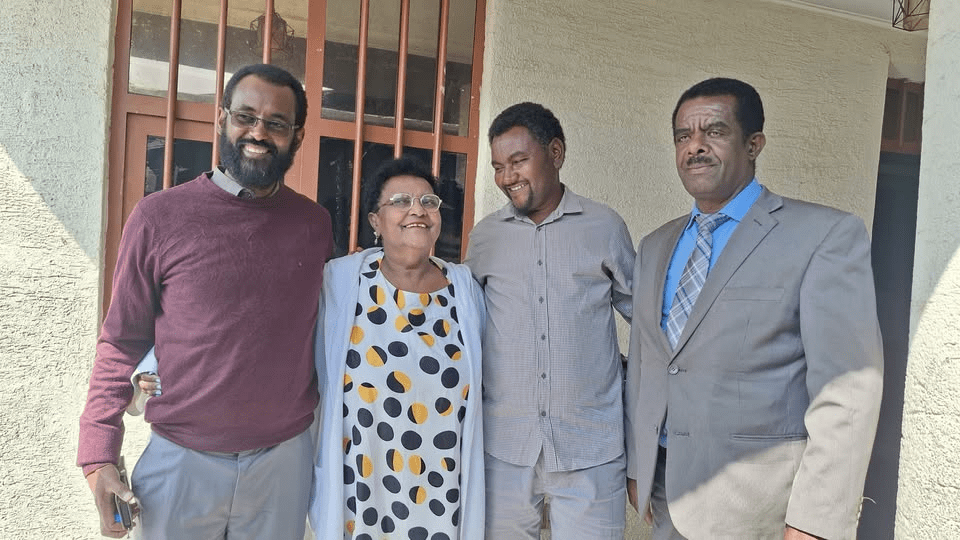

Community Mourns Loss of Melbourne Teenager, Calls for Action to Prevent Further Tragedies

Melbourne, VIC – The Ethnic Communities’ Council of Victoria (ECCV) has extended its deepest sympathies to the family and friends of 16-year-old Ater Good, who was killed near his home on a Fitzroy street in the early hours of Saturday morning.
The tragic death has sent waves of grief through the local community, particularly impacting Victoria’s South Sudanese community, who are mourning yet another young life lost.
“We are deeply aware of the impact this tragic event has had on Victoria’s wider South Sudanese community,” an ECCV spokesperson said. “Too many young lives have already been lost over the past year, and community leaders are right to ask why.”
Ater has been described by his family as a deeply loved and cherished son and friend. Victoria Police are investigating the circumstances surrounding his death.
In a statement, the ECCV expressed solidarity with South Sudanese families and community members who are rallying to support one another during this painful time. The council also acknowledged the community’s urgent calls for answers and concrete measures to improve safety.
“ECCV stands with South Sudanese families and communities who are supporting one another at this time,” the spokesperson added. “We also acknowledge their urgent calls for safety, answers, and practical action, so that no more families have to experience such loss.”
The loss of Ater Good has amplified concerns about youth safety and community violence, with many urging greater support for young people and stronger intervention strategies to prevent future tragedies.
Funeral arrangements and community-led vigils are being organized, as friends, family, and community leaders come together to mourn and seek a way forward.
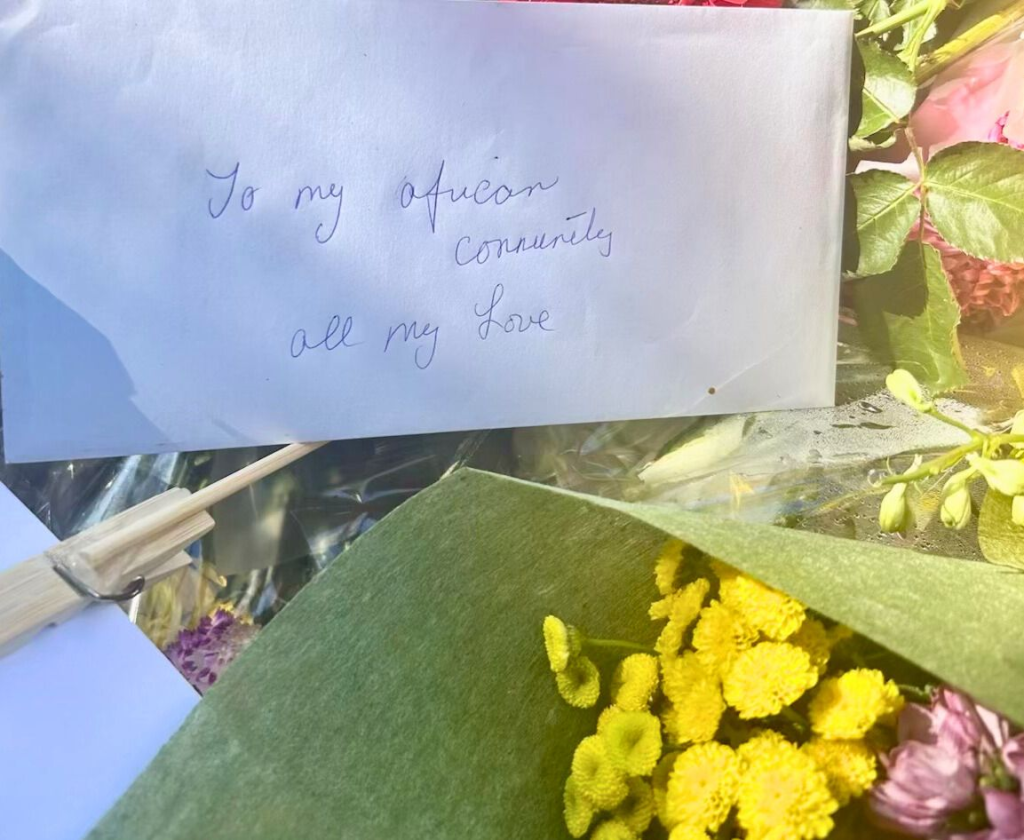

Understanding the Karrayyu’s Role in Buttaa Qaluu
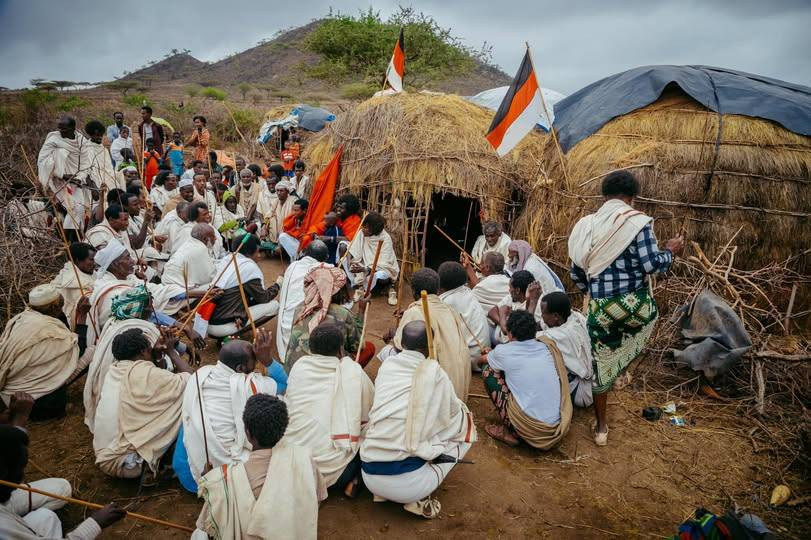
FEATURE COMMENTARY
Buttaa Qaluu: The Gadaa Ceremony of Consecration and the Sacred Bond of Karrayyu Stewardship
In the heart of Oromia, among the intricate pillars of Gadaa governance and ritual, there exists a sacred ceremony known as Buttaa Qaluu. Often referred to poetically as “Irreecha goobaa kennuu” — the giving of the festival of Irreecha — this ritual transcends mere celebration. It is a profound act of spiritual and political consecration, a moment when cyclical authority is solemnized, and the land itself is entrusted to its guardians.
The ceremony is anchored in a specific and revered geography: the plains of Tarree Reeddii, within the territory of the Warra Baasoo in the Ardaa Jilaa district. This is not a random location. Tarree Reeddii is more than land; it is a historical and ritual fulcrum, a site where the cosmic order reflected in the Gadaa system touches the earth.
The text reveals a crucial dimension of this ritual: “Tarree Reeddii ardaa jilaa Karrayyuun itti baallii waliif dabarsee kennuu dha.”
(It is at Tarree Reeddii in Ardaa Jilaa that the Karrayyu mutually confer and bestow the Baallii [authority/term of power].)
This single line unravels deep layers of meaning:
- The Karrayyu as Custodians of the Ritual: The ceremony is intrinsically tied to the Karrayyu clan, a major Oromo lineage known as stalwart guardians of Gadaa traditions. Their role here is not passive; they are the active conduits and mediators of power. The act of “mutually conferring” the Baallii suggests a collective, deliberative process rooted in consensus, a core democratic principle of Gadaa.
- Baallii: More Than Just Power: The Baallii is the Gadaa grade of leadership, an eight-year term of political, military, and ritual authority. Its conferral is the climax of the Buttaa Qaluu. The use of “kennuu” (to bestow/give) frames this not as a seizure of power, but as a sacred offering and a heavy responsibility being passed from the outgoing Gadaa class to the incoming one, under the auspices of the Karrayyu and witnessed by the community and the divine (Waaqa).
- Irreecha Goobaa Kennuu – A Metaphor of Renewal: Linking this ceremony to Irreecha (the Oromo thanksgiving festival) is deeply symbolic. Irreecha celebrates the end of the dark rainy season and the blossoming of spring; it is a festival of gratitude, cleansing, and renewal. To call Buttaa Qaluu the “giving of Irreecha” implies it is the source of that renewal, the ritual moment that ensures the cyclical rebirth of the natural and social order. The new leadership (Baallii) is thus bestowed as a gift to the people, meant to usher in a season of peace, fertility, and justice.
The Larger Significance
The Buttaa Qaluu at Tarree Reeddii is therefore a linchpin in the Gadaa universe. It is:
- A Transfer of Mandate: The peaceful, ritualized transfer of supreme authority.
- A Covenant with the Land: The ceremony ties the new leaders’ legitimacy to a specific, sacred geography, grounding their rule in the soil and history of their people.
- A Clan’s Sacred Duty: It highlights the essential, non-competitive role of specific clans like the Karrayyu as upholders of the system’s integrity.
- A Living Democracy: It demonstrates Gadaa as a living system where power is not taken but received, not owned but held in trust, and always linked to the well-being of the community and the environment.
In an era where political transitions are often marked by conflict, the image of the Karrayyu at Tarree Reeddii, overseeing the mutual and solemn bestowal of the Baallii, stands as a powerful testament to an indigenous African model of democratic renewal, sacred stewardship, and enduring peace.
This ceremony reminds us that true authority is a gift given by the people, through tradition, for the renewal of all life.
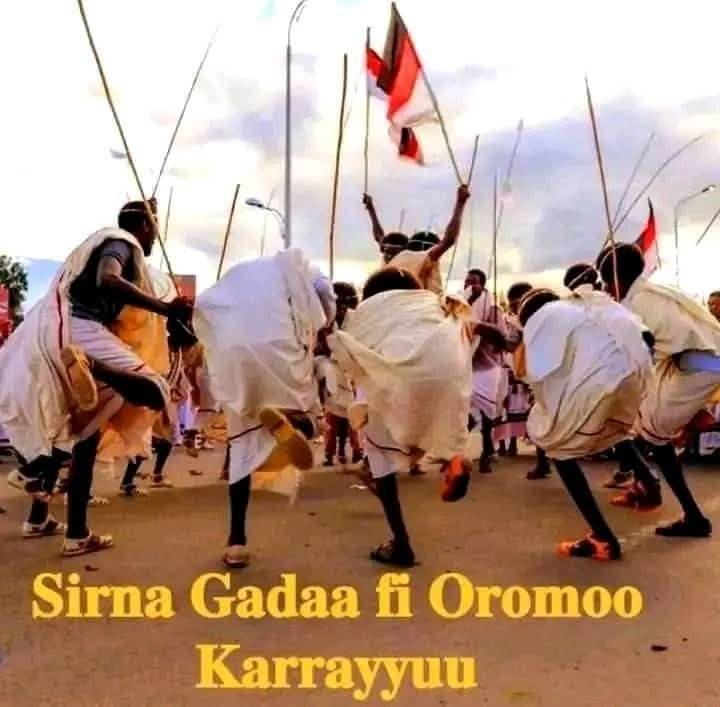

Reviving Oromo Identity: Sikkoo Mandoo Gadaa Assembly 2026
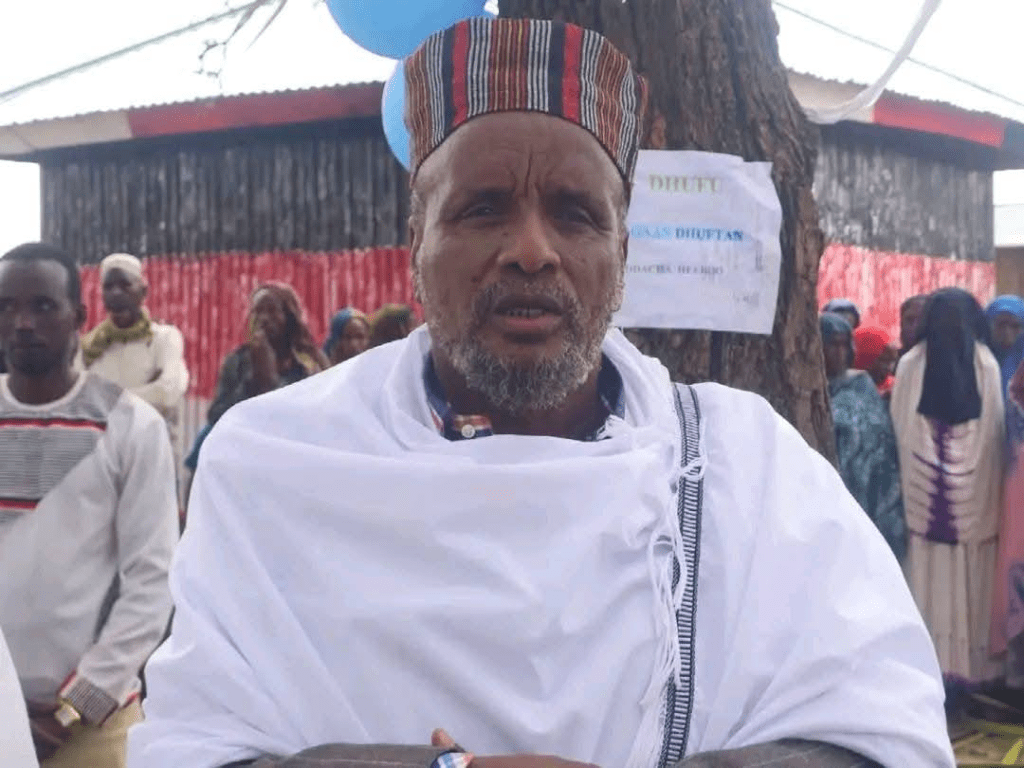
A Call to Heritage: The Sikkoo Mandoo Gadaa Assembly Convenes in Baalee Bahaa
LAGA HIDHAA DHAADDACHOO, OROMIA, ETHIOPIA – In a significant cultural and political event, the Sikkoo Mandoo Gadaa generation is set to hold its major assembly, the Ya’a Dhaddacha Guutaa (Grand Assembly of the Dhaddacha), from April 9th to 11th, 2026. The gathering will take place on the historic lands of the Dhaddacha Heeroo in Laga Hidhaa Dhaddacha, Baalee Bahaa Zone, marking a powerful moment of revival and continuity for the Oromo people’s indigenous governance system.
The assembly follows a pivotal decision made during a previous meeting, where twenty Dhaddachas (Gadaa class leaders or representatives) of the Sikkoo Mandoo generation resolved to formally return to their positions. The 21st Dhaddacha is located in Hosaana.
This convocation is more than a ceremonial gathering; it is a deliberate act of cultural reclamation. “The Oromo people are in a critical and necessary time to reclaim their identity under the Gadaa System from the places where it was taken from them in the past,” the announcement states. The event is positioned as distinct and vital, especially during a period of political transition in Ethiopia, where the Oromo are placing great emphasis on recovering their historical identity and autonomous systems.
A Gathering of National Significance
The Baalee Bahaa Zone Administration Communications Office, which released the call, emphasized the national importance of the event. “This assembly belongs to all Oromos,” the announcement declares, extending a special invitation to the children of Arsii, particularly the Ilmaan Arsii Sikkoo Mandoo, the specific lineage of this Gadaa generation.
The message is a communal summons: “We share this call together so that we may restore our system in its rightful place.” The statement underscores a collective responsibility to witness and participate in this act of restoration, urging Oromos from near and far to attend. Reports indicate that participants are already beginning their journeys from distant areas to converge on the historic site.
Context: The Gadaa System in Modern Ethiopia
The Gadaa system is a millennia-old, complex socio-political system of the Oromo people, based on democratic principles, generational classes, and cyclic leadership. It was historically suppressed by successive Ethiopian states. Its contemporary revival is deeply intertwined with the Oromo political awakening and struggle for self-determination over the past decades.
The convening of such a formal, large-scale Gadaa assembly in 2026 occurred against a backdrop of major political change in Ethiopia. It reflected a grassroots-driven movement to assert cultural sovereignty and provide a framework for governance and social organization rooted in Oromo tradition, parallel to the modern state structures.
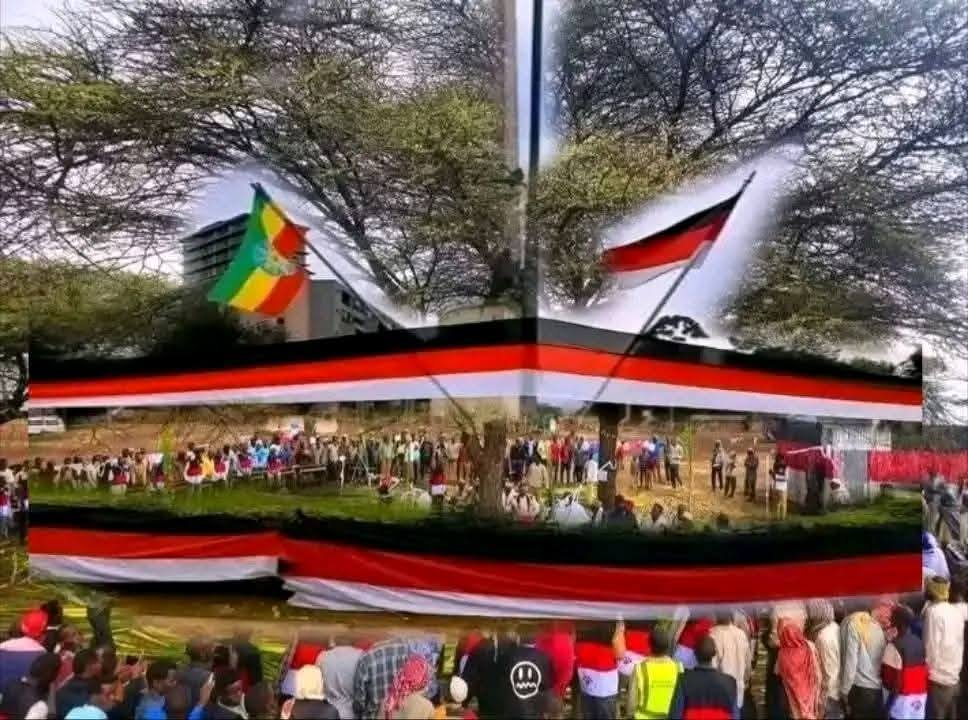
The Site: Dhaddacha Heeroo
The choice of location is deeply symbolic. Dhaddacha Heeroo is not a random field but a site laden with historical memory for the Arsii Oromo and the Sikkoo Mandoo generation. Holding the assembly there represents a physical and spiritual return to a source of authority and law, anchoring the future of the Gadaa system in the sacred geography of the past.
As final preparations are completed, the Ya’a Dhaddacha Guutaa stands as a testament to the resilience of the Gadaa system. It is a vivid demonstration of a people actively piecing together the fragments of their heritage, not as a museum exhibit, but as a living, breathing framework for identity and governance in the 21st century.
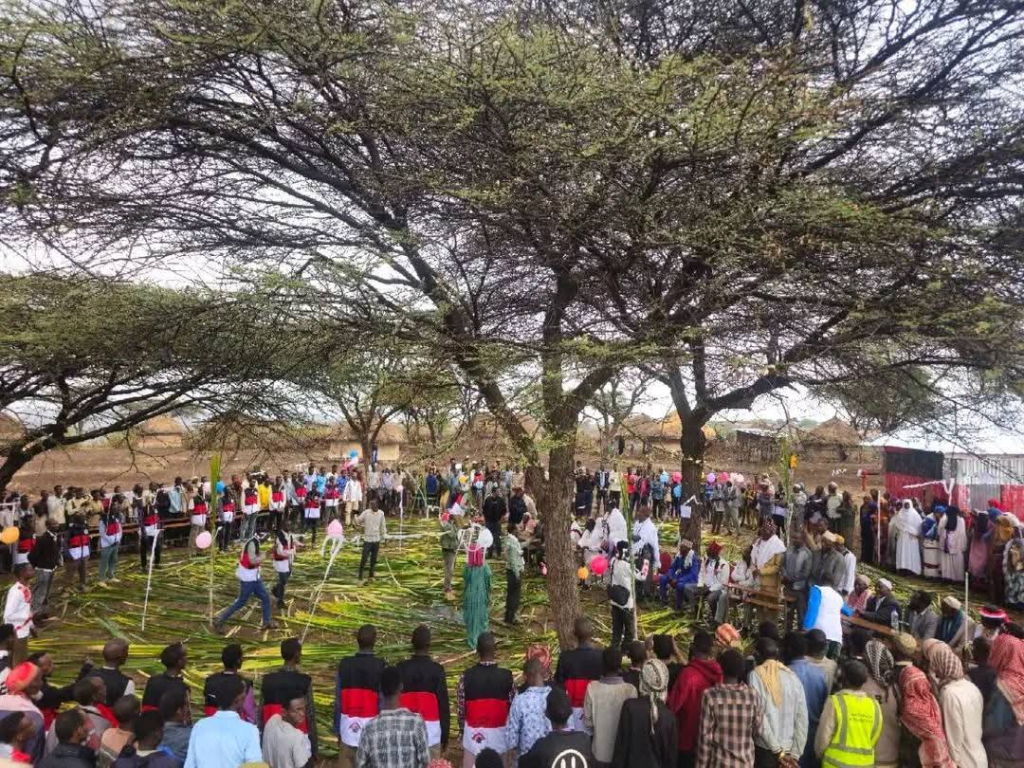
240 Australian Groups Unite Against Antisemitism: A Strong Solidarity Statement

A Unified Front Against Hate: 240 Australian Civil Society Groups Declare Solidarity with Jewish Community
SYDNEY, NSW – In a powerful and unprecedented display of national unity, a coalition of 240 Australian civil society organisations has issued a resolute statement of solidarity with the Australian Jewish community following the horrific antisemitic terror attack in Bondi last week.
The joint declaration, titled “Civil society statement of solidarity with the Australian Jewish community,” comes in the wake of a deadly assault targeting a peaceful Hanukkah celebration. It represents a broad, cross-sectoral commitment to stand against hatred and defend the fundamental rights of all Australians.
A Collective Pledge of Support and Shared Grief
The statement opens with an unequivocal message of support: “We stand in unwavering support of the Australian Jewish community… Our deepest sympathy and love goes out to the bereaved families, the victims, first responders, and all those impacted.” This sentiment forms the bedrock of the declaration, moving beyond formal condolences to a promise of enduring partnership.
Emphasising a core Australian value, the signatories assert that “Antisemitism (anti-Jewish racism) should have no place in Australia.” They affirm the universal right for everyone to “feel and be safe in our identities – free to practice our faiths, live our cultures, celebrate with family, and be in community with one another.”
Rejecting Division, Upholding Shared Humanity
The coalition directly confronts the dangerous dynamics of scapegoating and division. “We have seen what happens when a community is singled out,” the statement reads, rejecting efforts to exploit fear, polarisation, and disinformation. Instead, it champions the response of unity and compassion witnessed across the country in recent days.
Echoing the NSW Faith Affairs Council, the groups vow, “We will not let hatred and violence divide us. Across all our cultures and faiths, we will stand united in sympathy, compassion and solidarity.“
A Commitment to Action and Deeper Understanding
Moving beyond words, the statement outlines a proactive, two-fold commitment from civil society. First, it is a pledge to actively defend everyone’s rights to safety, culture, and faith. Second, and crucially, it is a promise to engage in deeper education: “We commit to deepening our understanding of how anti-Jewish racism arises, in order to better identify and prevent it.”
This commitment to learning signifies a recognition that lasting safety requires not just solidarity in a moment of crisis, but a sustained, informed effort to combat the roots of prejudice.
A Broad Coalition for a Peaceful Society
The list of 240 signatories, hosted on the Australia Democracy website, includes a diverse array of organisations representing multicultural, faith-based, human rights, migrant and refugee, community legal, and social service sectors from every state and territory. This wide-ranging coalition underscores that the threat of antisemitism is not a Jewish community issue alone, but a challenge to the very fabric of Australia’s multicultural democracy.
The statement concludes with a simple, powerful final line, repeated by all signatories: “We stand with the Australian Jewish community, in love and solidarity.”
This collective stand serves as a defining national response, demonstrating that in the face of targeted hatred, Australian civil society chooses unity, courage, and a reinforced commitment to a peaceful and inclusive society for all.
https://australiandemocracy.org.au/solidarity-with-jewish-community
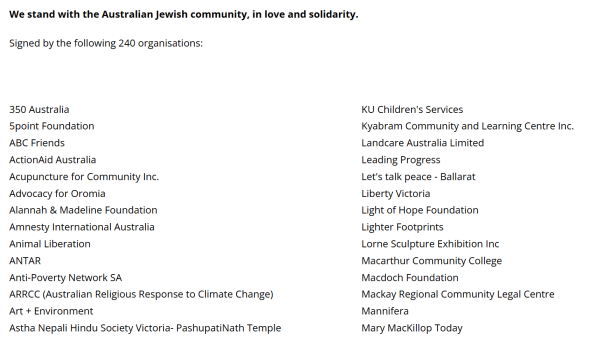

The 75th Goba Ceremony: A Legacy of Democracy in Oromia

FEATURE: 75th Goba System Ceremony in Oromia Showcases Living Gadaa Legacy for Modern Development
ARDHA JILA TARE LEDI, Fantale District, East Shewa, Oromia – In a vibrant display of living heritage, the 75th Gadaa System handover ceremony, known as Goba, was successfully held last week, transferring leadership from the outgoing Gadaa Michile (age-set in power) to the incoming Gadaa Halchisa. The ceremony, meticulously observed in Ardha Jila Tare Ledi, underscores a determined revival of a system once under pressure, now being actively harnessed for contemporary social and economic progress.
The Gadaa system, the indigenous democratic socio-political governance system of the Oromo people, is more than a cultural ritual. As emphasized by speakers at the event, it is a repository of values increasingly seen as crucial for national development.
From Ritual to Resource: Gadaa Values for Modern Development
Gobenya Hola, Secretary of the Union of Tulema Abba Gadaas and Oromo Abba Gadaas, articulated this forward-looking vision. “The Gadaa system possesses values useful for the country’s development and growth,” Hola stated. He highlighted ongoing efforts to make these values serve economic and social development, pointing to the Busa Gonofa—a traditional conflict resolution and reconciliation method—as a prime example now being implemented at the regional state level.
Furthermore, Hola detailed structural initiatives to integrate Gadaa into governance, noting the establishment of traditional courts (Sirnaa Seeraa) down to the smallest administrative unit (Kebele) to ensure justice is accessible through the system’s principles.
A System Reclaimed and Institutionalized
Abba Gadaa Gobenya also outlined the remarkable institutional comeback of Gadaa. “The Gadaa system and its value, which had weakened due to various reasons, is being restored,” he declared. This revival is now formalized within the education system, with curricula developed for schools to teach the principles of Gadaa, actively guiding the public.
“The focus now transcends just strengthening and preserving Gadaa,” he continued. “We are working intently to apply it to the nation’s landscape development, and to make it serve social and economic progress.”
Ensuring Democratic Continuity
The Union of Oromo Abba Gadaas is also leveraging the system’s inherent democratic checks and balances. Through the union, efforts are underway to ensure the Baallii (term of power) is not extended and that the transfer of power is timely and orderly—a principle at the very heart of the Gadaa cycle’s eight-year leadership transition.
Preparations are already in motion for the next major transition in the upcoming Ethiopian year (2018 E.C.), where the 70th Tulema Oromo Abba Gadaa will formally hand over authority to the 71st.
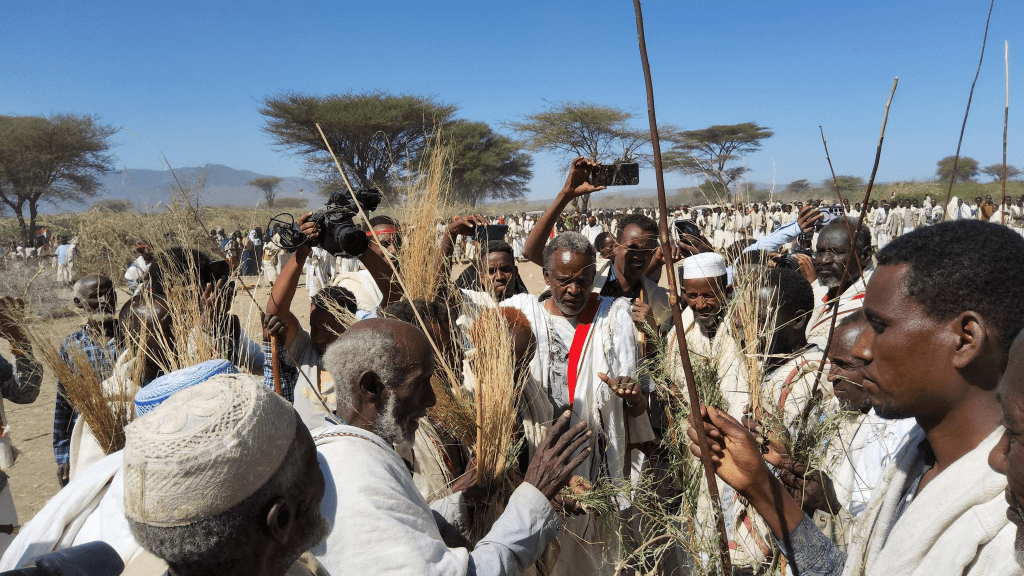
A Testament to Enduring Democracy
Other participants echoed the system’s contemporary relevance. Abba Gadaa Sabu Godana noted that the Goba ceremony itself is a testament to how profoundly democratic the Gadaa system is. He explained the ceremony’s symbolism, marking the transfer of leadership from the Karrayyu clan to members of the Dulecha clan, a rotation predetermined by the system’s generational classes.
Abba Gadaa Qumbi Waqeyo, organizer for the Boset District Abba Gadaa Committee, framed the system in national terms. “The Gadaa system, founded on democratic principles, is one under which peace and development continue, and a nation and generation is built,” he said. He issued a collective call to action, urging the current generation to work together to safeguard the system’s values, support its structures, and ensure its implementation for a resilient future.
The successful ceremony in Fantale stands as a powerful symbol: a millennia-old system is not only being preserved but is being actively studied, structured, and promoted as a viable framework for governance, justice, and sustainable development in modern Ethiopia.
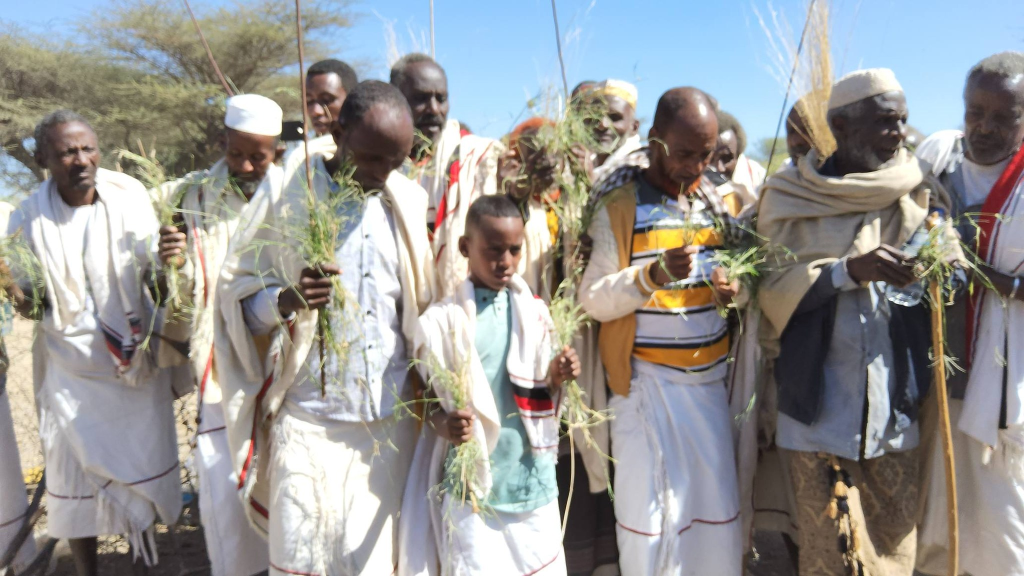
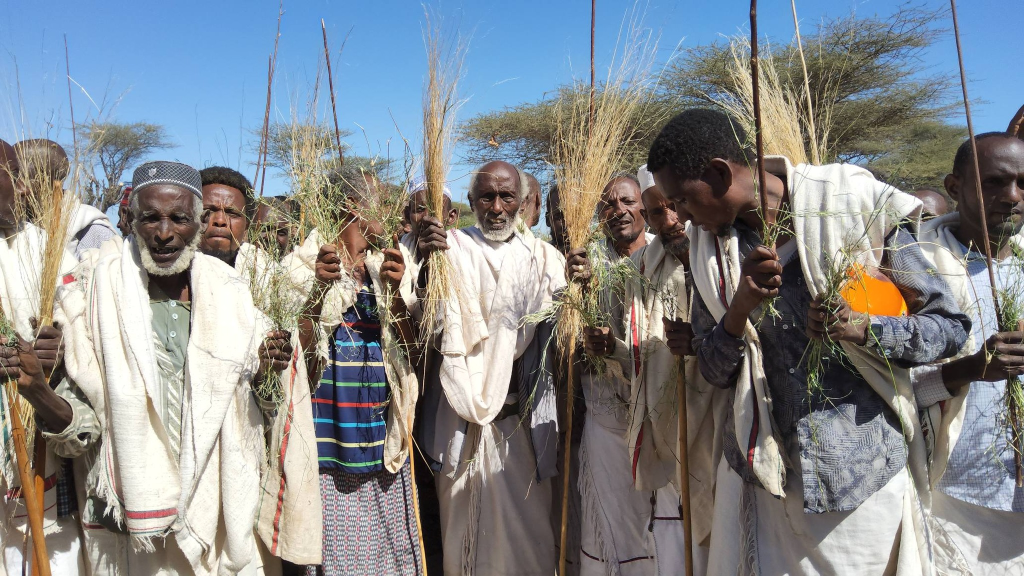
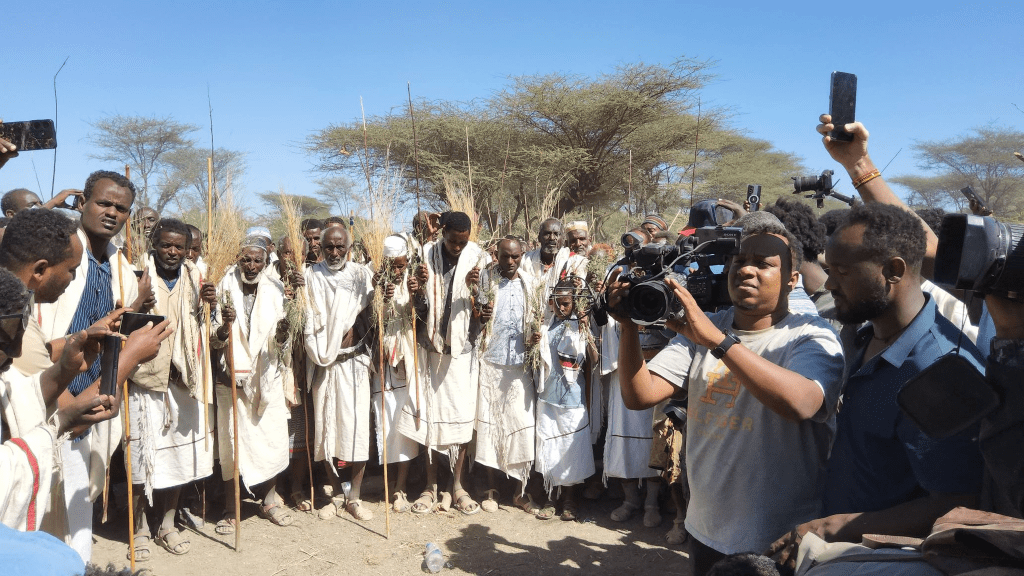

Strengthening Multicultural Services: SSI’s Mission in WA

Forging Connections in the West: SSI Leads Cross-State Mission to Strengthen Multicultural Services and Combat Family Violence
PERTH, WA – In a significant push to expand national collaboration on migrant integration and social support, a delegation of senior leaders from Settlement Services International (SSI) recently concluded a strategic multi-day mission to Western Australia. The visit, centered on relationship-building and knowledge exchange, highlighted a shared commitment to enhancing services for multicultural communities across state lines.
The delegation, which included SSI CEO Violet Roumeliotis AM, alongside senior colleagues Brad Chilcott AM, Gulnara Abbasova, and the author, traveled to Perth to support their newest WA-based colleague, Tharanga De Silva, and engage directly with key stakeholders on the ground.
“This was a mission of listening, learning, and laying the groundwork for stronger partnerships,” the delegation noted. “The insights gained from stakeholders in Western Australia are invaluable as we work to tailor and improve national service delivery.”
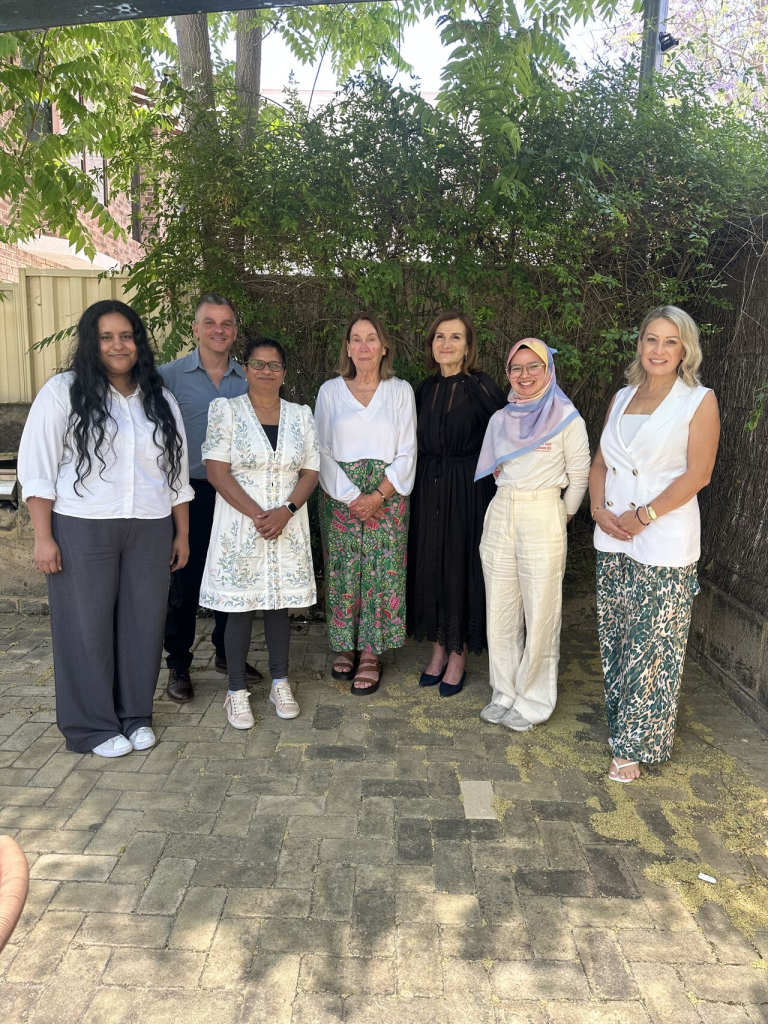
The itinerary underscored the trip’s high-level strategic nature. A major highlight was being hosted at WA’s Parliament House by the Hon Klara Andric MLC. The delegation also held productive meetings with federal and state parliamentarians, including Senator the Hon Sue Lines, Sook Yee Lai MLA, and Tania Lawrence MP, Member for Hasluck, appreciating their openness and commitment to community-focused policy.
Moving from government to grassroots, the week featured a series of impactful meetings:
- With the City of Stirling, where officials including Janeice Carrascalao and Elizabeth Richard exchanged vital program knowledge and local government perspectives.
- With the Western Australia Multicultural Association (WAMA), engaging with Mr. Simon Lee and Mrs. Helen Job to understand the local multicultural landscape.
- With Ramdas Sankaran, CEO of the Multicultural Services Centre of WA (MSCWA), and Louise Giolitto, CEO of the Western Australian Council of Social Service (WACOSS), discussing systemic support and collaboration.
A key focus of the visit was SSI’s innovative work in combating Family and Domestic Sexual Violence (FDSV) within multicultural communities. This culminated in a Community & Faith Leaders Forum, generously hosted by the Hon Ayor Chuot MLC. The forum, attended by over 18 leaders, showcased a new e-learning module developed by SSI in partnership with the Federation of Ethnic Communities’ Councils of Australia (FECCA). The module is designed to equip community leaders with the tools to identify signs of FDSV and respond appropriately, a critical step in early intervention.
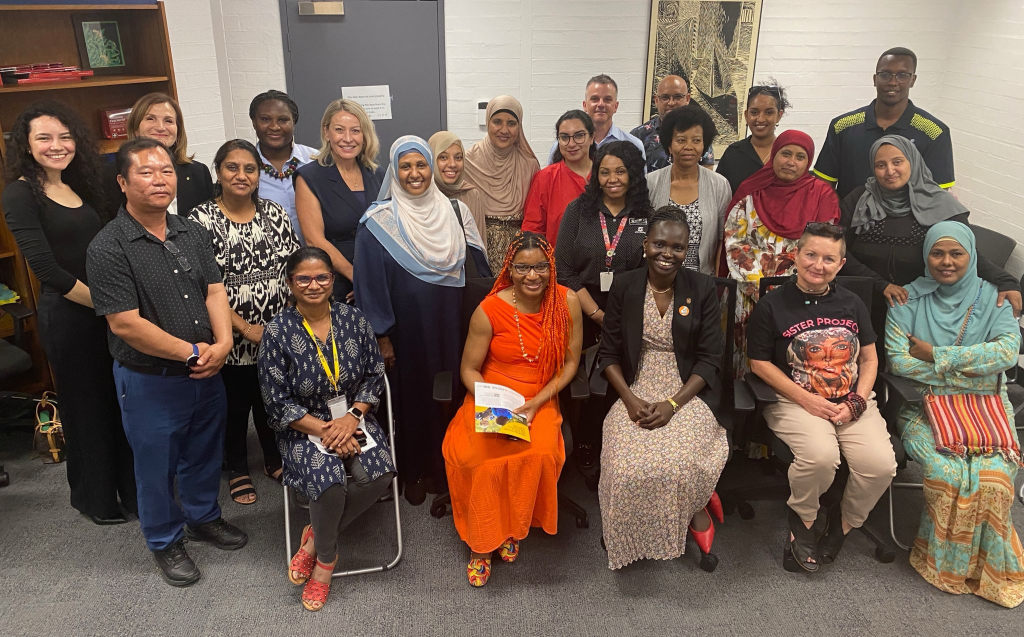
“We were particularly grateful for the opportunity to present our FDSV prevention tools,” the delegation shared. “Empowering community leaders with this knowledge is essential to creating safer environments for all.”
The visit also served to highlight SSI’s specific service offerings, such as a productive discussion with Caroline Speirs, Director of Community Engagement Projects at the Department of Communities, regarding SSI’s Multicultural Foster Care services.
The SSI delegation expressed profound gratitude to all stakeholders for their warm welcome and candid discussions. The trip has firmly established a foundation for future collaboration, with a shared goal of strengthening support systems and fostering more inclusive, resilient communities across Australia.
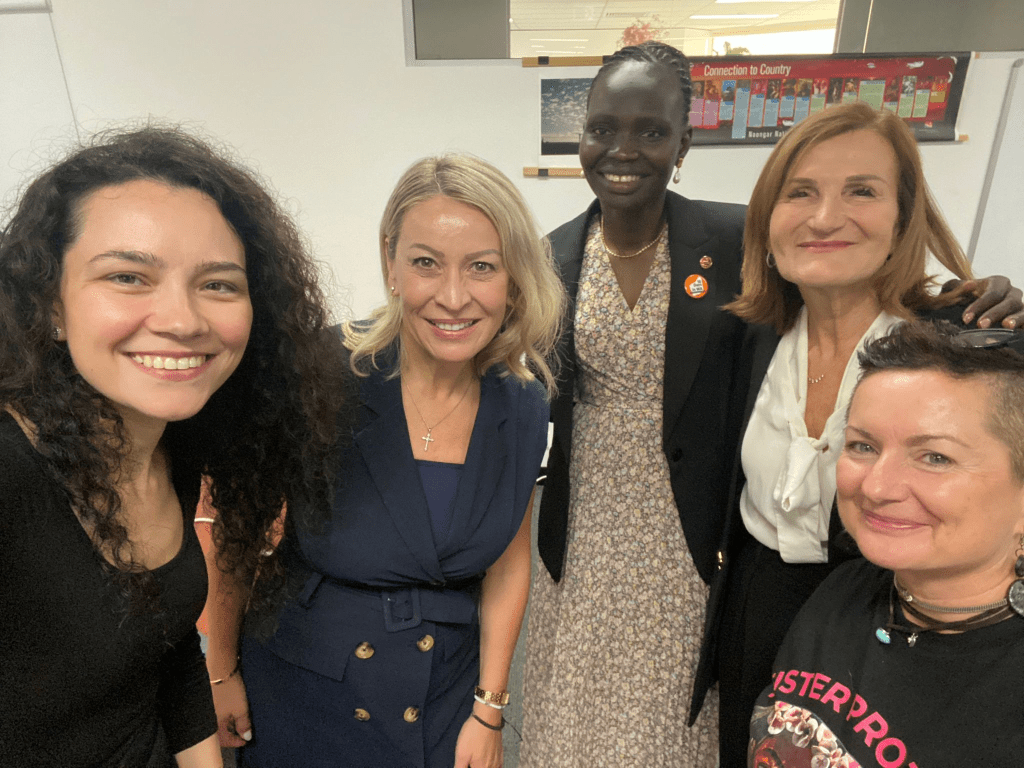

Ongoing Fight Against Family Violence in Dandenong

Beyond 16 Days: Dandenong Advocate Champions Sustained Action Against Family Violence
DANDENONG, VIC — While the global campaigns of the 16 Days of Activism against Gender-Based Violence and International Human Rights Day have concluded for another year, a clarion call for continuous, localised action echoes through one of Victoria’s most diverse communities. Local advocate and member of the Victoria Police Multicultural Reference Advisory Board is urging residents to make the fight against family violence a daily commitment.
“The calendar may have moved on, but our work cannot stop,” the advocate stated. “We must continue to raise Family Law awareness and call out behaviours that encourage violence every single day. This is how we build a truly safe environment for everyone in our multicultural community.”
The call to action follows powerful local demonstrations of solidarity. Last month, the advocate joined over 1,000 community members in the City of Greater Dandenong’s annual Walk Against Family Violence—a visible testament to the growing collective resolve to address this critical issue.
The event was highlighted by a stirring address from keynote speaker Elvis Martin, whose personal insights resonated deeply with the diverse audience. “Hearing from voices like Elvis is powerful,” the advocate noted. “It connects the issue to real experiences and inspires others to speak up and seek change.”
The advocate directly linked the path to safer communities with two key pillars: the adoption of Australian family law and the promotion of healthy lifestyles. This dual approach, they argue, is essential for protecting the most vulnerable and shaping future generations.
“Understanding and adopting Australian law is non-negotiable for safety and justice,” they explained. “Coupling this with a healthy, respectful lifestyle creates the foundation we need. Together, they allow us to lead our younger generation toward a better, violence-free future.”
This perspective underscores a crucial mission within multicultural advocacy: navigating the complex intersection of cultural practices, legal rights, and community safety. As a bridge between Victoria Police and diverse communities, the advocate’s work focuses on ensuring all residents, regardless of background, know their rights, understand the law, and can access support without fear.
The message from Greater Dandenong is clear: ending gender-based and family violence is not a seasonal campaign. It is a sustained, community-wide effort that demands ongoing education, unwavering courage to challenge harmful norms, and a united front dedicated to safety for all.
The community is encouraged to seek information on family law and support services through local councils, legal aid, and family violence hotlines.

A Night of Light: Victorian Communities Stand in Solidarity Against Hate
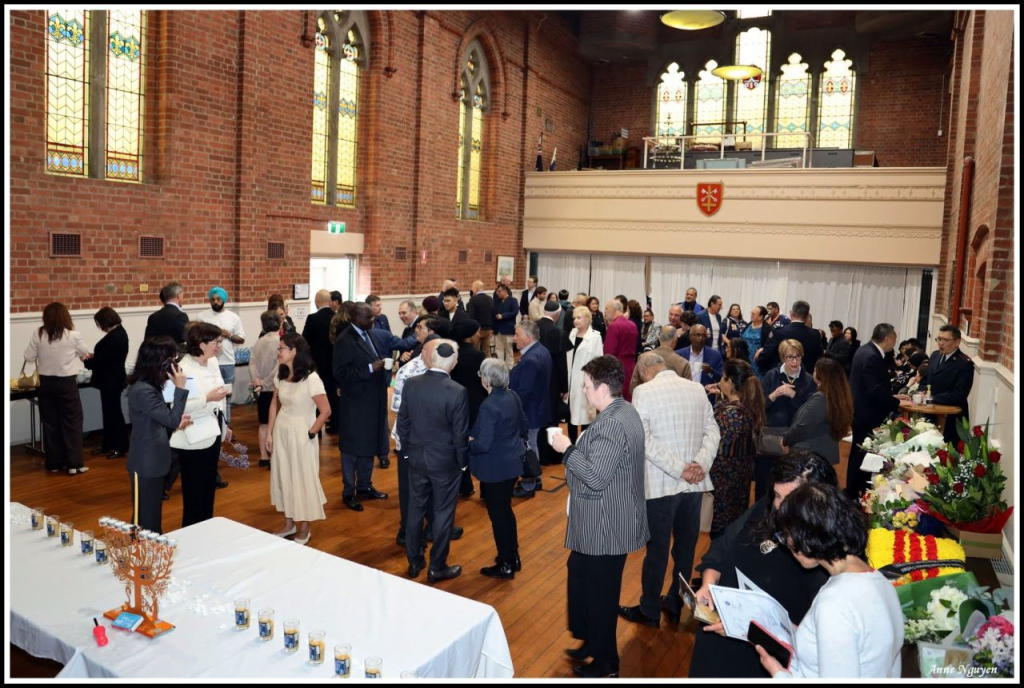
In a powerful display of unity, a coalition of Victoria’s diverse multicultural and multifaith communities gathered last night for a solemn vigil, offering a collective embrace to the Jewish community following the devastating antisemitic terror attack in Sydney.
Held at St Peter’s Eastern Hill Hall and convened by the Victorian Multicultural Commission (VMC), the event marked one week since the tragedy at Bondi Beach that claimed fifteen innocent lives. The vigil served as a profound reaffirmation of the state’s shared commitment to respect, compassion, and the unbreakable bonds of social cohesion.
“Antisemitism has no place in our society,” stated the VMC, a sentiment that echoed throughout the evening. “Together, we stand united against hate and violence, committed to building a Victoria where every community feels safe, respected and supported.”
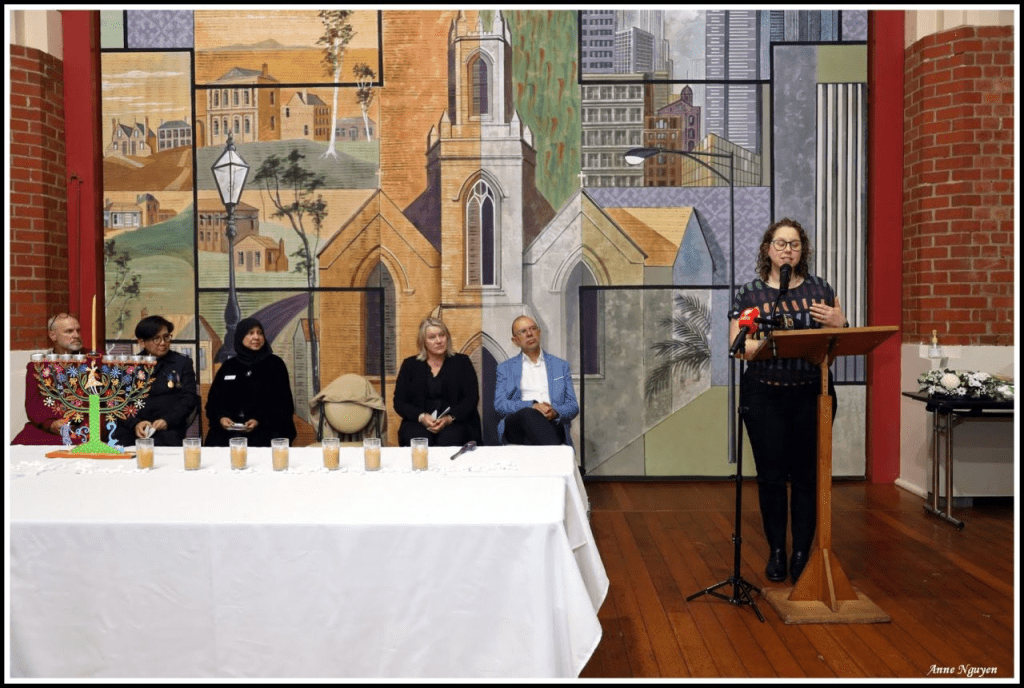
The ceremony saw leaders from across Victoria’s social fabric standing shoulder-to-shoulder. The Minister for Multicultural Affairs, Ingrid Stitt MP, joined the gathering, underscoring the government’s solidarity. The atmosphere was one of shared grief and unwavering support.
Naomi Levin, CEO of the Jewish Community Council of Victoria, delivered a heartfelt address, giving voice to the profound pain and anxiety reverberating through the Jewish community. “The trauma of such a targeted attack is deep and personal,” she shared with the assembled crowd, her words met with a respectful and empathetic silence.
This theme of shared humanity was amplified by faith leaders. Archbishop Ric Thorpe, Phong Nguyen, and Batul Gulani each offered condolences and emphasised the critical importance of maintaining harmony and mutual understanding among all Victorians.
In one of the vigil’s most poignant moments, fifteen candles—provided by the Jewish Museum of Victoria—were lit by multicultural community leaders. Each flame represented a life lost in Sydney, a silent, glowing tribute to the victims. Following the lighting, Rabbi Ralph Genende OAM offered a moving memorial prayer, filling the hall with a spirit of remembrance and solace.
The evening culminated in a symbolic act of communal care. Together, the diverse assembly walked the candles and bouquets of flowers from the hall to the nearby East Melbourne Synagogue. This quiet procession through the streets was a visible testament to a simple, powerful truth: in Victoria, no community mourns alone.
The vigil, marked by the hashtags #UnityandSolidarity, #VMC, and #MulticulturalVictoria, stands as a clear counterpoint to the language of division. It demonstrated that the collective response to hatred is not fear, but a stronger, more determined fellowship—a promise etched in candlelight to protect the inclusive heart of the state.
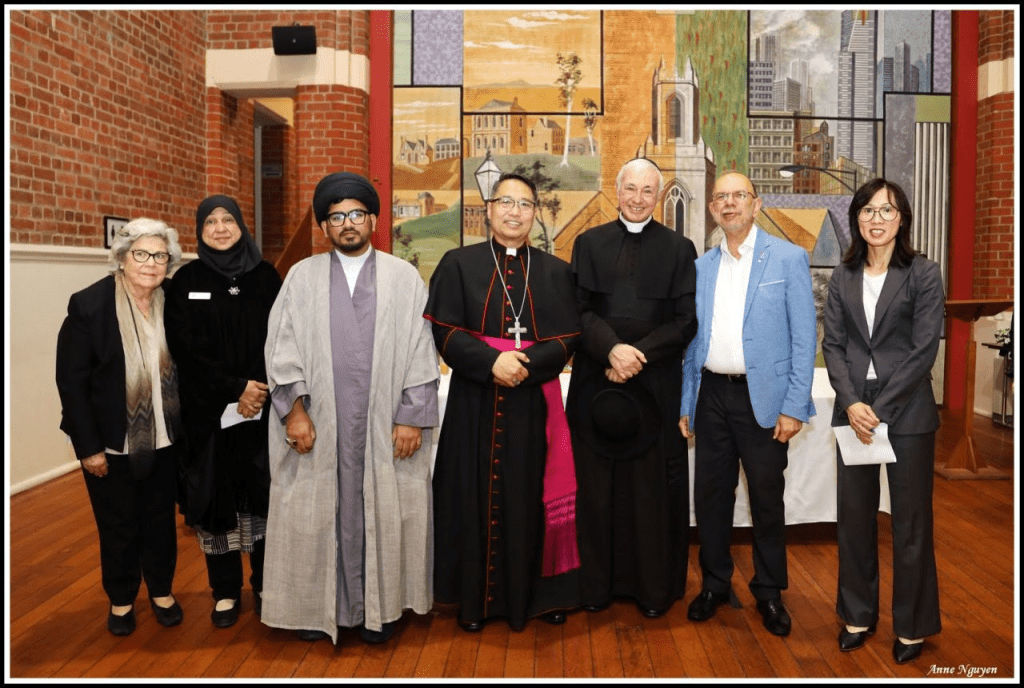

Oromo Solidarity: Struggles for Unity and Ownership

FEATURE NEWS
“WE ARE NOT FREE FROM FEAR”: A COMMUNITY LEADER’S SOBERING ASSESSMENT ON THE STATE OF OROMO SOLIDARITY
By Maatii Sabaa
Date: December 11, 2023
In a poignant and critical address that has resonated across the Oromo diaspora and within Ethiopia, Obbo Dirribi Damusee, the former Chairman of the influential Maccaa and Tuulamaa Association (MTA), has delivered a stark analysis of the current condition of the Oromo people. His message, steeped in the gravity of lived experience and historical awareness, cuts to the heart of contemporary struggles.
“The Oromo people today are not free from fear; they live in a state of fragmentation and internal division,” Dirribi stated, articulating a concern shared by many observers. “The community has awakened, yes, but it has not yet unified itself. It still lacks genuine ownership of its own cause.”
These words, shared during a recent community forum, transcend mere opinion. They represent a sobering diagnosis from a figure deeply embedded in the long history of Oromo organizational and intellectual resistance. The MTA, which Dirribi once led, is historically recognized as a crucial incubator for Oromo national consciousness, making his critique particularly significant.
Awakening Without Unity: The Core Dilemma
Dirribi’s statement draws a critical distinction between awakening and ownership. The Oromo people, especially following the watershed protests of 2014-2018, have undergone a profound political and cultural awakening. A new generation has fiercely challenged historical narratives and demanded rights, visibility, and self-determination.
However, Dirribi suggests this awakening has not yet crystallized into a sustained, unified, and self-directed movement. The term “of-birratee jira” (fragmented, divided) points to the internal fractures—political, ideological, and regional—that continue to hamper collective action. The “sodaarraa bilisa miti” (not free from fear) acknowledges the persistent climate of political repression, violence, and insecurity that prevents the full and free expression of Oromo political will.
The Challenge of “Ownership” (Keessummaa)
The most profound part of his message lies in the concept of “keessummaa” – ownership, agency, or authentic stewardship. Dirribi contends that for the Oromo struggle to transcend reaction and achieve its objectives, the community must move beyond being merely awakened to external stimuli. It must cultivate an internal, collective ownership of its institutions, its political projects, and its future direction.
This implies building resilient, accountable, and transparent structures that are truly of the people, by the people, and for the people. It is a call to move from protest to sustained institution-building, from fragmented reactions to a cohesive, long-term strategy owned by the community itself.
A Veteran’s Voice in a Critical Time
Obbo Dirribi Damusee’s intervention comes at a critical juncture. The Oromo people, and Ethiopia at large, face immense uncertainty. His words serve as both a caution and a guide:
- A Caution: Against the dangers of division and the illusion that awakening alone is sufficient. Fear and fragmentation remain formidable adversaries.
- A Guide: Toward the harder, more meticulous work of building internal unity, fostering genuine leadership accountable to the people, and claiming full ownership of the struggle’s direction and destiny.
The message is clear: the path to true freedom requires conquering internal divisions as surely as it requires confronting external obstacles. The awakening was the first, essential step. The challenge now, as framed by this elder statesman, is to transform that awakening into an unshakeable, self-determined unity. The question left to the community is how to answer this call.
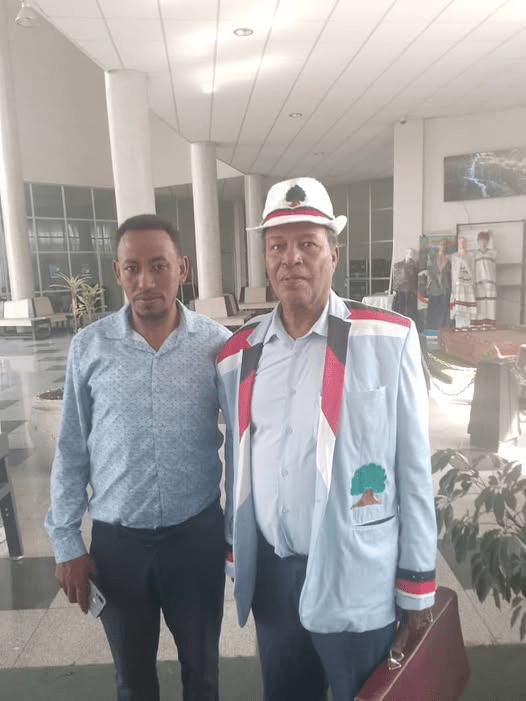




 Advocacy for Oromia