Category Archives: Corona

More Than an Ancient Civilization: The Kingdom of Kush—A Powerful Empire of Land and Sea
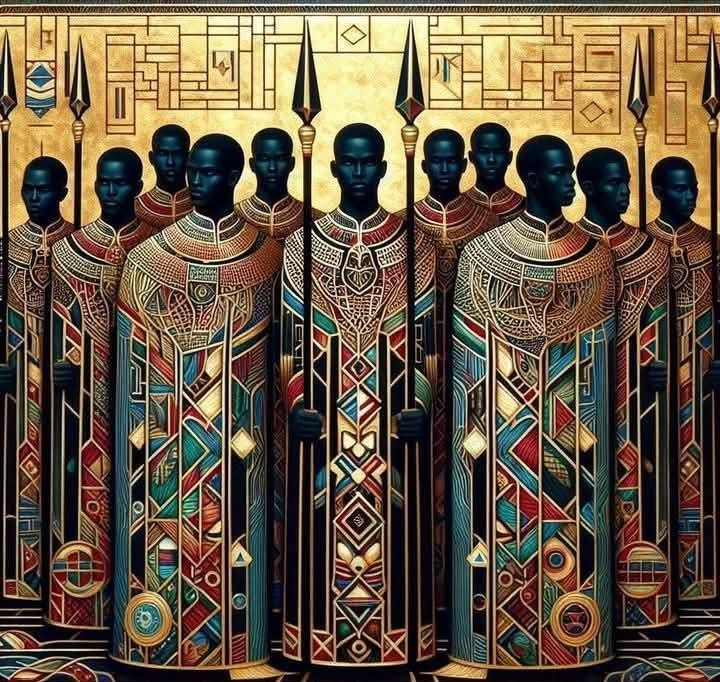
A people whose legacy challenges the very foundations of African history
When we speak of the great civilisations of antiquity, our minds often turn to Egypt, Greece, or Rome. But long before the Persian Empire rose to dominance, there existed in the heart of Africa a kingdom of extraordinary power, wealth, and sophistication—the Kingdom of Kush.
The Kingdom of Kush, with its three major cities of Meroe, Kerma, and Napata, emerged in the Nubian Desert south of Egypt along the Upper Nile River Valley from the 2nd millennium B.C. to the fourth century A.D. . For over a thousand years, Kush was a major power in the Nile valley, controlling an empire that at its height stretched from Central Sudan to the Mediterranean .
The achievements of this ancient civilisation challenge long-held beliefs that Egypt was the sole centre of advancement in the region. As renowned archaeologist Charles Bonnet’s excavations have revealed, Kush was not a mere vassal state of Egypt but a powerful and independent kingdom with its own distinctively indigenous culture . This sophisticated political state organised trade to the Mediterranean basin and built up a military strong enough to resist Egyptian forces .
The Black Pharaohs: A Legacy of Power
The Kushite rulers of Egypt’s 25th Dynasty, often referred to as the “Black Pharaohs,” represent a pivotal moment in the history of the Nile Valley. Emerging from the Kingdom of Kush at Napata in Nubia, these rulers not only unified Egypt after centuries of fragmentation but also reinvigorated pharaonic traditions .
The first major figure of this dynasty, King Piye, launched a campaign into Egypt during a period of political fragmentation known as the Third Intermediate Period. His Victory Stela records the subjugation of Delta rulers and proclaims his role as restorer of order . By 730 BCE, Piye had conquered Lower Egypt, establishing Kushite authority over both Upper and Lower Egypt .
The dynasty reached its zenith under Taharqa (690–664 BCE), whose reign is remembered for monumental building projects and ambitious foreign policy. Taharqa sponsored extensive temple construction at Karnak, Kawa, and Jebel Barkal, reinforcing his devotion to Amun and his claim to pharaonic legitimacy . He intervened in the Levant, supporting coalitions against Assyrian expansion, and is mentioned in both Biblical and Assyrian sources .
One of the most remarkable features of Meroitic civilisation was its powerful queens. The title “Candace,” meaning “sister,” was given to Kushite queens . Queens such as Amanirenas—who signed a peace treaty with the emperor Augustus—and Amanishakheto, whose treasure was looted in 1834, demonstrate the prominent role of women in Kushite society .
Kush: More Than a Footnote
The Kingdom of Kush was more than a civilisation; it was a power that commanded both land and sea. Kushite armies were formidable, and their military prowess allowed them to conquer and control Egypt itself . Kush also boasted a powerful navy, controlling trade routes along the Nile and beyond .
The economy of the ancient Kushites relied on trade in exotic African goods with Egypt and beyond. As middlemen, Kushite traders passed along ivory, ebony, incense, and other exotic goods from the South to the Egyptians, who then traded with other Mediterranean peoples . The city of Kerma, with its strategic location on the Nile River, controlled this crucial trade route .
Kush produced more gold than anywhere in the world at that time . Archaeologists have uncovered massive gold-processing operations at sites like Hosh el-Guruf, revealing the scale of Kush’s wealth . Minerals and high-quality stone were also mined for trade, and the Kushites introduced and developed iron metallurgy to the region .
A Sophisticated Society
The art and architecture of the Kushites reveal a sophisticated society of innovative craftsmen who constantly assimilated new artistic techniques from other lands . Notable architecture includes stone temple complexes such as the Lion Temple at Naqa and the steep-sided, solid pyramids found at Meroe and Jebel Barkal .
In fact, Sudan has more pyramids than all of Egypt—a testament to the grandeur of the Kushite civilisation . These tall, slender, graceful monuments bear witness to the lasting splendour of Kush .
Kushite art includes narrative tomb wall paintings and unique, eggshell-thin pottery with geometric patterns traded all over the Mediterranean . Stoic granite and bronze statues of gods and kings convey the religious beliefs of this ancient people .
The Question of Cush
The name “Kush” has been connected since at least the time of Josephus with the biblical character Cush, son of Ham (Genesis 10:6). Ham had four sons: Cush, Put, Canaan, and Mizraim (Egypt) . According to the Bible, Nimrod, a son of Cush, was the founder and king of Babylon, Erech, Akkad, and Calneh .
The Cushitic-speaking peoples, who are the ethnolinguistic groups speaking Cushitic languages natively, are today found primarily in the Horn of Africa, with minorities in Egypt, Sudan, Kenya, and Tanzania . Proto-Cushitic was spoken on the Ethiopian Highlands by 5000–4000 BC .
A Civilisation Worthy of Recognition
The Kingdom of Kush is not merely a footnote in the history of Africa—it is a testament to the power, ingenuity, and resilience of the peoples of the Nile Valley. As the American Journal of Archaeology notes in its review of The Nubian Pharaohs of Egypt, the term “Black Pharaohs” has sometimes been used to market exhibits, but the historical significance of Kush extends far beyond its interaction with Egypt . Sudanese colleagues and community members rightly resent the idea that the kings of ancient Sudan are only important because they ruled over Egypt . The Kingdom of Kush deserves to be remembered on its own terms.


The Unrelenting Reactionary Force: A Reflection on Ethiopia’s National Dialogue and the Battle for Constitutional Integrity
Confronting the Forces That Seek to Undermine Ethiopia’s Federal Foundation
By Dereje Gerefa Tullu
For over three decades, the Ethiopian Constitution has served as the foundational document upon which the country’s federal system was built. It enshrined the rights of nations, nationalities, and peoples—including the right to self-determination, cultural recognition, and political participation. It was a historic compromise, an attempt to address the historical grievances of marginalized communities and build a new Ethiopia based on equality and justice.
Yet, from the moment it was adopted, there have been forces that have sought to undermine it. These forces—reactionary in their orientation—have never accepted the constitutional order. They have never reconciled themselves to the reality that Ethiopia is a country of diverse nations and nationalities with equal rights. And now, as the national dialogue unfolds, they have emerged once again, more vocal and more aggressive than ever.
This is a reflection on the reactionary forces that have dominated Ethiopia’s political discourse for decades—forces that, under the guise of unity, seek to reimpose a centralized, assimilationist order that has been rejected by the Ethiopian people.
The Assault on the Constitution: Erasing Nations and Nationalities
The reactionary forces have made their agenda clear. They have targeted the very language of the Constitution, particularly the phrase “nations and nationalities” that appears in its preamble. They argue that this language is divisive, that it undermines national unity, that it must be replaced with something more “inclusive”—a term that, in practice, means something far more sinister.
“The phrase ‘nations and nationalities’ bothers me,” they declare. “It should be removed.”
When the ruling Prosperity Party proposed replacing it with “Ethiopian nationalities” —a gesture toward the reactionaries—it was not enough. They demanded more. They insisted that the very recognition of distinct nationalities be erased entirely, replaced by a homogenized “Ethiopian” identity that denies the reality of the country’s diversity.
No one outside the reactionary camp has asked for this. No one has demanded that the Constitution’s recognition of nations and nationalities be removed. This is not a popular demand—it is the agenda of a minority that refuses to accept the constitutional order.
The Attack on Self-Determination: Article 39 Under Fire
If the preamble was the first target, Article 39 of the Constitution—which enshrines the right to self-determination, up to and including secession—has been the primary focus of the reactionary assault.
“Remove the right to secession,” they demand. “Why should the Constitution include such a dangerous provision?”
Despite the fact that the right to self-determination is a fundamental principle of international law, despite the fact that it is recognized in constitutions around the world, the reactionaries have never accepted it. They see it as a threat to their vision of a centralized Ethiopian state.
“We Ethiopians are not interested in secession,” they insist. “We are interested in unity, equality, and brotherhood/sisterhood.”
But if the right to self-determination is not a threat, if it is simply a constitutional safeguard, then why do they want it removed? The answer is clear: because they do not trust the Ethiopian people. They do not believe in democracy. They do not believe that the people, if given the choice, would choose to remain united. They want to deny the people that choice—not because they believe in unity, but because they believe in control.
The Land Question: Undermining Oromo’s Constitutional Rights
The reactionary forces have also targeted Article 49(5) of the Constitution, which recognizes Oromia’s “special interest” in Finfinne concerning social services, natural resources, and joint administrative matters.
“Remove Oromia’s special interest,” they demand. “Why should Oromia have a special interest in the capital?”
They argue that because Finfinne is surrounded by Oromia, and because the city’s daily activities and development depend on resources from Oromia, this constitutional provision is somehow unfair. They have called for the complete removal of any reference to Oromia in the Constitution’s treatment of the capital.
“The national dialogue is completely under the control of Oromia’s Prosperity Party,” they have claimed on social media. “It is rigged.”
Despite the fact that Finfinne has historically been the capital of Ethiopia and the seat of the federal government, the reactionary forces have framed Oromia’s constitutional interests as a threat. They have campaigned relentlessly to delegitimize these provisions and to marginalize the Oromo people in their own capital.
The Land Question: Property, Access, and Control
The reactionary forces have also weighed in on the land question, challenging the constitutional principle that land is the common property of the state and the people. They have demanded that private property rights be expanded to include land—a demand that would fundamentally alter the socio-economic order of Ethiopia.
“Land should be private,” they declare.
When it was suggested that some form of private land ownership could be introduced, the reactionary forces were not satisfied. They insisted that the only reason private land ownership was not already enshrined in the Constitution was the treachery of the previous regime, the EPRDF. They dismissed any attempt at compromise and insisted on the full privatization of land—a demand that would disproportionately benefit the wealthy at the expense of farmers and rural communities.
The Historical Revisionism: A Convenient Amnesia
The reactionary forces have also engaged in historical revisionism. They have argued that Finfinne has always been the capital of Ethiopia, that it has always been the capital of the Shoa region, and that there is nothing exceptional about this arrangement.
“Under the Emperor, Finfinne was the capital of Ethiopia and Shoa. Under the Derg, it was the capital of Ethiopia, the Shoa Province, and the Administrative Region. Under the EPRDF and Prosperity Party, it has been the capital of Ethiopia and Oromia. Nothing has changed.”
But this is a convenient amnesia. The fact that Finfinne has served as the capital is not in dispute. What is in dispute is whether the Oromo people have a constitutional and historical stake in the city. Article 49(5) was not invented by the current regime—it was a product of the EPRDF era, adopted with the consent of all parties.
The reactionary forces have conveniently forgotten that the EPRDF itself faced a crisis when it attempted to revise the capital’s status. The Oromo people protested, and the attempt failed. The current regime itself is a product of that crisis—a crisis that was caused precisely by the refusal to respect Oromo rights.
“If the Prosperity Party does not change Oromia’s capital from Finfinne to something else,” the reactionaries now declare, “then Prosperity Party itself is OLF.”
The Flag: A Symbol of Unity or Division?
The reactionary forces have even gone after the Ethiopian flag, arguing that the star represents nations and nationalities and that this is somehow divisive.
“If the star is meant to represent the equality and unity of the nationalities, then it must be removed,” they insist. “Otherwise, I am willing to go to death.”
When it was suggested that the flag could be discussed as part of the national dialogue, the reactionary forces attacked the dialogue commission and its members for even raising the issue. They accused the Prosperity Party of being willing to “sell out” by even considering changes to the flag.
“The flag is sacred,” they claimed. “Why should it be changed?”
But the flag has been changed before—under the Derg, under the EPRDF, and under the current regime. The Ethiopian flag has always reflected the political order of the time. The reactionaries’ demand that the flag be frozen in amber, that it never change, is not a demand for tradition—it is a demand for control.
The Deception of the Reactionary Forces
The reactionary forces have attempted to frame themselves as defenders of Ethiopian unity. They have attacked the Prosperity Party for being too “soft” on Oromo rights. They have attacked the national dialogue commission for being too “Oromo-dominated.” They have attempted to claim the mantle of Ethiopian nationalism for themselves.
But their actions betray them.
- They refuse to accept the constitutional recognition of nations and nationalities.
- They refuse to accept the right to self-determination.
- They refuse to accept Oromia’s special interest in the capital.
- They refuse to accept the principle of land as common property.
- They have delegitimized the national dialogue before it even began.
They are not defending Ethiopian unity—they are defending their own power. They fear that any recognition of Oromo rights, any acknowledgment of the constitutional order, will diminish their influence. And so they fight tooth and nail to preserve a system that has already been rejected by history.
The Failure of the National Dialogue
The reactionary forces are now attempting to sabotage the national dialogue. They have engaged in a social media campaign to discredit the dialogue commission, to attack its members, and to delegitimize its proceedings.
“The dialogue is a sham,” they have claimed. “It is entirely controlled by Oromia’s Prosperity Party.”
But the reality is different. The national dialogue has brought together a wide range of voices from across Ethiopia. The Oromo representatives, including Qajeelaa Mardaasaa, Sanyii Nagaasaa, and Dr. Saamuel Kiflee, have presented their views. The issues of Finfinne, the capital status, and the constitutional rights of the Oromo people have been discussed.
But the reactionary forces have not accepted the dialogue—they have sought to undermine it. They have attacked the dialogue commission, they have attacked the participants, and they have demanded that the agenda be changed to suit their preferences.
They are not interested in dialogue. They are interested in dictation.
The Need to Confront the Reactionary Forces
The reactionary forces have been allowed to dominate the political discourse for too long. They have been allowed to attack the Constitution, to deny Oromo rights, and to undermine the national dialogue—all in the name of “unity.”
But silence is not a strategy. It is a surrender.
If the reactionary forces are not challenged, they will continue to dominate. They will continue to attack the constitutional order. They will continue to undermine the national dialogue. And they will continue to marginalize the Oromo people and other communities that seek justice and equality.
“If you don’t say ‘enough,’ the reactionary forces will not retreat. They will only grow bolder.”
The time for confrontation is now.
Conclusion: A Choice Between Two Futures
The reactionary forces have made their agenda clear. They want to roll back the constitutional gains of the past thirty years. They want to deny the Oromo people their rights. They want to centralize power and impose a homogenized Ethiopian identity.
But that is not the only future available.
The Oromo people have made their voice heard. They have insisted on the recognition of their rights, the acknowledgment of their history, and the respect of their constitutional position. They have demonstrated that they will not accept a system that denies them justice.
“Finfinne is Oromo. Oromia’s rightful capital must be recognized. The struggle for justice continues.”
The choice is now before the Ethiopian people: Will they allow the reactionary forces to dominate? Will they accept the denial of Oromo rights? Will they embrace a future of equality and justice—or a return to the past?
The time to say “enough” is now.
The time to confront the reactionary forces is now.
The time to build a future of justice and equality is now.
Finfinne is Oromo.
The Constitution must be respected.
The national dialogue must serve the people, not the reactionaries.
The struggle for justice continues.
Injifannoon Ummata Oromoo!
Finfinne haa jabaattu!
This feature article is based on the reflections of Dereje Gerefa Tullu and is dedicated to all those who continue to struggle for justice, equality, and constitutional integrity in Ethiopia.
Opposition parties statement on election postponement

(A4O, May 4, 2020) The National Electoral Board of Ethiopia has announced that it will be unable to conduct the 2020 national elections due to the COVID-19 pandemic. Subsequently, the House of Peoples’ Representatives approved the election postponement. According to the constitution, the term of office of government is five years, which means that the current government’s constitutional mandate will come to an end on 10 October 2020. With that in mind, the government has tabled four proposals as potential remedies to manage the power vacuum that would occur when its current term expires on October 10. After a careful and considered review of the proposed alternatives, we, the undersigned parties, issue the following statement.
- The constitution makes it clear that power should be acquired only through a periodic election conducted every five years, and the term of office of a government is strictly five years. The electoral board has announced that it will not be able to conduct the election before the current government’s term of office expires. And there is no legal basis that will allow the government to legitimately remain in power past 10 October, even for a single day.
- We have carefully reviewed the four possible solutions proposed by the government to manage what would ultimately become a constitutional crisis. We have concluded that none of the presented options provide a legal basis to extend the mandate of the current government beyond its five-year term limit in the event that the national elections, albeit due to understandable reasons, are not held on time. The constitution does not allow for the declaration of a state of emergency specifically to postpone an election or extend a government’s term. The dissolution of parliament pursuant to Article 60 only allows for an election to be held prior to the expiry of the five-year term. This article cannot be invoked to allow term extensions beyond five years. Undertaking a constitutional amendment in order to add an article or clause that would allow the postponement of an election and/or the extension of term of office does not only negate the spirit of the constitution, it is a complex process that requires public debate and deliberation that cannot be undertaken during a pandemic in any meaningful way.
- The fourth option, constitutional interpretation, which is favored by the government, is not a legal and legitimate reason to postpone the election or extend the incumbent’s term. Although the House of Federation has the power to interpret the constitution, it can only do so on disputed issues contained within the constitution. Unfortunately, the constitution does not stipulate a mechanism for the postponement of elections or extension of terms of office. Furthermore, constitutional interpretation by a legislative body overwhelmingly controlled by a single party, whose members were elected through an election that we know was rigged, amounts to imposition of the will of a single party. Hence, if anything, this option erodes the legitimacy of this government even more, rather than lending it credence.
- It is our view that, in order to collectively and effectively combat the pandemic while preparing for the election, the best and only option is to seek a national consensus among political parties in order to legitimately fill the looming power vacuum.
- We would like to strongly stress that extending the term of government by any other means lacks political or legal legitimacy and could lead to a political as well as a security crisis, which the country cannot afford at a time where it needs a unified front to overcome the multifaceted challenges posed by the pandemic.
In order to find a legitimate solution for the impasse through achieving a national consensus, we believe these principles should be put into practice:
- The deliberation and negotiation should involve all political parties that are registered and qualified to participate in the 2020 election.
- The deliberation and negotiation should be facilitated by entities who do not have direct involvement in electoral affairs and do not have a vested interest in the outcome.
- The final agreement reached by the parties should be binding.
After years of struggle and sacrifice by the Ethiopian people, it was two years ago that we embarked on a transition that we all hoped would usher in a new era of democracy. Unfortunately, negotiations and deliberations which would be vital for a successful transition were not undertaken. Consequently, as we get closer to the election, tension has begun to rise and the political space has further narrowed, dashing the hopes for a successful transition to a democratic order through a free and fair election.
The postponement of the election due to the pandemic can be used as another opportunity to seriously deliberate, correct mistakes made over the last two years, and put the transition back on track. Therefore, we call upon all parties to seize this opportunity and sit for a roundtable deliberation to seek a legitimate political consensus on how to manage the constitutional crisis the country is facing. To this effect, we have prepared a detailed proposal and action plan in line with this recommendation, which we will present at the negotiation forum once it is convened upon acceptance.
Co-signing members of the Coalition of Democratic Federalism:
- Oromo Liberation Front
- Ogaden National Liberation Front
- Oromo Federalist Congress
- Agaw National Congress
- Mocha Democratic Party
- Kaffa Green Party
- Arena Tigray for Democracy and Sovereignty
Peace, Freedom & Democracy for All Peoples!
Ethiopia: Release detained journalists and opposition politicians immediately
(Amnesty International, 7 April 2020, The Ethiopian authorities must immediately release two journalists from the Oromia News Network and three Oromo Liberation Front (OLF) officials who remain in custody a week after charges against them were dropped and the court ordered their release on 31 March.
The authorities must desist from this intimidation, harassment and arbitrary detention and immediately and unconditionally release these five individuals.
Deprose Muchena, Amnesty International’s Director for East and Southern Africa
“The Ethiopian authorities continue to detain five people long after the court ordered their release. The authorities must desist from this intimidation, harassment and arbitrary detention and immediately and unconditionally release these five individuals,” said Deprose Muchena, Amnesty International’s Director for East and Southern Africa.
The five were charged with taking a photo at the Burayu police station, and for traffic offenses relating to an incident where a vehicle rammed into the back of the police car the arresting officers were using. The prosecutor later dropped the charges, stating none of the alleged acts were crimes under the country’s criminal law.
The police however continue to detain the individuals claiming there were irregularities with the names on their identification documents. However, they have not presented the five in court with any new charges.
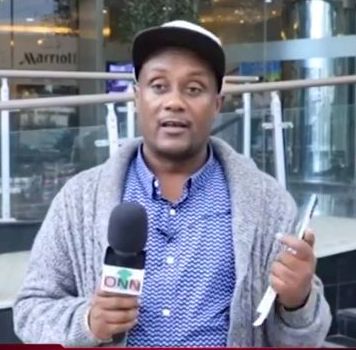
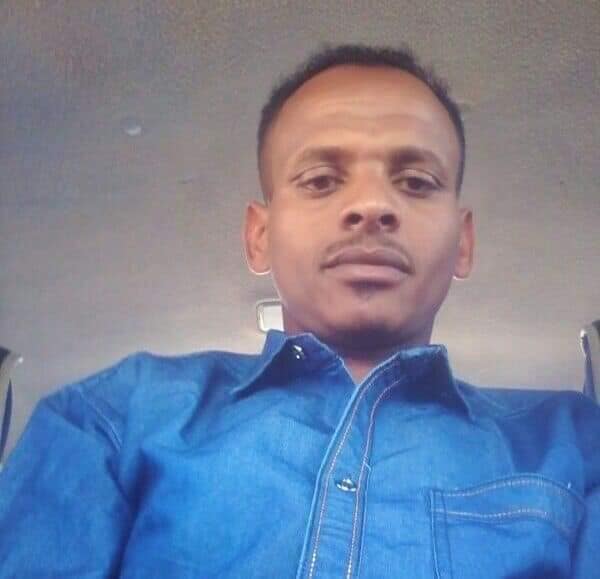
The detained are Batir Filae, OLF Central Committee member; Gadaa Gabisa, OLF political officer; and Bilisuma Ararsa, OLF member. With them are Desu Dula, the Vice Director of the Oromia News Network (ONN) and Wako Nole, a journalist with the network.
For more information on the mounting harassment of OLF members and supporters, see links below.
Vendor killed after police attack opposition supporters in Oromia
Authorities crackdown on opposition supporters with mass arrests
Resolution: Conference of Oromo Civic, Professional and Faith-Based Organizations
 (A4O, 28 March 2020) Whereas, the Oromo nation, Oromummaa and Oromia are being subjected to unprecedented repression by the Government of Ethiopia (GoE);
Whereas, the GoE engages in a deliberate destruction of Oromo nationalism, dismantling Oromia and reversing the victories our people achieved by heroic sacrifices of our sons and daughters;
Whereas, the GoE works in concert with neo-nafxayas who aspire to re impose their former oppressive and exploitative system;
Whereas, the GoE promotes division and conflict among the Oromo people along regional and religious lines as a strategy for its success;
Whereas, the GoE, having imposed illegal Command Posts on parts of Oromia, is subjecting the Oromo people to untold misery through military rule;
Whereas, the GoE has widened and deepened the killings, arbitrary arrests and beatings of the Oromo people;
Whereas, the GoE burns houses with families inside and granaries full of grain; and sets fire to farmlands and forests without concern for crops or wildlife;
Whereas, the GoE has deployed armed forces to continue hunting down and murder Oromo youth on a daily basis;
Whereas, the GoE continues to refuse to bring to justice those who committed ethnically motivated murders of Oromo students on the campuses of universities in the Amhara regional state,
Whereas, the GoE is not willing to provide any protection to those spared from the killings, but finds the flimsiest of excuses to suspend or dismiss Oromo students from universities;
Whereas, contrary to its promises a few months ago to widen the political space in the country, that the GoE has actually narrowed the space significantly by illegally arresting and/or causing disappearances of leaders and members of the opposition parties and by obstructing and hindering the contacts of opposition parties with their constituents;
Whereas, the GoE intimidates independent Oromo media outlets and imprisons their management and reporters for reporting the truth;
Whereas, the GoE is engaged in hunting down and arresting politically conscious Oromos for not supporting the ruling Prosperity Party of Prime Minister Abiy Ahmed;
Whereas, the economic deprivation of Oromo people and robbery of the resources of Oromia by the GoE and its cronies have intensified;
Whereas, the GoE is leaving no stone unturned to demoralize and to force the Oromo nation to surrender and;
Deeply Concerned about the fate of the Oromo people and the survival of the Oromo as a nation and Oromia as land of the Oromo, if the current situation is allowed to persist;
Recognizing the need for the Oromo unity inside and outside the of country more than ever before in combating the ongoing difficult situation imposed upon our people;
We, Oromo Civic, Professional and Faith-Based Organizations, whose names are listed below and who share the aforementioned concerns about the situation of our people and our nation, having deliberated on wide-ranging issues pertaining to our people’s dire situation, and having successfully concluding our first conference from March 28-29, 2020;
We, hereby
1. Approve a Memorandum of Understanding (MOU), and pledge to work together to achieve our shared vision of advocating for the voiceless victims of injustices in Oromia and beyond;
2. Authorize and direct the coordinating committee, and the three others operational committees to lead our Advocacy, Information collection and dissemination, and Resource mobilization and organization efforts, to execute the MoU;
3. Strongly condemn and demand an immediate stop to the ongoing killings, arbitrary arrests, rapes and beating against the Oromo people by Ethiopia armed forces;
4. Demand the immediate lifting of the illegal and undeclared command posts and military rule imposed on Western and Southern parts of Oromia;
5. Call up on the Oromo diaspora to join us in condemning and actively opposing the ongoing repression against our people;
6. Call up on Oromo civic organizations whose names are not listed below to join us so that we can together defend our people’s rights;
7. Call up on all Oromo political organizations operating in Oromia to put their differences aside and unite in condemning the repressive policies of the GoE and, coordinate our people’s resistance to end the killings and arbitrary arrests being committed against our people;
8. Call up on all Zones of Oromia to come to the aid of their compatriots in other zones to once and for all uproot the GoE’s repressive policies which are the root causes of the poverty and misery of our people for there is strength in numbers;
9. Call up on all nations and nationalities in Ethiopia to condemn and actively oppose the killings and arbitrary arrests that the GoE is perpetrating against the Oromo and other peoples as all conflicts in one region can easily spread to their regions;
10. Call up on all organizations advocating for respect of human rights to inform the international community the untold human rights violations the Oromo people are subjected to by the GoE;
11. Remind the international community of its moral obligation and responsibility to speak up against, and to work to prevent the population exodus that is sure to ensue from the continued hunting down and killings of Oromo youth and the resulting forced migration and refugee problems;
12. Urge the international community to bring pressure to bear on the GoE to immediately stop the war it has declared on the Oromo people before the situation escalates into massive displacement, famine, civil war and genocide.
United we Stand!!
Oromo Civic, Professional and Faith-Based Organizations
1. Advocacy4Oromia
2. Bilal Oromo Dawa Center
3. Canaan Oromo Evangelical Church
4. Charismatic International Fellowship Church
5. Global Gumii Oromia
6. Global Oromo Advocacy Group
7. Global Waaqeffannaa Council
8. Horn of Africa Genocide Watch
9. Human Rights League of the Horn of Africa
10. International Oromo Women’s Organization
11. International Qeerroo Support Group
12. Mana Kiristaanaa Fayyisaa Addunyaa
13. Oromo Christ Evangelical Lutheran Church
14. Oromo Communities’ Association of North America
15. Oromo Evangelical Lutheran Church of Washington DC Metropolitan Area
16. Oromo Evangelical Lutheran Mission Society
17. Oromo Human Rights and Relief Organization
18. Oromo Legacy, Leadership and Advocacy Association
19. Oromo Lutheran Church of Baltimore
20. Oromo Parliamentarians Council
21. Oromo Studies Association
22. Oromia Support Group
23. Tawfiq Islamic Center
24. Union of Oromo Communities in Canada
25. United Oromo Evangelical Church
26. Washington DC Metropolitan Oromo SDA Church
March 28, 2020
Two journalists and a driver arrested, held without charge in Ethiopia
(Nairobi, March 18, 2020) Authorities in Ethiopia should immediately and unconditionally release journalists Dessu Dulla and Wako Nole and media worker Ismael Abdulrzaq, and let them work freely, the Committee to Protect Journalists said today.
ONN Journalist Dessu Dulla
ONN Journalist Wako Nole
On March 7, police arrested Dessu, deputy director of the privately owned Oromia News Network broadcaster, Ismael, a driver for the station, and Wako, a reporter with the Sagalee Bilisummaa Oromoo radio broadcaster, in Burayu, a town in the Oromia region, according to Muhammed Regassa and Betie Urgessa, two Oromia News Network employees who spoke to CPJ via messaging app, and an eyewitness to the arrests who spoke to CPJ on the condition of anonymity, citing safety concerns.
Betie told CPJ that the three appeared in court on March 10, and that police were granted 14 days to hold them in custody, but said they were not charged with any crime.
“Holding journalists for weeks without charge is a violation of their basic rights and a clear effort to intimidate the press; Ethiopia must release Dessu Dulla, Wako Nole, and Ismael Abdulrzaq immediately,” said CPJ Sub-Saharan Africa representative Muthoki Mumo. “Journalists must be allowed to cover regional politics without official interference or fear that they will be arbitrarily arrested.”
Police arrested the journalists and driver shortly after they left the Burayu police station, where they had traveled to speak with Abdi Regassa, a senior member of the opposition Oromo Liberation Front political party, who was detained there, according to Muhammed, Betie, and the eyewitness. Two Oromo Liberation Front party members who were visiting Abdi were also arrested, those sources said.
The eyewitness told CPJ that he heard a police officer shouting that the journalists had taken pictures on their phones before they arrested them and added that officers were likely uncomfortable with the journalists visiting Abdi Regassa. Prior to 2018, Abdi was a commander in the liberation front’s armed wing while it operated from exile and was designated a terror organization; police initially denied having him in custody, according to a report by the privately owned news site Addis Standard.
The Oromia News Network vehicle was involved in a minor road accident at the scene, but those sources told CPJ that it was unrelated to the arrests. Police are still holding the vehicle, Betie told CPJ.
The Oromia News Network, which operated in exile until 2018, primarily covers politics and is targeted at an Afaan Oromo-speaking audience; Sagalee Bilisummaa Oromoo, which broadcasts some of its programming on the news network, hosts programming that is supportive of the Oromo Liberation Front and also covers regional news, according to Muhammed and Betie, as well as CPJ’s review of the broadcasters’ content.
In a phone interview on March 10, Oromia regional government spokesperson Getachew Balcha told CPJ that he did not know anything about the journalists’ arrests. Getachew later acknowledged their detention in an interview with the U.S. Congress-funded Voice of America broadcaster, but said that they were arrested due to prior offenses.
Getachew referred CPJ to the head of the Oromia Peace and Security Bureau, identified as “Mr. Jibril,” for comment. Jibril told CPJ in a phone interview yesterday that he did not know about the journalists’ cases.
Barattoonni Oromoo Gargaarsa Hatattamaa Barbaadu.
(Finfinnee, 29 Bitootessa 2020) Barattootnni Oromoo yunivarsitiiwwan addaa addaarraa gara maatii isaaniitti deebi’aa jiran rakkinaaf saaxilaman.

Oduun Finfinnee irraa nu dhaqqabe akka ibsutti, yeroo ammaa kana barattoonni hedduun sababa dhibee koronaavaayirasiitiin gara maatii sianaiitti deebi’aa jiran.
Haata’u malee,barattoonni Oromoo naannoo qunnamtiin bilbilaa uggurame irraa dhufan maatii waliin walqunnamaa wana hin turreef maalalqa ittiin galan dhabanii buufata konkolaataa Askootti rakkachaa jiru.
Barattoonni Oromoo kunneen bakka bulan dhabanii hanga namoota 60 tahanii otobuusii keessa buluuf dirqamanii jiru.
Kana birattis, waan nyaatan dhabanii gargaarsa barbaadaa akka jiran beekameera.
Barattoonni kunneen dhaamsa dabarfataniin namoonni dandeettii qaban barataa tokkollee yoo ta’e maatii biraan gahuudhaan qooda lammummaa akka bahan gaafataniiru.
*Barattoonni Yunivarsitiiwwan addaddaa irraa gara maatiitti deebi’aa jiran kunneen gargaaruu yoo barbaaddan adaraa karaa email: info@advocacy4oromai.org nu qunanmaa!
Open Appeal Letter Regarding the Missing Oromo Political Leader
(A4O, Appeal Letter, 29 March 2020) Advocacy for Oromia is deeply concerned by reports of the diappreance of Mr. Abdi Regassa, the leader of Oromo Liberation Front who disappeared from Burrayyu Police station, Oromia, since 20 March 2020.
The letter sent to Ethiopian Prime Minster today by Advocacy for Oromia expresses its deep concern regarding Mr Abdi Regassa’s current state: detained without charges and with out access to the outside world, his colleagues and his family, since 29 February 2020.
The letter demands PM administration to ensures Mr Abdi Regassa has immediate access to a lawyer of his choosing and can communicate with his family.
For full appeal letter: Appeal Letter Abdi Regassa 29 March 2020
Blocking information during this critical time is a violation of human rights.
We condemn the internet and phone service shutdown by Ethiopia gov’t in Western and Southern Oromia. To prevent the spread of Corona Virus information is very crucial.
Blocking information during this critical time is a violation of human rights. The Ethiopian government should unblock the internet and phone service shut down before it is too late. The people should not be left in the dark for death.
#ReconnectTheWestETH
#COVID19
#Ethiopia

Dhimmi Jaal Abdii Raggaasaa maatii fi hiryoota yaaddeesse; mootummaan Jaal Abdii dhoksee jira.
(Oromedia, 28/03/2020) Maatiin jaal Abdii Raggaasaa yaaddoo fi dhiphina guddoo keessa akka jiran ibsan.
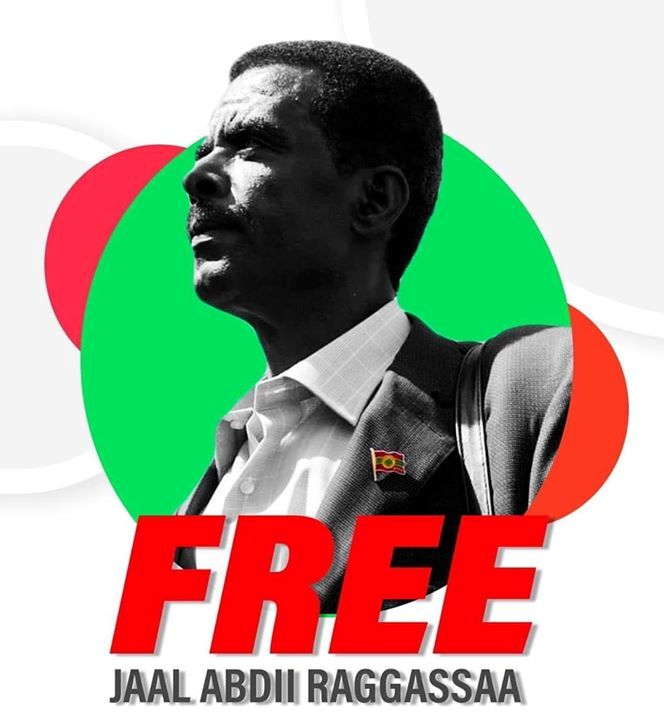 Maatiin akka dubbatanitti Jaala Abdii Raggaasaa erga ijaan arginii torban tokkoo ol ta’ee jira.
Maatiin akka himutti Jaal Abdiif torbaan tokko dura gaafa gaafa 20/03/2020 GC ykn 11/07/2012 EC mana hidhaa inni duraan keessa ture Buraayyuutti ciree fi laaqana geessaniifii turan. Haata’uutii, galgala akka lakk biyyattiitti 12:30 Jaal Abdiin fudhamee bakka hin beekamne geeffamee jira.
Erga torban tokkoo as maatiin bakak halle iyyaafataa jira. Garuu “haga yoonaatti eessa akka geessan hin beeknu; bakka jiruyyuu qaamni nuuf ibse hin jiru,” jedhan maatiin Jaal Abdii.
Haala Jaal Abdiin keessa jiru “manni murti Burrayyu illee hin beeku,” kan jedhan maatiin Jaal Abdii, yeroo ammaa kanas maatiin marti dhiphuu guddoo keessa akka jiru dubbatu.
“Abban keenya baadiyaa jiraatan rifaatuu irraa kan ka’e dhukkubsatanii sireerratti hafanii jiru; nutis takkaa gadi hin teeny; barbaacha isaatif dhibee CORONA kanaf ille akka nun sababne nu soodachisa,” jechuun haala keessa jiran ibsan.
Maatiin Jaal Abdii hanga hardhatti waajjira Poolisii magaalaa Buraayyuutti deddeebi’anii gaafataa jiran. Waajjirri Poolisii magaalaa Buraayyuu garuu “jaal Abdiin as hin jiru; Finfinneetti fudhatame” ittin jedhan.
Eenyu akka isa fuudhee fi eessa akka jiru immoo qaamni maatiitti hime hin jiru.
Haalli kun immoo maatii yaaddessaa jira. “lubbuun jiraachuu fi jiraachuu dhiisu isaayyuu wanti beeknu hin jiru; hanga ammatti qaamni mootummaa ‘bakka akkasi jiraa, hin yadda’inaa’ nuun jedhe hin jiru; erga guyyaa sana inuma barbaanna.” jedhan.
Kana malees, dhimmi fayyaa isa ahedduu akka isaan yaaddessu maatiin Jaal Abdii hin dhoksine. “Nuti waa’ee fayyaa isaaf hedduu yaaddoo qabna; mootummaan dhugaadhuma waanta isaaf barbaachusus ni guutaaf jennee irraa amantaa hin qabnu; Jaal Abdiin dhukkuba asmii dhukkubsachaa jira.” jedhu.
“Uffata jijjirraas dhugumaan mootummaan ni kennaaf jennee hin amannu; yeroo hamtuu kanatti beekaadhuma akka rakkinaaf saaxilamuuf nu jalaa dhoksan; kana biraan dhibeen #Corona nama hunda yaaddeesu akka isa hin tuqne waanti beeknu hin jiru.” jechuun dhiphina maatiin qabu nuuf ibsanii jiru.
Akka odeeffannooa rgannetti, baallamni mana murtii jaal Abdii gaafa 18/07/2012 ture. Garuu dhaddacharratti hin dhihaanne.
Inumaa poolisiin magaalaa Buraayyuu “dhimma kana qaama biraatti dabarsine waan ta’eef galmeen nuuf haa cufamu,” jechuu isaa maddi keenya gabaaseera.
Abukaatoo, Maatii fi jaallan isaa yeroo ammaa kanatti yaaddoo guddoo keessa jiran.
Jaarmyooti mirga dhala namaaf falman ibsoota baasaniin mootummaan Itoophiyaa qabiinsa mirga namoomaa Jaal Abdii akka fooyyessu gaafachaa jiraachuun beekamaadha.
Itoophiyaan addunyaa kana irratti dhiitinsa mirga namoomaan sadarkaa duraatti galmooftee jirti. Biyyattii keessatti nama harka poolisii jiru tokko, keessumaa Oromoo yoo ta’e, abukaatoo fi maatii jalaa dhoksuun, dhiittaa mirga namoomaa irratti raawwachuun mootummichaa kan addunyaan ifatti beekuu dha.






