Daily Archives: February 18, 2025
Understanding Shanan Day in Oromo Culture
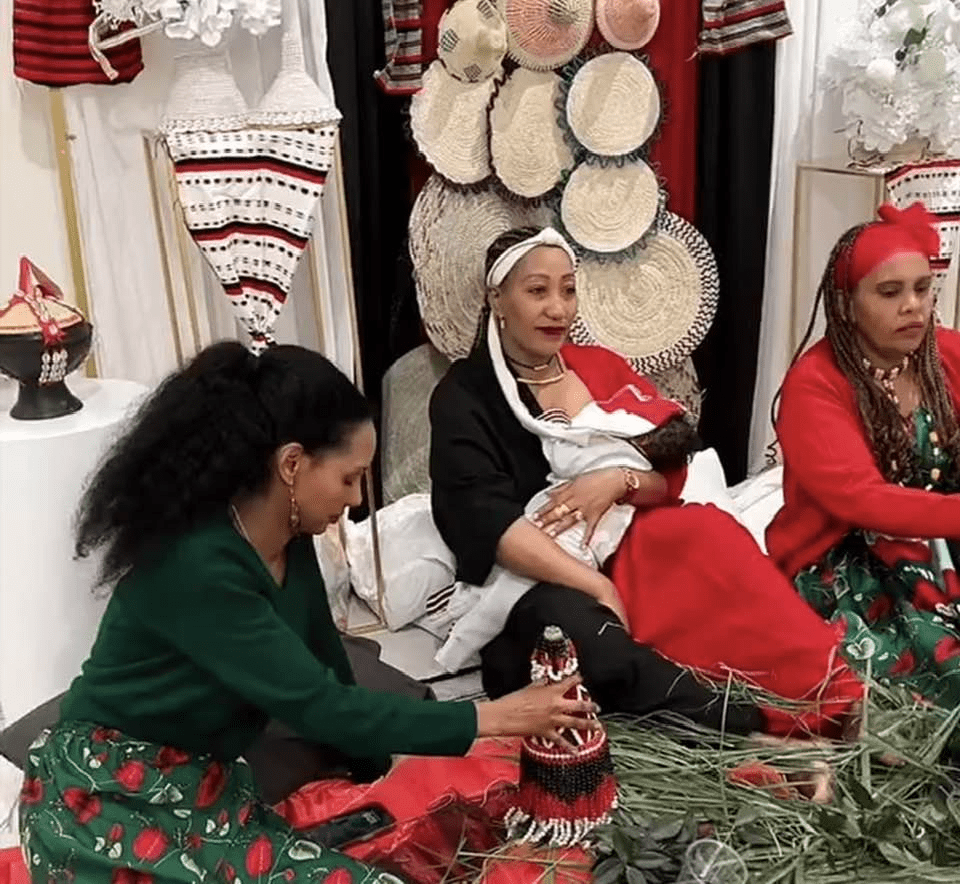
In Oromo culture, the **shanan day** (the fifth day after childbirth) is a deeply respected and cherished tradition. This day holds significant cultural, social, and emotional importance for the mother, the newborn, the family, and the community. It is a time of celebration, healing, and bonding, rooted in the values of care, support, and communal love.

Significance of the Shanan Day in Oromo Culture:

1. Celebration of New Life:
   - The shanan day marks the arrival of a new life into the family and the community. It is a time to celebrate the miracle of birth and the continuation of the family lineage.
   - The newborn is welcomed with blessings, prayers, and rituals that reflect the community's hopes for the child's future.

2. Family Blessings and Support:
   - On this day, the mother and child receive blessings from elders, family members, and the community. These blessings are believed to bring protection, health, and prosperity to the newborn.
   - Relatives and friends gather to show their love and support, reinforcing the communal bonds that are central to Oromo culture.

3. Healing and Recovery:
   - The shanan day is also a time for the mother to recover from the physical and emotional challenges of childbirth. The community's support during this period is crucial for her well-being.
   - Traditional practices, such as special meals, herbal remedies, and rest, are often provided to help the mother regain her strength.

4. Role of Midwives:
   - Midwives play a vital role during the shanan day and the entire childbirth process. Their knowledge and skills are highly valued, and they are often honored during the celebrations.
   - The shanan day serves as both a **prevention** and **intervention** measure, as midwives ensure the mother and child are healthy and provide guidance on postpartum care.

5. Cultural Rituals and Traditions:
   - The shanan day is marked by various cultural rituals, such as the preparation of special foods, the sharing of gifts, and the performance of traditional songs and dances.
   - These rituals not only celebrate the newborn but also reinforce the cultural identity and continuity of the Oromo people.

6. Community Bonding:
   - The shanan day brings the community together, fostering a sense of unity and shared responsibility. It is a reminder that the well-being of the mother and child is a collective concern.
   - The love and sympathy shown by relatives and friends during this time strengthen social ties and create a supportive environment for the family.

Benefits of the Shanan Day:

- For the Mother: The shanan day provides emotional and physical support, helping her recover from childbirth and adjust to her new role as a parent.
- For the Newborn: The blessings and rituals performed on this day are believed to ensure the child's health, happiness, and prosperity.
- For the Community: The celebration reinforces cultural values, promotes unity, and highlights the importance of collective care and responsibility.
- For Midwives: The shanan day recognizes their essential role in childbirth and postpartum care, ensuring their knowledge and skills are respected and preserved.

Conclusion:
The **shanan day** is a beautiful and meaningful tradition in Oromo culture, reflecting the community's deep respect for life, family, and communal support. It is a time to celebrate new beginnings, honor the sacrifices of mothers, and strengthen the bonds that hold the community together. By preserving and cherishing this tradition, the Oromo people continue to pass down their values and wisdom to future generations. **Fayyaa fi nagaa!** (Health and peace!)
A Legacy of Empowerment: Oromo Inauguration Day Insights

The inauguration day is a profoundly significant and honorable occasion, not just for the immediate family but for the entire Oromo community. It is a celebration of sacrifice, resilience, and the collective effort to uplift future generations. Specifically, honoring families like Latii Habte Tolessa Bechere’s, who have dedicated their time and resources to educate their children despite not having the opportunity to educate themselves, is a powerful testament to the values of perseverance, love, and community.
Why This Inauguration Day is a Great Success:
- Celebration of Sacrifice:
- Families like Latii Habte Tolessa Bechere’s represent the countless parents who have prioritized their children’s education over their own aspirations. Their sacrifices are the foundation of this success, and the inauguration day is a moment to honor their selflessness.
- This day serves as a reminder that education is a collective journey, often built on the sacrifices of those who came before.
- A Milestone for the Family:
- The inauguration day marks the culmination of years of hard work, dedication, and perseverance. It is a celebration of the family’s unwavering commitment to ensuring their children’s success.
- For the children, it is a moment of pride and achievement, knowing that their accomplishments are a direct result of their family’s support and sacrifices.
- A Victory for the Oromo Community:
- The success of one family is a success for the entire Oromo community. It demonstrates the power of education as a tool for empowerment and progress.
- This inauguration day inspires others in the community to value education and invest in the future of their children, reinforcing the idea that collective effort leads to collective success.
- Preserving Cultural Values:
- The Oromo community places great importance on family, community, and education. This inauguration day is a reflection of these values, showcasing how cultural traditions and modern achievements can coexist and strengthen one another.
- It is also an opportunity to celebrate Oromo identity and resilience, reminding the community of their shared history and aspirations.
- A Legacy of Empowerment:
- Families like Latii Habte Tolessa Bechere’s are creating a legacy of empowerment. By prioritizing education, they are breaking cycles of poverty and opening doors for future generations.
- This inauguration day is a reminder that education is not just an individual achievement but a communal one, with the potential to transform entire communities.
A Message to the Family and Community:
To Latii Habte Tolessa Bechere and the family, this inauguration day is a testament to your unwavering commitment, love, and sacrifice. Your efforts have not only brought success to your family but have also inspired the entire Oromo community. This day is a celebration of your resilience and a reminder of the power of education to create lasting change.
To the Oromo community, this inauguration day is a call to continue supporting one another, valuing education, and working together to uplift future generations. It is a reminder that every sacrifice made for the sake of education is a step toward a brighter, more empowered future.
In conclusion, this inauguration day is not just a personal milestone but a communal triumph. It is a celebration of the past, present, and future—a day to honor sacrifices, celebrate achievements, and inspire hope for generations to come. Fayyaa fi nagaa! (Health and peace!)
Oromo Elders Association’s Tesfaye Defa Honored by Victoria
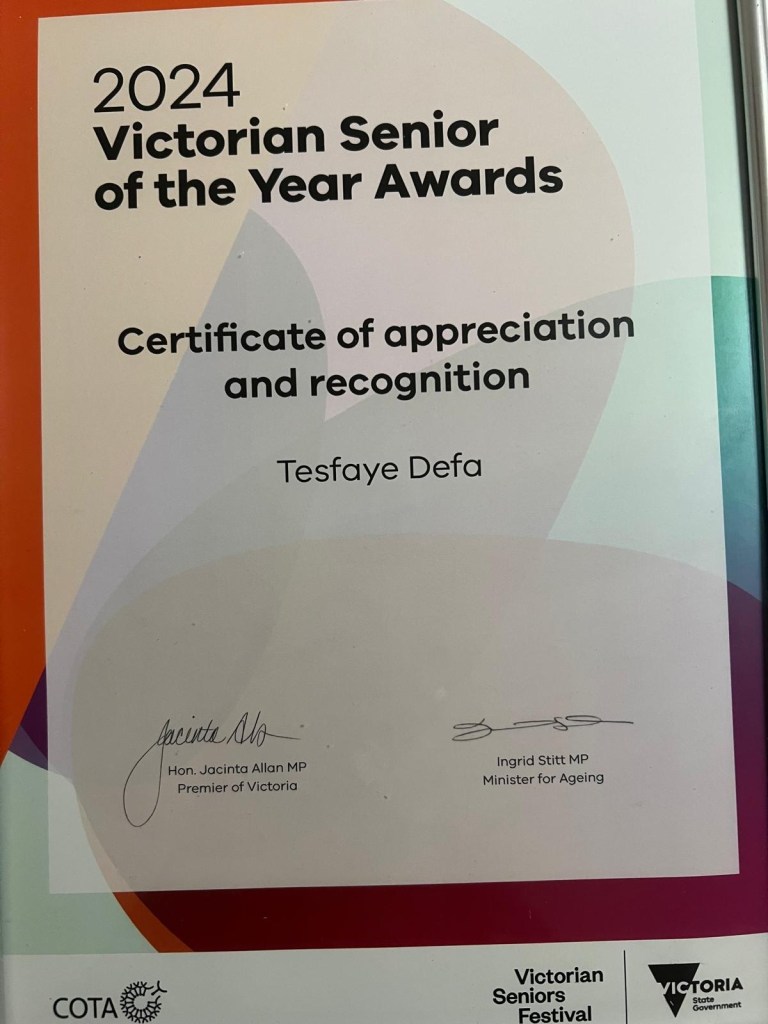
Mr Tesfaye Defa, Secretary of the Oromo Elders Association of Australia has been awarded the 2024 Elderly Award by the Victorian Government.

Mr. Tesfaye Defa, as the Secretary of the Oromo Elders Association of Australia, being awarded the 2024 Elderly Award by the Victorian Government is a significant recognition of his contributions and dedication to his community. Such awards often highlight the efforts of individuals who have made a positive impact on society, particularly in supporting and uplifting their communities.

The Oromo Elders Association of Australia likely plays a crucial role in preserving cultural heritage, providing support to the Oromo community, and fostering connections among its members. Mr. Defa's work in this capacity would have been instrumental in achieving these goals, making him a deserving recipient of this honor.

This award not only celebrates his individual achievements but also shines a light on the importance of elder contributions in maintaining cultural identity and community cohesion, especially within diaspora communities. Congratulations to Mr. Tesfaye Defa on this well-deserved recognition!




 Advocacy for Oromia