Daily Archives: February 23, 2025
Historic Resolutions for Oromia: Building a Unified Future
For Immediate Press Release
Oromo Federalist Congress Announces Historic Unity Agreement and Roadmap for Peace in Oromia
The Oromo Federalist Congress (OFC), alongside the Oromo Liberation Front (OLF), Oromo community organizations, religious leaders, elders, and professionals, has concluded a landmark four-day joint conference in Finfinnee (Addis Ababa) to address the escalating political, security, and humanitarian crises in Oromia. The conference, held from February 19–22, 2025, marks a critical step toward unifying Oromo political forces and charting a path to sustainable peace, justice, and self-determination for the Oromo people.
Key Resolutions and Commitments:
1. Restoring Peace and Establishing Inclusive Governance
- The OFC and OLF affirm that the full restoration of the Oromo people’s freedom and rights is essential for lasting peace. They pledge to utilize all available means to ensure peace is restored and maintained in Oromia.
- The OFC and OLF will work to establish an inclusive “Transitional National Unity Government of Oromia” with other major stakeholders to ensure democratic governance, self-determination, and expanded public services until a permanent system is established through a popular mandate.
- The Oromo Liberation Army (OLA), as Oromo freedom fighters, will be entrusted to maintain peace, security, and the boundaries of Oromia. They will be integrated into peacekeeping efforts under the Transitional Government’s authority to enforce law and order, following inclusive political negotiations and settlements.
2.Resolving Boundary and Administrative Disputes
- The conference reaffirmed Finfinnee’s status as the rightful capital of Oromia, directly answerable to the Oromia state. It pledged to legally reclaim all encroached territories through diplomatic and legal channels.
3. Revitalizing Oromo Unity and Traditions
- The ‘Gadaa/Siinqee’ system will serve as the foundation for Oromo political, cultural, and social unity. The OFC and OLF will work to modernize this traditional governance framework through public dialogue and alignment with contemporary needs, establishing a governance structure rooted in Oromo traditions.
4. Rights of the Oromo People and Minority Groups in Oromia
- The conference emphasized the ‘Gadaa’ system’s teachings on coexistence with non-Oromo communities. The OFC and OLF commit to ensuring the rights of all ethnic groups in Oromia are respected without fear or discrimination.
5. Equitable Representation in Ethiopia’s Federal System
- The OFC and OLF demand fair representation for Oromia in all federal institutions, including the judiciary, defense, and federal police, as well as in resource allocation, to reflect the Oromo people’s demographic and historical contributions.
- The OFC and OLF demand the reform of all democratic institutions of the state to ensure their independence, professionalism, and freedom from partisan bias, strengthening democracy and the rule of law.
A Cautious Yet Determined Path Forward
In a statement, OFC leadership emphasized the urgency of the moment: “Our people endure daily violence, economic collapse, and systemic marginalization. While we pursue dialogue with the federal government, we will not disarm our vigilance. Every commitment must be tested against tangible outcomes within defined timelines. Empty promises will no longer suffice.”
The OFC acknowledges potential challenges, including factional disputes and government intransigence, but remains committed to a pragmatic, step-by-step approach. The party urges all Oromo organizations—regardless of their methods of struggle—to prioritize unity and the collective vision of liberation.
Call to Action
- The OFC calls upon all genuine Oromo forces, regardless of their method of struggle, to resolve their political differences and galvanize their unity in rallying behind this initiative to save the nation.
- The OFC appeals to all Ethiopian nations and nationalities, Ethiopia’s democratic forces, and the international community to support this initiative, recognizing that Oromo unity is vital to Ethiopia’s stability.
- The federal and Oromia regional governments are called upon to engage sincerely with these resolutions, as their success is in the best interest of all Ethiopians and the Horn of Africa.
Oromo Federalist Congress (OFC)
February 23, 2025
Finfinnee, Oromia, Ethiopia
This press release outlines a significant step toward addressing the crises in Oromia and fostering unity among Oromo political forces. It emphasizes the importance of inclusive governance, traditional values, and equitable representation while calling for broad support from both domestic and international stakeholders.

Oromo Assembly 2025: A New Era for Peace and Unity
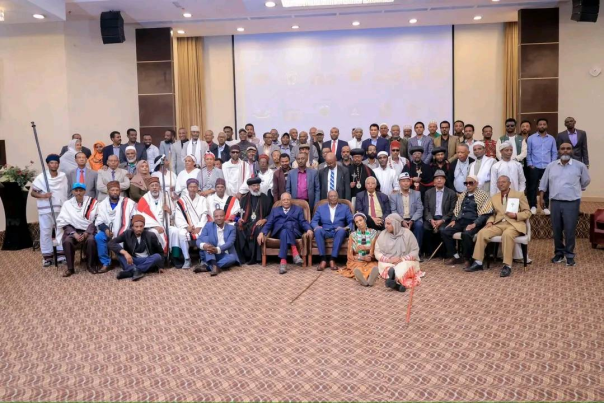
This comprehensive four-day discussion held by various Oromo community organizations, the Oromo Liberation Front (OLF), and the Oromo Federalist Congress (OFC) at Ilili Hotel from February 19 to February 22, 2025, represents a significant effort to address the political, military, and socio-economic crises facing the Oromo people. The resolutions and agreements reached during this meeting reflect a collective commitment to achieving lasting peace, justice, and stability in Oromia. Below is a summary of the key points and their implications:
1. Establishing and Maintaining Peace
- Recognition of Historical Injustices: The delegation acknowledged that the Oromo people have been deprived of justice and freedom since the Nafxanya system, leading to ongoing instability. The OLF and OFC have committed to ending the war in Oromia and establishing sustainable peace.
- Interim Transitional Government: Until democratic elections can be held, an Interim Transitional Government of Oromia will be established, inclusive of all relevant political parties and stakeholders. This government will focus on delivering essential public services and ensuring stability.
- Integration of the Oromo Liberation Army (OLA): The OLA will be integrated into the political and administrative framework of the Interim Transitional Government, ensuring its role in maintaining law, order, and territorial integrity.
2. Resolving the Issues of Addis Ababa (Finfinnee) and Oromia’s Borders
- Addis Ababa (Finfinnee): The delegation affirmed that Addis Ababa historically and legally belongs to the Oromo people and should be administered by the Oromia government.
- Reclaiming Oromo Territories: Territories such as Wallo, Dire Dawa, Matakkal, Moyale, and Madda Walabu, which were forcibly separated from Oromia, will be reclaimed through legal and diplomatic means.
3. Strengthening Oromo Unity and Institutional Development
- Revitalization of the Gadaa/Siinqee System: The Gadaa/Siinqee system, as the foundation of Oromo governance and unity, will be studied and revitalized to align with contemporary realities. This system will serve as the governing framework for the Oromo people.
4. Rights of Non-Oromo Nations and Nationalities in Oromia
- Protection of Minority Rights: The OLF and OFC committed to ensuring that all ethnic groups residing in Oromia can live without fear and that their rights are fully protected, drawing on the historical inclusivity of the Gadaa system.
5. Relations Between the Oromia Government and the Federal Government
- Addressing Federal Imbalances: The delegation highlighted the lack of rule of law, underrepresentation of Oromos in federal institutions, and the absence of autonomy in key federal institutions. The OLF and OFC will work to ensure that Oromo rights and interests are respected at the federal level.
Participants in the Joint Assembly
The meeting included a wide range of Oromo organizations and traditional institutions, such as:
- Council of Oromia’s Gadaa Leaders
- Macca and Tulama Association
- Irkoo 1976 (Traditional Council of Elders)
- Yaa’ii Ganyaa Harooreessaa (Siinqee Women’s Council)
- Council of Abbaa Dhugaa (Abbaa Muudaa/Ayyaantuu Institution)
- Wayyooma Anaajinaa (Dirree Sheek Huseen Council)
- Wayyooma Soof Umar (Judiciary Council)
- Nagummaa Dambii (Sayidii Alfaqii Religious Council)
- Oromia National Elders Council
- Academia and University Scholars Council
- Teessoo Magarsaa Badhaasaa (Oromia Synod Council – Pheexiroos Seat)
- Makaana Yesus Church Council of Ethiopia
- Dhugeeffannaa Uumaa (Waaqeffannaa Faith Organization)
- Yuba 1st Council (Human and Civil Rights Advocacy Group)
- Waahilan Waltajjii (Yuba 4th Council)
- Yaa’aa Haaromsa Finfinnee (Addis Ababa Oromo Community Council)
Final Commitment
The OLF and OFC have been entrusted with implementing the agreements reached during the assembly. The participating organizations pledged their full support to ensure the realization of these resolutions.
Signed by:
Delegation of Oromo Community Organizations & Oromo Political Organizations (OLF & OFC)
February 22, 2025 – Finfinnee (Addis Ababa)
Implications and Significance
This meeting marks a pivotal moment in the Oromo struggle for justice, freedom, and self-determination. By addressing critical issues such as peace, governance, territorial integrity, and minority rights, the resolutions aim to create a foundation for lasting stability and prosperity in Oromia. The inclusion of diverse Oromo organizations and traditional institutions underscores the unity and collective determination of the Oromo people to overcome their challenges.
The success of these agreements will depend on the commitment of the OLF, OFC, and the broader Oromo community to work together, as well as the willingness of external stakeholders, including the Ethiopian federal government, to engage constructively with these efforts. If implemented effectively, these resolutions could pave the way for a more inclusive, just, and peaceful future for the Oromo people and all communities in the region.




 Advocacy for Oromia