Oromia’s Future Without Language Federalism
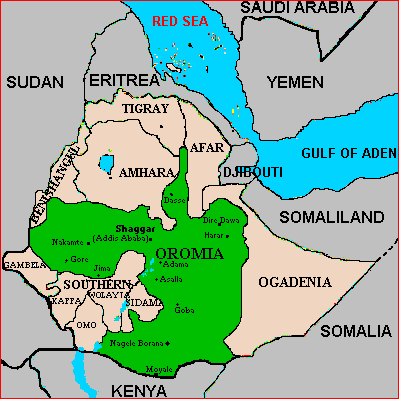
The elimination of language-based federalism in Ethiopia—particularly in Oromia, the largest and most populous regional state—could have profound political, social, and economic consequences. Since 1991, Ethiopia’s federal system has been structured along linguistic and ethnic lines, with Oromia being a key beneficiary of this arrangement. Removing this system could trigger the following impacts:
1. Political Consequences
- Loss of Autonomy: Oromia currently has self-rule under the federal system, with Afaan Oromo as its working language and control over local governance. A centralized system could weaken Oromo political representation.
- Resurgence of Oromo Nationalism: Historically, marginalization of Oromo identity led to resistance (e.g., OLF insurgencies). Recent protests (2014–2018) were partly about preserving self-rule. Dismantling federalism could reignite unrest.
- Power Struggle in Addis Ababa: Finfinne (Addis Ababa) is a contested city, legally part of Oromia but federally administered. A shift could escalate disputes over land and resources.
2. Social & Cultural Effects
- Threat to Afaan Oromo’s Official Status: Language-based federalism helped revive Afaan Oromo in education/media. Centralization might reduce its institutional use, leading to cultural erosion.
- Identity Backlash: Many Oromos see federalism as protection against assimilation (e.g., past Amharization policies). Its removal could be seen as an attack on Oromo identity.
- Interethnic Tensions: Oromia hosts other ethnic groups (e.g., Amhara, Gurage). A centralized system might fuel competition over resources and representation.
3. Economic Implications
- Resource Control: Oromia has key resources (agriculture, minerals). Centralization could redirect wealth without local consent, breeding discontent (e.g., Addis Ababa land grabs protests).
- Investment Uncertainty: Ethnic federalism allowed Oromia to negotiate investments (e.g., industrial parks). A unitary system might reduce regional bargaining power.
4. Security Risks
- Potential for Armed Resistance: Hardline factions (e.g., OLF-Shane/Oromo Liberation Army) could gain support if Oromia’s self-rule is dismantled.
- Clashes with Federal Forces: Centralization could lead to crackdowns, as seen during the 2016–2018 Oromo protests.
Possible Outcomes
- Best Case: A reformed, inclusive system addressing grievances while maintaining unity.
- Worst Case: Escalation into widespread rebellion, destabilizing Ethiopia further.
Historical Context
Ethiopia’s 1995 constitution introduced ethnic federalism partly to address Oromo marginalization. Before that, Oromo language/culture was suppressed under Haile Selassie and the Derg. Many Oromos see federalism as a safeguard, not a divider.
Conclusion
Eliminating language-based federalism without a credible alternative for power-sharing risks:
✔️ Oromo alienation & renewed conflict.
✔️ Cultural and linguistic suppression backlash.
✔️ Economic grievances over resource extraction.

Posted on June 1, 2025, in Uncategorized. Bookmark the permalink. Leave a comment.




 Advocacy for Oromia
Leave a comment
Comments 0