Daily Archives: June 4, 2025
In defence of Oromummaa
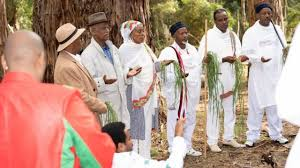
Recently, Eritrean President Isaias Afewerki publicly expressed concerns that Oromummaa poses a threat and destabilizes both his country and the surrounding region. In my published work in a peer-reviewed journal, I argue that Oromummaa promotes democracy, equity, diversity, gender equality, and environmental sustainability. Furthermore, it has the potential to significantly improve public health development. My paper critiques the failures of the governments in the Horn of Africa, particularly in their attempts to adopt borrowed ideologies like capitalism and socialism, as well as national identities such as Ethiopia and Eritrea. Unfortunately, these imported systems have not served the populations well. Countries embracing capitalism and socialism often struggle with self-sufficiency and food security, leading many young people to seek refuge abroad, frequently risking their lives in the Mediterranean Sea. I emphasize the need to shift towards indigenous African perspectives, which are essential for the continent’s future. I propose Oromummaa as one viable perspective. What exactly are the President’s concerns regarding Oromummaa? Is he apprehensive because it fosters democracy, equity, diversity, gender equality, and environmental sustainability, or because it undermines colonial identities and ideologies—or perhaps both? Either way, both implications are deeply concerning.
Let me clarify the distinction between a colonized mind and a liberated mind by examining the conflicts between Eritrea and Ethiopia. The long-standing territorial and political disputes between these two nations illustrate how external influences have shaped African borders, identities and ideologies. Historians from Eritrea and Northern Ethiopia acknowledge that these nations settled in neighboring territories and share a common history that predates the Italian invasion. It is noteworthy that the names “Eritrea” and “Ethiopia” are derived from Greek words. The Greek word “Eritrea,” meaning “red,” is reflected in the term “Red Sea,” named for the red algae present there. In contrast, “Ethiopia” comes from two Greek words meaning “burned face,” a reference to black people. Both terms have endured in the Greek lexicon.
Some Ethiopians claim that the date when the term “Ethiopia” became part of Greek vocabulary over three thousand years ago as the beginning of their written history. However, the records show that Abyssinia changed her name and became Ethiopian in 1945. In the bloody struggle for Eritrean liberation, led by President Afewerki against Ethiopia, both sides incurred heavy costs. Ethiopians fought to assert their Ethiopian identity and took measures to suppress Eritrean aspirations, while Eritreans fought valiantly to assert their Eritrean identity. Ultimately, both sought to validate the identities that the Greeks had attributed to them. It seems they both want to appease the Greeks.
The Ethiopian government has been actively suppressing Oromummaa—an identity deeply rooted in a pan-Africanist vision—in favor of identities imposed by Greek nomenclature. President Afewerki has opted to ally with the Ethiopian government in its struggle against Oromummaa. One can only hope that the Greeks do not find amusement in the fact that two African nations are embroiled in a violent conflict over names they themselves assigned, while simultaneously waging a war on African identity and perspectives. Furthermore, we can only hope that such laughter does not persist.
I understand that President Afeworki has a packed schedule, which may prevent him from fully grasping the essence of Oromummaa. Given the limited availability of the internet in the country, it can be challenging for him to access contemporary ideas and perspectives. However, the importance of understanding Oromummaa cannot be overstated. It can stimulate a paradigm shift in our thinking and daily lives, enlightening and informing us. Relying on borrowed ideas, ideologies, and identities, borders and hindering Afro-centric ideas is detrimental. Instead, we should focus on cultivating Afro-centric ideas rooted in indigenous worldviews. Oromummaa is not about imposition or control but embodies the concept of emancipation. It also plays a crucial role in challenging colonial ideologies, empowering us to shape our own narrative. Ultimately, Oromummaa poses a threat only to colonial identities, ideologies, and policies that disregard environmental sustainability and perpetuate inequality.
If you are interested in reading the whole article, it is published in the Journal of Oromo Studies.
Dugassa, Begna (2022) Fostering Healthy Social Policies and Sustainable Development: Employing Oromummaa as a Framework of Thinking, The Journal of Oromo Studies, Vol. 28, No.1, pp. 65- 90.




 Advocacy for Oromia