Daily Archives: June 10, 2025
Shanan: A Festival of Blessings for New Mothers
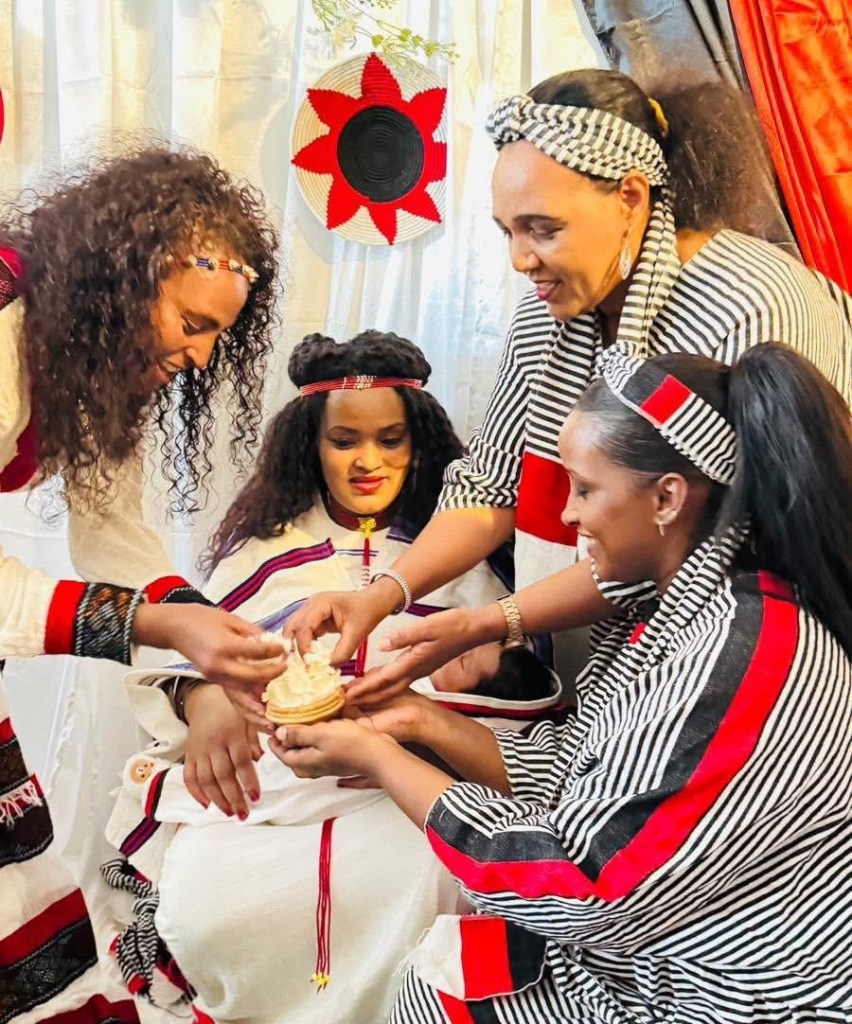
This is the day of Shanan Boontuu Shuggee Galaasaa. Boontuu was tortured in various prisons in Oromia. Later, the torture worsened and she migrated to neighboring Kenya. After years of exile, she settled and traveled safely to Canada.
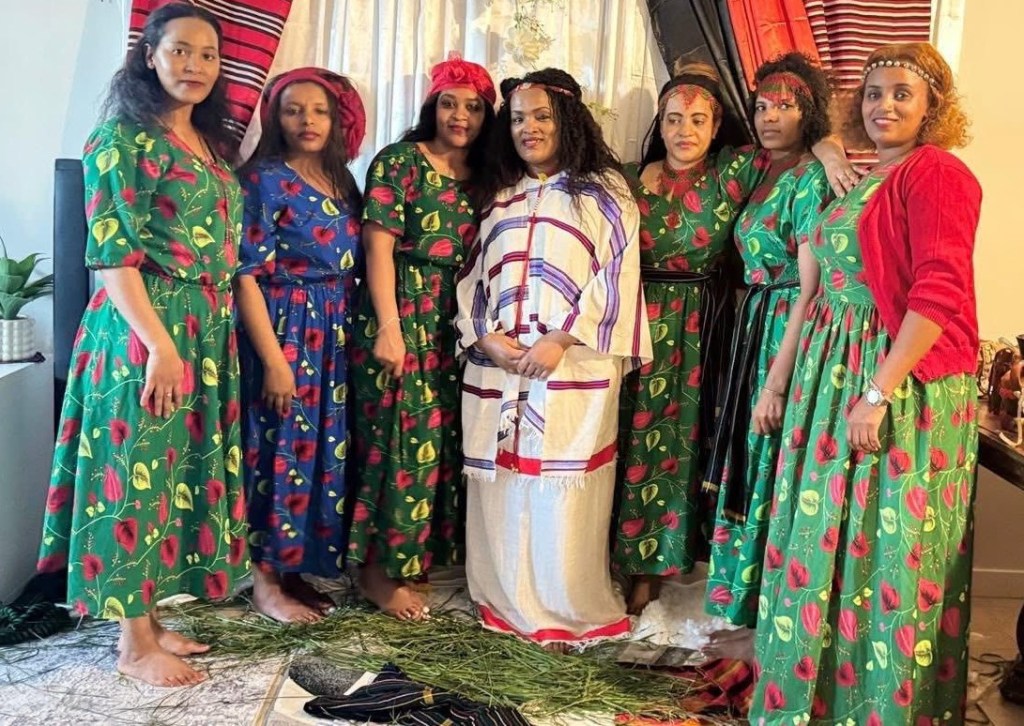
She recently had a baby boy safely. She celebrated the Shanan with her friends in traditional Oromo beauty. The main purpose of Shanan is to encourage and bless the woman who gave birth on the fifth day. It is also a mother’s festival or ateetee and a thanksgiving to God for helping her to give birth in peace.
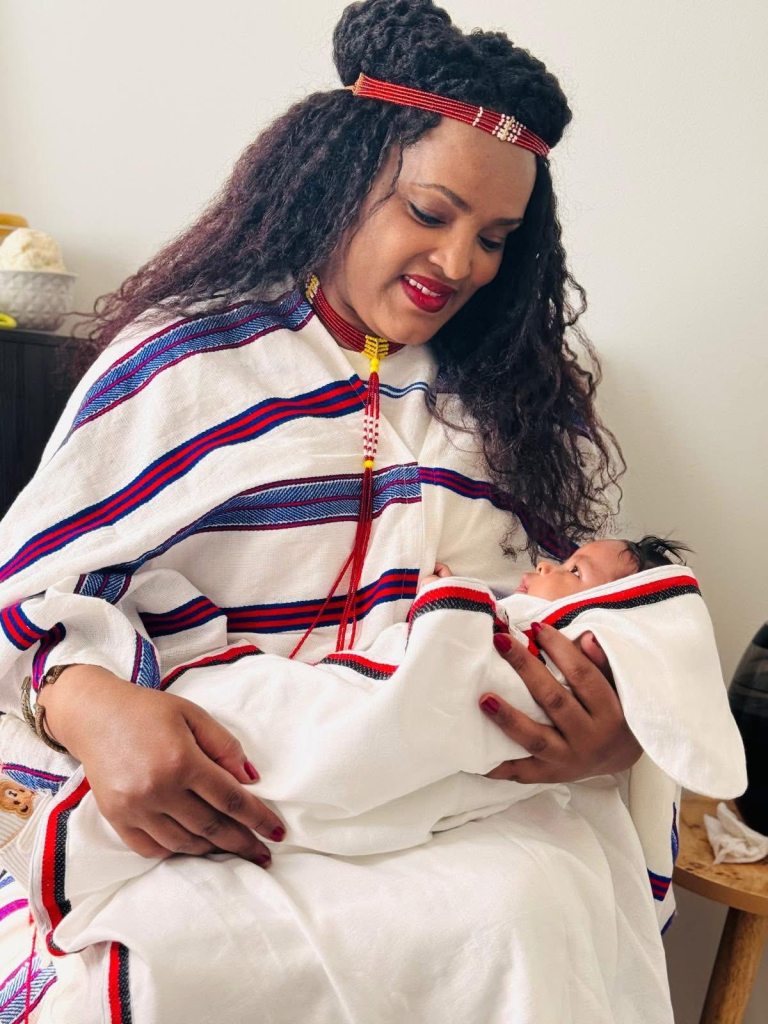
During this ceremony, the new mother does not wash her clothes until Shanan day. So she washes her circumcision on this day; and her clothes shall be washed.
The Shanan is an important and celebrated part of the midwife’s life. This is to the advantage of the family that a woman is safely released after carrying it in her womb for nine months. And the newborn is an addition to the family. Therefore, they do not leave a woman alone until she becomes stronger and self-reliant. Because it is said that the pit opens its mouth and waits for her. And when she goes to the bathroom, she carries an iron in her hand, and sucks it into her head.
In general, after Shanan is out, the child is encouraged; and the midwife shall be comforted; they ate with the prepared marqaa and gave her collective support.
This system plays an important role in helping the mother recover from labor pains. Family and friends who attend the Shanan will also encourage the midwife to look beautiful and earn the honor of midwifery. On this Shanan they made the midwife physically strong, socially beautiful, gracefully bright, and accustomed to the burdens of pregnancy and childbirth.
This Shanan Prides make those like her who are away from relatives and aunts not feel lonely and isolated. It covers the new mother with identity commonality.
Understanding Oromummaa: Identity vs. Ideology
What is Mr. Dhabessa's position on Mr. Yemane's response to the open letter of Oromo scholars?
Dear Mr Yemane,
Thank you for this thoughtful clarification and for your respectful tone. I understand the depth of your concern, and your perspective is important to acknowledge. Here’s a reflection of our key points and their significance:
1. Respect for Eritrea Reaffirmed:
Your explicit respect for the Eritrean people, their struggle for freedom, and their sovereignty is clear and valued. This establishes a foundation of mutual dignity.
2. Core Concern – Misrepresentation of Oromummaa:
You rightly identify the core issue: President Isaias Afwerki’s characterization of *Oromummaa* as a political ideology in his Independence Day speech.
You emphasize that *Oromummaa* is fundamentally the cultural, linguistic, and historical identity of the Oromo people. It is the essence of Oromo nationhood and self-understanding.
Equating it solely with a political ideology, especially within the context of the conflict between the Eritrean government and Ethiopia’s Prosperity Party, is a profound misrepresentation and a source of significant disappointment.
3. Rejection of a Harmful Narrative:
You correctly point out that framing *Oromummaa* as a divisive or expansionist political ideology is a narrative primarily propagated by certain Ethiopian political forces historically opposed to Oromo self-determination. This narrative seeks to delegitimize the Oromo struggle for justice, equality, and self-rule within Ethiopia.
President Afwerki’s adoption of this framing, even if intended to critique the Ethiopian government, inadvertently validates this harmful distortion and undermines the authentic meaning of *Oromummaa* for the Oromo people.
4. The Impact of the Misrepresentation:
This mischaracterization is not merely an academic error; it feels like an erasure of the Oromo people’s authentic self-definition and a dismissal of their legitimate aspirations within Ethiopia.
It risks straining the understanding and solidarity between peoples who have both endured significant struggles.
In Summary:
Our message powerfully asserts that *Oromummaa* is the bedrock of Oromo identity, distinct from any political party or ideology. Portraying it otherwise, especially using a narrative historically employed to marginalize Oromo aspirations, is deeply problematic and hurtful. While you understand the Eritrean government’s focus on its conflict with the Ethiopian government, we emphasize that this should not come at the cost of misrepresenting the fundamental identity of the Oromo nation.
Our stance is clear, respectful, and grounded in the desire for accurate recognition of what Oromummaa truly represents. Thank you for taking the time to articulate this crucial distinction with such clarity and for reaffirming our respect for the Eritrean people despite this significant point of disagreement.
Kind Regards,
Dhabessa Wakjira
Mr. Yemane’s Reply to Oromo Scholars’ Open Letter

What is Mr. Yemane's response to the open letter to the Oromo scholars?
Yemane G. Meskel @hawelti
Brief Remarks on "Open Letter to President Isaias Afwerki

A group of 85 Oromo scholars and professionals posted an "Open Letter to President Isaias Afwerki" on June 5, 2025.

The "Letter" is regrettably replete with inaccuracies and contains a number of grave and unfounded accusations against Eritrea.

This cannot but arouse our dismay, particularly as the authors could have chosen a more appropriate approach of face to face discussions if the real motive, is, as it should be, to ally lingering misunderstandings or perspectives on matters of paramount importance to Eritrea and the Oromo people.

In this spirit, Eritrea believes that the most constructive way to address these matters remains through a frank, face to face, dialogue between signatories of the Letter or their representatives with relevant Eritrean counterparts.

In the meantime, and for the record, we wish to reiterate Eritrea's long-standing views and positions:
1. Eritrea has utmost respect for the Oromo people and their culture.
2. Eritrea's resolute solidarity with, and strong support for, the Ethiopian people, and in particular the Oromo people's struggle in pursuit of their fundamental rights, has spanned over half a century.
3. In this respect, the reference to political Orommuma in President Isaias' speech does not detract from its principled respect for the Oromo people and alludes to vexing ideological interpretations and overtones that have come to light in the recent couple of years from certain and unrepresentative quarters.
4. Eritrea is unwaveringly committed to peace and justice in the Horn of Africa.  It is no secret that the drum beating and drive for war is not coming from Eritrea but from those who are openly agitating for the conquest of sovereign Eritrean territories.




 Advocacy for Oromia