Monthly Archives: June 2025
Oromo Scholars and Professionals Sent Open Letter to President Isaias Afwerki unequivocally denouncing his unprovoked attack on Oromo Identity

Oromo Scholars and Professionals based in North America, Europe, and Australia send an open letter to President Isaias Afewerki of Eritrea unequivocally denouncing his unprovoked attack on Oromo Identity
Open Letter to President Isaias Afwerki
June 05, 2025
Mr. Isaias Afwerki
President of Eritrea
Your Excellency,
We, the undersigned Oromo scholars and professionals, write this letter to you to unequivocally denounce your unprovoked attack on Oromo identity during your speech on 24 May 2025, marking Eritrea’s 34th Independence Anniversary.
The speech, which seemed to strike at the Prosperity Party (PP) of Ethiopia, carried an open and somber attack on the Oromo identity, causing a serious resentment and tarnishing the positive views and opinions Eritrea enjoyed among our people. Pursuant to the unhealthy trend that Eritrean politics adopted in recent years, we wrote our first letter to you on February 28, 2020, in which we called upon your government to “refrain from blatant acts of intervention that will ultimately harm the people on both sides of the border,” and “align, should you wish, your political measures to be on the side of the people to foster lasting peace and prosperity for our peoples.” A copy of that letter is attached. Our 2020 call fell on deaf ears, and in fact, we see Eritrean politics growing more hostile not only to the Oromo struggle, but also to the Oromo identity.
In your speech, you baselessly linked PP with the “ideology of Orommuma”. You identified Oromummaa (translated as “being Oromo”) as an unacceptable ideology of PP to conveniently besmirch the Oromo identity using the very party that attacks Oromo identity. Evidence recorded by independent international organizations is abundant to show that the PP government jails, tortures, and kills Oromos more than any group in Ethiopia. In your own speech, you acknowledged that PP doesn’t represent the Oromo people, which contradicts the stated reason for which you criticize PP. Yet, you chose an irresponsible ploy to disparage PP, the very party you helped and supported against the will of our people until a few years ago. You mugged the millions whose identity, Oromummaa, was targeted for over a century, and the hundreds of thousands who still languish in Ethiopian prisons
for the sole reason that they proudly identify themselves as Oromos. Clearly, a self-contradicting incongruity emerges from your speech; if “being Oromo” is an unacceptable ideology, how would being Eritrean, being Tigrean, etc. become acceptable?
Mr. Afwerki,
Your reference to “Cushitic-Semitic antagonism,” a non-existing antipathy, is more of a call for such an encounter, than a caution from a concerned leader. Such antagonism is not known even to this scholarly forum. So, why was it necessary to conceive a wider platform of conflict when the region cannot handle even local clashes that have kept it in perpetual poverty? What is the political gain for Eritrea that can be redeemed from a bloody war between North and South? We leave the answers to you.
In closing, we hereby pronounce our grave concern that peace is evading the region once again; a palpable tension of war permeates the Horn of Africa. Your speech not only added to the prevailing tension fueling the existing contradictions, but it also demonstrated a condescending disrespect for the identity of our people. We categorically denounce your statements and urge you to reconsider such dangerous rhetoric.
Respectfully,
Oromo Scholars and Professionals (Email: oromo.scholoars.professionals@gmail.com Signatories (in alphabetical order):
1. Abdisa Koricho (PhD)
2. Abraham Mosisa (MSc)
3. Adugna Birhanu (PhD)
4. Ahmed Gelchu (PhD)
5. Alemayehu Biru (PhD)
6. Aman Kedir (MA)
7. Amanuel Gobena (PhD)
8. Asebe Regasa (PhD)
9. Asafa Jalata (PhD)
10. Asfaw Beyene (PhD)
11. Ayana Gobena (PhD)
12. Ayele Teressa (PhD)
13. Bahiru Duguma (PhD)
14. Bahiru Gametchu (PhD)
15. Baro Deressa (MD)
16. Bedassa Tadesse (PhD)
17. Begna Dugassa (PhD)
18. Beekan Erena (MEd)
19. Bekele Temesgen (PhD)
20. Benti Getahun (PhD)
21. Benti Ujulu (PhD)
22. Berhanu Kedida (MD)
23. Beletech Dheresa (PhD)
24. Bersisa Berri (PhD)
25. Beyan Asoba (PhD)
26. Bichaka Fayissa (PhD)
27. Daniel Ayana (PhD)
28. Daniel Dibaba (PhD)
29. Degefa Abdissa (MD)
30. Demissie Karorsa (PhD)
31. Dessalegn Negerie (PhD)
32. Desta Yebassa (PhD)
33. Ezekiel Gebissa (PhD)
34. Fantahun Diba (PhD)
35. Galaana Balcha (MD)
36. Gemechu Abeshu (PhD)
37. Geremew Begna (PhD)
38. Geremew Nigatu (PhD)
39. Gizachew Tesso (PhD)
40. Gizaw Tasissa (PhD)
41. Gobena Huluka (PhD)
42. Guluma Gemeda (PhD)
43. Gutu Olana (PhD)
44. Habtalem Kenea (PhD)
45. Haile Hirpa (PhD)
46. Hambisa Belina (PhD)
47. Henok Gabisa (PhD)
48. Ibrahim Elemo (PhD)
49. Iddoosaa Ejeta (PhD)
50. Imiru Itana (MSc)
51. Ismael Abdullahi (PhD)
52. Jamal Ebrahim (MD)
53. Jemal Hebano (PharmD)
54. Jenberu Feyisa (PhD)
55. Jirenya Gudeta (MSc)
56. Junaidi Ahmed (MD)
57. Kano Banjaw (PhD)
58. Kebene Kejela (PhD)
59. Koste Abdissa (PhD)
60. Mekbib Gebeyehu (PhD)
61. Mekuria Bulcha (PhD)
62. Mesfin Abdi (PhD)
63. Michael Oli (MSc)
64. Moa Apagodu (PhD)
65. Mohammed Hassan (PhD)
66. Mohammed Tahiro (PhD)
67. Mosisa Aga (PhD)
68. Namara Garbaba (PhD)
69. Oli Bachie (PhD)
70. Regassa Oljira (EdD)
71. Rundassa Eshete (PhD)
72. Samuel Geleta (PhD)
73. Solomon Geleta (PhD)
74. Teferi Margo (PhD)
75. Tekleab Shibru (PhD)
76. Tesfaye Negeri (PhD)
77. Tesfaye Tesso (PhD)
78. Teshome Dime (MSc)
79. Thomas Baisa (MD)
80. Tolawak Beyene (MD)
81. Tsegaye Ararsa (PhD)
82. Workineh Torben (PhD)
83. Worku Burayu (PhD)
84. Zelealem Abera (MSc)
85. Zelalem Negassa (MSc)
THE BATTLE BETWEEN ETHIOPIANISM AND OROMUMMAA: FROM THE THIRTEENTH CENTURY TO TODAY
Asafa Jalata, PhD The University of Tennessee, Knoxville, USA

Even though the Oromo are the most significant national group in the Horn of Africa with abundant resources and struggled for their liberty and sovereignty for a long time, the children of nafxnayas hijacked the Oromo national movement in 1991 and 2018 by capturing the Ethiopian colonial state. Then Ethiopian colonial forces and their Oromo mercenaries terrorized and humiliated Oromo families and communities by terrorizing, killing, raping, conscripting young Oromos to fight for them, robbing properties, burning Oromo houses with pregnant women and elderly individuals, and displacing them from their homes and communities for being Oromo and manifesting their Oromo identity and culture or for supporting the struggle for their liberation and freedom. Nothing is more degrading and humiliating than seeing the butchering, cutting the throats, and shooting or lynching of young Oromos in front of parents and communities and leaving their corpses on streets for dogs or in forests for hyenas by preventing their burials at gun points.
We cannot continue to blame our enemies for failing to protect our freedom by defending our security and sovereignty. Our forefathers and mothers created their country and defended themselves from empire builders until the last decades of the 19th century when European imperialism changed the balance of power between the Habashas and themselves. Since then, the imposition of the ideology of Ethiopianism on the Oromo has undermined their collective identity and national Oromummaa, which are prerequisites for a national collective action. Answering the following four questions helps to understand the central problem of Oromo society. (1) What significant factors incapacitated Oromo elites from effectively mobilizing and organizing themselves to contribute to Oromo’s emancipation and freedom? (2) How did the OPDO infiltrate the Oromo activist networks in the diaspora and facilitate the dilution of the objectives of the OLF by misleading the Qeeroo/Qarree movement, which was created and built by the OLF? (3) How did the ideological, leadership, and organizational deficits of the Oromo movement allow political merchants, opportunists, nafxanayas (Amhara and Afaan Oromo speakers), and Oromos who were not fully equipped with liberation knowledge to collaborate in empowering the neo-nafxanya regime of Abiy Ahmed? (4)What are the main ways of mobilizing large numbers of Oromos to build effective national organizations for achieving Oromo security, freedom, and national sovereignty?
In the process of answering these questions, two significant problems emerge. The first and most complicated one is the ideological deficits of the Oromo national movement. The second problem is leadership and organizational deficits because of the assassination or killing and imprisoning of the pioneering Oromo leadership and the low level of cognitive liberation in the more significant Oromo elites and masses. What should be done about these complex problems?
The Ideological Deficits of the Oromo National Movement
Most Oromo elites have accepted the ideology and identity of their colonizers. They have identified themselves as Ethiopians and accepted Ethiopianism, which characterizes the Oromo as the object of history by labeling them as primitive, invasive, and a people without culture, history, and civilization. What logic do Oromos have to identify themselves with their slavers and colonizers? Why don’t some Oromo elites wholeheartedly accept national Oromummaa, which involves Oromo-centric history, worldview, culture, nationalism, and egalitarian democracy? The few pioneering Oromo nationalist scholars initiated the project of national Oromummaa in the early 1970s by using liberation knowledge and drawing the roadmap for the liberation of Oromo society from the nafxanya colonial state and its other institutions.
These few pioneering nationalists produced a groundbreaking publication, The Oromos: Voice Against Tyranny, in May 1971. This publication was the first manifesto to map the political roadmap of the Oromo national movement. Specifically, the piece focuses on class issues, the national question, the liberation Oromo struggle, and the process of decolonization across the African continent. It has three major themes: The first deals with the glories of Oromo history, which the enemies of the Oromo had attempted to erase and replace with false or racist Habasha historical narratives. It explains that before Abyssinia/Ethiopia colonized the Oromo, the Oromo had Biyyaa Oromoo (the Oromo country), a glorious history, and practiced democratic governance under the gada/siiqqee system, which the colonial government outlawed and suppressed. According to the document, the enemies of the Oromo invested a lot of money and energy in distorting the Oromo’s history to connive their subjugation schemes. Amhara writers such as Aleqa Taye claimed that “the first Oromo came out of the water.” Others argued that the Oromo were “invaders” of Ethiopia or aliens who came to Ethiopia in the sixteenth century. Habasha colonialists and their Euro-American supporters have manufactured propaganda on the Oromo to justify their colonization and deny their indigeneity.
As The Oromos: Voice against Tyranny notes, the indigenous Oromo settled in their country, Biyya Oromoo, before “the so-called Sabeans crossed the Red Sea and started settling on the East African Coast.” It initiated a starting foundation for Oromo’s critical historical studies. Since then, Oromia scholars and others have written several books and numerous scholarly refereed articles debunking Ethiopian mythologies and false historical narratives about the Oromo and the other colonized peoples. The Oromo national movement has influenced these scholars and others to study and write about Oromo society. The second central theme of the paper describes the colonial relationship between the Oromo nation and the Ethiopian Empire: ” There is evidence that the ancient ancestors of the Oromo were once confronting and contending with the expansion of the Axumite Kingdom towards the interior territories. The [Zagwe] dynasty, [Which replaced the Axumite kingdom] ended by intrigues staged by remnants of the oldest Axumite Kingdom who had fled to the South, to what is today the region to the extreme northern part of Shawa, to solicit the hospitality and assistance of the Oromo people of the region.”
Although they emerged through the assimilation of the remnants of the Axumites and indigenous peoples, the Abyssinians or Habasha, particularly the Amhara, continued to assimilate the conquered peoples. Amharanization meant the destruction of the identity of the colonized population groups. The establishment of military colonies, the evangelization of the indigenous populations, and cultural and biological assimilation were the continuous processes of expansion and Amharanization, which during the second first half of the 19th century transformed into Ethiopianization, whose exact meaning is Amharanization, molded into Amhara cultural heritage. Between the 12th and the mid-19th century, the Habasha and the Oromo contestation over who had the power to control resources and territories continued. The European intervention on the side of the Habasha changed the balance of power by favoring them.
The Amhara ruling class used a document known as the Kebra Nagast (Glory of the Kings) that rationalized and legitimized the monarchy by linking its genealogical descent to the ancient king of Israel, Solomon. Based on an untenable myth, the Amhara monarchy considered itself a Solomonic dynasty. The so-called Solomonic monarchy remained in power in Ethiopia from 1270 to 1974, when the military government overthrew the Haile Selassie regime and ended the legend that connected the Amhara dynasty with King Solomon. The first Amhara warlord, Yekuno-Amlak, claimed the restoration of the Solomonic dynasty in 1270 when he emerged as the first Amhara negus (king) and later shifted the geopolitical center from Lalibela, Lasta, to Menz, or the northern Shawan plateau. The successive Amhara ruling classes continued using the Solomonic dynasty’s mythical claim and Orthodox Christian ideology to maintain their dominant political economies.
Claiming their descent from King Solomon and their election by God, the monarchs placed themselves at the top of the secular and ecclesiastic hierarchies: they had the absolute right to appoint and dismiss church and government officers. From the 15th century on, the monarchies maintained political order through their loosely organized army, Orthodox Christian ideology, and the monopolization of imported firearms during the 19th century, and through their control over the appointment and dismissal of officials and the ability to mobilize human and economic resources. The monarchs’ primary duties were defending the Amhara or Tigrayan people from their enemies and expanding their territories to find more land, enslaved people, cattle, and ivory. The colonial government also forced the conquered peoples to provide men as a fighting force and product for the monarchs and their followers. In search of land, enslaved people, serfs (gabbars), cattle, and other resources, the Amhara warlords expanded their colonial territories to the Oromo communities of northern Shawa. Sociologist Mekuria Bulcha writes, “the Gaalaan and the Amhara were fighting in the twelfth, thirteenth, and fourteenth centuries. The Gaalaan, who the Tuulama Oromo consider as angafa (the senior gosa or the firstborn), is numerically the largest Oromo gosa [clan] cluster.” Bulcha considers the northern Shawan plateau the ancient country of the Oromo nation and refutes the claims that the Oromo came to Oromia/Ethiopia from another place. He characterizes the Shawan plateau as the “cradle of Oromo civilization and springboard for Amhara expansion” to the Oromo country.
The Amhara group called Menz “remained as a pocket of resistance in a rugged mountainous area, located in the northern horn of Shawa. As early as the 17th century, the Menz, under the leadership” of Kristos Warada Qal and later Sahle Selassie (1813-1847) began to attack the neighboring Oromo clans. Bulcha notes that Menz is not an Amhara name, and it was usurped. As a territory, Menz includes Geera Meder, Laalo Meder, and Mamaa Meder when the Amhara king conquered it, and they are Oromo names. The name Shawa was also usurped by Sahle Selassie as the name of his kingdom when he established it in 1814. Isolated Christian communities trickled down to the South between the ninth and thirteenth centuries and gradually reached Menz within the Shawa plateau and formed a Christian kingdom. Initially, Christian Amhara priests moved into neighboring Oromo communities, as described in The Oromos: Voice Against Tyranny. Historian Mohammed Hassen notes that “some Oromo groups already living in the region of Shawa before the formation of the Shawan Amhara Empire during the first half of the fourteenth century remained an integral part of that empire during and after the fourteenth century.”
Yikunno Amlak (1270-85) established the Shawan Amhara kingdom and the Orthodox Church in the Oromo community of the northern Shawan plateau. During the reign of Amda-Sion, between 1314 and 1344, the Christians intensified their expansion into the neighboring Oromo communities in two ways. First, they annexed “the Christian communities occupied with the Oromo in southern Shawa.” They forcefully converted some Oromos to Christianity by killing confident Oromo political and religious leaders. As one source noted, “If a Christian kill … [Oromos] either with a spear or with another weapon…[the Oromo] which he kills shall be considered for him as an offering to God.” The neighboring Oromo communities fought against the invading Christian kingdom until the rise of Imam Ahmad, a Muslim leader who conquered and dominated the Christian empire and other communities between 1527 and 1543. The Oromo suffered immensely from the jihadi war because they were involved in both sides of the conflict against invading Christians and Muslims. When the Christian and Muslim forces were contesting in the Horn of Africa for power and control over resources, such as land, the northern and southern Oromo branches fought to liberate their territories and the conquered Oromo communities from the two invaders. The Amhara Christian kingdom attacked the Tulama Oromo clans, such as the Gaalaan, Yaya, Waji, Abichu, Lalo, and Warra Qaalluu; the Muslim Somali and Afar empire builders attacked the Oromo groups living in the area that currently called Somalia and other region.
Starting with the Metta Oromo, Sahle Sellasie, the king of Menz from 1813 to 1847, raided and butchered four thousand five hundred Oromo and enslaved the remaining men, women, and girls, looting grains and herds and burning and destroying Oromo communities. According to The Oromos, Menelik, the grandson of Sahle Selassie, using the geopolitics of northern Shawa, the Menz, the Oromo collaborator class led by Gobana Dacee, and the assistance of European colonial powers, was able to complete the colonization of the larger Tulama Oromo and later the whole Oromo nation and other peoples. Using the Orthodox Christian ideology and the willingness of the Abyssinian ruling class to collaborate with European imperialist powers, Menelik gained access to European technology, weapons, administrative and military expertise, and other skills that enabled him to establish the Ethiopian Empire at the end of the 19th century. Furthermore, he mobilized the Oromo military collaborator classes, such as Gobana Dacee, Habte Giorgis, and Balcha Abbaa Nafso. He conscripted Oromo mercenary soldiers to invade and colonize Oromia and other territories. Following Menelik’s footsteps, Haile Selassie consolidated settler colonialism and the Habasha political and religious institutions, garrison cities, strengthening an intermediary class, and developing colonial education, the colonial landholding system, and the media. The colonial government forced most farmers to become serfs or semi-slaves to produce food and other commodities for the colonizers. As a result, they were impoverished. In the 1960s, these collective grievances resulted in various resistance movements in Oromia and other territories. The Bale Oromo armed struggle, the Western Oromo confederation movement, the Macha Tulama Association, and the Oromo cultural revival in Hararghe are primary examples of these resistances.
The third central theme in The Oromos: Voice Against Tyranny focused on developing national Oromummaa (Oromo national history, culture, and nationalism) and creating and building Oromo’s national organizational capacity. The Oromos provided an intellectual roadmap for designing and building the Oromo Liberation Front (OLF) to struggle and liberate the Oromo people and their country, Oromia, from Ethiopian settler colonialism and its oppressive political, economic, cultural, and religious institutions. In the following words, the document invites all self-respecting Oromos to be united and fight for their human dignity and freedom and to liberate their country from the racist colonial state of Ethiopia:
[The call is] not a dilemma for an Oromo worthy of the name, for there is one and only one way for his [or her] dignity, security, liberty, and freedom. In this, he [or she] is ready and willing to join hands in the spirit of brotherhood [and sisterhood], equality, and mutual respect with other oppressed nationalities and all persons and institutions of goodwill. He [or she] is equally ready and prepared to pay any sacrifice and oppose any persons or groups that crossed or double-crossed or hindered his [or her] mission of liberation from all forms of oppression and subjugation. An Oromo has no empire to build but a mission to break an imperial yoke. That makes his [or her] mission sacred, and his [or her] never sacrifices too dear.
The ideology of Ethiopianism explains and justifies the formation of the Ethiopian Empire and denies the colonization of the Oromo and others. To understand the source of this ideology, we need to critically comprehend the name Ethiopia, which originated from the Greek word Aethiopes. Classical Greek explorers and writers named the territories inhabited by Black peoples that they called burned-face peoples in Asia and Africa. Although the historical meaning of Ethiopia applies to all Black peoples, its contemporary purpose applies to Habashas or Abyssinians (mainly Amharas and Tigrayans who also call themselves Ethiopians). They have successively racialized and dominated Abyssinian/Ethiopian state power. Recognizing the political and ideological significance of the name Ethiopia and especially its Christian Biblical connections, Abyssinian leaders have claimed an Ethiopian identity and asserted that their ancient territories included all regions that classical geographers and historians described as Ethiopia. The official adoption of Ethiopia for the Abyssinian Empire occurred in 1931 when Haile Selassie officially changed the name Abyssinia to Ethiopia in his constitution.
Ethiopianism is a political and ideological construct that Amhara and Tigrayan state elites have used to justify and rationalize Ethiopian settler colonialism, the gabbar–nafxanya system (semi-slavery), the racialized state power, and an ethnic-racial hierarchy. The Ethiopian state is the continuation of the Abyssinian racialized state, which committed cultural genocide on indigenous peoples, such as the Qemant, Gafat, Agao, and later the Oromo. Contemporary Ethiopia emerged as an empire by claiming the name of ancient Ethiopia and justifying terrorism, enslavement, colonization, and the continued subjugation of Oromos and others through the discourse of race and religion. The Oromo nafxanyas enjoy claiming that their forefathers built and defended the Ethiopian Empire even though they were mercenaries who did not represent the Oromo nation. Ethiopianism, or Greater Ethiopia’s ideology, claims Ethiopia was not colonized like other parts of Africa because Habasha’s bravery and patriotism made this empire unique. The Ethiopian historical discourse claims that Ethiopian boundaries are sacred since they were established 3,000 years ago.
Furthermore, it is asserted that Ethiopia played a crucial civilizing mission by colonizing and dominating the Oromos and other nations that were considered backward, pagan, destructive, and inferior. These racist mythologies assisted Ethiopia in enjoying more recognition in Europe and North America. As a racist ideology, Ethiopianism claims that Habashas are different from other Africans and superior to them lay at the core of the European justification for empowering them to colonize and rule the Oromos and other nations.
The Ethiopian Empire was created with the alliance of European imperialist powers. Habasha warlords have maintained themselves through a coalition with successive imperial superpowers, namely, Great Britain, the Soviet Union, the United States, and China; currently, the UAE has protected successive Ethiopian state elites and their governments. Amhara colonial settlers and their collaborators in Oromia and other regions have justified their colonial domination with a racist discourse. Habasha settlers have claimed innate superiority over the colonized population groups by establishing their colonial authority in the colonized states. These essential components of racist discourses have remained intact. Fake “socialist” and then “democratic” assertions have been introduced by successive nafxanya state elites and accepted by their global supporters without changing Ethiopian society’s colonizing and racist structures. Because of its racist policies, the Ethiopian state has different policies within Abyssinia proper, the homeland of Amhara-Tigray, and the colonized regions such as Oromia. The Ethiopian state has acted in an authoritarian manner toward Amhara and Tigray ethnonational from which it emerged and in a terrorist fashion toward racialized peoples, such as Oromos, Afars, Sidamas, Ogaden-Somalis, and others, that it suppresses and exploits.
The Ethiopian state is owned mainly by the nafxanya class, which includes Habasha elites, Ethiopianized Oromos, and other collaborators who control all aspects of state power and use state terrorism to maintain their power and privilege. This state has been racialized and Christianized to exclude non-Habashas peoples, except members of the nafxanya class, from decision-making power. The Ethiopian state has effectively used Ethiopianism to hide the crimes against humanity. Today, non-nafxanya Oromo elites who defend the Ethiopian Empire are either politically misguided or opportunists who sacrifice the Oromo national interest for their personal and group interests. These elites call themselves Ethiopians, the identity that true and revolutionary Oromo nationalists reject. If those colonized peoples around the world did not abandon their indigenous identities to accept the identity of their colonizers, why do some Oromo elites call themselves Ethiopians? The Ethiopianized Oromos perpetuate Ethiopian colonialism and the domination and dehumanization of Oromo society. Whether they claim to advance Ethiopianism, socialism, or democracy, they have contributed to maintaining the racialized Ethiopian state during and after the failed revolutions of 1974, 1991, and 2018. The only way to liberate Oromo society is by building and strengthening the Oromo national movement based on the ideology of the national Oromummaa. The nafxanya state elites and their collaborators have used Ethiopianism to claim the unity of the colonizer and the colonized population groups while committing crimes against humanity.
Rejecting the ideology of Ethiopianism, the pioneering Oromo nationalists have developed national Oromummaa to oppose and dismantle the Ethiopian racial/ethnonational hierarchy and settler colonialism and its institutions. National Oromummaa, as an Oromo nationalist ideology and worldview, builds on the best elements of Oromo culture and traditions and advances an indigenous Oromo democracy known as the gadaa/siiqqee system. It sees the Oromo culture as the center of Oromo life and bases its vision on Oromo egalitarian democracy, an institution that emerged before American democracy. The Oromo national movement led by the OLF and the OLA is struggling to retrieve popular Oromo democracy through national Oromummaa and self-determination principles. National Oromummaa is based on the principles of the gadaa system, which protected Oromo freedom, security, and sovereignty for many centuries before the Oromo nation was colonized and incorporated into the Ethiopian Empire. The gadaa centers were established at Odaa Mormor (near the Blue Nile), Odaa Nabee (in Shagar), Odaa Roba, and Madda Walaabuu in Bale. In these centers, two different institutions, gadaa and qaaluu, served as the center of politics and religion for the Oromo clans living in the area.” The renewal and centralization movement of the gadaa system occurred at Odaa Roba by replacing “Odaa Nabee, which had been a politico-religious center for several hundred years before the fourteenth century.” Subsequently, “Odaa Roba [became] a new holy politico-religious center of the Oromo people at large that the various representatives of Oromo groups periodically visited from all directions for such celebrations like Jilaa Gadaa [pilgrimages].” Later, the politico-religious center of Odaa Roba moved to Madda Walaabuu (spring of freedom), likely because of the pressure from the Muslim empire-builders from Afar and Somalia. With the support of other Oromo branches, the Bale Oromo living around Madda Walaabu reorganized and reconsolidated their political power and the gadaa system starting from the fourteenth century. Between 1518 and 1519, the general assembly of the Oromo nation was held for six months at Madda Walaabuu to deliberate on how to liberate and defend the Oromo country from the Christian and Muslim invaders; delegates from different parts of the Oromo country participated in this assembly. The main question Walaabuu Jiloo, Abbaa Gadaa of Madda Walaabuu, asked at the general assembly was, “Maal Taana?” (“What are we going to be? After thorough discussions and deliberations, the general assembly defined the main enemies of the Oromo people as Christian and Muslim empire builders. These enemies were attacking the Oromo people by killing them, enslaving them, taking their lands and other resources, and forcing them to abandon their culture, religion, and identity. The history of Madda Walaabuu demonstrates that the most significant revival and reorganization of the gadaa institution occurred at the beginning of the 16th century. Since this century, the renewal and reorganization of the gadaa system have involved fundamental changes, including establishing political objectives, specific rules, and regulations. The assembly passed three primary political objectives: The first objective was to strengthen the institution of the gadaa system to defend the Oromo people from the wars of Christian and Muslim empire-builders. The second one was consolidating the Oromo military power by recruiting and training qerroo (Oromo youth) between 18 and 24 to regain the old Oromo territories lost due to the constant wars and to free enslaved Oromos.
The assembly formulated new rules and regulations, which were important in realizing the objectives. The third objective was to strengthen the Muuda religious pilgrimage to the seat of Abbaa Muuda, the chief qaallu, every eight years. In the indigenous Oromo religion known as Waaqeeffana, Abbaa Muuda, established an ethical and moral order, which defined the relationship among Waaqa (God), society, and nature in a balanced way. In 1522, the Oromo intensified their defensive struggle to recover their lost territories and liberate the conquered Oromo groups. The Christian and Muslim empire-builders fought the Oromo. Darrel Bates notes, “The [Oromo] … had suffered in their time from both parties and were waiting in the wings for opportunities … to recover lands taken from them.” Between 1529 and 1543, the Muslims destroyed Christian rule and established their own under Imam Ahmad ibn Ibrahim al-Ghazi. The Imam was defeated and beheaded in 1543. The wars between the Christians and Muslims endangered the Oromo’s survival as a people.
With the renewal and reorganization of gadaa, the Oromo carried out butta wars every eight years, when power transferred from one gadaa grade to the next. At the beginning of the sixteenth century, when they intensified their territorial recovery through the butta wars, many Oromo branches were under one gadaa government. The gadaa system strengthened and enabled them to recover their lost territories and accommodate their increased population and stock. The Oromo fought twelve butta wars between 1522 and 1618, recovering and reestablishing the Oromo country called Oromia today. According to The Oromos: Voice Against Tyranny, “the sixteenth century’s so-called ‘Galla’ invasion’ was neither an invasion nor a migration. Instead, it was a national movement of the Oromo people incited by the southern Oromos and supported by the northern Oromos under the domination of the Abyssinians with the specific goal of liberating themselves and their territories from colonial domination.”
Those Ethiopianized Oromos who endorse and glorify Ethiopianism are undermining the Oromo-centric awareness to enjoy the power and material benefits at the cost of the Oromo people and other colonized peoples. National Oromummaa, as an intellectual and ideological vision, places the Oromo man and woman at the center of analysis and, at the same time, goes beyond Oromo society and aspires to develop global Oromummaa by contributing to the solidarity of all oppressed peoples by promoting the struggle for national self-liberation and egalitarian democracy. It is a complex and dynamic national and global project. As a national project and the ideology of the Oromo national movement, national Oromummaa enables Oromos to retrieve their cultural-centric political strategies and tactics that can mobilize the nation for collective action, empowering the people for liberation. As a global project, the Oromummaa project requires that all persons be included in the Oromo national movement, operating democratically. This global Oromummaa enables the Oromo people to form alliances with all political forces and social activities that accept the principles of national self-determination and egalitarian democracy in promoting global humanity free of forms of oppression and exploitation. In other words, global Oromummaa is based on the principles of mutual solidarity, social justice, and popular democracy.
National Oromummaa, as an element of culture, nationalism, and vision, has the power to serve as a manifestation of the collective identity of the Oromo national movement. The foundation of national Oromummaa must be built on overarching principles embedded within Oromo democratic traditions and culture and, simultaneously, have universal relevance for all oppressed peoples. The main foundations of national Oromummaa are individual and collective freedom, justice, popular democracy, and human liberation, all of which are built on the concept of safuu (moral and ethical order) and are enshrined in gadaa/siiqqee principles. Although national Oromummaa emerges from the Oromo cultural and historical foundations, it goes beyond culture and history in providing a liberating narrative for the future of the Oromo nation and the other oppressed peoples, particularly those who suffered under the Ethiopian Empire. As a critical ideology and worldview, national Oromummaa challenged the idea of glorifying kings or strongmen or chiefs who collaborated with European slavers and colonizers and destroyed African peoples by participating in the slave trade and the project of colonization.
Successive Ethiopian government elites, popularly known as nafxanyas have built their power on the foundation of an ethno-racial hierarchy rationalized and justified by racism. They have maintained their legitimacy and survival through external connections and domestic political violence. Because they have failed to remove the political obstacles that have facilitated external dependency and state violence, they cannot build multinational democracy, peace, stability, and meaningful development. Because the Ethiopian state has been supported by mighty global powers and the imperial interstate system, there have been connections between racism, state violence, and global tyranny in the Ethiopian Empire. National Oromummaa promotes sovereignty in opposition to dependency, sustainable development, self-sufficiency, national self-determination, and egalitarian democracy. Unfortunately, most of the Oromo elites and masses are not fully equipped with the narrative of national Oromummaa because of the low level of cognitive liberation or opportunism. Such elites are intoxicated by the desire for power and wealth rather than Oromo freedom, security, and sovereignty.
Low Cognitive Liberation and Leadership and Organizational Deficits
Leaders and their organizations cannot effectively fulfill their objectives without developing cognitive liberation or transforming their consciousness and behavior. Cognitive liberation is the process of understanding and challenging beliefs or ideological systems that legitimize existing authorities and develop liberatory narratives. To what extent Oromo elites, leaders, and organizations have succeeded in developing cognitive liberation and the capacity to mobilize a substantial number of Oromos to engage in the Oromo liberation struggle by building effective organizations with multiple spokespersons and know-how and by formulating adequate framing to break the Ethiopian colonial system? A few nationalist Oromo intellectuals framed Oromo issues as Ethiopian settler colonialism and the necessity of liberating Oromo society from it. They produced articles and magazines, such as The Oromos: Voice Against Tyranny in 1971, the OLF political program in 1976, and other publications, such as Warraqaa, Bakkalcha Oromiyyaa, Oromiyaa, and Guca Dargaagoo in the 1970s. Other publications include Sagalee Oromoo: Journal of the Union of Oromo Students in Europe, Waldhaansso: Journal of the Union of Oromos in North America, and Oromia Speaks: A Publication of the Oromo Liberation Front from the OLF Foreign Relations Office.
In addition, Gadaa Melbaa (a pseudonym for Dr. Taddassa Eeba), a scientist and prominent OLF leader, published Oromia: An Introduction in 1980. Starting in 1990, a few Oromo critical scholars also began to publish books and refereed articles in national, regional, and international journals. These publications have produced original Oromo liberation knowledge that facilitated the development of cognitive liberation in Oromo society. Then, in 1993, OSA started to publish The Journal of Oromo Studies. Since Oromos are socially, historically, and culturally connected and since they have been collectively colonized, brutalized, and oppressed, they are potentially or more likely to join the Oromo national movement to defend their collective national interest. However, the Oromo collective identity, solidarity, and the possibility of joining the Oromo movement are not naturally given, but they result from agitation and critical education by nationalists and leaders and their organizations.
Since most Oromo elites and the masses are not effectively organized and critically educated in the politics and psychology of liberation, they have remained primarily passive participants in the Oromo national movement. They have been waiting to receive their liberation as a gift from Oromo political organizations. This is a grave mistake. Oromo liberation can only be achieved by the active participation of an adequate portion of Oromo elites and the masses. As Gilly Adolfo states, “Liberation does not come as a gift from anybody; the masses seize it with their own hands. And by seizing it, they are transformed; confidence in their strength soars, and they turn their energy and experience to the tasks of building, governing, and deciding their own lives for themselves.” Developing Oromummaa or Oromo nationalism among the Oromo elites and the masses is required to increase Oromo’s self-discovery and self-acceptance through liberation education. Without overcoming inadequate political consciousness and passivity among all sectors of Oromo society, the Oromo national movement continues to face multi-faceted problems.
The Oromo can challenge and overcome multiple levels of domination and dehumanization through numerous approaches and actions. As Patricia Hill Collins puts it, “People experience and resist oppression on three levels: the level of personal biography; the group or community level of the cultural context … and the systematic level of social institutions.” Developing individual political consciousness through liberation knowledge generates social change. This action is essential to creating a sphere of freedom by increasing the power of self-definition, which is necessary to liberate the mind. We cannot resist oppression on multiple levels without the liberated and free mind. The dominant groups are against mental liberation, and they use institutions such as schools, churches or mosques, the media, and other formal organizations to teach their oppressive worldviews. Collins states, “Domination operates by seducing, pressuring, or forcing … members of subordinated groups to replace individual and cultural ways of knowing with the dominant group’s specialized thought. As a result … ‘the true focus of revolutionary change is never merely the oppressive situation which we seek to escape, but that piece of the oppressor which is planted deep within each of us.’ Or …‘revolution begins with the self, in the self.’”
The Oromo have been objectified and exploited for one and a half centuries. Understanding the complex problems of Oromo society and the importance of self-definition is central to the Oromo national movement to promote “the revolution of mind” and culture. A mental and cultural revolution will enable the Oromo to define themselves without limitation. The Oromo people can develop a collective consciousness and pride and empower themselves to struggle for their freedom and power through self-definition, self-discovery, and self-legitimation. People who have acquired liberation knowledge and achieved mental liberation can freely define themselves and determine their destiny. According to Stokely Carmichael, “The first need of a free people is to define their terms.”
The Oromo liberation struggle started by restoring their collective name by rejecting the derogatory name Galla. However, we can observe that certain ideological and political positions that some have taken to conflate Ethiopianism and Oromummmaa or localism and Oromo nationalism demonstrate that mental liberation in Oromia and the diaspora has not yet been adequately achieved. One symptom of this challenge is that more Oromos are organized in Afoshas (local self-help associations) than national political and civil organizations. Without using the tool of liberation knowledge to build political consciousness and restore their usurped biographies and history, the Oromo cannot confront and defeat the oppressor within. The Oromo national movement still suffers from the oppressor within and a lack of effective leadership and organization. Therefore, the Oromo national movement has not yet developed a strong front with a capable bureaucratic organization that can provide combat readiness and unity to engage in collective political action. Why did Oromo nationalists in the OLF and the OLA fail to build a body that can unite Oromo nationalists and masses to confront and defeat the neo-nafxanya government of Abiy Ahmed?
According to one theory of social movements, four factors increase a mobilization process in social movements; these factors are the availability of resources (in forms of human power and finance, skills and know-how, and intellectual capacity), the capacity of mobilizing resources for collective action, the availability of preexisting organizations and institutions, and the availability of crises (socio-economic and political crises). Of all these factors, only one thing is missing in the Oromo national movement. This factor is the inability of Oromo elites and leaders to build a strong organizational capacity to mobilize Oromo society in Oromia and the diaspora. This absence has enabled Oromo political entrepreneurs and opportunists to use the ideology of localism and Ethiopianism to undermine the role of Oromo nationalists and their organizations, such as the OLF, OLA, and OFC.
The success of a social or national movement depends on the level of cognitive liberation in a society and the strength of indigenous political and civic organizations. As mentioned above, the level of cognitive liberation in Oromo society has been low and uneven, and Oromo nationalism has not yet matured. Consequently, Oromo elites, leaders, and organizations could not effectively fulfill their political objectives. Some Oromos are influenced and abused by Oromo nafxanyas, political entrepreneurs, and opportunists, and sometimes work against the Oromo national movement. Oromo liberation organizations do not have substantial members and financial recourses. Even though many Oromo political and military leaders are committed and ready to sacrifice their lives for the Oromo national cause, their political know-how and their level of cognitive liberation have prevented them from uniting and leading Oromo nationalists. The lack of critical political education in Oromo society has negatively affected the level of mental liberation. Oromo’s cognitive liberation did not yet reach the level of understanding and challenging belief systems that legitimized existing authorities.
The effectiveness of movement organizations depends on their members’ size, their solidarity and cohesion, effective communication networks, the level of cognitive liberation, and effective leadership cadres. The assassinations, killings, and imprisonment of some effective Oromo cadres and leaders have introduced leadership and organizational deficits from the beginning until the present. The Ethiopian colonial state has targeted politically and culturally conscious Oromos to hinder the development of Oromo nationalism. Under the Ethiopian reign of terror, Oromo society has faced monumental challenges to develop its leadership and organizational capacity.
Problems of Oromo Elites and Limited Mobilization of Oromo Society
From Menelik to Abiy Ahmed, the successive nafxanya governments of Ethiopia have effectively organized and controlled the military, bureaucracy, financial resources, and the process of opinion and decision-making and dominated, brutalized and exploited Oromo society. Most Oromos have been excluded from the nafxanya institutions, governments, and decision-making, atomized and disengaged from politics and reduced to producers and consumers. Even though the Ethiopian colonial state has been successful to a certain degree in producing some educationally, religiously, and culturally assimilated Oromos by implementing its colonial policies, the Ethiopian colonial system has denied education to most of the Oromo people.
The Ethiopian colonial government has intentionally limited the access of Oromo masses and other colonized peoples to education and positions of authority in government, knowledge production, and business. For instance, in the late 1960s, the Oromo and the other colonized peoples comprised less than 10 percent of the students at Haile Selassie University (currently Addis Ababa University). In comparison, the number of Habasha students at the university was more than 80 percent. Until the 1960s, most of the children of colonial settlers attended schools in Oromia and the other colonized areas. As M. A. Rahman asserts, “domination of masses by elites is rooted not only in the polarization of control over the means of material production but also over the means of knowledge production, including control over social power to determine what is useful knowledge.”
Overcoming several obstacles, the founding fathers and mothers of modern Oromummaa (Oromo national history, culture, and nationalism) created two pioneering organizations in the 1960s and 1970s: the Macha-Tulama Self-Help Association and the Oromo Liberation Front, respectively. These organizations acted as a roadmap for the burgeoning Oromo national movement. Unfortunately, the national movement has since been confronted externally by the forces of Ethiopian colonialism – with assistance from their global supporters – and internally by an Oromo collaborator class that has served the interests of the oppressor of the Oromo people. For instance, some Oromo elites had become raw materials for the Tigrayan-led Ethiopian regime and implemented its terrorist and genocidal policies in the puppet parliament, the administration, and the army, and participated in imprisoning and killing Oromo nationalists between 1991 and 2018.
These and other internal agents of the Ethiopian government have participated in robbing Oromo’s economic resources. As Frantz Fanon notes, “The intermediary does not lighten the oppression, nor seek to hide the domination…he is the bringer of violence into the home and the mind of the native.” The Oromo national struggle must solve the internal problem of Oromo society before it can fully confront and defeat its joined external enemies. It is estimated that the Oromo intermediary elites are the numerical majority at the lower echelons of the Ethiopian colonial institutions. These intermediaries joined the Tigrayan-created and -led organization known as the Oromo People’s Democratic Organization (OPDO) to satisfy their interests at the cost of the Oromo nation. Every colonized nation indeed has a collaborator class that fulfills its interests and the interests of its colonial masters. However, a few elements of this class clandestinely defend the interests of their people. For example, some Eritrean and Tigrayan intermediaries under the Amhara-led Ethiopia protected the interests of their respective people. However, what makes the Oromo collaborator class different is its commitment to serve the oppressor (except in a few cases) without being sympathetic to their people.
While imprisoning or killing independent Oromo leaders, the successive Ethiopian regimes have promoted to positions of authority less competent Oromo collaborators who have internalized and manifested their masters’ worldviews. The Oromo collaborator elites are politically ignorant and harbor an inferiority complex that has been imposed on them by the Amhara-Tigray colonial institutions. According to Hussein Abdilahi Bulhan, “Prolonged oppression reduces the oppressed into mere individuals without a community or a history, fostering a tendency to privatize a shared victimization.” Since they have been cut from their biographies and the collective Oromo history, members of the Oromo collaborator class only know what Amhara or Tigrayans have taught them, and, as a result, they constantly wear “Ethiopian masks” that have damaged their psyche. The colonizer was never content with occupying the land of indigenous peoples and expropriating their labor; he also declared war on the psyches of the oppressed.
By introducing an inferiority complex, the Amhara-Tigray state attacked the Oromo culture and worldview to alter the perspective of the colonized Oromo from independence to dependence; consequently, every colonized Oromo subject who has not yet liberated their mind wears an Ethiopian mask by associating his/herself with Ethiopian culture and identity. As Fanon asserts, “All colonized people—in other words, people in whom an inferiority complex has taken root, whose local cultural originality has been committed to the grave—position themselves about the civilizing language…. The more the colonized has assimilated the cultural values of [the colonizer], the more he [or she] will have” imitated their masters. As European colonialists did, the Amhara-Tigrayan colonizers manufactured the Oromo collaborator elites to use them in their colonial projects. According to Bulhan, “in prolonged oppression, the oppressed group willy-nilly internalizes the oppressor without. They adopt his guidelines and prohibitions, they assimilate his image and his social behavior, and they become agents of their oppression. The oppressor without becomes…an oppressor within…. They become auto-oppressors as they engage in self-destructive behavior injurious to themselves, their loved ones, and their neighbors.”
It is no wonder that some members of the OPDO, from ordinary individuals to high officials, engaged in imprisoning, killing, and robbing members of Oromo society, particularly those whom they suspect of sympathizing with or supporting the Oromo national struggle. The Oromo self has been attacked and distorted by Ethiopian colonial institutions. The attack on Oromo selves at personal, interpersonal, and collective levels has undermined the self-confidence of some Oromo individuals by creating an inferiority complex within them. Consequently, the manufactured Oromo elites are abusive to their people, and they confuse their ambitions and interests with those of the Oromo nation. What Fanon says about other colonial intermediary native elites applies to the Oromo elites: “The European elite undertook to manufacture native elite. They picked out promising adolescents; they branded them, as with a red-hot iron, with the principles of Western culture; they stuffed their mouths full with high-sounding phrases, grand glutinous words that stuck to the teeth.” Since most Oromo elites who have passed through Ethiopian colonial institutions have not yet achieved psychological liberation, they consciously or unconsciously prefer to be passive or to work for their colonial masters rather than work as a team on the Oromo liberation project. Walter Rodney says that “colonial education corrupted the thinking and sensibilities of the African and filled him with abnormal complexes.”
Similarly, some Oromo intermediaries who have passed through the Ethiopian colonial education system have been de-Oromized and Ethiopianized and have opposed the Oromo struggle for national liberation, or they have become politically passive. Colonial education creates submissive leaders who facilitate underdevelopment through subordination and exploitation. Considering the condition of African Americans in the first half of the 20th century, Carter G. Woodson characterized the educated Black as “a hopeless liability of the race” and schools for Blacks as “places where they must be convinced of their inferiority.” He demonstrated how White oppressors controlled the minds of Blacks through education: “When you control a man’s [or a woman’s thinking], you do not have to worry about his [or her] actions. You do not have to tell him [her] not to stand here or go yonder. He [or she] will find his [or her] ‘proper place’ and will stay in it.”
The behaviors and actions of the educated Oromo intermediaries parallel what Woodson claims about the educated African Americans. But, starting in the mid-20th century, most African American elites developed nationalist political consciousness by overcoming their inferiority complex and participating in their national struggle for liberation. Most biologically and culturally assimilated former Oromos, like their Habasha masters, are the defenders of Habasha culture, religion, and the Amharic language and the haters of Oromo history, culture, institutions, and Afaan Oromoo. Explaining similar circumstances, Fanon notes, “The individual who climbs up into white, civilized society tends to reject his black, uncivilized family at the level of the imagination.” The slave psychology of such assimilated Oromos has caused them also to prefer the leadership of the Amhara or Tigrayan oppressor. Through his seven years of experimentation and observation in Martinique, Frantz Fanon concluded that the dominant “black man’s behavior is similar to an obsession neurosis…. There is an attempt by the colored man to escape his individuality, to reduce his being in the world to nothing…. The [psychologically affected] black man goes from humiliating insecurity to self-accusation and even despair.”
Furthermore, the attack on Oromo families and national structures introduced psychological disorientations to Oromo individuals and incapacitated their collective personality. As an essential institution of any society, the family guides values, norms, and worldviews and acts as the educational and training ground for entry into that society. Because Oromo families have lived for more than a century under colonial occupation and because Oromo national institutions were intentionally destroyed or disfigured by Ethiopian colonial institutions, the Oromo people lack the educational, cultural, ideological, and experiential resources to guide their children in the process of building national institutions and organizational capacity. Oromo individuals who have lived under such conditions face social, cultural, and psychological crises and become conflict-ridden. Due to these complex problems, the low level of political consciousness, and an imposed inferiority complex, those who claim that they are nationalists sometimes confuse their sub-identities with the Oromo national identity or with Ethiopian identity. According to Fanon, “The neurotic structure of an individual is precisely the elaboration, the formation, and the birth of conflicting knots in the ego, stemming on the one hand seven from the environment and the other from the entirely personal way this individual reacts to these influences.” In one way or another, these factors negatively affected the confidence and ability of Oromo elites, leaders, and organizations.
Mobilization for Security, Freedom, and Sovereignty
The mobilization of Oromo nationalists by overcoming divisions based on Oromo nationalist organizations must be the immediate priority. The OLA must unite all Oromo nationalists rather than create and depend on small cliques. This approach has dwindled all forms of support, mainly financial, psychological, and moral support for the organization in the diaspora. Divisions gradually undermine the legitimacy of the OLA. The OLA leadership must receive correct and adequate information on Oromo diaspora communities. Members of the OLF and OFC need to recognize the military paradigm shift the OLA has introduced despite the political, strategic, and tactical errors of the leadership of this organization. All Oromo nationalist organizations must engage in cognitive liberation to transform political consciousness and behavior. The old ways of political fragmentation, my way or no way, political naivety, and illusion must be abandoned.
The second priority deals with the issues of Oromo elites, which are nationalists and non-nationalists. Oromo elites have moral and ethical responsibilities to stand with their terrorized and humiliated people and participate in the Oromo struggle for their security, freedom, and sovereignty. While involved in the Oromo movement in one way or another, engaging in cognitive liberation and transformation of politics and behavior is necessary. Such actions can happen through organizing workshops, seminars, conversations, and debates on Oromummaa, which involves national history, culture, and Oromo nationalism.
The third priority is mobilizing all sectors of Oromo society in Oromia and the diaspora, particularly Oromo youth and women. How can this be done? It can be done by developing cognitive liberation or emancipatory knowledge to promote and implement a revolution of mind for developing Oromummaa, consolidating collectivity and solidarity, and building national organizational capacity. Oromo collective and solidarity are not naturally given but the result of hard work and effort. Oromo nationalists, leaders, and organizations must formulate policies, frameworks, and programs to develop and expand Oromo’s collective solidarity. Expanding political consciousness and loyalty to the Oromo national movement is necessary.
Implementing these priorities requires determination, political will, skills, and knowledge from Oromo nationalists, leaders, and organizations. Knowledge and expertise are necessary to formulate action plans by developing short- and long-term strategies and tactics. So, we members of the Oromo intellectual professional groups establish specific action plans and start working on them. Success belongs to those who are determined to plan and take concrete actions step by step.
Asafa Jalata, PhD
The University of Tennessee, Knoxville, USA
In defence of Oromummaa
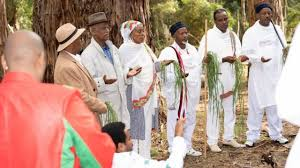
Recently, Eritrean President Isaias Afewerki publicly expressed concerns that Oromummaa poses a threat and destabilizes both his country and the surrounding region. In my published work in a peer-reviewed journal, I argue that Oromummaa promotes democracy, equity, diversity, gender equality, and environmental sustainability. Furthermore, it has the potential to significantly improve public health development. My paper critiques the failures of the governments in the Horn of Africa, particularly in their attempts to adopt borrowed ideologies like capitalism and socialism, as well as national identities such as Ethiopia and Eritrea. Unfortunately, these imported systems have not served the populations well. Countries embracing capitalism and socialism often struggle with self-sufficiency and food security, leading many young people to seek refuge abroad, frequently risking their lives in the Mediterranean Sea. I emphasize the need to shift towards indigenous African perspectives, which are essential for the continent’s future. I propose Oromummaa as one viable perspective. What exactly are the President’s concerns regarding Oromummaa? Is he apprehensive because it fosters democracy, equity, diversity, gender equality, and environmental sustainability, or because it undermines colonial identities and ideologies—or perhaps both? Either way, both implications are deeply concerning.
Let me clarify the distinction between a colonized mind and a liberated mind by examining the conflicts between Eritrea and Ethiopia. The long-standing territorial and political disputes between these two nations illustrate how external influences have shaped African borders, identities and ideologies. Historians from Eritrea and Northern Ethiopia acknowledge that these nations settled in neighboring territories and share a common history that predates the Italian invasion. It is noteworthy that the names “Eritrea” and “Ethiopia” are derived from Greek words. The Greek word “Eritrea,” meaning “red,” is reflected in the term “Red Sea,” named for the red algae present there. In contrast, “Ethiopia” comes from two Greek words meaning “burned face,” a reference to black people. Both terms have endured in the Greek lexicon.
Some Ethiopians claim that the date when the term “Ethiopia” became part of Greek vocabulary over three thousand years ago as the beginning of their written history. However, the records show that Abyssinia changed her name and became Ethiopian in 1945. In the bloody struggle for Eritrean liberation, led by President Afewerki against Ethiopia, both sides incurred heavy costs. Ethiopians fought to assert their Ethiopian identity and took measures to suppress Eritrean aspirations, while Eritreans fought valiantly to assert their Eritrean identity. Ultimately, both sought to validate the identities that the Greeks had attributed to them. It seems they both want to appease the Greeks.
The Ethiopian government has been actively suppressing Oromummaa—an identity deeply rooted in a pan-Africanist vision—in favor of identities imposed by Greek nomenclature. President Afewerki has opted to ally with the Ethiopian government in its struggle against Oromummaa. One can only hope that the Greeks do not find amusement in the fact that two African nations are embroiled in a violent conflict over names they themselves assigned, while simultaneously waging a war on African identity and perspectives. Furthermore, we can only hope that such laughter does not persist.
I understand that President Afeworki has a packed schedule, which may prevent him from fully grasping the essence of Oromummaa. Given the limited availability of the internet in the country, it can be challenging for him to access contemporary ideas and perspectives. However, the importance of understanding Oromummaa cannot be overstated. It can stimulate a paradigm shift in our thinking and daily lives, enlightening and informing us. Relying on borrowed ideas, ideologies, and identities, borders and hindering Afro-centric ideas is detrimental. Instead, we should focus on cultivating Afro-centric ideas rooted in indigenous worldviews. Oromummaa is not about imposition or control but embodies the concept of emancipation. It also plays a crucial role in challenging colonial ideologies, empowering us to shape our own narrative. Ultimately, Oromummaa poses a threat only to colonial identities, ideologies, and policies that disregard environmental sustainability and perpetuate inequality.
If you are interested in reading the whole article, it is published in the Journal of Oromo Studies.
Dugassa, Begna (2022) Fostering Healthy Social Policies and Sustainable Development: Employing Oromummaa as a Framework of Thinking, The Journal of Oromo Studies, Vol. 28, No.1, pp. 65- 90.

The Benefits of Linguistic Federalism: Why It Matters for Ethiopia
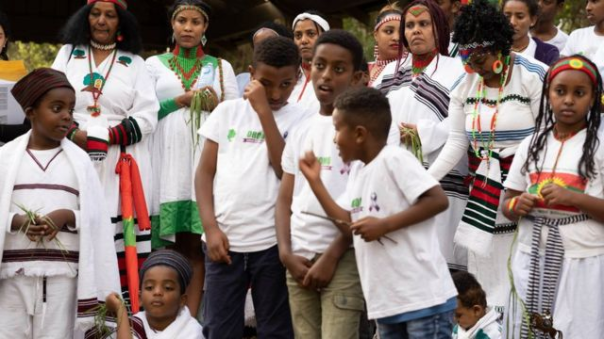
Linguistic federalism—a system where regional states are organized based on language and identity—has been a cornerstone of Ethiopia’s political structure since 1991. While controversial, this model has brought significant cultural, political, and socio-economic benefits, particularly for historically marginalized groups like the Oromo, Somali, and others. Below are the key advantages:
1. Preservation of Language & Cultural Identity
- Revival of Indigenous Languages:
- Under past regimes, Amharic was enforced as the sole official language, suppressing others.
- Linguistic federalism allowed Afaan Oromo, Tigrinya, Somali, and others to become working languages in schools, media, and government.
- Example: Afaan Oromo is now used in Oromia’s courts, schools, and bureaucracy, reversing decades of marginalization.
- Protection of Cultural Heritage:
- Regions can promote local traditions (e.g., Irreechaa, Fichee-Chambalaalla) without state interference.
- Cultural autonomy strengthens pride and social cohesion.
2. Political Empowerment & Self-Rule
- Decentralized Governance:
- States manage their own education, health, and infrastructure policies based on local needs.
- Example: Oromia’s Oromia Education Bureau develops curricula in Afaan Oromo.
- Reduced Dominance of a Single Group:
- Prevents one ethnic group from monopolizing power (a major cause of past conflicts).
- Ensures fair representation in federal institutions.
3. Conflict Mitigation & Peacebuilding
- Addresses Historical Grievances:
- Many conflicts in Ethiopia stem from forced assimilation (e.g., Haile Selassie’s Amharization policies).
- Linguistic federalism allows groups to self-govern, reducing rebellion risks.
- Prevents Secessionist Pressures:
- When regions have autonomy, demands for full independence decrease (e.g., Sidama’s referendum led to statehood within Ethiopia, not secession).
4. Economic & Developmental Advantages
- Localized Development Policies:
- Regions can prioritize agriculture, trade, or industry based on their economy.
- Example: Somali Region focuses on livestock, while Oromia invests in coffee and manufacturing.
- Resource Equity:
- Wealth (land, minerals) is managed locally rather than extracted by a distant central government.
- Reduces tensions over “land grabs” (e.g., Addis Ababa’s expansion into Oromia).
5. Educational & Social Progress
- Mother-Tongue Education Improves Literacy:
- Studies show children learn better in their first language.
- Regions like Tigray and Oromia saw higher school enrollment after introducing local-language teaching.
- Inclusive Media & Public Discourse:
- FM radios, TV stations, and newspapers in multiple languages ensure broader civic participation.
6. Democratic Participation & Accountability
- Stronger Local Governance:
- Citizens engage more when leaders speak their language and understand local issues.
- Reduces elite detachment from rural populations.
- Checks and Balances Against Authoritarianism:
- Federalism disperses power, making it harder for a single leader to control the entire country.
Counterarguments Addressed
❌ “Federalism divides Ethiopia!”
✅ Reality: It actually prevents breakup by giving groups a stake in the system. Forced unity (e.g., under the Derg) led to wars.
❌ “It promotes ethnic tensions!”
✅ Reality: Most violence happens where federal rights are violated (e.g., Wolqait conflict). Well-implemented federalism reduces clashes.
Conclusion: Why Linguistic Federalism Works
Ethiopia’s diversity is its strength—but only if all groups feel respected. Linguistic federalism:
✔ Protects cultures,
✔ Prevents conflicts,
✔ Boosts development,
✔ Strengthens democracy.
Threats to this system risk reversing decades of progress. Advocates must highlight these benefits while pushing for reforms (e.g., better minority protections within regions).
Global Examples of Successful Linguistic Federalism
Linguistic federalism—where regional autonomy is tied to language and identity—has been implemented in several countries to manage diversity, reduce conflict, and promote inclusive governance. Below are key case studies where it has succeeded, along with lessons for Ethiopia:
1. Switzerland: The Gold Standard of Multilingual Federalism
Structure:
- 4 Official Languages (German 63%, French 23%, Italian 8%, Romansh <1%).
- 26 Cantons (States): Highly autonomous, with language rights constitutionally protected.
Success Factors:
✔ No Dominant Language Group: No single language is imposed nationwide.
✔ Cantonal Autonomy:
- German-speaking Zurich and French-speaking Geneva set their own education/local policies.
- Romansh, spoken by just 0.5%, is still an official language in Grisons canton.
✔ Power-Sharing at Federal Level: The Swiss government always includes French, German, and Italian speakers.
Lesson for Ethiopia:
- Even small language groups (like Sidama or Afar) can thrive if given institutional support.
2. India: Managing Extreme Diversity
Structure:
- 22+ Official Languages (Hindi, Bengali, Tamil, Telugu, etc.).
- 28 States & 8 Union Territories, many formed along linguistic lines (e.g., Tamil Nadu for Tamil speakers).
Success Factors:
✔ Linguistic States Prevented Secessionism:
- Violent Tamil protests in the 1950s led to Tamil Nadu’s creation, stabilizing the region.
- Telugu-speaking Andhra Pradesh was carved out of Madras State after protests.
✔ Three-Language Policy: - Schools teach in mother tongue + Hindi + English, balancing unity and diversity.
✔ No Forced Hindi Imposition: Non-Hindi states (e.g., Kerala, West Bengal) operate in their own languages.
Lesson for Ethiopia:
- Ethiopia’s “Afaan Oromo + Amharic + English” model mirrors India’s approach.
- Violence decreases when linguistic rights are respected (contrast Tamil Nadu’s stability with Sri Lanka’s Tamil war).
3. Canada: Resolving Crises Through Bilingual Federalism
Structure:
- 2 Official Languages: English (75%), French (21%).
- Quebec: French-majority province with special autonomy.
Success Factors:
✔ Avoided Quebec’s Secession:
- After violent 1970s separatist movements, Canada granted Quebec language rights, immigration control, and cultural protections.
- 1995 independence referendum failed by just 1%.
✔ Flexible Federalism: - Provinces like New Brunswick (bilingual) and Alberta (English-dominant) have different policies.
Lesson for Ethiopia:
- Compromise prevents breakup (e.g., Oromia’s autonomy keeps it within Ethiopia).
4. Belgium: Balancing Dutch & French Tensions
Structure:
- 3 Linguistic Regions: Flanders (Dutch), Wallonia (French), Brussels (bilingual).
- Complex Federalism: Each region has its own parliament, with strict language laws.
Success Factors:
✔ Prevents Domination:
- French was once elite; now Dutch-speaking Flanders has equal power.
✔ Brussels as Neutral Capital: - Like Addis Ababa, Brussels is officially bilingual despite being in Flanders.
Lesson for Ethiopia:
- Addis Ababa (Finfinne) must balance Oromo & Amharic rights to avoid conflict.
5. Spain: Autonomy for Catalonia & Basque Country
Structure:
- Co-Official Languages: Catalan, Basque, Galician, and Spanish.
- Autonomous Communities: Catalonia and Basque Country control education and media.
Success Factors:
✔ Reduces Separatism:
- When Madrid respected Catalan autonomy, separatist violence declined.
- Recent crackdowns (e.g., 2017 independence referendum) backfired.
Lesson for Ethiopia:
- Suppressing linguistic rights fuels rebellion (e.g., OLF’s past insurgency).
Why These Models Worked
- No Forced Assimilation (unlike Ethiopia under Haile Selassie).
- Local Control Over Key Policies (education, culture, policing).
- Power-Sharing at the Center (no single group dominates).
Ethiopia’s Unique Challenge
- Unlike Switzerland or Canada, Ethiopia’s federalism is still young (since 1991).
- Weak institutions and centralizing tendencies threaten progress.
Key Takeaway
Linguistic federalism prevents conflict when respected but fails when undermined (e.g., Sri Lanka’s suppression of Tamil led to civil war). Ethiopia must learn from these examples to avoid chaos.
A Deeper Dive: How South Africa & Nigeria Manage Linguistic Diversity – Lessons for Ethiopia
Both South Africa and Nigeria are highly multilingual nations with complex federal systems. While they take different approaches to language policy, their experiences offer critical lessons for strengthening Ethiopia’s linguistic federalism.
1. South Africa: Multilingualism in a Post-Apartheid Democracy
Linguistic Landscape:
- 12 Official Languages (including Zulu, Xhosa, Afrikaans, English).
- English dominates government/media, but provinces use local languages.
Key Policies:
✔ Constitutional Protections (1996 Constitution):
- All languages must be treated equitably.
- Provinces can adopt their own official languages (e.g., isiZulu in KwaZulu-Natal).
✔ Mother-Tongue Education (MTE): - Early schooling in local languages improves literacy (e.g., Sesotho in Free State).
- Challenge: English still dominates higher education/jobs, pushing parents to prefer it.
✔ Pan South African Language Board (PanSALB): - Promotes marginalized languages like Nama, Khoi, and South African Sign Language.
Challenges:
- English hegemony weakens indigenous languages.
- Underfunding for non-dominant languages.
Lesson for Ethiopia:
- Constitutional recognition is not enough—implementation matters (e.g., Afaan Oromo in courts/media must be enforced).
- Ethiopia’s “Afaan Oromo + Amharic + English” model could avoid South Africa’s English dominance trap.
2. Nigeria: Federalism with a Dominant Lingua Franca
Linguistic Landscape:
- 500+ languages (Hausa, Yoruba, Igbo major).
- English is the sole official language (legacy of colonialism).
Key Policies:
✔ State-Level Language Rights:
- Some states (e.g., Lagos, Kano) use Yoruba/Hausa in local governance.
- Three major languages (Hausa, Yoruba, Igbo) taught in schools.
✔ National Institute for Nigerian Languages (NINLAN): - Standardizes and promotes indigenous languages.
✔ “Mother Tongue First” Education Policy: - Early grades taught in local languages, transitioning to English.
Challenges:
- No regional monolingual states (unlike Ethiopia’s Oromia/Tigray).
- Ethnic tensions persist (e.g., Igbo separatist movements).
Lesson for Ethiopia:
- Nigeria’s reliance on English avoids favoritism but erodes local languages—Ethiopia’s language-based states are more protective.
- Standardizing orthographies (like NINLAN) could help Ethiopian languages like Sidama, Afar.
3. Strategies to Strengthen Ethiopia’s Linguistic Federalism
A. Legal & Institutional Reforms
- Enforce Language Rights in Courts/Government:
- Ensure Afaan Oromo, Tigrinya, Somali are actually used in regional administrations.
- Independent Language Commission:
- Modeled after PanSALB, to monitor implementation and resolve disputes.
B. Education & Media
- Mother-Tongue Education (MTE) Expansion:
- Invest in teacher training, textbooks, and curricula for all state languages.
- Multilingual Media Mandates:
- Require federal TV/radio (e.g., EBC) to broadcast in all major languages.
C. Economic & Political Incentives
- Fiscal Federalism:
- Let regions retain more revenue to fund language/cultural programs.
- Power-Sharing in Federal Govt.:
- Ensure high-ranking positions rotate among major language groups.
D. Conflict Prevention
- Interstate Language Councils:
- Mediate disputes (e.g., Oromia-Somali border conflicts over resources).
- Addis Ababa (Finfinne) as a Bilingual Capital:
- Legally recognize Afaan Oromo & Amharic as co-official, with protections for minorities.
Key Takeaways
| Country | Approach | Success | Challenge | Lesson for Ethiopia |
|---|---|---|---|---|
| South Africa | 12 official languages, weak enforcement | Prevents ethnic dominance | English hegemony | Stronger implementation needed |
| Nigeria | English unifies, states use local languages | Reduces favoritism | Indigenous languages declining | Balance unity & diversity |
| Switzerland (Bonus) | Cantonal language autonomy | Zero language conflict | Complex governance | Decentralize power further |
Final Recommendation
Ethiopia’s linguistic federalism is young but vital for stability. To strengthen it:
- Learn from South Africa’s laws but avoid weak enforcement.
- Avoid Nigeria’s over-reliance on a colonial language.
- Adopt Switzerland’s power-sharing and canton-style autonomy.
Oromia’s Future Without Language Federalism
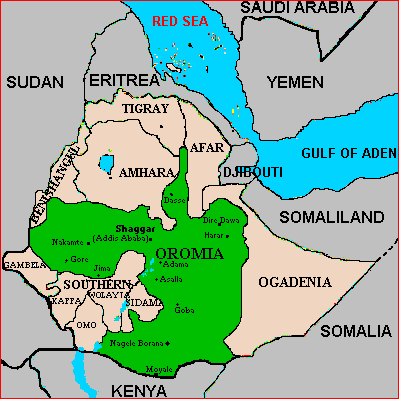
The elimination of language-based federalism in Ethiopia—particularly in Oromia, the largest and most populous regional state—could have profound political, social, and economic consequences. Since 1991, Ethiopia’s federal system has been structured along linguistic and ethnic lines, with Oromia being a key beneficiary of this arrangement. Removing this system could trigger the following impacts:
1. Political Consequences
- Loss of Autonomy: Oromia currently has self-rule under the federal system, with Afaan Oromo as its working language and control over local governance. A centralized system could weaken Oromo political representation.
- Resurgence of Oromo Nationalism: Historically, marginalization of Oromo identity led to resistance (e.g., OLF insurgencies). Recent protests (2014–2018) were partly about preserving self-rule. Dismantling federalism could reignite unrest.
- Power Struggle in Addis Ababa: Finfinne (Addis Ababa) is a contested city, legally part of Oromia but federally administered. A shift could escalate disputes over land and resources.
2. Social & Cultural Effects
- Threat to Afaan Oromo’s Official Status: Language-based federalism helped revive Afaan Oromo in education/media. Centralization might reduce its institutional use, leading to cultural erosion.
- Identity Backlash: Many Oromos see federalism as protection against assimilation (e.g., past Amharization policies). Its removal could be seen as an attack on Oromo identity.
- Interethnic Tensions: Oromia hosts other ethnic groups (e.g., Amhara, Gurage). A centralized system might fuel competition over resources and representation.
3. Economic Implications
- Resource Control: Oromia has key resources (agriculture, minerals). Centralization could redirect wealth without local consent, breeding discontent (e.g., Addis Ababa land grabs protests).
- Investment Uncertainty: Ethnic federalism allowed Oromia to negotiate investments (e.g., industrial parks). A unitary system might reduce regional bargaining power.
4. Security Risks
- Potential for Armed Resistance: Hardline factions (e.g., OLF-Shane/Oromo Liberation Army) could gain support if Oromia’s self-rule is dismantled.
- Clashes with Federal Forces: Centralization could lead to crackdowns, as seen during the 2016–2018 Oromo protests.
Possible Outcomes
- Best Case: A reformed, inclusive system addressing grievances while maintaining unity.
- Worst Case: Escalation into widespread rebellion, destabilizing Ethiopia further.
Historical Context
Ethiopia’s 1995 constitution introduced ethnic federalism partly to address Oromo marginalization. Before that, Oromo language/culture was suppressed under Haile Selassie and the Derg. Many Oromos see federalism as a safeguard, not a divider.
Conclusion
Eliminating language-based federalism without a credible alternative for power-sharing risks:
✔️ Oromo alienation & renewed conflict.
✔️ Cultural and linguistic suppression backlash.
✔️ Economic grievances over resource extraction.




 Advocacy for Oromia