Harnessing Oromo Wisdom for Effective Environmental Conservation
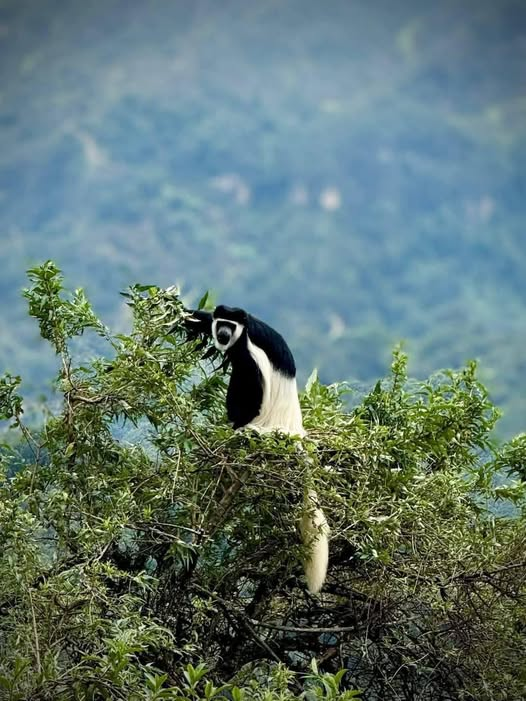
Why scientists are turning to Oromo indigenous knowledge and wisdom for environmental protection and conservation?
Scientists are increasingly turning to Oromo indigenous knowledge and wisdom (often referred to as **Aadaa Seeraa** and embedded within systems like the **Gadaa**) for environmental protection and conservation for several compelling reasons:
1. **Proven Sustainability Practices:** The Oromo people have inhabited and managed diverse ecosystems in the Horn of Africa (primarily Ethiopia and Kenya) for centuries, even millennia. Their traditional practices in agriculture (e.g., crop rotation, intercropping), pastoralism (e.g., controlled grazing, herd diversification), forestry (e.g., sacred groves – *Deddeettii*), and water management have demonstrably sustained these environments long before modern conservation science existed. Scientists recognize these as time-tested models of living *with* nature rather than dominating it.
2. **Deep Ecological Knowledge and Biodiversity Conservation:**
* **Species Knowledge:** Oromo knowledge includes intricate understanding of local flora and fauna – their uses (medicinal, nutritional, material), life cycles, ecological roles, and interactions. This is invaluable for identifying species, understanding ecosystem health, and prioritizing conservation efforts.
* **Habitat Management:** Practices like protecting sacred forests (*Deddeettii* or *Jaarsummaa*), wetlands, and water sources (*Hora*) act as de facto biodiversity reserves and ecological corridors. These areas are often off-limits to exploitation, preserving critical habitats and genetic resources.
* **Sustainable Resource Harvesting:** Rules govern the harvesting of wild plants, honey, and other resources, ensuring regeneration and preventing over-exploitation.
3. **Resilience and Adaptation Strategies:** Indigenous Oromo knowledge contains sophisticated strategies for coping with environmental variability, drought, and climate extremes – challenges that are intensifying with climate change. This includes:
* **Drought-Resistant Crops & Varieties:** Knowledge of locally adapted, resilient crop varieties.
* **Water Conservation Techniques:** Traditional methods for locating, conserving, and sharing water resources.
* **Early Warning Systems:** Ecological indicators used to predict weather patterns, droughts, or pest outbreaks (e.g., behavior of certain birds, flowering patterns of specific trees).
* **Livestock Management:** Strategies for moving herds during drought, diversifying livestock types for risk spreading, and utilizing diverse forage resources.
4. **Effective Governance and Social Sanctions (Gadaa System):** The Gadaa system, a complex indigenous democratic socio-political system, incorporates strong environmental governance principles:
* **Codified Laws (Seera Waaqaa – Laws of Waaqa/God):** Explicit environmental laws prohibiting pollution of water, wanton destruction of trees, killing of certain animals, and regulating land use and resource access.
* **Community Enforcement:** Environmental stewardship is a communal responsibility. Violations of environmental laws carry significant social and spiritual sanctions, ensuring compliance more effectively than external enforcement in many contexts.
* **Intergenerational Equity:** The Gadaa’s cyclical nature inherently promotes long-term thinking and responsibility towards future generations (“*Safuu*” – moral and ethical responsibility).
5. **Holistic and Spiritual Worldview (Waaqeffannaa):** The Oromo worldview, often centered around Waaqeffannaa (belief in Waaqa, the supreme creator), sees humans as an integral part of nature, not separate or superior.
* **Sacredness of Nature:** Mountains, rivers, lakes, forests, and specific trees are often considered sacred abodes of spirits or manifestations of Waaqa, commanding deep respect and protection.
* **Concept of Safuu:** This ethical concept emphasizes balance, respect, and responsibility towards all creation – humans, animals, plants, and the land itself. Exploitation violates *Safuu*.
* **Rituals and Taboos:** Many rituals reinforce the connection to nature, and taboos (*Qaayyoo*) often protect specific species or areas at critical times (e.g., breeding seasons).
6. **Addressing Limitations of Top-Down, Western Science:**
* **Local Context:** Western scientific approaches can be generic and fail to account for specific local ecological, social, and cultural contexts. Oromo knowledge is hyper-local and deeply contextual.
* **Community Buy-in:** Conservation projects imposed from outside often fail due to lack of local understanding and ownership. Integrating indigenous knowledge fosters community participation, legitimacy, and long-term sustainability of conservation efforts.
* **Cost-Effectiveness:** Leveraging existing local knowledge and governance structures can be more practical and cost-effective than establishing entirely new, externally managed systems.
7. **Ethical Shift and Recognition of Rights:** There’s a growing ethical recognition within science and global conservation (e.g., IPBES, CBD) that:
* Indigenous peoples are the original stewards of vast biodiversity-rich areas.
* Their knowledge systems are valid, sophisticated, and hold critical solutions.
* Marginalizing or ignoring this knowledge is not only unjust but also counterproductive to conservation goals. Respecting and integrating it is a matter of rights and justice.
8. **Practical Applications:** Scientists are collaborating with Oromo communities to:
* Restore degraded lands using traditional techniques.
* Design community-based conservation areas incorporating sacred sites.
* Develop climate adaptation plans based on indigenous forecasting and resilient practices.
* Document and preserve ecological knowledge before it is lost.
**In essence, scientists recognize that Oromo indigenous knowledge offers:**
* **Time-tested, sustainable practices** refined over generations.
* **Deep, place-based ecological understanding** crucial for effective management.
* **Robust governance and ethical frameworks** that ensure compliance and long-term thinking.
* **Critical strategies for resilience** in the face of climate change.
* **A pathway to more effective, equitable, and culturally relevant conservation** that engages local communities as partners.
This shift represents a move towards more inclusive, holistic, and effective approaches to tackling the global environmental crisis by learning from those who have successfully managed their environments for centuries. The UNESCO recognition of the Gadaa system as Intangible Cultural Heritage further underscores its global significance, including its environmental governance aspects.

Posted on July 29, 2025, in Uncategorized. Bookmark the permalink. Leave a comment.




 Advocacy for Oromia
Leave a comment
Comments 0