Monthly Archives: August 2025
Celebrating Shanan: A Mother’s Festival in Oromo Culture
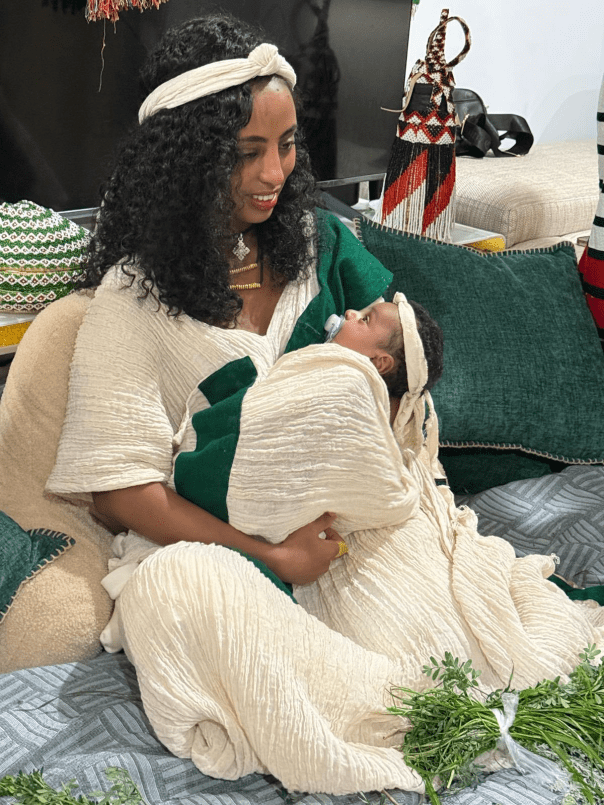
It is a special day for Sena Boka. Most of all, it is the day she had her first child, and for this she traditionally thanked God for helping her with members of the Oromo community mainly women who loved and respect Sena. She celebrated the Shanan with her friends in traditional Oromo beauty. The main purpose of Shanan is to encourage and bless the woman who gave birth on the fifth day. It is also a mother’s festival and a thanksgiving to God for helping her to give birth in peace. This is the day they celebrate the Shanan Day.
The rituals performed on this cultural ceremony have many benefits for the mother who has just recovered from childbirth. However, what is the essence of Shanan in Oromo culture? What are the benefits of this ceremony? What is done on this day? In this article we will try to look at the Shanan nature of things.
In Oromo culture, the shanan day (the fifth day after childbirth) is a deeply respected and cherished tradition. This day holds significant cultural, social, and emotional importance for the mother, the newborn, the family, and the community. It is a time of celebration, healing, and bonding, rooted in the values of care, support, and communal love.
The Shanan is an important and celebrated part of the midwife’s life. This is to the advantage of the family that a woman is safely released after carrying it in her womb for nine months. And the newborn is an addition to the family. Therefore, they do not leave a woman alone until she becomes stronger and self-reliant. Because it is said that the pit opens its mouth and waits for her. And when she goes to the bathroom, she carries an iron in her hand, and sucks it into her head.
This system plays an important role in helping the mother recover from labor pains. Family and friends who attend the Shanan will also encourage the midwife to look beautiful and earn the honor of midwifery. On this Shanan they made the midwife physically strong, socially beautiful, gracefully bright, and accustomed to the burdens of pregnancy and childbirth.
Why the Shanan Day? In the Oromo worldview, the number five holds special importance. The Gadaa system is organized around cycles of fives and multiples of five (e.g., five Gadaa grades, eight-year terms consisting of 5+3 years). Waiting for five days is a way to honor this cultural structure and to properly prepare for the important act of naming.
Key Aspects of Shanan:
Community Support:
The core of the Shanan tradition is the communal nature of Oromo society, where the well-being of the mother and child is a shared responsibility.
Blessings and Encouragement:
Community members gather to provide emotional support, motivation, and blessings to the mother, helping her regain strength and feel connected.
Marqaa Food:
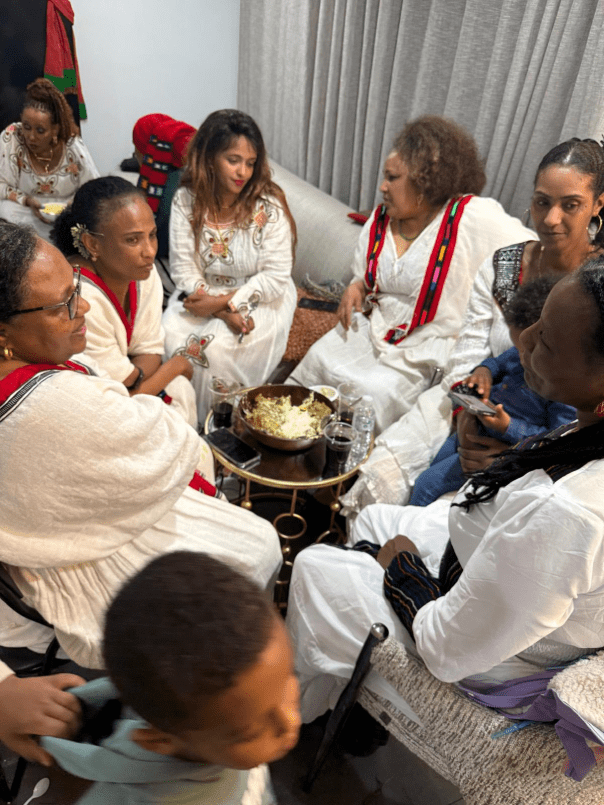
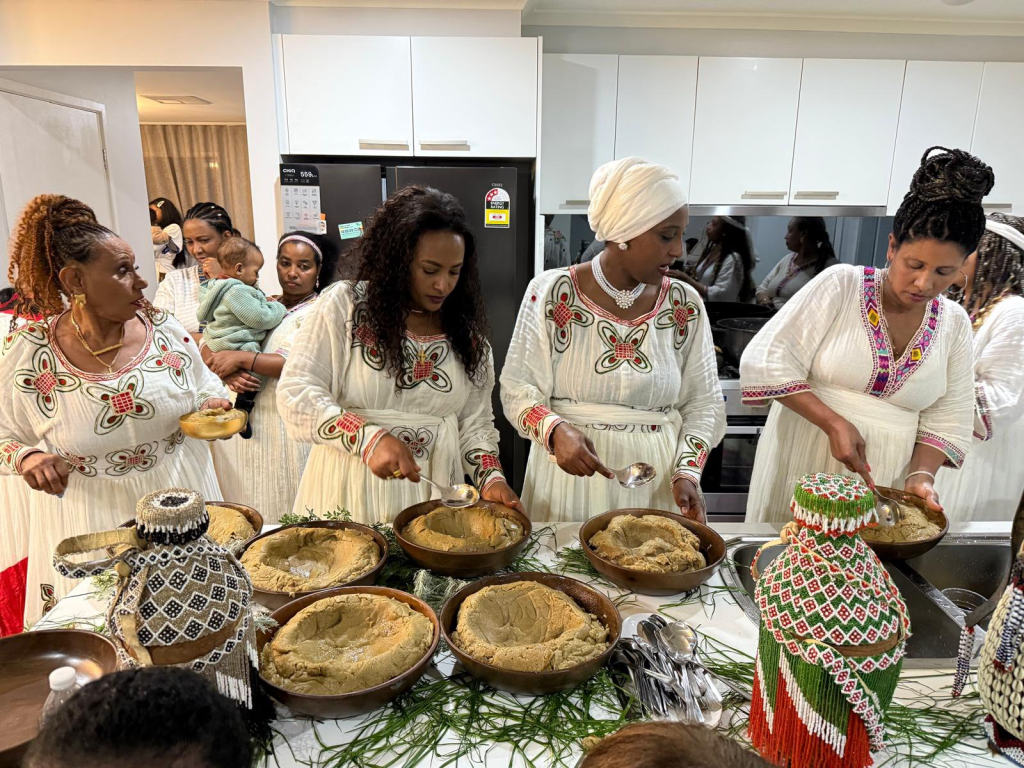
The traditional food served on this day is marqaa. The serving of marqaa, a traditional food, is a central part of the celebration, symbolizing the care, blessings, and communal solidarity being extended to the new family. The midwives washed their genitals and ate together. Traditional songs of praise to God and encouragement of the mother are sung in turn.
Cultural Identity:
The ritual reinforces Oromo cultural identity and continuity, serving as a way to preserve and pass down these traditions to younger generations. During the ceremony, mothers dressed in traditional clothes surrounded the mother and expressed their happiness; sitting around the midwife after eating the marqaa, they blessed the new mother, ‘give birth again; carry it on your shoulder and back; be strong in your knees.’
Strengthening Bonds:
Shanan strengthens social and emotional bonds within the community, as everyone participates in welcoming the new member.
The celebration of the Shanan (fifth day) after a birth is a deeply significant and cherished ritual in Oromo culture, rooted in the Gadaa system. This culture has been weakened for centuries by various religious factors and the influence of foreign regimes. However, with the struggle of the Oromo people, the culture of encouraging childbirth is being revived and growing. Of course, many things may not be as perfect as they used to be. There is no doubt that the honor of Shanan as Sena Boka will contribute to the restoration of Shanan culture.
Oromo Cultural Week 2025: Celebrate Heritage in Edmonton
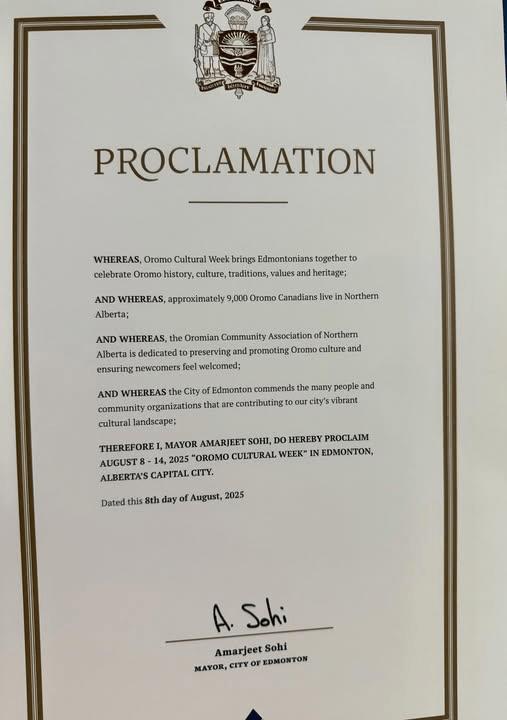
Oromo Cultural Week in Edmonton (August 8–14, 2025)
Celebrating Oromo Heritage, Unity & Resilience
📍 Location: Edmonton, Alberta, Canada
📅 Dates: August 8–14, 2025
🎉 Highlights: Traditional music, dance, art, history forums, and community feasts.
Expected Events & Activities
(Based on past Oromo cultural weeks in Canada; official schedule TBA)
1. Opening Ceremony (Aug 8)
- Speeches by Oromo elders & community leaders.
- Flag-raising (Oromo & Canadian flags).
- Traditional blessings (Waaqeffannaa prayers).
2. Cultural Showcase (Aug 9–10)
- Oromo Dance & Music: Dhaanto, Geerarsa, Shaggooyyee performances.
- Fashion Show: Traditional Horo Guduru attire and modern Oromo designs.
- Art Exhibition: Oromo paintings, crafts, and photography.
3. History & Identity Forum (Aug 11)
- Panel Discussions: Oromo history, Gadaa system, and diaspora experiences.
- Documentary Screenings: Films like “Oromo: The Forgotten People”.
4. Sports & Youth Day (Aug 12)
- Soccer Tournament: Oromo teams from across Canada.
- Poetry & Spoken Word: Young Oromo artists sharing their voices.
5. Community Feast (Aug 13)
- Oromo Cuisine: Injera, Waaddii (mariqaa), Buna Qalaa (coffee ceremony).
- Storytelling: Elders sharing oral histories.
6. Closing Celebration (Aug 14)
- Grand Concert: Oromo artists (local & international).
- Award Ceremony: Honoring community contributors.
How to Participate
✅ Attend: Open to all—Oromo community members & allies.
✅ Volunteer: Help with organizing (contact Oromo Canadian Community Association).
✅ Perform/Exhibit: Showcase your talent (music, art, poetry).
Organizers & Contacts
🔹 Oromo Canadian Community Association (OCCA)
🔹 Edmonton Oromo Youth Group
📩 Check Facebook/Eventbrite for official updates closer to the date.
Why This Matters
This week is a powerful way to:
- Preserve Oromo culture in the diaspora.
- Educate others about Oromo identity.
- Strengthen unity among Oromo Canadians.
“ Bilisummaa fi Walabummaa! “ (Freedom & Liberty!)
Need help finding specific details (e.g., venues, registration)? Let me know—I’m happy to dig deeper! 🌍💛
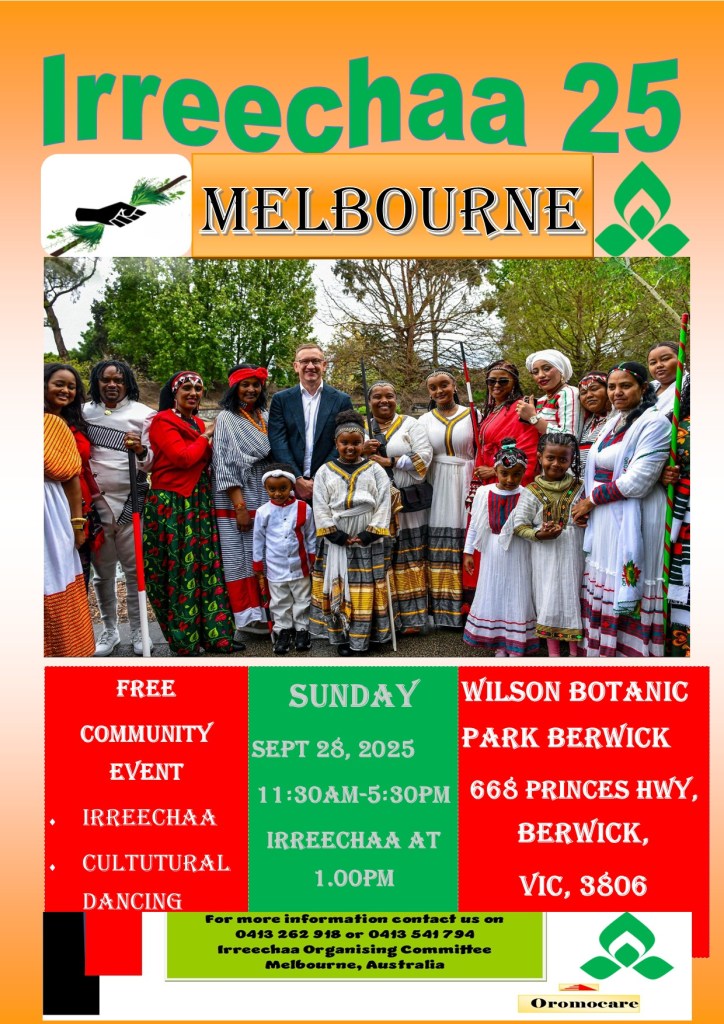
Irreechaa 25 Festival – Melbourne
Here’s a clear summary and important information for the **Irreechaa 25** event in Melbourne:
**Irreechaa 25 Festival – Melbourne**
* **Date:** Sunday, 28 September 2025
* **Time:** 11:30 AM to 5:30 PM
* **Location:** Wilson Botanic Garden
* **Address:** 668 Princes Hwy, Berwick VIC 3806
**Key Details:**
1. **Significance:** Irreechaa is the major **Oromo Thanksgiving Festival**, celebrating the end of the rainy season, blessings of the past year, and welcoming the new spring season (in the Southern Hemisphere context, it aligns with the end of winter/start of spring). This marks the **25th anniversary** of Irreechaa celebrations in Melbourne.
2. **Venue:** Wilson Botanic Garden in Berwick is a beautiful and spacious public park, well-suited for large cultural gatherings like this.
3. **What to Expect:**
* Traditional Oromo prayers, songs, and speeches.
* Cultural performances including music and dance (like the *Shaggooyyee*).
* Community gathering and socializing.
* Traditional Oromo attire is often worn.
* Food and refreshments (likely available for purchase from vendors).
* A vibrant and family-friendly atmosphere celebrating Oromo culture and heritage.
**Practical Information:**
* **Transportation:**
* **Public Transport:** Take a train to **Berwick Station** (on the Pakenham line). From the station, it’s about a 15-20 minute walk (1.3 km) to the Garden entrance. Local buses also serve the area near the highway – check the PTV app/website for routes like 828, 830, 835, or 836 stopping near the Garden.
* **Parking:** Limited free parking is available within Wilson Botanic Garden, and street parking is available on surrounding roads. **Arrive early as parking can fill up quickly for large events.**
* **What to Bring:**
* Comfortable shoes (the Garden has walking paths).
* Sun protection (hat, sunscreen) or rain gear (Melbourne weather can be changeable in September).
* A blanket or picnic rug for sitting on the grass.
* Water bottle.
* Cash might be useful for smaller vendors, though card facilities are increasingly common.
* **Accessibility:** Wilson Botanic Garden has accessible paths and facilities. Check specific event details closer to the date for any accessibility services provided by the organizers.
**For the Most Up-to-Date Information:**
It’s always wise to check official sources or community social media pages closer to the event. Look for pages associated with the **Oromo Community Association in Victoria** or similar groups.
This is a wonderful opportunity to experience the rich culture and traditions of the Oromo community in Melbourne. Enjoy the celebrations!
Conservation Ambitions: Ethiopia Plants 700 Million Trees
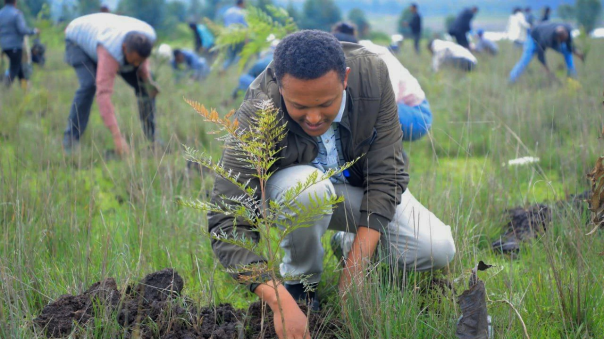
ADDIS ABABA, Ethiopia (AP) — Ethiopia launched a national campaign on Thursday to plant 700 million trees in one day as part of an ambitious conservation initiative that aims to plant 50 billion trees by 2026.
The reforestation campaign has been a personal project of Prime Minister Abiy Ahmed since 2019.
Tesfahun Gobezay, state minister for the Ethiopian Government Communication Services, told reporters before 6 a.m. local time that some 355 million seedlings had already been planted by 14.9 million Ethiopians.
It was not possible to verify the government’s figures. Ethiopia has a population of more than 120 million people.
“We kicked off this year’s one-day green Legacy planting early this morning,” Abiy said on social media platform X. “Our goal for the 7th year is 700 million seedlings. Let’s achieve it together.”
Authorities say some 40 billion tree seedlings have been planted since 2019. The target for 2025 is 7.5 billion trees.
Abiy took power in 2018 as a reformist. He won the Nobel Peace Prize for making peace with neighboring Eritrea but a war that erupted shortly afterward in the Ethiopian region of Tigray damaged his reputation as a peacemaker. He now he faces another rebellious uprising in the Amhara region.
Many public offices are closed Thursday to make time for tree planting. Thousands of public servants have been dispatched across the east African nation to help plant seedlings made available through the official bureaucracy.
At the break of dawn, many were seen planting trees in the capital Addis Ababa. At a site in Jifara Ber dozens of people were involved, including children.
Almaz Tadu, a 72-year-old grandmother, brought her grandchildren to a tree planting event she said reunites her with neighbors.
“I have come with my mother and this is my third time planting trees,” said 13-year-old student Nathenael Behailu. “I dream of seeing a green environment for my country.”
Another Addis Ababa resident, Ayanaw Asrat, said he has heeded the call for the last three years. “I came early and I have so far planted 15 seedlings. I am very happy to contribute to creating greener areas across Addis,” he said.
Abiy himself was active in Jimma, the largest city in the southwestern region of Oromia. Cabinet ministers were sent to other regions to support local officials.
Kitessa Hundera, a forest ecologist at Jimma University, told The Associated Press that a “noble” reforestation initiative was being carried out by non-experts who could not define conservation objectives regarding site selection and other technical issues.
He cited concern over mixing exotic species with indigenous ones and the apparent failure to report the survival rate of seedlings planted over the years. He also doubted it was possible to plant 700 million seedlings in one day.
“Planting 700 million seedlings in one day needs the participation of about 35 million people, each planting 20 seedlings, which is practically impossible,” he said.
Building a Sovereign Nation: The Oromo Path to Stability
By By Bantii Qixxeessaa
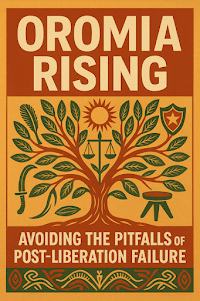
A common argument raised against the Oromo liberation struggle for independence is this:“Even if Oromia becomes independent, how do we know it won’t end up like South Sudan, Eritrea, or Somalia—mired in authoritarianism, internal conflict, or state collapse?”This is a sobering question. It deserves more than a dismissal. It demands reflection, honesty, and a credible roadmap.There is truth in the concern. History confirms that independence alone does not guarantee peace, freedom, or democracy. There is truth in the concern. History confirms that independence alone does not guarantee peace, freedom, or democracy. South Sudan gained independence in 2011 after a long and bloody struggle, only to descend into civil war and political dysfunction.
Eritrea fought heroically for sovereignty, only to replace foreign domination with domestic repression. Somalia collapsed into stateless chaos after the fall of its authoritarian regime. In all three cases, the post-independence vision was either unclear, co-opted, or completely abandoned.
But this is only one side of the story.
There are also powerful examples of nations that won independence and successfully built stable, democratic, and sovereign states. Timor-Leste, after decades of brutal occupation, transitioned into a pluralistic democracy with repeated peaceful elections. Namibia emerged from South African apartheid rule to become one of Africa’s most stable democracies. Slovenia, which broke away from Yugoslavia in the early 1990s, managed a peaceful transition and integrated swiftly into the European Union. Botswana – Maintained multiparty democracy and rule of law since 1966. Cape Verde – Peacefully transitioned to multiparty democracy and maintained political stability. India – Despite enormous diversity and challenges, India preserved electoral democracy since independence. These cases, and others not mentioned here, remind us that independence, when coupled with visionary leadership, institution-building, and inclusive governance, can yield not only sovereignty—but peace, democracy, and prosperity.
The point is clear: independence is not a guarantee of success, but neither is it a path to inevitable failure. The outcomes depend on preparation, political culture, and strategic execution.
So the question is not whether independence is worth pursuing, but whether we are willing to do the hard work to ensure it leads to a just and thriving Oromia. For Oromia, the lesson is not to be discouraged by the odds, but to be disciplined by them. The struggle must not end with independence, it must start with building the foundations of the state we want to live in.
Independence Alone Does Not Guarantee Peace, Freedom, or Democracy
The Oromo struggle is not merely about redrawing borders. It is about reclaiming power from an empire that has long denied the Oromo people the right to govern themselves. That goal will only be fulfilled when the new Oromia is built on justice, freedom, and democratic accountability.
The failure of other post-independence states was not that they chose sovereignty, but that they did not adequately plan what to do with it once they had it. For them Independence became an endpoint instead of a beginning. Oromia must learn from their experience.
What Went Wrong with these movement, later states? Here as some Key Lessons.
- Lack of Political Consensus: South Sudan’s liberation forces fractured along ethnic (the Dinka and the Nuer) and personal rivalries (Salva Kiir Mayardit and Riek Machar) after independence. Their unity was wartime-deep but not nation-deep.
- Weak Institutions: Eritrea’s government was centralized around a single figure, Isaias Afwerki. In the absence of independent institutions, authoritarianism became inevitable. The concentration of power in one leader, the failure to implement a democratic transition after independence, the systematic suppression of dissent, the militarization of governance, and the entrenchment of one-party rule without internal accountability made authoritarianism not just likely—but the logical outcome.
- Militarization of Politics: In both South Sudan and Eritrea, there was no planned and inclusive transition to civilian-led, democratic governance. Instead, armed movements transitioned into ruling elites without civilian oversight, perpetuating a culture of command over consent.
- Failure to Transition from Liberation to Governance: If a liberation movement is undemocratic in its internal organization and decision-making during the struggle, it is likely to reproduce those same authoritarian habits once it comes to power. In both the South Sudanese and Eritrean liberation struggles, the movements failed to democratize internally and instead carried autocratic tendencies into statehood.
- Neglect of Reconciliation and Inclusion: Neither South Sudan nor Eritrea implemented meaningful, independent truth, reconciliation, or justice commissions after achieving independence. The absence of such mechanisms played a significant role in their post-liberation crises.Somalia’s fragmentation was deepened by the exclusion of key clans and groups, undermining the legitimacy of national institutions.
- No Economic Vision: Liberation without economic development leads to frustration, elite capture, and failed expectations. neither South Sudan nor Eritrea had well-developed or realistic economic development plans when they gained independence. This absence of clear, inclusive, and sustainable economic strategies significantly contributed to post-independence frustration, elite capture, and ultimately state failure or stagnation.
How Can the Oromo Movement Avoid These pitfalls?
- Start Nation-Building Before Statehood: Nation-building must begin during the struggle—not after victory. This means cultivating democratic norms, inclusive leadership, institutional habits, and a shared civic vision now, so Oromia rises not just as a state, but as a nation rooted in justice, dignity, and self-rule.
We can begin this process by:
a. Democratizing the Movement Itself: Hold inclusive consultations across Oromo political organizations. Practice internal democracy—rotate leadership, hold free elections, and foster open debate without branding dissent as betrayal. A democratic state cannot emerge from undemocratic movements.
b. Developing a Shared Vision: Draft a People’s Charter or “Oromo Covenant” through public forums that articulates the future state’s core values (democracy, justice, equality), defines citizen rights and responsibilities, and establishes unifying symbols and narratives.
c. Building and Strengthen Oromo Institutions: Create shadow institutions like diaspora parliaments, advisory councils, and grassroots dispute-resolution platforms. Launch Oromo think tanks and development organizations to shape post-independence governance. Sustainable nations rely on institutions—not just leaders.
d. Drafting a Transitional Roadmap: Prepare a clear, inclusive plan for transferring power post-independence. Include a transitional charter, a timeline for elections, constitution-making, and institution-building. Planning now prevents chaos later. Such planning helps prevent power grabs and chaotic improvisation during a fragile transition.
e. Modeling Inclusive Leadership and Conflict Resolution: Initiate dialogues among Oromos across regions, religions, and political lines to build trust and reconciliation. Use traditional Oromo mechanisms (e.g., Gadaa) and modern legal norms to manage disputes. Promote leaders guided by integrity, not allegiance. Independence cannot bring stability without reconciliation and trust.
- Ensure Civilian Supremacy: Armed resistance must not give rise to a ruling military caste. Civilian political authority must guide Oromia’s future. If the Oromo liberation movement seeks to build a just and democratic state, it must begin now to ensure that guns return to the barracks—and governance rests with the people through ballots, not bullets. Civilian supremacy—the principle that elected or accountable civilian leadership controls the military—is essential to preventing post-independence authoritarianism. To uphold this principle, the movement must take deliberate steps during the struggle to clearly define and separate military and political roles.
- Forge a National Covenant: Develop a pre-independence social contract that binds Oromo regions, parties, and communities together in shared purpose. Forging a National Covenant is a strategic and unifying step that helps consolidate internal cohesion, articulate a collective vision, and lay the foundation for inclusive governance after independence. It transforms aspiration into agreement, agreement into accountability, and accountability into a shared destiny. The Covenant offers a moral foundation and unifying framework that can endure political transitions and guide the creation of a democratic Oromia. By ensuring all major segments of Oromo society have a stake in it, the Covenant becomes both a political backbone and a public promise. Embedded in the movement’s strategy, it serves as the compass for nation-building—before and after independence.
- Guarantee Inclusivity for All Peoples: Oromia will be home to non-Oromo minorities, and any future vision must ensure their protection and full citizenship. Guaranteeing inclusivity—especially for non-Oromo communities—is both a moral imperative and a strategic necessity for legitimacy, stability, and democratic state-building. This is not a concession; it is a declaration of confidence in a democratic future. By ensuring that all residents feel a genuine sense of belonging, the Oromo movement lays the foundation for a stronger, more unified, and enduring nation.
- Prepare a Transitional Charter and Leadership Framework: Governance must not be improvised. A clear roadmap for the first five years—outlining institutions, timelines, elections, and reforms—is essential. Preparing a Transitional Charter and Leadership Framework ensures that post-independence Oromia is not vulnerable to instability, power struggles, or elite capture. It signals maturity, foresight, and credibility—both to the Oromo people and the international community. Such a framework provides the structure, stability, and legitimacy Oromia will need during its most fragile moment: immediately after independence. States should not be improvised—they must be deliberately designed.
- Establish a Truth and Justice Commission: Addressing historical wounds through transparent, accountable processes is essential for justice and healing—not revenge. A Truth and Justice Commission (TJC) is vital for legitimacy and nation-building, especially in Oromia, where the people have endured decades of systemic violence, dispossession, and betrayal. Crucially, the groundwork for such a commission must be laid before independence to ensure swift and credible implementation afterward. Truth and justice must not wait—they must be integral to the liberation itself. By planning now, the Oromo movement demonstrates that it seeks not just power, but moral legitimacy and national healing. In doing so, it breaks the cycle of revenge and paves the way for a democratic future rooted in memory, accountability, and reconciliation.
- Develop Economic Sovereignty: Plan now for food security, youth employment, regional trade, and resource equity, so that political independence translates into real, lived freedom. Economic sovereignty is essential to ensuring that Oromia’s future is not symbolic but substantive. True sovereignty is not just a flag or a border, it is the ability to feed, employ, and empower your people. Building the foundations of a dignified life must be central to the liberation struggle. The Oromo movement must treat economic development not as a post-independence task, but as a core pillar of liberation itself.
The Cost of Caution vs. the Risk of Action
Opponents of independence argue that avoiding these risks is reason enough to remain under the Ethiopian so called federation. But Ethiopia’s own record is one of repression, fragmentation, and crisis. Remaining in the current system is not a guarantee of peace or prosperity, it is a guarantee of stagnation, dependency, and continued repression and subjugation.
The Oromo people are not doomed to repeat the mistakes of others. But they must learn from them, seriously, humbly, and strategically. The goal is not just a new flag. It is a new political culture, rooted in the principles the Oromo struggle has long proclaimed: freedom, equality, justice, and self-rule.
Independence is only the first chapter—but without it, the rest of the story cannot be written.
Opponents of Oromo independence often argue that its advocates are fixated on symbols—new flags, new borders—without a plan for what comes next. Nothing could be further from the truth. The call for independence is not about retreating into nationalism; it is about unlocking the possibility of justice, peace, democracy, and dignity—none of which have ever been guaranteed under the current imperial structure.
The reality is this: for the Oromo people, there can be no meaningful next chapter without the first one. There can be no justice without sovereignty. No peace without self-rule. No democracy without the freedom to determine our own future. Independence is not the end goal—it is the beginning of a better path. The Oromo movement must and does look beyond independence, but it also recognizes that independence is the necessary foundation on which every future reform must rest.
We are not asking for isolation. We are demanding inclusion—on our own terms, in our own voice, in our own land.
(Published as part of the “Oromia Rising: Essays on Freedom and the Future” series. Everyone is invited to contribute. Send your contributions to bantii.qixxeessaa@gmail.com.)




 Advocacy for Oromia