Daily Archives: October 31, 2025

Oromian Defense Force: Goals for Justice and Autonomy
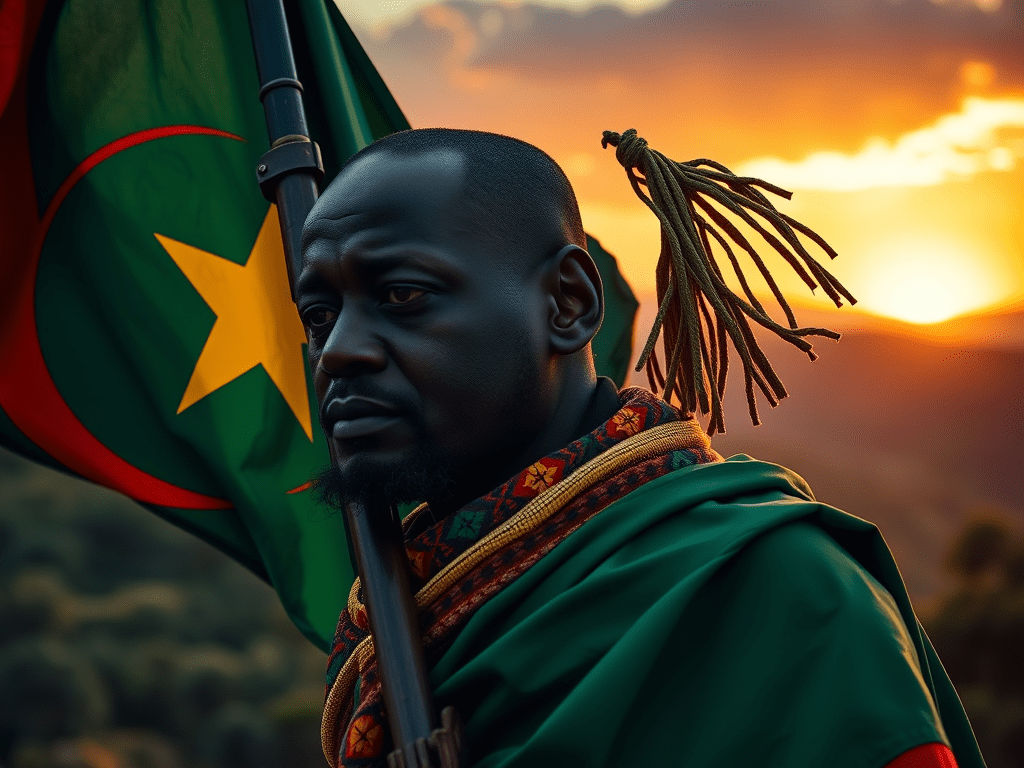
What are ODF’s stated goals and political demands?
The stated goals and political demands of the Oromian Defense Force (ODF)—also associated with the Oromo Liberation Front (OLF) and its armed wing, the Oromo Liberation Army (OLA)—focus on national self-determination, justice, and inclusive governance for the Oromo people in Ethiopia.[1][2][3]
Stated Goals
– **National Self-Determination:** The ODF aims to secure the inalienable right of the Oromo people to determine their own political status and govern their affairs, free from external manipulation and systemic oppression.[2][3]
– **End Oppression and Exploitation:** The movement is fundamentally committed to ending historical and ongoing political, economic, and cultural domination faced by Oromos under successive Ethiopian regimes.[2]
– **Democratic Rights:** The ODF calls for establishing a system where democratic rights, including political participation, civil liberties, and equality before the law, are fully guaranteed for all citizens.[2]
– **Cultural and Linguistic Rights:** It demands protection and promotion of the Oromo language, culture, and traditions as essential aspects of Oromo identity.[1][2]
Political Demands
– **Establishment of a Federal System:** ODF advocates for a genuine federal structure that grants real autonomy and self-rule to regional states, particularly Oromia, while allowing voluntary union with other Ethiopian peoples based on equality and mutual respect.[1][2]
– **Professional and Inclusive Security Forces:** The ODF’s proposals include a national defense force that is non-partisan, professional, and reflective of the country’s demographics, plus regional National Guards under civilian control for internal security.[1]
– **Ending Political Repression:** Official demands include the cessation of arbitrary arrests, extrajudicial killings, and suppression of Oromo political leaders, activists, and civilians.[4]
– **Justice and Power-Sharing:** The ODF has sought equitable power-sharing arrangements at the federal level and called for accountable, inclusive governance in all of Ethiopia.[4]
– **Peaceful Negotiation and Reconciliation:** The movement is open to dialogue and peaceful negotiation, provided these processes address core Oromo grievances and guarantee enforceable commitments to justice and autonomy.[4][2]
Overall, the ODF’s political program centers on recognition, autonomy, equity, and comprehensive reforms to empower the Oromo people within Ethiopia’s political landscape.[3][2][4][1]
Sources
[1] ADDA DEMOKRAATAWAA OROMO (ADO) … https://zelalemkibret.wordpress.com/wp-content/uploads/2013/07/adda-demokraatawaa-oromo.pdf
[2] Mission – Oromo Liberation Front https://oromoliberationfront.org/english/mission/
[3] Objective of The Oromo Liberation Front is national self- … https://www.facebook.com/OLFinfo/posts/objective-of-the-oromo-liberation-front-is-national-self-determination-for-the-o/1681980898611603/
[4] Peace—and justice—remain elusive in Oromia https://www.ethiopia-insight.com/2024/10/17/peace-and-justice-remain-elusive-in-oromia/
[5] Ethiopia Advancing Toward Capable, Modern Military https://www.ena.et/web/eng/w/eng_6899789
[6] 53 https://www.eisa.org/storage/2023/05/2022-journal-of-african-elections-v21n2-transformative-power-oromo-protests-ethiopia-resilience-political-change-eisa.pdf
[7] Military Operations Intensify in Amhara, Oromia as Peace … https://borkena.com/2025/04/21/ethiopia-military-operations-intensify-in-amhara-oromia-as-peace-dialogue-faces-hurdles/
[8] “Will We Really Have Peace?”: OFC Calls For End To … https://www.thereporterethiopia.com/42840/
[9] Oromo Liberation Army https://en.wikipedia.org/wiki/Oromo_Liberation_Army
[10] Country policy and information note: Oromos, the … https://www.gov.uk/government/publications/ethiopia-country-policy-and-information-notes/country-policy-and-information-note-oromos-the-oromo-liberation-front-and-the-oromo-liberation-army-ethiopia-march-2022-accessible
Understanding the Oromia Defence Force (ODF) and Its Role
Why Oromian Defense Force-ODF necessary and important?
The term “Oromia Defence Force” is commonly used to refer to the Oromo Liberation Army (OLA), an armed group fighting in the Oromia region of Ethiopia. The OLA, distinct from the now-defunct Oromo Liberation Front (OLF), has engaged in guerrilla warfare and is known for its alliance with the Tigray People’s Liberation Front (TPLF) against the Ethiopian federal government. The conflict is complex, involving clashes with the Ethiopian National Defense Force (ENDF) and reports of violence against civilians by all parties.
Key aspects of the OLA
Impact: The conflict has led to significant violence and displacement, with reports of thousands of people killed in clashes and attacks.
The Oromian Defense Force (ODF), represented prominently by groups such as the Oromo Liberation Army (OLA), is considered necessary and important primarily to protect the rights, self-determination, and security of the Oromo people in Ethiopia. Historically, Oromia’s indigenous defense mechanisms have evolved to resist political exclusion, economic exploitation, and cultural marginalization, functioning within both traditional frameworks like the Gadaa system and modern liberation movements.[1][2][3][4]
Goals: The OLA states it is fighting for the rights of the Oromo people, with some reports indicating goals to achieve independence and overthrow the current government.
Conflict: The group is engaged in an armed conflict with the Ethiopian government and its forces, which has included taking control of towns and fighting in various parts of Oromia.
Alliances: The OLA has formed alliances, most notably a military partnership with the Tigrayan rebels, which was announced in 2021.
Accusations: The OLA has been accused of human rights violations, including attacks on civilians, though the group has denied some of these claims. The Ethiopian government designated the OLA as a terrorist group in May 2021.
Historical context: A splinter group that refused to disarm after the OLF was removed from a terrorist list in 2018, the OLA is the successor to a long-standing armed movement formed in the 1970s.
Defense of Rights and Sovereignty
The ODF’s central role is to ensure Oromos can freely determine their political future and establish governance responsive to their community. This necessity arose from a long history of systemic oppression and a lack of autonomy under various Ethiopian regimes, making self-defense structures vital for safeguarding basic freedoms.[4][1]
Security and Protection
With ongoing regional instability, the ODF defends the Oromo population from violence perpetrated by state and non-state actors, especially in the absence or perceived failure of federal security forces. The dissolution of regional special forces and controversial federal interventions have made localized defense more critical for community survival and resilience.[5]
Cultural and Social Empowerment
The ODF supports socio-cultural rights, fighting against marginalization, and upholding the Oromo identity. It mobilizes not only militarily but also ideologically, drawing strength from community participation and moral legitimacy among Oromos. Activists emphasize the necessity for a united movement to preserve language, values, and collective security, especially as diaspora resources grow.[6][7]
Political Leverage and Defense
The ODF functions as both a deterrent and a negotiating force, influencing balance-of-power dynamics within Ethiopia. Its continued existence sustains Oromo representation amidst competing ethnic interests and shifting alliances, preserving a critical, independent voice in national affairs.[7][8]
Traditional Legitimacy
Rooted historically in the Gadaa system, the ODF symbolizes continuity in indigenous governance, promoting peace, security, and self-rule while resisting exploitation. Its importance is also recognized in academic and cultural discussions as a means of upholding democratic principles and Oromo sovereignty.[2]
In summary, the ODF is seen as both a practical and symbolic bulwark for protecting Oromo communities’ political, social, and cultural futures, while enabling the pursuit of peace, security, and empowerment within Ethiopia.[1][2][4][6]
Sources
[1] A BRIEF POLITICAL MANIFESTO https://www.fnnmedia.org/media/images/OLA_Brief_Manifesto.pdf
[2] Copyright © 2023 The Author(s): This work is licensed under a Attribution-NonCommercial 4.0 International (CC BY-NC 4.0) https://isrgpublishers.com/wp-content/uploads/2023/10/ISRGJAHSS2032023.pdf
[3] Mission – Oromo Liberation Front https://oromoliberationfront.org/english/mission/
[4] Country policy and information note: Oromos, the … https://www.gov.uk/government/publications/ethiopia-country-policy-and-information-notes/country-policy-and-information-note-oromos-the-oromo-liberation-front-and-the-oromo-liberation-army-ethiopia-march-2022-accessible
[5] EPO November 2023 Monthly: An Evolving Conflict … https://acleddata.com/update/epo-november-2023-monthly-evolving-conflict-environment-oromia
[6] THE OROMO NATION: TOWARD MENTAL LIBERATION … https://advocacy4oromia.org/article/the-oromo-nation-toward-mental-liberation-and-empowerment/
[7] OLF-OLA, the Northern Alliances, and the Oromo Cause https://oromia.today/olf-ola-the-northern-alliances-and-the-oromo-cause/
[8] Conflict in Ethiopia | Global Conflict Tracker https://www.cfr.org/global-conflict-tracker/conflict/conflict-ethiopia
[9] OLF is the immune system of the Oromo nations https://advocacy4oromia.org/oromia/olf-is-the-immune-system-of-the-oromo-nations/
[10] Analyzing Why Ethiopia Launched a New Military … https://futureuae.com/clients.tar.bz2/Mainpage/Item/9780/fano-militia-analyzing-why-ethiopia-launched-a-new-military-operation-in-the-amhara-region
Oromo Political Alliance: The Key to Effective Resistance
Why is the coordination of OLF, OFC and OPP necessary for the advancement of political interest of Oromo?
This is a fundamental question in contemporary Oromo politics. The argument that coordination between the OLF, OFC, and OPP is necessary stems from a strategic analysis of the challenges facing the Oromo people.
Here is a breakdown of the reasoning, based on common political arguments:
1. Overcoming Political Fragmentation
The Oromo people, despite being the largest ethnic group in Ethiopia, have often found their political influence weakened by internal divisions. Each of these three parties represents significant, but distinct, segments of Oromo society:
· OLF (Oromo Liberation Front): Represents the longstanding nationalist and self-determination struggle. It has historical credibility, a strong diaspora base, and is seen by its supporters as the standard-bearer for Oromo sovereignty.
· OFC (Oromo Federalist Congress): Represents a civil disobedience and legalist approach. Led by prominent figures like Merera Gudina and the imprisoned Jawar Mohammed, it has massive grassroots mobilization within Oromia and focuses on working within (or challenging) the constitutional federal system.
· OPP (Oromo People’s Party): Often seen as representing a pragmatic and moderate wing. It aims to build broader coalitions and may appeal to constituencies wary of the more hardline stances of the other parties.
The Necessity: When these groups work at cross-purposes, they split the Oromo vote, confuse the international community, and allow the central government to employ a “divide and rule” strategy. Coordination creates a unified front, presenting a single set of demands and a coherent political vision, which is far more powerful than fragmented voices.
2. Creating a Unified Bargaining Position
A divided opposition has little leverage in negotiations with a powerful central government. The incumbent Prosperity Party (PP) can easily ignore, co-opt, or suppress isolated groups.
· Strength in Numbers: A coordinated bloc of the OLF, OFC, and OPP would represent an overwhelming majority of Oromo political sentiment. This makes it impossible for the government to dismiss them as a “fringe group” and forces genuine negotiation.
· Negotiating from Strength: Whether the goal is greater autonomy, fairer distribution of resources, or a genuine federal system, a unified Oromo position would have significantly more weight in determining the future of the Ethiopian state.
3. Pooling Resources and Capabilities
Each party has unique strengths that, when combined, create a more formidable political force:
· The OLF brings a clear, historic ideology and a dedicated network of supporters.
· The OFC possesses unparalleled grassroots mobilization and a proven ability to organize mass movements.
· The OPP can offer a bridge to other ethnic groups and a platform for more moderate or coalition-oriented politics.
The Necessity: By coordinating, they can pool their organizational skills, international advocacy efforts, and grassroots networks. This makes their collective action—be it electoral campaigns, diplomatic outreach, or peaceful protest—infinitely more effective.
4. Countering External Threats and Ensuring Security
The phrase “thwart the campaign from the north to Oromia” directly references security concerns, particularly the expansion of the war involving the Tigray People’s Liberation Front (TPLF) or other Amhara forces into Oromia.
· A fragmented Oromo political leadership cannot coordinate a unified defense or security strategy.
· A coordinated command or political directive would be essential to organize resistance, protect civilians, and present a united stance against any invading force. Disunity makes Oromia vulnerable.
5. Legitimizing the Struggle and Providing a Clear Alternative
For the average Oromo, political disunity at the top leads to disillusionment and apathy. When parties are squabbling, it delegitimizes the entire struggle for self-determination.
· A Credible Alternative: Coordination shows the Oromo people and the world that these leaders can put aside differences for the greater good. It presents a credible alternative to the current government, not just as protest movements, but as a potential governing coalition.
· Restoring Faith: It helps rebuild public trust in the political process by demonstrating that the leadership is serious about achieving tangible results rather than pursuing individual party agendas.
In summary, the argument is that the political interests of the Oromo people are too vast and face too powerful an opponent to be advanced by any single party acting alone. The coordination of the OLF, OFC, and OPP is seen not as a preference, but as a strategic imperative to
· Consolidate political power.
· Negotiate effectively with the state.
· Defend the region with coordinated force-Oromian Defense Force.
· Present a viable path forward for the Oromo nation.
Without this unity, the risk is continued marginalization, despite the Oromo people’s numerical majority and historical claims.




 Advocacy for Oromia