The Evolution of ODF: From Independence to Self-Determination
How has ODF’s platform evolved since its founding?
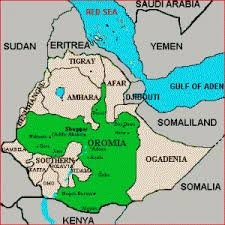
The platform of the Oromian Defense Force (ODF), often associated with the Oromo Liberation Front (OLF) and the Oromo Liberation Army (OLA), has evolved significantly since its founding. While the core principle of national self-determination for the Oromo has remained constant, the specific vision and political tactics have adapted to changing conditions in Ethiopia.[1][2][3]
Early Objectives: Independence and Liberation
At its founding in 1973, the OLF/ODF’s primary goal was achieving full independence for Oromia, framed as liberation from what was perceived as Abyssinian (Amhara) colonial rule. This initially included calls for the creation of a sovereign Oromo state outside of Ethiopia, accompanied by armed struggle against the government.[2][4][1]
Evolution to Self-Determination Within a Federal Ethiopia
Over time, especially after Ethiopia’s regime change in 1991, the OLF began shifting toward the idea of national self-determination—asserting the right of the Oromo to decide, through a democratic process, whether to remain within a restructured, truly federal Ethiopia or pursue independence. The platform emphasized voluntary union with other nations based on equality and mutual respect rather than enforced secession.[1][2]
Engagement and Withdrawal from Federal Politics
The OLF participated in Ethiopia’s transitional government after the fall of the Derg regime in 1991, indicating willingness to cooperate with broader Ethiopian movements. However, citing harassment and political exclusion, the OLF soon withdrew, reinforcing its orientation toward armed struggle and political autonomy.[5][1]
Shift Toward Democratization and Inclusive Struggle
By the 2010s and especially after 2012, some OLF factions voiced a willingness to work for democracy and freedom within Ethiopia rather than outright secession. This broadening of goals to include justice, democratization, and inclusion emerged more strongly during the Abiy Ahmed era.[3][5][1]
Recent Developments: Unity, Decentralization, and Peace
Recent ODF and OLA documents highlight continued emphasis on:
– Self-determination and responsive government via democratic means[3]
– Economic sovereignty and development for the Oromo people[3]
– Socio-cultural rights: language, culture, local governance[3]
– The possibility of a political union with other Ethiopian groups based on voluntary association and equality, rather than either forced unity or imposed independence[2][1]
– Openness to negotiation and peaceful resolution, alongside continued resistance to central state repression[6][3]
Factional Complexity
The evolution of the ODF’s platform has also included internal splits, such as the division between the OLF and the OLA over armed resistance and disarmament processes. These reflect broader debates within Oromo nationalism regarding practical versus maximalist goals, and engagement versus resistance, as Ethiopia’s political context has shifted.[5][6]
Overall, the ODF’s platform evolved from calls for independence to a nuanced program of self-determination, democratization, and potential federal partnership—adapted to challenges and opportunities presented by Ethiopian politics since the 1970s.[1][2][5][3]
Sources
[1] Oromo Liberation Front – Wikipediaen.wikipedia.org › wiki › Oromo_Liberation_Front https://en.wikipedia.org/wiki/Oromo_Liberation_Front
[2] Mission – Oromo Liberation Front https://oromoliberationfront.org/english/mission/
[3] A BRIEF POLITICAL MANIFESTO https://www.fnnmedia.org/media/images/OLA_Brief_Manifesto.pdf
[4] Political program of Oromia Liberation Front- O.L.F – FINFINNE MEDIA http://samsondoya.blogspot.com/2013/08/political-program-of-oromia-liberation.html
[5] Country policy and information note: Oromos, the … https://www.gov.uk/government/publications/ethiopia-country-policy-and-information-notes/country-policy-and-information-note-oromos-the-oromo-liberation-front-and-the-oromo-liberation-army-ethiopia-march-2022-accessible
[6] About the Oromo Liberation Army | OLF-OLA https://www.olf-olahq.org/about
[7] Open Dialogue Foundation https://en.wikipedia.org/wiki/Open_Dialogue_Foundation
[8] Clark Anna 2010, ‘Politicians Using History’, Wiley https://opus.lib.uts.edu.au/bitstream/10453/14057/1/2009008262.pdf
[9] The good old days: how nostalgia clouds our view of … https://theconversation.com/the-good-old-days-how-nostalgia-clouds-our-view-of-political-crises-52309
[10] Oromo Liberation Army – Wikipedia https://en.wikipedia.org/wiki/Oromo_Liberation_Army

Posted on November 1, 2025, in Uncategorized. Bookmark the permalink. Leave a comment.




 Advocacy for Oromia
Leave a comment
Comments 0