Irreechaa: The Oromo Thanksgiving Festival
Introduction: Culture as the Soul of a People
A people’s identity is expressed through their culture. It is how they are seen and known by other communities and nations. The Oromo people possess a wealth of traditions that profoundly express their unique identity. The diverse geography of Oromia itself seems to have been created in harmony with the culture of its people.
Oromo culture is deeply intertwined with all aspects of social life. The people’s economy and faith are also expressed through this cultural lens. These traditions include marriage customs, culinary practices, dress, the Waaqeffannaa religion and its thanksgiving rituals, and the Gadaa system of power transfer, among many others. The systems that guide Oromo life are deeply spiritual, and a significant place is always given to Waaqa (God), the creator of the Earth.
However, the Oromo people have not been able to practice their way of life freely. From the era of Emperor Menelik to the fall of the Derg regime, they faced immense persecution for their identity and culture, enduring countless hardships. Yet, they held fast to their culture as the core of their identity until the fall of the imperial regime and the mass-exodus under the Derg in 1984.
With the establishment of a participatory government, Oromo culture, once marginalized and suppressed, is now being restored. The people are reclaiming their heritage. One of the most vibrant expressions of Oromummaa is the system of thanksgiving and prayer known as Irreechaa.
Irreecha: A Thanksgiving Ritual to the One God
The Oromo people, one of the major nations of Northeast Africa, are endowed with a rich culture and a fertile land. Historically, their way of life, faith, and cultural practices were guided by the Waaqeffannaa religion.
The Oromo are a monotheistic society, believing in one Creator God, who is formless and unparalleled. This God is the source of all existence. The Oromo do not worship creation itself—rivers, mountains, trees, or stones—but they see God’s power and artistry manifested within them. Therefore, Irreechaa is the form and process through which they give thanks to this one God. The name itself means “thankfulness to the one God.”
Irreecha and the Gadaa System
Irreechaa, as a practice of thanksgiving and prayer, holds a significant place within the Gadaa system. The Gadaa system is a holistic socio-political system that meticulously organizes all aspects of Oromo life: culture, social life, economy, governance, and faith. Among the institutions established by Gadaa, Irreechaa is a prominent and enduring cultural and religious manifestation. It demonstrates how the Oromo, before the introduction of other faiths, prayed to and thanked the one God, affirming their identity as Waaqeffataa (believers in God).
The Philosophy of Irreechaa
The Irreechaa festival is a thanksgiving ritual where the Oromo acknowledge the power of Waaqa in the universe and in their daily lives. They believe that the cycle of human life—death and rebirth—is a hidden manifestation of God’s power, revealed during the thanksgiving process. This belief also has an economic dimension; a farmer will wake at dawn and pray, “Oh God, bless the fruit of the crop and the offspring of my child!”
In agrarian life, a farmer plants a seed with hope. God, with rain, nourishes the land, and the seed sprouts into a plant. This plant, in its season, blossoms, bears fruit, and becomes food for people and livestock. This transition happens in Birra (spring), after the summer rains have passed, the land has dried, and the rivers have receded. The plant, which was green, dries up, and its fruit is ready for harvest. This is the time of Irreechaa. The Oromo say, “Baga Booqa Birraa geessan!” (Congratulations on reaching the season of Birra!). Birra is the time when the summer gloom has passed, and the landscape is lush.
The Celebration of Birra
Birra is a time of joy. The month of Birra (roughly September) marks a clear shift in the weather; the summer clouds and mist give way to the bright sun of spring. The land becomes adorned with lush, green vegetation. It is a time for community, shared meals, conversation, and mutual visits. The festival of Masqala, with its iconic daamara (torch), is part of this seasonal celebration, where communities gather, sing, and dance.
Where is Irreechaa Celebrated?
In Oromo philosophy, all of creation reflects the work and power of the God who created it. The divine is made manifest through nature. Therefore, Irreechaa is celebrated in two main types of locations that reflect God’s creative power: Irreecha Tulluu (Mountain Top Irreechaa) and Irreecha Malkaa (River Bank Irreechaa). These are the most common, but celebrations occur throughout Oromia.
- Irreecha Tulluu: This is held in mid-May (Bitootessa) to pray for the heavy Kiremt (summer) rains. Elders gather on mountain tops, raise their hands to the sky, and pray: “Protect us from the hot sun, let the seasons follow their course, send us the rainy wind, forgive us.” This ritual shares philosophical roots with ancient Cushitic traditions.
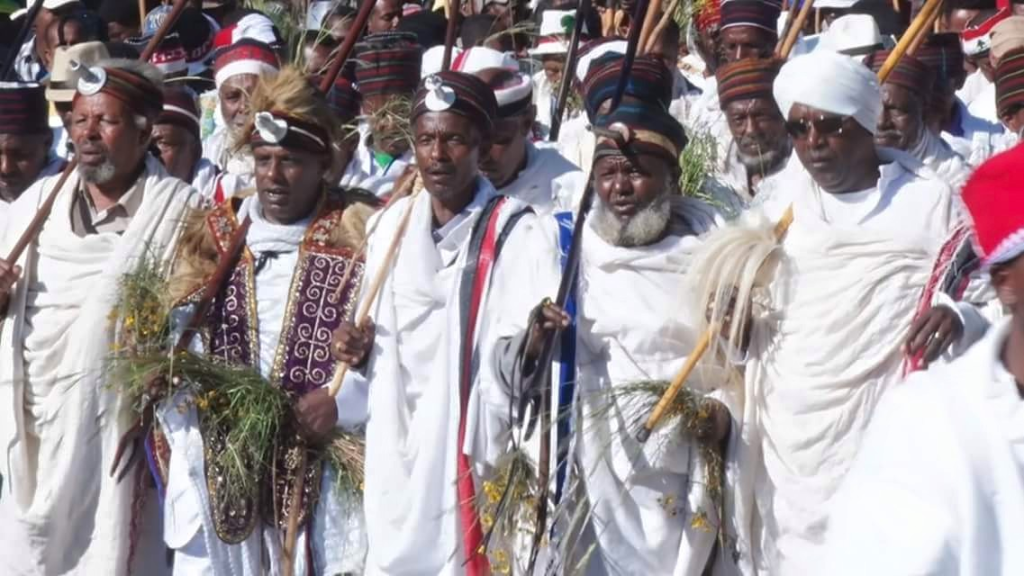
- Irreecha Malkaa (The Ayyaana Birraa): This is the main and most widely recognized Irreechaa, held in mid-October (Fulbaana). It celebrates the end of the rainy season and the beginning of Birra. It is known as the “Festival of Birra” and is a day of giving thanks to God. On this day, people dress in traditional attire, hold sacred grasses like jiidhaa and keelloo, and gather at river banks. Gadaa leaders, holding their symbols of authority, lead the procession. The attire is a form of respect to Waaqa.
The Epicenter: Hora Harsadii in Bishooftu
The most famous site for the Malkaa Irreechaa is Hora Harsadii (Lake Harsadii) in the city of Bishooftu. The city’s name is derived from its abundance of water (bishaan). The lake is named after Harsadii, a figure from the Liiban clan. Today, an estimated four million people gather here annually for Irreechaa, drawing attention from global media like BBC, Al Jazeera, and CNN.
The gathering is a profound spectacle of peace and devotion. People wade into the water, sprinkling it on their heads while praying for longevity and prosperity. After the ceremony, families return home to share a special meal, celebrating together and saying, “Baga ittiin si ga’e” (Congratulations on the occasion).
The city of Bishooftu, adorned with its beautiful lakes like Hora Kurruuftuu and Hora Baabboo Gaayyaa, opens its arms to visitors, showcasing its beauty and the magnificence of the Irreechaa celebration.

Posted on November 15, 2025, in News. Bookmark the permalink. Leave a comment.




 Advocacy for Oromia
Leave a comment
Comments 0