Daily Archives: November 19, 2025

Promoting Peace Through Dialogue: OLF and OFC’s Efforts in Oromia
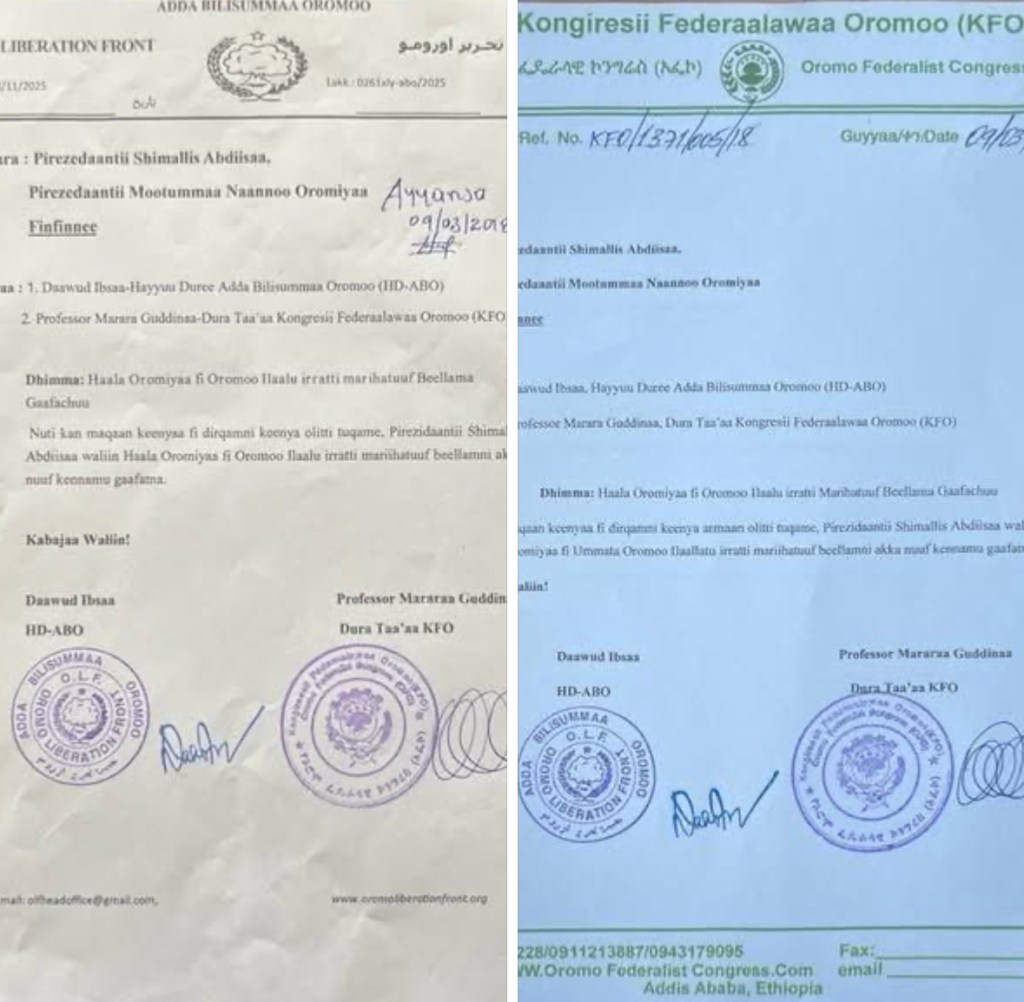
The joint call for dialogue by the OLF and OFC is a commendable and necessary move for peace in Oromia. We believe that inclusive discussion is the only viable solution to the insecurity that has plagued our region. We are hopeful that the Oromia Regional Government will respond positively and collaborate to make these critical talks a success.
Why the joint call for dialogue by the OLF and OFC is a commendable and necessary move for peace in Oromia?
The joint call for dialogue by the ABO (OLF) and KFO (OFC) is commendable and necessary because it signals rare strategic unity among major Oromo forces and opens a realistic path away from a worsening armed stalemate toward an inclusive political process in Oromia. It also answers long‑standing demands from communities and observers that only broad, principled dialogue can address structural grievances, fragmented armed actors, and cycles of repression and revenge.
Overcoming a history of failed peace efforts
Previous attempts to resolve the conflict between the Ethiopian government and Oromo armed actors, including OLF-related factions, failed largely due to the absence of a clear, formal framework, internal divisions, and weak political will on all sides. Jointly calling for dialogue starts to correct these deficits by making a public, political commitment to a negotiated path, rather than ad‑hoc, personality‑driven deals. This shift matters because sustainable peace in Oromia requires transparent agreements, monitoring, and institutions—not informal understandings that quickly unravel.
Building Oromo political unity and legitimacy
The OLF and OFC/ KFO have often represented different strands of Oromo political strategy—armed liberation versus federalist electoral politics—which has historically weakened the Oromo bargaining position and confused the wider public. A common call for dialogue shows a convergence around peaceful, negotiated solutions and reduces the perception that Oromo elites are permanently fragmented and unable to agree on a roadmap. This joint stance increases their legitimacy in the eyes of Oromo communities, other Ethiopian actors, and international partners looking for credible interlocutors for a peace process in Oromia.
Centering inclusive, people‑driven dialogue
Reports indicate the envisioned joint conference aims to involve “all sections of the community” to discuss the current situation with the people, rather than limiting talks to elites. This aligns with OFC/KFO’s broader advocacy for inclusive political dialogue and transition mechanisms in response to nationwide crises. Such an approach is crucial in Oromia, where civilians have borne the brunt of violence and displacement, and where any peace process that excludes victims, elders, women, youth, and local leaders risks reproducing the same injustices that fuelled the conflict.
Creating a framework for demilitarisation and rights
Comparative experience from other peace processes in Ethiopia shows that ceasefires and hostilities agreements need clear, institutional follow‑up—demobilisation, reintegration, restoration of services, and guarantees for rights and political participation. A unified OLF–OFC call for dialogue makes it more feasible to negotiate such concrete arrangements for Oromia: cessation of hostilities, safe humanitarian access, release of political prisoners, and credible pathways to participate in future elections or transitional mechanisms. This is essential if armed actors are to shift from a guerrilla logic to a constitutional, rules‑based political contest.
Opening space for a wider national settlement
Oromia’s instability is central to Ethiopia’s broader crisis, and both domestic and international analyses now stress the need for a comprehensive political dialogue that does not exclude key constituencies like the Oromo. By publicly embracing dialogue together, ABO and KFO signal that Oromo forces are ready to be constructive partners in any wider national process of reform, federal re‑balancing, or transitional justice. In this sense, their joint call is not only a step toward peace in Oromia, but also a necessary building block for any credible, all‑inclusive settlement for Ethiopia as a whole.




 Advocacy for Oromia