Dr. Tesgara Hirpo’s Journey: Faith, Education, and Oromo Identity
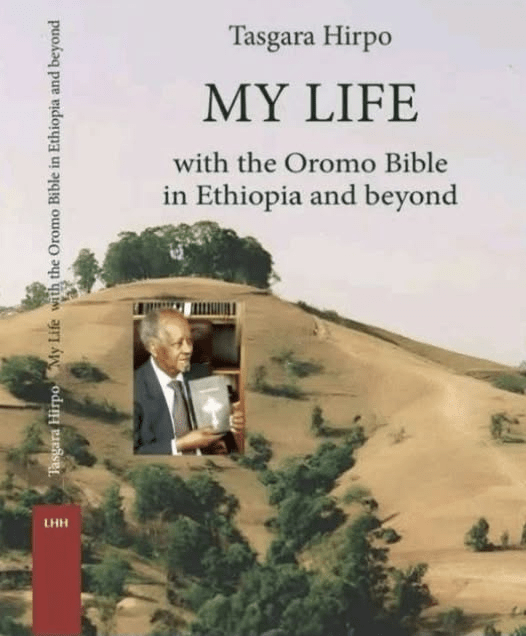
Dr. Tesgara Hirpo: A Lifetime of Advocacy for Faith and Oromo Rights
Dr. Tesgara Hirpo is a man of dual callings: a dedicated priest in the Christian faith and a steadfast advocate for the rights of the Oromo people.
Too often, the narrative of Oromo history is dominated by political figures, party leaders, and government officials. In this narrative, the profound contributions of intellectuals, peaceful activists, and those who champion our social and human rights are often sidelined. However, many have served the Oromo cause not through political parties, but through their professional expertise and unwavering cultural identity. One such towering figure is Dr. Tesgara Hirpo.
A Life of Service and Struggle
Dr. Tesgara is not merely a religious leader; he is a man who understands that faith freedom is deeply intertwined with the right to one’s own language and culture. His lifelong mission has been to ensure that these rights are respected. His key contributions include:
- Championing the Oromo Language in Faith: From his youth, he chose to practice Christianity in Afaan Oromoo. For over 70 years, he has fought for the Oromo people to be served in their own language, arguing that no foreign language should be imposed on them in the name of faith. Today, he is 90 years old.
- Building a Global Oromo Church: He was instrumental in ensuring Oromos in Europe and other countries could receive Christian services in their own language. Today, the establishment of Oromo evangelical churches worldwide bears his direct or indirect influence.
- Founding the Oromo Bible Society: He was among the foremost campaigners for the creation of the Oromo Bible Society.
- Pioneering the Bible in Qubee Script: He played a lion’s share role in translating the Gospel into the modern Qubee script for Afaan Oromoo.
- Embracing Modern Technology: He was a key figure in adapting the Qubee-script Bible for modern technology, supporting its development for reading on smartphones.
- Creating Educational Resources: He has authored and published essential Afaan Oromoo books tailored for adults, youth, and children.
Recently, to mark his 90th birthday, he published a book titled “My Life with the Oromo Bible in Ethiopia and Beyond.”
A Personal Reflection on His Work
Upon seeing the title, I initially assumed the book would be solely about divine wisdom and pastoral service. This was a profound misjudgment. I purchased the book and began reading, quickly realizing that my attempt to fit his immense struggle into a narrow framework was not just an error, but a weakness in understanding his true contribution.
In this book, Dr. Tesgara illuminates the long road the Oromo people have traveled to secure modern education for their children, to serve in their own language, and to establish a free church, independent of external pressure. He also provides a crucial analysis of the historical influences of religion that have been deeply etched into our people’s foundations.
Revealing a Pioneering Educational Legacy
On pages 38-39, he reveals a remarkable piece of history: the first modern school in the area was opened in Cheliya Eka (East Welega), just 5 km from his birthplace in Korme Kebele, by the local governor, Balambaras Gameda Urgesa. Dr. Tesgara himself began his education at this school, which was established over 80 years ago.
What made this school revolutionary?
- Gender Inclusion: Unlike traditional church schools, which only sent boys to become deacons or priests, this new school was open to both young boys and girls.
- Free Supplies: It provided students with notebooks and pencils for free—something unthinkable in the church schools.
- A Modern Curriculum: Beyond the Orthodox religious teachings, Governor Balambaras mandated that this school teach History, Geography, Mathematics, and Language.
- Mandatory Attendance: The governor made it compulsory for every person in his district to send their children to school.
- Free Tuition: The school was entirely free, unlike the church schools where the community bore the teachers’ salaries.
- The Governor as Director: In a striking detail, Dr. Tesgara notes that the director of this school was none other than Governor Balambaras Gameda Urgesa himself.
Confronting Nationalist Narratives through Scholarship
Dr. Tesgara’s academic work also challenged dominant narratives. For his Master’s degree in Germany in the 1970s, he wrote his thesis on the “Orthodox Practice of Baptizing People in Ethiopia.” On page 66, he explains his choice of topic:
“…I myself was baptized in the Orthodox faith, as was my family… I decided to write about the ritual of baptism because when a person is baptized, they did not understand the meaning of the sacrament and were given no teaching. The point I wanted my thesis to focus on was that baptism in Ethiopia was used to promote the principle of ‘One Nation, One King, One Culture, One Flag, One Language.’ The one being baptized was expected to conform to this.”
A Theological Fight for Linguistic Rights
Dr. Tesgara powerfully argues for the use of the Oromo language in religious service. On pages 89-90, he recounts a pivotal historical moment:
“When the German missionaries came to found the Lutheran Church among the Oromos, they came to Irreecha. Upon their arrival, missionaries like D. Wassmann and other Europeans made a concerted effort to learn Afaan Oromoo. The first person to teach them the language was Qees Daffa Jammo. Ironically, Qees Daffa Jammo also learned their language with astonishing speed.
The Ethiopiangovernment’s policy in the 1940s decreed that education in all schools and religious institutions must be in Amharic.”
This policy, championed by the then-Minister of Education, Sahle Tsedalu, had immediate consequences, which Dr. Tesgara describes:
“…Except for the Germans in Irreecha, even in the main Bible school, the teachers and students were Oromos, yet teaching was in Amharic and had to be translated into Afaan Oromoo. When I started my work as President of the Western Synod (1971), I decided, ‘This must be changed!’ For this goal, I was greatly assisted by Qees Manfered Zach, who had many years of experience in gospel work and was the finance officer, and Abo Theophilus Qanqaa, who had exceptional skill in gospel teaching and the Afaan Oromoo language.”
Conclusion: A Legacy for Generations
It is with deep admiration that I express my respect for Dr. Tesgara Hirpo for documenting his life’s work in this book and preserving it for future generations. His is a story of profound dedication, intellectual courage, and an unwavering commitment to his people’s spiritual and cultural liberation.

Posted on November 27, 2025, in News, Uncategorized. Bookmark the permalink. Leave a comment.




 Advocacy for Oromia
Leave a comment
Comments 0