A Tribute to Professor Mohammed Hassen Ali
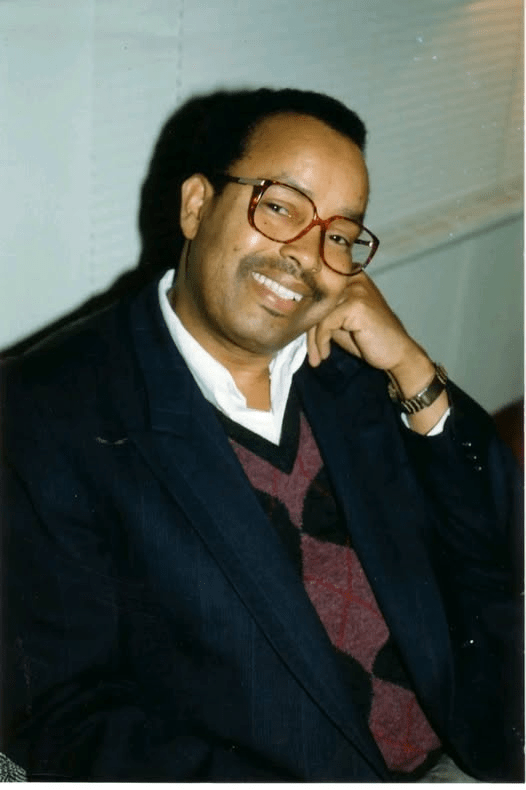
On the eve of Atlanta’s celebration honoring Professor Mohammed Hassen Ali, we are moved to share a few reflections on a man whose contributions to the Oromo nation are nothing short of extraordinary—enduring in their impact and deeply inspiring in their character.
As many of you know, Professor Mohammed stands among a rare few scholars who undertook the courageous and meticulous work of correcting distorted narratives crafted by Abyssinian court historians and state-sponsored academics. At a time when the Oromo story was silenced or twisted, he restored its truth with unwavering discipline and moral clarity. In doing so, he helped reclaim for our people a dignified history—one rigorously documented and grounded in evidence, not propaganda.
For years, we admired his work from afar, learning from his books, relying on his analysis, and drawing inspiration from the courage embedded in his scholarship. Over the past five years, we have been fortunate to know him more personally, and that closeness has only deepened our respect.
Despite his towering intellect and monumental achievements, Professor Mohammed is a man of profound humility—almost embarrassed by praise. He consistently deflects credit, insisting that any accomplishment belongs to the Oromo people and the broader struggle for justice.
At the same time, he is remarkably generous in lifting others up. He offers encouragement and recognition with a sincerity that uplifts everyone around him. His warmth, gentleness, and quiet generosity have endeared him to all who are fortunate enough to cross his path.
His influence extends far beyond the written word. As a founder and early leader of the Oromo Studies Association, he helped create an enduring academic home where Oromo history, culture, and identity could be studied with rigor and dignity. His pivotal role in establishing the Journal of Oromo Studies helped lay the intellectual foundation for the modern Oromo struggle.
In the diaspora, Professor Mohammed has been a steady anchor—providing clarity amid confusion, evidence in the face of disagreement, and truth in moments of denial. His seminal work on Oromo history, from the Gadaa system to conquest-era state formation, has fundamentally shaped how an entire generation understands itself and its place in the Horn of Africa.
Tomorrow, as we gather to honor him, we do more than celebrate a scholar. We pay tribute to a true son of the Oromo nation—a guardian of our historical truth and a model of humility, kindness, and principled devotion.
Professor Mohammed, thank you for restoring to the Oromo people a history rooted in fact, dignity, and justice. Thank you for showing us that liberation is waged not only on battlefields or in political arenas, but also in libraries, archives, and classrooms—through the patient, steadfast work of scholarship.
May your legacy continue to guide Oromo scholars, activists, and generations to come. May your life remind us all that truth, humility, and kindness are, in themselves, revolutionary forces.
Congratulations.

Posted on November 29, 2025, in Information, News. Bookmark the permalink. Leave a comment.




 Advocacy for Oromia
Leave a comment
Comments 0