Daily Archives: December 19, 2025

Coalition of Voices Stands with Australian Jewish Community, Condemns Bondi Terror Attack

FOR IMMEDIATE RELEASE
Coalition of Voices Stands with Australian Jewish Community, Condemns Bondi Terror Attack
A collective of community and advocacy groups has issued a resolute statement of solidarity with the Australian Jewish community following the horrific antisemitic terror attack that targeted peaceful Hanukkah celebrations in Bondi. The statement, shared publicly, expresses profound grief and an unwavering commitment to stand alongside the community.
“The deepest sympathy and love goes out to the bereaved families, the victims, first responders, and all those impacted in the Jewish and wider Bondi community,” the declaration begins. “We share your grief and we will always stand by you.”
The statement delivers a firm condemnation of antisemitism, declaring it has no place in Australia. It asserts the universal right for all people to feel and be safe in their identities, “free to practice our faiths, live our cultures, celebrate with family, and be in community with one another.”
In the wake of the violence, the coalition calls for a reaffirmation of shared humanity, honouring the memories of those killed and celebrating the national outpouring of “unity, courage, and care” shown by millions of Australians.
Drawing a clear line against division, the statement warns of the dangers of scapegoating communities based on identity. “We reject efforts to create further division through fear, polarisation, and disinformation,” it reads, echoing the NSW Faith Affairs Council’s message: “We will not let hatred and violence divide us. Across all our cultures and faiths, we will stand united in sympathy, compassion and solidarity.“
Beyond solidarity, the coalition makes a forward-looking commitment to action. It is “resolute in our collective commitment to defend everyone’s rights to safety, culture and faith, and to build a peaceful society.” Significantly, it pledges to deepen understanding of the roots of anti-Jewish racism to better identify and prevent it in the future.
The statement concludes with a simple, powerful affirmation: “We stand with the Australian Jewish community, in love and solidarity.”
The full statement and list of supporting groups can be found at the provided link: https://australiandemocracy.org.au/solidarity-with-jewish-community

Advocacy for Oromia Condemns Bondi Violence
FOR IMMEDIATE RELEASE
Advocacy for Oromia Condemns Bondi Attack, Stands with Jewish Community
MELBOURNE, VIC – 15 December 2025 – Advocacy for Oromia has issued a strong statement condemning yesterday’s horrific attack at Bondi Beach and expressing unwavering solidarity with the Australian Jewish community. The organisation denounced the violence as an attack on shared Australian values and a profound violation of human dignity.
In the statement, Advocacy for Oromia expressed “profound sorrow” for the victims, their families, and all those affected, calling the act an “affront to our common humanity” that inflicts “unimaginable trauma and grief.” The group highlighted the particular cruelty of the timing, noting the attack occurred on the first day of Hanukkah—a celebration of “light, faith, and joy”—thereby framing it as “an especially disturbing act of hatred, antisemitism, and terrorism.”
“Such violence strikes not only at one community, but at the very heart of Australia’s shared values: compassion, respect, and peaceful coexistence,” the statement read.
The advocacy group emphasised that terrorism and hate have no place in Australia, warning of the deep and lasting scars such events leave on the entire national fabric, creating fear and heartbreak far beyond the immediate victims.
A Call for National Unity and Compassion
In response to the tragedy, Advocacy for Oromia issued a call for unity, urging Australians to draw strength from the nation’s diversity. “Our strength has always resided in our diversity—in people of all faiths and cultures, from over 236 backgrounds, standing side by side in empathy and mutual respect,” the statement affirmed.
The organisation declared its firm solidarity with Jewish Australians, reaffirming a “shared commitment to peace, dignity, and our common humanity.” It advocated for a collective response rooted in compassion and unity rather than fear and division.
“Let us respond not with fear, but with compassion; not with division, but with unity,” the statement concluded. “May we support one another, honour those who have been impacted, and continue building an Australia where every person feels safe, valued, and supported—in both body and mind.”
About Advocacy for Oromia: Advocacy for Oromia is an organisation dedicated to promoting human rights, justice, and the welfare of the Oromo people, while engaging in broader humanitarian and solidarity efforts within the Australian and global community.
The full statement from Advocacy for Oromia is available for review.

Celebrating “Shanan”: Preserving a Sacred Tradition of Sisterhood and Care

Our SBS Afaan Oromoo team recently hosted a special podcast episode celebrating a unique and empowering Oromo cultural tradition. We were honored to feature Aadde Fayinee Qabatoo, who shared her personal and heartfelt insights into Shanan—the sacred five-day postpartum celebration.
“Even though I have a large extended family, the solidarity of women, especially during my own Shanan, brought me an indescribable joy,” Aadde Fayinee reflected. “It is our duty to preserve and continue this beautiful custom.”

Before introducing our guest, let’s explore the tradition itself. Among the rich tapestry of Oromo culture is a special right and practice belonging to women: the observance of Shanan. This is a dedicated five-day period following childbirth where a new mother is honored and supported by her community of women. Shanan is a powerful cultural system designed to strengthen female solidarity and provide crucial nurturing and rest for mothers during the postpartum phase.
The Rituals of Shanan: Nourishment, Rest, and Blessing
The celebration begins with the preparation of marqaa (a special porridge). The women gather, prepare the marqaa together, and share it. A unique ritual follows the meal: the plate on which the marqaa was eaten is not simply cleaned. Instead, a specific practice is observed where the plate is respectfully placed on the ground.
The new mother, adorned by the women as a queen for the day, is then escorted with great care to a specially prepared resting place. She sits in a designated spot, surrounded by a circle of supporting women. A special meal, askuti, is prepared and served to her by her closest female relatives or friends.
After everyone has eaten and the ceremonies are complete, one specific plate is singled out. This plate is used to bless the new mother before being placed on the ground. Children playing nearby might race to snatch something from the setup, a playful moment believed by some to be a sign of shared fortune among the participants. The day then continues with singing, celebration, eating, drinking, and communal bonding.

A Tradition of Profound Benefit
This custom is understood to offer significant psychological and emotional benefits for the new mother. It is said to generate a profound sense of joy and happiness that is deeply felt. “The feeling of joy and elation I experienced wasn’t just my own—it was shared,” is a common sentiment expressed by participants.
During our conversation, Aadde Fayinee elaborated on these aspects. Our program, recognizing the immense role Shanan plays in the peace and health of women, aims to explore this tradition further by engaging with other knowledgeable elders and those with direct experience.
We extend our sincere gratitude to Aadde Fayinee for generously sharing her insights and personal reflections.
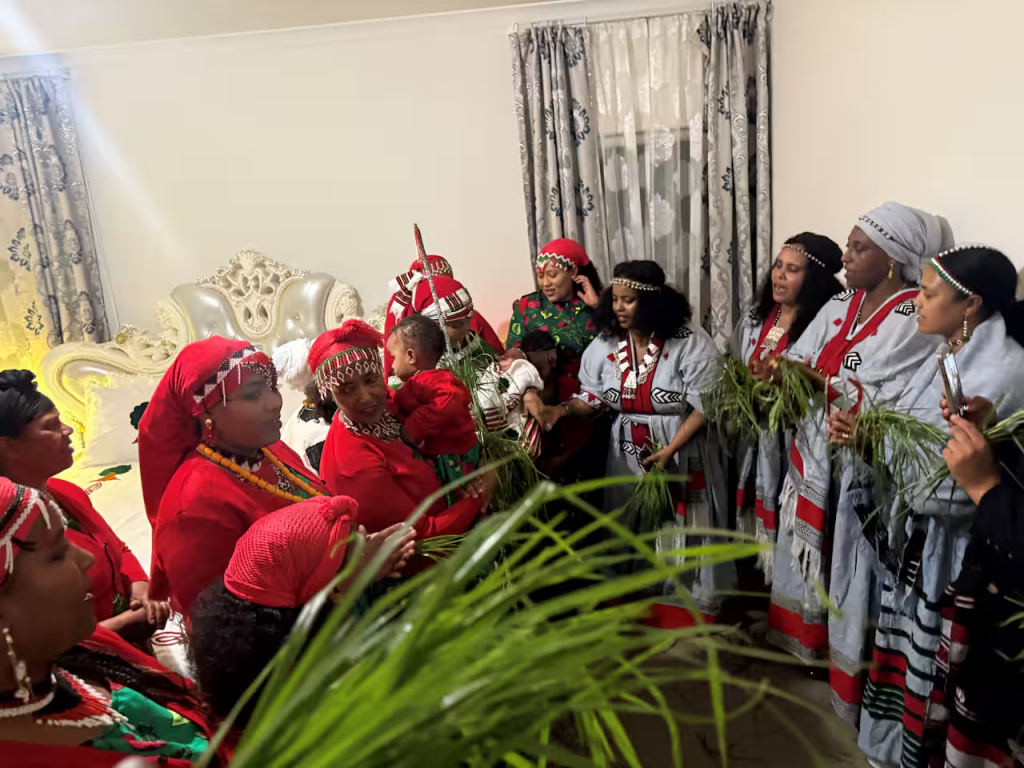
This article is based on a recent SBS Afaan Oromoo podcast segment, presented as a community-focused piece to educate, celebrate, and encourage the respectful preservation of the Shanan tradition.
Source: SBS Afaan Oromoo




 Advocacy for Oromia