Daily Archives: December 26, 2025

A New Year’s Salute to Oromo Resistance: “You Are the True Heroes, the Unyielding”
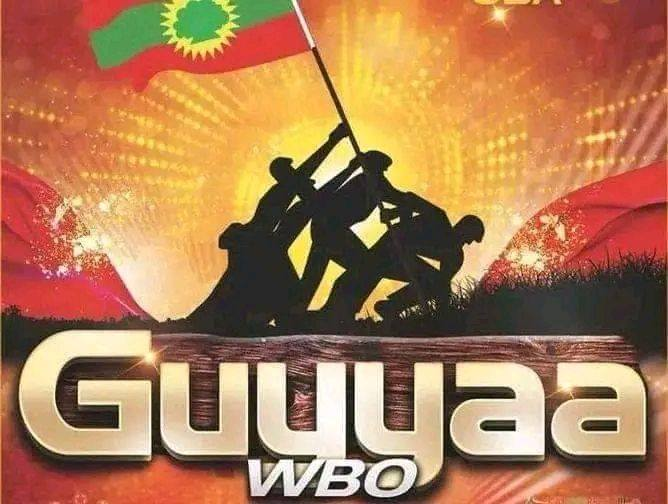
Oromia – As the Oromo community marks Amajjii 1, the traditional New Year, a powerful message of recognition and defiance is being broadcast to the movement’s steadfast supporters and unsung heroes.
The statement, resonant with cultural pride and political resolve, honors those who have borne the weight of the struggle. “You are the ones who, by resisting oppressors, have shown the essence of your nation,” it declares, directly addressing the countless individuals engaged in the Oromo quest for rights and self-determination.
The tribute draws a clear line, celebrating not those who have retreated or compromised, but those who remain unmoved. “You are the ones who did not flee or surrender ground. You are the exemplary core of this country’s struggle.”
It acknowledges the profound personal cost of resistance, stating, “You are the ones who awakened the Oromo nation to fight for its rights… You are the ones whose youth and energy have been consumed and left in the struggle.”
In a striking passage, the message elevates these individuals above mere labels, affirming, “You are the true heroes, not those who simply wear the fame of the people.” It calls them “the persistent champions, the children of Oromo,” while issuing a sober reminder: “Not everyone is a hero. Not every chain is broken. Not everyone is called to the front. The battlefield has its rightful owners.”
The communique culminates in a call for unity and renewed strength among allies and supporters. “You who stand firm for this cause and shine—all steadfast friends and supporters, the day of the steadfast has reached you.”
Circulated at the dawn of the Oromo New Year, the message serves both as a somber reflection on sacrifice and a galvanizing call to persevere. It reinforces the cultural and political significance of Amajjii, transforming the New Year from merely a calendar event into a moment of collective recommitment to the enduring struggle for justice, recognition, and autonomy in Oromia.

Prime Minister Netanyahu Announces Israel’s Recognition of Somaliland as Sovereign State

JERUSALEM – In a dramatic move set to reshape diplomatic dynamics in the Horn of Africa and the Middle East, Israeli Prime Minister Benjamin Netanyahu announced today the official recognition of the Republic of Somaliland as an independent and sovereign state.
“I announced today the official recognition of the Republic of Somaliland as an independent and sovereign state,” Netanyahu stated.
The Prime Minister confirmed that a joint and mutual declaration was signed together with Israeli Foreign Minister Sa’ar and the President of the self-declared Republic of Somaliland, Dr. Abdirahman Mohamed Abdallah. Netanyahu framed the agreement as an extension of the spirit of the Abraham Accords, the normalization agreements between Israel and several Arab nations initiated during the Trump administration.
In his remarks, Netanyahu congratulated President Abdirahman, praising his “leadership and commitment to promoting stability and peace.” The Israeli leader extended an invitation for the Somaliland President to pay an official visit to Israel.
According to Netanyahu, President Abdirahman expressed gratitude for the “historic declaration” and appreciation for the Prime Minister’s “achievements in fighting terrorism and advancing regional peace.”
Netanyahu also credited Israeli Foreign Minister Sa’ar, Mossad Director David Barnea, and the intelligence agency for their contribution to finalizing the agreement.
Looking forward, the Prime Minister stated that Israel plans to “immediately expand its relations with the Republic of Somaliland through extensive cooperation” in key sectors including agriculture, health, technology, and the economy. He concluded by wishing the people of Somaliland “success, prosperity, and freedom.”
Potential Implications and Reactions
Somaliland declared independence from Somalia in 1991 and has since maintained a de facto independent government with relative stability and democratic elections. However, no United Nations member state has formally recognized its sovereignty, a longstanding goal of its government.
Israel’s unilateral recognition is likely to trigger significant geopolitical reactions. Somalia’s internationally recognized federal government, which considers Somaliland an integral part of its territory, is expected to issue a strong condemnation. The move may also influence the positions of other regional and international powers, particularly Gulf states with interests in the Horn of Africa, and could complicate African Union mediation efforts.
This recognition marks a significant and unexpected expansion of Israel’s diplomatic engagement in Africa, following its recent reintegration into the African Union as an observer state.

Oromo Communities Worldwide Mark Amajjii, A Day of Defiance and Remembrance Amid Ongoing Struggle

GLOBAL — Oromo communities across the world are observing Ayyaana Amajjii this week, the 46th anniversary of a historic victory in their long-standing quest for self-determination. The day commemorates a pivotal moment when a small group of Oromo fighters secured a landmark triumph against formidable adversaries, an event enshrined in collective memory as a testament to resilience and strategic courage.
For over four decades, the Amajjii celebration has served as a core cultural and political observance. This year’s commemoration, however, is marked by a stark duality: it is simultaneously a reaffirmation of identity and a protest against what organizers describe as severe ongoing repression.
In statements released for the occasion, community spokespersons framed the current period as one of “difficulty and darkness.” They cited “drone strikes, artillery shelling, mass arrests, and killings by Ethiopian military forces and Fano militia” as the harsh backdrop against which the holiday is being observed. “This brutal oppression wounds us,” one message read, “but without losing hope, we resist fiercely and honor our Amajjii, learned from our ancestors.”
Central to the day’s symbolism is the lighting of the Xomboorrii Amajjii, or Amajjii bonfire, atop the highest available hill. This flame is described not merely as a ritual, but as a powerful transmitter. Organizers state it carries a “supreme message” of “true freedom, emergence from subjugation, unbreakable hope rising from despair, and light breaking through profound darkness” to all who witness it.
“Amajjii is more than a holiday; it is the ultimate symbol of the endurance defining our entire struggle,” a community elder explained. “In times of intensified crackdowns, its history becomes our most vital weapon for unity and renewal.”
The observance also functions as a solemn memorial for fallen freedom fighters. It is a day to “remember the Oromo liberation fighters who sacrificed their lives without hesitation to liberate and protect Oromia and its people.”
This year’s messages emphasize renewal and perseverance. They call for the community to “strengthen our pledge” to continue the pursuit of a future where Oromia is a place of asserted rights and dignified existence. The lighting of the bonfire, from the homeland to diaspora communities, stands as a silent, luminous act of defiance—a declaration that cultural memory itself is a foundational pillar of ongoing resistance.
The traditional greeting, Ayyaana Amajjii Gaarii, echoes globally, carrying with it the weight of history and the unwavering demand for a free and just future.




 Advocacy for Oromia