Daily Archives: January 2, 2026

Commemorating Oromo Liberation: A Virtual Celebration

Feature Commentary: The Virtual Hearth – How a Global Oromo Gathering Forged Unity from Adversity
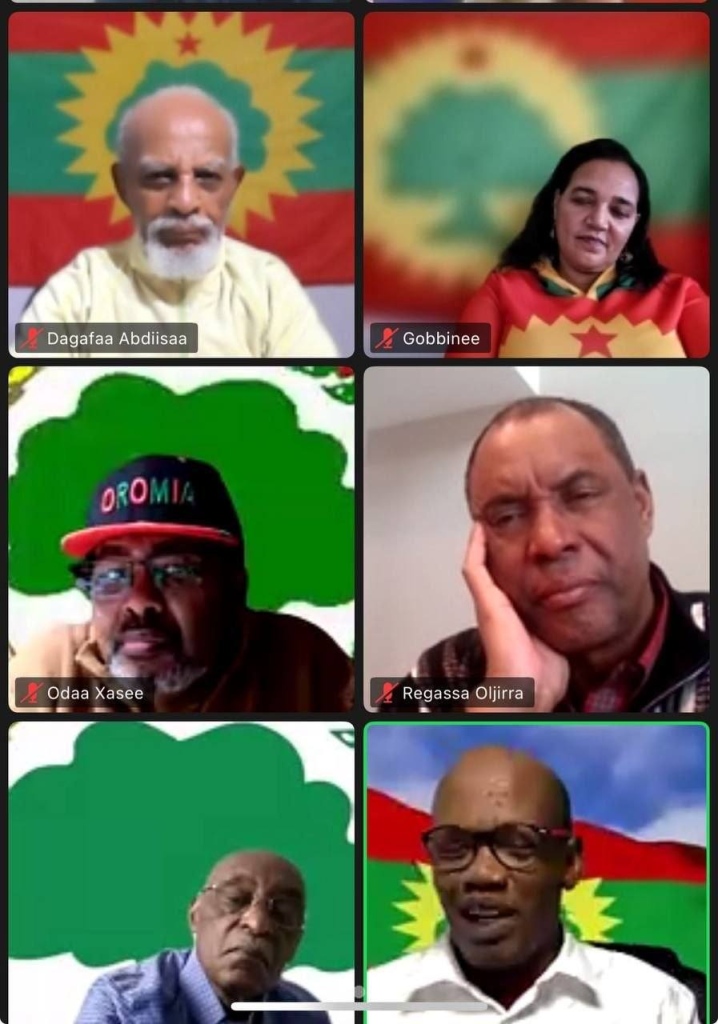
On January 2, 2026, a remarkable convergence took place not in a physical capital, but in the digital ether. The global Oromo community, scattered across continents, logged onto a Zoom call. Their purpose was twofold: to commemorate the 46th anniversary of the Oromo Liberation Army (OLA/WBO) and to celebrate Ayyaana Amajjii 1, the Oromo New Year. This was not merely an online event; it was the lighting of a virtual sacred fire around which a nation-in-exile and its internal vanguard could gather, reflect, and reaffirm a covenant tested by fire.
The gathering’s very format was a testament to resilience. As speakers noted, the OLA’s anniversary and the New Year have always been marked wherever Oromo patriots find themselves—in hidden clearings, in diaspora community halls, and now, in the intimate squares of a video call. This digital assembly, reaching a global stage, was a powerful evolution of that tradition, proving that the spirit of the struggle cannot be quarantined or confined.
The commemoration served as a strategic audit of a challenging year. The year 2025 was framed not as a period of setback, but as one of immense pressure and clandestine endurance. The key revelation was both sobering and defiant: of all the OLF’s offices across Oromia, only the one in Gullalle had managed to reopen after state-led closures. The rest remained shuttered, their assets seized. This single operational office, as described, became a symbol of tenacious survival—a nerve center conducting political “training and mobilization” even under “difficult and oppressive conditions,” preparing for the proverbial “7th round.”
The historical anchor for this resilience was powerfully underscored by participant Jaal Dhugaasaa Bakakkoo, who reminded the assembly of the OLA’s very first commemorated day: January 1, 1980, marking a victory over the Derg (Darg) regime. This was a crucial narrative pivot. It connected the current struggle—of closed offices and digital gatherings—directly to the movement’s foundational moment of armed triumph. It argued that the movement was born from victory in adversity and thus carries that DNA of overcoming long odds.
The most poignant thread was the deliberate passing of the torch. Dr. Daggafaa Abdiisaa’s address cut to the heart of intergenerational duty, telling the youth: “The duty to pursue the goal and objective of the OLF rests upon you, the beloved children of the fallen heroes.” This was more than inspiration; it was a formal transfer of moral obligation, framing the youth not as bystanders but as the sole rightful heirs and executors of an unfinished mission.
The dual nature of the celebration—the martial memory of the OLA with the cultural renewal of Amajjii—fused two core aspects of Oromo identity: the resistance fighter and the cultural citizen. The final message distilled this fusion into a clear directive for 2026: unity (tokkummaa), self-defense against encroachment (daangaa isaa kabachiifatu), and speaking with one unwavering voice (afaan faajjii tokko).
Thus, the Zoom call transcended its pixels. It became a virtual Chaffe (assembly), a space for accountability, historical remembrance, and strategic realignment. From recalling the 1980 battlefield victory to reporting on the solitary open office in Gullalle in 2025, the narrative woven was one of unbroken continuity. The gathering declared that the struggle persists across generations and geographies, adapting its tools—from the gun to the internet, from the forest clearing to the Zoom room—but never altering its ultimate goal: to ensure the Oromo people, united and resolute, finally become the authors of their own destiny in their own land. The virtual hearth may have been extinguished with a click, but the fire it carried burns on.

Global Oromo Diaspora Marks New Year and OLA Anniversary

January 2, 2026, Global Oromo Community Commemorates 46th Anniversary of Oromo Liberation Army (OLA) and New Year
In a powerful display of unity and resolve, the global Oromo diaspora and supporters convened virtually on January 2, 2026, to jointly commemorate two pivotal occasions: the 46th anniversary of the founding of the Oromo Liberation Army (OLA) and the traditional Oromo New Year, Ayyaana Amajjii 1.
The online gathering, organized via Zoom, served as both a solemn remembrance and a strategic assessment. Participants honored the immense sacrifices made over nearly five decades of struggle for Oromo self-determination while analyzing the current status, achievements, and ongoing challenges facing the movement.
Speakers and attendees reflected on the harsh conditions under which the OLA—the armed wing of the Oromo Liberation Front (OLF)—was founded and how its founding day has become a cornerstone of resistance and identity for the Oromo people. The event highlighted how these anniversaries are perennially observed wherever Oromo patriots, OLF members, and supporters of the liberation struggle are found.
A central theme of the commemoration was a call to the younger generation. In a keynote address, Dr. Daggafaa Abdiisaa emphasized the weight of legacy and continuing responsibility, stating to Oromo youth: “The duty to pursue the goal and objective of the OLF rests upon you, the beloved children of the fallen heroes.” This message framed the struggle not as a historical artifact, but as a living mission requiring sustained commitment.
The dual commemoration of Ayyaana Amajjii—a cultural celebration of renewal—with the military anniversary of the OLA underscored a profound narrative: the intertwining of cultural identity and political resistance. It reinforced the idea that the fight for Oromo rights is as much about preserving heritage as it is about achieving political autonomy.
The virtual event allowed for participation from across the globe, demonstrating the widespread and enduring connection of the diaspora to the cause in Oromia. As the movement enters its 47th year, this commemoration served to reaffirm global solidarity, honor a legacy of sacrifice, and rally a new generation to the ongoing pursuit of the Oromo Liberation Front’s objectives.
###
Background Notes:
- On January 1, 1980, the Oromo Liberation Army (OLA) celebrated its first formal day to commemorate a hard-fought victory over the Darg regime’s campaigns.
- This day stands as a testament to the early courage and sacrifice that laid the foundation for the ongoing struggle. We remember, honor, and draw strength from the resilience shown from the very beginning.
- Ayyaana Amajjii 1 marks the Oromo New Year based on the traditional Gadaa calendar.
- The OLA has been engaged in an ongoing armed conflict with the Ethiopian government, fighting for the self-determination of the Oromo people, Ethiopia’s largest ethnic group.
- The Oromo Liberation Front (OLF) is the political organization from which the OLA originated.




 Advocacy for Oromia