Daily Archives: January 3, 2026

Amajjii 2026: A Turning Point for OLF and Oromo Identity

Feature Commentary: Amajjii 2026 at OLF HQ – A Ceremony of History, Resolve, and the “Moving Seed”
(SBO, Amajjii 3, 2026)-The celebration of Amajjii (Oromo New Year) and History Makers’ Day at the headquarters of the Oromo Liberation Front (OLF) on Amajjii 3, 2026, was more than a ritual. It was a multidimensional gathering—part solemn remembrance, part strategic council, and part generational baton-passing—that laid bare the soul of a movement at a critical juncture.
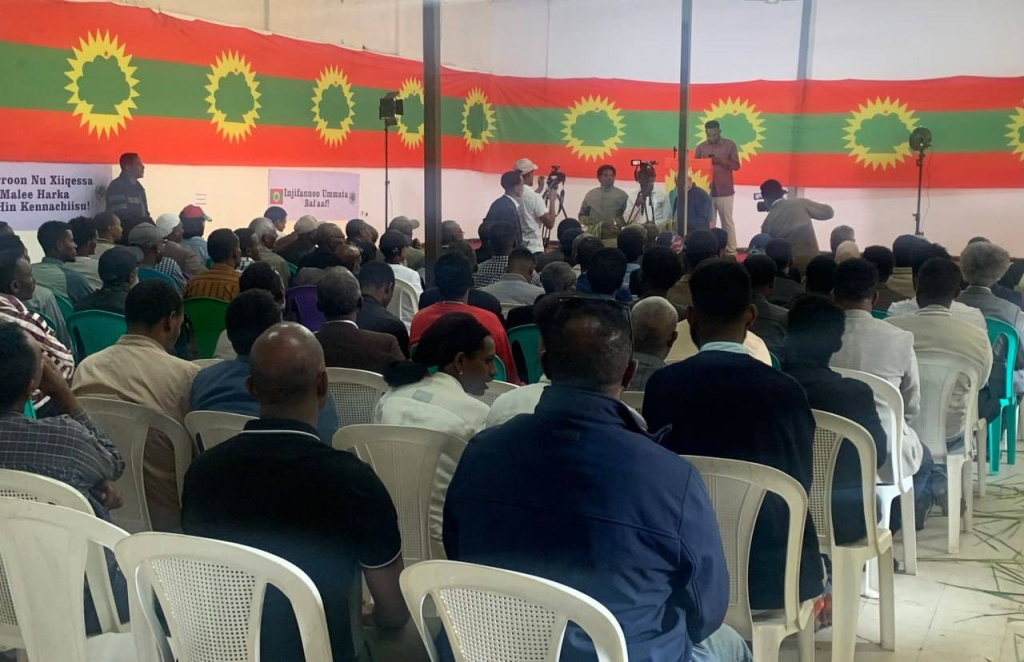
Held at the OLF’s Gullalle office, the ceremony brought together leaders, officials, members, and supporters. It began, as Oromo tradition dictates, with the Eebba of the elders, a spiritual invocation that roots contemporary struggle in ancient covenant. This set the tone: the day was to be a bridge between timeless cultural identity and urgent modern politics.
The core of the event was a powerful narrative arc, presented by key OLF figures. Jaal Kennasaa Ayyaanaa framed the day, connecting the act of commemoration to the tangible outcomes of the struggle. But the strategic heart of the discourse came from Jaal Jabeessaa Gabbisaa of the National Council (Shanee Gumii). His address was a stark, clear-eyed audit of the OLF’s journey.
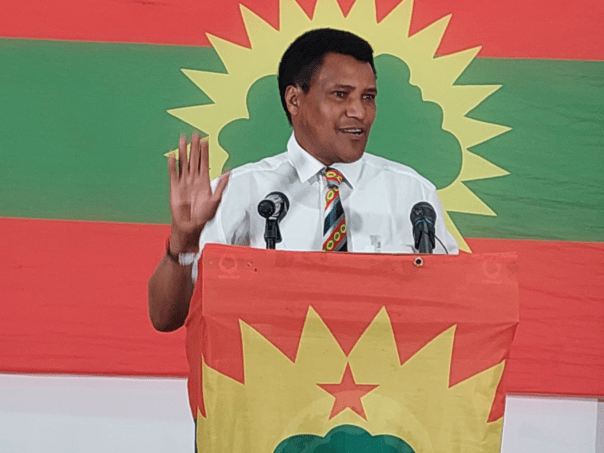
Jaal Jabeessaa declared a pivotal transition: the OLF has moved from a phase of “resistance” to one of “elections.” This is not merely rhetorical. It signifies a strategic evolution from opposing a state to preparing to administer one. He acknowledged the immense difficulties—the “severe and grueling conditions”—under which the OLF is preparing for the “7th round of elections,” a task requiring immense internal fortification (danqaa fi danqaraan). The goal, he stated, is to conduct an election that is not only fair but a “standard” and “example” for the world. This is an ambitious reframing of the Oromo quest from a struggle for recognition to one setting a global benchmark in democratic practice.
He candidly addressed challenges, noting difficulties in campaigning in regions like Amhara, Benishangul-Gumuz, and Harar due to insecurity, while asserting preparedness elsewhere. This admission of uneven political terrain was a mark of sober realism, not weakness.
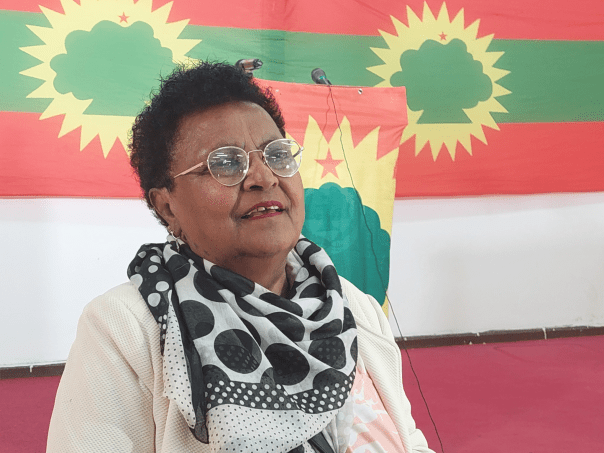
The ceremony’s most profound moment, however, was human, not strategic. The presence of Jaal Ilfinesh Qannoo, the revered activist and poet, now frail and carried to the event, served as the gathering’s moral and emotional compass. Her voice, quoting the proverb “Ilkaan socho’e buqqa’uun isaa hin oolamu” (A seed that moves does not rot), electrified the room. She transformed the metaphor: the OLF and its supporters are the “moving seed,” their constant struggle preventing the dream from decaying. Her declaration—“The OLF is a sphinx; no one can defeat it”—was a spiritual charge to the youth to prepare for the final sacrifices needed for victory. In her, the audience saw the living cost of the past and the unwavering faith required for the future.
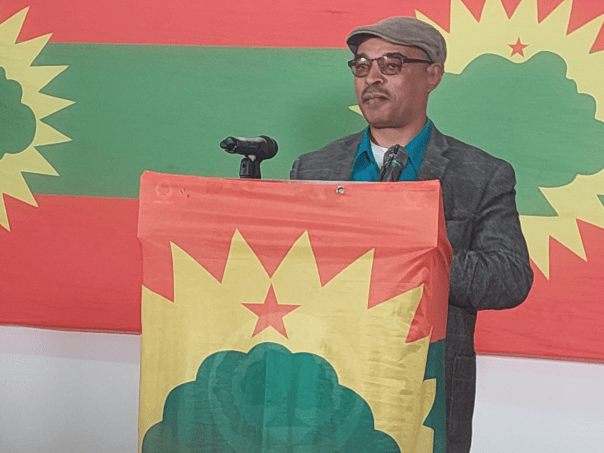
This intergenerational dialogue was emphasized by Jaal Alamaayyoo Diroo, who noted, “The OLF is forged; it has become strong because it resisted oppression.” His message reinforced that the movement’s strength lies in its tested resilience, and the only path forward is mutual self-construction (of ijaaruu fi wal ijaaruu).
In closing, Jaal Amaan Filee tied the threads together, thanking organizers and issuing a call for broader support, emphasizing that the responsibility to sustain the movement lies with every Oromo, at home and abroad.
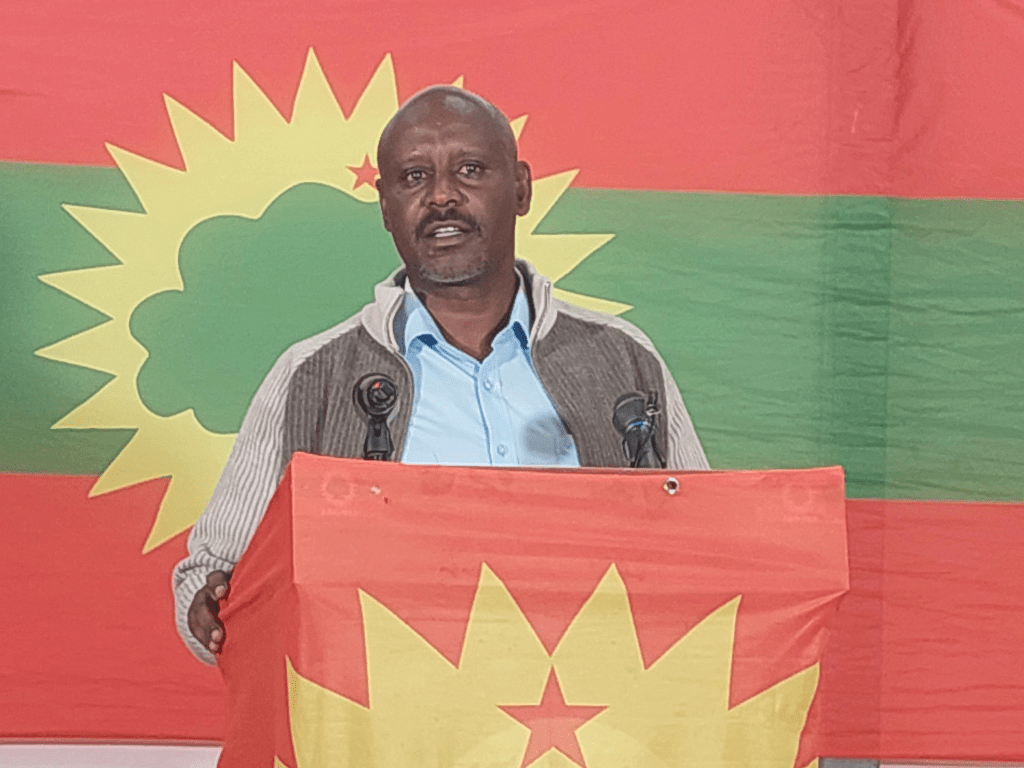
The Amajjii 2026 ceremony at the OLF HQ was, therefore, a masterful orchestration of symbolism and strategy. It honored history not as a distant memory but as an active, guiding force. It audited the present with unflinching honesty, announcing a new, electoral phase of the struggle. And most importantly, it connected these strands through the powerful imagery of the “moving seed” and the living embodiment of sacrifice in Ilfinesh Qannoo.
The message was clear: the Oromo movement is in motion, transitioning from resistance to governance, fortified by its history, steeled by its struggles, and propelled by an unbreakable spirit that refuses to let the seed of freedom rot. The new year’s celebration was, in essence, a recommitment to that perpetual motion.
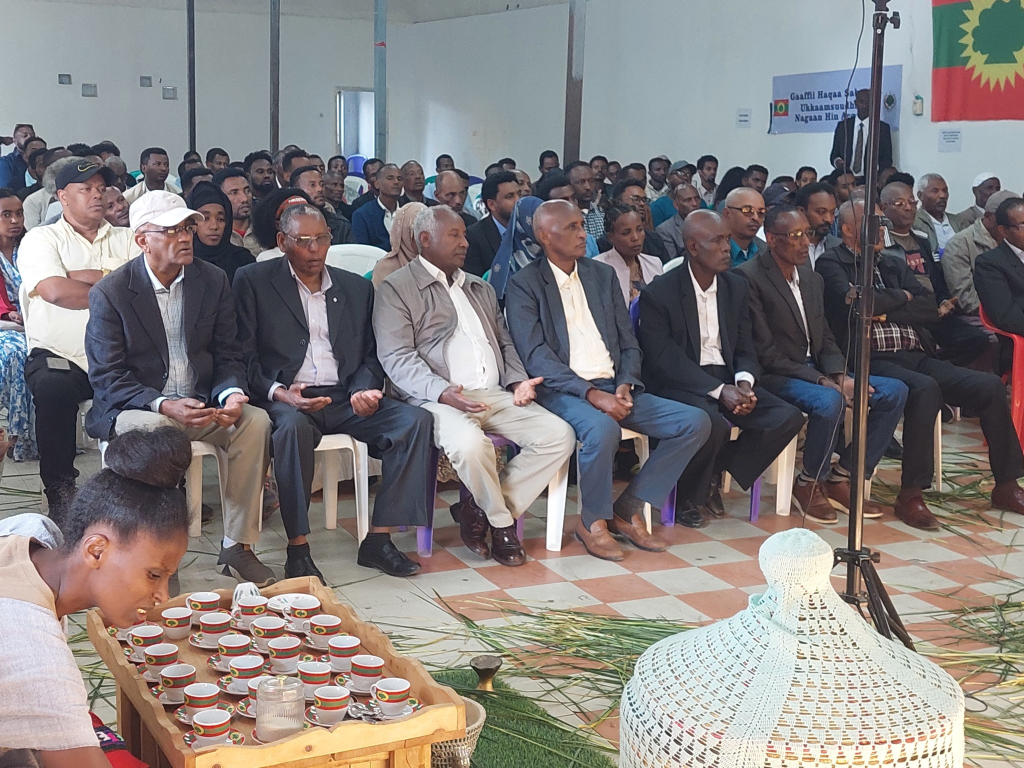
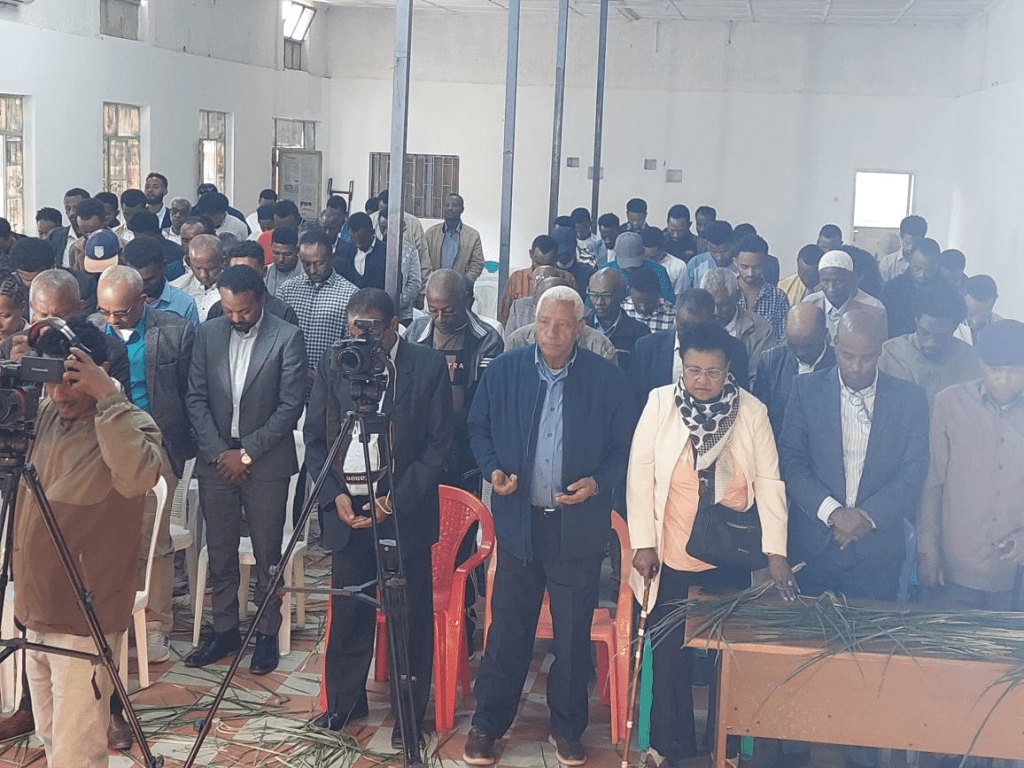

Ilfinash Qannoo: A Living Symbol of Oromo Resilience
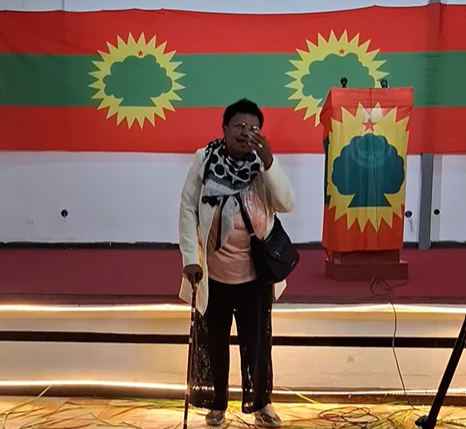
News Feature: The Unbroken Flame – Ilfinash Qannoo Embodies a Lifetime of Struggle and Steadfastness
GULLALLE, OROMIA – In the bustling activity of the Oromo Liberation Front (OLF) headquarters this Amajji 1 celebration, one figure sits with a quiet, palpable gravity. Ilfinash Qannoo, her body bearing the weight of years and the toll of relentless struggle, is a living archive of the Oromo quest for freedom. Too weak to stand, too ill to move independently, she is carried to gatherings, not as an invalid, but as a revered ember of the movement’s enduring fire.
Her presence is a testament, not to frailty, but to an indomitable will. It is the final, physical testament of a life offered completely—uleetti rarraatee—stretched across the altar of the Oromo struggle. Her commitment, born of a profound and unwavering love for the cause, saw her pour her energy into every space she could reach, for as long as she could manage, until her very body could no longer sustain the pace of the fight.
Today, on Oromo World Brotherhood Day (WBO), surrounded by a new generation of activists and leaders at the OLF Gullalle office, Ilfinash Qannoo’s role has transformed from frontline mobilizer to living monument and moral compass. Her journey is a bridge connecting the sacrifices of the past to the responsibilities of the present.
“A Seed That Moves Does Not Rot; The Dead Do Not Rise, So Do Not Fear Them.”
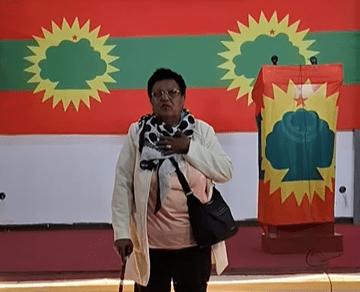
This powerful Oromo proverb, evoked by those who know her story, encapsulates her legacy. Ilfinash Qannoo was never static. She was a “seed” that moved—organizing, advocating, supporting—ensuring the ideas of liberation never stagnated or “rotted” in passivity. Her life’s work was to keep the movement in motion.
Now, her physical stillness speaks volumes. It forces a confrontation with the cost of the struggle and the solemn duty of those who remain. “Do not fear the dead,” the proverb advises, urging the living to act with the courage of those who can no longer stand. In her silent, observant presence, she embodies this charge, a silent reminder that the true threat is not the fallen, but the inaction of those who inherit their dreams.
Her life has been one of radical interdependence—naamaan deeggaramtee—leaning on and being leaned upon by the community she helped build. From providing shelter and intelligence in perilous times to offering counsel and moral support, her strength was always relational, woven into the fabric of the collective struggle.
As officials and well-wishers approach her chair on this day of celebration, they do not offer pity. They offer kabaja—deep respect. They bend to whisper words of gratitude, to seek a silent blessing from her weary eyes. The whispers that surround her are not about illness, but about endurance; not about an ending, but about a transcendent persistence.
“Ulfaadhu, umurii dheeradhu jenna!” – “Be strong, may you have long life!” is the fervent wish expressed for her. It is a wish for the longevity of the spirit she represents: the spirit of self-sacrifice, unconditional love for the cause, and an resilience that refuses to be extinguished.
Ilfinash Qannoo, in her dignified fragility, is more than an individual. She is a symbol. She represents every parent who lost a child, every activist who endured prison, every anonymous supporter who carried the movement forward in shadows. On this Amajji 1, as the Oromo people worldwide celebrate their brotherhood and identity, the image of Ilfinash Qannoo, carried to the heart of the movement’s headquarters, serves as the most profound reminder: that the journey is long, the cost is high, and the flame, once lit by love, must be tended by every generation.
Her silent message echoes in the hall: The seed must keep moving. Do not let it rot. And do not fear—build the future with the courage her life has demanded.

Tribute to Bernadette Hailé Fida: Remembering a Family Pillar
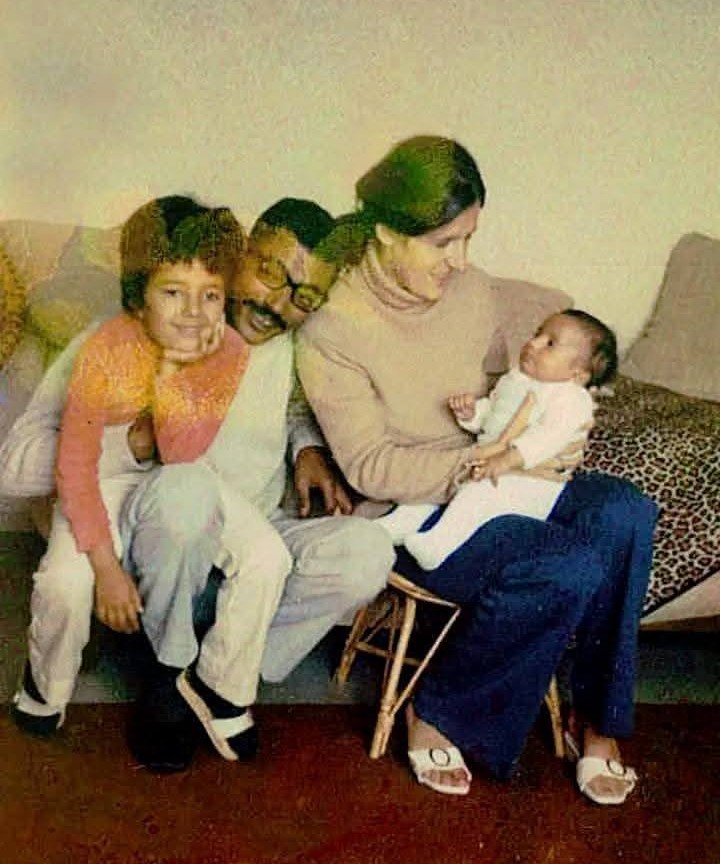
Breaking: A Pillar of Education and Family, Dr. Hailé Fida’s Wife, Passes Away
ADDIS ABABA — With profound sadness, we report the passing of Bernadette Hailé Fida, the beloved wife of the renowned Ethiopian scholar, linguist, and politician, Dr. Hailé Fida. Mrs. Hailé Fida, a French national and cherished mother to their children Sara and Yodit, departed this world after a period of illness. The news of her transition was shared by family, sending waves of grief through their wide circle of loved ones, colleagues, and the communities touched by the family’s legacy.
Bernadette Hailé Fida was more than the spouse of a prominent figure; she was the steadfast anchor of her family, providing unwavering support throughout Dr. Hailé Fida’s significant academic and political journey. Her life was one of quiet strength, cultural bridge-building, and deep devotion to her children and grandchildren.
Dr. Hailé Fida, a monumental intellectual force, is celebrated for his pivotal role in the development of Qubee, the Latin-based Oromo alphabet, and for his extensive scholarly contributions to Oromo language, history, and literature. Behind this public legacy stood a private partnership of mutual support, of which Bernadette was an integral part.

Her passing leaves a deep void in the hearts of her family. The announcement, accompanied by a prayer—“May the Creator grant comfort to their children, their family, and their friends”—reflects the profound sorrow of this moment. The family is currently observing a period of private mourning.
As condolences begin to pour in from across Ethiopia and abroad, many remember Bernadette Hailé Fida for her grace, her resilience in navigating life between two cultures, and her role in nurturing a family dedicated to education and Ethiopian heritage.
We join the nation in offering our deepest sympathies to Dr. Hailé Fida, their children Sara and Yodit, and the entire family. May her soul find eternal peace, and may her loved ones find solace in their cherished memories and the outpouring of love and support.
Rest in Peace, Bernadette Hailé Fida. 🙏




 Advocacy for Oromia