The Untold Heroes of Qeerroo: Jaal Abdii and Jaal Gaashuu

Feature Commentary: The Architects of Awakening – Recovering the Forgotten Genesis of Qeerroo
In the grand, often simplified narrative of the Oromo struggle, certain chapters risk fading into the footnotes of history. We speak in broad strokes: “The Qeerroo movement,” “The 2014-2018 protests,” “The youth uprising.” But movements are not spontaneous eruptions; they are meticulously seeded, nurtured, and ignited by individuals whose names deserve to be more than whispers in the wind. The story of Jaal Abdii Raggaasaa and Jaal Gaashuu Lammeessaa is one such pivotal, yet under-sung, genesis story.
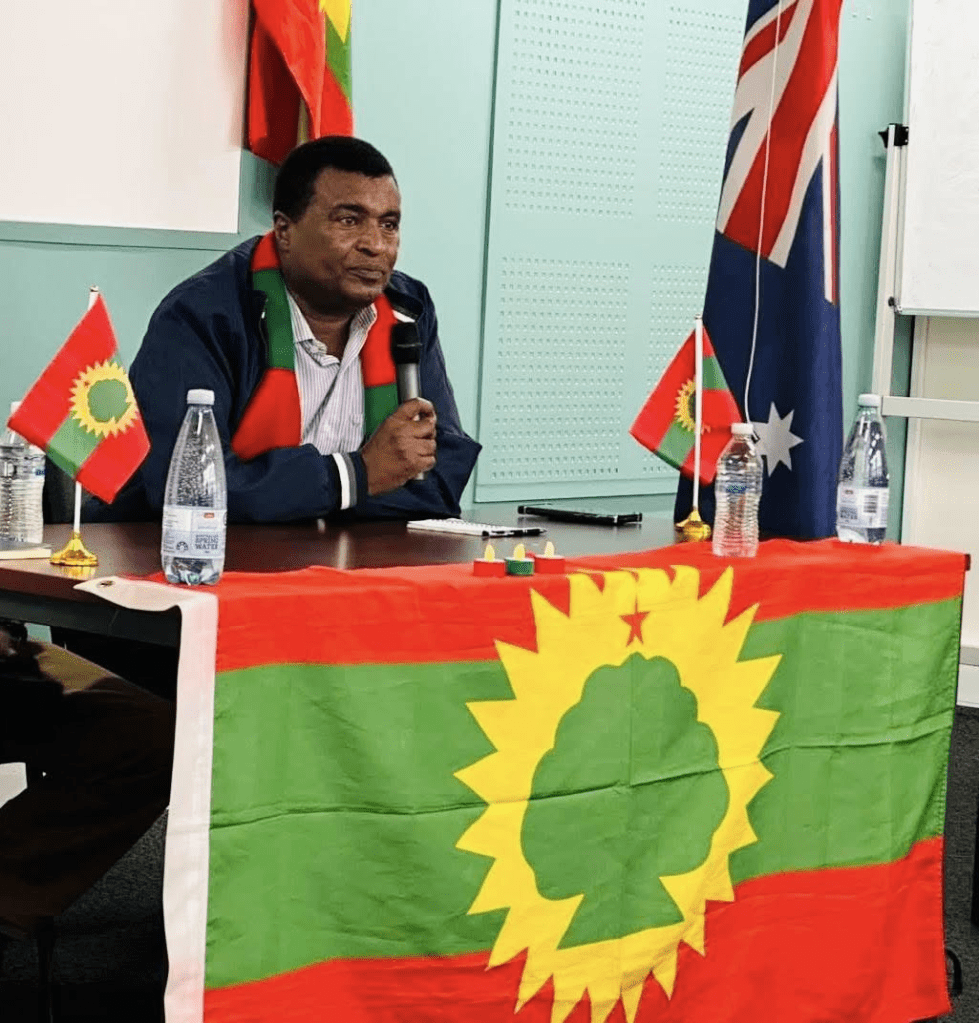
The year was 2010. As the embers of the Arab Spring began to glow in Tunisia, a parallel spark was being carefully struck in the heart of Oromia. The narrative, often repeated, is that the Qeerroo Bilisummaa Oromoo (QBO) formally announced itself on April 15, 2011. But what happened in the crucible of 2010? This is where our architects enter.
Jaal Gaashuu Lammeessaa, then a key organizational figure, performed a crucial act of political translation. He looked at the revolts cascading across North Africa—Tunisia, Egypt, Libya—and posed a radical, mobilizing question to Oromo students in universities and secondary schools: “If this can happen there, why not in Oromia?” This was not mere rhetoric; it was a strategic incitement, a deliberate framing of possibility. He channeled a global moment of youth defiance into a specific, localized call to action, providing the intellectual and motivational catalyst for a generation to organize.
But a spark needs structure to become a sustained fire. This is where the senior vanguard, Jaal Abdii Raggaasaa of the Oromo Liberation Army (WBO), provided the essential scaffolding. The formal launch of the QBO on April 15, 2011, was not a rogue student act. Testimony confirms it was discussed, planned, and ratified in conjunction with Jaal Abdii Raggaasaa. This was a strategic, top-down and bottom-up alliance. The WBO, the seasoned armed wing, provided political sanction, strategic direction, and a sense of historic continuity, blessing the nascent youth movement as a legitimate front in the broader struggle.
This partnership reveals the true, hybrid nature of the movement’s birth. It dismantles the simplistic binary of “armed struggle” versus “civil protest.” Instead, it shows a calculated synergy: the WBO offering veteran legitimacy and strategic depth, and the Qeerroo injecting massive, youthful energy, digital savvy, and a broad-based civil resistance front. As noted, Jaal Abdii Raggaasaa’s enduring vision was to “integrate the Qeerroo movement and the WBO,” seeing them not as separate entities but as interlocking forces of the same liberation engine.
Yet, herein lies the poignant thrust of this recovered history: “We must acknowledge their contribution while they are still with us, not only when they are gone.” In the rush of events and the elevation of newer faces, the foundational work of such architects can be obscured. The commentary is a corrective—a call for historical accountability and gratitude within the community itself. It insists that every member, from the highest leader to the grassroots organizer, played a part, but we must be diligent in naming those who laid specific, catalytic cornerstones.
The story of Abdii Raggaasaa and Gaashuu Lammeessaa is more than a tribute; it is a lesson in movement-building. It teaches that revolutions are born at the intersection of inspiration (Gaashuu’s translational mobilizing) and institutional sanction (Abdii’s strategic integration). It reminds us that before the hashtags and the mass marches, there were quiet meetings, risky conversations, and deliberate plans.
To remember them is to understand that the “Qeerroo spirit” was not an accident of history but a deliberate construction. It is to honor the blueprint alongside the building. As the closing refrain, “Oromiyaan Biyya!” echoes, it does so with the recognition that the path to that homeland was charted by both the soldier in the field and the strategist in the shadows, by the veteran’s resolve and the organizer’s spark. Their combined legacy is the unbreakable chain that links the struggle’s past to its restless, enduring present.

Posted on January 5, 2026, in News. Bookmark the permalink. Leave a comment.




 Advocacy for Oromia
Leave a comment
Comments 0