Oromo Solidarity: Struggles for Unity and Ownership

FEATURE NEWS
“WE ARE NOT FREE FROM FEAR”: A COMMUNITY LEADER’S SOBERING ASSESSMENT ON THE STATE OF OROMO SOLIDARITY
By Maatii Sabaa
Date: December 11, 2023
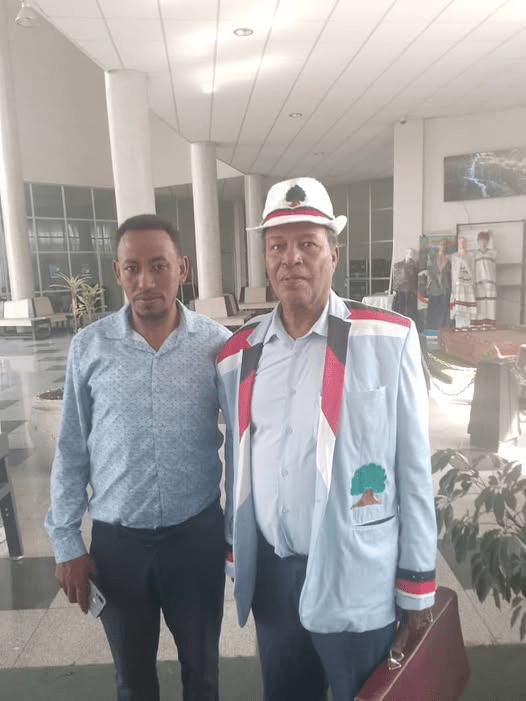
In a poignant and critical address that has resonated across the Oromo diaspora and within Ethiopia, Obbo Dirribi Damusee, the former Chairman of the influential Maccaa and Tuulamaa Association (MTA), has delivered a stark analysis of the current condition of the Oromo people. His message, steeped in the gravity of lived experience and historical awareness, cuts to the heart of contemporary struggles.
“The Oromo people today are not free from fear; they live in a state of fragmentation and internal division,” Dirribi stated, articulating a concern shared by many observers. “The community has awakened, yes, but it has not yet unified itself. It still lacks genuine ownership of its own cause.”
These words, shared during a recent community forum, transcend mere opinion. They represent a sobering diagnosis from a figure deeply embedded in the long history of Oromo organizational and intellectual resistance. The MTA, which Dirribi once led, is historically recognized as a crucial incubator for Oromo national consciousness, making his critique particularly significant.
Awakening Without Unity: The Core Dilemma
Dirribi’s statement draws a critical distinction between awakening and ownership. The Oromo people, especially following the watershed protests of 2014-2018, have undergone a profound political and cultural awakening. A new generation has fiercely challenged historical narratives and demanded rights, visibility, and self-determination.
However, Dirribi suggests this awakening has not yet crystallized into a sustained, unified, and self-directed movement. The term “of-birratee jira” (fragmented, divided) points to the internal fractures—political, ideological, and regional—that continue to hamper collective action. The “sodaarraa bilisa miti” (not free from fear) acknowledges the persistent climate of political repression, violence, and insecurity that prevents the full and free expression of Oromo political will.
The Challenge of “Ownership” (Keessummaa)
The most profound part of his message lies in the concept of “keessummaa” – ownership, agency, or authentic stewardship. Dirribi contends that for the Oromo struggle to transcend reaction and achieve its objectives, the community must move beyond being merely awakened to external stimuli. It must cultivate an internal, collective ownership of its institutions, its political projects, and its future direction.
This implies building resilient, accountable, and transparent structures that are truly of the people, by the people, and for the people. It is a call to move from protest to sustained institution-building, from fragmented reactions to a cohesive, long-term strategy owned by the community itself.
A Veteran’s Voice in a Critical Time
Obbo Dirribi Damusee’s intervention comes at a critical juncture. The Oromo people, and Ethiopia at large, face immense uncertainty. His words serve as both a caution and a guide:
- A Caution: Against the dangers of division and the illusion that awakening alone is sufficient. Fear and fragmentation remain formidable adversaries.
- A Guide: Toward the harder, more meticulous work of building internal unity, fostering genuine leadership accountable to the people, and claiming full ownership of the struggle’s direction and destiny.
The message is clear: the path to true freedom requires conquering internal divisions as surely as it requires confronting external obstacles. The awakening was the first, essential step. The challenge now, as framed by this elder statesman, is to transform that awakening into an unshakeable, self-determined unity. The question left to the community is how to answer this call.

Posted on January 7, 2026, in News. Bookmark the permalink. Leave a comment.




 Advocacy for Oromia
Leave a comment
Comments 0