Understanding the Karrayyu’s Role in Buttaa Qaluu
FEATURE COMMENTARY
Buttaa Qaluu: The Gadaa Ceremony of Consecration and the Sacred Bond of Karrayyu Stewardship
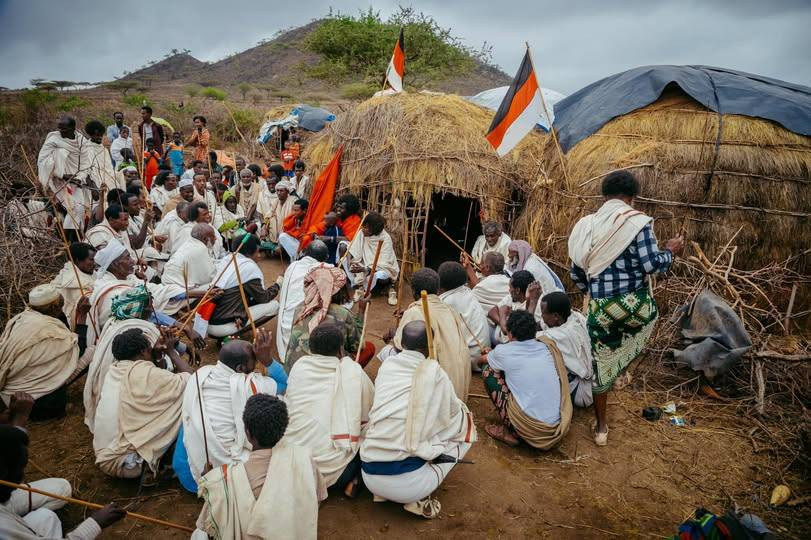
In the heart of Oromia, among the intricate pillars of Gadaa governance and ritual, there exists a sacred ceremony known as Buttaa Qaluu. Often referred to poetically as “Irreecha goobaa kennuu” — the giving of the festival of Irreecha — this ritual transcends mere celebration. It is a profound act of spiritual and political consecration, a moment when cyclical authority is solemnized, and the land itself is entrusted to its guardians.
The ceremony is anchored in a specific and revered geography: the plains of Tarree Reeddii, within the territory of the Warra Baasoo in the Ardaa Jilaa district. This is not a random location. Tarree Reeddii is more than land; it is a historical and ritual fulcrum, a site where the cosmic order reflected in the Gadaa system touches the earth.
The text reveals a crucial dimension of this ritual: “Tarree Reeddii ardaa jilaa Karrayyuun itti baallii waliif dabarsee kennuu dha.”
(It is at Tarree Reeddii in Ardaa Jilaa that the Karrayyu mutually confer and bestow the Baallii [authority/term of power].)
This single line unravels deep layers of meaning:
- The Karrayyu as Custodians of the Ritual: The ceremony is intrinsically tied to the Karrayyu clan, a major Oromo lineage known as stalwart guardians of Gadaa traditions. Their role here is not passive; they are the active conduits and mediators of power. The act of “mutually conferring” the Baallii suggests a collective, deliberative process rooted in consensus, a core democratic principle of Gadaa.
- Baallii: More Than Just Power: The Baallii is the Gadaa grade of leadership, an eight-year term of political, military, and ritual authority. Its conferral is the climax of the Buttaa Qaluu. The use of “kennuu” (to bestow/give) frames this not as a seizure of power, but as a sacred offering and a heavy responsibility being passed from the outgoing Gadaa class to the incoming one, under the auspices of the Karrayyu and witnessed by the community and the divine (Waaqa).
- Irreecha Goobaa Kennuu – A Metaphor of Renewal: Linking this ceremony to Irreecha (the Oromo thanksgiving festival) is deeply symbolic. Irreecha celebrates the end of the dark rainy season and the blossoming of spring; it is a festival of gratitude, cleansing, and renewal. To call Buttaa Qaluu the “giving of Irreecha” implies it is the source of that renewal, the ritual moment that ensures the cyclical rebirth of the natural and social order. The new leadership (Baallii) is thus bestowed as a gift to the people, meant to usher in a season of peace, fertility, and justice.
The Larger Significance
The Buttaa Qaluu at Tarree Reeddii is therefore a linchpin in the Gadaa universe. It is:
- A Transfer of Mandate: The peaceful, ritualized transfer of supreme authority.
- A Covenant with the Land: The ceremony ties the new leaders’ legitimacy to a specific, sacred geography, grounding their rule in the soil and history of their people.
- A Clan’s Sacred Duty: It highlights the essential, non-competitive role of specific clans like the Karrayyu as upholders of the system’s integrity.
- A Living Democracy: It demonstrates Gadaa as a living system where power is not taken but received, not owned but held in trust, and always linked to the well-being of the community and the environment.
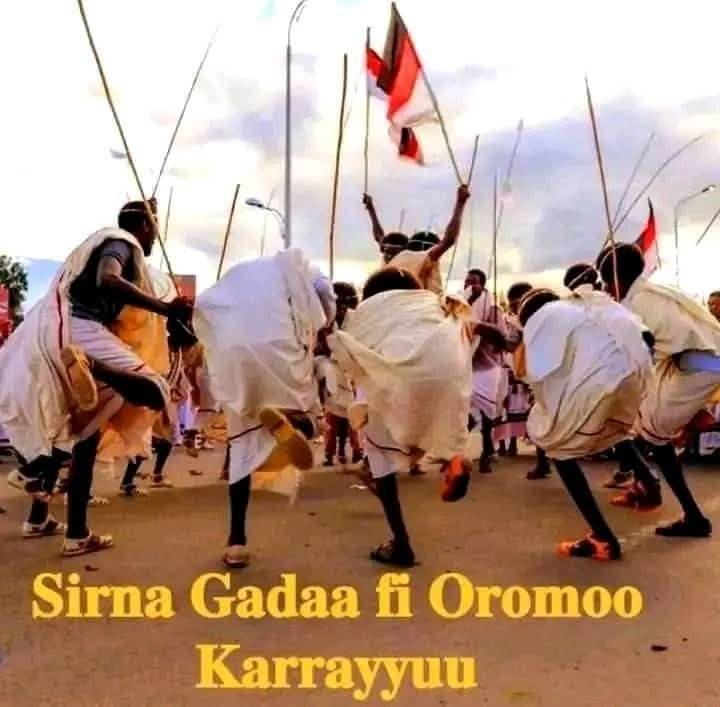
In an era where political transitions are often marked by conflict, the image of the Karrayyu at Tarree Reeddii, overseeing the mutual and solemn bestowal of the Baallii, stands as a powerful testament to an indigenous African model of democratic renewal, sacred stewardship, and enduring peace.
This ceremony reminds us that true authority is a gift given by the people, through tradition, for the renewal of all life.

Posted on January 8, 2026, in News. Bookmark the permalink. Leave a comment.




 Advocacy for Oromia
Leave a comment
Comments 0