Community Healing: The Naqamtee Reconciliation Council’s Impact

NEWS FEATURE
Peacemakers of Naqamtee: How a Community-Based Reconciliation Council is Healing Families
NAQAMTEE, OROMIA — In this bustling city, a quiet revolution is taking place inside homes, not on the streets. It’s led not by politicians, but by elders and respected community figures who have come together to form a local reconciliation council, or gaa’ila. Their mission: to mend the fractures within families before they reach the courthouse, and to restore peace one household at a time.
The council’s impact is tangible. To date, its members have successfully mediated and reconciled over 300 families teetering on the brink of permanent separation. But their work doesn’t end with a handshake. “It’s not just about reconciliation,” explains Luba Haayilu, a founding member. “We also follow up by visiting their homes to see how the healing is progressing, and we counsel and educate them about the principles of gaa’ila itself. The benefit is immense.”
From Courtrooms to Living Rooms
The traditional path for marital or family disputes in Ethiopia often leads to a costly, adversarial, and public court battle. The Gaa’ila council of Naqamtee offers an alternative rooted in Oromo customary law (Aadaa Seera). They describe a common scenario: a husband and wife separate, divide their property through the court, and go their separate ways, often leaving deep wounds.
“Afterwards,” says Luba Haayilu, “they come to us separately, gain understanding, seek each other out, and are reconciled. They are now living together anew, with love.”
A Personal Mission Born from Observation
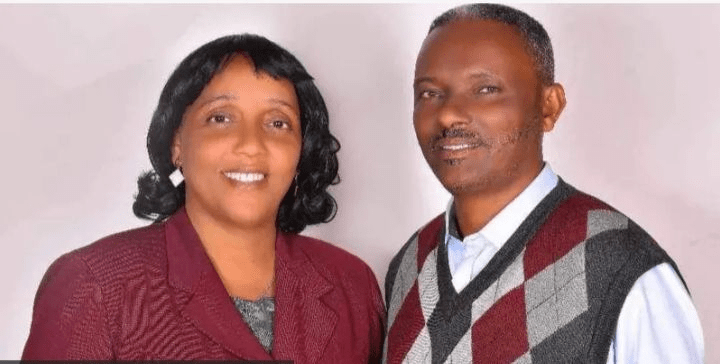
For Luba Haayilu and his wife, Aadde Yashii Abbabaa, this mission is personal. They founded their council 25 years ago. The catalyst was the pain they witnessed around them. “We didn’t start this work while sitting idle,” Luba recalls. “It was because of what we saw happening on the streets.”
He shares a poignant story that compelled them to act: “A young man would marry a girl and they would have a child. However, while they loved each other, her family would intervene and separate them. ‘No, this boy is not the right man for you,’ they would say, and they would take their daughter back after she had borne his child. The young man would be left utterly heartbroken.”
Seeing this cycle of unnecessary familial destruction, Luba and Yashii decided to intervene. “We want everyone to have a stable family (gaa’ila tasgabbaa’aa),” Luba explains. “So we asked ourselves, ‘Why are we just sitting here while families are breaking apart?’ and we began this work of mercy.”
The Methodology: Listening and Facilitating Dialogue
The council’s power lies in its process. The two key principles, Luba states, are equal listening and openly identifying the root cause of the conflict. “We listen to both sides equally and we bring the source of the problem out into the open to discuss it frankly,” he says.
A primary technique is facilitating direct communication. Council members visit the family home and mediate a conversation between the spouses about their union. “We talk with them about their marriage together, and that’s how we reconcile them,” Luba notes.
Fruits of Reconciliation: A Legacy of Peace
The rewards of this decades-long work are measured in human futures restored. Luba beams with pride when speaking of the families they’ve helped. “Today, that family has had many more children. Their children have grown into adults. One of their children is now studying for a second degree. I am very happy,” he says, reflecting on one of their early successes.
The Gaa’ila council of Naqamtee stands as a powerful testament to community-driven justice. It operates on the belief that the best resolution is not a legal verdict that divides property, but a healed relationship that preserves a family. In a world of complex legal systems, they offer a simple, profound alternative: deep listening, honest dialogue, and the patient rebuilding of trust. Their 300 reconciled families are a living archive of their success, and a model for communities everywhere.

Posted on January 10, 2026, in News. Bookmark the permalink. Leave a comment.




 Advocacy for Oromia
Leave a comment
Comments 0