Exploring ‘Daaniyaa’: A Journey of Resistance and Identity

The Unbroken Pen: “Daaniyaa” and the Price of Truth in Captivity
In a quiet but profound literary offering, a book titled “Daaniyaa” has emerged from a place of enforced silence, carrying a message that resonates far beyond its pages. “A person who reads this book, Daaniyaa,” it is said, “will not lose their faith, but will find their identity within it.” This is more than a tagline; it is a declaration of the book’s purpose and the defiant spirit of its author, Dhaabassa Waaqjiraa, who wrote it from within a prison cell.
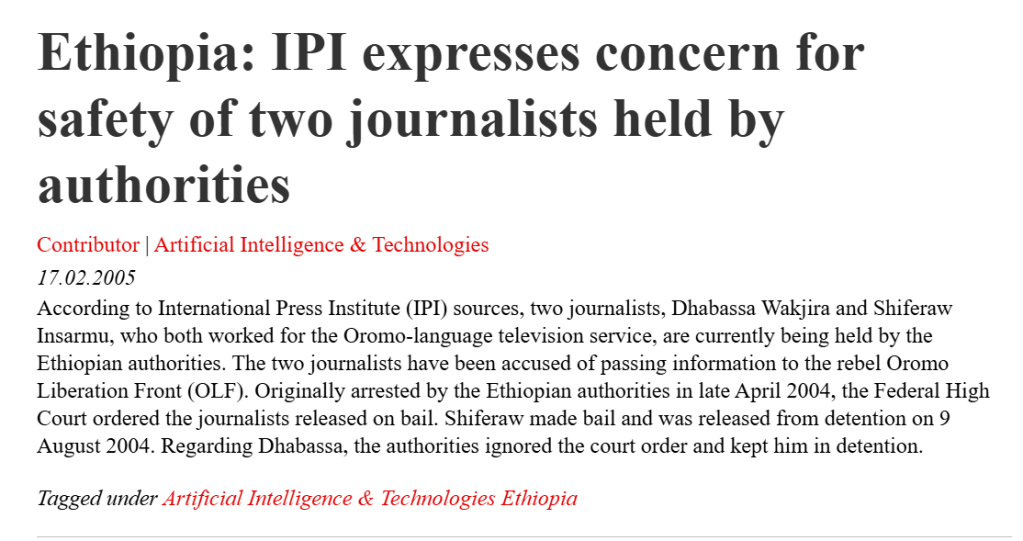
The story of Daaniyaa is inextricably linked to the story of its creator, a narrative that reveals the high cost of integrity within a repressive system. Dhaabassa was not an anonymous activist in the shadows but a professional within the system itself—a producer for the Afaan Oromoo program at the Ethiopian Television (ETV). His colleagues from that time attest to his diligence and strength, calling him a “hard worker.” Yet, it was precisely this platform that became the stage for his principled stand, which would ultimately lead to his downfall.
His crime, as framed by the then-ruling EPRDF and its security apparatus (IHADIG), was a classic example of how truth-telling is criminalized. During a period when the city of Adama (Nazareth) was controversially designated as the “capital of Oromia,” Dhaabassa did what any responsible journalist and Oromo citizen might do: he challenged the official narrative on air. He presented evidence, arguing that Adama could not functionally serve as the regional capital, citing its history as a site of recurring conflict and displacement, particularly referencing the turbulent period of 1994/95.
This act of professional and civic duty was not received as such. It was twisted into an act of subversion. The state’s machinery swung into action: he was accused of having “ties with the enemy” for opposing the capital designation, and other pretexts were fabricated. Along with a colleague, Shifarra, he was arrested and imprisoned. His career was not just ended; it was used to paint him as a traitor.
Courtesy: https://www.pambazuka.org/categories/media-freedom-expression?page=150
But here lies the remarkable turn in this story: captivity became a crucible for creation. It was from within this very prison that Dhaabassa Waaqjiraa, alongside fellow inmates, gathered testimonies and composed Daaniyaa. The book is therefore a physical artifact of resistance—a testament that the walls meant to silence him only focused his voice. It embodies a powerful truth: “People who give themselves for their nation want to do something. To accomplish what they have envisioned, no circumstance or time is a limit to them. Their work is not measured by personal gain.” Dhaabassa himself is living proof.
The publication of Daaniyaa prompts a challenging reflection for the reader and the wider Oromo intelligentsia: “If you were in his place, could you have written this book? It doesn’t seem so to me.” This is not a challenge of capability, but of courage and commitment. It asks us to measure our own resolve against the standard set by those who write history from their shackles.
The final call is both an invitation and a charge: “Let the generation buy and read this book. You become for your nation what you are for yourself. You will find yourself in Daaniyaa.”
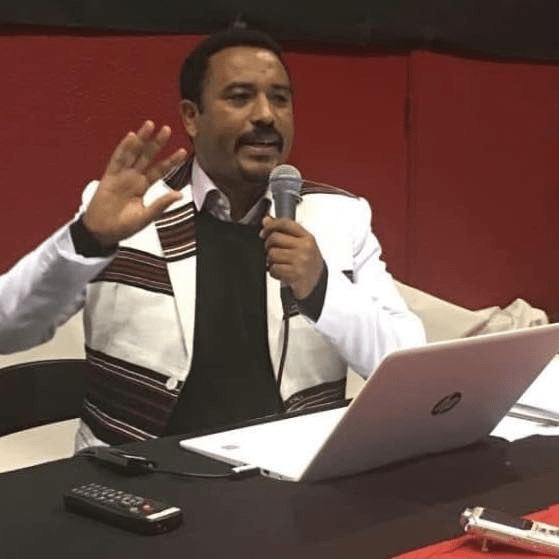
Daaniyaa is more than a memoir or a historical account. It is a mirror held up to the Oromo struggle, reflecting the enduring battle for narrative sovereignty, the persecution faced by those who speak inconvenient truths, and the indomitable will to create identity and history even from the darkest of places. It is a story of how a prison sentence was transformed into a sentence of liberation, written one word at a time.

Posted on January 12, 2026, in News. Bookmark the permalink. Leave a comment.




 Advocacy for Oromia
Leave a comment
Comments 0