Daily Archives: January 22, 2026

Unlocking Oromo Women’s Power for Community Change
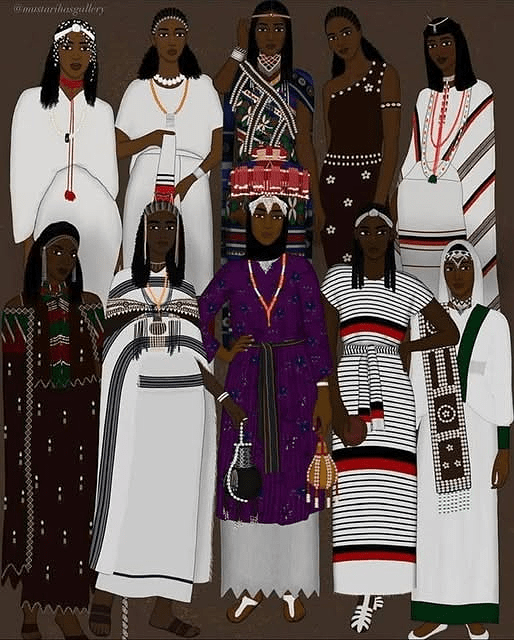
Feature Commentary: Beyond the Token – The Imperative of Unleashing Oromo Women’s Power
A profound truth is being spoken by the Oromo Sisterhood Institute, one that every Oromo civic and political organization must hear: the future of the Oromo people is held in the untapped potential of its women. The call is not for polite inclusion but for a fundamental restructuring of power.
The statement, “Advancing Equity for Oromo Women,” begins with a diagnosis that rejects all euphemisms. The absence of Oromo women from leadership boards, high-stakes negotiations, and strategic decision-making is not an “oversight.” It is, in their own powerful words, a “systemic breakdown.” This framing is crucial. It moves the conversation from a plea for a seat at the table to a demand to rebuild the table itself. The failure is not of individuals but of design.
The Mirage of Inclusion and the Reality of Exclusion
For too long, the solution offered to this systemic failure has been tokenism. A single female face on a committee of twelve becomes the shield against criticism, the hollow symbol of “inclusion.” The Oromo Sisterhood Institute rightly declares this era over. A committee with one woman is not inclusive; it is a perpetuation of the exclusionary structure. True engagement, they argue, requires “clear avenues for Oromo women to lead, impact, and mold our institutions.” This is the difference between being a guest in a house you did not build and being an architect of the new foundation.
The distinction between where Oromo women are currently concentrated and where they are systematically excluded is stark. They are overwhelmingly present in the volunteer work, the community mobilizing, and the front-line advocacy—the vital, often thankless labor that keeps movements alive. Yet, when the discussions shift to strategy, governance, and final decision-making—where the power to set direction and allocate resources resides—their voices fade into the background. The Institute’s message is clear: this dissonance is unacceptable. The work of the hands must be connected to the authority of the voice.
Dismantling the Barriers: A Matter of Justice
To move forward requires honest confrontation with the specific barriers. The Institute names them plainly: the gatekeeping of old networks, cultural norms that invisibilize women’s intellectual and leadership capacities, biased practices in hiring and promotion, and the simple, stark lack of representation where it counts most. These are not peripheral “women’s issues.” They are, as stated, core “issues of justice.” A struggle for liberation that internally replicates structures of oppression is a contradiction in terms.
An inclusive Oromo community, therefore, is not one that merely allows women to speak. It is one that actively “prioritizes women’s voices,” expects their leadership as a norm, and, most importantly, ensures that young Oromo girls can look at every level of their community’s power structure and see a reflection of themselves. Representation is not a gift; it is a mirror that tells the next generation what is possible.
The Unlocked Future
The concluding statement lands with the force of prophecy: “The future of the Oromo people depends on the power we choose to unlock in our women today.” This is the ultimate calculus. The Oromo struggle, in its quest for justice, self-determination, and cultural renaissance, cannot afford to operate at half-strength. It cannot hope to build a liberated tomorrow while silencing half its wisdom, courage, and vision today.
The Oromo Sisterhood Institute has issued more than a statement; it has issued a challenge. The transformation they speak of is not just for women—it is for the entire Oromo nation. To ignore this call is not just to fail women; it is to willfully constrain the future. When Oromo women are truly unleashed to lead, the very horizon of what is possible for the Oromo people expands. Their full potential is not a separate cause; it is the key to a transformed tomorrow.

Oromia’s Jila Tajoo: A Cultural Celebration of Unity
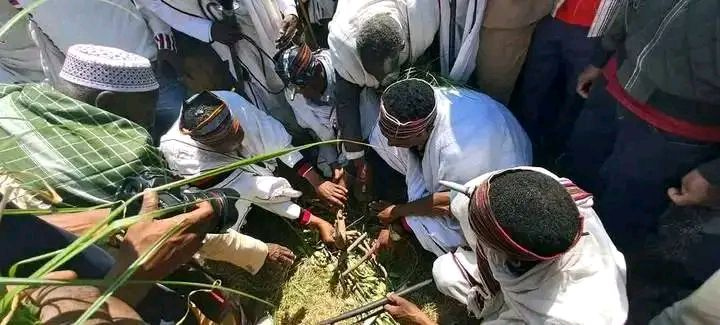
Feature News: Reviving Tradition – Oromia Calls for a Collective Celebration of Jila Tajoo/Birboo
Malkaa Baatuu, Oromia Region – The call has been sounded across Oromia. In a vibrant celebration of faith, culture, and community, the annual Jila Tajoo/Birboo is set to be observed with reverence and unity. The gathering, deeply rooted in the sacred Utaa-Waayyu tradition, has been officially announced for Sunday, January 25, 2026 or Amajjii 17, 2018 EC (Ethiopian Calendar).
The ritual, which holds both spiritual and social significance, will be held at Malkaa Baatuu, near the premises of the Oromia Regional State University in the east.
The invitation is extended broadly and emotionally. “Oromoon cufti, ittiin bultoonni, jaalattoonniifi leelliftoonni aadaafi duudhaa Oromoo marti koottaa waliin Jila Tajoo haa bulfannuu,” the announcement proclaims. (Oromo people, come one and all, leaders, devotees, and supporters of Oromo culture and faith, let us celebrate Jila Tajoo together at the appointed time.)
The event serves a threefold purpose deeply embedded in the Oromo worldview: to celebrate and preserve ancient traditions, to express gratitude for the past, and to invoke blessings for the future. The full call translates as: Let us celebrate Jila Tajoo together, give thanks to Waaqa Uumaa (the Creator) for what has passed, and pray for milkii (abundance) for what is to come!
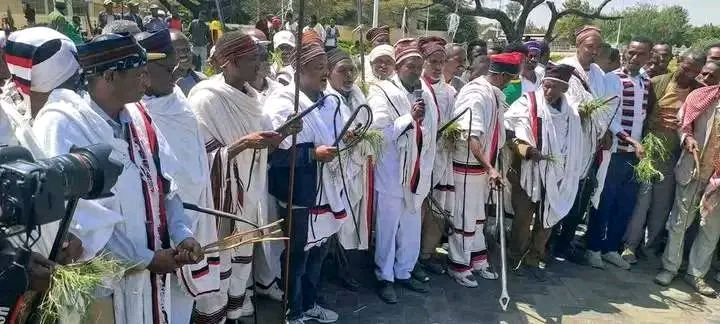
The gathering is not merely a ceremony but a profound communal experience, a reaffirmation of identity. It promises a full sensory immersion in Oromo heritage, culminating in the evocative closing line: “Ijaan aaga argaa; gurraan nagaa dhagayaa!” (May our eyes see wonder; may our ears hear peace!)
This celebration stands as a powerful testament to the living, breathing nature of Oromo cultural and spiritual systems, inviting a collective experience of gratitude, hope, and enduring tradition.
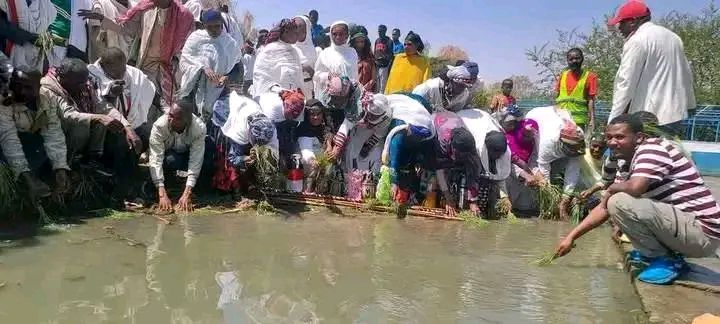

Australia Mourns Bondi Victims with Light and Silence, as Communities Reaffirm Hope
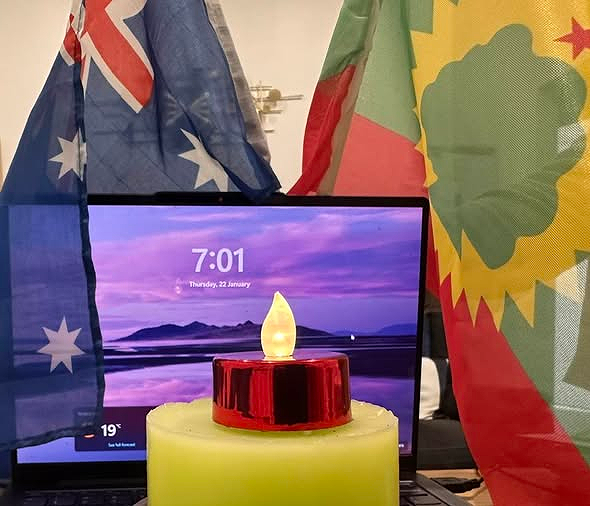
January 22, 2026 | AUSTRALIA – Today, Australia stands still in a sombre moment of national unity, observing a National Day of Mourning for the 15 lives taken in the devastating terrorist attack at Bondi’s Jewish community centre last month.
The Day of Mourning has been declared as a time for collective reflection, with all Australians called upon to join together in grief and solidarity. “It is a day for all Australians to come together to grieve, remember, and stand against antisemitism and hate,” a government statement affirmed.
In a series of formal tributes, flags are being flown at half-mast across federal and Victorian government buildings. As evening falls, iconic landmarks throughout Victoria will be illuminated in white—a powerful visual symbol of resilience, peace, and the collective determination to move forward.
At exactly 7:01 PM, the time the attack unfolded on December 14, 2025, the nation is invited to pause for a minute of silence—a shared moment to remember the innocent victims whose lives and futures were violently cut short.
Personal Acts of Remembrance Echo National Resolve
The official day of mourning is mirrored in the private homes of Australians from all walks of life, where the national tragedy resonates with personal histories of loss and resilience. For some, the act of remembrance is profoundly intertwined with their own experiences.
“At 7:01 PM, my family and I lit memorial candles for a minute of silence,” shared one community member, speaking from Melbourne. Their reflection wove together the national moment with a deeply personal journey: “We found the peace and freedom in Australia that was violated in our homeland, Oromia. Therefore, we condemn any act of hatred. We reiterated our hope that any darkness will be conquered by light.”
This sentiment underscores the profound significance of safety and social cohesion for Australia’s multicultural communities. For many who have sought refuge and stability, the attack strikes at the very promise of sanctuary that Australia represents.
A Nation’s Grief, A Shared Commitment
Today’s observances are more than ritual; they are a national reaffirmation of the values that bind a diverse society together. The minute of silence, the lowered flags, and the glowing white landmarks serve as public pledges against hate, offering a collective response to tragedy through unity and remembrance.
As candles flicker in windows and cities shine with light, the message echoing across the country is clear: from the depths of shared mourning arises a strengthened commitment to ensure that light—and the hope it carries—will always prevail.

The Oromo Flag: Shining Light on a Legacy of Struggle
Feature News: The Unbroken Symbol – The Oromo Flag as a Nexus of Identity and Struggle
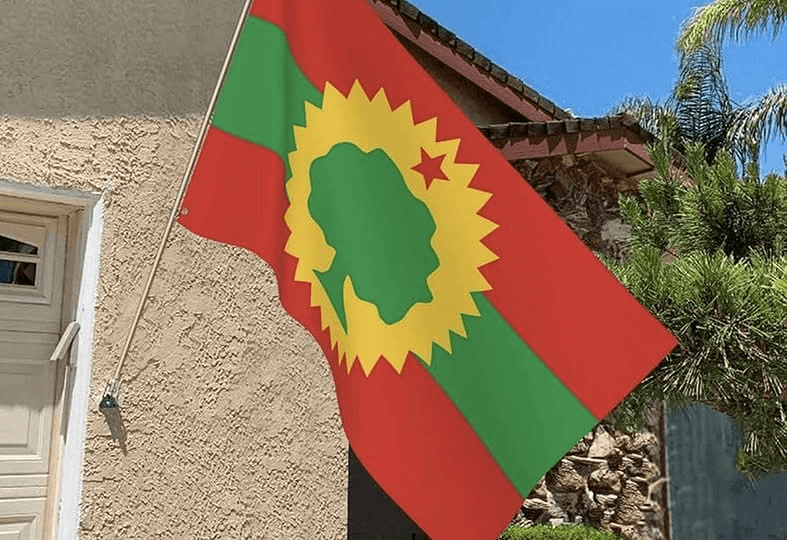
In the annals of liberation movements, a symbol is never just cloth and color. It is a repository of memory, a map of a desired future, and a target for those who fear the unity it inspires. A recent, poignant statement from within the Oromo struggle underscores this eternal truth: “Oromoon akka mul’atuu fi dhabama irraa hafu kan godhe faajjii qabsoo kana! Alaabaa Oromoo ibsituu dukkanaa..!!” (“What made the Oromo people visible and saved them from extinction is this struggle! The Oromo flag that shines in the darkness..!!”).
This declaration is not mere rhetoric; it is a historical verdict and a living reality. The Oromo flag—with its horizontal stripes of black, red, and white—has evolved from a clandestine emblem of resistance to a powerful, public declaration of an identity long suppressed. Its journey from the shadows into the light is the story of the Oromo people’s modern political awakening.
From Suppression to Symbol: The Flag’s Forbidden History
For decades under successive Ethiopian regimes, the display of the Oromo flag was a criminal act, punishable by imprisonment or worse. Its colors were banned, its meaning erased from official discourse in a systematic attempt to enforce cultural and political assimilation. To raise it was an act of profound bravery, a silent shout of existence against a state policy that sought to render Oromoness—Oromumma—invisible.
“The struggle gave us visibility,” the statement asserts, pointing to the decades-long political and cultural mobilization led by groups like the Oromo Liberation Front (OLF). The flag became the central emblem of this movement, its display at protests, cultural festivals, and in diasporic communities a direct repudiation of enforced silence. It transformed from a party symbol into a national one, representing not just a political program but the very sovereignty of the Oromo nation—a people with a distinct history, language, and the Gadaa system of governance.
“Shining in the Darkness”: A Beacon of Collective Memory
The phrase “shining in the darkness” is deeply evocative. The “darkness” represents eras of persecution, mass displacement, and cultural negation. The flag’s light is the enduring spirit of resistance, the scholarly work preserving Oromo history, the poets singing in Afaan Oromo, and the millions who now claim their identity publicly.
It shines on the graves of martyrs like Hundee (Ahmad Taqii), whose sacrifice was meant to sow terror but instead planted a seed of defiance. It illuminates the wisdom of oral traditions like Mirriga, which carries the constitutional memory of the people. It is the light held high by each new generation of Qeerroo and Qarree, the youth who have carried the struggle into the 21st century.
The Contemporary Crucible: Between Celebration and Conflict
Today, the flag flies openly across Oromia, a testament to a hard-won political space. It is celebrated during festivals like Irreechaa and marks public buildings. Yet, its display remains a potent and often contentious political act. To some, it is an unequivocal symbol of self-determination; to the state, its political interpretation can be seen as a challenge to national unity.
This tension ensures the flag is more than a celebratory banner; it remains a banner of contention. Each time it is raised, it reiterates the unresolved questions at the heart of the Ethiopian federation: the meaning of true multinational equality, the right to self-administration, and the legacy of a struggle that saved a people from cultural extinction.
An Amaanaa Carried Forward
The featured statement connects directly to the core Oromo concept of Amaanaa—the sacred trust of the martyrs. To bear the flag is to bear that trust. It is a vow that the sacrifice of those named in the litany of heroes—from Elemoo Qilxuu to Mecha Tullu—will not be betrayed for fleeting political gain. The flag is the physical manifestation of that covenant, a daily reminder that the visibility it represents was purchased at an incalculable price.
As one Oromo intellectual noted, the struggle is an unstoppable train; some may disembark, but the journey continues. The Oromo flag is the headlight of that train, cutting through the darkness of history, its light a constant, challenging, and unifying glow for millions. It is, as the voice from the struggle declared, the brilliant, undeniable proof that the Oromo people are here, they remember, and they endure.




 Advocacy for Oromia