Unlocking Oromo Women’s Power for Community Change
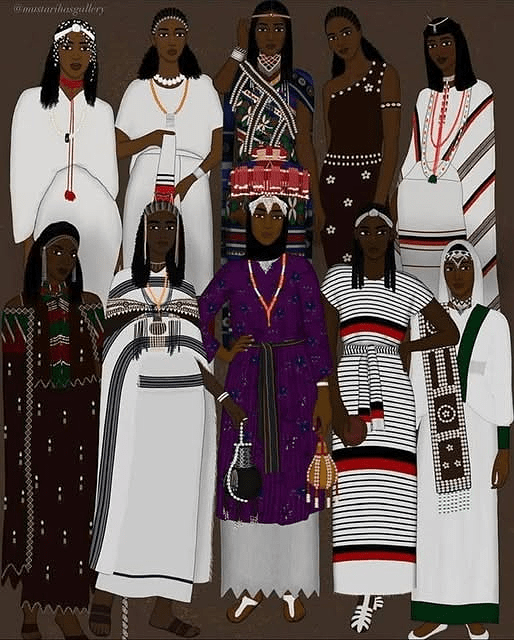
Feature Commentary: Beyond the Token – The Imperative of Unleashing Oromo Women’s Power
A profound truth is being spoken by the Oromo Sisterhood Institute, one that every Oromo civic and political organization must hear: the future of the Oromo people is held in the untapped potential of its women. The call is not for polite inclusion but for a fundamental restructuring of power.
The statement, “Advancing Equity for Oromo Women,” begins with a diagnosis that rejects all euphemisms. The absence of Oromo women from leadership boards, high-stakes negotiations, and strategic decision-making is not an “oversight.” It is, in their own powerful words, a “systemic breakdown.” This framing is crucial. It moves the conversation from a plea for a seat at the table to a demand to rebuild the table itself. The failure is not of individuals but of design.
The Mirage of Inclusion and the Reality of Exclusion
For too long, the solution offered to this systemic failure has been tokenism. A single female face on a committee of twelve becomes the shield against criticism, the hollow symbol of “inclusion.” The Oromo Sisterhood Institute rightly declares this era over. A committee with one woman is not inclusive; it is a perpetuation of the exclusionary structure. True engagement, they argue, requires “clear avenues for Oromo women to lead, impact, and mold our institutions.” This is the difference between being a guest in a house you did not build and being an architect of the new foundation.
The distinction between where Oromo women are currently concentrated and where they are systematically excluded is stark. They are overwhelmingly present in the volunteer work, the community mobilizing, and the front-line advocacy—the vital, often thankless labor that keeps movements alive. Yet, when the discussions shift to strategy, governance, and final decision-making—where the power to set direction and allocate resources resides—their voices fade into the background. The Institute’s message is clear: this dissonance is unacceptable. The work of the hands must be connected to the authority of the voice.
Dismantling the Barriers: A Matter of Justice
To move forward requires honest confrontation with the specific barriers. The Institute names them plainly: the gatekeeping of old networks, cultural norms that invisibilize women’s intellectual and leadership capacities, biased practices in hiring and promotion, and the simple, stark lack of representation where it counts most. These are not peripheral “women’s issues.” They are, as stated, core “issues of justice.” A struggle for liberation that internally replicates structures of oppression is a contradiction in terms.
An inclusive Oromo community, therefore, is not one that merely allows women to speak. It is one that actively “prioritizes women’s voices,” expects their leadership as a norm, and, most importantly, ensures that young Oromo girls can look at every level of their community’s power structure and see a reflection of themselves. Representation is not a gift; it is a mirror that tells the next generation what is possible.
The Unlocked Future
The concluding statement lands with the force of prophecy: “The future of the Oromo people depends on the power we choose to unlock in our women today.” This is the ultimate calculus. The Oromo struggle, in its quest for justice, self-determination, and cultural renaissance, cannot afford to operate at half-strength. It cannot hope to build a liberated tomorrow while silencing half its wisdom, courage, and vision today.
The Oromo Sisterhood Institute has issued more than a statement; it has issued a challenge. The transformation they speak of is not just for women—it is for the entire Oromo nation. To ignore this call is not just to fail women; it is to willfully constrain the future. When Oromo women are truly unleashed to lead, the very horizon of what is possible for the Oromo people expands. Their full potential is not a separate cause; it is the key to a transformed tomorrow.

Posted on January 22, 2026, in News. Bookmark the permalink. Leave a comment.




 Advocacy for Oromia
Leave a comment
Comments 0