Daily Archives: January 25, 2026

Exploring Western Oromo History: New Book Launch
Landmark Book Launch Sheds Light on Western Oromo History
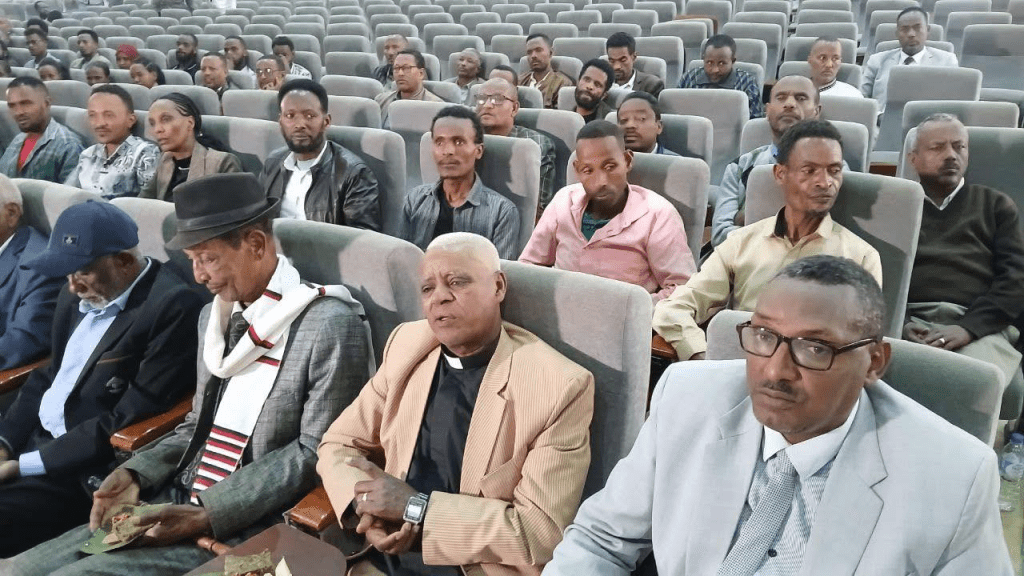
Finfinnee, January 24, 2026 – A significant contribution to Ethiopian historiography was celebrated this week with the official launch of the book “The Western Oromo and The Ethiopian State to 1941.” The work, authored by renowned historian and scholar Professor Tesema Ta’a, was launched at a formal ceremony held at Wollega University.
The book, published in English by Wollega University Press, offers a comprehensive and detailed examination of the political and social history of the Western Oromo people within the context of the Ethiopian state, tracing pivotal developments up to the year 1941. This period marks a critical juncture in modern Ethiopian history, and Professor Tesema’s research provides an essential perspective from the Oromo community’s experience.
The launch event was attended by a distinguished gathering of historians and scholars from various Ethiopian universities, underscoring the academic importance of this publication. The ceremony featured remarks that highlighted the book’s role in enriching the understanding of Ethiopia’s complex and multifaceted historical narrative.
A Deeper Scholarly Contribution
Professor Tesema Ta’a’s work is heralded as a meticulous academic study that draws on extensive research. It moves beyond broad national narratives to focus specifically on the institutions, interactions, and experiences of the Western Oromo. Scholars present at the event noted that such focused studies are crucial for building a more complete and inclusive historical record.
Significance and Impact
The launch of “The Western Oromo and The Ethiopian State to 1941” represents more than just the publication of a new academic text. It signifies a growing emphasis within Ethiopian academia on exploring and documenting the diverse regional and ethnic histories that comprise the nation’s past. By bringing this research to the forefront, Wollega University and Professor Tesema have provided an invaluable resource for students, researchers, and anyone seeking a deeper understanding of Oromo history and state-society relations in Ethiopia.
The book is now available through Wollega University Press.
About the Author: Professor Tesema Ta’a is a respected figure in the field of Ethiopian history, known for his dedicated research and scholarly contributions focused on Oromo history and the broader Horn of Africa region.
Media Contact: Dhaba Fiqadu

Oromo Scientist Launches School in Oolankomii: A Legacy of Education
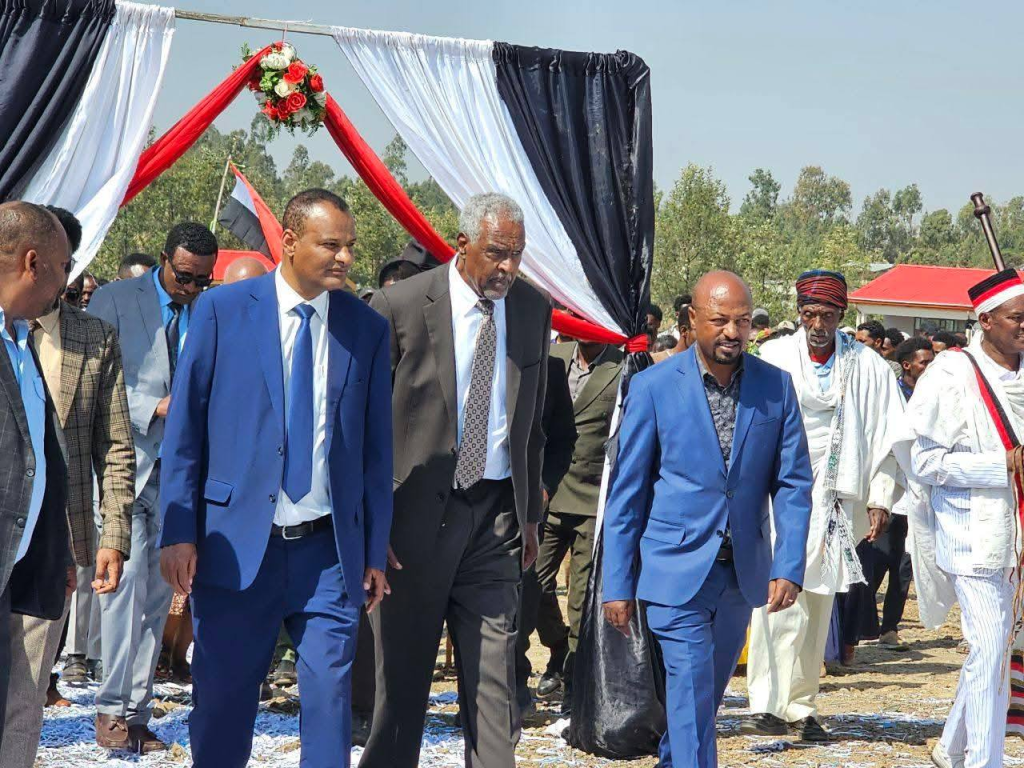
A Mother’s Name, A Nation’s Future: World-Renowned Oromo Scientist Inaugurates School in Oolankomii
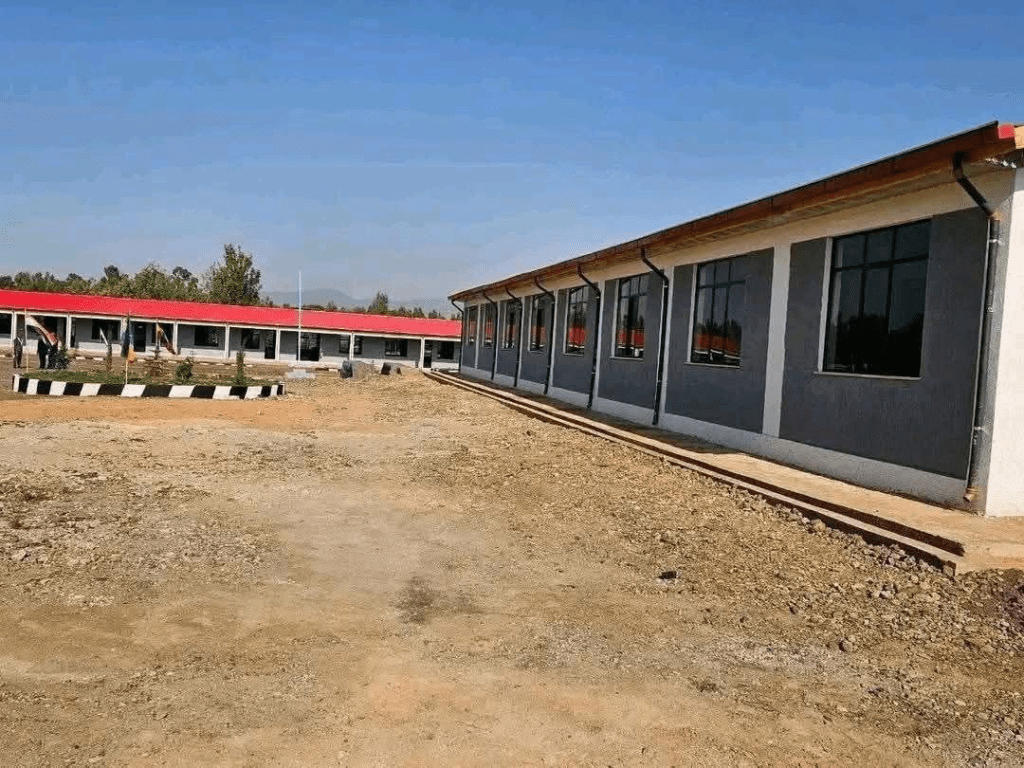
OOLANKOMII, Shaggar Lixaa – In a powerful gesture of giving back, world-renowned Oromo scientist Professor Gabbisaa Ejjetaa today inaugurated a secondary school he personally funded and built in his hometown of Oolankomii. The school was officially opened for service on Amajjii 25, 2026.
Named in honor of his late mother, Mootuu Ayyaanoo, the “Mootuu Ayyaanoo Secondary School” stands as a permanent tribute to the values of nurture, wisdom, and foundational support—embodied by mothers in Oromo culture. Professor Ejjetaa stated that naming the institution after his mother was a way to immortalize her sacrifices and to inspire future generations to honor their roots while reaching for the stars.
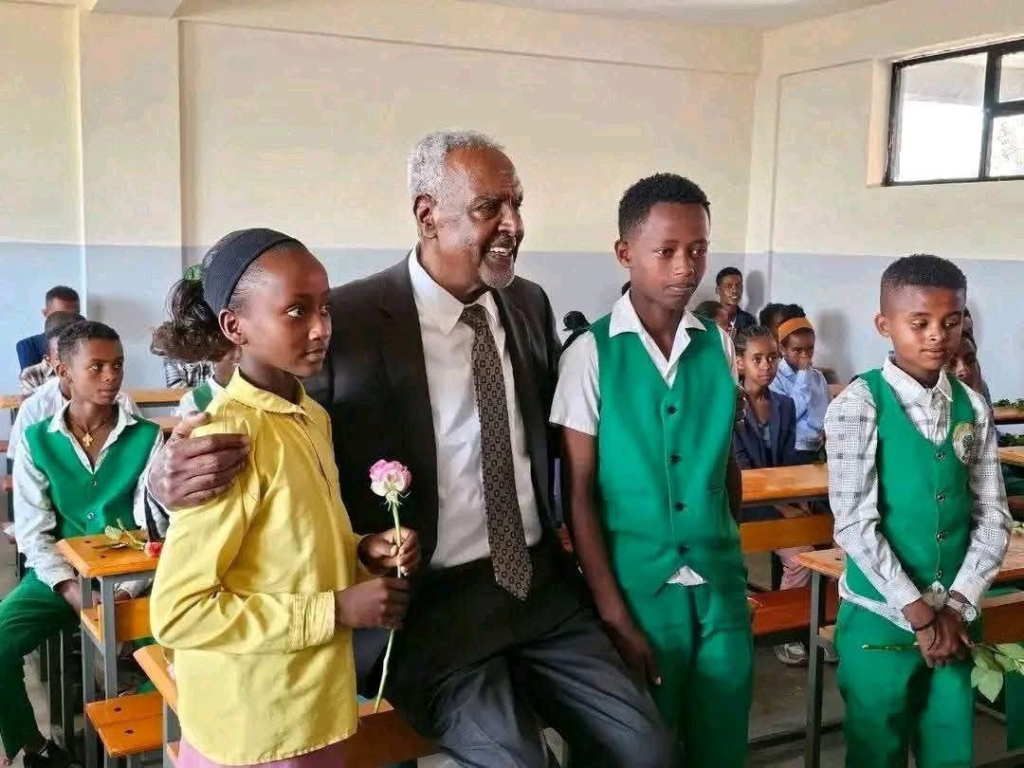
The inauguration ceremony was a moment of immense pride and celebration for the community of Oolankom. Local elders, educators, students, and residents gathered to witness the ribbon-cutting, marking the culmination of Professor Ejjetaa’s vision to provide a modern, quality educational facility for the town’s youth.
Professor Gabbisaa Ejjetaa, a distinguished plant geneticist known for his groundbreaking work in developing drought-resistant sorghum, is a source of immense pride for the Oromo people globally. The establishment of this school underscores his deep commitment to translating global scientific acclaim into tangible local development. It represents a different kind of freedom fight—the liberation of young minds through education.
The Mootuu Ayyaanoo Secondary School is equipped to serve hundreds of students, offering a conducive learning environment designed to foster academic excellence and critical thinking. Community leaders hailed the project as transformative. “This is not just a building; it is a beacon of hope,” said one elder present. “Our son excelled abroad, but his heart remained here. Today, he plants the seed of knowledge for our children. Ulfaadhaa—may it bear abundant fruit.”
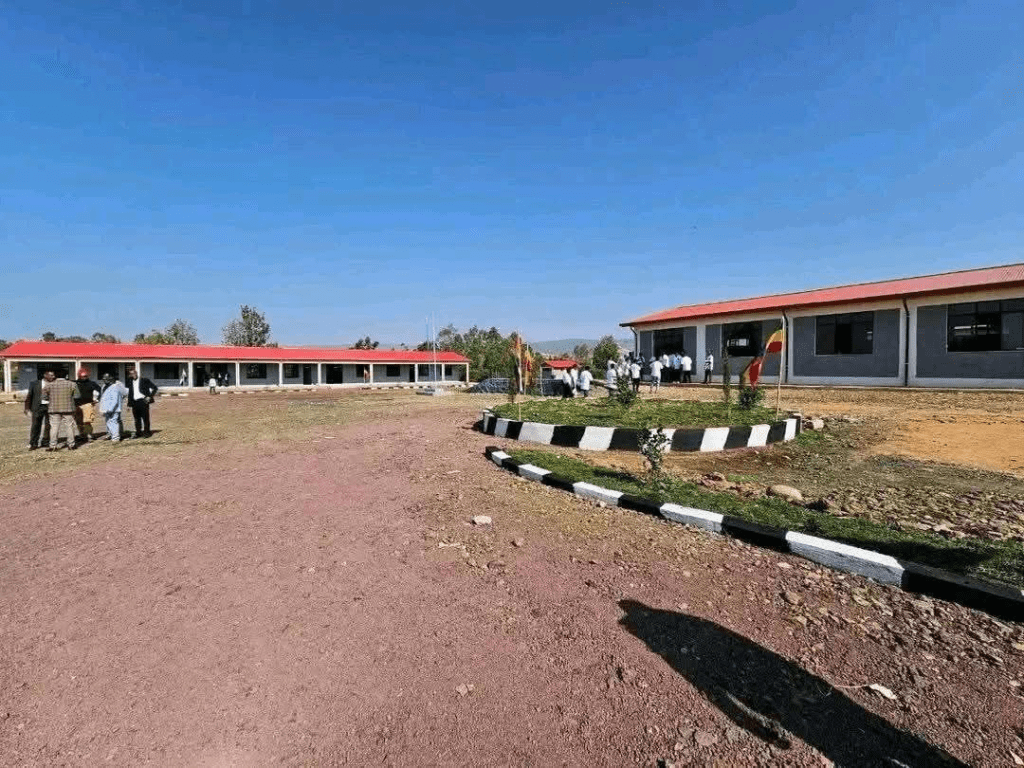
The school’s opening is seen as a significant milestone for educational access in the region, promising to empower a new generation of Oromo youth by combining rigorous academics with a strong grounding in their cultural identity and values.
In his address, Professor Ejjetaa emphasized that true development begins with education. He expressed his hope that the school would become a cradle for future scientists, leaders, and compassionate citizens who would contribute to their community and the world.
The inauguration of the Mootuu Ayyaanoo Secondary School is more than a local event; it is a resonant story of global success circling back to its source, of a scientist honoring his first teacher—his mother—and of a community’s future being brightly rewritten.
Ulfaadhaa jennaan.  (We say, may it bear fruit.)

The Voice That Sowed a Revolution – Daagim Mokonnin and the Soundtrack of Oromo Awakening
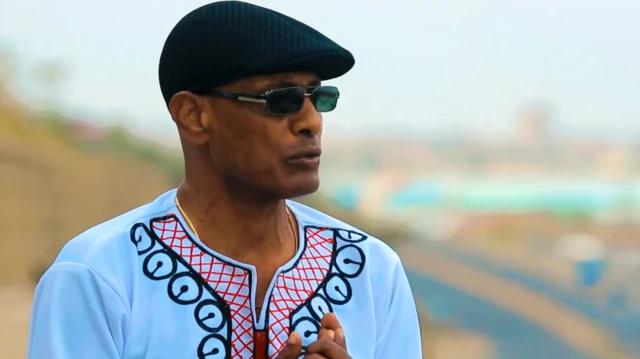
Feature Commentary: The Voice That Sowed a Revolution – Daagim Mokonnin and the Soundtrack of Oromo Awakening
The story of Daagim Mokonnin is not merely a biography of an artist; it is a chronicle of a people’s reawakening, told through melody, struggle, and an unbreakable spirit. Known affectionately by his stage name “Kiilolee” (The Melody), Daagim’s journey from a child chastised for his language to a foundational pillar of modern Oromo music encapsulates the political and cultural resurgence of the Oromo nation in the late 20th century.
His art was never just entertainment. In an era where speaking Afaan Oromoo in the capital, Finfinnee (Addis Ababa), was an act of defiance met with scorn or worse, Daagim’s music became a vessel for identity. “When we sang, it wasn’t just for money,” he recalls. “It was about contributing to the growth of the Oromo language and making the Oromo proud of their tongue.” His first hit, “Agadaa Birraa”, was more than a love song; it was a cultural declaration. Using the metaphor of the Oromo agadaa (a traditional stool) and the spring season of Birraa, it wove romance with deep cultural pride, instantly resonating with a generation hungry for such representation.
His path was forged in adversity. Arriving in Finfinnee as a boy from Wallagga, he was thrust into an educational system designed to erase his identity. “I didn’t know a word of Amharic, only Oromiffa,” he says. The punishment was isolation and ridicule—a “qophaa” (nickname) of shame that marked him as an outsider. Yet, this very oppression became the fuel for his mission. He and a small band of pioneering artists, operating under the banner of the Oromo Liberation Front’s cultural wing, became architects of resistance. They staged Oromo-language radio dramas, walked miles to recording spots, and produced music with rudimentary instruments, all under the watchful eye of a hostile state.
The collective he was part of—artists like Eebbisaa Addunyaa, Jireenyaa Ayyaanaa, and Usmaayyoo Muusaa—did not just sing; they curated a movement. Their style, from Daagim’s iconic headscarf and afro to their distinct aesthetic, was a deliberate, fashionable rejection of assimilation. “There was no borrowed ‘style’,” he insists. “Wearing a scarf is Oromo. If you go to rural Tulama, everyone wears it.” They were building a modern Oromo aesthetic from the ground up.
This courage came at a terrible cost. The 1990s, a period of cautious hope after the fall of the Derg, turned into a nightmare under the new regime. His comrades were hunted. His own brother was killed, and Daagim himself narrowly escaped assassination, an event that inspired one of his most poignant, unpublished poems of grief. Forced into exile in the United States for his safety, he continued his work, but the vibrant, collective creative ecosystem of Finfinnee was lost, replaced by the fragmented life of a diaspora artist.
Today, Daagim Mokonnin has stepped away from the secular music world, finding solace in Christianity. Yet, to view this as a retreat from his life’s work is to misunderstand the man. His legacy is cemented. He was present at the creation, one of the first to plant the seed of contemporary Oromo music—a seed that has now grown into a forest.
When he sings today, it is in praise of his faith. But the thousands who still play “Agadaa Birraa”, the artists who now fill stadiums singing in Afaan Oromoo, and the very fact that the language flourishes in the media, stand as living testimony to his earlier battle. Daagim and his generation were the bridge. They took the immense risk, endured the kutannoo (persecution), and used their art to make it normal, beautiful, and powerful to be Oromo in spaces designed to deny that reality.
His story is a powerful reminder that cultural work is not ancillary to political struggle; it is its bedrock. Before protests could rally millions, songs had to rally hearts. Before a language could be official, it had to be heard as worthy of a love song. Daagim Mokonnin, Kiilolee, provided that crucial, beautiful sound. He didn’t just sing melodies; he helped an entire generation find its voice.

U.S. Withdrawal from WHO: Impacts on Global Health Cooperation

WORLD NEWS: U.S. Announces Withdrawal from World Health Organization; WHO Expresses “Regret,” Defends Pandemic Record
GENEVA, January 24, 2026 – In a move that marks a seismic shift in the global health landscape, the World Health Organization (WHO) has confirmed receipt of a formal notification from the United States of America to withdraw from the UN health agency. The announcement, made public in a detailed statement from WHO headquarters today, has triggered widespread concern about the future of international cooperation against pandemics and other health threats.
The WHO statement began by acknowledging the United States’ historic role as a founding member, crediting its contributions to landmark achievements like the eradication of smallpox and the fight against HIV, polio, and Ebola. However, the tone swiftly turned to one of profound disappointment and warning.
“WHO therefore regrets the United States’ notification of withdrawal from WHO – a decision that makes both the United States and the world less safe,” the agency stated unequivocally.
The U.S. decision, which will be formally deliberated by the WHO Executive Board in February and the World Health Assembly in May 2026, was reportedly accompanied by sharp criticism from Washington. WHO noted U.S. claims that the agency had “trashed and tarnished” it, compromised its independence, and pursued a “politicized, bureaucratic agenda driven by nations hostile to American interests.” WHO rejected these assertions, stating, “The reverse is true,” and affirmed its commitment to engaging all member states with respect for their sovereignty.
Pandemic Response at the Heart of the Dispute
A central pillar of the U.S. justification, according to the WHO, was cited “failures during the COVID-19 pandemic,” including alleged obstruction of information sharing. In an extensive point-by-point rebuttal, the WHO defended its early pandemic actions, providing a detailed timeline:
- Dec. 31, 2019: WHO activated its emergency system upon first reports from Wuhan.
- Jan. 11, 2020: Before China reported its first death, WHO had already issued global alerts and guidance.
- Jan. 30, 2020: WHO declared a Public Health Emergency of International Concern (PHEIC)—its highest alarm—when there were fewer than 100 cases and no deaths reported outside China.
The statement emphasized that while WHO recommended protective measures like masks and vaccines, it “at no stage recommended mask mandates, vaccine mandates or lockdowns,” asserting that final decisions rested with sovereign governments.
A Future Without U.S. Membership
The withdrawal comes at a critical juncture. WHO highlighted that its 194 member states last year adopted a landmark WHO Pandemic Agreement, designed to strengthen global defenses against future outbreaks. Nations are currently negotiating a complementary Pathogen Access and Benefit Sharing system to ensure equitable access to vaccines and treatments.
The U.S. exit casts a long shadow over these initiatives and the operational capacity of WHO, which has long relied on American financial and technical support. The agency, however, expressed hope for a future return.
“We hope that in the future, the United States will return to active participation in WHO,” the statement concluded, reaffirming its commitment to its constitutional mandate of pursuing “the highest attainable standard of health as a fundamental right for all people.”
The formal departure process is now underway, setting the stage for intense diplomatic discussions in the coming months over the architecture of global health security in an era of renewed great-power fragmentation.




 Advocacy for Oromia