The Voice That Sowed a Revolution – Daagim Mokonnin and the Soundtrack of Oromo Awakening
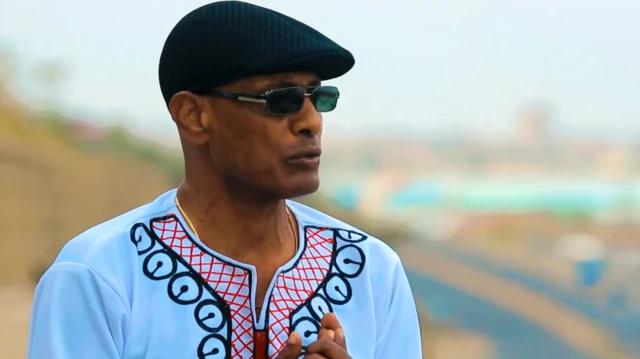
Feature Commentary: The Voice That Sowed a Revolution – Daagim Mokonnin and the Soundtrack of Oromo Awakening
The story of Daagim Mokonnin is not merely a biography of an artist; it is a chronicle of a people’s reawakening, told through melody, struggle, and an unbreakable spirit. Known affectionately by his stage name “Kiilolee” (The Melody), Daagim’s journey from a child chastised for his language to a foundational pillar of modern Oromo music encapsulates the political and cultural resurgence of the Oromo nation in the late 20th century.
His art was never just entertainment. In an era where speaking Afaan Oromoo in the capital, Finfinnee (Addis Ababa), was an act of defiance met with scorn or worse, Daagim’s music became a vessel for identity. “When we sang, it wasn’t just for money,” he recalls. “It was about contributing to the growth of the Oromo language and making the Oromo proud of their tongue.” His first hit, “Agadaa Birraa”, was more than a love song; it was a cultural declaration. Using the metaphor of the Oromo agadaa (a traditional stool) and the spring season of Birraa, it wove romance with deep cultural pride, instantly resonating with a generation hungry for such representation.
His path was forged in adversity. Arriving in Finfinnee as a boy from Wallagga, he was thrust into an educational system designed to erase his identity. “I didn’t know a word of Amharic, only Oromiffa,” he says. The punishment was isolation and ridicule—a “qophaa” (nickname) of shame that marked him as an outsider. Yet, this very oppression became the fuel for his mission. He and a small band of pioneering artists, operating under the banner of the Oromo Liberation Front’s cultural wing, became architects of resistance. They staged Oromo-language radio dramas, walked miles to recording spots, and produced music with rudimentary instruments, all under the watchful eye of a hostile state.
The collective he was part of—artists like Eebbisaa Addunyaa, Jireenyaa Ayyaanaa, and Usmaayyoo Muusaa—did not just sing; they curated a movement. Their style, from Daagim’s iconic headscarf and afro to their distinct aesthetic, was a deliberate, fashionable rejection of assimilation. “There was no borrowed ‘style’,” he insists. “Wearing a scarf is Oromo. If you go to rural Tulama, everyone wears it.” They were building a modern Oromo aesthetic from the ground up.
This courage came at a terrible cost. The 1990s, a period of cautious hope after the fall of the Derg, turned into a nightmare under the new regime. His comrades were hunted. His own brother was killed, and Daagim himself narrowly escaped assassination, an event that inspired one of his most poignant, unpublished poems of grief. Forced into exile in the United States for his safety, he continued his work, but the vibrant, collective creative ecosystem of Finfinnee was lost, replaced by the fragmented life of a diaspora artist.
Today, Daagim Mokonnin has stepped away from the secular music world, finding solace in Christianity. Yet, to view this as a retreat from his life’s work is to misunderstand the man. His legacy is cemented. He was present at the creation, one of the first to plant the seed of contemporary Oromo music—a seed that has now grown into a forest.
When he sings today, it is in praise of his faith. But the thousands who still play “Agadaa Birraa”, the artists who now fill stadiums singing in Afaan Oromoo, and the very fact that the language flourishes in the media, stand as living testimony to his earlier battle. Daagim and his generation were the bridge. They took the immense risk, endured the kutannoo (persecution), and used their art to make it normal, beautiful, and powerful to be Oromo in spaces designed to deny that reality.
His story is a powerful reminder that cultural work is not ancillary to political struggle; it is its bedrock. Before protests could rally millions, songs had to rally hearts. Before a language could be official, it had to be heard as worthy of a love song. Daagim Mokonnin, Kiilolee, provided that crucial, beautiful sound. He didn’t just sing melodies; he helped an entire generation find its voice.

Posted on January 25, 2026, in News. Bookmark the permalink. Leave a comment.




 Advocacy for Oromia
Leave a comment
Comments 0