Daily Archives: January 26, 2026

Mootuu Ayyaanoo School: A Beacon of Educational Hope
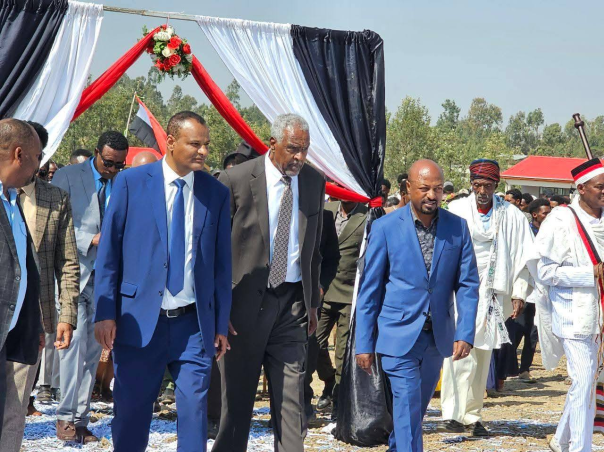
Headline: A Mother’s Name, A Nation’s Future: “Mootuu Ayyaanoo” School Inaugurated as a Beacon of Educational Transformation
Sub-headline: Built with 60 million Birr in Holonkomii, West Shewa, the state-of-the-art school honors Professor Gebisa Ejeta’s mother and embodies a government push for world-class education.
By Maatii Sabaa, Olonkomii, West Shewa, Oromia – In a powerful fusion of personal legacy and national development, the Mootuu Ayyaanoo Secondary School was officially inaugurated today in Holonkomii town. The school, a modern facility constructed with a 60 million Birr government investment, is named in honor of Mootuu Ayyaanoo, the mother of renowned Ethiopian scientist and World Food Prize laureate, Professor Gebisa Ejeta.
The inauguration ceremony was attended by community elders, educators, and senior officials, including the Head of the Oromia Education Bureau, Dr. Tolaa Bariisoo. In his address, Dr. Tolaa framed the school as a critical piece in a larger, transformative strategy.
“The government’s focus on constructing schools of international standard and providing quality education is directly aimed at producing a competent generation in large numbers,” stated Dr. Tolaa. “This work is now bearing significant fruit.”
His words underscore a pivotal shift in educational policy: moving beyond mere access to prioritizing excellence and global competitiveness from the ground up.
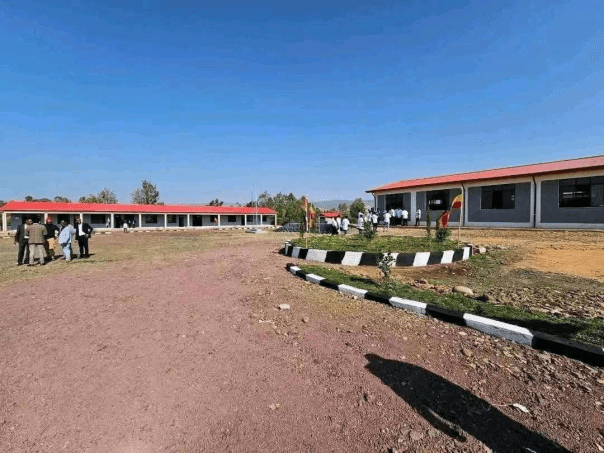
The Mootuu Ayyaanoo School stands as a physical testament to this ambition. The two-story complex houses five blocks containing well-equipped classrooms, a standard library, laboratories, and various other sections designed to facilitate comprehensive, 21st-century learning. It is envisioned as a hub where talented youth from the region can be nurtured.
For Professor Gebisa Ejeta, who was born and raised in Holonkomii, the inauguration was an emotionally charged moment. He expressed profound gratitude that a school bearing his mother’s name would now serve his community. He recounted the extraordinary sacrifices made by his mother, whose unwavering belief in education—often fueled by selling firewood—propelled him from these very fields to global scientific acclaim.
“This school answers her deepest prayers,” Professor Ejeta remarked. “The commitment of various stakeholders to equip it with modern learning materials ensures that the students here will have the tools to reach their full potential.”
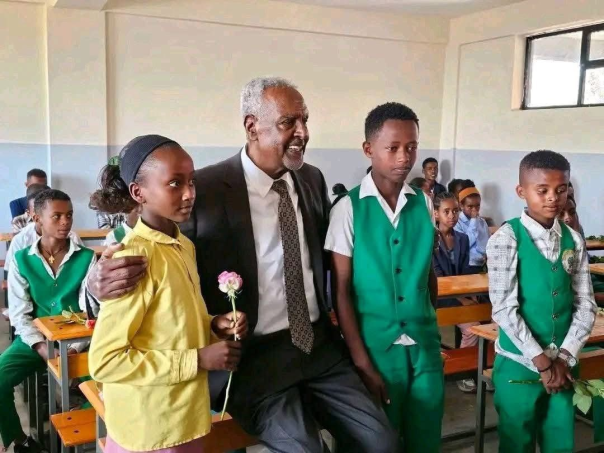
The sentiment of answered prayers echoed throughout the Holonkomii community. Residents, who had long advocated for a quality secondary school, described a palpable sense of joy and relief. “The construction of this school fulfills a long-standing demand,” said one local elder. “The happiness we feel today is immense.”
The Mootuu Ayyaanoo Secondary School, therefore, represents more than just bricks and mortar. It is a symbol of intergenerational hope: a mother’s sacrifice immortalized in a institution dedicated to empowering future generations. It signals a government’s commitment to turning rural towns into launchpads for excellence, ensuring that the path from Olonkomii to the world stage becomes well-trodden by the capable, confident students of tomorrow.

Tajoo Roobaa: Sacred Rituals for Rain and Peace in Oromia

“Tajoo Roobaa”: The Arsii Oromo’s Sacred Invocation for Rain, Peace, and Prosperity
Sub-headline: At Hara Dambal in Malka Utaa Waayyuu, ancient rituals connect community to Waaqa (God) and mark a new year under the Amajjii moon.
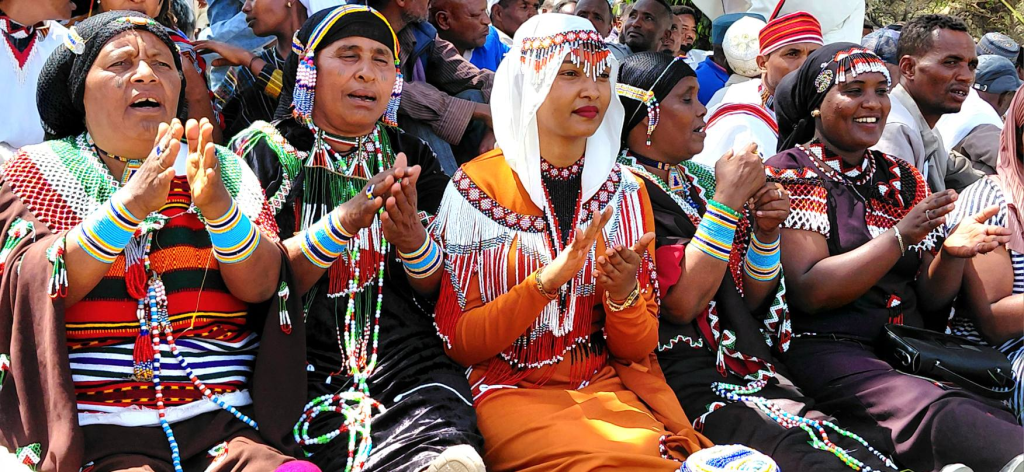
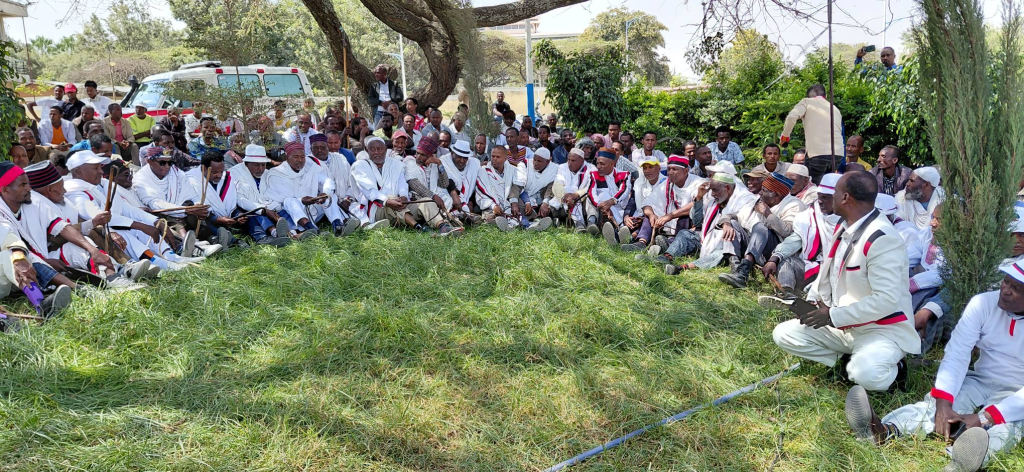
By Maatii Sabaa, Hara Dambal, Arsi Zone, Oromia – Under the bright Amajjii moon, the rolling hills of Hara Dambal echoed this week not just with the wind, but with the collective prayers of thousands. The Arsii Oromo people of Sikkoo Mando, Utaa Waayyuu, gathered to celebrate the profound and spiritually charged festival of Irreecha Tajoo Roobaa—a sacred ceremony dedicated to invoking rain, giving thanks to the creator, and ushering in a new year.
More than a cultural event, Tajoo Roobaa is a deep-rooted indigenous system of supplication to Waaqa (God) for rain. The ceremony, observed specifically during the Amajjii lunar month, serves a dual purpose: as a thanksgiving to the divine (Hinikkaa) and as the celebration of the Oromo New Year.
The rituals follow a powerful annual cycle. Days before the main gathering, the community embarked on a spiritual journey, traveling from their homes to the sacred site of Araddaa Jilaa near the Haroo Booramoo (Lake Booramoo). There, initial prayers for rain were offered. This preparatory pilgrimage culminated in the major congregation at Hara Dambal, where the main Ayyaana Tajoo Roobaa was enacted with diverse and symbolic rituals.
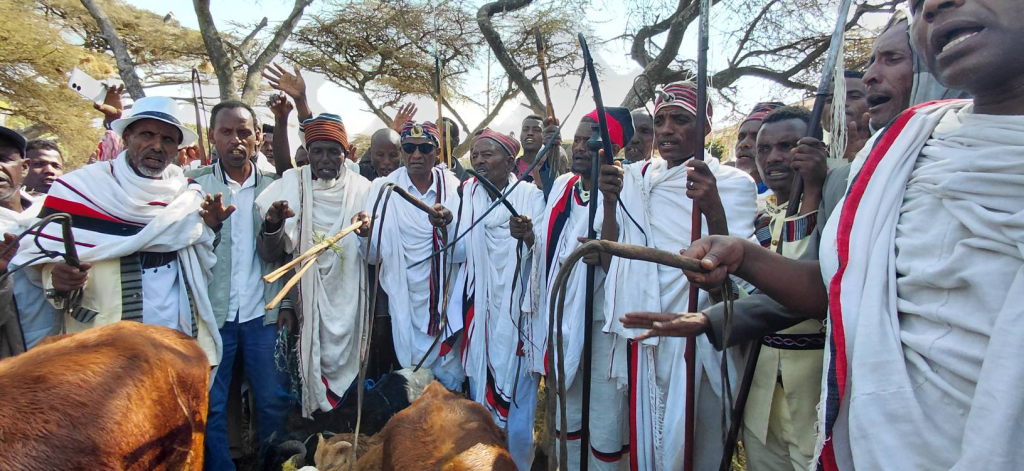
Chants filled the air, carrying the community’s unified hopes skyward. The core of their invocation is a timeless appeal to the divine for balance and blessing: “Bona nuuf gabaabsi” (Shorten the dry season for us), “Badheessa nuu deebisi” (Bring us abundance), “Ganna nuuf dheereessii” (Prolong the rainy season for us), and “Nagaa nuuf buusi” (Bestow peace upon us).
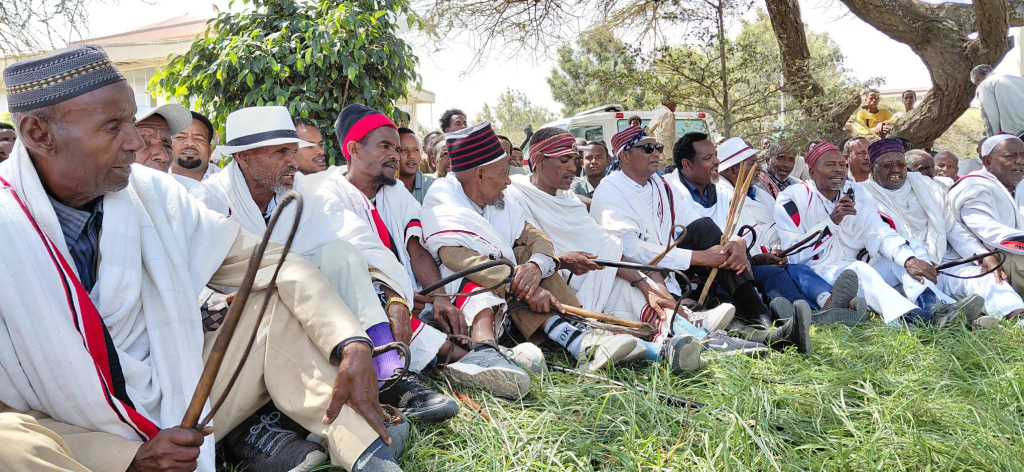
Elders, clad in traditional dress and holding freshly cut grass and flowers—symbols of fertility and peace—led the prayers. The gathering was a vibrant tapestry of song, dance, and solemn prayer, embodying the Arsii Oromo’s intimate connection with their environment, their cyclical calendar, and their spiritual heritage.
“This is not just a festival; it is our covenant with nature and Waaqa,” explained one elder, who chose to be identified simply as Abbaa Gadaa. “When we stand here at Hara Dambal, we are speaking to our creator with one voice, asking for the sustenance of life—rain—and for peace to govern our lives. Celebrating it in Amajjii marks our new beginning.”
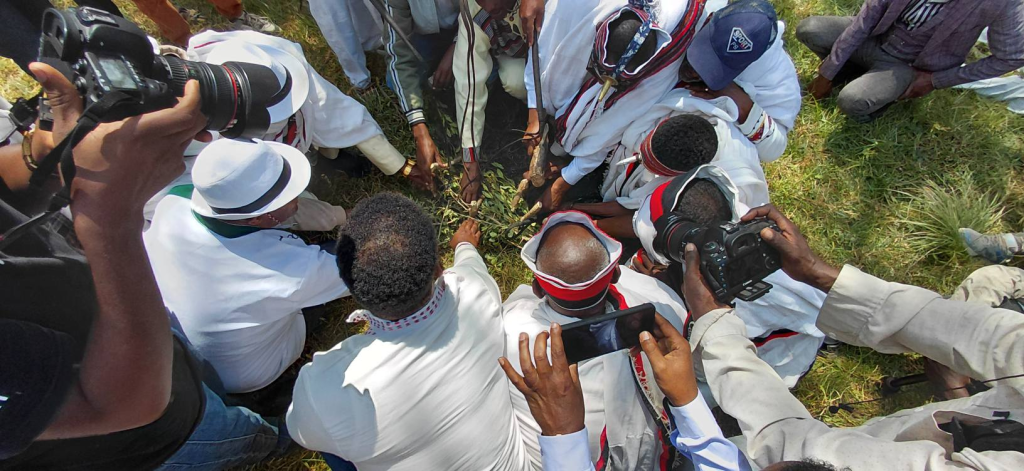
The Irreecha Tajoo Roobaa at Hara Dambal stands as a powerful testament to the resilience of indigenous Oromo spiritual practices. It is a living tradition where cosmology, environmental stewardship, and social cohesion intertwine, ensuring that the sacred plea for a fruitful and peaceful year continues to resonate from generation to generation.




 Advocacy for Oromia