An Unseen Architecture: The Passing of a Pillar and the Foundation He Leaves Behind

An Unseen Architecture: The Passing of a Pillar and the Foundation He Leaves Behind
By Maatii Sabaa
A community, especially one woven across a diaspora, is an intricate architecture. We most easily see its public face—the vibrant festivals, the spirited tournaments, the collective statements. But the integrity of the entire structure, its ability to stand firm across distance and time, depends on a different kind of element: the hidden pillars. These are the individuals whose work is not in the spotlight, but in the scaffolding; whose legacy is not a single dramatic act, but the relentless, humble labor of holding things together.
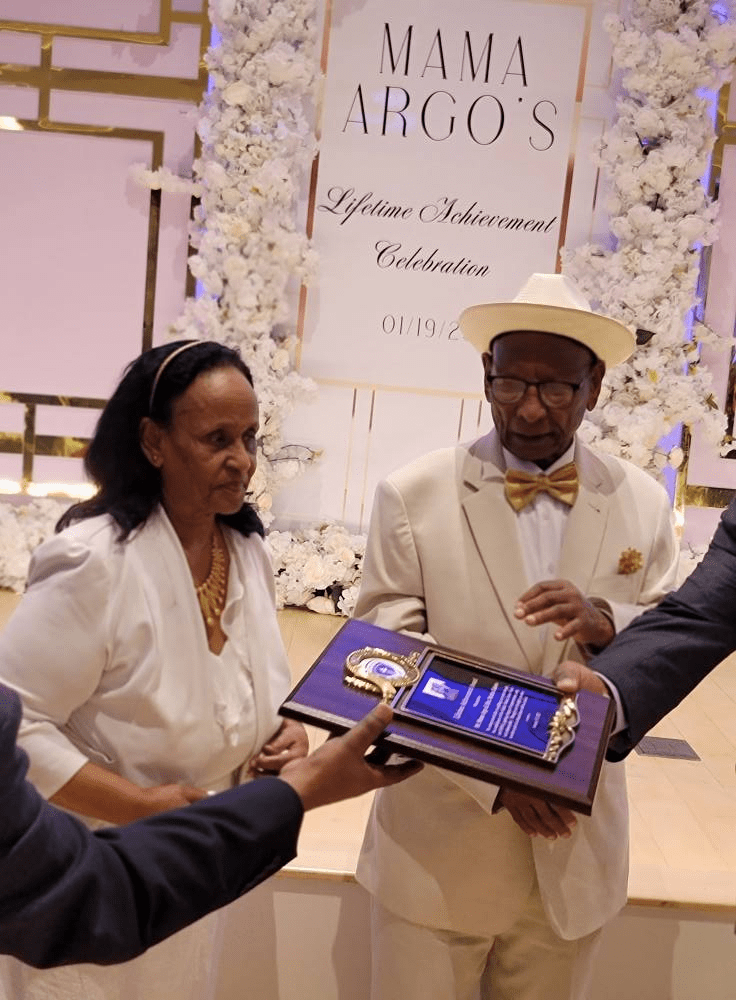
The recent passing of Obbo Mama Argo is the quiet removal of such a pillar. The condolences flowing to his family, the Seattle Oromo community, and the Oromo Soccer Federation and Network in North America (OSFNA) speak to a loss that is deeply personal yet irreducibly public. He is remembered with the profound titles that form the bedrock of any strong society: a devoted patriot, a loving family man, a selfless public servant. But it is the specific mention of his founding role in OSFNA, and his three decades of support for it, that reveals the true nature of his contribution.
To found an organization like OSFNA is to do more than start a sports league. It is to recognize that for a dispersed people navigating the complexities of a new world, identity needs a living, breathing, communal space. A soccer tournament becomes more than a game. It is an annual pilgrimage, a temporary capital, a network of kinship and care. It is where the next generation meets the old, where news is exchanged, where culture is performed, and where a scattered nation gathers to feel whole.
For three decades, Obbo Mama Argo helped build and sustain this sacred space. This was not a ceremonial role. It is the unglamorous work of logistics, diplomacy, fundraising, and quiet encouragement. It is resolving disputes, securing fields, comforting losses, and celebrating victories that extend far beyond the final whistle. It is the work of a builder who understands that the structure—OSFNA—is not an end in itself, but a vessel for preserving something infinitely precious: a sense of belonging.
His type of patriotism is the most essential kind. It is not the patriotism of grand rhetoric, but of concrete action. It is the patriotism that shows up, year after year, to ensure the community has a place to play, to connect, to be Oromo together in a foreign land. This “selfless public service” is the very glue of diaspora survival.
In mourning him, the community confronts a poignant truth. We often celebrate the visible leaders—the speakers, the stars, the officials. But the true resilience of a people is forged by those like Obbo Mama Argo, whose life’s work was to be a reliable constant, a foundational node in the network. His absence creates a silence that is less about noise and more about stability; a space where his once-steadfast presence used to be.
The greatest tribute to such a man, therefore, is not just in the tears shed, but in the continued strength of the architecture he helped build. It is in the ongoing vibrancy of OSFNA, in the unity of the Seattle community, and in the commitment of new generations to step into the supporting roles he exemplified. To honor Obbo Mama Argo is to understand that the most enduring monuments are not made of stone, but of sustained, loving effort. His legacy is etched in every game played, every connection made, and in the enduring sense of home he helped construct for a nation far from its geographic one.
Galatoomi, Abbaa Argo. Your foundation holds.

Posted on January 28, 2026, in News. Bookmark the permalink. Leave a comment.




 Advocacy for Oromia
Leave a comment
Comments 0