The Legacy of Obbo Mama Argo: A Community’s Guiding Star
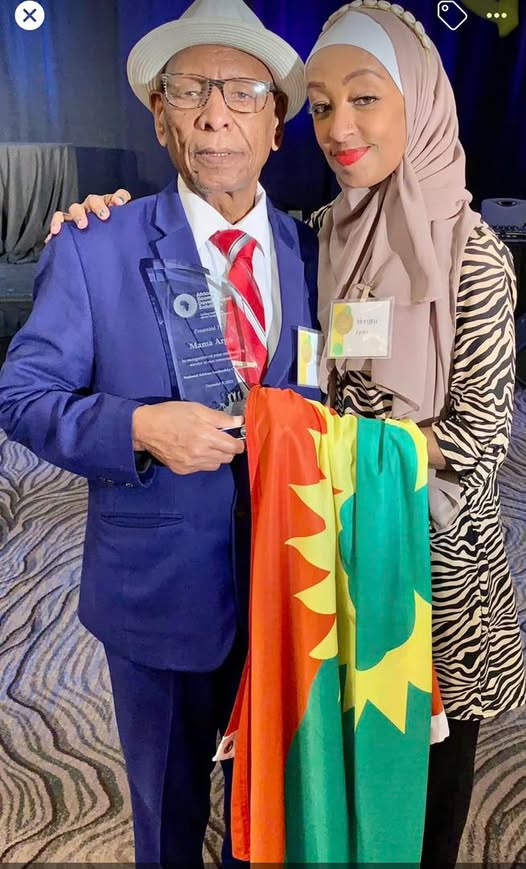
The Milk of Human Kindness: On Losing a Local Legend Like Obbo Mama Argo
By Dhabessa Wakjira
True community is rarely built in grand gestures announced with fanfare. More often, it is woven in the quiet, repeated acts of welcome that happen after dark, in the glow of a porch light, in the simple offering of a cool drink. The passing of a figure like Obbo Mama Argo of Seattle reminds us that the mightiest pillars of a diaspora are often the most humble, their legacy measured not in headlines, but in the cherished, personal memories of a generation.
News of his departure arrives, as the community member writes, with “great sorrow.” But the obituary that follows is not a formal listing of titles—though he certainly earned them as a founding pillar of the Oromo Soccer Federation and Network in North America (OSFNA) and a selfless public servant. Instead, it is something more powerful: a flood of sensory memory, a testament to a man whose impact was felt in the intimate, daily fabric of life.
“I can’t think of anyone who was more selfless or whose contributions are more undeniable,” the tribute begins, anchoring his legacy in collective agreement. For over twenty years in Seattle, the writer explains, “we grew up looking up to his guidance and the love he had for Oromos.” Here is the core of it: he was a local north star, a constant reference point for a community finding its way in a new land.
Then comes the defining anecdote, the story that paints a clearer picture than any official biography ever could. “Back in those childhood days… every evening after soccer, we would go to his house and drink milk.” From this simple, nurturing act emerged his most beloved title: “Abbaa Aannanii” – the Father of Milk.
This name is a masterpiece of community poetry. It speaks of sustenance, of care, of a home that was always open. It speaks of a man who understood that building a community isn’t just about organizing tournaments or holding meetings; it’s about feeding the youth, literally and spiritually. His house wasn’t just a residence; it was a post-game refuge, a cultural waystation where ties were strengthened not through rhetoric, but through shared cups and shared presence.
The tribute makes a profound point about gratitude: “This blessing was a great reward that the Seattle community received from him. Receiving it was timely.” Abbaa Aannanii performed his essential role precisely when it was most needed—during the formative years of a community’s establishment. His gift was his unwavering, predictable kindness.
And so, the writer issues a crucial, poignant reminder: “It is necessary to say THANK YOU to people like him while they are still alive.” We are often so good at eulogizing, at weaving beautiful galatoomaa in hindsight. But the true challenge is to offer that gratitude in real-time, to honor the living pillars before they become memories.
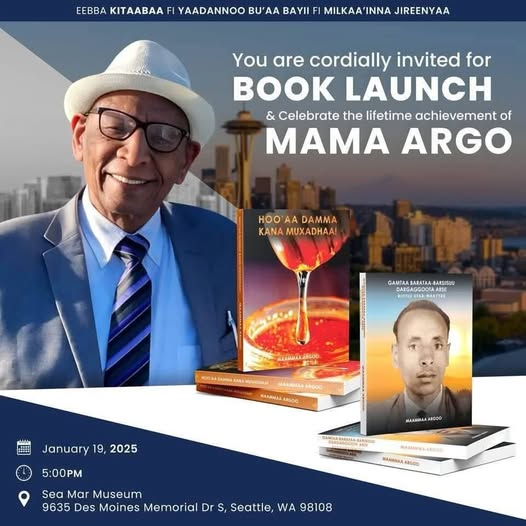
Obbo Mama Argo’s story is a universal one. Every community, every neighborhood, has its Abbaa Aannanii—the person whose door is always open, whose quiet support forms the bedrock. His passing is a deep loss precisely because his contribution was so profoundly human. He built a nation not through pronouncements, but through poured cups of milk; not just through organizing soccer, but by ensuring the children who played it were nourished, welcomed, and loved.
His legacy is the warmth of that remembered milk, the strength of the bonds forged in his living room, and the enduring model of a patriotism expressed through radical, open-hearted hospitality. We extend our deepest condolences to his family, the Seattle Oromo community, and OSFNA. In mourning him, may we all be inspired to see, appreciate, and thank the quiet pillars in our own midst, while the light on their porch is still on.

Posted on January 28, 2026, in News. Bookmark the permalink. Leave a comment.




 Advocacy for Oromia
Leave a comment
Comments 0