Daily Archives: February 3, 2026

Barak Mountain’s Irreechaa: A Spiritual Gathering for Peace and Gratitude

From the Highlands, a Prayer of Gratitude: Irreechaa Tulluu Unites Community on Barak Mountain
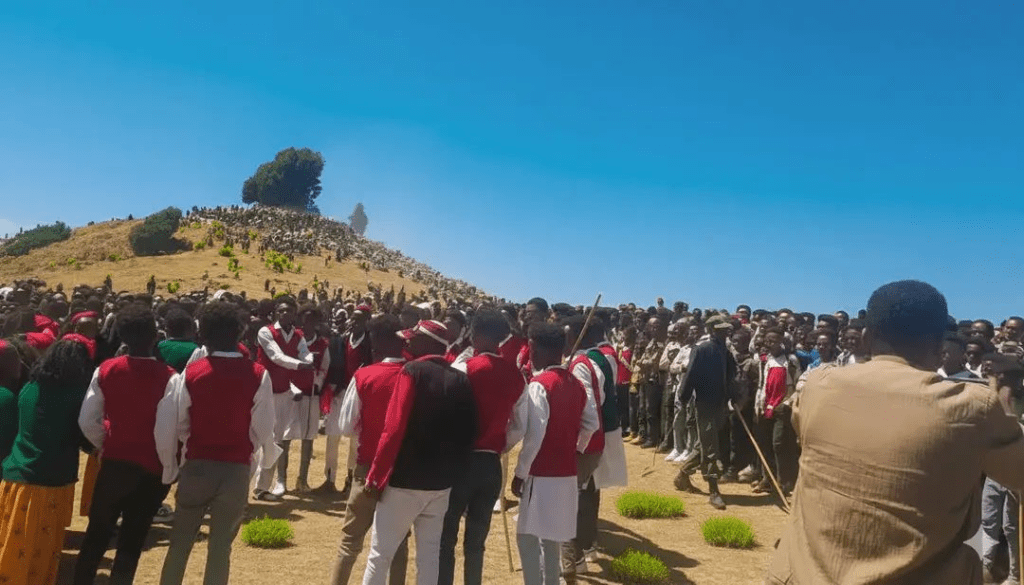
SANDAFAA BAKKEE, OROMIA – As the first light of the autumn sun crests the horizon, the slopes of Barak Mountain are already a tapestry of movement and color. Thousands of men, women, and children, dressed in the brilliant whites and intricate embroideries of traditional Oromo attire, ascend the paths in a serene, purposeful procession. They are not mere hikers; they are participants in one of humanity’s oldest and most profound rituals: offering thanks to the divine for life’s sustenance and praying for peace in the seasons to come. This is Irreechaa Tulluu, the hill festival, and on this day, Barak Mountain is its sacred stage.
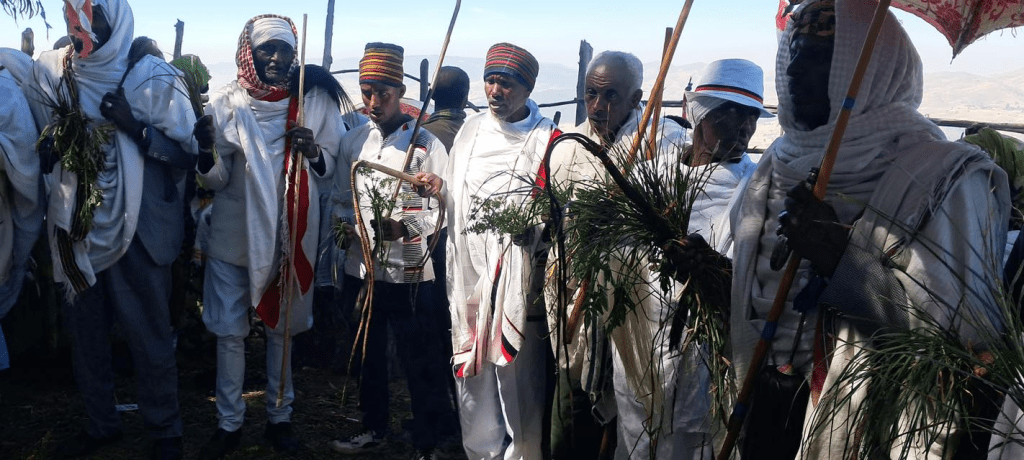
Irreechaa is not a single event but a bi-annual dialogue with nature, deeply embedded in the Gadaa system’s ecological wisdom. The first, Irreechaa Arfaasaa, celebrated at riversides in early October, welcomes the rainy season—a festival of renewal, cleansing, and thanksgiving for the promise of life. The second, unfolding now in the crisp autumn air, is Irreechaa Tulluu. As the harvest is gathered, the community climbs to the high places, turning gratitude into a physical act of ascent, symbolizing a spiritual upliftment and a reflective review of the passing year.
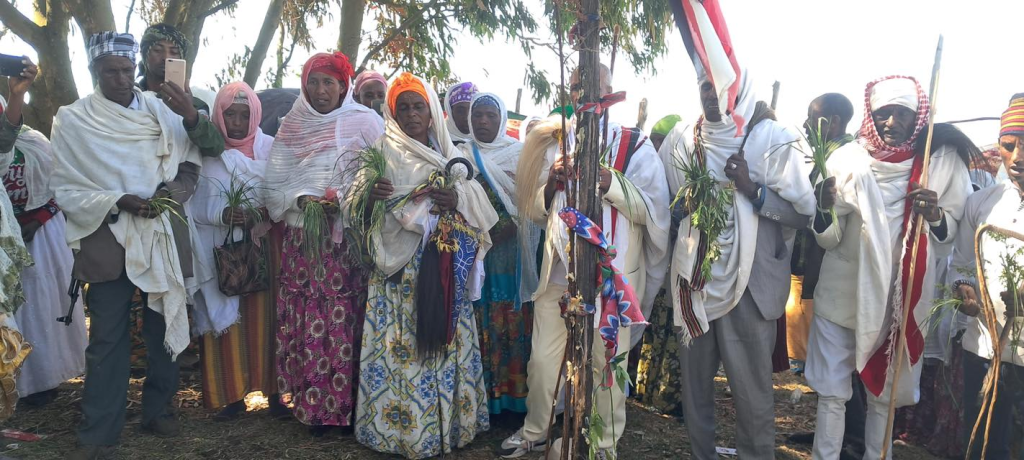
This season, the community of Sandaafaa Bakkee has transformed Barak Mountain into a breathtaking open-air temple. Led by revered elders, or Hayyus, who carry staffs of authority and centuries of tradition, the people climb. The air fills with the sound of communal prayer, traditional Geerarsa (praisesongs), and the soft murmur of individual supplications. At the summit, the focal point is not an altar of stone, but a shared spiritual intention. Participants bring fresh green grasses and flowers, symbols of peace and prosperity, offering them as tokens of gratitude to Waaqaa (the Creator) for the blessings of the past year and as prayers for harmony and abundance in the next.
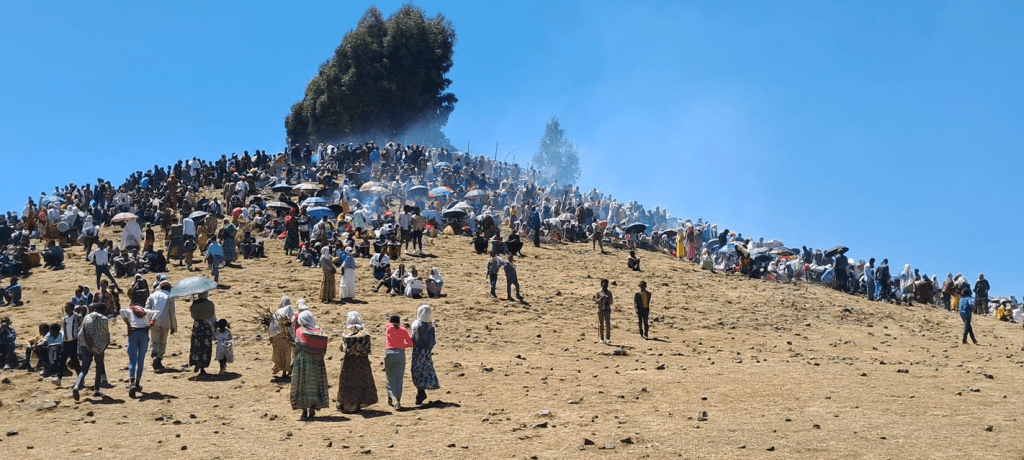
“This mountain is our church, our mosque, our most sacred space,” explained Elder Gammachuu Roba, pausing during the ascent. “When we climb together—young and old, from all walks—we are doing more than celebrating. We are reaffirming our bond with Waaqaa, with our ancestors, and with each other. We pray for nagaa (peace) because without peace in our hearts, our communities, and our environment, no prosperity can take root.”
Beyond its profound spiritual core, Irreechaa Tulluu is a vibrant celebration of Oromo identity. The mountain slopes become a living museum of culture. The air resonates with the rhythms of the kebero drum and the strings of the kirar. Young men engage in spirited waa’ee (verbal jousting), showcasing wit and wisdom, while circles form for traditional dance. It is a powerful, collective assertion of a culture that has endured, adapted, and thrived.
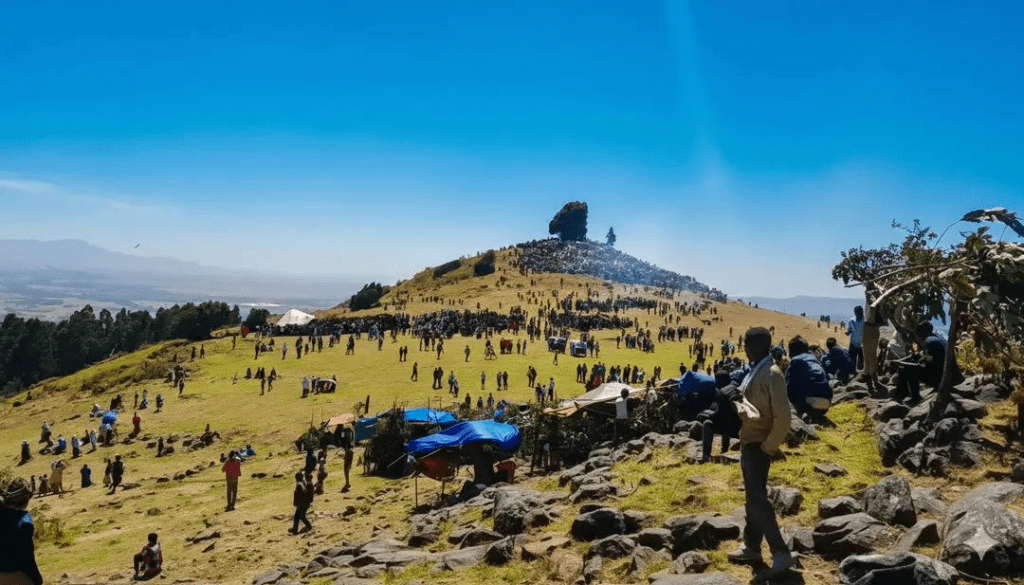
For observers and visitors, the festival offers an unparalleled immersion into the “timeless richness of Oromo culture,” as promoted by the Oromia Tourism Bureau. It is a chance to witness a living tradition where faith, ecology, and community are seamlessly woven together. As the sun sets on Barak Mountain, casting long shadows over the departing crowds, the feeling left behind is one of collective catharsis and renewed hope. The prayers for peace, whispered from the highlands, are carried on the wind, a timeless echo from a people forever rooted in their land and their gratitude.
#Irreechaa #IrreechaaTulluu #OromoCulture #BarakMountain #Oromia #LandOfOrigins #Ethiopia #CulturalHeritage




 Advocacy for Oromia