Remembering Professor Asmerom Legesse: A Legacy of Oromo Democracy
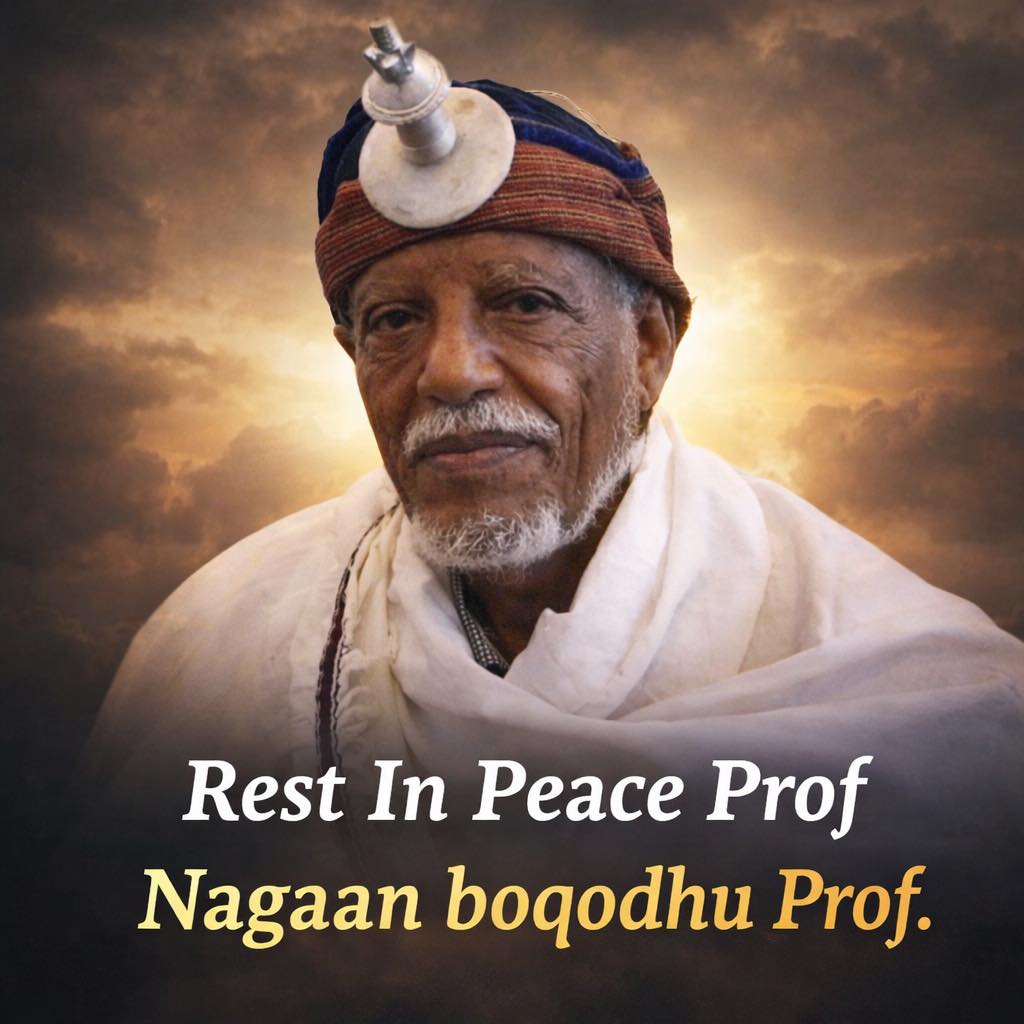
A World Mourns an Intellectual Giant: Tributes Pour In for Professor Asmerom Legesse, Scholar of Oromo Democracy
[Global] – February 2026 – The passing of Professor Asmerom Legesse has triggered a profound wave of mourning across academic, cultural, and political spheres, uniting voices from the Oromo diaspora to global institutions in tribute to the man who single-handedly brought the sophisticated Oromo Gadaa system to the world’s attention. Recognized as the preeminent global authority on the subject, his death at the age of 89 is being hailed as an irreplaceable loss to indigenous knowledge and the study of African democracy.
Condolence statements from major Oromo organizations, scholars, and advocates paint a consistent portrait of Professor Legesse: not merely an academic, but a bridge-builder, a truth-teller, and a steadfast guardian of a cultural heritage long marginalized. His life’s work is credited with fundamentally reshaping global understanding of the Oromo people and providing the intellectual foundation for their cultural and political identity.
Scholars and Intellectuals Honor a Pioneer
Prominent Oromo scholar Prof. Asfaw Beyene remembered him as a “sincere friend of the Oromo people,” whose life was “defined by wisdom, integrity, and an unwavering commitment to revealing truths long ignored by entrenched systems.” This sentiment was echoed by commentator Habtamu Tesfaye Gemechu, who stated Legesse was the scholar who “shattered the conspiracy” of Ethiopian rulers and intellectuals to obscure Oromo history, “revealing the naked truth of the Oromo to the world.”
Jawar Mohammed emphasized the practical depth of Legesse’s scholarship, noting his “decades of dedicated field research” and “deep engagement with Borana-Oromo communities” which helped “bridge the transmission of Gadaa knowledge from our ancestors to the present generation.”
Institutional Tributes Highlight Global Impact
Major Oromo institutions have issued formal statements underscoring the monumental scale of his contribution. The Oromo Studies Association (OSA), which honored him with a Lifetime Achievement Award, stated his “groundbreaking work fundamentally reshaped the global understanding of African democracy,” providing the academic backbone for UNESCO’s 2016 recognition of Gadaa as an Intangible Cultural Heritage of Humanity.
Advocacy for Oromia hailed him as a “preeminent global ambassador” for Gadaa, whose work performed a “vital act of cultural reclamation and global education.” Similarly, The Oromia Culture and Tourism Bureau praised his “indispensable role in safeguarding the philosophical foundations and moral values that define Oromo identity.”
A Legacy of Pride and Empowerment
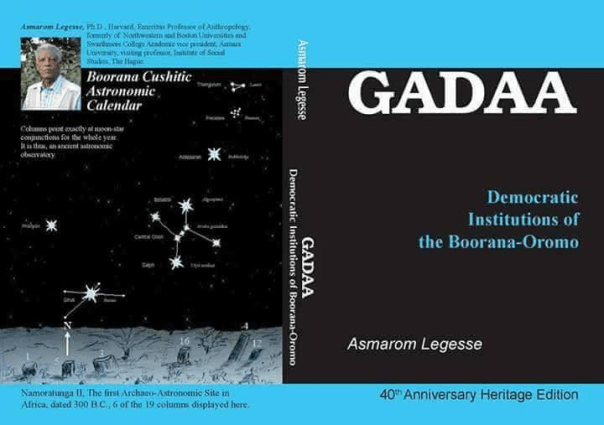
For the broader Oromo community, his passing is deeply personal. Activist Bilisummaa A. Qubee captured this sentiment, stating, “Prof. Asmarom Legesse has a great legacy of making Oromo identity known at a global level for us! His history lives with the Oromo!” This reflects the prevailing view that his rigorous scholarship—epitomized by definitive texts like Gada: Three Approaches to the Study of African Society and Oromo Democracy: An Indigenous African Political System—did more than analyze; it restored dignity and provided a source of immense pride.
As tributes continue to pour in, the consensus is clear: while Professor Asmerom Legesse’s voice is silent, his foundational work ensures that the Gadaa system—a complex indigenous framework of democracy, justice, and social order—will remain a lasting part of humanity’s intellectual heritage, inspiring generations to come.

Posted on February 4, 2026, in News, Uncategorized. Bookmark the permalink. Leave a comment.




 Advocacy for Oromia
Leave a comment
Comments 0