Revealed: Internal Talks on War Crimes by Ethiopian and Eritrean Leaders
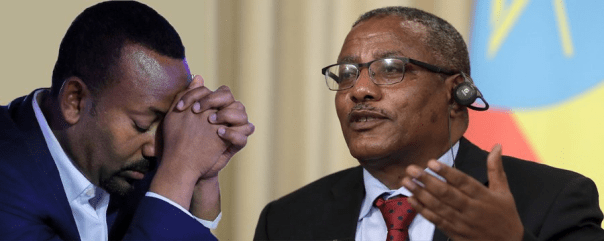
Internal Communication Reveals Ethiopian and Eritrean Leaders’ Concerns Over War Crimes Accountability
5 February 2026 – Internal communications from the early stages of the Tigray War, revealed in former Ethiopian official Gedu Andargachew’s open letter, show that the leadership of Ethiopia and Eritrea privately expressed concern over potential legal consequences for alleged human rights violations, while publicly denying them.
According to the letter, in January 2021, Prime Minister Abiy Ahmed tasked Gedu with delivering a message to Eritrean President Isaias Afwerki. The message included a warning that “supporters of the TPLF and foreign forces who do not want good relations between Ethiopia and Eritrea have launched a widespread defamation campaign through various international organizations and media regarding human rights violations.”
The message, as conveyed by Gedu, stated that this issue “could expose us to serious accountability if left to fester, so we must exercise shared caution.”
President Isaias Afwerki’s reported response, as detailed in the letter, was one of alignment and caution. He allegedly agreed that “all possible caution should be taken” and that both sides should issue instructions to their respective structures. He then reportedly added, “Beyond that, there is still much work to be done based on the agreement that Isaias and I have reached.”
The letter states that Gedu, after receiving these instructions, reported back to PM Abiy that the meeting had been positive and that Isaias emphasized the need for caution regarding human rights allegations.
This private exchange, now made public, stands in stark contrast to the official wartime narratives from both capitals, which largely dismissed reports of atrocities. It reveals that at the highest levels, the potential for “serious accountability” was a recognized risk from the outset of the conflict.
Gedu’s letter presents this communication as evidence that his mission to Asmara was focused on coordinating a political and legal defense, not on addressing the humanitarian situation, stating that “no message whatsoever concerning the suffering of the people of Tigray was conveyed.”
For more detail see the official Amharic letter of Gedu Andargachew

Posted on February 6, 2026, in News. Bookmark the permalink. Leave a comment.




 Advocacy for Oromia
Leave a comment
Comments 0