Honoring Oromo Scholars: Asmarom Legesse and Hamdesa Tuso
A Legacy Forged in Scholarship and Struggle: ABO Honors Professors Asmarom and Hamdesa
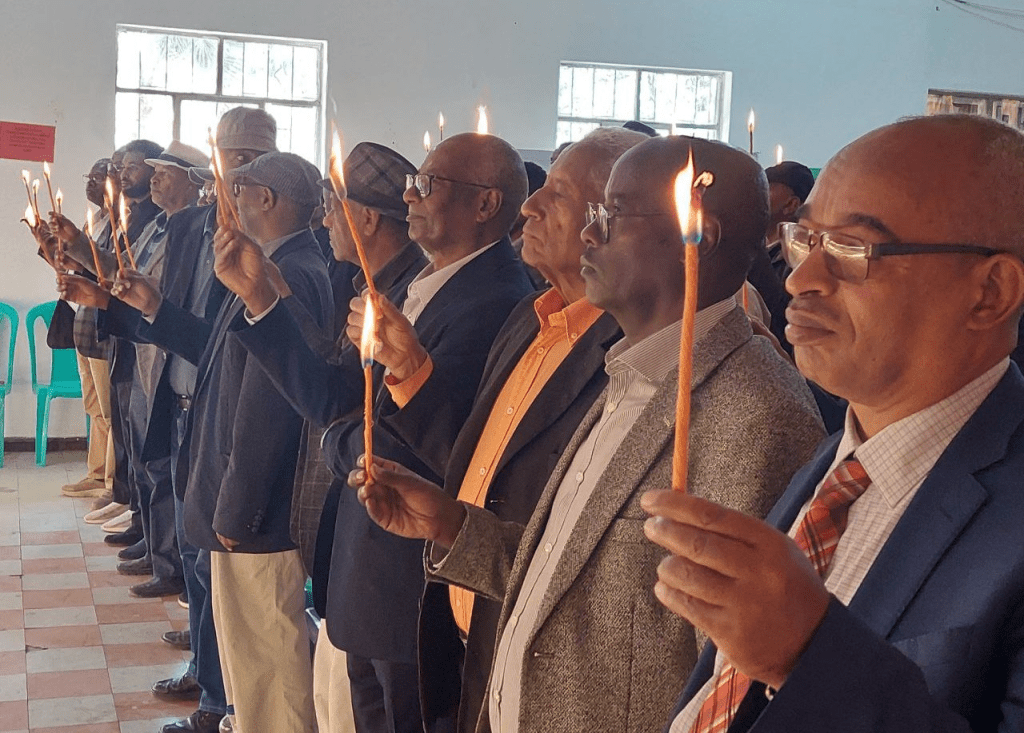
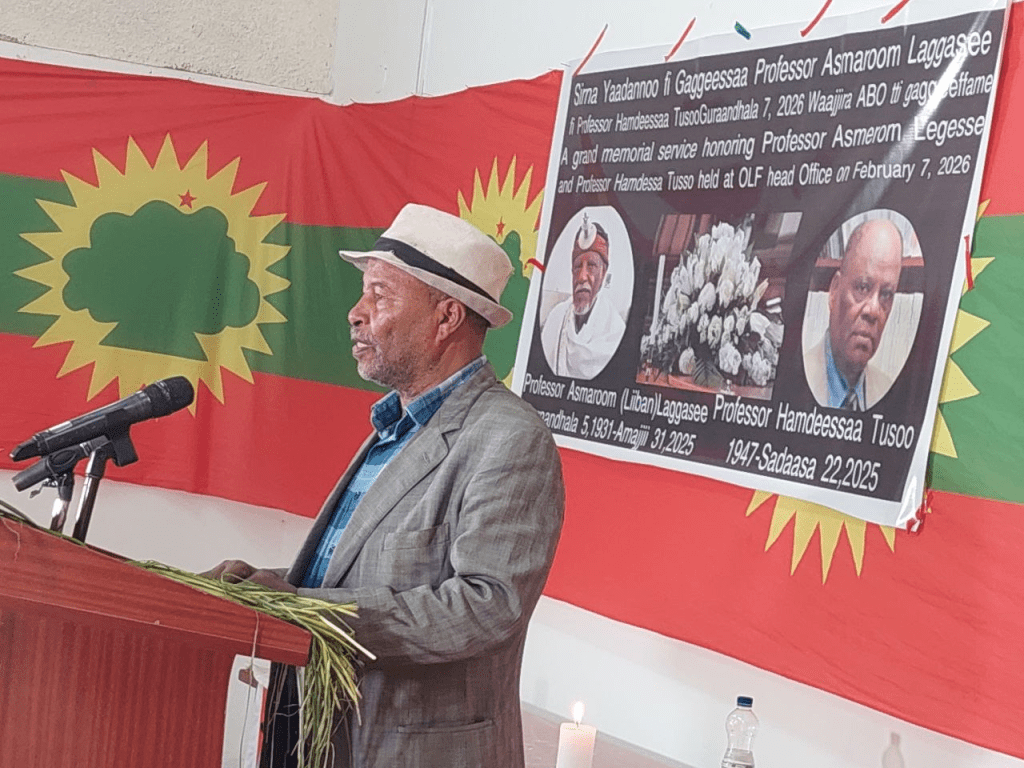
(WAJJJIRA, MUUMMEE GLLALLETTI, FEBRUARY 07, 2026) – Under the solemn banner of memory and celebration, the Oromo Liberation Front (OLF) today convened a ceremony of profound significance at its headquarters. The gathering paid tribute to two intellectual giants who dedicated their lives to the Oromo cause: the late Professor Asmarom Legesse and Professor Hamdesa Tuso.
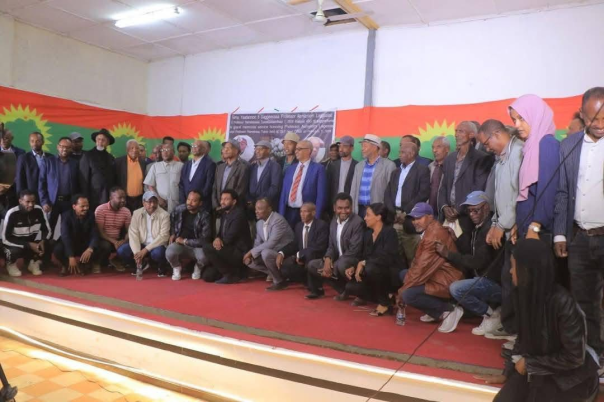
The event, more than a memorial, served as a powerful reaffirmation of the inseparable bond between academic rigor and the national struggle. It drew a distinguished assembly of Oromo elders (Hayyoota), scholars, OLF leadership—including Chairman Jaal Dawud Ibsa—and numerous members of the community, all united in gratitude and reflection.
In a poignant address, Chairman Jaal Dawud Ibsa spearheaded the tribute by dismantling what he termed “the great lies of Professor Asmarom Tulu.” This direct refutation underscored the ceremony’s deeper purpose: to reclaim historical truth and honor those whose scholarship authentically served the Oromo people. The chairman and other speakers extended particular gratitude to Eritrean nationals who have steadfastly supported the Oromo liberation struggle through the OLF, singling out Gaaxaseessaa Tesfaayee G/Ab for his exemplary role.
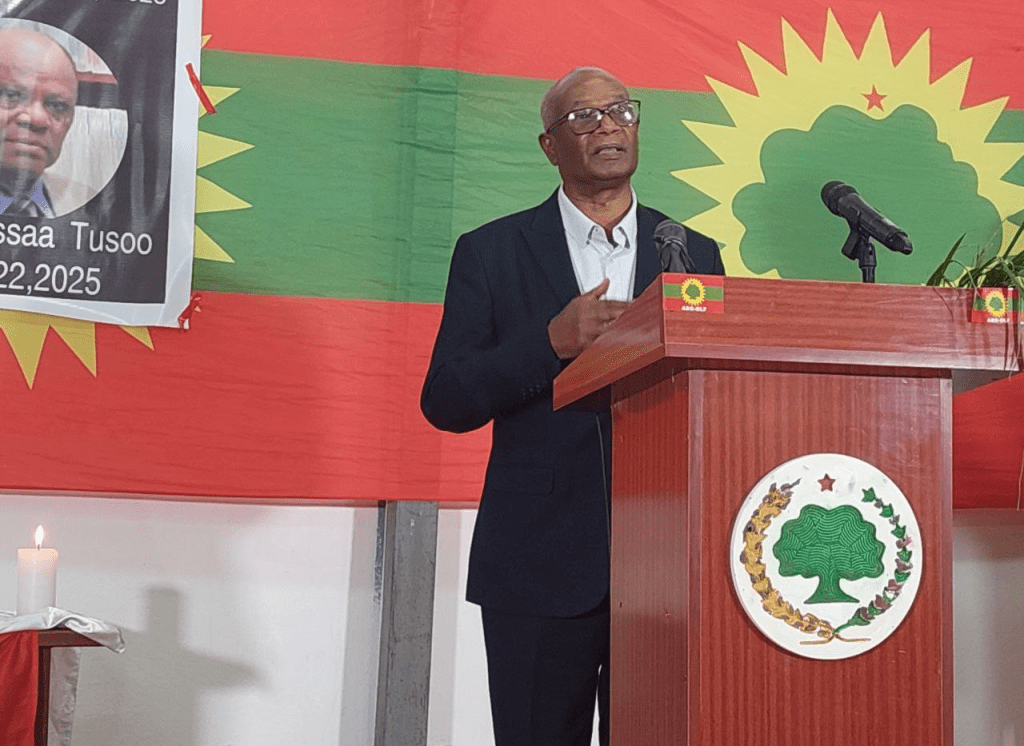
The ceremony highlighted the enduring impact of the two professors. Professor Asmarom Legesse was celebrated for his groundbreaking anthropological research, most notably his seminal work Gada: Three Approaches to the Study of African Society. His scholarship did not merely document Oromo culture; it presented the Gada system to the world as a profound and democratic form of governance, pulling Oromo history from the shadows of a repressive past (bar dukkanaa) into the global light.
“Oromummaa (Oromo national identity) is not just about blood,” one speaker affirmed, echoing the professors’ legacy. “It is a great symbol. During that dark era, rather than simply placating Habasha hegemony, it was Asmarom who made the world accept that the Gada system is a great and democratic governance tradition.”
Professor Hamdesa Tuso, a revered philosopher and peace scholar, was honored for his relentless dedication to framing Oromo liberation within universal principles of justice, human rights, and ethical philosophy. His work provided the intellectual and moral framework that elevated the struggle beyond mere political contestation.
A poignant moment arose with the participation of Obbo Dirribi Damise, former head of the Oromo Broadcasting Service (WMT). His presence symbolized the bridge between scholarly work and public dissemination. Speakers expressed deep gratitude for his role in carrying the professors’ profound knowledge of Oromo affairs to the world, ensuring their insights reached a broad audience.
The gathering was not only a look backward but a call to the future. The elders and leaders issued a clear directive to the younger generation (dhaloota): the monumental work begun by Asmarom and Hamdesa remains unfinished. They must take up the mantle and continue it.
In a powerful closing sentiment, the elders emphasized the collective responsibility to this legacy. “Professor Asmarom has left an unforgettable mark that other Oromos can emulate,” they stated. “We must internalize the mission he started and left for us, and pledge to carry it forward.”
Today’s ceremony in Wajjira solidified a central truth for the Oromo movement: that the pen and the resolve for freedom are allies in the same fight. The legacy of Professors Asmarom Legesse and Hamdesa Tuso stands as a challenging and illuminating torch, guiding the path toward both intellectual sovereignty and national liberation.

Posted on February 7, 2026, in Information, News. Bookmark the permalink. Leave a comment.




 Advocacy for Oromia
Leave a comment
Comments 0