Daily Archives: February 11, 2026

Dhagaa Baabbilee: Nature’s Marvel Beckons Tourists to Eastern Hararghe
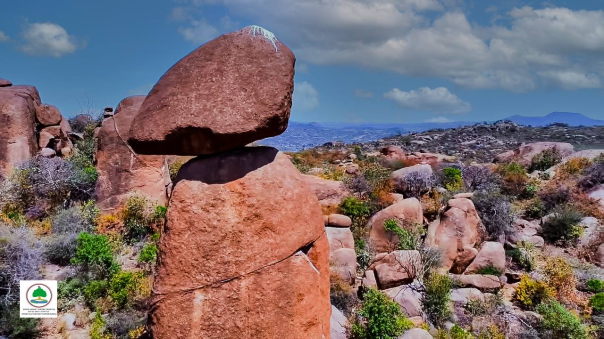
Oromia, Babille— Rising majestically from the rugged landscape of Eastern Hararghe Zone, the extraordinary rock formation known as Dhagaa Baabbilee stands as one of Ethiopia’s most remarkable natural wonders, offering visitors an unforgettable encounter with geological history.
Located just five kilometers from the town of Babile and approximately 40 kilometers from the ancient walled city of Harar, this fascinating volcanic rock structure is easily accessible to both domestic and international tourists seeking authentic natural experiences. The site, situated in an area locally called Dakkata, presents visitors with a stunning visual spectacle that has captivated travelers, photographers, and nature enthusiasts alike.
A Testament to Volcanic Origins
Dhagaa Baabbilee’s distinctive shape tells a story millions of years in the making. Geological experts attribute its unusual formation to ancient volcanic activity that shaped the region’s topography. Unlike typical rock formations found elsewhere in the country, these particular monoliths stand in remarkably preserved forms, their peculiar contours defying conventional expectations of natural rock structures.
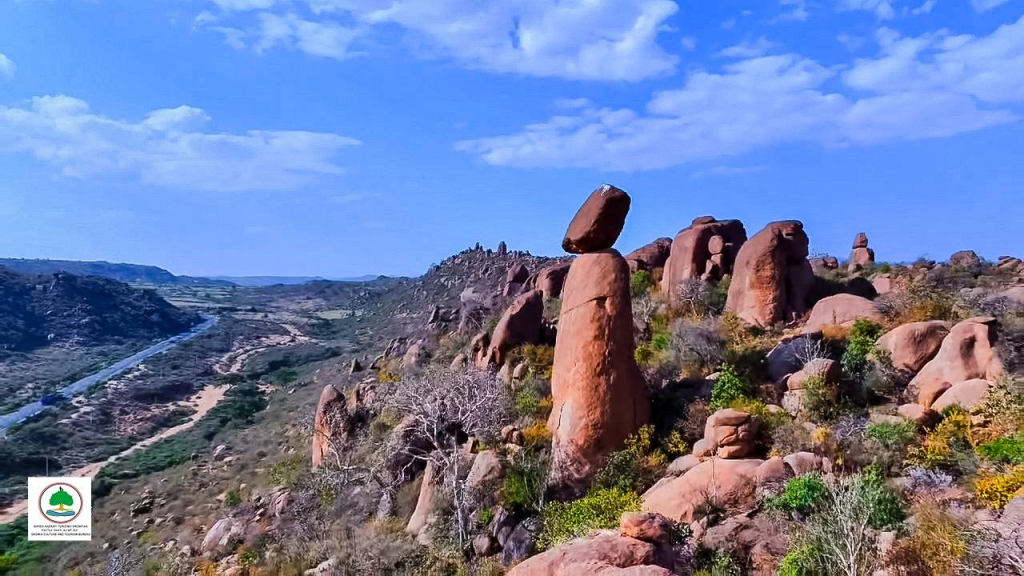
Standing prominently along the roadside, the formation offers convenient viewing opportunities without requiring strenuous hiking or specialized equipment. Visitors can simply park and witness this geological masterpiece up close, making it an ideal stop for travelers journeying between Harar and Babile.
Photographer’s Paradise
For photography enthusiasts and social media content creators, Dhagaa Baabbilee presents an unparalleled backdrop. The interplay of light and shadow across the volcanic rock faces during golden hours creates dramatic compositions that have made the site increasingly popular among Ethiopia’s growing community of nature photographers.
“The way these rocks catch the morning light is simply magical,” observed Tadesse Alemu, a frequent visitor from Harar. “Every visit offers a different perspective, a new angle to appreciate.”
Gateway to Greater Exploration
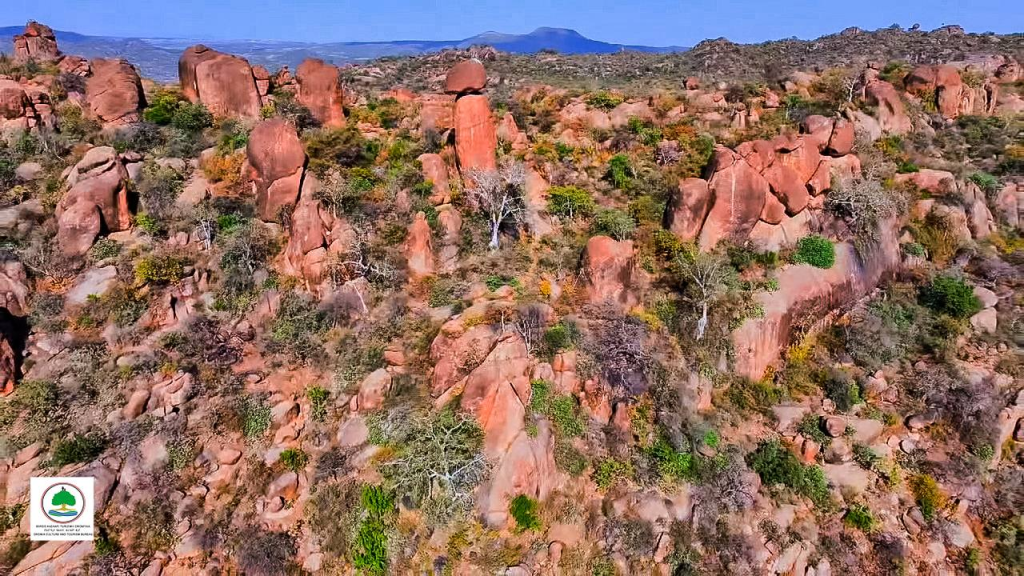
The Dakkata Valley, stretching from Harar to Funyaan Bira, features an entire landscape dotted with similar volcanic formations, creating what tourism experts describe as an underutilized geological corridor with tremendous potential for adventure tourism, educational field trips, and scientific research.
Unlike many tourist destinations that offer only recreational value, Dhagaa Baabbilee serves multiple purposes. Its accessibility makes it suitable for school excursions focusing on geography and natural sciences, while history researchers find value in understanding how such formations have influenced human settlement patterns in the region.
Untapped Tourism Potential
Despite its proximity to Harar—a UNESCO-recognized heritage site that attracts thousands of international visitors annually—Dhagaa Baabbilee remains relatively unknown outside the immediate region. Local tourism stakeholders are now advocating for greater promotional efforts to integrate this natural attraction into existing tourist circuits.
“We have this magnificent resource practically at our doorstep, yet many visitors to Harar leave without knowing it exists,” said Mulugeta Tesfaye, a tourism operator based in Babile. “The potential here is enormous—for local job creation, for community development, and for diversifying Ethiopia’s tourism offerings beyond the northern circuit.”
An Invitation to Discover
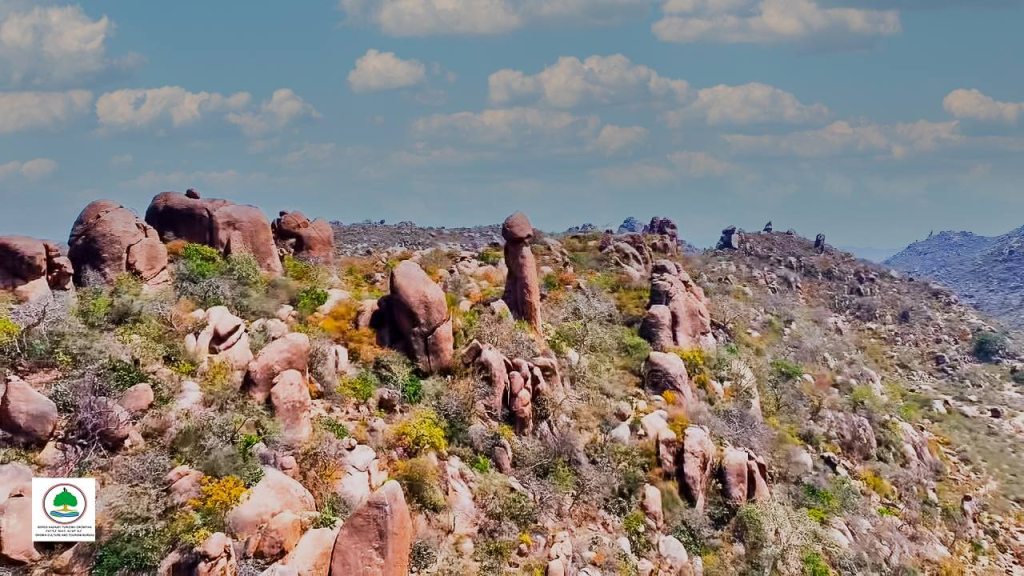
As Ethiopia’s tourism sector continues recovering and expanding, destinations like Dhagaa Baabbilee represent opportunities to showcase the country’s lesser-known natural heritage. The site embodies the geological diversity that makes the Horn of Africa region scientifically significant while offering accessible adventure for casual travelers.
“We invite everyone—whether you’re a researcher seeking to understand our geological history, a photographer chasing that perfect shot, or simply someone who appreciates the extraordinary beauty of nature,” said community representative Amina Ibrahim. “Come, visit Dhagaa Baabbilee, witness this wonder of Oromia’s natural heritage, and take pride with us in this magnificent gift of nature.”
As sunset paints the volcanic rocks in shades of amber and crimson, visitors to Dhagaa Baabbilee experience what local guides describe as “the moment when stone and sky become one”—a fitting metaphor for a place where Ethiopia’s ancient geological past meets its promising tourism future.

A Call for Security, A Pledge for Protection: Oromia’s Leadership Outlines Commitment After Period of Unrest
A Call for Security, A Pledge for Protection: Oromia’s Leadership Outlines Commitment After Period of Unrest
In a direct address to mounting public concerns, a statement from Oromia’s leadership has acknowledged a sustained period of violence and insecurity, vowing to restore safety as the region’s fundamental priority. The message strikes a resonant chord with communities who have felt vulnerable, explicitly referencing the unresolved trauma of the 2016 Irreechaa tragedy as a pivotal moment of institutional failure.
“A safe nation is the foundation for everything else,” the statement declares, framing security not as a privilege but as the essential bedrock upon which economic prosperity, social development, and personal freedom are built. “Oromians cannot build their lives with confidence if they do not feel secure in their own communities.”
The frank acknowledgment of public anxiety comes after years of reported unrest involving various armed groups, inter-communal clashes, and allegations of state violence. This instability has disrupted livelihoods, deepened social fractures, and fueled a widespread demand for decisive action.
A Four-Pillar Pledge for Action
Moving beyond acknowledgment, the leadership has outlined a four-point action plan, presenting it as an unwavering commitment to its citizens:
- 🔵 Crack down on anti-Oromummaa: A pledge to confront ideologies and actions deemed hostile to Oromo identity, culture, and self-determination.
- 🔵 Tackle violent extremism: A commitment to address radicalization and violence from all sources that threaten civil order.
- 🔵 Take strong action to fight terrorism: A vow to combat groups officially designated as terrorist organizations operating within and across Oromia’s borders.
- 🔵 Secure our borders to protect Oromians: A promise to enhance control over regional boundaries to prevent cross-border incursions and the flow of weapons.
“Protecting Oromians and defending our way of life is a government’s first responsibility,” the statement concludes. “That is the standard we will uphold.”
The Shadow of Irreechaa and the Test of Trust
The explicit mention of the 2016 Irreechaa tragedy is particularly significant. During the annual Oromo thanksgiving festival that year, a deadly stampede and alleged security force actions led to hundreds of deaths, a profound national trauma that has become symbolic of a broken trust between the people and the state. By invoking it, the current statement directly ties its new security pledge to the healing of that historic wound.
The success of this pledge now rests on its translation from rhetoric into tangible, even-handed, and effective action on the ground. Observers and citizens alike will be watching closely to see if these commitments lead to a measurable decrease in violence, the protection of all communities, and the restoration of the confidence needed for Oromians to build their futures without fear. The ultimate test will be whether safety, promised as a foundation, can truly be rebuilt.
“Protecting Oromians and defending our way of life is a government’s first responsibility,” the statement concludes. “That is the standard we will uphold.”

Australia’s Untold Stories: Celebrating Refugee Contributions
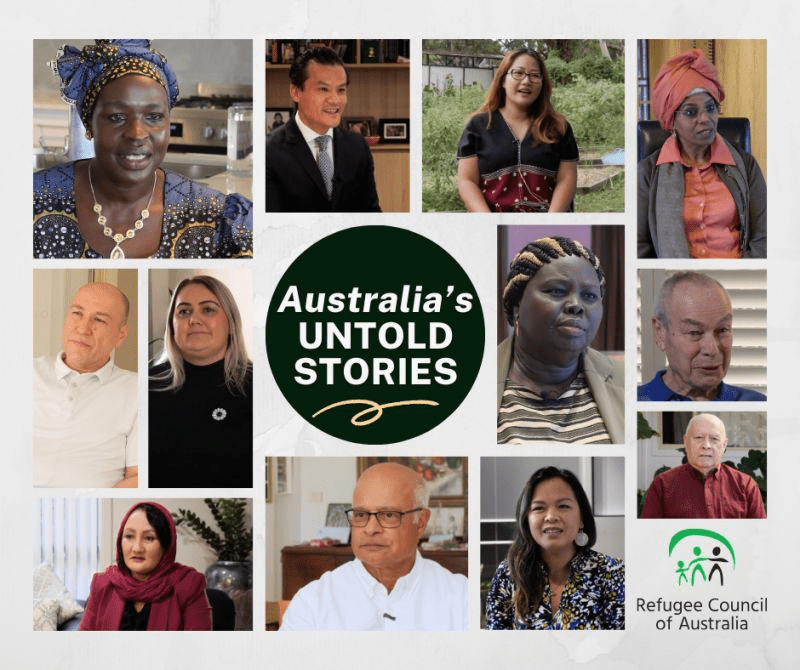
Australia’s Untold Stories: New Project Celebrates the Lives and Legacies of Former Refugees
[Advocacy for Oromia] Today launched Australia’s Untold Stories, a powerful digital archive of oral histories from 12 former refugees who have rebuilt their lives and enriched the nation. The project spotlights individuals from diverse backgrounds—including Afghanistan, Bosnia and Herzegovina, Chile, Eritrea, Laos, South Sudan, and Vietnam—as a testament to the resilience and contributions of over a million refugees who have settled in Australia since World War II.
Body Content Structure:
You can structure the main body of your article to include the following sections:
- The Heart of the Project: Briefly explain the “why” behind the project. Emphasize its goal to move beyond statistics and present personal, human narratives of courage, loss, hope, and new beginnings. Mention the format (e.g., video interviews, written narratives) and the goal of preserving these stories for a national audience.
- Introducing the Storytellers: This is the core of your feature. Once you access the project site, select two or three compelling individuals to highlight. For each, provide:
- Name and Origin: (e.g., “Amina, who fled Afghanistan…”).
- A Glimpse of Their Journey: A brief, poignant detail from their story (e.g., the profession they left behind, a moment of danger or hope).
- Their Contribution in Australia: How they rebuilt their life (e.g., founded a community organization, became a nurse, opened a restaurant sharing their culture, raised a family).
- A Powerful Direct Quote: Pull a short, impactful line from their interview that summarizes their experience or perspective. This adds authenticity and emotional depth.
- The Broader Tapestry: Connect these individual stories to the larger historical narrative mentioned in your prompt. Discuss how these 12 stories represent the wider contributions refugees have made to Australian society over eight decades in fields like medicine, cuisine, arts, business, and community life. Acknowledge the role of welcoming communities and settlement support.
- Call to Action and Access: Direct readers clearly to where they can experience the stories. You can use the text you already have: “Through their stories, we reflect on the contributions refugees have made… Watch Australia’s Untold Stories: https://bit.ly/AustraliasUntoldStories“. Consider adding a final reflective sentence on the importance of listening and understanding.
Quotes to Incorporate (add from the videos once you watch them):
- Look for a quote from a project organizer on the vision for the archive.
- Look for 2-3 moving quotes from the featured individuals about their past, their journey, or their life in Australia.
- You could also consider including a brief quote from a historian or community leader on the national significance of such projects (if available on the site or from your own research).
Practical Next Steps:
- Visit the Direct Link: Go to
https://bit.ly/AustraliasUntoldStoriesin your web browser to watch the videos and read the full profiles. - Take Detailed Notes: As you watch, note down the names, key life events, professions, and the most powerful statements from the interviewees.
- Fill in the Template: Use the notes to populate the article structure above with specific, vivid details.
- Add a Relevant Image: If the project page provides promotional images or video stills you have permission to use, include one with your article to make it more engaging.

The Poet Who Spoke for a Continent: Remembering Tsegaye Gabre-Medhin (1936-2006)
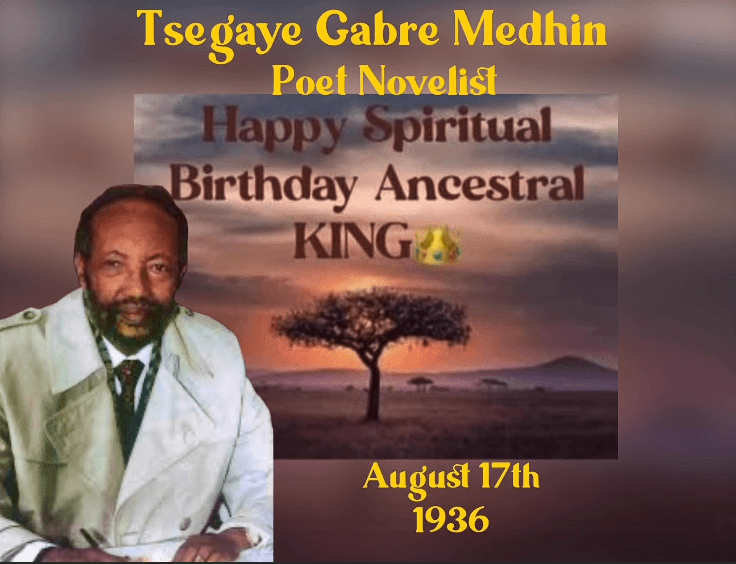
Subtitle: Ethiopia’s towering playwright, poet laureate, and pan-African visionary left a legacy that bridged tradition, revolution, and human dignity.
On a February day in 2006, in a Manhattan hospital room far from the highlands of Boda where he was born, the heart of Ethiopian letters ceased to beat. Tsegaye Gabre-Medhin – playwright, poet, pan-Africanist, and keeper of his nation’s conscience – passed away at 69, physically separated from the land he immortalized but spiritually never departed from it.
Tsegaye’s life was a testament to the power of art to shape national identity and awaken continental consciousness. Educated in the wake of Ethiopia’s liberation from Italian occupation, his genius was recognized early. While still a schoolboy, he wrote a play performed before Emperor Haile Selassie—a prophetic beginning for a writer who would spend a lifetime wrestling with the myths, heroes, and soul of his nation.
The Playwright as Patriot and Teacher
Rejecting careers in law and commerce, which he saw as “soul-destroying,” Tsegaye devoted himself to the stage. As a director of Ethiopia’s National Theatre, he became a deliberate pedagogue. He believed his country needed heroes, and through historical dramas like Tewodros and Petros at the Hour, he taught Ethiopians to respect the martyrdom, reform, and resistance that defined their past. Yet his vision was never parochial. His celebrated play The Oda Oak Oracle, a comedy of Ethiopian country life, was performed across eight nations, proving the universal appeal of locally-rooted storytelling.
The Poet as Pan-African Visionary
Tsegaye’s patriotism was expansive, firmly rooted in an Africanist worldview. A friend of Senegal’s President Léopold Sédar Senghor, he engaged deeply with the Négritude movement. His scholarship led him to trace the linguistic and cultural threads linking the Nile Valley civilizations, asserting Ethiopia’s place within a broader African continuum. This vision culminated in 2002 when his poem, calling to “make Africa the tree of life,” was adopted as the anthem of the newly-formed African Union.
The Advocate as Unyielding Conscience
Beyond the stage and page, Tsegaye was a formidable advocate for justice. He campaigned tirelessly for the return of Ethiopia’s looted heritage—the Aksum Obelisk taken by Mussolini and the priceless manuscripts pillaged from Emperor Tewodros’s fortress at Magdala. For him, these were not mere artifacts but fragments of the national soul.
In his later years, his focus broadened to the universal themes of peace and human dignity, earning him international recognition and a place in the United Poets Laureate International.
A Legacy of Unbroken Spirit
Confined to exile by the medical necessity of dialysis, Tsegaye became a spiritual anchor for the diaspora, affectionately known as Blattengetta—the great scholar. His seminal poem, “Prologue to African Conscience,” remains a piercing critique of post-colonial malaise, warning of “luxury and golden chains that free the body and enslave the mind.”
Tsegaye Gabre-Medhin taught us that to look forward, a people must first learn to look deeply into their own past and see themselves within the grand tapestry of their continent. He was not just Ethiopia’s poet laureate; he was Africa’s scribe, a visionary who understood that true freedom lives in the stories we tell, the history we reclaim, and the conscience we dare to awaken.
Galatoomaa, Blattengetta. Your footprints in time are indelible.




 Advocacy for Oromia