Daily Archives: February 13, 2026

Ethiopia Marks 14th World Radio Day with a Focus on Diversity and Community Service

ADDIS ABABA — Ethiopia joined the global community today in celebrating the 14th World Radio Day under the theme “Radio and Artificial Intelligence.” In a message marking the occasion, the Ethiopian Media Authority (EMA) highlighted the medium’s indispensable role in serving the nation’s diverse population and reaffirmed its commitment to supporting the sector’s growth.
“Happy World Radio Day to all radio journalists, editors, leaders, and listeners across our nation!” declared Haimanot Zelake, Director General of the Ethiopian Media Authority, in a statement released to the press .
The global observance, celebrated annually on February 13, has a rich history. The concept was initiated by the Spanish Radio Academy, and the formal proposal was presented to UNESCO in 2010. It was proclaimed by UNESCO in 2011 and subsequently adopted by the United Nations General Assembly in 2012, with February 13 chosen to commemorate the establishment of United Nations Radio in 1946 . This year marks the 14th time the day has been celebrated worldwide .
The Enduring Power of Radio in Ethiopia
In her message, Director General Zelake underscored the unique and vital role radio plays in Ethiopia’s specific context. As a low-cost and accessible medium, radio remains the primary source of information, education, and entertainment for communities across the country, effectively serving as a cornerstone for public discourse and democratic engagement .
“Radio plays a unique role in informing, educating, and entertaining the public,” Zelake stated. “Given our national context, its importance is extremely high, serving as a key source of information in almost all areas.”
The Ethiopian Media Authority, empowered by its founding legislation, views radio as essential for guaranteeing the public’s right to information and ensuring media accessibility . The Authority’s mandate includes licensing, monitoring, and supporting media outlets to create an enabling environment for them to flourish.
A Growing and Diverse Radio Landscape
The Director General provided an encouraging update on the state of the industry, highlighting a significant expansion in the number of radio stations operating under the Authority’s license. Currently, Ethiopia is home to a vibrant mix of 57 radio stations, comprising:
- 31 Public radio stations
- 10 Community radio stations
- 11 Commercial radio stations
- 5 Educational radio stations
This diverse media landscape ensures that a multitude of voices and perspectives are represented, catering to the varied interests of the Ethiopian populace. “Radio stations operate by taking into account the diverse thoughts and interests of society,” Zelake emphasized.
Amplifying Community Voices
A key focus of the Authority’s work, as outlined in the message, is the expansion and strengthening of community radio. These stations are vital for reaching remote and vulnerable groups, giving a platform to the illiterate, women, youth, and marginalized communities to participate in public debate .
Haimanot Zelake stressed that beyond issuing licenses, the Authority is actively creating support frameworks to help community stations thrive. This support is crucial for ensuring that Ethiopia’s nations, nationalities, and peoples can use their languages and promote their cultures and values. The Director General reiterated that the Authority’s commitment to this cause will continue to be strengthened.
“As we celebrate this day, I want to reaffirm that the Authority’s support in this regard will continue to be strengthened,” she said. “The role of radio in enabling nations, nationalities, and peoples to use their own languages and promote their culture and values is immense.” .
As Ethiopia celebrates this World Radio Day, the message from the EMA is clear: radio is not a dying medium but a resilient and evolving force for unity, information, and community empowerment, and its growth will continue to be a national priority.

General Damisse Bulto: The Forgotten Eagle of Ethiopia’s Skies
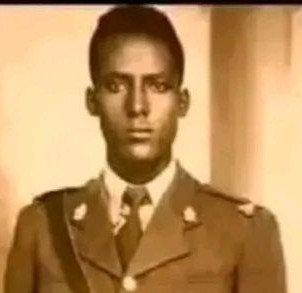
Personal Profile
Who was General Damisse Bulto? 💔
The question lingers, suspended in grief and memory. For those who knew him, he was a son of Ada’a Berga, a herdsman turned warrior, an aviator who painted his nation’s future across African skies. For those who have forgotten—or were never taught—he is a ghost in the military archives, a name erased from official histories, a body moved in secret.
This is his story.
From the Pastoral Plains
General Damisse Bulto Ejersa was born in 1926 in Ada’a Berga District, West Shewa, to his mother Adde Ayyee Jiraannee and his father Mr. Bultoo Ejersa. From childhood, he knew the weight of responsibility. While other boys played, young Damisse tended his family’s cattle, moving through grasslands that would later seem impossibly distant from the jet streams he would one day command.
But the open fields that raised him also gave him his first taste of horizons. A boy who watches the sky from the earth learns to dream of flight.
When he reached the appropriate age, Damissae traveled to Finfinne to study at the Medhanealem School. It was there, in the capital’s classrooms, that a military recruitment announcement changed everything. The Makonnen School was calling for cadets. Without informing his family, the young man enlisted—and stepped onto a path that would define the rest of his life.
The Making of a Makonnen
Three years of intensive training transformed the cattle herder’s son into a disciplined officer. By 1946, as Lieutenant Colonel, he received orders that would carry him far from Ethiopian soil.
The Korean Peninsula was aflame. The Cold War’s first hot conflict had drawn nations from across the globe into its crucible. Ethiopia, under Emperor Haile Selassie, committed troops to the United Nations forces. Among them was Damissae Bultoo—a young commander representing his ancient empire on a distant battlefield.
He served with distinction. He returned alive. He completed his consecration ceremony. And then his nation called again.
Ethiopia had no air force to speak of. The Emperor, modernizing his military, sought to build one from the cockpit up. Damissae was selected for training in Israel, where he learned the arts of aerial warfare from one of the world’s most capable air arms. He returned home a pilot—and soon, commander of the famed “Flying Leopard” squadron.
Wars and Recognitions
The 1950s and 1960s were decades of fire. When Somalia challenged Ethiopia’s territorial integrity, General Damisse took to the skies. In 1955 and again in 1957, he flew combat missions against Somali forces, his Leopards drawing blood across the Ogaden skies.
Emperor Haile Selassie took notice. The young man from Ada’a Berga, who had once watched clouds from cattle pastures, now received medals and commendations from the Lion of Judah himself. He rose through the ranks: Colonel in 1969, Brigadier General in 1972, Major General in 1977.
Each promotion marked not merely personal advancement but the trajectory of a man who had dedicated his entire existence to the defense and dignity of his nation.
The Dream of Oromia
Yet General Damisse’s patriotism was not uncritical. He loved Ethiopia—but he also saw its failures. He served the empire—but he also dreamed of liberation for his own people.
When the Derg seized power, when Mengistu Hailemariam’s Red Terror washed Ethiopian cities in blood, General Damisse made his choice. He would not merely serve. He would resist.
The plan was audacious, befitting an airman accustomed to thinking in three dimensions. On the morning of December 8, 1981, Mengistu was scheduled to depart for East Germany. General Damisse and his co-conspirators intended to shoot down the dictator’s aircraft—or, alternatively, divert it to Eritrea and capture the leader himself. A single blow to decapitate the Derg and open the path for Oromia’s liberation.
But conspiracies breathe thin air in authoritarian states. Fellow air force officers, when approached, hesitated. Some refused outright. The plot faltered, then collapsed. No missile was fired. No aircraft was diverted. No dictator fell.
The dream of an Oromo political order, forged in that moment of daring, remained unrealized.
The Exile and the Grave
What follows is contested, obscured, deliberately forgotten.
What is known: General Damisse was killed. The commander of the Flying Leopards, the veteran of Korea and Ogaden, the man who had received medals from an emperor’s hand, died at the hands of fellow officers—or of the regime they served.
His body was initially interred in Asmara, within the compound of the Catholic Church of St. Isteqs. Eritrea, then still part of Ethiopia, received the fallen general in silence. His grave marked nothing more than a name, a date, a vanished life.
But even the dead are not beyond the reach of politics.
Years later, after Eritrea had separated, after Asmara had become foreign soil, General Damisse’s remains were exhumed. They traveled south, across the border his squadron had once defended, back to the capital city where a cattle herder’s son had first dreamed of flight.
Today, they say, he rests in Finfinne. Within the compound of St. Joseph’s Church. A man displaced even in death, his final resting place known to few, visited by fewer still.
What Remains
General Damisse Bulto left no political testament. No memoirs. No public confessions or private apologies. He left only the record of his service—the medals, the missions, the promotions—and the whispered memory of a plot that failed.
To Ethiopian military history, he is an embarrassment: a decorated commander who turned against the state. To Oromo nationalists, he is a martyr: a patriot who understood that love of nation and love of people could not be separated. To his family, he is simply gone—a father, a grandfather, a name spoken in prayers.
And to the young men and women of Ada’a Berga, who still tend cattle beneath the same skies he once watched, he is a question without answer.
Who was General Damisse Bulto?
The cattle know. The grass knows. The wind that moves across the West Shewa highlands remembers the boy who became an eagle.
But the archives are silent. The grave is quiet. And the dream he died for remains, like his body, displaced—waiting for a nation that has not yet decided whether to claim him.
💔
The author acknowledges the family of General Damisse Bulto and surviving members of the Ethiopian Air Force who provided information for this profile, many of whom spoke on condition of anonymity.

Ethiopia’s Sudan Calculus: Beyond Bystander, Toward Strategic Survival
By Hayyuu Oromia
Feature Commentary
In the discourse surrounding Ethiopia’s engagement in the Sudanese conflict, a curious expectation has taken root—one that presumes Addis Ababa should somehow transcend the very logic of statecraft that every other regional actor employs without apology.
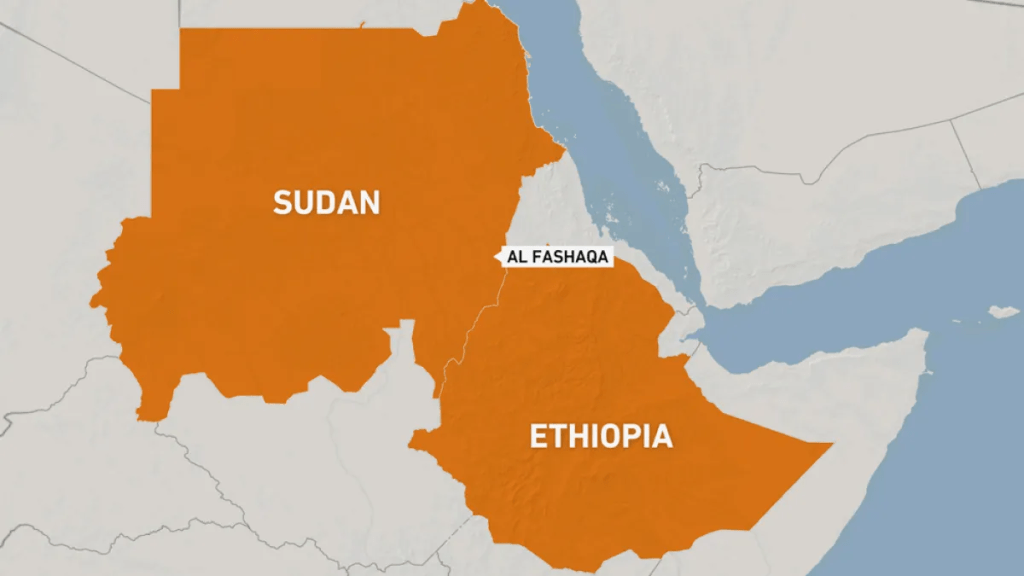
Egypt maneuvers. The United Arab Emirates projects power. Saudi Arabia calibrates. Turkey expands. Qatar hedges. All pursue their interests with the unembarrassed clarity that sovereign states have always done. Yet when Ethiopia—a nation sharing 744 kilometers of border with Sudan, hosting hundreds of thousands of its refugees, and dependent upon stable transit corridors through its territory—dares to act in its own defense, a chorus of disapproval arises.
This double standard is not merely unjust. It is strategically naïve.
The Geography of Vulnerability
Let us state plainly what diplomatic language often obscures: Ethiopia cannot afford to be a bystander in Sudan. Not because of ideological affinity with any faction. Not because of adventurism. Not because of a governing party’s foreign policy vanity.
Because geography has already decided otherwise.
When Sudan burns, the flames do not stop at the border. They leap. They travel along ancient trading routes, through porous boundaries that no government on either side has ever fully controlled, into the ethnic borderlands where kinship ties defy colonial cartography. They arrive in the form of automatic weapons flowing into regions already wrestling with internal tensions. They arrive as refugee surges that strain already limited resources. They arrive as disrupted trade corridors upon which Ethiopian businesses and consumers depend.
Egypt does not share a border with Sudan. Its cities will not receive Sudanese refugees. Its farmers will not lose access to Port Sudan. Its traders will not watch their goods stranded at border crossings.
Ethiopia will. Ethiopia does. Ethiopia has.
The Egyptian Calculus
To speak of Ethiopia’s engagement in Sudan without referencing Egypt’s extensive involvement is to analyze a chess game while ignoring one player’s moves entirely.
Cairo has not been neutral. It has not been passive. It has not been a disinterested mediator seeking only Sudanese welfare. Egypt has actively cultivated relationships with specific Sudanese armed factions, provided political cover for certain actors in regional forums, and framed its engagement as protective of its own red lines—the most significant being the preservation of its historical dominance over Nile waters.
This is not an accusation. It is an observation of normal state behavior. Egypt, like any sovereign nation, pursues its perceived strategic interests. The Grand Ethiopian Renaissance Dam represents a fundamental shift in the region’s hydro-political balance. It would be extraordinary—indeed, irresponsible from Cairo’s perspective—if Egypt did not seek to offset this shift wherever possible.
Sudan has become an arena for that effort.
The question, then, is not whether Ethiopia should be present in Sudanese affairs. The question is whether Ethiopia can afford to be absent while its primary regional competitor works actively to shape outcomes that will directly affect Ethiopian security, economy, and water interests for generations.
The Luxury of Abstraction
Critics of Ethiopia’s Sudan policy often deploy a peculiar rhetorical maneuver. They concede that Ethiopia has legitimate interests. They acknowledge that other actors are deeply involved. They may even admit that Cairo’s activities are not purely altruistic.
And then they pivot to demand that Ethiopia nevertheless behave as though these facts did not exist—as though moral suasion were a substitute for strategic positioning, as though abstention were a viable posture in a region defined by zero-sum competition.
This is not principled foreign policy analysis. It is the luxury of abstraction available only to those who do not bear direct responsibility for national security.
Ethiopia’s policymakers do not have that luxury. They cannot instruct the military not to monitor border developments. They cannot tell intelligence services to ignore foreign powers cultivating relationships with armed groups along Ethiopian frontiers. They cannot inform the foreign ministry that diplomatic engagement with Sudanese stakeholders is somehow beneath Ethiopian dignity.
These are not policy choices. They are existential imperatives.
What Strategy Is, and Is Not
To argue that Ethiopia must be engaged in Sudan is not to endorse every specific action taken by Ethiopian officials. Strategy can be well-executed or poorly executed. Tactics can be effective or counterproductive. Decisions about which actors to engage, what pressure points to employ, and how to calibrate public and private messaging are all legitimate subjects of critique.
But critique requires an alternative framework. It must answer certain questions:
What would Ethiopian non-involvement actually look like? Complete diplomatic withdrawal? Termination of engagement with Sudanese stakeholders? Silence in regional forums while other states shape narratives and outcomes favorable to themselves?
And what would be the consequence of such withdrawal? Would Sudan become more stable? Would Ethiopian interests be better protected? Would Egypt reduce its own engagement out of reciprocal restraint?
The answers write themselves.
Survival, Not Adventurism
There is a word for a state that observes regional instability affecting its core interests and chooses deliberate inaction: it is not virtuous. It is not principled. It is not strategically sophisticated.
It is a failed state.
Ethiopia has endured enough decades of weakness, enough periods when others made decisions on its behalf, enough moments when its voice was absent from conversations determining its own fate. The current government, whatever its domestic shortcomings, has demonstrated a consistent refusal to return to that posture.
This refusal is not driven by ideological affinity with any Sudanese faction. It is not motivated by expansionist ambition. It is not evidence of some supposed Abiy Doctrine of regional interventionism.
It is survival.
The same survival instinct that led every Ethiopian government since Menelik to seek access to the sea. The same survival instinct that impelled successive administrations to pursue equitable utilization of the Nile. The same survival instinct that has kept Ethiopia engaged with its neighbors through every political transition, every change of ideology, every shift from empire to republic to federal democracy.
The Continuity Beneath Change
Governments change. Parties rise and fall. Personalities dominate headlines and then recede from memory. But Ethiopia’s strategic geography remains stubbornly constant.
The same Nile that concerned Emperor Tewodros concerns Prime Minister Abiy. The same borderlands that worried Emperor Haile Selassie worry the current National Security Council. The same imperative to prevent hostile powers from dominating Ethiopia’s periphery that animated Derg foreign policy animates EPRDF and PP administrations alike.
This continuity is not evidence of ideological capture. It is evidence of reality—unyielding, indifferent to political fashion, unforgiving of strategic negligence.
Critics who conflate temporary partisan grievances with permanent national interests may achieve emotional satisfaction. They may generate applause in certain forums. They may even convince themselves that their opposition to a particular government constitutes enlightened statesmanship.
But they do not thereby absolve themselves of the responsibility to distinguish between the party in power and the state itself. They do not exempt themselves from the obligation to think seriously about Ethiopia’s enduring strategic requirements.
And they do not alter the fundamental fact that Ethiopia—like Egypt, like every other regional state—will continue to pursue its interests in Sudan and beyond, because the alternative is not moral purity.
The alternative is strategic suicide.
Beyond the Current Moment
The Sudanese conflict will eventually resolve, as all conflicts do. The configuration of power in Khartoum will shift. Egypt will continue its engagement. Other external actors will come and go. The headlines will move elsewhere.
But Ethiopia will remain. Its geography will not change. Its fundamental interests will persist. Its need to engage with its neighbors—to protect its people, secure its economy, and defend its sovereignty—will outlast any single administration, any particular policy, any contemporary debate.
The question facing Ethiopia’s political class is not whether to support or oppose the current government’s Sudan policy. It is whether they can develop the strategic literacy to distinguish between contingent political disagreements and permanent national necessities.
Thus far, the evidence is not encouraging. But necessity, as they say, is a harsh teacher.
And Ethiopia’s geography is not finished instructing.




 Advocacy for Oromia