Ethiopia’s Sudan Calculus: Beyond Bystander, Toward Strategic Survival
By Hayyuu Oromia
Feature Commentary
In the discourse surrounding Ethiopia’s engagement in the Sudanese conflict, a curious expectation has taken root—one that presumes Addis Ababa should somehow transcend the very logic of statecraft that every other regional actor employs without apology.
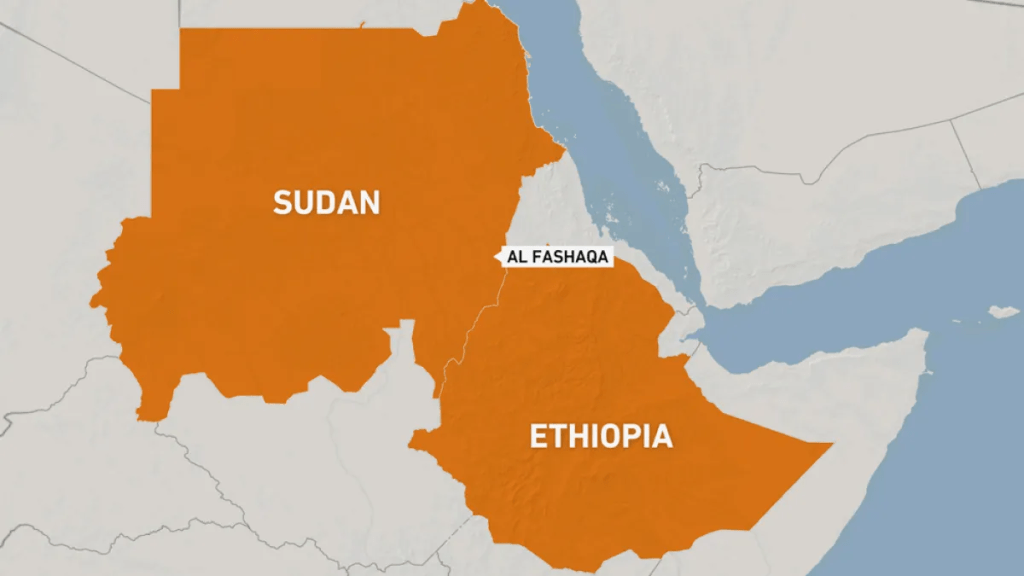
Egypt maneuvers. The United Arab Emirates projects power. Saudi Arabia calibrates. Turkey expands. Qatar hedges. All pursue their interests with the unembarrassed clarity that sovereign states have always done. Yet when Ethiopia—a nation sharing 744 kilometers of border with Sudan, hosting hundreds of thousands of its refugees, and dependent upon stable transit corridors through its territory—dares to act in its own defense, a chorus of disapproval arises.
This double standard is not merely unjust. It is strategically naïve.
The Geography of Vulnerability
Let us state plainly what diplomatic language often obscures: Ethiopia cannot afford to be a bystander in Sudan. Not because of ideological affinity with any faction. Not because of adventurism. Not because of a governing party’s foreign policy vanity.
Because geography has already decided otherwise.
When Sudan burns, the flames do not stop at the border. They leap. They travel along ancient trading routes, through porous boundaries that no government on either side has ever fully controlled, into the ethnic borderlands where kinship ties defy colonial cartography. They arrive in the form of automatic weapons flowing into regions already wrestling with internal tensions. They arrive as refugee surges that strain already limited resources. They arrive as disrupted trade corridors upon which Ethiopian businesses and consumers depend.
Egypt does not share a border with Sudan. Its cities will not receive Sudanese refugees. Its farmers will not lose access to Port Sudan. Its traders will not watch their goods stranded at border crossings.
Ethiopia will. Ethiopia does. Ethiopia has.
The Egyptian Calculus
To speak of Ethiopia’s engagement in Sudan without referencing Egypt’s extensive involvement is to analyze a chess game while ignoring one player’s moves entirely.
Cairo has not been neutral. It has not been passive. It has not been a disinterested mediator seeking only Sudanese welfare. Egypt has actively cultivated relationships with specific Sudanese armed factions, provided political cover for certain actors in regional forums, and framed its engagement as protective of its own red lines—the most significant being the preservation of its historical dominance over Nile waters.
This is not an accusation. It is an observation of normal state behavior. Egypt, like any sovereign nation, pursues its perceived strategic interests. The Grand Ethiopian Renaissance Dam represents a fundamental shift in the region’s hydro-political balance. It would be extraordinary—indeed, irresponsible from Cairo’s perspective—if Egypt did not seek to offset this shift wherever possible.
Sudan has become an arena for that effort.
The question, then, is not whether Ethiopia should be present in Sudanese affairs. The question is whether Ethiopia can afford to be absent while its primary regional competitor works actively to shape outcomes that will directly affect Ethiopian security, economy, and water interests for generations.
The Luxury of Abstraction
Critics of Ethiopia’s Sudan policy often deploy a peculiar rhetorical maneuver. They concede that Ethiopia has legitimate interests. They acknowledge that other actors are deeply involved. They may even admit that Cairo’s activities are not purely altruistic.
And then they pivot to demand that Ethiopia nevertheless behave as though these facts did not exist—as though moral suasion were a substitute for strategic positioning, as though abstention were a viable posture in a region defined by zero-sum competition.
This is not principled foreign policy analysis. It is the luxury of abstraction available only to those who do not bear direct responsibility for national security.
Ethiopia’s policymakers do not have that luxury. They cannot instruct the military not to monitor border developments. They cannot tell intelligence services to ignore foreign powers cultivating relationships with armed groups along Ethiopian frontiers. They cannot inform the foreign ministry that diplomatic engagement with Sudanese stakeholders is somehow beneath Ethiopian dignity.
These are not policy choices. They are existential imperatives.
What Strategy Is, and Is Not
To argue that Ethiopia must be engaged in Sudan is not to endorse every specific action taken by Ethiopian officials. Strategy can be well-executed or poorly executed. Tactics can be effective or counterproductive. Decisions about which actors to engage, what pressure points to employ, and how to calibrate public and private messaging are all legitimate subjects of critique.
But critique requires an alternative framework. It must answer certain questions:
What would Ethiopian non-involvement actually look like? Complete diplomatic withdrawal? Termination of engagement with Sudanese stakeholders? Silence in regional forums while other states shape narratives and outcomes favorable to themselves?
And what would be the consequence of such withdrawal? Would Sudan become more stable? Would Ethiopian interests be better protected? Would Egypt reduce its own engagement out of reciprocal restraint?
The answers write themselves.
Survival, Not Adventurism
There is a word for a state that observes regional instability affecting its core interests and chooses deliberate inaction: it is not virtuous. It is not principled. It is not strategically sophisticated.
It is a failed state.
Ethiopia has endured enough decades of weakness, enough periods when others made decisions on its behalf, enough moments when its voice was absent from conversations determining its own fate. The current government, whatever its domestic shortcomings, has demonstrated a consistent refusal to return to that posture.
This refusal is not driven by ideological affinity with any Sudanese faction. It is not motivated by expansionist ambition. It is not evidence of some supposed Abiy Doctrine of regional interventionism.
It is survival.
The same survival instinct that led every Ethiopian government since Menelik to seek access to the sea. The same survival instinct that impelled successive administrations to pursue equitable utilization of the Nile. The same survival instinct that has kept Ethiopia engaged with its neighbors through every political transition, every change of ideology, every shift from empire to republic to federal democracy.
The Continuity Beneath Change
Governments change. Parties rise and fall. Personalities dominate headlines and then recede from memory. But Ethiopia’s strategic geography remains stubbornly constant.
The same Nile that concerned Emperor Tewodros concerns Prime Minister Abiy. The same borderlands that worried Emperor Haile Selassie worry the current National Security Council. The same imperative to prevent hostile powers from dominating Ethiopia’s periphery that animated Derg foreign policy animates EPRDF and PP administrations alike.
This continuity is not evidence of ideological capture. It is evidence of reality—unyielding, indifferent to political fashion, unforgiving of strategic negligence.
Critics who conflate temporary partisan grievances with permanent national interests may achieve emotional satisfaction. They may generate applause in certain forums. They may even convince themselves that their opposition to a particular government constitutes enlightened statesmanship.
But they do not thereby absolve themselves of the responsibility to distinguish between the party in power and the state itself. They do not exempt themselves from the obligation to think seriously about Ethiopia’s enduring strategic requirements.
And they do not alter the fundamental fact that Ethiopia—like Egypt, like every other regional state—will continue to pursue its interests in Sudan and beyond, because the alternative is not moral purity.
The alternative is strategic suicide.
Beyond the Current Moment
The Sudanese conflict will eventually resolve, as all conflicts do. The configuration of power in Khartoum will shift. Egypt will continue its engagement. Other external actors will come and go. The headlines will move elsewhere.
But Ethiopia will remain. Its geography will not change. Its fundamental interests will persist. Its need to engage with its neighbors—to protect its people, secure its economy, and defend its sovereignty—will outlast any single administration, any particular policy, any contemporary debate.
The question facing Ethiopia’s political class is not whether to support or oppose the current government’s Sudan policy. It is whether they can develop the strategic literacy to distinguish between contingent political disagreements and permanent national necessities.
Thus far, the evidence is not encouraging. But necessity, as they say, is a harsh teacher.
And Ethiopia’s geography is not finished instructing.

Posted on February 13, 2026, in News, Oromia. Bookmark the permalink. Leave a comment.




 Advocacy for Oromia
Leave a comment
Comments 0