Celebrating 36 Years of Operation Fenkil in Eritrea
“Heroic Fenkil Operation: Heritage for Generations” celebrated as national symbol of liberation struggle
MASSAWA, Eritrea — The seashore of the historic port city of Massawa came alive today with patriotic fervor as Eritrea officially commemorated the 36th anniversary of Operation Fenkil, the decisive military offensive that liberated the strategic Red Sea port from Ethiopian occupation in 1990.
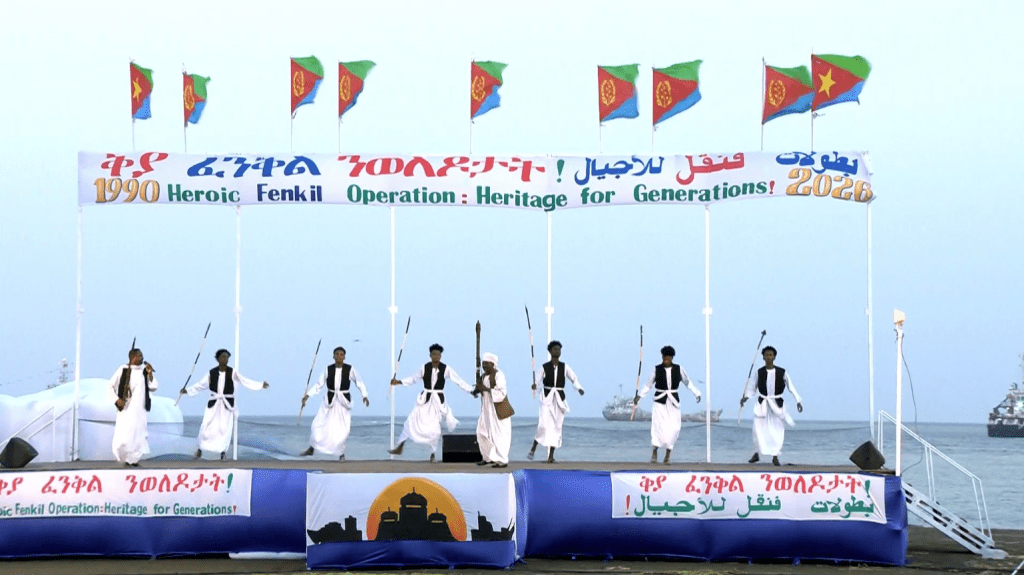
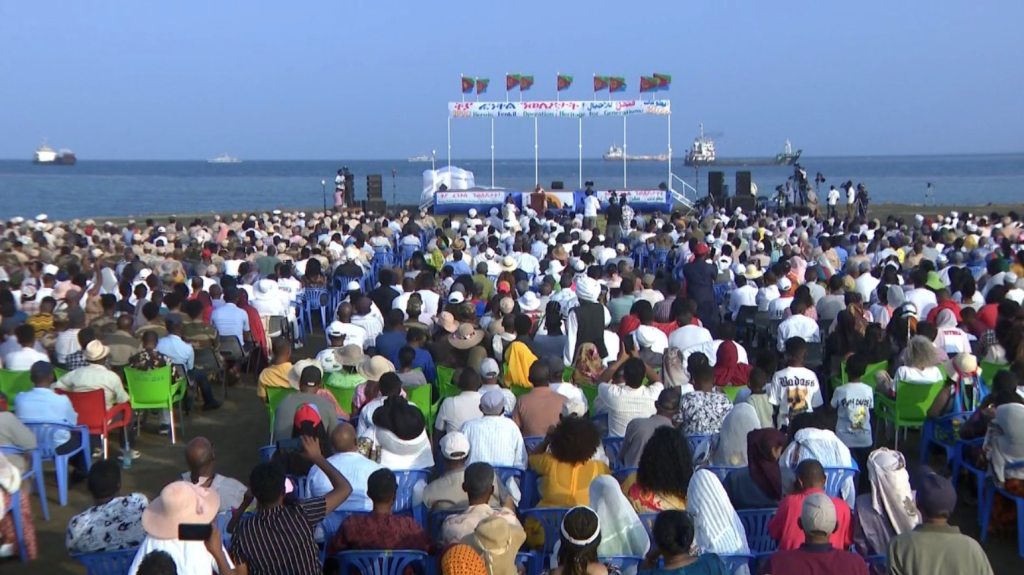
The official ceremony, held under the theme “Heroic Fenkil Operation: Heritage for Generations,” was broadcast live across the nation by Eritrean Television and Radio Dimtsi Hafash, bringing the celebration to every corner of the country. President Isaias Afwerki attended the event, joined by ministers, government and PFDJ officials, army commanders, religious leaders, and numerous nationals who gathered to honor this pivotal moment in Eritrea’s liberation history .
A Legacy of Heroism and Perseverance
Ms. Asmeret Abraha, Governor of the Northern Red Sea Region, delivered the keynote address, emphasizing the enduring significance of Operation Fenkil in the national consciousness. “The history of Operation Fenkil is a history of heroism, resolve, and perseverance of the Eritrean people and freedom fighters that will be remembered by future generations,” she declared to the assembled crowd .
The Governor drew direct connections between the sacrifices of the past and the development priorities of the present. She highlighted that national development programs being carried out in coordination with the public, members of the Defense Forces, construction companies, and other stakeholders represent the continuation of the Fenkil spirit. These programs, she noted, are based on “active and conscious public participation” and founded on “the pillars of social justice,” which together constitute the main message of the commemoration event .
Naval Power and Cultural Celebration
A dramatic highlight of the ceremony featured Fast Patrol Boats operated by female members of the Eritrean Naval Force, showcasing the integration of women into all aspects of national defense and the ongoing strength of Eritrea’s maritime capabilities .
The celebration wove together military display and cultural expression, with performances depicting the history of Operation Fenkil, praising the Eritrean people and freedom fighters, and conveying messages to adversaries. The artistic presentations also carried a message of social solidarity, encouraging support for disadvantaged citizens and families of martyrs who made the ultimate sacrifice for national liberation .
Week-Long Commemoration Activities
The 36th anniversary observance extends well beyond today’s official ceremony, encompassing a diverse array of activities designed to engage all sectors of society:
- Youth Week, organized in collaboration with the National Union of Eritrean Youth and Students, providing platforms for young Eritreans to connect with their national heritage
- Sports competitions celebrating physical fitness and team solidarity
- Photo exhibitions documenting the historic operation and its place in Eritrean history
- General knowledge contests testing understanding of the liberation struggle
- Children’s programs ensuring the youngest generation learns about this heritage
- The Fenkil Award ceremony recognizing contributions to national development and preservation of Fenkil values
- Seminars and community gatherings fostering discussion and reflection on the operation’s significance
Historical Significance of Operation Fenkil
Operation Fenkil, launched in February 1990, stands as one of the most decisive military campaigns of Eritrea’s 30-year war for independence from Ethiopia. The operation’s success in capturing Massawa, Eritrea’s second-largest city and primary port, dealt a crippling blow to Ethiopian forces and their Soviet-backed military apparatus. The victory severed critical supply lines and provided the Eritrean People’s Liberation Front (EPLF) with a strategic stronghold that would prove instrumental in the final push toward liberation in 1991.
Military historians note that the operation demonstrated the tactical sophistication of EPLF forces, combining conventional warfare with the guerrilla expertise honed during years of struggle. The capture of Massawa’s port facilities and the nearby islands fundamentally altered the strategic calculus of the war, opening new supply routes for the liberation forces while denying them to the enemy.
Fenkil in National Memory
For Eritreans, Fenkil represents more than a military victory—it embodies the resilience and determination that carried the nation through decades of struggle. The operation’s anniversary has become an annual opportunity to honor the martyrs who fell during the campaign and to transmit the values of sacrifice and national unity to younger generations.
The presence of female naval personnel in today’s ceremony carried particular resonance, reflecting how the liberation struggle transformed gender roles and established women as equal participants in national defense and development. During the armed struggle, women comprised approximately one-third of EPLF fighters, and their descendants continue to serve in all branches of the national defense forces.
Development as Continuation of Struggle
Governor Asmeret’s emphasis on development programs as the “main message” of the commemoration reflects a consistent theme in contemporary Eritrean national discourse: that the task of building the nation continues the work of liberating it. The “active and conscious public participation” she referenced draws direct parallels to the mass mobilization that sustained the armed struggle.
Infrastructure development in and around Massawa holds particular significance. The port city, once a major Ottoman and Italian colonial center, suffered extensive damage during the liberation war and has been the focus of ongoing reconstruction and modernization efforts. Development programs in the Northern Red Sea Region aim to restore Massawa’s historic role as a commercial hub while improving living conditions for its residents.
Transmitting Heritage to Generations
This year’s theme, “Heroic Fenkil Operation: Heritage for Generations,” explicitly frames the commemoration as an exercise in intergenerational transmission. With Eritrea’s population increasingly composed of young people born after independence, the challenge of conveying the lived experience of the struggle to those who did not witness it has become a national priority.
The variety of activities scheduled throughout the commemoration period—from children’s programs to youth competitions to general knowledge contests—reflects a deliberate strategy to engage different age groups through formats appropriate to their experiences and interests. The participation of the National Union of Eritrean Youth and Students in organizing Youth Week activities ensures that young people are not merely passive recipients of historical information but active participants in shaping how that history is remembered and transmitted.
A Nation Remembers
As the sun set over the Massawa seashore, the site where liberation fighters stormed ashore 36 years ago, the gathered nationals departed with renewed commitment to the values Fenkil represents. The ceremony, blending solemn remembrance with celebration of national achievements, reinforced the bonds that unite Eritreans across generations and regions.
For the families of martyrs, whose sacrifices were specifically honored in today’s proceedings, the commemoration offered public recognition of losses that can never be fully compensated. For the veterans of the liberation struggle in attendance, it provided validation that their efforts are remembered and valued. And for the young people participating in the week’s activities, it opened a window onto the experiences that shaped the nation they have inherited.
The 36th anniversary commemoration of Operation Fenkil continues through the coming days, ensuring that this pivotal moment in Eritrean history receives the reflection and celebration it deserves, and that its lessons and values continue to inform Eritrea’s national journey.

Posted on February 15, 2026, in News. Bookmark the permalink. Leave a comment.




 Advocacy for Oromia
Leave a comment
Comments 0