Exploring Indigenous Peacemaking at the 2026 Oromo Conference
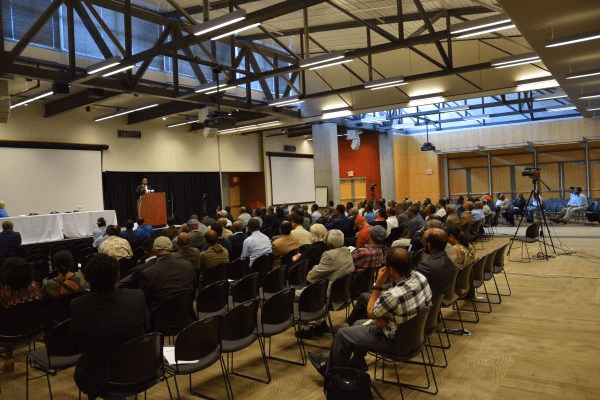
Oromo Studies Association Honors Legacy of Prof. Hamdessa Tuso with Mid-Year Conference on Conflict Resolution and Peace-Building
Scholars and researchers invited to explore indigenous peacemaking traditions at University of Minnesota gathering
MINNEAPOLIS — The Oromo Studies Association (OSA) has issued a call for papers and panels for its 2026 Mid-Year Conference, scheduled for April 11-12 at the University of Minnesota Medical Center’s West Bank campus. This year’s gathering carries special significance as it will honor the life and legacy of Professor Hamdessa Tuso, a founding member of OSA and a towering figure in the study of indigenous conflict resolution mechanisms .
Under the theme “Conflict Resolution & Peace-Building: Honoring the Life and Legacy of Prof. Hamdessa Tuso,” the conference invites scholars, researchers, and community leaders to submit abstracts exploring the rich traditions of peacemaking that have sustained Oromo society for generations. The event will take place at 2450 Riverside Ave, Minneapolis, MN 55454.
A Life Devoted to Indigenous Peacemaking
Professor Hamdessa Tuso, who passed away on November 22, 2025, in Winnipeg, Manitoba, dedicated his life to studying and teaching about African indigenous conflict resolution processes . His scholarly work emphasized that indigenous forms of peacemaking—long dismissed by Western academics as “irrelevant and backward tribal rituals”—contain sophisticated mechanisms for building lasting peace .
Dr. Tuso earned his Ph.D. in Conflict Resolution and Peacebuilding from Michigan State University in 1981 and served in distinguished academic roles across North America, including as Professor of Peace and Conflict Studies at the University of Manitoba and as a faculty member at Nova Southeastern University . His landmark work, “Creating the Third Force: Indigenous Processes of Peacemaking,” which he co-edited with Maureen P. Flaherty, presented the Oromo Gadaa system as a global model for conflict resolution .
In that seminal volume, Tuso contributed chapters including “Indigenous processes of conflict resolution: neglected methods of peacemaking by the new field of conflict resolution” and “Ararra: Oromo indigenous processes of peacemaking,” establishing a scholarly foundation for understanding how Oromo traditional institutions can address contemporary conflicts .
Conference Theme and Significance
The conference announcement highlights the Oromo people’s historical role as “the anchoring population that cemented the coexistence of peoples of various creeds” and “guarantors of peace, stability and justice everywhere its rule prevailed.” According to the call for papers, historical accounts indicate that before the precolonial era, the Oromo managed to create alliances with neighboring tribes, transforming former rivals into partners.
The announcement also addresses historical challenges to Oromo recognition: “Since the formation of Ethiopia as an empire State, the Oromo people were brutally oppressed, marginalized, dehumanized and the contributions of the Oromo to maintaining peace and stability in the horn of Africa were denied the due recognition they deserved in history.”
It was not until the early 1970s that organized scholarly attention began to reveal “the hidden truth that the Oromo in fact are custodians of indigenous institutions of governance that guarantees equality of all its citizens, rule of law, justice and fairness for all living things and the environment.”
The conference draws on core Oromo values of Nagaa (peace) and Araara (reconciliation)—traditional principles that guide conflict resolution when disputes arise between groups and individuals. As the call for papers notes, “The Oromo Land is therefore rightly described as the sea of blessings, where elders call for peace to prevail over everything living and the environment.”
Call for Submissions
OSA invites abstracts for individual paper presentations, posters, panels, and roundtables addressing the conference theme and the following sub-themes:
- Indigenous Oromo institutions: exploring the mechanisms of peacebuilding and conflict resolution
- Mitigating intra-ethnic conflicts in Ethiopia, the Horn of Africa and elsewhere globally: lessons learned from other settings
- Building peace and resolving conflicts among the Oromo and neighboring nations and nationalities (such as Somali, Afar, Sidama) past, present, and future
- Federalization and exclusion of Oromo cities Harar, Dire Dawa, Jigjiga: case studies of the impact of forced division on Oromo approaches to peacebuilding and stability
- Dedicated Panel: Remembering the Life and Legacy of Prof. Hamdesa Tuso — welcoming reflections on how he approached the study of conflict resolution
- Examining women’s leadership in traditional Oromo peacebuilding and conflict resolution
- Transmitting the wisdom of peacebuilding to the younger generation in a time of intense war, violence and undermining of culture
Other topics will be considered, but priority will be given to abstracts relevant to the theme and sub-themes.
Submission Guidelines
Individual Papers or Posters: Submissions should include a 200-300 word abstract providing 1) title, 2) specific contribution to the theme, 3) evidence on which the presentation is based, and 4) brief findings or conclusions. Authors must include names, country of residence, affiliation, field of specialization, and contact information (email and WhatsApp).
Panels: Panels consist of four members of a pre-assembled group. Proposals should include the panel title and brief biographies of each panel member with academic credentials or community roles.
Roundtables: Roundtables bring together qualified scholars and prominent personalities moderated to discuss a specific topic, book, or research finding. Submissions should include the roundtable title, relevance to the conference theme, moderator information, and speakers’ names with contact details.
The deadline for submission is March 10, 2026, at midnight. Acceptances will be notified on a rolling basis, with final notices made by March 21. All submissions should be sent to: oromostudiesassociation@gmail.com
A Legacy of Scholarship and Advocacy
Professor Tuso’s contributions extended far beyond academia. He was among the earliest pioneers of the Arsi Basic School movement, helping ignite a culture of learning across Arsi in Oromia at a time when education itself was considered a revolutionary act . He championed Tokkumaa Oromoo (Oromo unity) and stood firmly against what he termed “the colonization of the Oromo mind.”
His service included organizing the Oromo Committee for Immigration and Refugees (OCIR) in the 1980s, helping secure asylum for thousands of Oromos in the United States at a time when the U.S. government had restricted asylum for Ethiopians . He also participated in the 1991 London Peace Conference, advocating for a just political reordering of Ethiopia .
As a founding force behind the Oromo Studies Association and its first president, Tuso nurtured generations of scholars committed to researching and preserving Oromo history and culture . The upcoming conference represents a continuation of that mission, bringing together researchers to explore how indigenous wisdom can address contemporary challenges.
For scholars of peace and conflict studies, African studies, and indigenous governance systems, the April conference offers a unique opportunity to engage with Oromo intellectual traditions at a moment of both remembrance and renewal.

Posted on February 15, 2026, in News, Oromia, Uncategorized. Bookmark the permalink. Leave a comment.




 Advocacy for Oromia
Leave a comment
Comments 0