Daily Archives: February 16, 2026

Ethiopia to Mandate Premarital Training Certificate for Couples Seeking Marriage
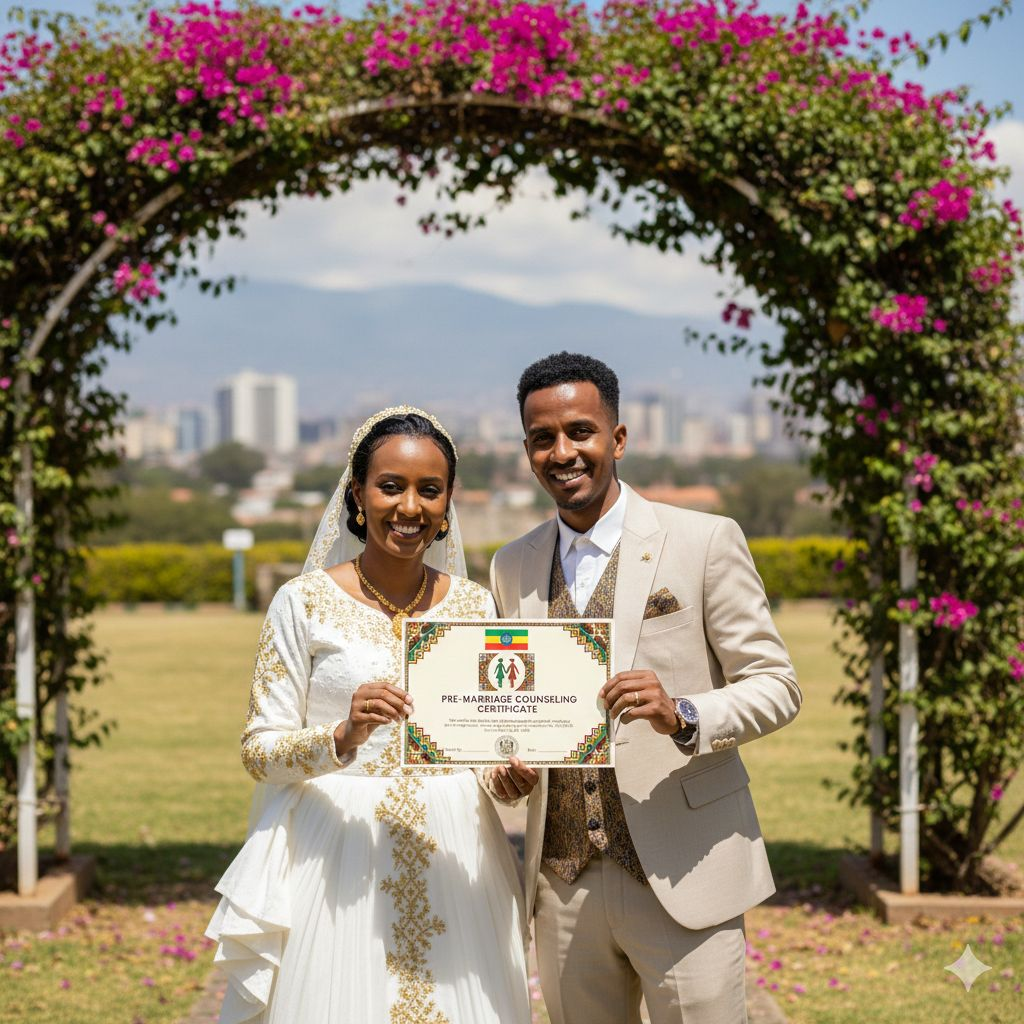
Ministry announces new regulation to combat skyrocketing divorce rates through mandatory education and certification
ADDIS ABABA — In a landmark initiative aimed at reversing Ethiopia’s rising divorce rates, the Ministry of Women and Social Affairs has announced plans to implement mandatory premarital training certification for all individuals seeking to enter into marriage. The new regulation would prohibit anyone without the required certificate from legally marrying .
The innovative approach, slated to take effect next year, represents a significant intervention in Ethiopia’s social policy landscape, targeting what officials identify as a primary cause of marital breakdown: lack of awareness and understanding about the realities of married life .
Alarming Statistics Drive Policy Response
The announcement follows concerning data released by the Addis Ababa City Civil Registration and Residence Service Agency, which revealed that divorce rates have increased by 54 percent compared to previous years. With over 20 million families currently in Ethiopia, the stability of the family unit has emerged as a pressing national concern demanding urgent attention .
Mr. Tesfaye Robele, Chief Executive for Elderly and Family Affairs at the Ministry of Women and Social Affairs, confirmed that preparations are underway to implement the system in the coming year. Speaking to Sheger Radio, officials outlined the ministry’s comprehensive approach to addressing what they describe as a crisis in Ethiopian family life .
“We have prepared training manuals to address this problem,” Mr. Tesfaye stated. “The primary cause for many marital breakdowns is the lack of awareness and understanding about what marriage truly entails” .
Collaborative Development with Religious and Community Leaders
Recognizing that marriage in Ethiopia is deeply intertwined with religious and cultural traditions, the ministry is pursuing a collaborative approach to implementation. Officials emphasize that the new system will be developed in consultation with religious institutions and community elders, ensuring respect for diverse cultural and faith-based marriage traditions .
“We are working in consultation with religious institutions and elders,” Mr. Tesfaye confirmed, highlighting the ministry’s commitment to creating a system that honors Ethiopia’s rich diversity of marriage practices while establishing consistent standards for preparation .
This collaborative framework acknowledges that marriage ceremonies in Ethiopia are performed through various institutions—religious bodies, civil authorities, and traditional community structures—all of which will need to participate in implementing the new requirements.
Comprehensive Strategy Beyond Certification
The premarital certification requirement represents just one component of a broader strategy to strengthen Ethiopian families. The ministry also announced the establishment of a joint forum bringing together various institutions working on family issues .
According to Mr. Tesfaye, this forum aims to identify and address gaps in family management practices while providing recommendations and guidance to the government on necessary actions to support family stability. The initiative reflects a holistic understanding that healthy marriages require ongoing support, not merely preparation before the wedding .
“We must begin the journey toward national change starting from the family,” the official emphasized, highlighting the fundamental role that stable households play in broader societal development . This perspective positions family stability as not merely a private concern but a public good essential to national progress.
Training Curriculum and Implementation
Ministry officials indicate that training manuals have already been prepared for the program. While specific curriculum details are still being finalized in consultation with religious and community leaders, the training is expected to cover fundamental aspects of marriage including communication skills, conflict resolution, financial management, and realistic expectations about married life .
The duration of required training and specific certification mechanisms remain under development, with implementation details to be announced following the consultation period. The goal of launching within the next year provides a clear timeline for completing these preparations .
Addressing a Growing Social Challenge
Ethiopia’s divorce rate increase of 54 percent reflects broader social transformations affecting families across the nation. Urbanization, changing gender roles, economic pressures, and evolving social expectations have all contributed to shifting dynamics in marital relationships .
The ministry’s initiative recognizes that many couples enter marriage with romanticized expectations rather than practical understanding of the commitment involved. By requiring structured preparation, officials hope to reduce the likelihood of marriage breakdown stemming from preventable misunderstandings or mismatched expectations.
Religious and Cultural Considerations
The collaborative approach with religious institutions acknowledges the complex landscape of marriage in Ethiopia, where religious ceremonies carry legal weight and traditional marriages performed by community elders remain common. Any successful intervention must work within these existing structures rather than attempting to supersede them.
Ethiopia’s religious diversity—encompassing Orthodox Christianity, Islam, Protestant Christianity, and traditional belief systems—means that marriage preparation will need to accommodate varied perspectives while maintaining consistent core content about marriage fundamentals.
Potential Impact and Challenges
If successfully implemented, the mandatory premarital training requirement would position Ethiopia among a growing number of countries recognizing the value of marriage preparation. Research in other contexts has suggested that well-designed premarital education can reduce divorce rates by helping couples develop realistic expectations and essential relationship skills.
However, implementation challenges remain significant. Ensuring accessibility of training across Ethiopia’s diverse regions, managing costs for prospective couples, and maintaining consistent quality while respecting local traditions will require careful planning and adequate resources.
The ministry’s emphasis on collaboration with existing institutions—religious bodies, community elders, and family service organizations—suggests an awareness that successful implementation depends on building upon established community structures rather than creating parallel systems.
Broader Social Implications
The initiative reflects growing recognition in Ethiopia that family stability has cascading effects on broader social outcomes. Children from stable households generally show better educational and health outcomes, while family breakdown can contribute to economic hardship and social challenges .
By intervening at the point of marriage, the ministry aims to prevent problems before they develop rather than responding after families have already fractured. This preventive approach aligns with public health models that emphasize early intervention and education as cost-effective strategies for addressing social challenges.
Looking Forward
As Ethiopia prepares to launch this innovative program, attention will focus on the consultation process with religious and community leaders, the development of culturally appropriate training materials, and the establishment of certification mechanisms that are accessible to all Ethiopians regardless of location or economic circumstance.
The coming year will see these elements take shape, with ministry officials working to transform policy announcement into operational reality. If successful, Ethiopia’s experiment in mandatory marriage preparation could offer lessons for other nations grappling with similar challenges of family stability in rapidly changing societies.
For Ethiopian couples planning to marry in the coming years, the new requirement will add an additional step to the marriage process—one that officials hope will prove invaluable in building the foundation for lasting, healthy unions. As Mr. Tesfaye emphasized, the ultimate goal extends beyond certification to the creation of stable families capable of contributing to national development and social wellbeing .

The TPLF: A Brutal Force That Should Never Have Been Given a Single Day’s Opportunity as an Organization
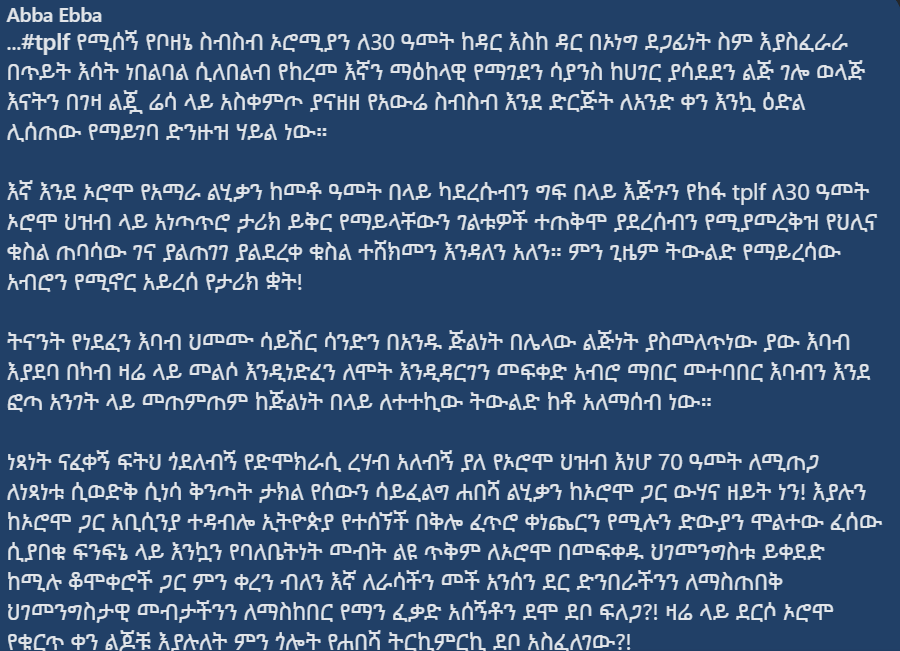
Oromo voices reflect on three decades of suffering under Tigrayan-led rule
FINFINNE — In a powerful and searing social media commentary that has resonated across Oromo networks, a voice identified as Abba Ebba has articulated the deep historical wounds and enduring grievances of the Oromo people against the Tigray People’s Liberation Front (TPLF), describing the organization as a “brutal force” that should never have been legitimized .
The statement, shared under the hashtag #Abba_Ebba, offers a raw and unflinching examination of the TPLF’s three-decade rule over Ethiopia and its specific impact on the Oromo people—a period the author describes as inflicting wounds “far worse than a hundred years of Abyssinian elite oppression” .
Thirty Years of Suffering
According to the commentary, the TPLF, operating under the banner of the Ethiopian People’s Revolutionary Democratic Front (EPRDF), controlled Oromia for thirty years, threatening the region from end to end in the name of supporting the Oromo Liberation Front (OLF) while actually enveloping the land in flames of gunfire .
The author describes how the TPLF blocked Oromos from the center, drove them from their country, killed children, and placed mothers upon the corpses of their own offspring in acts of unspeakable cruelty . This “collection of beasts,” as the author characterizes the TPLF, is portrayed as having committed atrocities that have left permanent scars on the Oromo collective consciousness .
“More than a hundred years of oppression by Abyssinian elites, the TPLF targeted the Oromo people for thirty years with historically unforgivable atrocities, using every means available,” the statement reads. “The wound of conscience they inflicted upon us is still unhealed, a scar not yet dried—we carry this unhealed wound with us” .
A Legacy That Lives With Generations
The commentary emphasizes that these historical wounds are not merely past events but living realities carried by the Oromo people. “Generations will not forget—it lives with us, an unerasable historical scar” .
The author draws a powerful analogy: “Yesterday, a snake bit us. Before the pain subsided, because of the foolishness of one and the childishness of another, we let it escape. That same snake, growing fat and multiplying, has returned today to bite us again, to bring us to death” .
Allowing this to happen, the author argues, is worse than foolishness—it is a failure to think of the coming generation. Collaborating with such forces, treating the snake as if it were a towel to be wrapped around one’s neck, represents a profound betrayal of the future .
The Quest for Freedom and Justice
The commentary gives voice to the Oromo people’s longstanding aspirations: “The Oromo people who say ‘I long for freedom, justice has been denied me, I hunger for democracy’—here they are, for nearly 70 years falling and rising in their struggle for freedom” .
Unlike others, the author asserts, Oromos have never sought scraps from anyone’s table. Yet Abyssinian elites have consistently declared, “We are like water and oil with Oromos!” while simultaneously claiming to have created a hybrid “mule” called Ethiopia through fusion with Oromos .
The author questions how, when the constitution grants special rights to Oromos even in Finfinne, there are those who would tear up the document, asking what remains for Oromos. “When will we stand up for ourselves, to protect our borders, to secure our constitutional rights—whose permission do we need to seek?” .
Today, the author notes, people say of Oromos, “They are children of the moment.” But what need has the Oromo of Abyssinian political maneuvering and crumbs?
The Folly of Sacrificing Justice for Peace
The commentary critiques those who urged compromise: “Yesterday, for the sake of peace, we abandoned justice! We forgave what you did publicly! There is no peace without justice” .
Those who stole wealth, whether collectively or individually, who used power to destroy lives, burn forests, displace people, commit inhuman acts in any form—the author insists they must not escape accountability .
Questions are raised about political transitions: “What and who is bringing the transition? From where to where?” The author suggests that those who mocked others for not understanding politics are now seeing the consequences .
What once appeared to some as downhill before them now seems as distant as the sky, transformed into an uphill struggle. “Are you truly not angered as you watch?” the author asks, suggesting that deep regret, not indifference, is the appropriate response .
Historical Memory: The Western Oromo Confederation of 1936
The commentary invokes a crucial but often overlooked chapter of Oromo history: the Western Oromo Confederation of 1936. Before the TPLF was even created, Oromos sent a delegation to the United Nations seeking to govern themselves through confederation .
This historical episode, disrupted by Italy’s five-year colonization of Abyssinia, demonstrates the long-standing Oromo pursuit of self-determination, predating the TPLF’s emergence by decades .
The author cites scholarly work by Ezekiel Gebissa on “The Italian Invasion, the Ethiopian Empire, and Oromo Nationalism: The Significance of the Western Oromo Confederation of 1936,” pointing to a tradition of Oromo political organizing that Abyssinian and Tigrayan narratives have systematically obscured .
Cultural Appropriation: The Heritage of “Weyane”
The commentary also raises questions of cultural appropriation, asking whether the TPLF has forgotten that “Weyane”—the traditional struggle strategy from which the organization derives its name—is actually Oromo heritage from Raya and Rayuma .
This observation, the author explains, is offered to counter any suggestion that Tigrayan or Amhara elites taught Oromos about freedom struggle. The historical record, including scholarship on “Peasant Resistance in Ethiopia: the Case of Weyane” published in the Journal of African History, demonstrates that Oromo traditions of resistance long preceded TPLF organizing .
The Complexity of Recognition
The author acknowledges that the situation is complex—like makeup applied and removed, artificial people appearing before cameras, living under disguise. But the weight of the matter, they emphasize, concerns the supremacy of the people, the formation of the nation, the debt owed to fathers, mothers, and faith .
“Knowledge means grasping the trunk of the tree, not hanging on its branches—hold the branches and you will fall” .
A Warning Unheeded?
The commentary concludes with a stark image: “O TPLF! The one who never says ‘enough’ will spit and continue. ‘Emboor! Emboor!’ (Get away! Get away!) they say to those who hold back and separate—now the flood has reached the neck, asking ‘What has brought my situation?'”
This metaphorical warning suggests that those who ignored calls for restraint and justice now find themselves overwhelmed by consequences of their own making .
Historical Context
The TPLF led the armed struggle that overthrew the Derg regime in 1991 and subsequently dominated Ethiopian politics for nearly three decades until Prime Minister Abiy Ahmed came to power in 2018. During their rule, the TPLF was the dominant force within the EPRDF coalition, controlling the levers of state power and directing security forces that, according to numerous human rights reports, committed widespread abuses against civilians in Oromia and other regions .
The period from 1991 to 2018 saw repeated military campaigns in Oromia, mass arrests of Oromo activists and politicians, and systematic suppression of Oromo political expression. The International Criminal Court’s Office of the Prosecutor noted in 2019 that it had received information regarding alleged crimes against humanity in Ethiopia dating back to 2015, including in Oromia .
Contemporary Relevance
The commentary appears against the backdrop of ongoing tensions in Ethiopia’s post-2018 political transition. While the TPLF was removed from federal power, it retained control over Tigray regional state until the recent Tigray War (2020-2022) dramatically altered the political landscape .
For Oromos, the question of accountability for past abuses remains unresolved. Many Oromo activists and politicians have called for justice for victims of TPLF-era atrocities, even as they navigate complex relationships with other political forces in contemporary Ethiopia .
A Voice for the Unhealed Wound
Abba Ebba’s commentary gives voice to what it describes as an “unhealed wound” in Oromo collective memory—the accumulated trauma of three decades of TPLF rule that compounded more than a century of Abyssinian domination .
The response to the post, shared widely across Oromo social media networks, suggests that these sentiments resonate deeply within the Oromo community. The demand for justice, the insistence on historical memory, and the refusal to accept narratives that minimize Oromo suffering emerge as consistent themes .
As Ethiopia navigates an uncertain political future, with ongoing conflicts in multiple regions and unresolved questions about the country’s constitutional order, voices like Abba Ebba’s serve as reminders that for many Oromos, the past is not past—it is a living wound that demands acknowledgment and, ultimately, healing through justice .
Whether such justice will be achieved, and what form it might take, remains one of the most pressing and unresolved questions in Ethiopian politics. For the Oromo people, as the commentary makes clear, the struggle continues—not only for freedom and democracy in the future but for acknowledgment and accountability for the crimes of the past.

Celebrating 49 Years of Bariisaa: A Voice for Oromo Equality
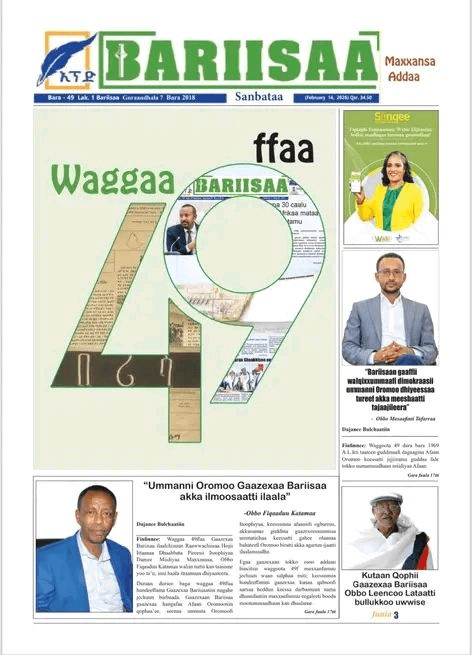
“Bariisaa Served as a Tool for the Oromo People’s Quest for Equality and Democracy”
– Mr. Masafinti Tafarraa
Oromo-language newspaper marks 49 years of serving as a beacon of information, identity, and struggle
FINFINNE — Forty-nine years ago, in 1969 E.C. (1976/77 G.C.), a transformative development in the growth and flourishing of the Afaan Oromo language occurred that would fundamentally reshape the landscape of Oromo media and lay the foundation for where Oromo-language outlets stand today: the establishment of Bariisaa Newspaper .
In an era before the proliferation of science and technology, when broadcast media could be counted on one’s fingers and the internet had not yet become the domain of a generation, the Oromo people’s love, effort, and desire for information and knowledge could only be satisfied through written word. It was in this context that the demand for and acceptance of newspapers was immense .
Bariisaa Newspaper, carried forward by scholars and heroes who toiled from afar and succeeded, passing from generation to generation through the接力 of struggle against tyranny, has now marked 49 years of existence .
Today marks the anniversary of Bariisaa Newspaper’s founding—for the Oromo people, a day when the dawn of information and knowledge shone brightly, just as the name “Bariisaa” (Dawn) suggests the morning star appears .
A Tool for the People’s Struggle
In an interview commemorating the anniversary, Mr. Masafinti Tafarraa, Executive Officer of the Ethiopian Press Agency, shared reflections on the newspaper’s historic role .
According to Mr. Masafinti, from its inception through half a century of service, Bariisaa Newspaper has undertaken and achieved great work for the freedom, equality, and democracy of the Oromo people .
Crucially, he noted that Bariisaa was established precisely at a time when the Oromo people’s demand for equality and democracy was being raised. In this context, the newspaper served as a vital medium of communication for the people’s aspirations .
Following that period and continuing after the people’s demands were reiterated, Bariisaa never halted its mission but persevered and has arrived at today’s milestone .
The founders of the newspaper were themselves participants in the struggle for the people’s equality movement at that time and played significant roles. Through their involvement, the newspaper became intertwined with the contemporaneous struggle being waged .
A Legacy of Forty-Nine Years
For nearly five decades, Bariisaa has chronicled the Oromo experience, documenting both the ordinary and extraordinary moments of Oromo life while serving as a platform for intellectual and political discourse. The publication has weathered changing political climates, technological revolutions, and shifts in the media landscape while maintaining its commitment to providing information in Afaan Oromo.
The newspaper’s endurance through nearly half a century reflects both the dedication of those who have sustained it and the persistent hunger for Oromo-language media among its readership. From its early days when written word was the primary means of mass communication to the contemporary era of digital media, Bariisaa has adapted while maintaining its core mission.
The Founders’ Vision
The founders of Bariisaa were not merely journalists but activists who understood the power of the written word in advancing the cause of equality. By establishing a newspaper in Afaan Oromo at a time when the language itself was marginalized, they made a profound statement about Oromo identity and the right to information in one’s mother tongue.
Their vision extended beyond simple news reporting to encompass the broader struggle for recognition and rights. The newspaper became both a record of that struggle and a participant in it, documenting abuses while articulating aspirations.
From Print to Digital: Evolution of a Legacy
As Bariisaa celebrates 49 years, it does so in a media environment dramatically transformed from its founding era. The broadcast media that were once scarce are now abundant, and the internet that was unknown to the generation of the 1970s has become ubiquitous.
Yet the fundamental need that Bariisaa addresses—the desire of Oromo people to receive information and analysis in their own language, reflecting their own perspective—remains unchanged. The newspaper has evolved alongside technology, with many readers now accessing content digitally while others continue to value the tangible experience of print.
Cultural and Linguistic Significance
Beyond its journalistic function, Bariisaa has played an important role in the development and standardization of written Afaan Oromo. At a time when the language was primarily oral in many contexts, the newspaper provided a model for written expression and helped establish conventions that would influence subsequent Oromo-language publishing.
For generations of Oromo readers, Bariisaa has been a window onto their world and beyond—a source of news, analysis, and cultural content that affirmed the value and vitality of their language. The newspaper has helped maintain and strengthen Oromo identity, particularly among diaspora communities separated from their homeland.
Forty-Nine Years of Service
The 49th anniversary represents a significant milestone, approaching the half-century mark that will be celebrated next year. For an independent publication to endure for nearly five decades in challenging political environments is a testament to the commitment of its staff, the loyalty of its readers, and the enduring need it fulfills.
Mr. Masafinti Tafarraa’s acknowledgment of Bariisaa’s role as a “tool” for the Oromo people’s quest for equality and democracy captures the publication’s essential character. It has never been merely a commercial enterprise or a neutral conveyor of information, but rather an institution deeply engaged with the aspirations of the people it serves.
Looking to the Future
As Bariisaa approaches its golden jubilee, questions of sustainability, adaptation, and continued relevance arise. The media landscape continues to evolve rapidly, with social media and digital platforms reshaping how people consume information. Younger generations, in particular, may engage with news differently than their parents and grandparents.
Yet the need that Bariisaa addresses—for information in Afaan Oromo that speaks to Oromo concerns from an Oromo perspective—remains as pressing as ever. The newspaper that has survived and thrived for 49 years has demonstrated remarkable adaptability, and there is every reason to believe it will continue to find ways to serve its readership.
A Dawn That Continues to Shine
The name Bariisaa—Dawn—carries with it the promise of new beginnings and the light that follows darkness. For forty-nine years, the newspaper has lived up to its name, bringing the light of information and knowledge to successive generations of Oromo readers.
As Mr. Masafinti Tafarraa’s reflections make clear, Bariisaa’s significance extends beyond its role as a news outlet. It stands as a testament to the power of the written word in struggles for justice, a record of a people’s journey through nearly five decades of change, and a continuing voice for equality, democracy, and the rights of the Oromo people.
The 49th anniversary of Bariisaa Newspaper is not merely a celebration of longevity but a recognition of enduring purpose—a purpose rooted in the struggles of the past and reaching toward the dawn of a future where the aspirations that gave birth to the publication may finally be realized.

Dinqinesh Dheressa and Dr. Trevor Trueman: Two Pillars of the Oromo Struggle Forever Remembered with Honor
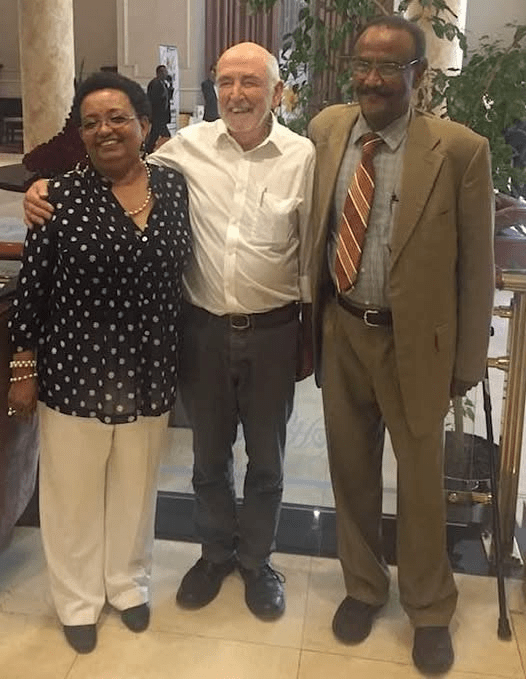
Activist and ally exemplify the international solidarity and unwavering commitment that sustain the movement for Oromo self-determination
GLOBAL — Dinqinesh Dheressa and Dr. Trevor Trueman stand as figures who will forever be remembered with honor in the annals of the Oromo liberation struggle—one a devoted activist who gave voice to Oromo women’s oppression, the other a British physician who became one of the movement’s most effective international advocates.
Their contributions, though arising from vastly different backgrounds, together illustrate the multifaceted nature of the Oromo struggle: a fight carried forward not only by those who bear its identity but also by allies whose solidarity transcends ethnicity and origin. As the Oromo liberation struggle continues “as a shield of humanity strengthening humanity itself,” the legacies of Deressa and Trueman remind us that the quest for freedom draws strength from diverse sources of commitment and courage .
Dinqinesh Dheressa: A Voice for Oromo Women
Dinqinesh Dheressa Kitila is an Oromo woman whose activism emerged from personal experience of discrimination and grew into institutional leadership. As the founder of the International Oromo Women’s Organization, a non-profit registered in the United States, she has dedicated her life to standing against discrimination and bringing social change, with particular emphasis on women’s empowerment.
Born and raised in Oromia, Ethiopia, Dheressa’s commitment to justice was forged in childhood. During elementary school, when she ran for student council president, a boy was preferred over her despite her having the highest grades. This early experience of discrimination motivated her to lead a fight against discrimination against women—a fight she has continued throughout her life.
Dheressa’s analysis of Oromo women’s situation is stark and unflinching. “The state of oppression is very deep in general but Oromo women face even greater difficulty,” she has stated. “Abyssinians treat Oromo women poorly. If a woman proposes a constructive idea, it doesn’t get proper attention as women are discriminated against up to a level where they are not considered as human beings”.
For Dheressa, self-determination is not an abstract political concept but a deeply personal and practical matter. She describes it as “a process by which one can take control of her/his whole life, decide freely what is good for her/him or not, what is important to her/him.” Beyond self-determination, she sees independence as giving people “the power to act freely” .
The key to achieving self-determination, in her view, lies in empowering oppressed people and standing for their rights as human beings. She emphasizes that organization is vital—if one wants to stand for peace and especially for women and their rights, being organized is essential .
Dheressa has also consistently called upon the international community to act. “The international community and humanitarian organisations have to take appropriate action to stop the Ethiopian government’s brutality against the Oromos,” she has urged. Her work with the Unrepresented Nations and Peoples Organization (UNPO) has helped bring Oromo concerns before international audiences, ensuring that the struggle receives attention beyond Ethiopia’s borders.
Dr. Trevor Trueman: The Quiet Ally
If Dheressa represents the voice of Oromo womanhood speaking on behalf of her people, Dr. Trevor Trueman represents something equally: the outsider who becomes an essential insider through decades of faithful service.
Dr. Trueman—affectionately known by the Oromo name Galatoo, meaning “Thank You”—has woven himself so deeply into the narrative of the Oromo struggle that he has become inseparable from it, transcending geography, ethnicity, and origin .
His journey with the Oromo people began not in the halls of advocacy, but in the gritty, desperate reality of survival. In the late 1980s, as a family health physician, he was in Sudan training Oromo health workers in refugee camps. When the Derg fell in 1991, he moved into Wallagga, shifting his focus to training community health workers. This foundation is crucial: his alliance was born not of abstract political theory, but of humanitarian connection—of seeing, firsthand, the people behind the cause. He didn’t arrive as an activist; he became one through service .
It was from this ground-level view that his pivotal role emerged. Starting in 1992, he began the critical, dangerous work of documenting and internationalizing the Ethiopian government’s systematic human rights violations against the Oromo people. While the OLF and others fought on the political and military fronts, Dr. Trueman opened a vital front in the global arena of information. He understood that tyranny thrives in silence and that the world’s conscience must be awakened with evidence. His reports became the credible, external voice that the diaspora and activists within could amplify, forcing the “Oromo question” onto agendas where it was being ignored .
His strategic genius is perhaps best embodied in the Oromia Support Group (OSG) , which he co-founded in 1994. The OSG was not a protest group but a clearinghouse for truth. It methodically gathered testimony, verified atrocities, and funneled this information to UN bodies, foreign governments, NGOs, and media outlets. For decades, when the Ethiopian state dismissed accusations as rebel propaganda, the OSG’s meticulously documented reports stood as unassailable counter-evidence. Dr. Trueman became a bridge of credibility, translating the suffering of a distant people into a language the international system was compelled, at least, to acknowledge .
A recent tribute to Dr. Trueman highlights several profound truths about his work:
- The Outsider as Essential Insider: Dr. Trueman’s identity as a “foreign national” was not a barrier but a unique asset. It lent his documentation a perceived objectivity that was desperately needed to break through global apathy. He wielded his privilege as a tool for the voiceless .
- Advocacy as a Marathon, Not a Sprint: His commitment, spanning from 1988 to the present day, defines “umurii dheeradhaa” —a long life of dedication. While political fortunes and rebel movements evolved, his channel of advocacy remained constant, providing a thread of continuity through decades of struggle .
- The Strategic “Taphat” (Preparation) : The tribute notes he will be remembered for his “shoora taphataniif” —his strategic preparations. His work was the essential groundwork. By ensuring the world could not plead ignorance, he created the political space and pressure that empowered all other facets of the Oromo struggle .
Dr. Trevor Trueman’s legacy is a masterclass in effective international solidarity. He did not seek to lead the Oromo struggle; he sought to amplify it. He did not fight with weapons, but with words, facts, and an unwavering moral compass. In the grand symphony of the Oromo quest for freedom, if some voices are the roaring melodies and others the steady rhythm, Dr. Trueman’s has been the crucial, clear note of the witness—persistent, truthful, and cutting through the noise to make the world listen .
For this, the name Galatoo is not merely a token of thanks, but a title of honor, earned over a lifetime. His work ensures that the crimes committed in darkness are recorded in light, and that the struggle of the Oromo people has, indeed, been given an echo the world cannot un-hear .
The Struggle Continues
The Oromo liberation struggle, which both Dheressa and Trueman have served so faithfully, continues today against a backdrop of ongoing conflict and human rights concerns. Recent reports from Oromia describe a region marked by insecurity, with civilians caught between government forces and insurgent groups.
The Associated Press reported in February 2026 that Oromia remains “very insecure,” with armed banditry, kidnapping, and extortion affecting daily life. Humanitarian access is restricted, and the conflict remains largely underreported due to government restrictions on journalists and rights groups .
It is precisely in such circumstances that the work of advocates like Dheressa and Trueman proves most vital. Their documentation, their amplification of Oromo voices, and their insistence that the world pay attention create the conditions under which accountability becomes possible.
As one tribute to Trueman noted, “His work ensures that the crimes committed in darkness are recorded in light” . Dheressa, through her women’s organization and international advocacy, ensures that the particular suffering of Oromo women—too often ignored in broader narratives—receives the attention it demands.
A Shared Legacy
Dinqinesh Dheressa and Dr. Trevor Trueman represent different faces of the same commitment: Dheressa, the Oromo woman who transformed personal experience of discrimination into lifelong activism for her people; Trueman, the British physician who arrived as a humanitarian worker and became one of the movement’s most effective international advocates.
Both have demonstrated that the struggle for Oromo self-determination is not confined to Oromia’s borders, nor limited to those who share Oromo identity. It is a human rights struggle that calls upon all people of conscience to bear witness and to act.
As the Oromo liberation continues as “a shield of humanity strengthening humanity itself,” the contributions of these two figures will forever be remembered with honor. Their lives demonstrate that the fight for freedom draws strength from many sources—from the mother who organizes women in her community to the physician who documents atrocities for the United Nations. Each, in their own way, has helped ensure that the Oromo struggle for truth, justice, and self-determination continues to resonate across generations and around the world.

Ramadan 2026 Begins: A Month of Fasting, Reflection, and Community for Muslims Worldwide
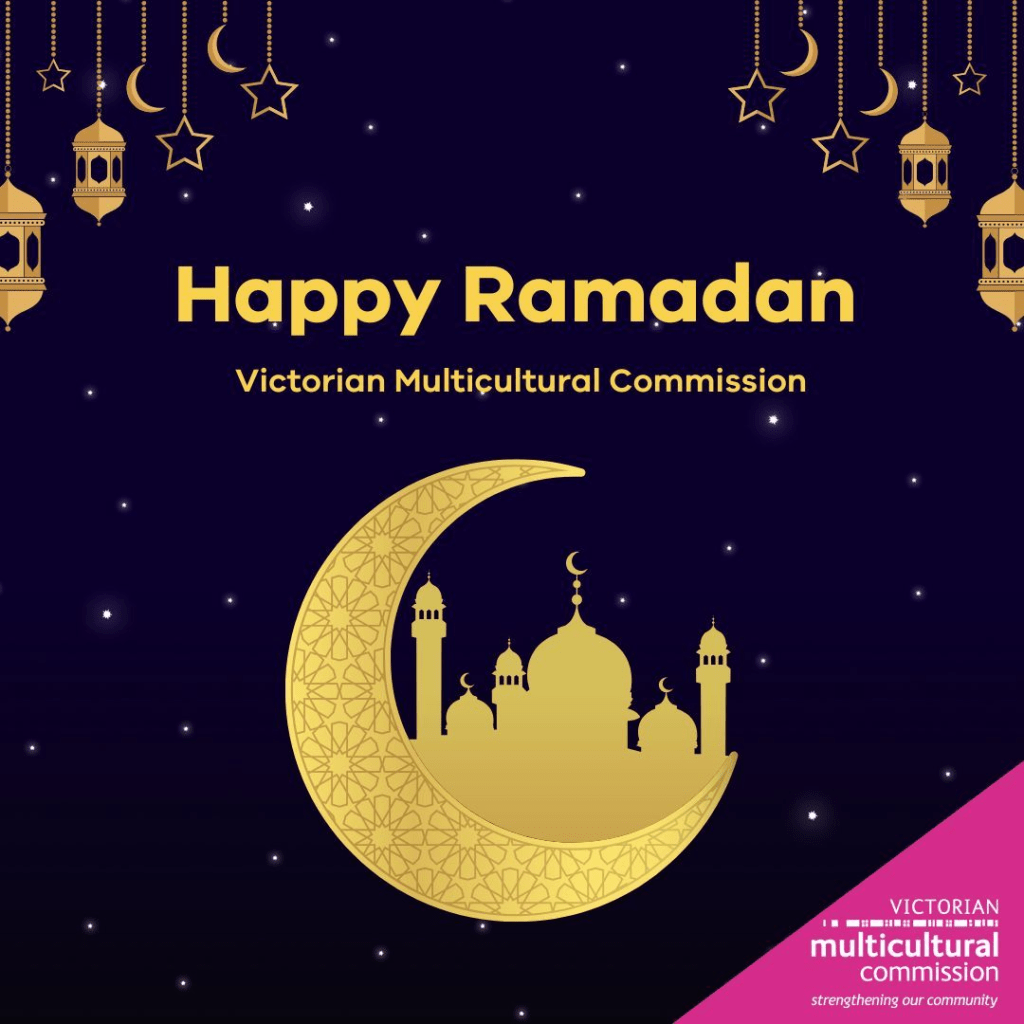
Victorian Multicultural Commission extends warm wishes as holy month commences
MELBOURNE, Australia — This week marks the beginning of Ramadan, the holiest month in the Islamic calendar, observed by Muslims around the world as a sacred period of fasting, prayer, and spiritual reflection. The crescent moon sighting ushers in approximately 30 days of devotion during which the faithful will abstain from food, drink, and other physical needs from dawn until sunset .
Ramadan commemorates the month in which the Quran was first revealed to the Prophet Muhammad, making it a time of heightened religious significance for the global Muslim community. For the world’s approximately 1.8 billion Muslims, the month represents an opportunity for profound spiritual renewal and connection with the divine .
Spiritual Significance and Practice
From first light until sunset, fasting—known as sawm—is practiced to strengthen faith, cultivate self-discipline, and foster empathy, generosity, and care for others . The daily fast serves multiple purposes: it reminds believers of those less fortunate who experience hunger not by choice, teaches patience and humility, and creates space for increased devotion through prayer and Quranic recitation.
Each day’s fast begins with a pre-dawn meal called suhoor and ends with iftar, the evening meal with which Muslims break their fast. Iftar is often a communal affair, bringing families and communities together and extending to neighbors, friends, and those in need. The practice of sharing meals with the less fortunate exemplifies Ramadan’s emphasis on generosity and social responsibility .
Beyond abstaining from physical sustenance, Ramadan calls Muslims to refrain from negative behaviors such as gossip, arguing, and ill feelings, directing focus instead toward spiritual growth, charitable acts, and strengthening community bonds. The month is also a time for personal growth and spiritual renewal, as believers seek to draw closer to God through increased prayer and reflection .
Community and Connection
Ramadan is traditionally a time when community bonds deepen significantly. Mosques fill for nightly Taraweeh prayers, extended congregational prayers offered only during this month. Families and friends gather for iftar meals, and communities organize shared meals for those who may be alone or in need .
The emphasis on generosity finds expression in increased charitable giving, or zakat—one of the five pillars of Islam. Many Muslims choose to pay their annual charity during Ramadan, believing the rewards for good deeds are multiplied during the holy month. Food drives, community iftars, and fundraising for humanitarian causes all see significant increases during Ramadan .
Victorian Multicultural Commission Extends Wishes
In Victoria, Australia, the Victorian Multicultural Commission has recognized the significance of Ramadan and the values it represents, including compassion, devotion, and connection. In a statement marking the beginning of the month, the Commission extended warm wishes to all observing this sacred time .
“We extend our warm wishes to all who are observing this sacred month and hope it brings peace, wellbeing and a strong sense of belonging across Victoria,” the Commission stated .
Victoria is home to a diverse Muslim population representing numerous cultural backgrounds, including significant communities with Turkish, Lebanese, Pakistani, Afghan, Bangladeshi, Somali, and Indonesian heritage, among others. For these communities, Ramadan provides an opportunity to maintain cultural and religious traditions while contributing to Victoria’s multicultural fabric.
Observance Across Australia
Across Australia, approximately 800,000 Muslims will observe Ramadan this year, with significant communities in Melbourne, Sydney, Brisbane, and Perth. Islamic councils and local mosques have announced prayer schedules and iftar programs, many of which welcome non-Muslim neighbors and friends to share in the evening meal as an opportunity for interfaith understanding and community connection .
Major mosques, including Melbourne’s Islamic Council of Victoria and Sydney’s Lakemba Mosque precinct, anticipate thousands of worshippers for nightly prayers and community iftars. Local councils in areas with significant Muslim populations have adjusted services and schedules to accommodate observers.
The Rhythm of Ramadan Days
For those observing, Ramadan transforms daily rhythms. Mornings begin early with suhoor before dawn, followed by morning prayers. The workday continues with fasting, requiring focus and energy management. Afternoon hours can be particularly challenging as energy levels dip, but the approaching sunset brings anticipation of breaking the fast.
At sunset, the adhan—call to prayer—signals time for iftar. Traditionally, dates and water or juice are consumed first, following the example of the Prophet Muhammad, before the main meal. After evening prayers, many Muslims head to mosques for Taraweeh, which can include recitation of significant portions of the Quran.
The final ten days of Ramadan hold special significance, marking the period when the first revelations of the Quran were sent down. During these nights, Muslims increase their devotion, with some engaging in itikaf—spiritual retreat in the mosque—to focus entirely on worship. One of these nights is Laylat al-Qadr, or the Night of Power, described in the Quran as “better than a thousand months.”
Eid al-Fitr: The Celebration Ahead
The conclusion of Ramadan will be marked by Eid al-Fitr, the festival of breaking the fast, expected to fall in late March depending on the lunar sighting. The day begins with a special prayer service followed by celebrations that include feasting, gift-giving, and gatherings with family and friends. Eid is a time of joy and gratitude, marking the successful completion of the month’s spiritual journey .
For businesses, schools, and community organizations across Victoria, awareness of Ramadan and its practices supports inclusion and understanding. Many workplaces accommodate observing employees with flexible hours or designated prayer spaces, recognizing the significance of the month.
A Message of Shared Values
The Victorian Multicultural Commission’s message emphasizing compassion, devotion, and connection highlights how Ramadan’s core values resonate beyond the Muslim community. In an increasingly diverse society, recognition and respect for religious observances strengthen social cohesion and mutual understanding .
As Muslims across Victoria and around the world begin this month of fasting and prayer, the wishes for peace, wellbeing, and belonging extend across communities, reflecting the universal aspirations that Ramadan represents.
Ramadan Mubarak to all observing this holy month.

Oromo Diaspora Honors Pivotal Figures in Virtual Memorial
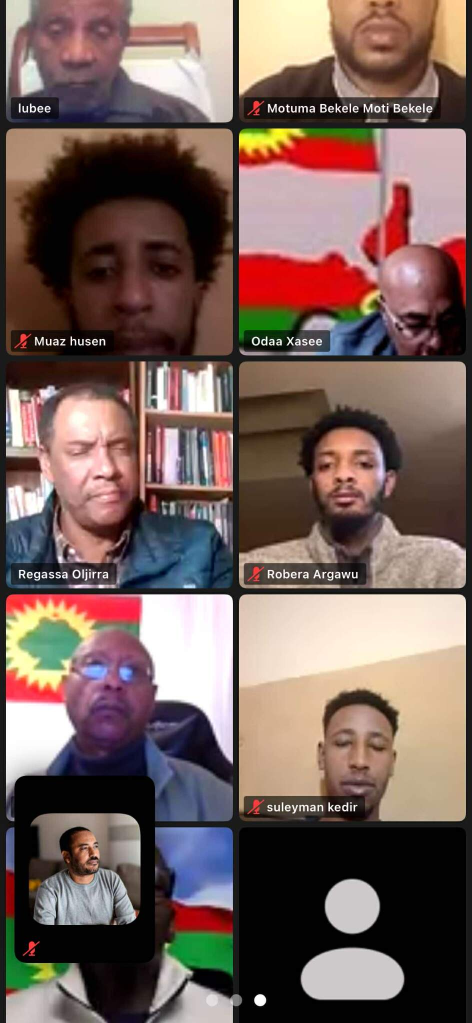
Diaspora gathers online to celebrate “towering figure” of Oromo liberation struggle
WASHINGTON, D.C. — The Oromo Liberation Front (OLF) convened a virtual memorial service Sunday, February 15, 2026, via Zoom to honor the life and legacy of a pivotal figure in the Oromo struggle for self-determination. The event, scheduled for 2:00 PM Eastern Time, brought together members of the Oromo diaspora, elders (Hayyoota), and human rights advocates from across the United States to celebrate a “towering figure” whose contributions to truth, justice, and the Oromo people have left an indelible mark on the movement .
A Moment of Collective Reflection
While the OLF’s announcement referred to the subject as a “towering figure,” Sunday’s service forms part of a broader moment of reflection for the organization, which has recently focused on honoring the intellectual giants who shaped Oromo nationalism. Just days earlier, on February 7, 2026, the OLF held a ceremony at its headquarters in Gullallee, Finfinnee to honor the late Professor Asmarom Legesse and Professor Hamdesa Tuso .
Professor Asmarom Legesse was celebrated during that gathering for his groundbreaking anthropological work, particularly his research on the indigenous Gadaa system, a traditional democratic governance structure. His seminal book, Gada: Three Approaches to the Study of African Society, is credited with bringing Oromo culture and governance to the global academic spotlight . During the February 7 ceremony, OLF Chairman Jaal Dawud Ibsa led tributes that highlighted the power of scholarship in the national struggle, emphasizing the need to “reclaim historical truth” .
Echoes of Recent Commemorations
Sunday’s virtual service in Washington appeared to be a continuation of this season of remembrance, extending honor to another key architect of the movement. Given the context of recent OLF commemorations, the event echoed the sentiments expressed at the February 7 gathering, where leaders praised the “unforgettable mark” left by the movement’s forebears and called upon the younger generation (dhaloota) to carry their unfinished work forward .
The Intellectual Foundations of the Struggle
Scholars note that the OLF, founded in the early 1970s, emerged from clandestine efforts by Oromo nationalists to build a movement that combined armed struggle with a strong intellectual and cultural foundation. Historians point to figures like Baro Tumsa, described in a recent 2024 biography as the “Principal Architect of the Oromo Liberation Front,” who worked to unite nationalists from diverse backgrounds in the face of oppression .
The intellectual tradition honored in these memorials reflects the OLF’s distinctive character as a movement that understood liberation not merely as a military objective but as a project of cultural and historical reclamation. The scholars being remembered devoted their lives to excavating Oromo history, philosophy, and governance traditions that had been suppressed or denied during decades of imperial rule.
A Solemn Duty
The invitation released by the OLF framed the event as an obligation owed to those who sacrificed for the cause. “This is the least we can do for a life so profoundly devoted to truth, justice, and our people,” the statement read .
That sentiment resonated throughout Sunday’s virtual gathering, as participants reflected on the personal and collective debts owed to the generation that built the movement. The Zoom format, necessitated by the geographic dispersal of the Oromo diaspora across North America, nonetheless allowed for meaningful connection and shared remembrance.
Diaspora Engagement
The service drew participants from across the United States, reflecting the strength and commitment of the Oromo diaspora community. Washington D.C. has long been a center of Oromo organizing and advocacy, hosting numerous cultural, political, and commemorative events over the decades. The virtual format expanded access to Oromos unable to travel to the nation’s capital while maintaining the solemnity appropriate to the occasion.
Elders (Hayyoota) played a prominent role in the proceedings, as is traditional in Oromo culture when honoring the departed. Their presence underscored the intergenerational nature of both the struggle itself and the responsibility to transmit its history and values to those who will carry it forward.
Preserving and Transmitting History
Sunday’s memorial service also served an educational function, introducing younger participants to figures whose contributions may not be widely known outside dedicated scholarly or activist circles. The emphasis on the intellectual and cultural foundations of the Oromo struggle provides context for understanding the movement’s character and objectives.
As participants reflected on the “towering figure” being honored, they also considered the broader legacy of Oromo intellectuals and organizers who built the institutions and articulated the vision that sustains the struggle today. The February 7 ceremony honoring Professors Legesse and Tuso, followed by Sunday’s virtual gathering, creates a season of remembrance that reinforces collective memory and identity.
Continuing Resonance
The service served as a poignant reminder of the ongoing resonance of the Oromo liberation struggle and the individuals who laid its intellectual and political groundwork. Even as the movement addresses contemporary challenges, these commemorative moments affirm continuity with the founders and the principles they established.
For the Oromo diaspora, separated by geography but united by commitment to their people’s cause, such gatherings provide opportunities for connection, reflection, and renewed dedication. The Zoom platform, while different from in-person assembly, enabled participation from Oromos who might otherwise be unable to join such commemorations, expanding the circle of remembrance.
Looking Forward
As Sunday’s virtual memorial concluded, participants carried forward not only memories of the individual being honored but also renewed commitment to the values and objectives that defined their life’s work. The call issued at the February 7 ceremony—for the younger generation (dhaloota) to carry forward the unfinished work of the movement’s founders—resonated across both gatherings.
The Oromo struggle continues, shaped by those who built its foundations and sustained by those who carry their legacy. Sunday’s virtual memorial service from Washington D.C. ensured that another “towering figure” received the honor due, while strengthening the connections that bind the Oromo people across continents and generations.
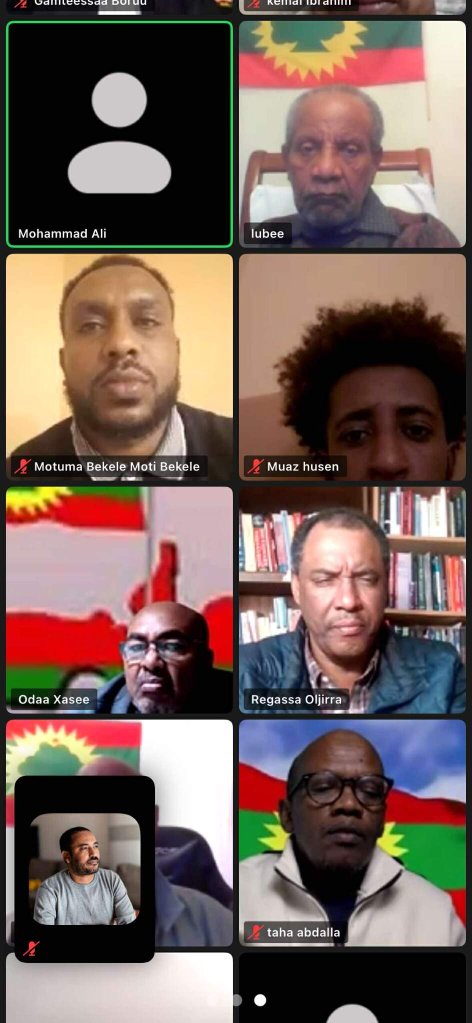




 Advocacy for Oromia