The Backbone of the Struggle: Oromo Women’s Indispensable Role in the Oromo Liberation Front (OLF/ABO)
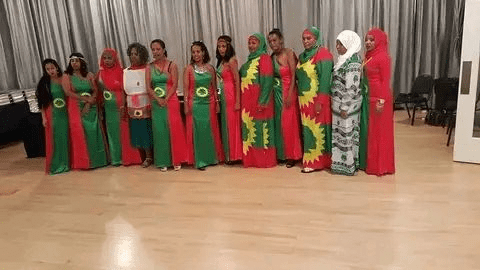
For decades, Oromo women have served as pillars of the liberation movement, from the battlefield to political organizing, paying the ultimate price for freedom
OROMIA/INTERNATIONAL — For generations, the Oromo people’s struggle for self-determination has been sustained by the courage, sacrifice, and unwavering commitment of its women. Within the Oromo Liberation Front (ABO), Oromo women have stood as “utubaa cimaa” —strong pillars—whose contributions have shaped every facet of the liberation movement .
From the armed struggle to political organizing, from those imprisoned and killed to those who preserved culture and identity, Oromo women have paid an enormous sacrifice. Their role has been not merely supportive but foundational—the very backbone upon which the struggle has been built .
Here are the key dimensions of Oromo women’s indispensable role within the Oromo Liberation Front .
1. Logistics and Combat Support: The Hidden Pillars
Long before they were visible as fighters, Oromo women served as the silent infrastructure of the liberation struggle. Operating in conditions of extreme danger, they undertook critical logistics and support roles that made armed resistance possible .
Women served as:
- Providers and nurturers for liberation fighters (WBO), ensuring they were fed, clothed, and cared for while operating in the bush
- Harborers and protectors, hiding freedom fighters in their homes at tremendous personal risk
- Couriers and intelligence operatives, transporting weapons, supplies, and vital information across enemy lines
- Lookouts and early warning systems, alerting fighters to approaching government forces
These roles carried immense danger. Women caught supporting the liberation struggle faced torture, imprisonment, rape, and death. Yet they continued, understanding that their courage sustained the fighters who carried the armed struggle forward .
2. Armed Struggle and Military Leadership
As the liberation movement evolved, Oromo women moved from support roles to direct participation in armed combat. Many women joined the guerrilla forces (WBO), serving as fighters and commanders who stood shoulder to shoulder with their male counterparts .
In the armed struggle, women:
- Received military training and participated in combat operations
- Served as unit leaders and commanders, directing operations
- Endured the same harsh conditions, long marches, and constant danger as male fighters
- Inspired their communities through visible courage and sacrifice
The presence of women fighters challenged not only the oppressive Ethiopian state but also traditional gender norms within Oromo society itself. By taking up arms for their people’s freedom, Oromo women demonstrated that liberation could not be achieved without them—and that their place in the struggle was not peripheral but central .
3. Political Organizing and Unity Building
Beyond the battlefield, Oromo women played crucial roles in building and sustaining the political infrastructure of the liberation movement. They understood that military struggle alone could not achieve liberation—that political consciousness, organization, and unity were equally essential .
Women’s political contributions included:
- Membership organizing, recruiting new supporters and expanding the movement’s reach
- Mass mobilization, inspiring communities to support the liberation cause
- Unity building, bridging divisions and fostering solidarity across clans, regions, and religious communities
- Political education, teaching Oromo history, language, and political consciousness
These organizing efforts often took place under constant surveillance and threat. Women organizers risked arrest, torture, and death simply for gathering people to discuss Oromo rights. Yet they persisted, building the political foundation upon which the armed struggle depended .
4. The Qeerroo and Popular Resistance: Leading the Peaceful Uprising
In more recent years, Oromo women have been at the forefront of the Qeerroo Bilisummaa Oromoo (Oromo Youth Liberation Movement) and the peaceful resistance that shook Ethiopia beginning in 2014. The struggle against land grabbing, political marginalization, and cultural suppression saw Oromo women emerge as visible and courageous leaders .
In this phase, women:
- Led and participated in mass protests demanding equality and justice
- Organized resistance networks using traditional social structures and modern technology
- Faced security forces with extraordinary courage, often at the front lines of demonstrations
- Sustained the movement through years of brutal crackdowns
The 2014-2018 protests that ultimately reshaped Ethiopian politics were sustained in significant part by Oromo women’s courage and determination. They marched, they organized, they documented abuses, and they refused to be silenced—even as bullets flew and tear gas filled the streets .
5. Sacrifice and Resilience: Surviving Imprisonment, Torture, and Loss
The price Oromo women have paid for their commitment to liberation is incalculable. Countless women have endured:
- Imprisonment for their political activities, often under brutal conditions
- Torture designed to break their spirit and force betrayal of comrades
- Rape used systematically as a weapon of war and intimidation
- Displacement from their homes and communities
- Loss of husbands, children, parents, and siblings killed in the struggle
- Witnessing the destruction of their communities and the suffering of their people
Yet remarkably, women emerged from these horrors not broken but strengthened in their resolve. Their resilience—the ability to endure unspeakable suffering and continue the struggle—has inspired generations and demonstrated that the Oromo people cannot be crushed .
As one veteran woman fighter reflected: “They took everything from us—our homes, our families, our bodies. But they could not take our commitment to freedom. That remained. That will always remain.”
6. Guardians of Culture and Identity: The Siinqee Tradition
Perhaps uniquely, Oromo women’s contribution to the liberation struggle has included the preservation and deployment of specifically female cultural traditions. Central to this is the Siinqee system—a traditional institution of women’s solidarity, mutual protection, and collective action that predates the modern liberation movement by centuries .
Through Siinqee, Oromo women have:
- Preserved cultural practices and knowledge passed down through generations
- Created spaces for women’s political organizing outside male-dominated structures
- Deployed traditional forms of protest and pressure that carry deep cultural authority
- Maintained Oromo identity and values even under conditions of extreme repression
- Passed Oromo language, history, and traditions to children when formal education was denied
The Siinqee tradition has proven remarkably adaptable, serving as both a cultural anchor and a tool for contemporary political organizing. It represents the deep roots of Oromo women’s resistance—roots that extend far beyond the modern liberation movement into the very foundations of Oromo society .
The Legacy Continues
Oromo women were the backbone of the Oromo liberation struggle. They remain so today. From the battlefields of the armed struggle to the streets of mass protests, from prison cells to political organizing meetings, from refugee camps to diaspora advocacy networks—Oromo women continue to carry the struggle forward .
Their contributions have not always received the recognition they deserve. Histories written by men sometimes minimize or overlook women’s roles. The sacrifices of women fighters and organizers have been less documented than those of their male counterparts. But the truth remains: without Oromo women, there would be no Oromo liberation movement.
As the Oromo people continue their journey toward self-determination and dignity, they do so standing on the shoulders of the women who came before—women who fed fighters, carried weapons, organized communities, endured torture, preserved culture, and refused to give up hope.
Honoring the Fallen, Supporting the Living
Among the countless Oromo women who have given their lives for freedom, many names are known—and many more are known only to those who loved them. Women fighters killed in combat. Women activists tortured to death in prisons. Women organizers disappeared and never found. Women refugees who died in exile, far from the homeland they loved.
The Oromo Liberation Front affirms its commitment to honoring these fallen heroines and supporting the women who continue the struggle today. Their sacrifices must never be forgotten. Their contributions must never be minimized. Their courage must continue to inspire.
ABO recognizes that without Oromo women, there is no liberation. Without Oromo women, there is no future. Without Oromo women, Oromia cannot be free.
May the struggle continue. May the women who carry it be honored. May Oromia be free.
This feature is dedicated to the countless Oromo women—known and unknown, living and departed—whose courage, sacrifice, and unwavering commitment have sustained the Oromo liberation struggle across generations. You are the backbone. You are the heart. You are the reason freedom remains alive.

Posted on February 21, 2026, in Finfinne, News, Oromia, Press Release, Promotion. Bookmark the permalink. Leave a comment.




 Advocacy for Oromia
Leave a comment
Comments 0