Daily Archives: February 24, 2026

Oromo Students in Sweden Celebrate International Mother Language Day with Pride and Purpose
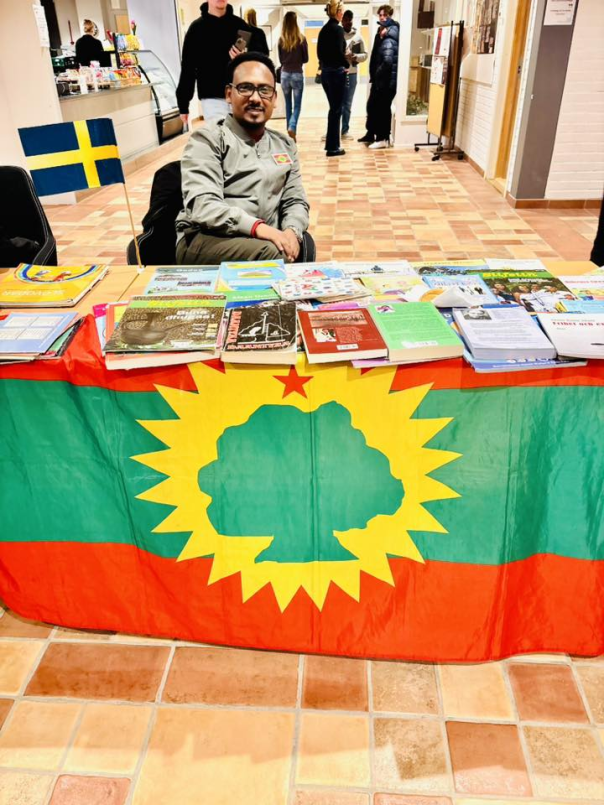
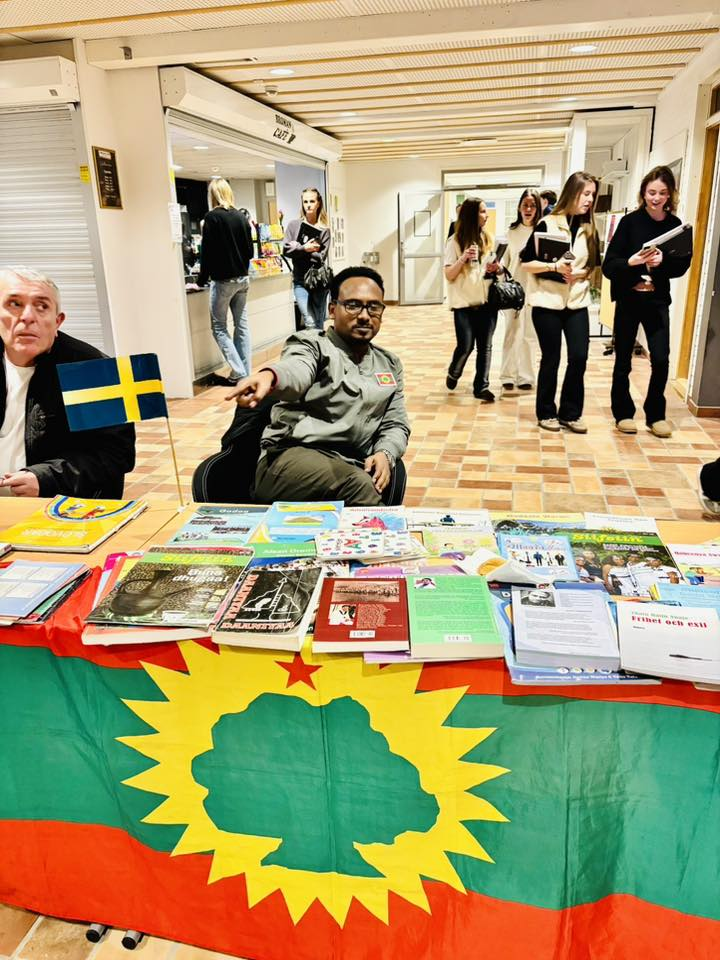
Bromangymnasiet hosts celebration highlighting the importance of preserving and strengthening mother tongues, especially for communities whose linguistic rights have been denied
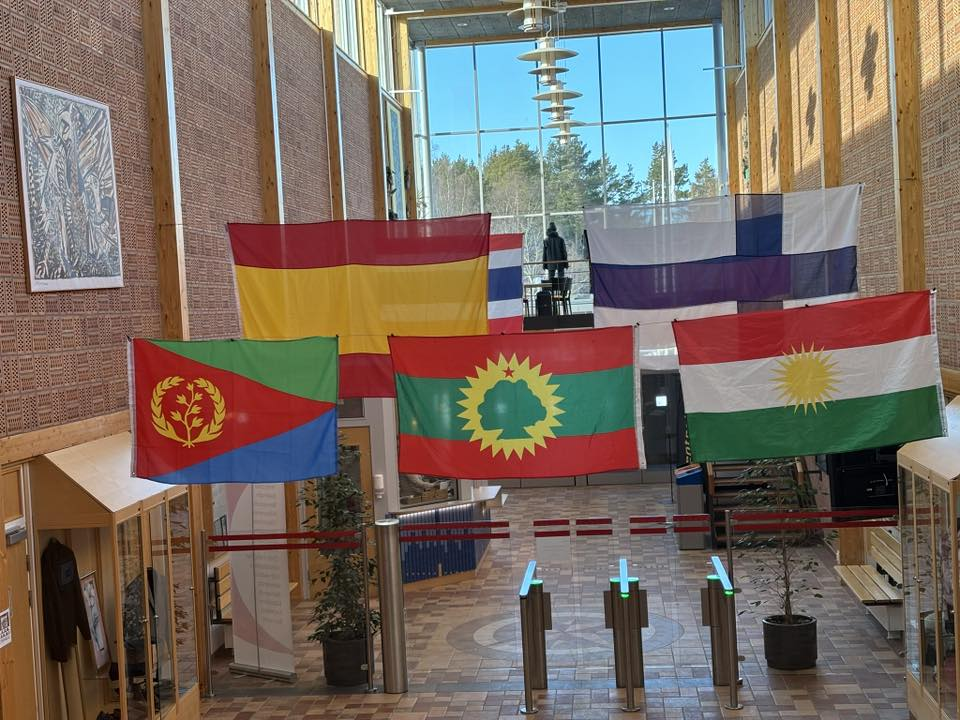
BRO, Sweden — Students and educators at Bromangymnasiet, a secondary school in Sweden, joined the global community in celebrating International Mother Language Day on February 21, recognizing the vital importance of linguistic diversity and the right to learn, write, and speak in one’s mother tongue .
The day, proclaimed by UNESCO in 1999 and observed annually on February 21, holds particular significance for communities whose languages have been marginalized, suppressed, or denied official recognition. For Oromo students at Bromangymnasiet and across the diaspora, the celebration represents both a affirmation of identity and a reminder of ongoing struggles for linguistic rights .
What Is Mother Language?
Mother language—the language a child first learns from their mother and father at birth, the language of their earliest thoughts and expressions—carries profound significance beyond mere communication. It is the medium through which identity is formed, culture is transmitted, and history is preserved .
For communities whose right to use their mother tongue has been violated—who have been denied education in their language, prohibited from publishing in it, or shamed for speaking it—Mother Language Day carries additional weight. It is both celebration and commemoration: celebration of linguistic diversity, commemoration of struggles to preserve languages against overwhelming pressure .
Language Expresses Identity, Culture, and History
As the students at Bromangymnasiet emphasized during their celebration, language is far more than a tool for communication. It is the vessel that carries a people’s identity, their culture, and their history across generations .
When a language dies, something irreplaceable is lost—not just words and grammar, but ways of seeing the world, relationships with nature, forms of humor, styles of prayer, patterns of storytelling, and connections to ancestors. Each language encodes unique knowledge and perspectives that cannot be fully translated into any other tongue .
For Oromo students celebrating in Sweden, this understanding is particularly acute. Many were born in or have grown up in diaspora, navigating between the Oromo language of their homes and communities and the Swedish language of their education and broader society. Maintaining Oromo language proficiency requires conscious effort, community support, and institutional recognition—none of which can be taken for granted.
The Global Context: Languages Under Threat
International Mother Language Day emerges from recognition of a global crisis in linguistic diversity. According to UNESCO estimates:
- More than 40% of the world’s 7,000 languages are currently at risk of disappearing
- A language dies approximately every two weeks
- 40% of the global population lacks access to education in a language they speak or understand
- Indigenous languages are disappearing at alarming rates, taking with them unique knowledge systems and cultural heritage
February 21 was chosen as International Mother Language Day to commemorate the 1952 Bengali Language Movement in Bangladesh, when students in Dhaka were killed by police while demonstrating for recognition of their mother tongue, Bengali. The day thus carries from its origins a connection to struggle—to the understanding that linguistic rights are not given but demanded, and that people have died defending their right to speak their own languages.
Oromo Language: A History of Suppression and Resilience
For Oromo people, the struggle for linguistic rights has been central to the broader struggle for recognition and self-determination. Under successive Ethiopian regimes, the use of Afaan Oromo was severely restricted:
- Education in Afaan Oromo was prohibited for decades
- Publishing in the language was suppressed
- Public use of Afaan Oromo was discouraged and sometimes punished
- Oromo children were educated in Amharic, a language many did not understand
- The Latin script (Qubee) for writing Afaan Oromo was banned, with the Ethiopic script imposed
Despite these pressures, Oromo language survived and has undergone remarkable revitalization since the 1991 change of government. The adoption of Qubee (Latin script) has facilitated writing and publishing. Afaan Oromo is now used in education, media, and government in Oromia. Oromo literature, music, and journalism have flourished.
Yet challenges remain. Within Ethiopia, the status and development of Afaan Oromo continues to be contested. In diaspora, parents struggle to pass the language to children growing up in English, Swedish, or other dominant languages. The work of strengthening Oromo language is ongoing.
Strengthen Our Language and Our Script!
The celebration at Bromangymnasiet carried a clear and powerful message: “Strengthen our language and our script! May Afaan Oromo grow!”
This call encompasses several dimensions:
For Oromo youth in diaspora: It means actively using Afaan Oromo at home, seeking out Oromo-language media, participating in community events where Oromo is spoken, and taking pride in linguistic heritage.
For parents and families: It means speaking Oromo to children from birth, creating environments where Oromo is valued and used, and transmitting not just language but the culture and history it carries.
For communities: It means establishing and supporting Oromo language programs, creating opportunities for youth to use the language, and celebrating linguistic achievements.
For educators and institutions: It means recognizing Oromo language as worthy of study and support, providing resources for Oromo language learning, and respecting students’ linguistic identities.
For advocates: It means continuing to press for full recognition and development of Afaan Oromo in Ethiopia and supporting Oromo language initiatives globally.
Celebration at Bromangymnasiet
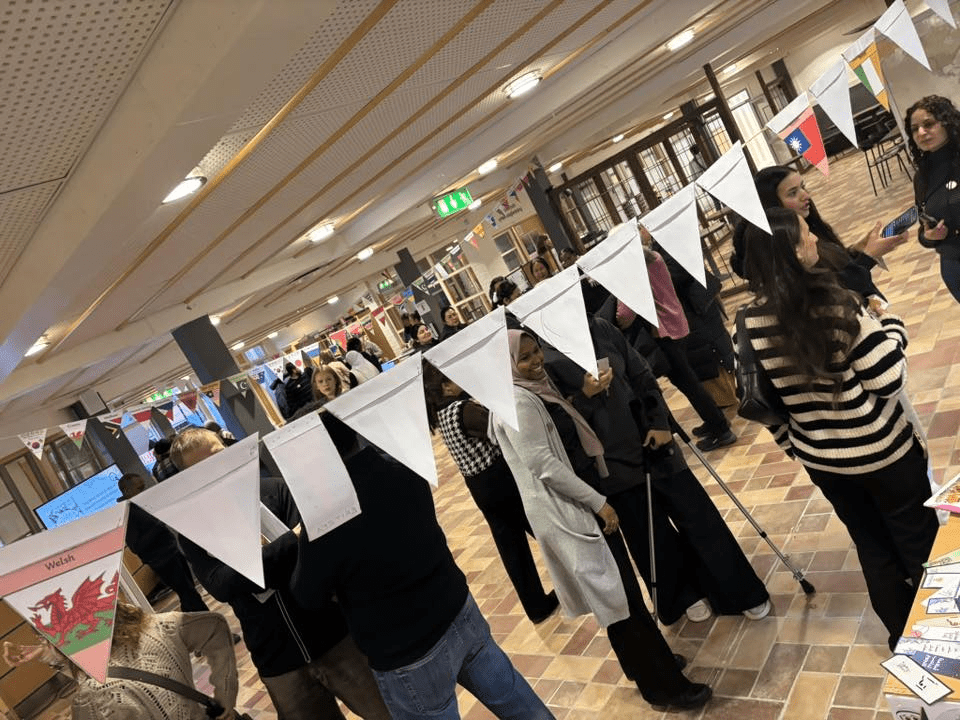
The International Mother Language Day celebration at Bromangymnasiet brought together Oromo students and educators to honor their language and reflect on its significance. Activities likely included:
- Readings of Oromo poetry and literature
- Performances of Oromo music
- Discussions about the history and importance of Afaan Oromo
- Presentations on Oromo culture and traditions
- Reflections on the challenges and joys of maintaining Oromo language in diaspora
For students growing up between cultures, such celebrations serve multiple purposes: they affirm that Oromo language matters, that their heritage is worthy of recognition, and that they are part of a global Oromo community that spans continents.
The Universal Message
While the Bromangymnasiet celebration focused particularly on Afaan Oromo, the universal message of International Mother Language Day resonates across all linguistic communities:
- Every language deserves respect and recognition
- Every child deserves education in a language they understand
- Linguistic diversity enriches humanity
- Languages carry knowledge and perspectives that benefit everyone
- The loss of any language diminishes us all
As one student participant reflected: “When we celebrate Mother Language Day, we celebrate not just our own language but the principle that all languages matter. We stand with every community fighting to preserve its mother tongue—whether in Ethiopia, Sweden, or anywhere in the world.”
Looking Forward
The celebration at Bromangymnasiet represents both an ending and a beginning: the end of another year’s observation, and the beginning of renewed commitment to strengthening Afaan Oromo for the year ahead.
For Oromo students in Sweden, the work continues—learning, speaking, reading, and writing in their mother tongue; passing it to younger siblings and future children; advocating for its recognition and support; and ensuring that Afaan Oromo not only survives but thrives in diaspora as well as in the homeland.
As the students themselves declared: “Afaan keenya fi Qubee keenya jabeessaa! Afaan Oromoo haa guddatu!” —”Strengthen our language and our script! May Afaan Oromo grow!”
International Mother Language Day: February 21—celebrating linguistic diversity, honoring struggles for linguistic rights, and committing to strengthen every mother tongue.

Ethiopia Revokes Addis Standard’s License in Latest Blow to Independent Media
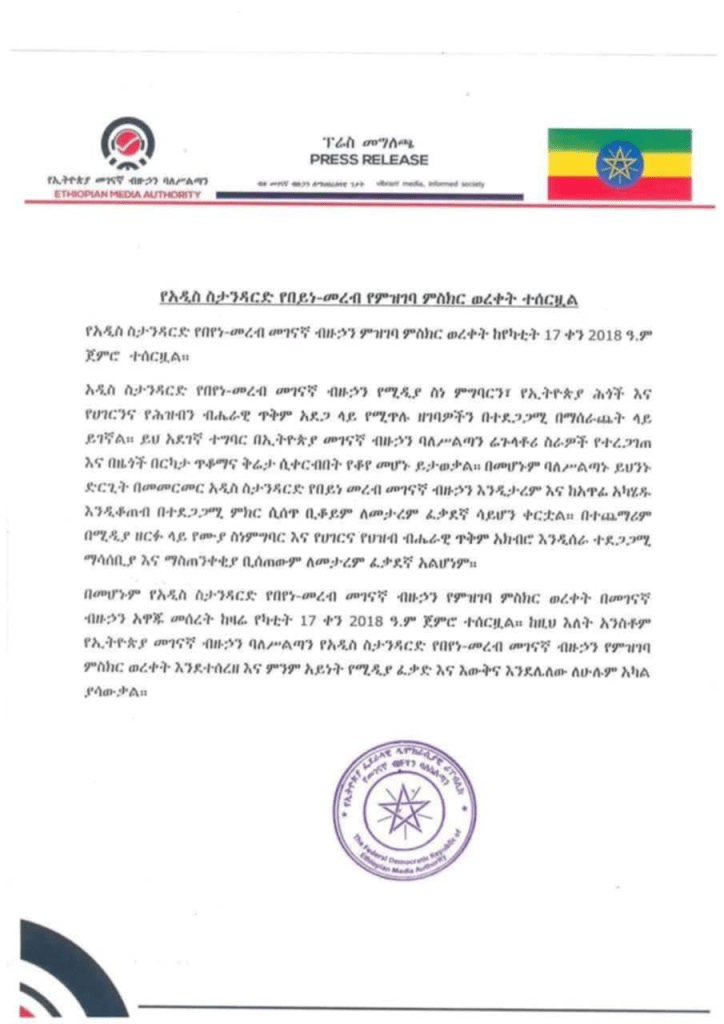
Authorities silence critical voice as crackdown on press freedom intensifies ahead of June elections
ADDIS ABABA — The Ethiopian Media Authority (EMA) has revoked the online media registration certificate of Addis Standard, one of the country’s most respected independent news outlets, effective February 24, 2026, in a move that press freedom advocates condemn as part of a widening crackdown on independent journalism.
The decision strips Addis Standard of its legal recognition to operate in Ethiopia, citing alleged “repeated violations of media ethics, national laws, and the country’s national interests,” though the Authority’s statement did not specify which reports or actions formed the basis of the decision.
A History of Targeting Independent Media
Addis Standard, established in 2011 as a monthly magazine and published in Afaan Oromo, Amharic, and English, has faced repeated government harassment over the years. The outlet discontinued its print edition in October 2016 in response to censorship, continuing online only, before resuming monthly print editions in 2018.
The latest revocation follows a pattern of escalating pressure on independent media:
- April 2025: Ethiopian police raided Addis Standard’s office and the home of a senior staff member, detaining three managers for several hours and confiscating laptops, phones, and data storage equipment. The Committee to Protect Journalists (CPJ) expressed “grave concerns about potential misuse of sensitive data” following the raids.
- June 2021: During the Tigray war, the EMA suspended Addis Standard, accusing it of advancing the agenda of what it described as a “terrorist group”. CPJ condemned the move, noting that Addis Standard “has been an important source of critical reporting and commentary on Ethiopia”.
- November 2020: Police arrested Medihane Ekubamichael, then product editor at Addis Standard, accusing him of attempting to “dismantle the constitution through violence”.
Editor-in-Chief Rejects Allegations
Responding to the EMA’s announcement, Yonas Kedir, Editor-in-Chief of Addis Standard publications, categorically rejected the Authority’s claims, stating the outlet had never received any formal notices of violations.
“The claim that Addis Standard received repeated notices is factually incorrect. At no point has the Ethiopian Media Authority formally notified Addis Standard newsroom of any prior violations or enforcement actions,” he said.
The publisher, JAKENN Publishing PLC, is reviewing legal options to protect its rights and ensure due process is upheld.
Broader Crackdown on Press Freedom
Addis Standard’s license revocation is not an isolated incident but part of a broader pattern of repression against independent media in Ethiopia, particularly as the country approaches national elections scheduled for June 2026.
Recent actions against media outlets include:
- Wazema Radio (January 2026): The EMA compelled Wazema Media to surrender its operating license, accusing the outlet of reporting contrary to “national interest” and lacking balance. The station has continued publishing content from abroad.
- Reuters (February 2026): The government declined to renew accreditation for three Addis Ababa-based Reuters journalists and withdrew the outlet’s accreditation to cover the African Union Summit, days after Reuters published an investigative report alleging Ethiopia hosts a training camp for Sudan’s Rapid Support Forces (RSF).
- Deutsche Welle (October 2025): The EMA suspended several correspondents working for Deutsche Welle. While most were later reinstated in December, two remain permanently suspended.
- Tesfalem Waldyes (June 2025-present): The founder of Ethiopia Insider remains detained despite a court ordering his release and bail being posted, in what CPJ calls “the Ethiopian government’s disregard for judicial processes and press freedom”.
From Hope to Retrenchment
The crackdown represents a dramatic reversal from the promise of Prime Minister Abiy Ahmed’s early years in power. In May 2019, addressing UNESCO’s World Press Freedom Day in Addis Ababa, Abiy declared a decisive break with Ethiopia’s repressive past, stating: “A democratic Ethiopia cannot be materialized if individuals are imprisoned for generating and sharing their ideas responsibly”.
His government opened more than 200 blocked websites, freed imprisoned journalists, allowed exiled media to return, and initiated reforms of laws long criticized for stifling expression.
Nearly seven years later, that horizon has receded. Ethiopia now ranks 145th out of 180 countries in the 2025 Reporters Without Borders World Press Freedom Index, falling for the first time into the “very serious” category. The Committee to Protect Journalists counts 12 journalists behind bars in Ethiopia, putting it among the worst countries in Africa for jailing journalists.

Legal Architecture of Control
The legal framework governing media has shifted away from the reform spirit of 2019. Amendments to the Media Proclamation in 2025 shifted critical oversight powers from the legislature to the executive, weakening the EMA’s independence in practice.
Meanwhile, the Hate Speech and Disinformation Prevention Proclamation (1185/2020) remain dangerously vague, with undefined terms such as “falsehood,” “hate,” and “national interest” deployed to enable selective enforcement. It is within this legal gray zone that outlets like Addis Standard and Wazema become most vulnerable—not through transparent judicial processes, but through administrative decree.
The Ethiopian Human Rights Commission (EHRC), a state-appointed constitutional body, has formally recommended further revisions to media laws, citing persistent structural flaws.
Election Concerns
The crackdown comes at a particularly sensitive time, as Ethiopia prepares for national elections in June 2026. Candidate registration and campaign activities are currently underway, raising concerns among media observers about the operating environment for independent journalism.
The National Election Board of Ethiopia (NEBE) now requires media organizations to sign a mandatory oath as a condition for accreditation, attaching legal liability for alleged “misinformation” directly to editorial leadership. Critics argue this transforms accreditation into a loyalty test, institutionalizing self-censorship and recasting election coverage from a public duty into a controlled privilege.
As one Addis Standard editorial noted: “Journalism ethics cannot be governed through compulsory oaths; they must be safeguarded through independence, due process, and constitutional protection”.
International Condemnation
International press freedom organizations have condemned Ethiopia’s escalating repression of independent media. Muthoki Mumo, CPJ’s Africa Program Coordinator, called the revocation of Reuters’ credentials “the latest in a troubling pattern of repressive regulatory action against international and independent press in Ethiopia”.
On World Press Freedom Day in 2025, 14 diplomatic missions in Addis Ababa issued a joint statement warning of a shrinking media and civic space, stressing that a free, pluralistic press is indispensable to democracy and social cohesion, particularly ahead of national elections.
The Stakes for Oromo Media and Voices
For Oromo media and those covering Oromo issues, the crackdown carries particular significance. Independent media have been essential platforms for amplifying Oromo voices, documenting human rights abuses, and providing counter-narratives to state-controlled discourse.
Addis Standard’s publication in Afaan Oromo, alongside Amharic and English, made it accessible to Oromo readers seeking news and analysis in their mother tongue. Its silencing represents another closure of space for Oromo expression and information access.
Looking Forward
As Addis Standard reviews its legal options and considers next steps, the broader question remains whether Ethiopia will reverse course on press freedom or continue its trajectory toward increasing repression.
The contradiction is stark: international partners, from Germany and the European Union to multiple diplomatic missions, warn that peace, partnership, and credible elections cannot endure without an open media environment. Yet domestically, legal ambiguity, bureaucratic obstruction, and administrative punishment steadily entrench the opposite trajectory.
For independent media operating in Ethiopia, the message from authorities is increasingly clear: critical journalism will not be tolerated. And for the Ethiopian people, access to information—essential for informed citizenship and meaningful democratic participation—grows ever more constrained.
As one Addis Standard editorial concluded: “Press freedom is not ornamental. It is central to transparency, accountability, and democratic legitimacy. Treating it as a privilege to be withdrawn in the name of ‘national interest’ undermines not only journalists, but the credibility of the political order itself” .
Media is independent. It works to bring out the truth of the people that has been suppressed. The Ethiopian government is silencing the voice of the people, especially when the suppressed truth of oppressed nations is heard—this threatens independent media freedom. It is a major problem for the political and media space when the government intensifies its pressure.

The Importance of Having Heroines and Heroes: Modeling Our Legendary Oromo Leaders
How Oromo traditions of celebrating excellence, bravery, and patriotism shape the struggle for liberation
OROMIA — In every society, heroines and heroes serve as living repositories of collective memory, embodiments of cherished values, and beacons guiding future generations. For the Oromo people, the celebration of heroic figures is not merely a cultural practice but an essential component of maintaining identity, transmitting values, and sustaining the centuries-long struggle for justice and self-determination .
Within the framework of the Gadaa system—one of the world’s oldest indigenous democratic governance structures—the recognition and celebration of excellence has always been central to social and political life. Bravery on the battlefield, patriotism in the face of external threat, deep knowledge of Oromo culture and tradition, and expertise in leadership, organization, and governance were all qualities that earned individuals lasting honor and remembrance .
Recognizing and Celebrating Achievement
The Gadaa system, which UNESCO has recognized as Intangible Cultural Heritage of Humanity, is built upon principles of merit, accountability, and service. Within this framework, those who demonstrated exceptional qualities received public recognition and were elevated as models for others to emulate .
Qualities honored in Gadaa tradition include:
- Bravery (Goromsa): Courage in defending the community and standing for justice
- Patriotism (Biyyummaa): Unwavering commitment to the Oromo people and their land
- Cultural knowledge (Aadaa beekumsa): Deep understanding of Oromo traditions, laws, and history
- Leadership expertise (Hoogganummaa): Skill in guiding communities, resolving disputes, and making wise decisions
- Organizational ability (Qindeeffama): Talent for mobilizing people and resources effectively
- Warfare knowledge (Waraana beekumsa): Strategic and tactical wisdom in defending the nation
These qualities were not abstract ideals but observable characteristics that individuals demonstrated through their actions and service. Communities paid attention, remembered, and passed down stories of exemplary figures from generation to generation.
Rejecting the Leadership of Collaborators
Just as Gadaa tradition celebrates those who uphold its principles, it also provides mechanisms for identifying and rejecting leaders who betray the people’s trust. Central to this is the understanding that not all who seek power deserve to hold it—especially those who have rejected the fundamental principles of Gadaa, Saffu, and social justice .
Saffu, a core Oromo philosophical concept, encompasses the moral order, the proper relationship between humans and the divine, and the ethical framework that governs Oromo society. Leaders who violate Saffu—who place their interests above the community’s, who collaborate with oppressors, who abandon the struggle for justice—forfeit their right to lead, regardless of any formal position they may hold .
The rejection of such leaders is not merely a political act but a moral and spiritual one. It affirms that leadership is not about personal ambition but about service to the people and fidelity to the values that sustain Oromo society. Those who collaborate with systems of domination, who benefit from Oromo oppression while claiming to represent Oromo interests, are recognized for what they are—and rejected accordingly.
Promoting Liberation Knowledge
A crucial dimension of honoring heroines and heroes involves actively promoting what might be called “liberation knowledge” —the wisdom, strategies, and understanding necessary for achieving and maintaining freedom. This requires simultaneously challenging what could be termed “knowledge of domination” —the narratives, ideologies, and assumptions that sustain oppressive systems .
Liberation knowledge includes:
- Understanding Oromo history from Oromo perspectives, not through the lens of conquerors
- Preserving and transmitting Gadaa principles and practices
- Documenting the sacrifices and strategies of past freedom fighters
- Developing political consciousness and critical analysis of power
- Building organizational skills and strategic thinking
Knowledge of domination manifests as:
- Narratives that deny or minimize Oromo suffering and struggle
- Ideologies that justify Oromo subordination within Ethiopian state structures
- Educational systems that erase or distort Oromo contributions
- Media that portrays Oromo resistance as “terrorism” or “instability”
- Historical accounts written by conquerors rather than the conquered
By actively promoting liberation knowledge and challenging dominating narratives, Oromos honor their heroines and heroes not through passive remembrance but through active continuation of their work. Every Oromo child who learns their true history, every activist who understands the strategies of past struggles, every leader who studies the principles of Gadaa—all are participating in the transmission of liberation knowledge that heroines and heroes died to preserve.
Modeling Our Legendary Oromo Leaders
The call to “model our legendary Oromo leaders” is an invitation to active emulation, not passive admiration. It recognizes that heroines and heroes are not meant to be merely remembered but to be imitated—their qualities studied, their strategies understood, their sacrifices honored through similar commitment in our own contexts .
What does it mean to model legendary Oromo leaders?
For activists today: It means studying how past leaders organized communities, built consciousness, and sustained struggle across generations. It means understanding that liberation is a marathon, not a sprint, and that each generation contributes its chapter to an ongoing story.
For community members: It means embodying the values that heroines and heroes exemplified—courage in speaking truth, commitment to justice, generosity toward fellow Oromos, and unwavering fidelity to the cause.
For young people: It means learning the names and stories of those who came before, understanding that freedom was not given but won through sacrifice, and preparing to take up the struggle in forms suited to their time.
For leaders: It means measuring their performance against the standards of Gadaa—justice, service, accountability, wisdom—and recognizing that true leadership is demonstrated through benefit to the people, not accumulation of personal power.
Heroines: The Often-Unsung Pillars
While much attention focuses on male heroes—partly because historical records have often been kept by men—Oromo tradition also celebrates heroines whose contributions have been equally essential to the survival and flourishing of the Oromo nation .
Within the Siinqee tradition, Oromo women have maintained their own institutions of solidarity, mutual protection, and collective action. Women leaders have organized resistance, preserved culture, sustained families through war and displacement, and transmitted Oromo values to children under the most difficult conditions.
Heroines like those who fed and sheltered liberation fighters, who carried weapons and messages across enemy lines, who organized protests and documented abuses, who raised children to know and love their Oromo identity—these women deserve recognition alongside more publicly celebrated figures. Modeling legendary Oromo leaders means honoring and emulating them as well.
The Struggle Continues
The importance of having heroines and heroes ultimately lies in the future, not the past. Heroines and heroes are not museum pieces to be admired from a distance but living presences whose example continues to shape the struggle. Their stories remind us that others have faced challenges as great as or greater than our own—and have overcome through courage, commitment, and faith.
When we model legendary Oromo leaders, we:
- Connect ourselves to a centuries-old tradition of resistance
- Draw strength from those who persevered through worse conditions
- Learn from their successes and their failures
- Transmit to the next generation a usable past
- Affirm that the struggle for Oromo freedom is not a recent invention but an ancestral obligation
Conclusion: Living Legacy
The heroines and heroes of Oromo history are not dead. They live in the songs of protest, in the prayers whispered in churches and mosques, in the dreams of children who grow up knowing their names, in the courage of activists who face down armed security forces, in the determination of elders who continue to teach Gadaa to new generations.
Modeling our legendary Oromo leaders means recognizing that we are not starting from scratch. We stand on the shoulders of giants—women and men who gave everything so that we might live in dignity and freedom. Our task is not to worship them from afar but to continue what they began, to carry forward the struggle in forms suited to our time, and to ensure that future generations will have their own heroines and heroes to model.
As one Oromo elder put it: “Our heroes are still alive, for they live in the hearts and minds of the Oromo people. They live with us in our homes, workplaces, schools, churches, and mosques. When we remember them, when we tell their stories, when we embody their values—they live.”
May we be worthy of those who came before. May we model their courage, their wisdom, and their commitment. May we ensure that the legacy of Oromo heroines and heroes continues through us and through all who come after.
Injifannoon Ummata Oromoo! (Victory to the Oromo People!)




 Advocacy for Oromia