Daily Archives: February 25, 2026

The Unbreakable Spirit of Siinqee: Who Is Martha Kuwee Kumsa?

By Dhabessa Wakjira
There is a Oromo saying: “Kuwee jechuun mootii kannisaa ti” — Kuwee means a queen who bends but does not break. Few individuals embody this proverb as profoundly as Martha Kuwee Kumsa, an Oromo scholar, survivor, and siinqee feminist whose life story reads not merely as a biography but as an epic of resistance, resilience, and intellectual defiance.
Born around 1955 in Dembidolo, in the Oromia Region of Ethiopia, Martha Kuwee Kumsa carries a name that predestines her for greatness. Her middle name honors an Oromo heroine, and her life’s trajectory would come to mirror the strength of those ancestral women who fought for their people’s dignity. Today, she stands as a full professor at Wilfrid Laurier University in Canada, but the path to that ivory tower was paved with the stones of imprisonment, torture, and exile.
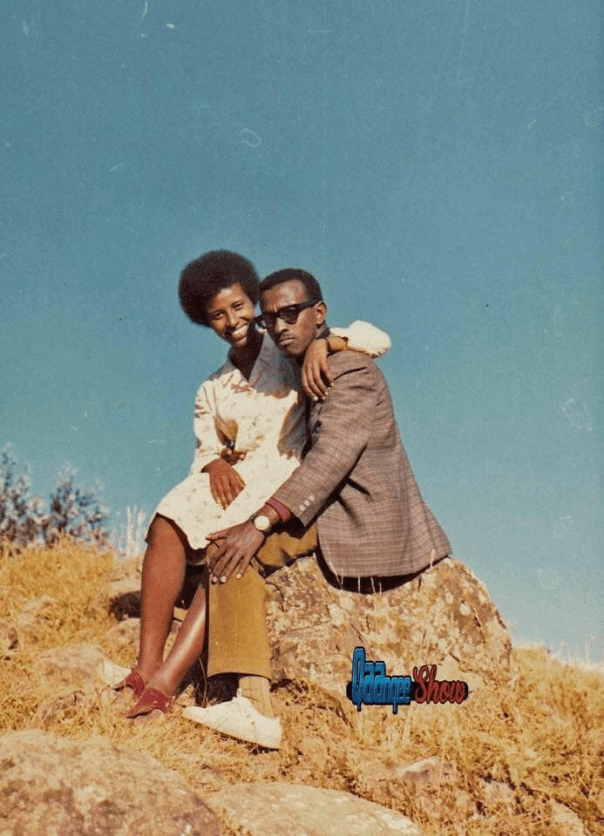
The Revolutionary’s Crucible
When a young Martha moved to Addis Ababa with dreams of becoming an engineer, she could not have anticipated how the 1974 Ethiopian Revolution would reroute her destiny. As universities shuttered, she found her voice not in engineering formulas but in the power of the written word. She trained as a journalist and married Leenco Lata, a chemical engineer who would become a founder of the Oromo Liberation Front.
The Red Terror that followed was Ethiopia’s bloodiest chapter, and it consumed Martha’s world. Her husband was detained four times in six months. The first three times, he returned bearing the scars of torture. The fourth time, he vanished into the maw of the Derg regime’s secret prisons.
What follows in Martha’s story is almost unbearable to contemplate. A young mother, pregnant with her third child, she spent a year turning over dead bodies in the streets of Addis Ababa, searching for her husband’s face among the massacred. She named her baby Goli — meaning “terror” in Oromo — a haunting testament to the moment of his birth. For an entire year, she did not know whether her husband was alive or dead. (He had, in fact, escaped Ethiopia, but this knowledge would not reach her for another decade.)
The Prison Years: Ten Years Without Charge
In January 1980, Martha herself was seized by plainclothes security forces. The scene that greeted her at the prison would scar her memory forever: bodies bleeding from mouths, faces disfigured by torture, wounds oozing pus, and a stench so overpowering it seemed to suffocate hope itself.
She was tortured ten times in that first year alone. The foot whipping — a technique designed to inflict maximum pain while leaving victims alive — became her introduction to the Derg’s hospitality. Yet, remarkably, she was never charged with any crime. Her only offense, as Amnesty International and PEN America would later affirm, was her journalism and her advocacy for Oromo women’s rights.
For ten years, Martha Kuwee Kumsa existed in a legal limbo — detained without charge, without trial, without any of the protections that international law supposedly guarantees. But prisons, as it turns out, cannot contain a mind determined to be free. She learned French and Tigrinya from fellow prisoners. She taught biology, geography, and mathematics to other detainees and even to the children of her captors. In one breathtaking act of maternal ingenuity, she faked a dental emergency to secure a brief meeting with her own children.
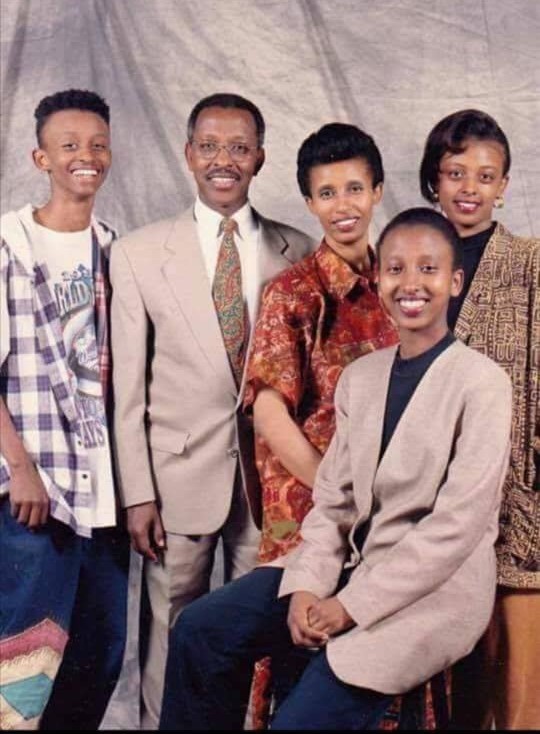
The Liberation of Voice
When Martha was finally released on September 10, 1989, as part of a mass prisoner amnesty, she emerged into a world that had moved on without her. Her children had grown. Her husband, unknown to her, was alive and working in opposition politics. The resistance asked her to join training camps; the government tried to conscript her. Seven months later, she made the impossible choice: walking with her children for two weeks through forests to reach Kenya and, eventually, Canada.
It was in Kenya, just before boarding a flight to a new life, that the phone rang. After eleven years of silence, her husband’s voice came through the receiver. He had survived. He had helped negotiate the EPRDF’s transition to power. He would meet her in Kenya, and then, two days later, she and the children would fly to Canada alone. The family would not be fully reunited until 1996, and even then, political asylum laws would eventually separate them again when Leenco’s armed opposition past made him ineligible for Canadian citizenship.
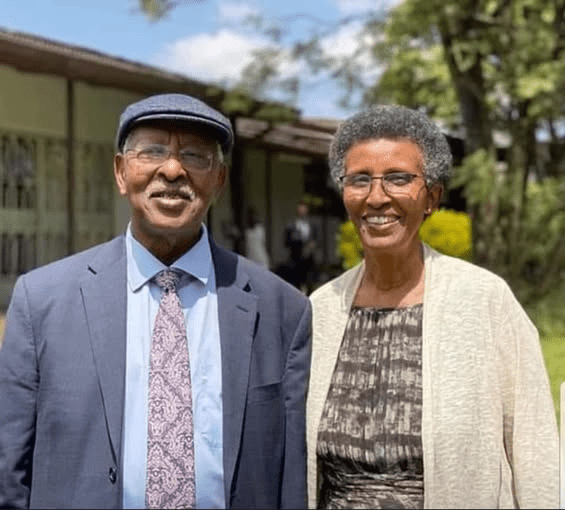
The Scholar-Activist
In Canada, Martha rebuilt herself from the ground up. She earned a bachelor’s degree in social work from York University (1996), a master’s from the University of Toronto (1997), and a PhD from the University of Toronto (2004). She began teaching at Wilfrid Laurier University in 2002 and rose to the rank of full professor.
Her scholarship focuses on Oromo culture, cultural identity, and the adaptation of immigrants — subjects she does not study from a distance but lives in her very bones. But Martha has never been content to remain in the ivory tower. She has remained active with PEN Canada and Amnesty International, speaking worldwide about human rights and freedom of speech.
Siinqee Feminism and the Defense of Youth
Martha’s activism is rooted in siinqee feminism — an Oromo philosophy of womanhood and solidarity that predates Western feminist thought. Siinqee is not merely an intellectual framework; it is a lived practice of mutual protection among Oromo women, a covenant of resistance against all forms of oppression.
This philosophical grounding explains her passionate defense of the Qeerroo and Qarree — the young Oromo activists who led peaceful, grassroots movements that helped overthrow the EPRDF. When pan-Ethiopian feminist Sehin Teferra categorically associated the Qeerroo with violence, Martha pushed back fiercely. Such generalizations, she argued, erase the diversity among young activists and criminalize legitimate protest.
In November 2020, following the assassination of singer Hachalu Hundessa and the subsequent riots, Martha co-authored a piece in The Washington Post that accused Ethiopian federal authorities of orchestrating a wave of repression against Oromos. She documented 9,000 arrests, the raiding of Oromo media offices, and internet shutdowns that created a media monopoly for state-aligned Amharic outlets. She called it “Orwellian misinformation” — a deliberate narrative that painted Oromo victims as perpetrators.
The Queen Who Did Not Break
Today, Martha Kuwee Kumsa lives in Waterloo, Ontario, though her heart remains tethered to Oromia. She has received the 1989 PEN/Barbara Goldsmith Freedom to Write Award, even before her release from prison. She has been honored by Amnesty International. But perhaps her greatest achievement is simpler and more profound: she survived.
She survived the Red Terror. She survived ten years in prison without charge. She survived torture. She survived exile. She survived the separation from her husband and the challenges of raising children in a foreign land while rebuilding a life from nothing. And through it all, she never stopped writing, never stopped advocating, never stopped believing in the power of Oromo women to defy systems of power and reclaim their culture.
Kuwee jechuun mootii kannisaa ti. Kuwee means a queen who bends but does not break. Martha Kuwee Kumsa has been bent by history — bent by dictatorship, by imprisonment, by exile, by loss. But she has never broken. She stands today as a living testament to the unbreakable spirit of siinqee feminism and the enduring power of the human voice when it refuses to be silenced.
In an era when Oromo rights remain contested, when misinformation spreads faster than truth, when young activists are labeled terrorists for demanding justice, Martha’s voice matters more than ever. She reminds us that journalism is not a career but a calling. That feminism is not a Western import but an ancient Oromo practice. That freedom is not granted but claimed.
And that queens, when they refuse to break, can change the world.
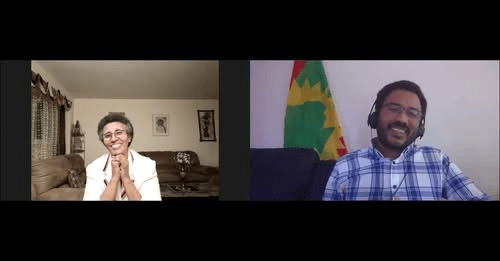
And so we ask again: Who is Martha Kuwee Kumsa?
She is the woman who turned over dead bodies searching for her husband.
She is the woman who named her baby Terror and raised him anyway.
She is the woman who taught mathematics in a torture prison.
She is the woman who walked through a forest to freedom.
She is the woman who built a PhD from the ashes of a decade stolen by the state.
She is the woman who refuses to let Oromo youth be slandered as terrorists.
She is the woman who embodies siinqee feminism in every cell of her being.
She is the queen who bends but does not break.
Kuwee jechuun mootii kannisaa ti.
And her name is Martha.
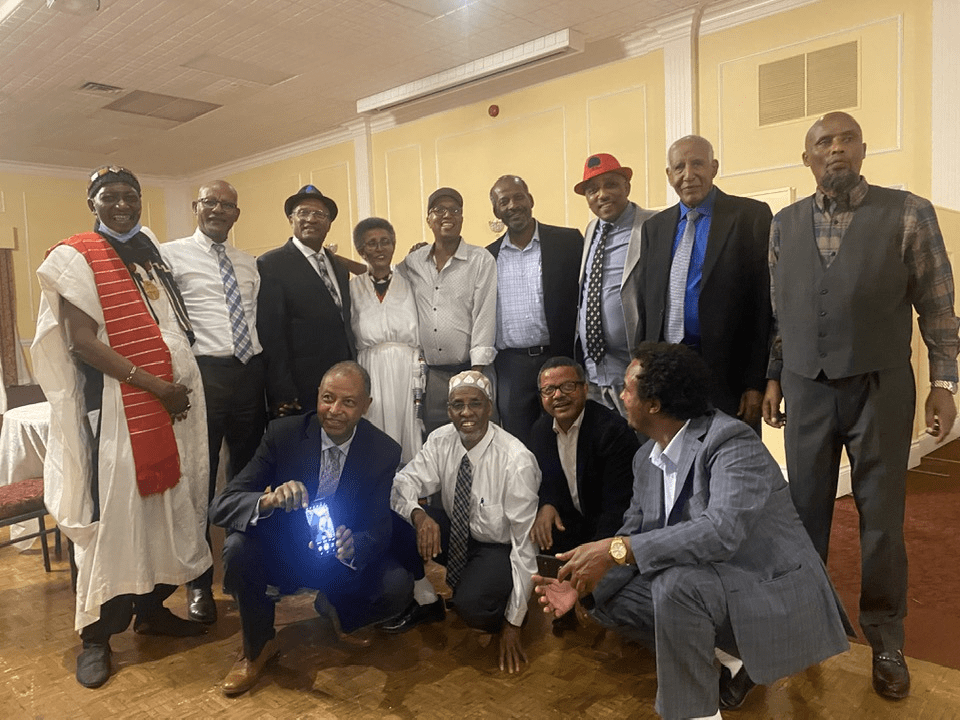
This feature commentary is based on biographical sources including PEN America, Amnesty International, and Martha Kuwee Kumsa’s own writings.

CPJ Denounces Government Crackdown on Addis Standard’s Press Freedom

Ethiopia Revokes Addis Standard’s License Amid Escalating Crackdown on Independent Media
CPJ condemns “retaliation” as authorities silence one of country’s few independent voices ahead of June elections
NAIROBI, February 24, 2026 — The Committee to Protect Journalists (CPJ) has called on Ethiopian authorities to immediately restore the registration of independent outlet Addis Standard after the Ethiopian Media Authority (EMA) revoked its online media registration certificate effective February 24, in the latest blow to press freedom in Africa’s second most populous nation .
“This is not regulation — it is retaliation,” said CPJ Africa Director Angela Quintal. “By weaponizing vague ‘national interest’ and ‘media ethics’ provisions, the Ethiopian Media Authority is silencing independent journalism. Revoking Addis Standard’s license is part of a deliberate campaign to dismantle critical reporting in Ethiopia. Authorities must immediately reinstate the outlet’s registration and end their escalating assault on the press” .
Government Allegations and Outlet’s Response
In a February 24 statement posted on Facebook, the EMA accused Addis Standard of “repeatedly disseminating reports that compromise media ethics, violate Ethiopian laws, and endanger the national interests of the country and its people” . The authority claimed it had issued multiple warnings and that the outlet had failed to take corrective measures before canceling its registration under Ethiopia’s Media Proclamation .
However, Addis Standard Editor-in-Chief Yonas Kedir firmly rejected the decision, stating that the outlet had never received any formal notice of violations from the EMA. He described the claim of “repeated notices” as factually incorrect and said the publisher, JAKENN Publishing PLC, is reviewing legal options to ensure due process is upheld .
The EMA’s statement did not specify which reports or actions formed the basis of the decision . The authority claimed the alleged violations were confirmed through its regulatory oversight activities and were the subject of numerous complaints and tips submitted by members of the public .
A Pattern of Escalating Repression
The move comes amid a widening crackdown on independent media as Ethiopia approaches legislative elections scheduled for early June 2026 . Recent actions against journalists include:
- On February 19, an Agence France-Presse journalist was blocked from traveling to Tigray .
- Authorities declined to renew the accreditation of three Reuters journalists based in Addis Ababa and withdrew the agency’s credentials to cover the African Union Summit, days after Reuters published an investigative report alleging Ethiopia hosts a training camp for Sudan’s Rapid Support Forces .
- In January, the EMA revoked Wazema Radio’s license over alleged reporting irregularities; the station has continued publishing content from abroad .
- In October 2025, the authority suspended the licenses of Deutsche Welle’s local correspondents, two of whom remain permanently barred .
- Four journalists imprisoned for nearly three years now face terrorism charges and potential death sentences, though executions remain rare .
Addis Standard’s History of Government Targeting
Addis Standard, established in 2011 as a monthly magazine and published in Afaan Oromo, Amharic, and English, has faced repeated government harassment over the years . The outlet is one of Ethiopia’s few independent media platforms, with nearly one million followers on X .
The latest revocation is not the first time authorities have moved against the outlet:
In April 2025, Ethiopian police raided the Addis Standard office and the home of one of its senior staff members, briefly detaining three managers for several hours and confiscating multiple electronic devices, including laptops, phones, hard drives, and CPUs. The Committee to Protect Journalists expressed “grave concerns about potential misuse of sensitive data” following the raids .
During the Tigray war in June 2021, Ethiopia’s media regulator suspended Addis Standard, accusing it of advancing the agenda of what it described as a “terrorist group”—an apparent reference to the Tigray People’s Liberation Front (TPLF). At the time, CPJ criticized the move, noting that “for years, Addis Standard has been an important source of critical reporting and commentary on Ethiopia” .
In November 2020, police arrested Medihane Ekubamichael, then product editor at Addis Standard, accusing him of attempting to “dismantle the constitution through violence” .
A Deteriorating Media Landscape
Ethiopia now ranks 145th out of 180 countries in the 2025 Reporters Without Borders (RSF) World Press Freedom Index . According to RSF, the media landscape under Prime Minister Abiy Ahmed, who came to power in 2018, remains “highly polarised and marked by a culture of opinion at the expense of fact-checking” .
The latest actions have raised serious concerns among press freedom advocates about the operating environment for independent journalism ahead of the June elections, as candidate registration and campaign activities are currently underway .
Addis Standard has reported extensively on unrest in Amhara, where rebels have battled federal forces for several years, as well as tensions in Tigray, where a fragile calm risks sliding back into conflict . The outlet’s critical political reporting made it a target, and the latest revocation effectively bars it from operating legally in Ethiopia .
International Condemnation
The CPJ’s condemnation follows similar expressions of concern from diplomatic missions and press freedom organizations. In a joint statement on World Press Freedom Day 2025, 14 diplomatic missions in Addis Ababa warned of a shrinking media and civic space, stressing that a free, pluralistic press is indispensable to democracy and social cohesion, particularly ahead of national elections.
CPJ’s email requests for comment to the Ethiopian Media Authority did not immediately receive a response .
As one observer noted, the revocation of Addis Standard’s license represents not an isolated incident but part of “a troubling pattern of repressive regulatory action against international and independent press” in Ethiopia . With elections approaching and civic space contracting, the future for independent journalism in Ethiopia appears increasingly precarious.
Founded in 2011, Addis Standard is known for critical political reporting, and the latest revocation effectively bars it from operating legally in Ethiopia.




 Advocacy for Oromia