Scholars Convene Under ‘Mother Oromia’ Banner, Urge Action on Political Crisis
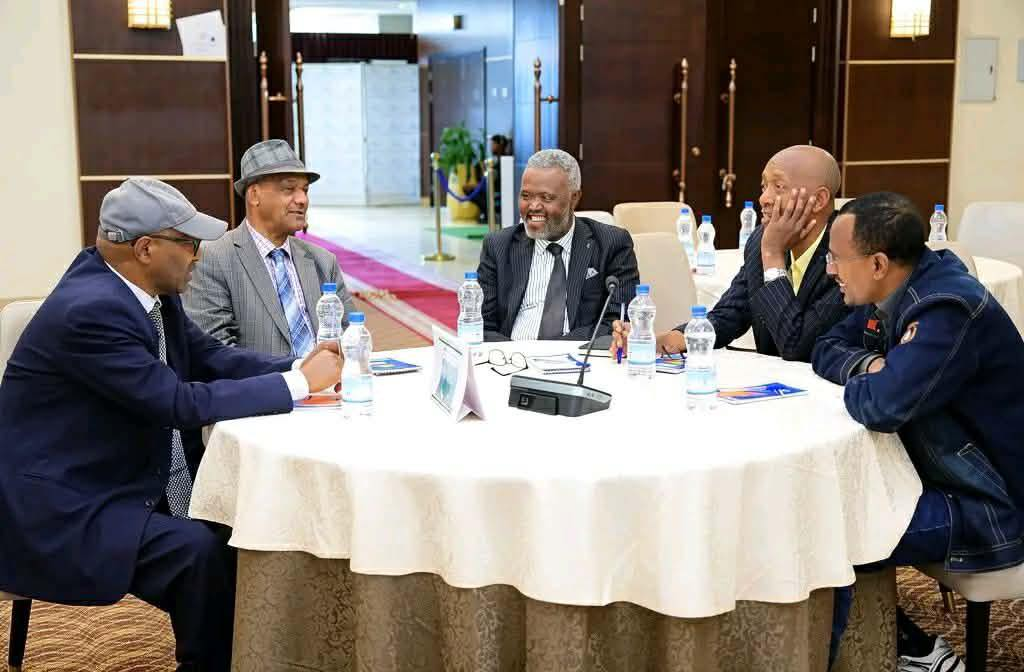
February 26, 2026 (Addis Ababa) – In a significant gathering of Oromo intellectuals and civic leaders, a five-day conference convened under the symbolic call “Harmeen Oromiyaa waamti” (“Mother Oromia summons you”) has concluded with urgent appeals for political accountability and truth-based dialogue to address the region’s deepening challenges.
The meeting brought together scholars and thought leaders for intensive deliberations on the political crisis affecting Oromia and its implications for Ethiopia as a whole. Participants engaged in what they described as “in-depth, truth-based discussions” regarding Oromo political challenges, outlining potential solutions they believe would benefit the broader population.
Kedir Bullo, one of the participants, reflected on the gathering’s significance in an interview following the conference. “When the call went out that ‘Mother Oromia summons you,’ this is how we responded,” Bullo said. “We convened to hold in-depth, truth-based discussions regarding Oromo political challenges, and we outlined solutions that would benefit our people.”
However, Bullo expressed uncertainty about whether the recommendations would translate into meaningful action. “I do not know what the politicians have done [with these recommendations],” he stated, highlighting a recurring gap between intellectual deliberation and political implementation that has frustrated many civic initiatives in the country.
The scholar emphasized the personal significance of participation. “Personally, I feel a sense of honor to have fulfilled my civic duty by spending five days with these scholars, discussing matters concerning both our people and the country with a deep sense of solidarity,” Bullo said.
Context of Crisis
The gathering occurs against a backdrop of escalating warnings about Ethiopia’s trajectory. Just days before the conference, the Oromo Liberation Front (OLF) issued a stark statement warning that “gathering clouds of war” continue to hang over Ethiopia, with persistent conflict in Oromia and other regions remaining a major source of security, social, and economic challenges .
According to the OLF statement, political differences remain unresolved, and longstanding conflicts have turned Oromia into what it described as a “recurring arena of war and exploitation” despite the region’s natural wealth, while many residents continue to face economic hardship .
The urgency of these warnings was amplified by a coalition of twenty international and regional human rights and humanitarian organizations, which warned on February 20 that Ethiopia stands “on the brink” of renewed large-scale conflict. The groups cited ongoing fighting between federal forces and the Oromo Liberation Army (OLA), with reports of extrajudicial killings, mass arrests, property destruction, forced conscription, and collective punishment of civilians .
The Human Cost of Insecurity
The conflict’s toll on ordinary citizens has been devastating. A recent investigation by the Associated Press documented widespread abuses in Oromia, where civilians find themselves caught between government forces and armed opposition groups .
Ayantu Bulcha, speaking to AP from Addis Ababa, described how soldiers came to her family’s home in Oromia in early December. Her cousin was shot outside the property, she said, and soldiers took her father and uncle to a nearby field where they were also killed. They had been accused of fighting alongside the OLA—allegations she denies .
Lensa Hordofa, a civil servant from Oromia’s Shewa region, told AP her family faces constant harassment and extortion from armed men, including demands for food and supplies. Her uncle was recently detained and released only after payment of a ransom equivalent to $650. “Movement from place to place has become increasingly restricted,” she said. “It’s almost impossible to travel” .
Media Access Restricted
The conflict has remained largely hidden from public view due to restricted access. Ethiopia limits access to Oromia for journalists and rights groups, meaning the full scope of the humanitarian crisis remains underreported .
Getu Saketa Roro, co-founder of the Human Rights League of the Horn of Africa, noted that “the human rights situation—as well as the overall humanitarian crisis in Oromia—is underreported” .
This information blackout echoes warnings from human rights organizations that shrinking civic space and restrictions on independent reporting are obscuring the scale of violations and weakening early warning and prevention efforts .
Failed Peace Efforts
The call for dialogue from the scholars’ conference comes amid recent failures in formal peace negotiations. The Ethiopian government announced on February 18 that talks with the Oromo Liberation Army had ended without agreement. It was the second time Prime Minister Abiy Ahmed’s government and the OLA had sat down this year aiming to end a five-year insurgency in the restive Oromia region .
National security adviser Redwan Hussein posted on social media: “Due to the intransigence of the other party the talks have come to an end without an agreement. The obstructive approach and unrealistic demands of the other party are the principal reasons why these talks could not succeed” .
The OLA offered a different perspective, stating it had tried “to negotiate a space for a meaningful change in the governance of the Oromia region” during the talks in Dar es Salaam. Spokesman Odaa Tarbii said in a statement: “True to form, the Ethiopian government was only interested in co-optation of the leadership of the OLA rather than beginning to address the fundamental problems that underlie the county’s seemingly insurmountable security and political challenges” .
Economic Paradox
The conflict’s persistence stands in stark contrast to Oromia’s economic potential. The region is central to Ethiopia’s coffee industry, which continues to post strong results nationally. Official data shows Ethiopia earned 1.6 billion dollars from coffee exports in the first five months of the 2025/26 fiscal year, with plans to generate more than 3 billion dollars by exporting about 600,000 tons of coffee during the full year .
Major coffee-producing areas include Jimma, Illubabor, Guji, West Wollega and East Wollega in Oromia—many of which have been affected by insecurity. In Bale Zone, where coffee is grown on more than 68,000 hectares, officials report harvests reaching 93 percent of targets despite challenges .
Yet the benefits of this economic activity have not translated into stability or widespread prosperity. The OLF statement emphasized that despite the region’s natural wealth, many residents continue to face economic hardship .
The Scholar’s Appeal
Against this complex backdrop, the gathering of scholars under the “Mother Oromia” banner represents what participants view as a civic intervention—an attempt to inject intellectual rigor and truth-based analysis into a political environment often characterized by polarization and mutual recrimination.
Bullo’s personal reflection on fulfilling his “civic duty” speaks to a broader sense of responsibility among Oromo intellectuals who see themselves as bridges between grassroots concerns and political decision-makers. The five days of discussion, grounded in what participants describe as commitment to truth and solidarity, produced what they believe are viable solutions.
Whether these solutions will reach political actors—and whether those actors will act upon them—remains an open question. As Bullo noted with evident frustration: “I do not know what the politicians have done [with these recommendations].”
The conference’s conclusion coincides with growing international alarm about Ethiopia’s trajectory. The February 20 letter from human rights organizations warned that “space for de-escalation is rapidly shrinking” and called for sustained international attention, inclusive political solutions, and expanded independent human rights monitoring .
For the scholars who gathered under Mother Oromia’s summons, the path forward requires bridging the gap between intellectual deliberation and political action—ensuring that truth-based analysis does not remain confined to conference halls but translates into the inclusive dialogue and accountability that Ethiopia’s complex crisis demands.

Posted on February 26, 2026, in Events, Finfinne, Information, News, Oromia, Press Release, Promotion. Bookmark the permalink. Leave a comment.




 Advocacy for Oromia
Leave a comment
Comments 0