Monthly Archives: February 2026

Barak Mountain’s Irreechaa: A Spiritual Gathering for Peace and Gratitude

From the Highlands, a Prayer of Gratitude: Irreechaa Tulluu Unites Community on Barak Mountain
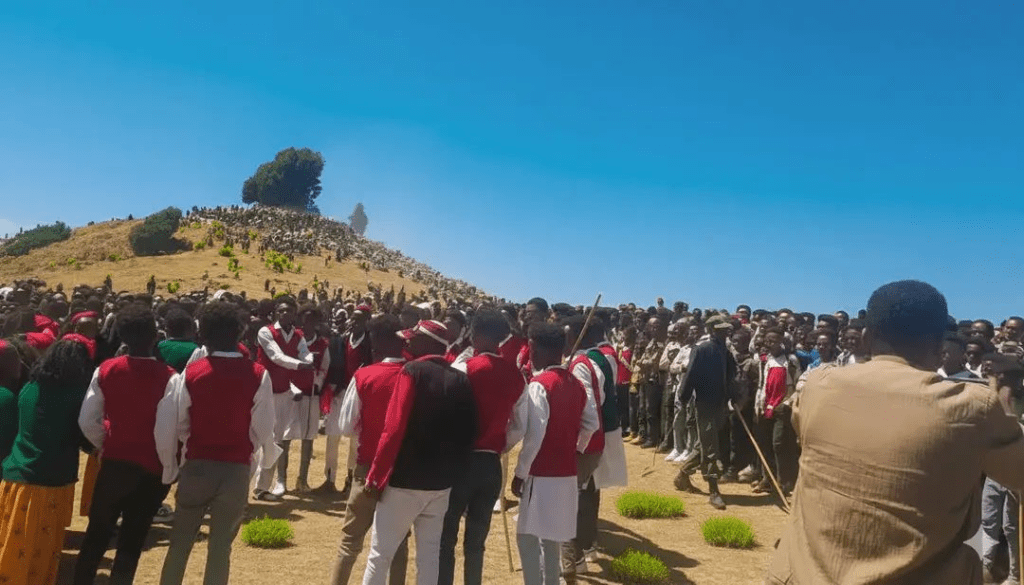
SANDAFAA BAKKEE, OROMIA – As the first light of the autumn sun crests the horizon, the slopes of Barak Mountain are already a tapestry of movement and color. Thousands of men, women, and children, dressed in the brilliant whites and intricate embroideries of traditional Oromo attire, ascend the paths in a serene, purposeful procession. They are not mere hikers; they are participants in one of humanity’s oldest and most profound rituals: offering thanks to the divine for life’s sustenance and praying for peace in the seasons to come. This is Irreechaa Tulluu, the hill festival, and on this day, Barak Mountain is its sacred stage.
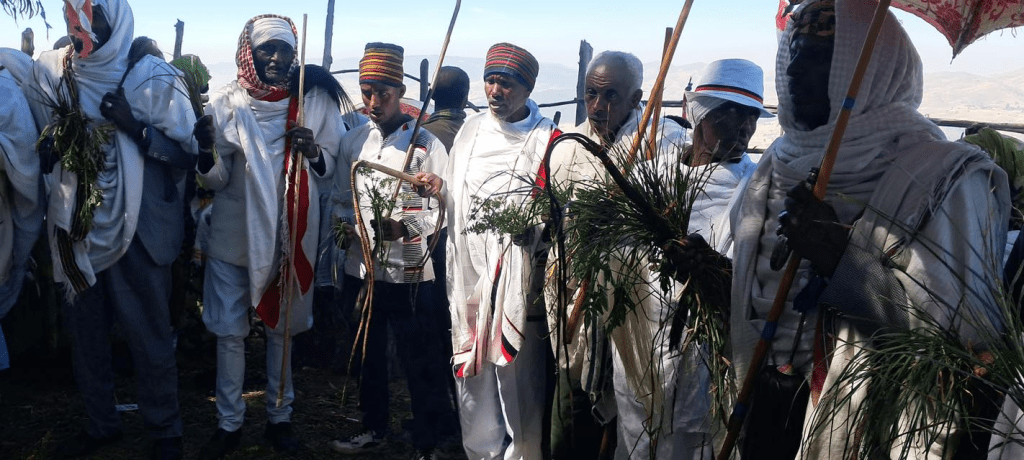
Irreechaa is not a single event but a bi-annual dialogue with nature, deeply embedded in the Gadaa system’s ecological wisdom. The first, Irreechaa Arfaasaa, celebrated at riversides in early October, welcomes the rainy season—a festival of renewal, cleansing, and thanksgiving for the promise of life. The second, unfolding now in the crisp autumn air, is Irreechaa Tulluu. As the harvest is gathered, the community climbs to the high places, turning gratitude into a physical act of ascent, symbolizing a spiritual upliftment and a reflective review of the passing year.
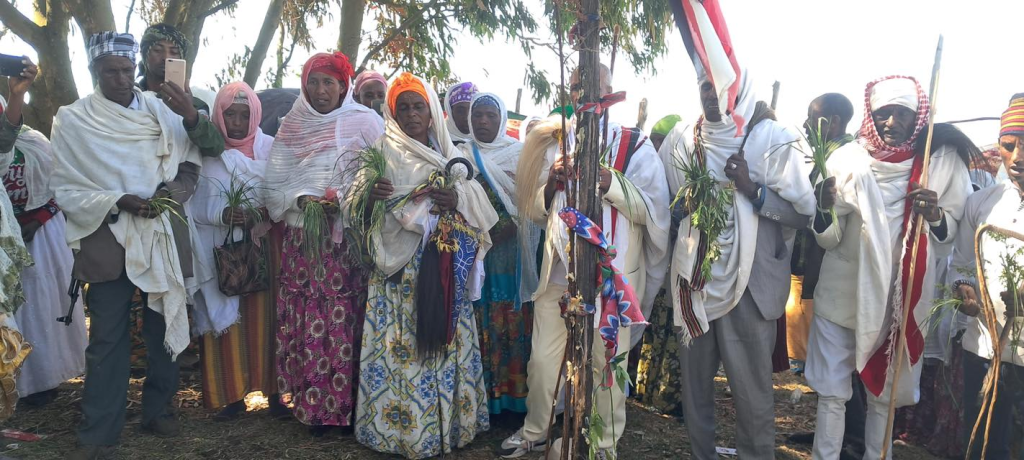
This season, the community of Sandaafaa Bakkee has transformed Barak Mountain into a breathtaking open-air temple. Led by revered elders, or Hayyus, who carry staffs of authority and centuries of tradition, the people climb. The air fills with the sound of communal prayer, traditional Geerarsa (praisesongs), and the soft murmur of individual supplications. At the summit, the focal point is not an altar of stone, but a shared spiritual intention. Participants bring fresh green grasses and flowers, symbols of peace and prosperity, offering them as tokens of gratitude to Waaqaa (the Creator) for the blessings of the past year and as prayers for harmony and abundance in the next.
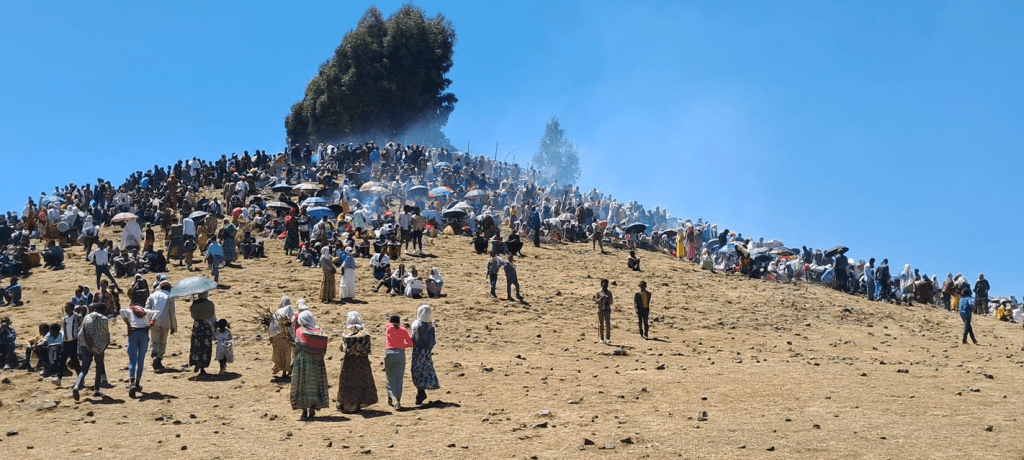
“This mountain is our church, our mosque, our most sacred space,” explained Elder Gammachuu Roba, pausing during the ascent. “When we climb together—young and old, from all walks—we are doing more than celebrating. We are reaffirming our bond with Waaqaa, with our ancestors, and with each other. We pray for nagaa (peace) because without peace in our hearts, our communities, and our environment, no prosperity can take root.”
Beyond its profound spiritual core, Irreechaa Tulluu is a vibrant celebration of Oromo identity. The mountain slopes become a living museum of culture. The air resonates with the rhythms of the kebero drum and the strings of the kirar. Young men engage in spirited waa’ee (verbal jousting), showcasing wit and wisdom, while circles form for traditional dance. It is a powerful, collective assertion of a culture that has endured, adapted, and thrived.
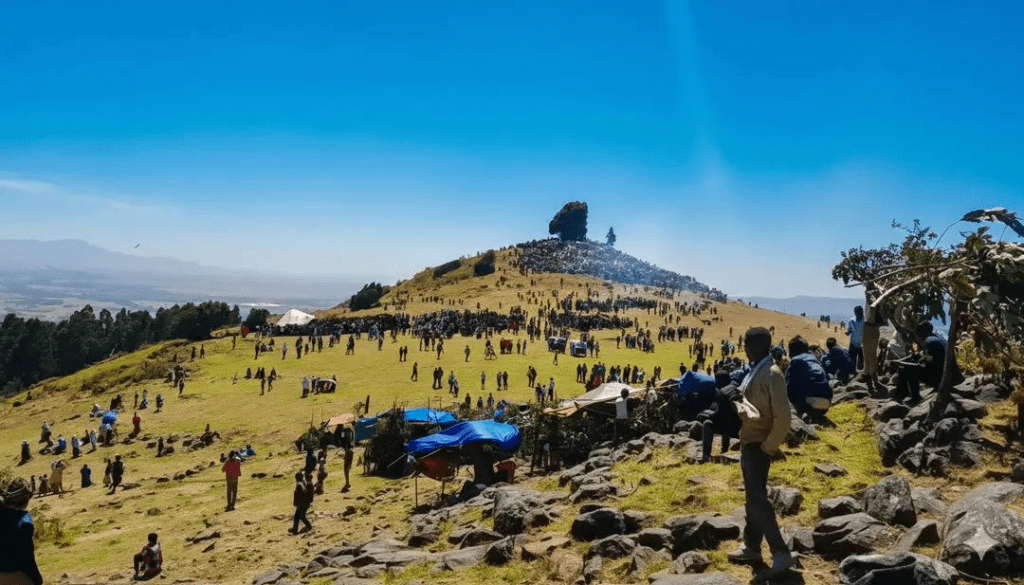
For observers and visitors, the festival offers an unparalleled immersion into the “timeless richness of Oromo culture,” as promoted by the Oromia Tourism Bureau. It is a chance to witness a living tradition where faith, ecology, and community are seamlessly woven together. As the sun sets on Barak Mountain, casting long shadows over the departing crowds, the feeling left behind is one of collective catharsis and renewed hope. The prayers for peace, whispered from the highlands, are carried on the wind, a timeless echo from a people forever rooted in their land and their gratitude.
#Irreechaa #IrreechaaTulluu #OromoCulture #BarakMountain #Oromia #LandOfOrigins #Ethiopia #CulturalHeritage

Oromo Diaspora: Celebrating the Legacy of the Maccaa-Tuulamaa Association

From Cairo to the Heart of Oromia: The Maccaa-Tuulamaa Association’s Enduring Flame
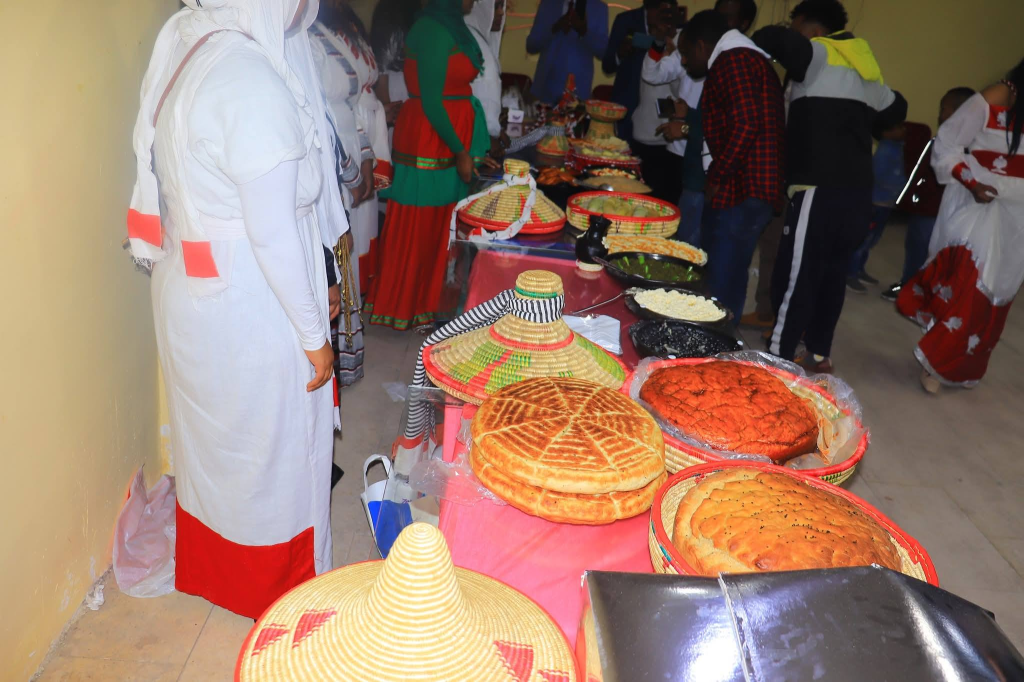
Cairo, Egypt – In a vibrant hall far from the verdant highlands of Oromia, the air was thick not with desert dust, but with the palpable weight of memory and the steady pulse of resilience. Last week, the Oromo community in Egypt gathered not for a simple social event, but for a profound act of collective remembrance: the 7th anniversary celebration of the founding of their chapter of the Maccaa-Tuulamaa Association (MTA).
This was more than a milestone marked on a calendar. It was a deliberate and powerful reaffirmation of an identity that refuses to be fragmented by geography. The speeches given were not mere formalities; they were carefully woven threads in the ongoing tapestry of Oromo history, reminding all present that the story of the Maccaa-Tuulamaa Association is inextricable from the modern narrative of the Oromo struggle itself.
For the uninitiated, the significance of such a gathering in a place like Cairo might be lost. But to understand the MTA is to understand a cornerstone of 20th-century Oromo political consciousness. Founded in 1963, the association emerged not as a militant front, but as a critical socio-cultural and intellectual awakening. At a time when the very fabric of Oromo identity was under systemic pressure, the MTA provided a legitimate, organized platform. It championed education, preserved language and history, and most importantly, fostered a sense of unified nationhood (sabboonummaa) among the Oromo people. It was the seed from which more overt political movements would later grow, making its founders not just community organizers, but architects of a modern political identity.
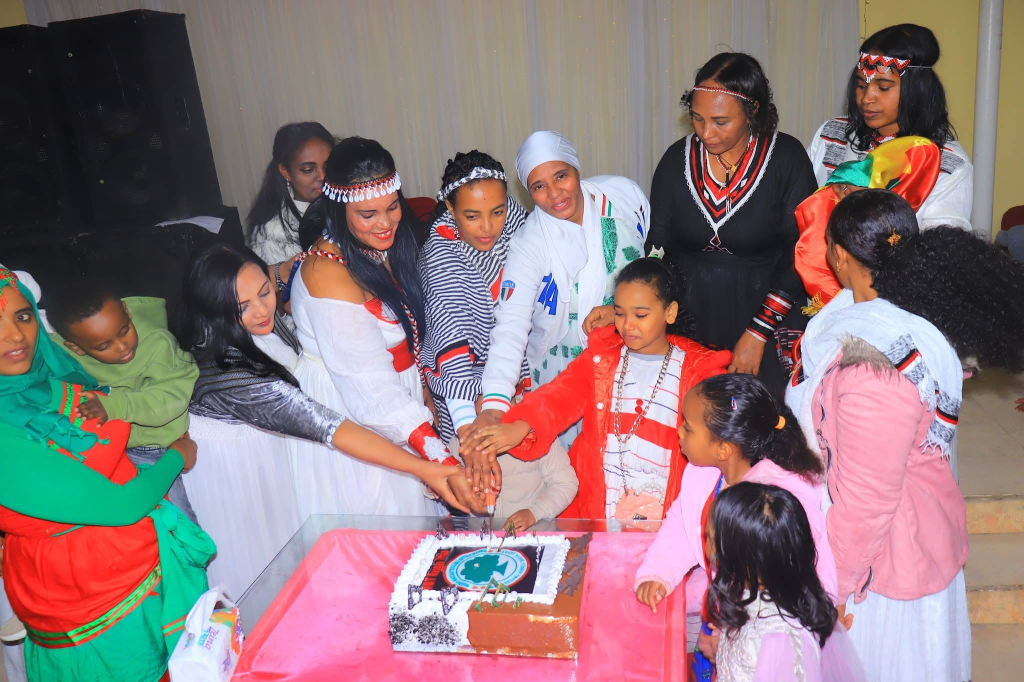
Therefore, the anniversary in Cairo transcends a chapter meeting. It represents a vital dialectic of diaspora existence: the act of building a future in one land while being steadfast custodians of a past from another. The community in Egypt, like Oromo diasporas worldwide, lives this duality. They build careers, raise families, and navigate life in Egypt, all while tending a flame ignited generations ago in the heart of Oromia. The detailed recounting of the MTA’s history at the event was a sacred ritual of passing this torch, ensuring that younger generations born on the Nile understand their roots in the Gibe River valley.
The calls for unity (tokkummaa) issued from the podium in Cairo resonate with a particular urgency today. They speak to challenges both internal and external. The diaspora, while a source of immense strength and resources, is not immune to the political and social fissures that affect any global community. The anniversary serves as an annual calibration—a reminder that the foundational principles of the MTA were unity, self-reliance, and the uplifting of the Oromo people as a whole. It is a call to look beyond differences and focus on the foundational hundee (root) that connects them all.
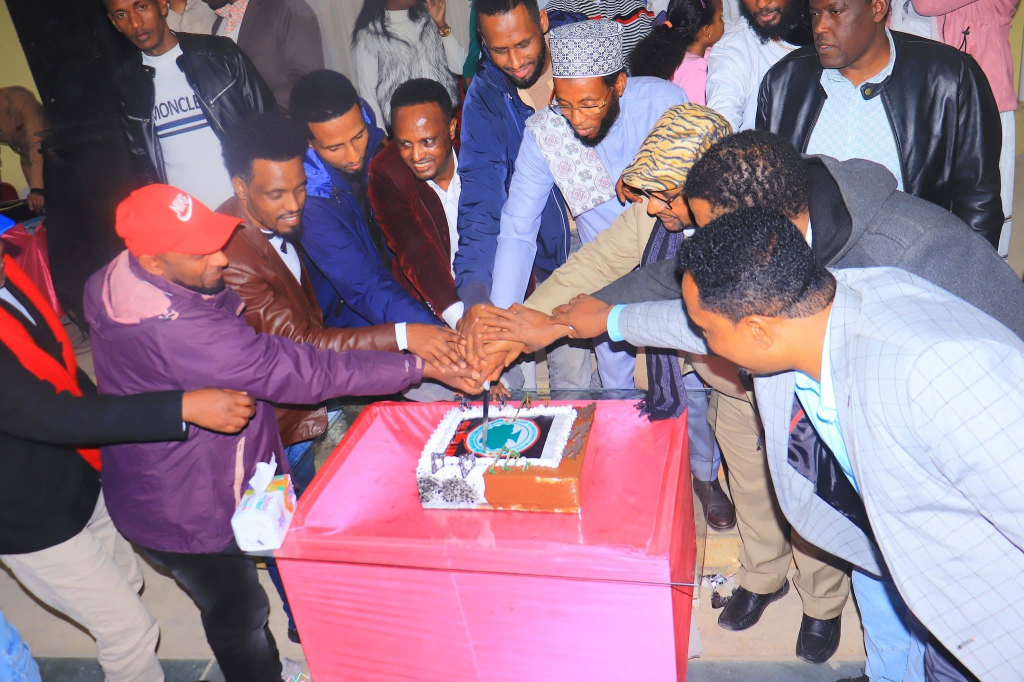
Furthermore, this gathering is a subtle but clear statement of unbroken continuity. It signals that the spirit of the MTA, the spirit of organized, dignified, and persistent advocacy for Oromo rights and identity, is not confined by borders or diminished by time. Whether in Cairo, Minneapolis, or Melbourne, the association’s legacy provides a framework for community cohesion and purpose. It answers the poignant question of how to remain meaningfully connected to a homeland many cannot safely return to. The answer lies in being living archives, active advocates, and unwavering supporters.
As the celebrations concluded, the message was clear: the Maccaa-Tuulamaa Association is far more than a historical relic. It is a living institution, its meaning continually renewed by diasporas like the one in Egypt. Their anniversary was a declaration that the seeds planted by the founders in the 1960s have borne fruit that now grows in global soil. It affirmed that the duty of the present generation is not just to remember the past, but to nurture this resilient tree, ensuring its branches—spread across the world—remain strong, interconnected, and forever reaching toward the light of justice and self-determination for Oromia.

Remembering the Past: Key to Oromo Self-Determination

Feature Commentary: On History, Fear, and the Unfinished Work of Liberation
By Maatii Sabaa
February 1, 2026
A specter haunts the discourse around the Oromo struggle for self-determination: the fear of history. Not the fear of making history, but the fear of speaking its full, unvarnished truth. A persistent notion suggests that to revisit the complex, often painful narrative of the Oromo Liberation Front (OLF) is to court chaos, to sow discord, and ultimately, to abandon the ongoing struggle. This perspective, often implied if not directly stated, holds that dwelling on the past is counterproductive.
This is a profound and dangerous miscalculation.
To argue that examining our history—with all its sacrifices, schisms, and strategic crossroads—has no place in the current struggle is to build our future on a foundation of amnesia. It is to disrespect the very martyrs in whose name we claim to act. The journey of the OLF, from its intellectual germination in the early 1970s, its formal establishment in 1973, and the articulation of its political program in 1976, is not a relic to be shelved. It is the origin story of a modern political consciousness. The subsequent decades of immense sacrifice—of targeted killings, imprisonment, and exile of its intellectuals and heroes—were the bloody ink with which chapters of resistance were written. The bittersweet victory of 1991, which broke the back of the Derg but saw the dream of Oromo liberation deferred, is a pivot point every contemporary analysis must contend with.
The internal fractures, the political alliances within the four-party coalition of 1991, the subsequent marginalization, and the difficult choices faced in the 1990s are not scandalous secrets. They are critical data points. They explain why the OLF found itself back in the bushes, in a “no-choice” scenario, fighting to keep a promise made to its fallen. To ignore this is to ignore the root causes of the very cycles of conflict and resistance that have characterized the past thirty years.
The claim that today’s generation, which has demonstrated formidable political maturity through movements like the #OromoProtests (Finfinnee DFS/Gadaa system is not the correct term here, replaced with the widely recognized hashtag) and the Qeerroo mobilization, would be destabilized by an honest reckoning with history is an insult to their intelligence. It is a paternalistic logic that assumes they cannot handle the complexity that shaped their present. We see remnants of old guard mentalities attempting to replay 30-year-old scripts, causing needless friction, and we are told to look away for the sake of unity. But unity forged in silence is fragile; unity built on a shared, honest understanding is unbreakable.
Therefore, speaking our history—the full history of a people’s resistance against successive repressive systems—is not separate from the struggle. It is an essential organ of it. Our history is our primary weapon against systemic alienation. When we surrender its narrative out of fear, we disarm ourselves intellectually and spiritually.
The central question for every individual invested in this cause today must not be, “How do I avoid offending powerful sensibilities?” It must be: “What is my role in ensuring the ultimate sacrifice of our heroes was not in vain?” For those who mistake gossip, character assassination, and sowing despair among the ranks as revolutionary action, a reckoning is due. True revolutionary duty lies in disciplined organization, in studying and adapting the strategic frameworks of our forebears to today’s realities, and in building upon—not abandoning—their foundational goals.
My recounting of history is not a wish to return to yesterday. It is an act of gathering all the pieces of our story so we can understand the puzzle of our present. Yes, we must celebrate every hard-won gain at the national level. But we must also be clear-eyed: without a deliberate, collective, and honest effort to address the core, unresolved question of Oromo national self-determination, those gains will remain incomplete and vulnerable.
The final struggle is not just against a visible enemy; it is against the forgetting, the fear, and the fragmentation of our own story. To remember completely, to analyze courageously, and to speak truthfully is, itself, a revolutionary act.
The Final Struggle is to End Subjugation!
Victory for the Oromo People!

Restoring Haramaya: A New Era for Tourism and Environment

Feature Commentary: Haramaya’s Return – From Symbol of Loss to Engine of Growth
For years, the name Haramaya evoked a profound sense of loss and environmental grief in Ethiopia. The haunting image of a vast, cracked lakebed where a major body of water once thrived became a national symbol of ecological mismanagement and the devastating consequences of environmental neglect. The primary culprit, as experts consistently pointed out, was siltation and pollution—a slow-motion disaster unfolding over 17 years.
However, a remarkable story of restoration and reimagining is now being written. As of late 2025/2026, Haramaya is not just back; it is being strategically positioned as a cornerstone for economic development and a premier tourist destination. This isn’t merely a recovery; it’s a metamorphosis.
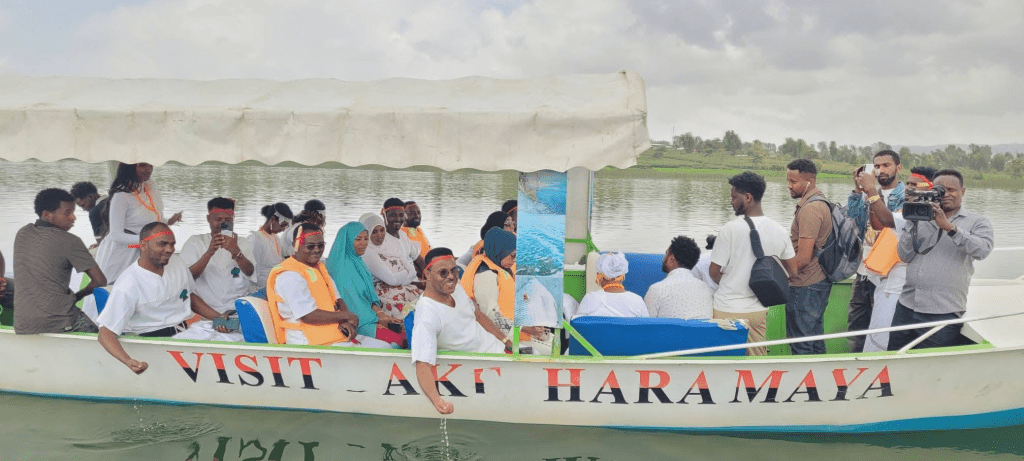
The catalyst for this shift is a multi-faceted, concerted effort spearheaded by the Oromia Regional State. As highlighted by officials like Culture and Tourism Bureau Head Jamiila Simbiruu and Mayor of Mays City Dr. Ifraha Wazir, the mission has moved far beyond refilling the lake. The goal is to systematically develop and promote Haramaya’s immense historical and natural potential. Having already achieved regional recognition, the focus is now on elevating it to a site of national significance.
The restoration itself is a testament to community-powered environmentalism. The lake’s return is credited to intensive rehabilitation works, including silt clearance and watershed management, combined with the transformative “Asheara Magarisaa” (Green Legacy) initiative. This involved the active participation of communities from 14 surrounding villages, turning a top-down directive into a grassroots movement for revival.
But the vision extends far beyond the shoreline. Authorities report that the lake’s volume and fish stocks are increasing year on year. Crucially, the perimeter is being secured, cleaned, and developed to unlock its full economic potential. An initial access road has already been completed, and a larger recreational project is underway along the banks, signaling a commitment to creating sustainable infrastructure for both visitors and the ecosystem.
Perhaps the most significant shift in strategy is the move from purely government-led action to a model seeking robust public-private partnership (PPP). Dr. Ifraha explicitly noted that unlocking Haramaya’s full potential requires significant investment from the private sector. This is already materializing, with 19 tourism-focused investment projects approved, nine of which are set to be built directly on the lakefront.
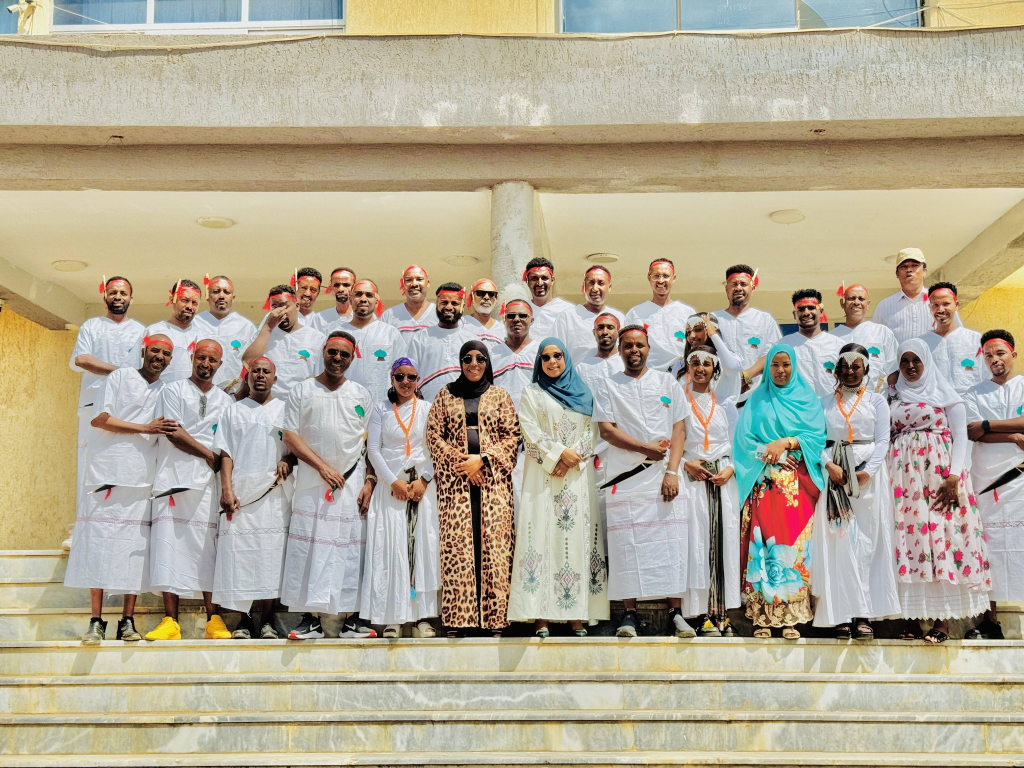
The ambition is grand. As the largest lake in Eastern Ethiopia, Haramaya is poised to serve not just Mays City but a wide region. It is envisioned as a major revenue generator and a source of employment, particularly for the youth. Its influence is rippling outward, with the production of lakeside ornamental plants now supplying major cities like Dire Dawa and Jigjiga.
In summary, the narrative around Haramaya has been fundamentally rewritten. It has transformed from a cautionary tale into a beacon of ecological recovery and smart economic planning. From being a place Ethiopians mourned, it is now a site they can visit and enjoy. With intensified efforts to enhance tourist services and attract more domestic and international visitors, Haramaya stands as a powerful testament to what can be achieved when environmental restoration is seamlessly integrated with community engagement and visionary economic development. The lake that was lost has been found again, and it is now working for its people.




 Advocacy for Oromia